Reviewed · MORNING
Tokyo: Morning Sightseeing Bus Tour
Tokyo works best when you get oriented fast, and this morning bus tour is built for that. You will go from a forested Shinto shrine to the bright, souvenir-filled streets of Asakusa, with iconic stops spaced out just enough to feel efficient. What makes it interesting is the rhythm: quick bus sightlines, short photo and walk moments, then a real cultural break for matcha at the end. You will also have a professional English-speaking guide to turn what you see into something you understand.
My favorite part is the mix of big names plus hands-on flavor. I especially like the Uji matcha moment in Asakusa, where you are not just looking at Tokyo, you are tasting it. One drawback to plan for is that the day is long for a seated ride, and the route can shift with traffic or weather, plus the tour ends in Asakusa with no extra drop-off.
Key highlights to look forward to
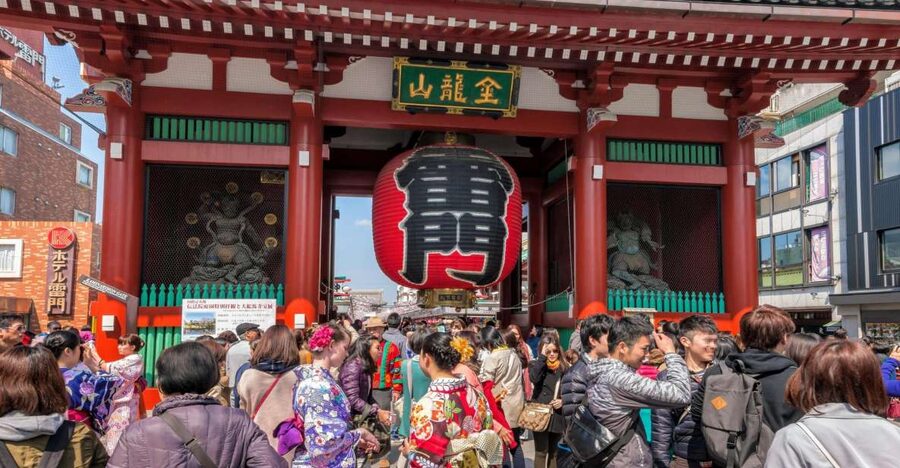
A coach route that strings together 12 must-sees in one morning, from Meiji Jingu to Sensō-ji
Live English guide with clear explanations while you watch Tokyo slide by
Uji matcha experience in Asakusa, with options like sweet matcha gelato or matcha beer
Shinto shrine etiquette lessons, so your visit feels respectful and not awkward
Audio headsets in multiple languages, plus free Wi-Fi on board
Air-conditioned coach with regular ventilation and antibacterial coating
A morning shortcut through Tokyo’s biggest icons
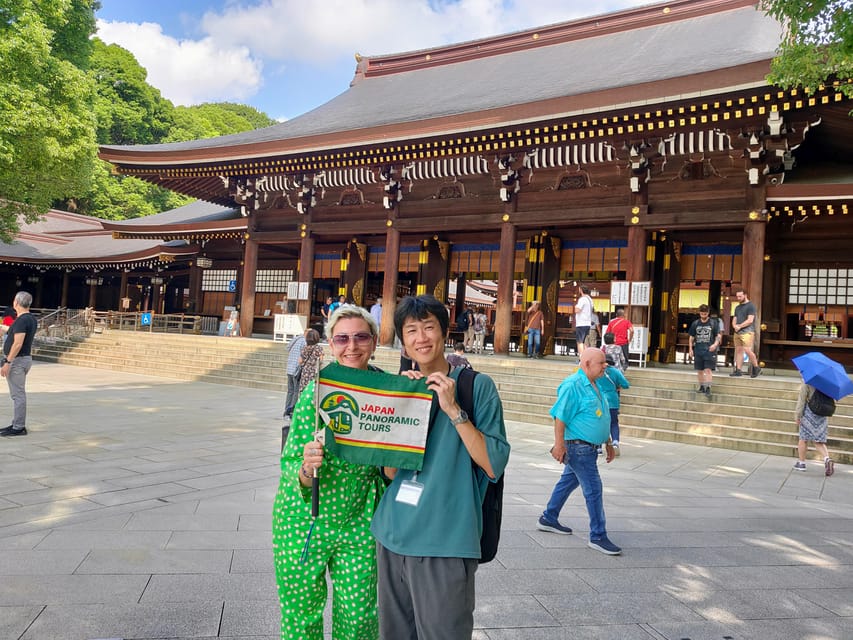
This is a 210-minute coach tour that gives you a “greatest hits” version of Tokyo without forcing you to master train transfers or neighborhood timing. The pacing is designed for people who want to see a lot of famous places in a short window, especially if your trip is packed or you are arriving in Tokyo and need a quick orientation.
You are not walking for hours. You will do short visits and photo stops, and you will spend most of your time riding. The upside is obvious: less logistical stress. The tradeoff is also obvious: this is not the kind of tour where you slowly roam every street at your own pace.
I like that the tour includes both calm and loud Tokyo. You get forest quiet at Meiji Jingu, then you pivot to the pop-culture energy you can see from the bus at Harajuku and the visual shopping streets around Omotesando.
Also on the shortlist for Tokyo:
- Mt Fuji and Hakone 1-Day Bus Tour Return by Bullet Train
★ 5.0 · 26,383 reviews - 1-Day Tokyo Bus Tour
★ 5.0 · 14,250 reviews - Tokyo: TOKYO SKYTREE® Admission ticket
★ 4.5 · 11,192 reviews
Where you start, how the coach ride feels, and what to expect on timing
The tour starts in central Tokyo, and your exact meeting point can vary based on the option booked. One listed starting point is the Ginza Robert Indiana Sculpture at 4-chōme-1-2 Ginza, with a Love statue meeting reference. The tour also includes pickup service from Ginza, but it does not include hotel pickup or hotel drop-off.
Plan for a steady morning schedule. The route order can change due to traffic or weather, and the operator notes that if a place is closed, they will try to attend an alternative. That flexibility matters in Tokyo, where the timetable can swing based on conditions.
On board, the coach is air-conditioned, with free Wi-Fi and regular ventilation. There is also an antibacterial coating mentioned for extra peace of mind. If you like using downtime, this is a good time to download offline maps or review what you will see next, because the itinerary is packed with recognizable names.
Bring comfortable shoes, even though you are not doing a long hike. Short walks and shrine steps add up, and Asakusa is where you will want to move around once the bus stops.
Meiji Jingu: the forest shrine moment that actually slows you down
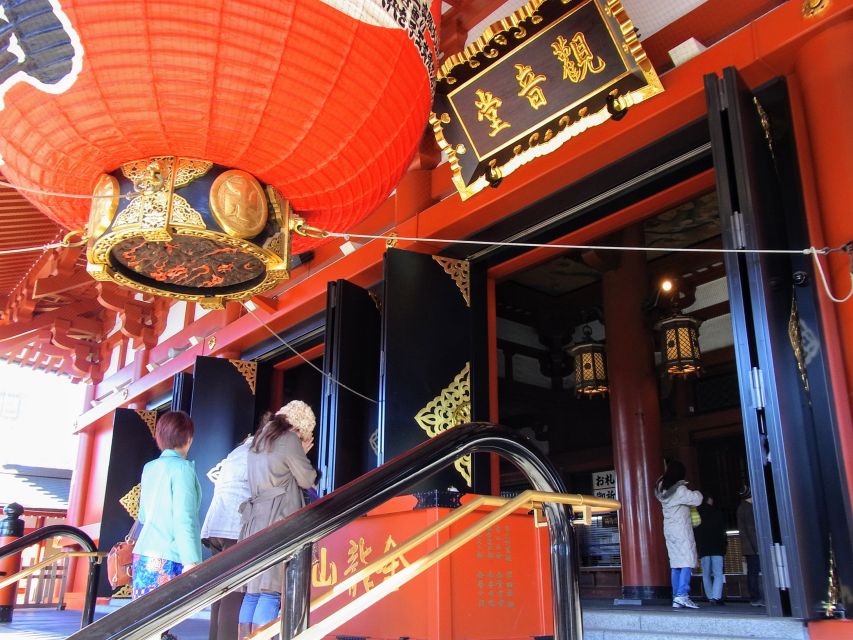
The bus heads first to Meiji Jingu Shinto Shrine, one of Japan’s best-known shrines. The standout detail here is the setting. Even though you are in Tokyo, the shrine is surrounded by forest, so the change in air and noise level feels immediate. You get a chance to take that one slow breath you usually miss when you are rushing between train stations.
This is also where the tour adds real value. You will learn the traditional way of visiting a Shinto shrine, so you know what to do before you are standing there. That is useful for first-time visitors who worry they might accidentally do the wrong thing.
What I like: this stop helps you understand Japanese spirituality beyond photos.
What to watch: it can feel crowded depending on timing, and the visit is usually brief. If you want a longer, quieter shrine experience, treat the tour moment as your introduction and plan extra time later on your own.
Harajuku and Omotesando views from the coach window
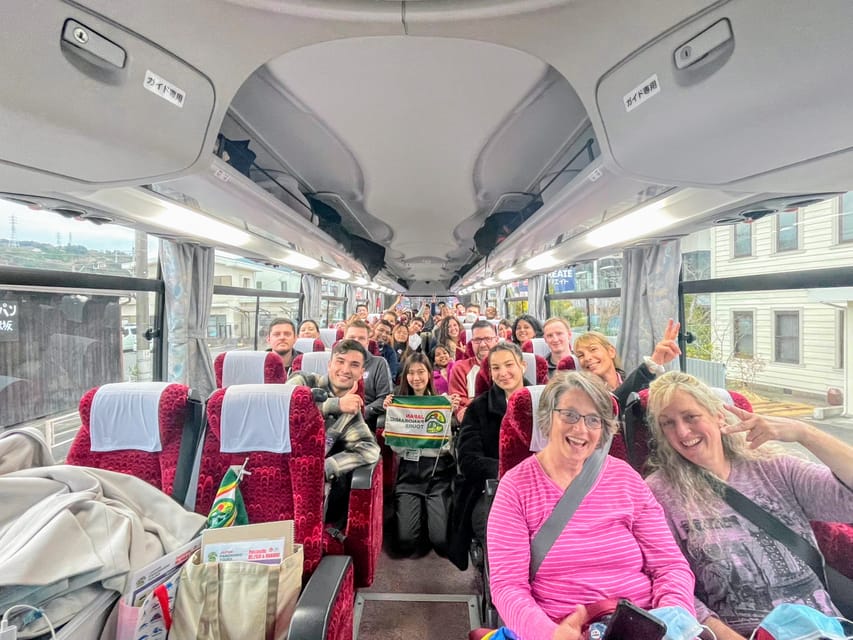
After Meiji Jingu, the bus passes areas closely associated with modern Tokyo. You will see Takeshita Avenue, strongly linked with Harajuku and Japanese pop culture, and you will also pass the Omotesando shopping district.
From a coach, you are not supposed to shop with both hands and run. Instead, you get the most valuable part: quick context. You see the vibe, you learn the geography, and you can decide later if you want to return for a longer browse.
If you are thinking, yes, I do want that Tokyo street energy, but I do not want to get lost, this is a good way to do it. If you want maximum shopping time, this is not the tour segment where you will do it. Your shopping focus comes later in Asakusa.
A change of pace from Tokyo:
- Tokyo: teamLab Planets TOKYO Digital Art Museum Entry Ticket
★ 4.6 · 9,779 reviews - Mt Fuji & Hakone Cruise, Drum Show Bullet Train 1 Day from Tokyo
★ 4.0 · 7,413 reviews - Tokyo: Sumo Show Experience with Chicken Hot Pot and a Photo
★ 4.8 · 6,678 reviews - Tokyo: Shinjuku Food Tour (13 Dishes at 4 Local Eateries)
★ 5.0 · 6,603 reviews
Imperial Palace photo stop: Edo Castle in your mind even from the roadside
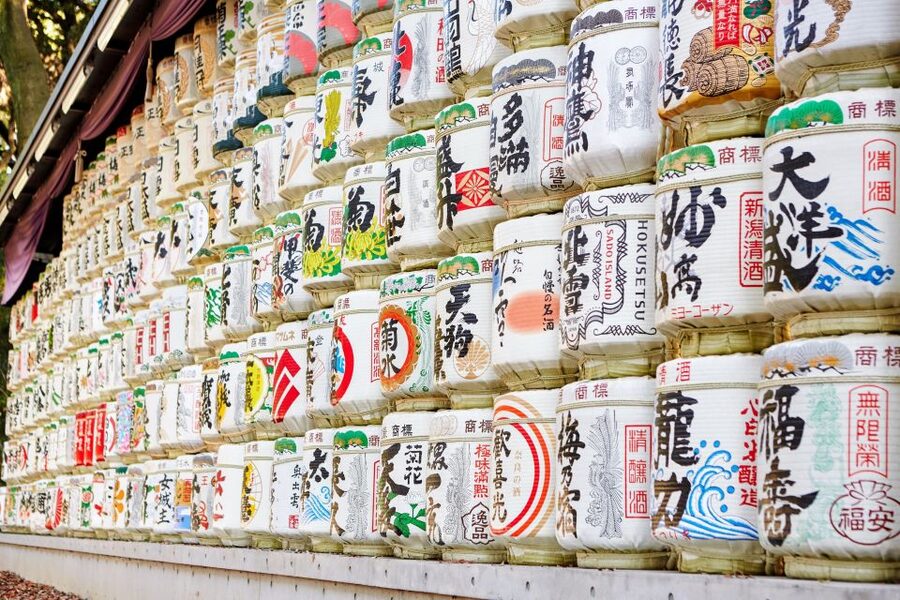
The tour includes a photo stop at the Imperial Palace, the current residence of the Imperial family. It is also the site of Edo Castle, and the tour is framed to help you connect the modern landmark to the older footprint of Tokyo.
Depending on operations, you will visit either the East Garden, which includes traditional Japanese gardens, or you will see Niju-bashi Bridge in the Outer Garden. That means your best photo angle might change depending on where you are taken, so be ready to pivot.
Why this stop matters: it gives you a landmark anchor. Tokyo is easy to overconsume. A recognizable “center” helps everything else make sense later when you are mapping neighborhoods on your own.
Possible downside: because this is a photo stop and/or an outer-area visit, it is not a deep tour of the palace grounds. If you love palace history and want multiple hours in gardens and museums, you will likely want to follow up separately.
Akihabara, Ueno, and Kappa-Bashi: tech culture, a historic park, and food-replica craft
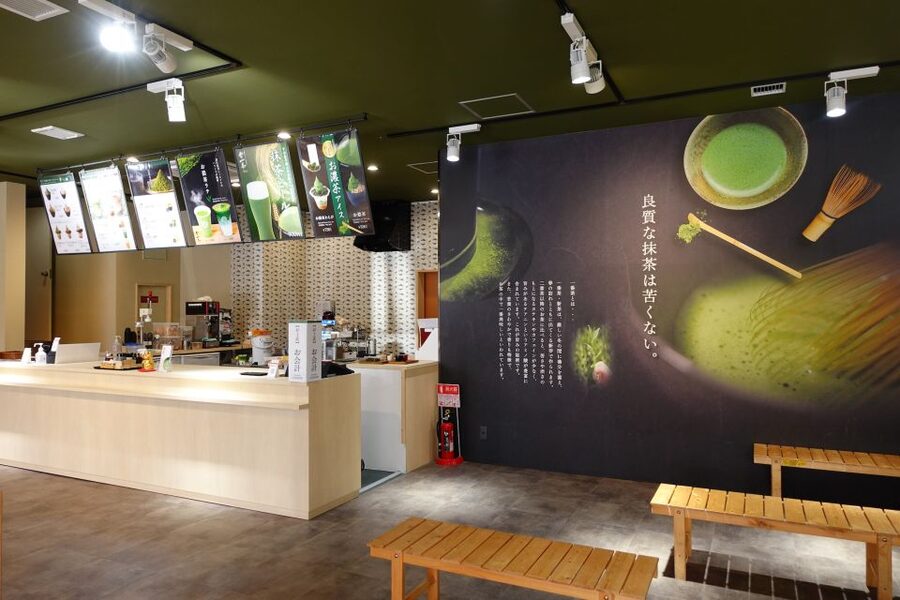
The bus drive continues through areas that many visitors treat as Tokyo must-dos for totally different reasons.
You will pass Akihabara, known for anime and the otaku scene, and you will also pass Ueno, known as Japan’s oldest park. There is also a stop area tied to Kappa-Bashi market street, which is famous for kitchen items. The tour specifically calls out the chance to see lots of knives, kitchen goods, and very realistic food replicas.
This segment is a nice “Tokyo reality check.” Not every traveler wants shrine calm and formal architecture all morning. Tokyo also has shopping that is fun, quirky, and visually entertaining. Food replicas are one of those things that you might laugh at until you see them in person and realize they are almost too accurate.
Tip for photos: if you are filming and photographing, try to switch off automatic flash and avoid glare from storefronts. The bus window can reflect light, so keep your angle.
Asakusa and Sensō-ji: the lantern-gate payoff plus time to linger
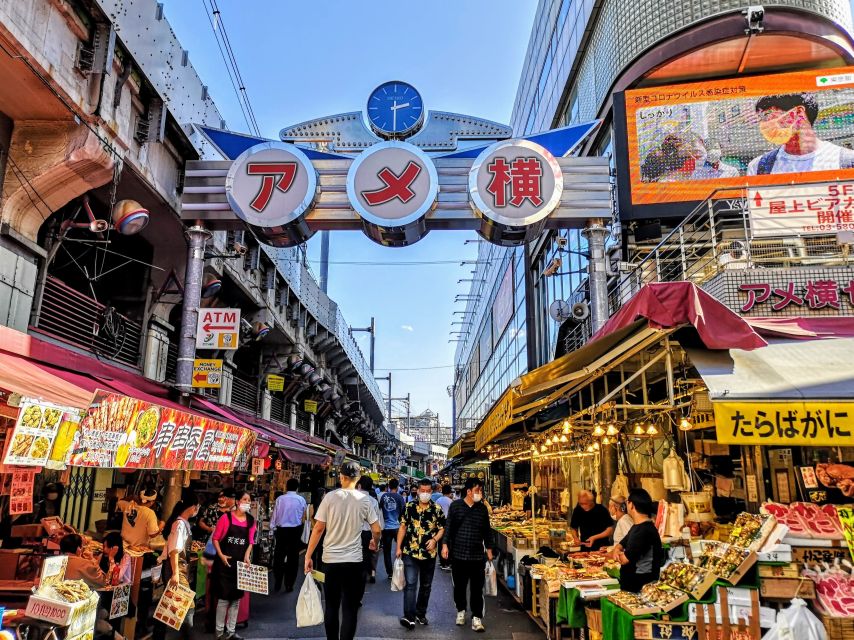
The tour’s finish is in Asakusa at Sensō-ji. This is where the morning shifts from “seeing” to “doing,” because you can spend as much time as you like once you arrive.
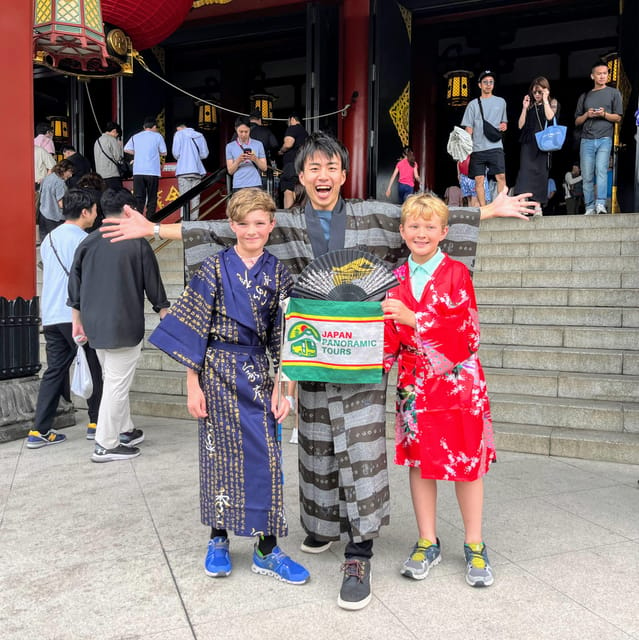
Asakusa usually means two things for most first-timers: Nakamise Avenue and the iconic Kaminari-mon gate with its red lantern. You will have time for shopping along Nakamise, and you will have a classic photo moment at the gate.
This is also where the tour offers its signature tasting experience.
What I like: Asakusa is a place where you can naturally wander without needing perfect planning. If the rest of Tokyo feels like an efficient museum, Asakusa feels like a street festival you can step into.
What to watch: the tour ends here and does not provide extra drop-off service. If you are heading elsewhere afterward, plan your route from Asakusa to your next neighborhood before you go, so you do not waste your best post-tour energy figuring it out.
The matcha experience in Asakusa, Uji-style
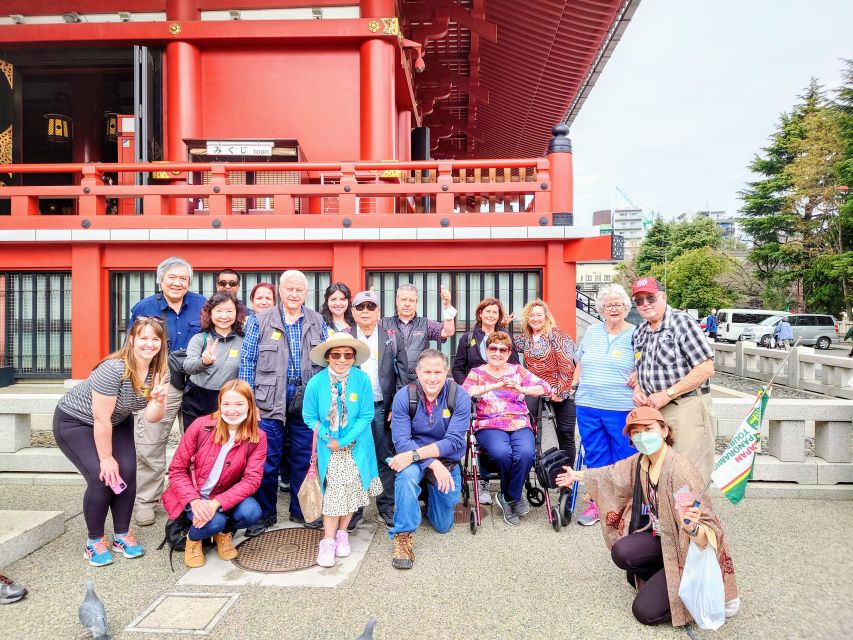
This tour includes an authentic Uji matcha experience at a historical place in Asakusa. The matcha is described as Not Bitter Matcha Green Tea, also called Premium Matcha, made using Ichibancha from Uji, Kyoto.
If you are new to matcha, this matters because “bitter matcha” is often what turns people off. The tour is positioning this one as smoother and more balanced. Even if you already like matcha, this is a good way to compare quality and feel the difference between everyday powder and a higher-grade approach.
The tour also notes alternatives tied to the matcha theme. You may be offered options like sweet matcha gelato or matcha beer. The included offering is described as matcha drink or matcha gelato, so you should expect at least one matcha-based treat as part of the tour cost.
One practical note: the matcha store is said to be closed on May 14th, and on that day they will give out matcha souvenirs instead of the matcha experience. So if you are traveling around that date, treat souvenirs as the fallback.
Small but smart takeaway: do not just drink and move on. Take a minute and pay attention to the aroma and texture. This is the one moment in the tour where you slow down on purpose, and it is more memorable if you actually taste with your senses instead of using it as a photo prop.
Live guide and audio headsets, and why that actually improves the visit
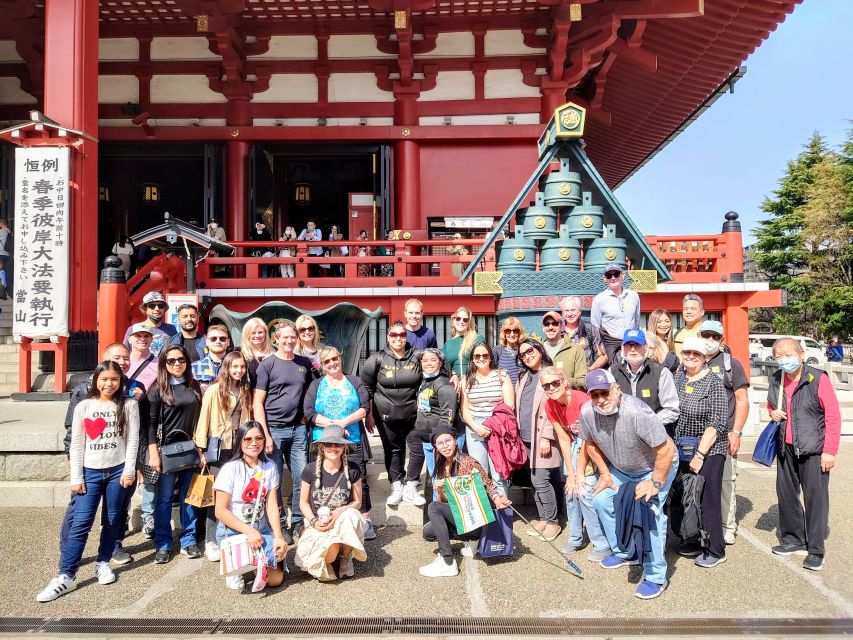
This is not just a bus with a pamphlet. You have a live English-speaking guide, and there are multilingual audio headsets available in several languages, including Spanish, French, Italian, German, Portuguese, and Ukrainian. The highlights also say audio is available in additional languages, so you should expect options beyond just English for many riders.
That combination is useful in two ways. First, it reduces “missing context” moments. You are not stuck asking the same question repeatedly, because the guide can explain what you are seeing as you move. Second, it helps non-native speakers stay engaged even when street names are hard to catch at bus speed.
The guide experience has been a highlight in multiple cases, with names like Aoi and Angela showing up as strong examples of clear English and friendly delivery. Other guide names like Taka, Jack, and Levin also appear in the same positive spirit. If you want a tour where the talking is part of the value and not just background noise, this operator is built for that.
Also, audio headsets mean you can listen at your own pace while the group moves. That is a small detail, but in a tour with 12 iconic stops, it is the difference between feeling rushed and feeling oriented.
Comfort, common-sense advice, and what to do if things change
Tokyo mornings can be unpredictable, and this tour explicitly notes that the itinerary order can change with traffic or weather. That is not a problem if you keep your expectations flexible.
Use this checklist mindset:
• Wear shoes you can stand and walk in for short stretches.
• Keep a light layer. Even when the coach is air-conditioned, shrine and market areas can feel cooler or warmer than you expect.
• Bring a phone battery plan. Free Wi-Fi helps on board, but you will still want maps and photos ready.
• Expect the tour to move at a guided pace, not a solo wander pace. It is designed for efficiency.
If you care about shopping, set your main shopping priorities for Asakusa. The bus can show you the look of other neighborhoods, but the time to browse and buy in your own rhythm is strongest at Nakamise and near Sensō-ji.
Price and value: what you really get for about $90
At $90 per person for 210 minutes, you are paying for a bundle. You get guided transportation by deluxe coach, a professional English-speaking guide, Wi-Fi on board, antibacterial and ventilation details, and included matcha drink or matcha gelato. You also get audio headsets for multiple languages.
Is that worth it? In my view, it is a strong value if you match the tour’s purpose:
• You are on a tight schedule and want a focused Tokyo overview in the morning.
• You want structure and interpretation, not just a list of landmarks.
• You are a first-time visitor who benefits from shrine etiquette guidance and a clear route through major districts.
It may feel expensive if you already know Tokyo well, or if you mainly want time in one neighborhood rather than a sampler. You will be paying for the convenience of not planning routes, plus the included matcha.
Think of the tour as a guided on-ramp. You pay to skip the early learning curve, then you use your afternoon to go deeper where you actually feel drawn.
Who this tour suits best, and who should skip it
This tour is a good fit if:
• You want a first-pass Tokyo morning with iconic landmarks and a real cultural stop at a shrine.
• You like clear explanations and multilingual support.
• You enjoy matcha and want a specific Uji-style tasting, not just a generic drink from a vending machine.
You might want a different type of plan if:
• You hate sitting for long stretches and prefer walking-focused tours.
• You want lots of time in only one district, like pure Harajuku shopping or a deep dive into museums.
• You dislike ending with no extra drop-off, because you will have to manage your onward travel from Asakusa.
Should you book this morning Tokyo bus tour?
If your goal is a smooth, high-efficiency Tokyo introduction with a proper shrine visit and a matcha payoff, I would book it. The combination of live English guidance, multi-language audio, air-conditioned coach comfort, and the included Uji matcha moment makes it feel more than just transportation.
Choose it with confidence if you are time-limited and you want the big Tokyo hits with minimal stress. Just go in knowing you are buying structure and orientation, not a slow, wandering day. If that matches your travel style, this morning tour is a very practical way to start Tokyo off right.
FAQ
How long is the Tokyo morning sightseeing bus tour?
It lasts 210 minutes, which is about 3.5 hours.
Where does the tour start?
The meeting point can vary depending on the option booked. One listed starting point is Ginza at the Robert Indiana Sculpture, with pickup service from Ginza. Hotel pickup is not included.
What does the tour include besides sightseeing?
You get an air-conditioned vehicle, Wi-Fi on the bus, a tour guide, audio headsets for included languages, and a matcha drink or matcha gelato.
Where does the tour end?
The tour ends at Sensō-ji in Asakusa, and you will not receive extra drop-off service after the tour.
Is lunch included?
No. Lunch is not included.
What languages are available?
The live tour guide is in English. Audio headsets are available in Spanish, French, Italian, German, Portuguese, and Ukrainian.
Is there a cancellation option?
Yes, free cancellation is available up to 24 hours in advance for a full refund.
Do I need to bring anything?
You should wear or bring comfortable shoes.
What if the itinerary order changes due to weather or traffic?
The itinerary order may change depending on traffic, weather, or operational reasons. If a location is closed, the operator will try to attend an alternative place.
Who handles luggage loading and unloading?
You handle loading and unloading of your luggage from the trunk yourself, including items like wheelchairs or strollers if applicable.
Latest write-ups near Tokyo
- Tokyo Customized Private Tour: See Top Attractions in 1 Day★ 4.8 · 67 reviews
- From Tokyo: Top 5 Scenic Spots of Mount Fuji Full-Day Tour★ 4.5 · 67 reviews
- Tokyo: Shinjuku Izakaya and Golden Gai Bar Hopping Tour (2h)★ 4.9 · 67 reviews
- Traditional Japanese Music ZAKURO SHOW in Tokyo★ 5.0 · 67 reviews
- Tsukiji: Unlimited Sake Tasting Experience★ 4.9 · 67 reviews
- Tokyo: Not a show- a professional sumo practice with experts★ 4.9 · 67 reviews
- Samurai Ninja Museum Asakusa: Kid-Friendly Ninja Training★ 4.7 · 67 reviews
- Private Harajuku Omotesando Architecture Walking Tour★ 5.0 · 67 reviews
Morning, compared.
Kyoto Early Morning Tour with English-Speaking Guide
Read our review →
World Heritage Shirakawa-go Morning Guided Tour
Read our review →
Nara Early Morning Tour (Kyoto or Osaka Departure Available)
Read our review →
Hiroshima in a Nutshell: Morning Bike Adventure
Read our review →