Reviewed · MORNING
From Kyoto: Nara Guided Morning Tour
What makes this morning trip to Nara interesting is how tightly it packs the big three: Todaiji Temple, the famous Nara Park deer, and Kasuga Taisha’s lantern-lined sanctuary area. It’s a half-day plan, so the day stays manageable while you still get that early, calm start in one of Japan’s most atmospheric old cities.
I like that you start with the Great Buddha at Todaiji and end up strolling among the deer in Nara Park, where feeding them (carefully) is a huge part of the magic. One drawback to plan for: the half-day tour ends around 12 PM at Kintetsu Nara Station, so you’ll sort out your own ride back to Kyoto.
Key things I’d prioritize
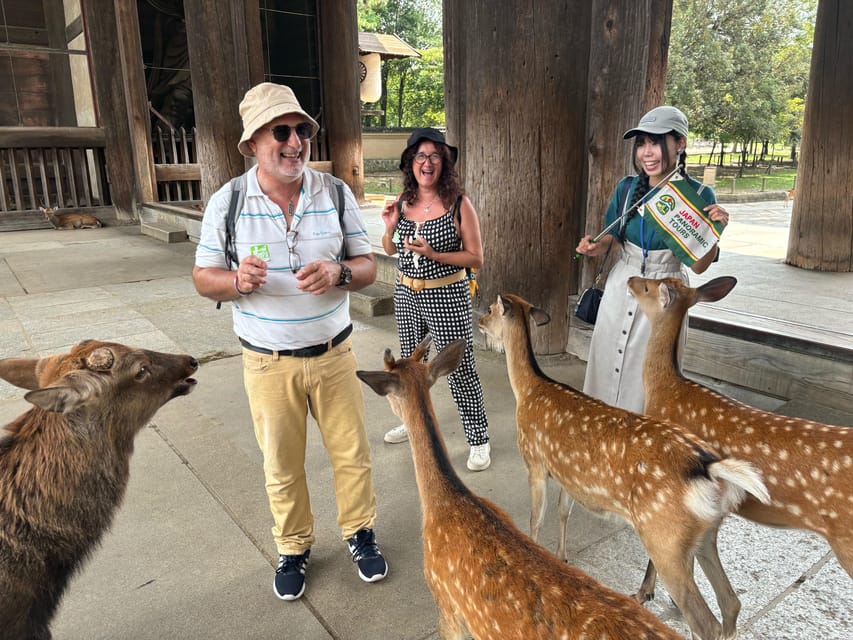
- Todaiji’s Daibutsuden guided visit, with admission handled for you
- Nara Park deer time that’s short but perfectly timed for a first look
- Kasuga Taisha guided stop at a UNESCO World Heritage Site
- Air-conditioned coach + free Wi-Fi, which matters when the day is already hot
- Audio headsets in 7 languages alongside an English live guide
Coach to Nara: getting there smoothly, then getting dropped at the right place
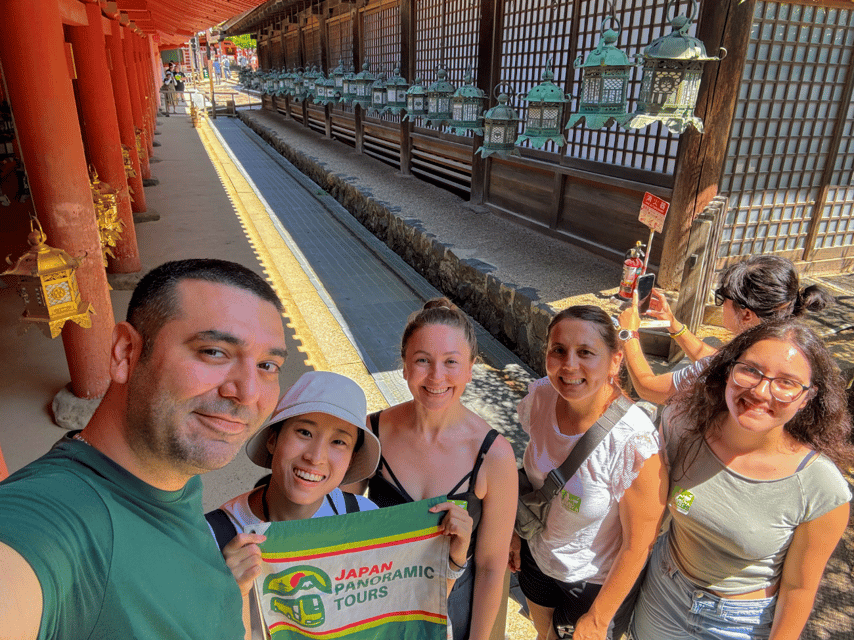
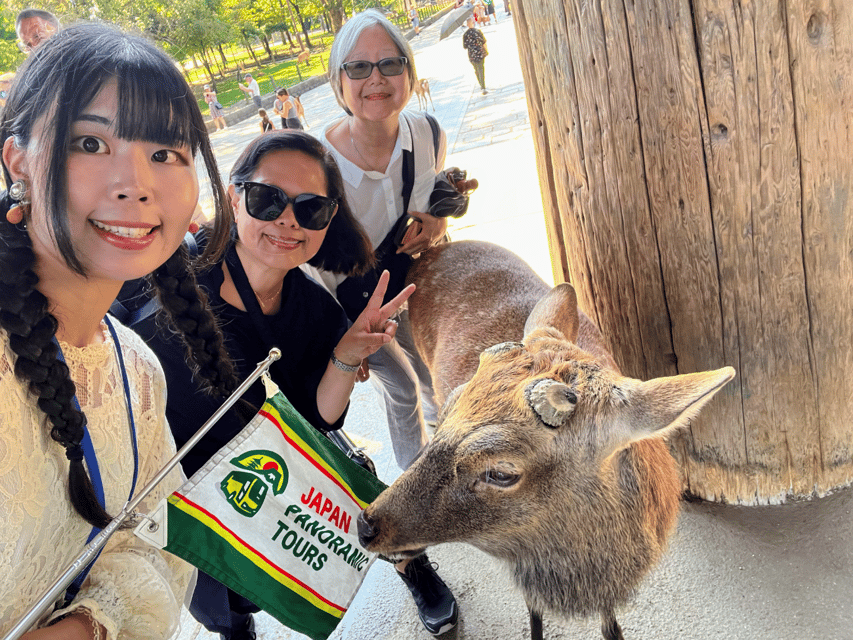
This is set up for an easy start. You meet in Kyoto at 7:50 AM at Tully’s Coffee side of the Kyoto Avanti building, and the bus leaves at 8:00 AM. Look for the green and white Japan Panoramic Tours flag near the Avanti entrance.
The ride is about 1 hour, and you’ll get some context as you pass well-known historic landmarks. The route can include views by Fushimi Castle and Heijokyo Palace, so even the transit feels less like a commute and more like the intro chapter to Nara.
The pacing is half-day friendly. You’re back to Nara with enough morning hours to see major sights without rushing through everything at night. But you should know the trade-off: this tour ends at Kintetsu Nara Station around 12 PM. If you were hoping to return to Kyoto by coach, you will need to arrange that yourself.
You also get modern comfort without making the day feel sterile. The coach is air-conditioned with free Wi-Fi, and that can be a lifesaver if you’re traveling with jet lag or just want to reset before the walking begins.
Also on the shortlist for Kyoto:
- PERFECT KYOTO 1-Day Bus Tour
★ 5.0 · 13,518 reviews - Kyoto: Fushimi Inari, Kinkakuji, Bamboo Grove 1 Day Bus Tour
★ 4.8 · 4,316 reviews - Kyoto: Tea Ceremony in a Traditional Tea House in Kiyomizu
★ 4.9 · 3,519 reviews
Todaiji and the Great Buddha Hall: why the first stop hits so hard
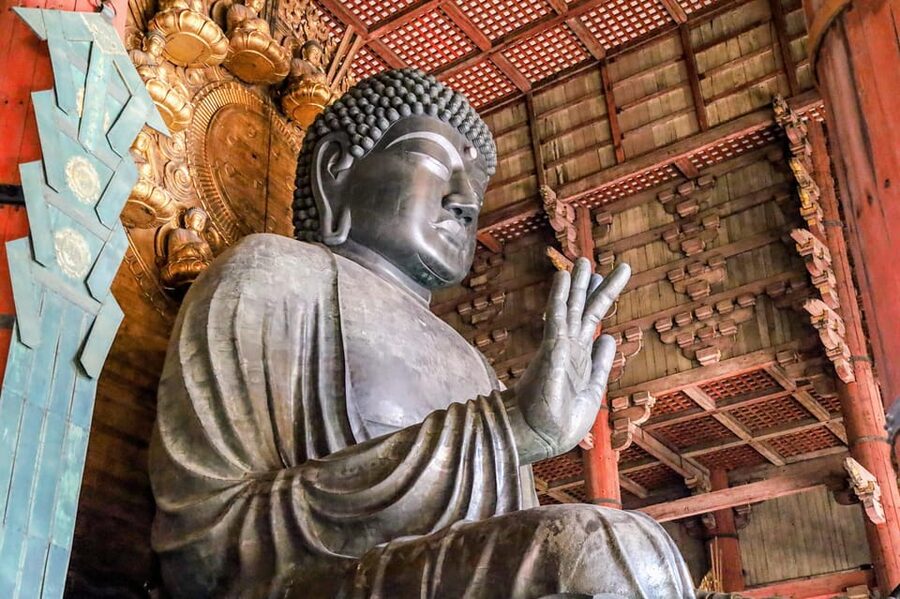
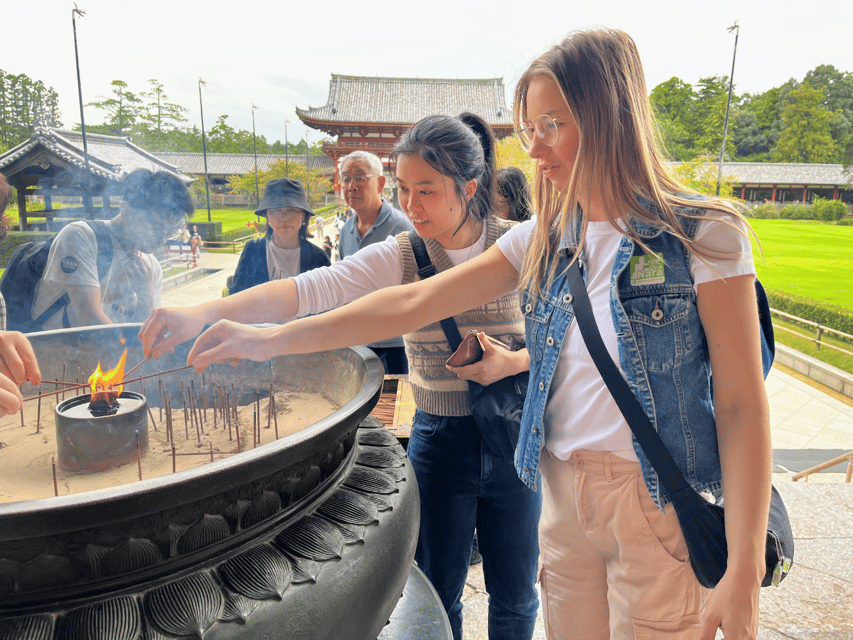
Your main guided anchor is Tōdai-ji Temple, with a guided visit of about 50 minutes plus admission included. Todaiji is one of those places where the scale lands before the details do. You approach the temple complex and then the Great Buddha Hall (Daibutsuden) takes over your vision.
Inside the complex, you’ll also notice the grand approach elements like Nandaimon Gate, with guardian statues on either side. It’s the kind of cinematic entry Japan does so well, and it helps you shift from city mode to temple mode fast.
The practical side matters too. Todaiji means walking and some stair work, and it’s worth wearing shoes you can move in. You’re not doing a marathon, but the temple route does involve uneven flow and a little elevation.
If you’re only doing half a day in Nara, this first stop is the one I’d keep non-negotiable. Many visitors remember Todaiji more than anything else, mostly because you’re seeing one of Japan’s signature historical objects in a building designed to house it. The moment you look up at the Great Buddha Hall’s grandeur, the rest of the day makes more sense.
Nara Park deer time: cute, sacred, and very snack-aware
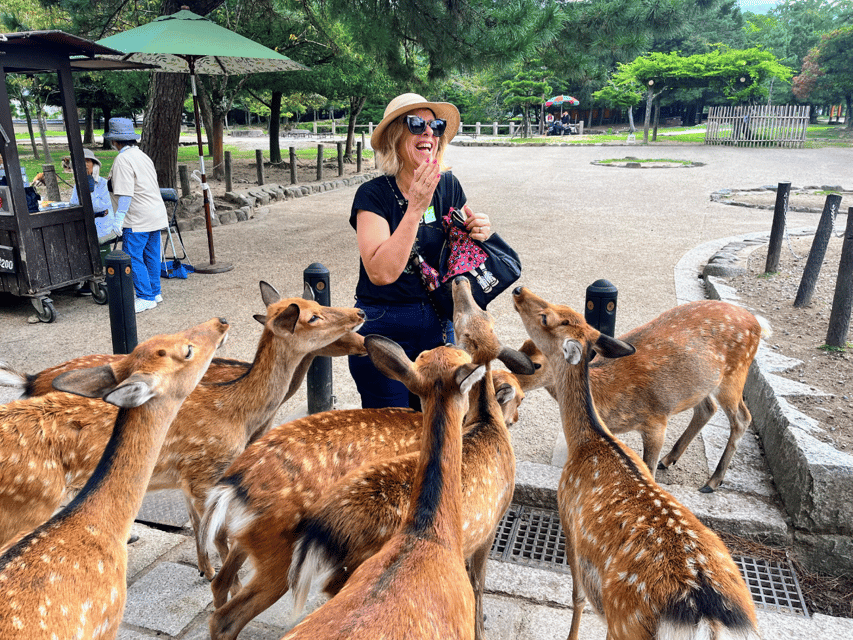
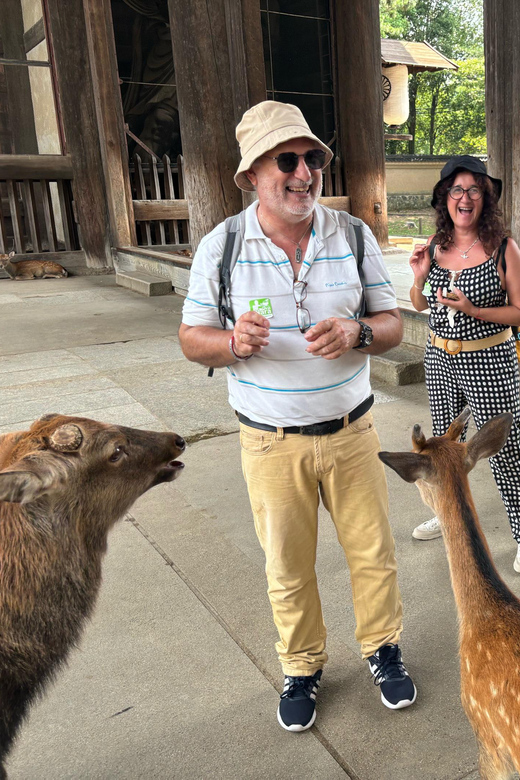
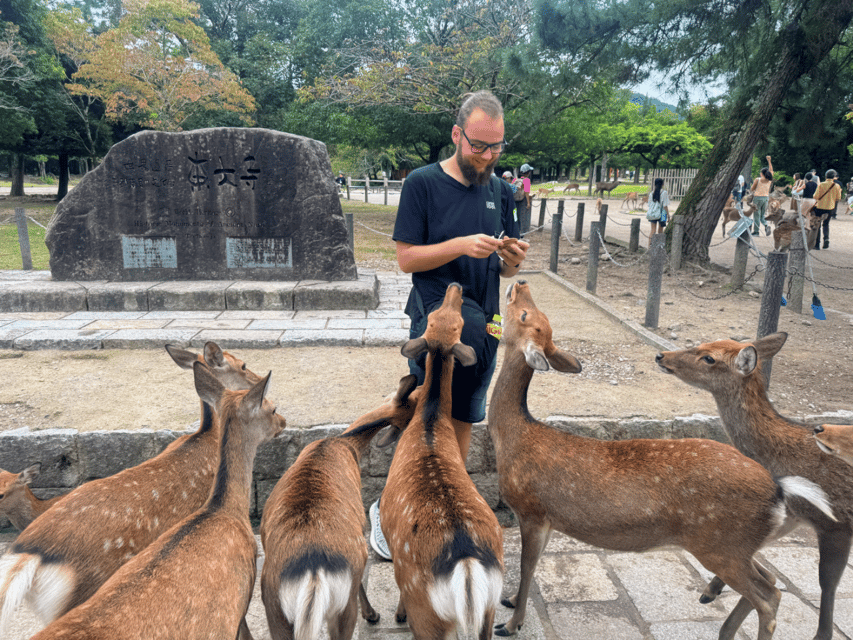
After Todaiji, the tour flows right into Nara Park, where the deer are the headline. The park is huge and green, with over 1,400 deer roaming freely. In the Shinto and folk-belief world, the deer are treated as sacred messengers, and that gives the whole setting a different tone than a typical animal park.
You get about 30 minutes of free time here. That’s enough to see the deer up close, watch their patterns, and snap photos, but it’s not long enough to treat it like a leisurely wildlife safari. Think of it as a quick “deer encounter window,” then move on.
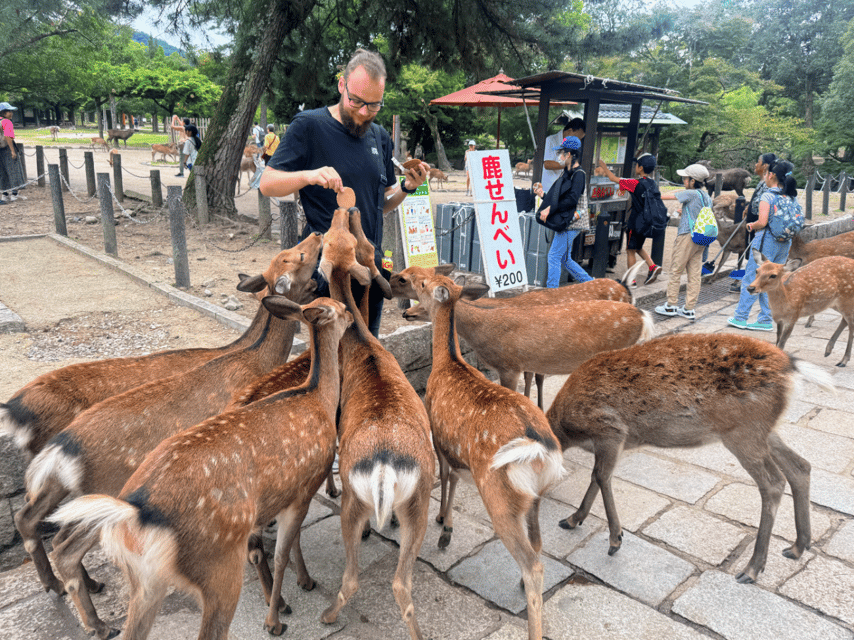
Feeding is allowed, but only in the park with the special crackers sold there. Here’s the practical tip I’d take seriously: keep the crackers controlled. Some deer are friendly, and some get bold. I’d follow the guide style that has worked well, which includes keeping crackers in your pocket and making it clear with your hands when you do not have food. If you do have crackers, be ready for deer to close the distance faster than you expect.
The rules are also part of the experience. Don’t flash with camera lights, and keep your belongings secure. The park can feel crowded, and when deer are active, they can make the ground-level snack hunt feel like a street performance.
A simple mindset helps: enjoy the interaction, but treat it like you’re sharing space with wild animals that have their own agenda. The deer are adorable, yet they’re also extremely focused on getting what they think you might have.
Kasuga Taisha’s lantern paths: UNESCO atmosphere in about 40 minutes
Next up is Kasuga Taisha Shrine, a UNESCO World Heritage Site, with a guided visit around 40 minutes. This shrine is famous for the 3,000 stone lanterns that line the pathways leading to the shrine.
Even if the lanterns are not lit at every moment, the layout still creates a quiet, slightly magical feel. The early timing of the tour helps, because the morning light and softer crowds make it easier to absorb the shrine without feeling like you’re being swept along by the day.
Kasuga Taisha works well after the deer park. The contrast is real. One minute you’re watching wildlife behavior, the next minute you’re in a sacred space where the atmosphere shifts from playful to reflective. It’s a good balance of “fun Nara” and “serious Nara.”
Keep an eye on timing and walking. The shrine visit is guided, but you’ll still walk the pathways and move between viewing points. This is not a sit-down lesson, so plan for moderate walking and keep water handy.
A change of pace from Kyoto:
- Kyoto Geisha Walking Tour: Gion District & Hidden Gems
★ 4.7 · 3,273 reviews - Kyoto: Tea Ceremony Ju-An at Jotokuji Temple
★ 4.9 · 3,207 reviews - Kyoto: Gion Magical Night Walking Tour with Geisha Trivia
★ 4.9 · 2,393 reviews - Kyoto: 45-Minute Tea Ceremony Lesson Experience
★ 4.3 · 2,378 reviews
English guide plus 7-language audio: how this setup helps you follow the story
What I like about this tour’s communication is that it gives you multiple ways to understand what you’re seeing. You get a professional English-speaking guide, and you also receive audio headsets that support Spanish, French, Italian, German, Portuguese, and Ukrainian.
That matters because Nara’s sights can be dense. You’re dealing with temple architecture, Shinto shrine symbolism, and animal-parklore all in a short time. When the guide explains the big ideas live, the headset helps you catch details you might miss from distance or crowd noise.
On days when your group is mixed language-wise, the system keeps everyone engaged. You’re not stuck with one person translating or everyone guessing what’s being pointed at. And if you want to go a little at your own pace, you still have a clear line of context.
There’s also a small comfort advantage to the headsets: it reduces the pressure of trying to read body language while walking. You can focus on where you’re stepping and still follow what’s important.
The walking reality: stairs, hills, and smart packing
This half-day tour is marketed as doable, but you should treat it as a proper morning walk. Expect moderate walking, including stairs and hills, especially around temple and shrine areas.
It’s not built for mobility needs. The tour is listed as not suitable for people with mobility impairments and not for wheelchair users. If you need step-free access, this is likely the wrong format.
For packing, keep it simple and practical. Bring comfortable shoes, water, and a hat. On sunny days, sunscreen matters here. If weather turns, plan for it. A light umbrella or raincoat can keep your morning comfortable without slowing you down too much.
Also follow the on-site photo rules. Flash photography is not allowed, and that’s one more reason to pack a camera mode that works in natural light.
Price and value: is $77 a good deal for a half-day Nara hit?
At $77 per person for about 4 hours, this tour is priced for convenience plus guided time, not for bargain DIY. The real value is what’s bundled:
- Coach transport from Kyoto (air-conditioned, free Wi-Fi)
- An English live guide
- Todaiji Temple admission included
- Audio headsets in 7 languages
If you try to piece it together on your own, you’ll spend time working out transit, buying tickets, and figuring out what’s worth your attention first. Here, you get a tight route that starts with the iconic Great Buddha and ends with Kasuga Taisha, with Nara Park inserted at the right moment.
What’s not included is also part of the value math. You’re on your own for meals and drinks. And because it ends in Nara around noon, you may add the cost and time of getting back to Kyoto.
For me, the choice comes down to your time window. If you have just a morning and want the best chance of seeing the must-sees in one run, this price can feel fair. If you want maximum freedom and no walking structure, a DIY train plan might fit better. But for speed with guidance, the bundled inclusions help justify the cost.
Should you book the Kyoto to Nara morning tour?
Yes, I’d book it if you want a clear, efficient way to see Todaiji, Nara Park deer, and Kasuga Taisha in one morning, without wrestling with schedules. This is especially a good fit if you like a guided narrative and you’d rather spend your energy taking photos and asking questions than figuring out transit.
I’d skip or reconsider if returning to Kyoto by noon is a deal-breaker, because this half-day experience ends at Kintetsu Nara Station. It’s also not a good match if you need wheelchair access or step-free routes due to stairs and hills.
If you do book, show up on time at the meeting point and wear walking shoes. The guides often add practical details that make the deer encounter smoother, including tips on managing cracker access and staying calm when deer crowd in.
FAQ
What time does the tour start, and where do I meet?
You meet at 7:50 AM at Tully’s Coffee side of the Kyoto Avanti building, and the bus departs at 8:00 AM. You should look for the green and white Japan Panoramic Tours flag.
How long is the tour?
The total duration is about 4 hours.
Does the tour include admission to Todaiji Temple?
Yes. Admission to Todaiji Temple is included.
Is there a return to Kyoto included?
No. This half-day tour ends at Kintetsu Nara Station around 12 PM, and returning to Kyoto is not included.
Are audio guides included, and which languages are available?
Yes. Audio headsets are included, with options in Spanish, French, Italian, German, Portuguese, and Ukrainian.
Is feeding the deer allowed?
Yes, feeding is allowed, but only with the special crackers sold in the park.
Latest write-ups near Kyoto
- Kyoto: Nishiki Market Tour with a Local Foodie & Tastings★ 4.5 · 67 reviews
- Kyoto Kimono Rental mimosa |Kimono/Yukata Rental Couple Plan★ 4.8 · 67 reviews
- Kyoto: Traditional Kimono Fabric Handicrafts Workshop★ 5.0 · 67 reviews
- Kyoto Tea Ceremony and Samurai Photo Session★ 5.0 · 70 reviews
- Kyoto: Replica food making experience★ 4.8 · 70 reviews
- Kyoto: Kinkakuji, Golden Pavilion Guided Tour★ 4.7 · 71 reviews
- Private departure transfer from Kyoto city to Kansai International airport★ 5.0 · 72 reviews
- Uji: Green Tea Tour with Byodoin and Koshoji Temple Visits★ 4.8 · 72 reviews
Morning, compared.

Kyoto Early Morning Tour with English-Speaking Guide
Read our review →
World Heritage Shirakawa-go Morning Guided Tour
Read our review →
Nara Early Morning Tour (Kyoto or Osaka Departure Available)
Read our review →

Hiroshima in a Nutshell: Morning Bike Adventure
Read our review →