
Reviewed · FUSHIMI INARI TOURS
Kyoto Magical Night English Tour: Gion & Fushimi Inari Shrine
Kyoto at night is different. The key here is Fushimi Inari after dark, when those famous red torii gates feel softer and more magical, then you flow straight into lantern-lit Gion for a look at Kyoto’s old-side street life. It is a lot of iconic scenery packed into one evening, but paced by a guide.
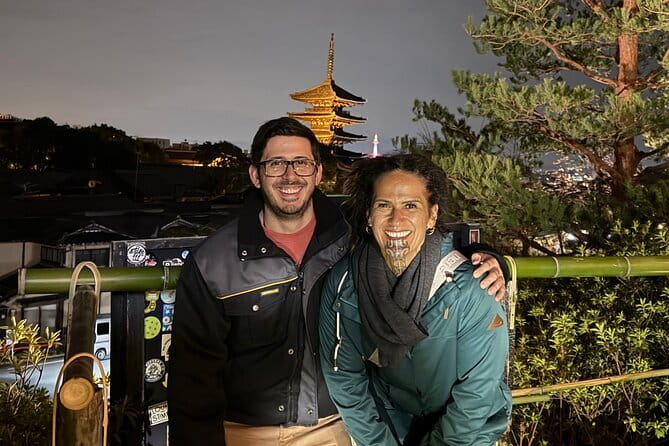
I especially like the way the guide connects what you see to how shrine and temple culture works, not just where the landmarks are. I also love the practical photo setup: you get professional photos taken during the tour, and the guide also helps you with photo spots and composition when things are dim.
One thing to plan for: this is a walking experience (with public transit) and it moves at a lively pace. If you are slower on your feet, bring sturdy shoes and expect to keep up for about 2.5 hours.
Key things that make this tour worth your time
- Fushimi Inari at night with a guide to make sense of the place beyond the postcard look
- Shrine and temple know-how explained as you walk, including how to pay your respects
- Photo support throughout plus professional photos included, even in low light
- Evening energy in Gion when the streets feel quieter than daytime
- Small-group outcomes can happen, including extra guided time when the group is tiny
Kyoto After Dark: Fushimi Inari Meets Lantern-Lit Gion
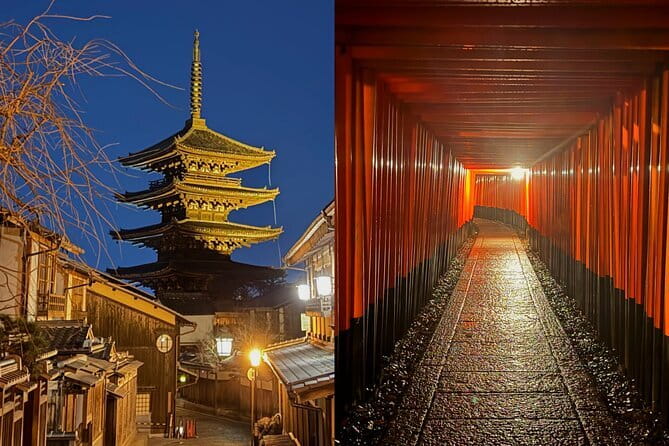
If you want Kyoto’s “wow” factor without rushing through it like a checklist, this night walk is built for you. You start at Fushimi Inari-taisha Shrine, famous for its thousands of bright red torii gates that form pathways up Mount Inari. Going at night changes the feel. The shrine is still iconic, but the mood is calmer, with softer light and a more intimate atmosphere than the daytime crush.
Then you shift into Gion, Kyoto’s most famous geisha district. The whole route is designed to show you how the neighborhoods connect, not just drop you at two famous spots and send you on your way. You will also pass classic Higashiyama walking streets that feel like stepping back in time, which is exactly what you want from a night tour.
More Evening Experiences in Kyoto
- Kyoto: Gion Magical Night Walking Tour with Geisha Trivia
★ 4.9 · 2,393 reviews - Night Walk in Gion: Kyoto’s Geisha District
★ 4.5 · 2,003 reviews - Kyoto Night Foodie Tour in Gion (9+ dishes + 6 Sake tastings)
★ 5.0 · 1,762 reviews
Price and Logistics: What You Pay, What You Must Budget Separately
At $26.43 per person for an approx 2 hours 30 minutes guided walk, the value is strong, mainly because you are getting multiple things bundled together.
Here is what is included:
- Passionate local English-speaking guide
- Admission fees for all temples and shrines
- Professional photos taken during the tour
Here is what costs extra:
- Public transportation fare: ¥480 per person
- Food and drinks (not included)
That mix matters. Many Kyoto night plans leave you paying separately for sites and then still expect you to figure out the routing. Here, the guide handles the shrine and temple portion, and the tour includes entry. You just plan for transit and dinner on your own.
Also note: you receive a mobile ticket, which helps if you are juggling a busy trip schedule and want fewer paper things to manage.
Meeting Point and Timing: Staying On Track in a Big Old Neighborhood
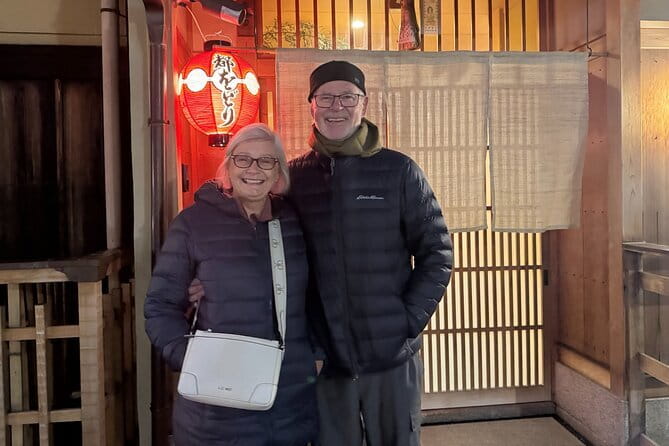
The tour meets at the Statue of Izumo-no-Okuni, Kawabatacho, in Kyoto’s Higashiyama Ward. It ends back at the same meeting point, which is a comfort because you do not have to worry about getting stranded halfway across the district.
A few practical tips based on how these walks work:
- You should be ready to move right at the start. If you are late, you will not be able to join and refunds are not offered.
- This is designed for moderate physical fitness. The walking time is short per stop, but the total foot time adds up.
- Wear shoes that can handle uneven stone and night surfaces, especially as you get to the historic lanes.
One more helpful detail: this is a private tour/activity, meaning only your group participates. Several people describe it feeling personal and tailored, especially when the group is small.
Stop 1: Fushimi Inari-Taisha at Night, and Why the Guide Matters
Fushimi Inari-taisha is one of Kyoto’s most iconic Shinto shrines. It is dedicated to Inari, the god of rice and prosperity, and it is known for its thousands of red torii gates that create scenic pathways up Mount Inari.
Seeing it on your own is possible, but the guide changes what you get out of it. This tour is designed so you are not just walking through a famous photo spot. You learn how to understand the shrine setting and how the religious space works in practice. A common highlight from guides in this program is the way they explain the difference between shrine customs and temple customs, plus how to properly pay respects while you are there.
Night also helps with patience. The torii gates are still the torii gates, but the evening pace can feel more comfortable. You get space to appreciate the route, not just shove forward for the best frame.
Practical moment: if you want to do the simple wish-prayer tradition people mention in connection with shrines, bring a bit of small change. One guide suggestion people repeat is to bring coins for making a wish.
More Temple & Shrine Tours in Kyoto
- Kyoto: Fushimi Inari, Kinkakuji, Bamboo Grove 1 Day Bus Tour
★ 4.8 · 4,316 reviews - Kyoto: Tea Ceremony Ju-An at Jotokuji Temple
★ 4.9 · 3,207 reviews - Osaka/Kyoto:Kinkakuji,Arashiyama,FushimiInariShrine,NaraPark
★ 4.1 · 1,596 reviews - Arashiyama Bamboo, Temple, Monkeys, or Secret Sake Brewery
★ 4.8 · 886 reviews
Stop 2: Hanamikoji Street and Stop 3: Gion, the Photo-Friendly Shortcut Into Old Kyoto

After Fushimi Inari, you move into the Gion area. This part of the tour hits two big goals at once:
1) You see the famous streets.
2) You learn how to read what you are looking at.
Hanamikoji Street is where you might have the chance to encounter geisha and maiko, and it is also known for traditional teahouses and historic wooden machiya houses. Then you continue into Gion, Kyoto’s best-known geisha district, with preserved historic streets that make it feel like an older chapter of the city.
At night, these areas can feel calmer. It is not empty, but it often feels less chaotic than midday. That matters because your guide can point out details while you are walking, not while you are squeezing past a crowd.
Also, this section is short on purpose. You get a taste of Gion without turning the whole evening into one neighborhood. That works well if you only have a day or two in Kyoto and want a balanced sampler.
Stop 4: Yasui-Konpiragu, Relationship Prayers With a Clear Meaning
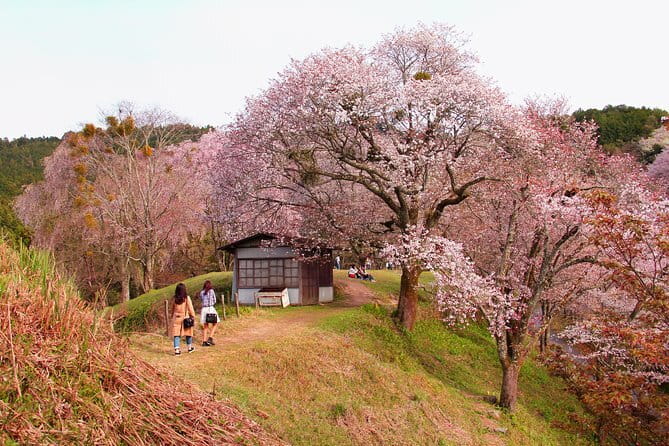
Next up is Yasui-Konpiragu, a shrine known for its power in severing bad relationships. People come here to pray for the end of negative ties and for new positive connections.
This is one of those stops that feels meaningful because it is very specific. You are not just collecting another temple photo. You are stepping into a place with a clear reason people visit, and that changes your mindset as you walk through Kyoto’s religious landscape.
A good guide also helps you slow down for the moment. Even if the tour schedule is tight, you can take in the energy of a smaller, focused shrine stop.
Stop 5: Yasaka Pagoda (Hokanji Temple) and the Wow Factor of Old Wood
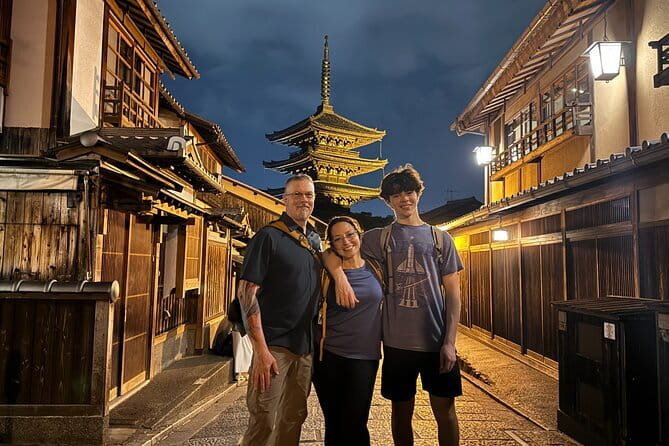
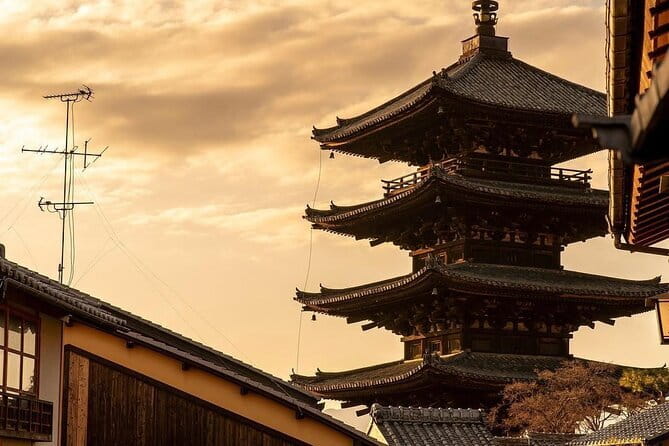
Then the route turns to a major Kyoto icon: Yasaka Pagoda, also called Hokanji temple. It is described as one of the oldest wooden structures in Japan, and it is known for being built without nails.
When you see it in person, the scale and the physical presence do most of the convincing. This is a stop where it helps to have a guide to frame the why. It becomes more than a photo backdrop.
One thing I like about having this kind of stop in a night itinerary is that the architecture reads differently after dark. Light tends to flatten some distractions and gives you time to notice structure and form.
Stop 6: Sannenzaka and Ninenzaka, the Historic Walk That Tests Your Footing
Sannenzaka and Ninenzaka are traditional stone-paved paths lined with souvenir shops and restaurants inside historic wooden buildings. Walking them feels like stepping back in time.
These streets are charming, but they can also be a little unforgiving underfoot. The night adds low-light conditions, and the stone path can make you watch your step more than you do in the daytime.
If you have any balance issues, this is where your “moderate physical fitness” planning shows up. A practical guide tip people share with this itinerary is to walk carefully down Sannenzaka and Ninenzaka. It is simple, but it prevents trips that ruin your evening.
Stop 7: Nene-no-Michi, a Calmer Path Through the Historic Temples
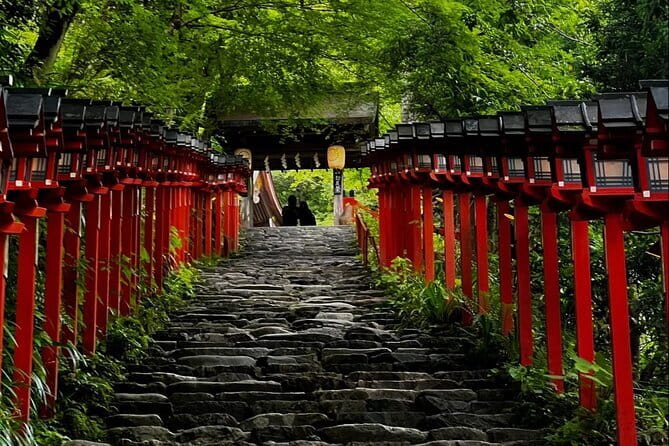
Nene-no-Michi is a serene path named after Nene, the wife of a powerful Japanese shogun. It is known for being a peaceful route past historic temples.
This stop acts like a breather. After the busier streets of shopping and sightseeing, a calmer path gives you time to reset. It also keeps the tour from feeling like one long parade of crowds.
If you are the kind of traveler who likes small changes in scenery and mood, you will probably enjoy this part. It also helps balance the evening, so the tour feels varied instead of repetitive.
Stop 8: Yasaka Shrine, Kyoto’s Wide-Reaching Headquarters for Prosperity and Protection
You finish at Yasaka Shrine, described as the headquarters of 2,300 related shrines throughout Japan. The shrine is dedicated to the gods of prosperity and protection.
This is a strong finale because it ties the whole evening together. Earlier you saw a shrine focused on prosperity themes through Inari, plus relationship prayers at Yasui-Konpiragu. Then you wrap with a major shrine with a larger national footprint and a clear message people associate with protection and wellbeing.
It also gives you a sense of place before you head back. Finishing at Yasaka Shrine feels like ending at a meaningful point, not just stopping somewhere convenient for transit.
Professional Photos and Night-Walk Tips That Actually Help
One reason I think this tour works for so many people is the photo component is not left to chance. The tour includes professional photos taken during the walk. That means you spend less time wrestling with camera settings and more time enjoying the walk.
Guides also often help you with photo timing and photo locations. One guide detail that pops up in feedback is the use of visual aids, like laminated charts with explanations and graphics. That kind of preparation can make the whole experience feel organized and easier to follow, especially when you are walking through multiple neighborhoods at night.
Here are a few practical tips to get better results and a smoother time:
- Bring comfortable shoes. Some guides are described as walking fast, so you need to keep pace.
- If rain shows up, it does not automatically ruin the plan. One guide note people repeat is that even if it rains, the tour still feels magical.
- If you like photo-heavy evenings, dress for the weather and be ready for low light. Night photos can look great, but you want stable footing.
Also, if your tour ends up with very small numbers, you may get more personalized time. There are accounts of a small group effectively turning into a longer exploration with the guide. That is not something to bet on, but it is a nice upside if it happens.
Who This Kyoto Night Walk Is Best For
This is a good fit if you:
- Want Fushimi Inari at night plus Gion in one evening
- Appreciate learning the meaning behind shrines and temples, not just seeing them
- Like walking tours but are okay with a moderate fitness level
- Want photos taken for you, without setting up your phone every few minutes
It also works well for couples and families, including multigenerational groups. Several guide styles mentioned in feedback highlight patience, engagement, and adapting to different needs, like taking breaks when needed.
One caution: if you hate walking quickly or you need lots of long seated breaks, you might find the pace less comfortable. The structure is compact and keeps moving from stop to stop.
Should You Book Kyoto Magical Night: Gion & Fushimi Inari?
I think you should book this tour if your goal is a guided introduction to Higashiyama Kyoto after dark, with a strong mix of iconic and less-expected stops. The price feels fair when you factor in the guide, shrine and temple entry, and the professional photo package. Add in that you are using a planned route with public transit, and it becomes a low-stress way to get a lot of meaning in one evening.
Skip it only if you want a slower, relaxed roam with minimal walking, or if you do not care about shrine and temple culture at all. This itinerary is built around places where paying attention makes the experience better.
If you do book, come with comfortable shoes, a flexible attitude for weather, and an openness to learning the customs behind what you are seeing. That is when the night really clicks.
FAQ
How long is the Kyoto Magical Night tour?
The tour runs for approximately 2 hours 30 minutes.
What are the main stops on the tour?
You visit Fushimi Inari-taisha Shrine, Hanamikoji Street, Gion, Yasui-Konpiragu, Yasaka Pagoda (Hokanji temple), Sannenzaka and Ninenzaka, Nene-no-Michi, and Yasaka Shrine.
Are admission fees included?
Yes. Admission fees for all temples and shrines are included.
Are professional photos included?
Yes. Professional photos are taken during the tour.
Is food included?
No. Food and drinks are not included.
What about public transportation cost?
Public transportation fare is not included. It is listed as ¥480 per person.
Is this tour private?
Yes. It is a private tour, and only your group participates.
Do I need a certain fitness level?
It is designed as a walking experience, with a moderate physical fitness level recommended.
What if I’m late to the meeting point?
If you are late for the meeting time, you will not be able to join the tour or receive a refund.
More Geisha Experiences in Kyoto
- Kyoto Geisha Walking Tour: Gion District & Hidden Gems
★ 4.7 · 3,273 reviews - Kyoto: Gion Geisha District Walking Tour – Stories of Geisha
★ 4.7 · 2,187 reviews - Best of Kyoto: Gion, Geisha, Pagodas & Cobblestones
★ 4.9 · 2,058 reviews - Kyoto Gion Geisha District Walking Tour – The Stories of Geisha
★ 5.0 · 1,441 reviews
More time at Fushimi Inari
- Fushimi Inari Hidden Hiking Tour (Private Option Available)
★ 5.0 · 1,750 reviews - Kyoto/Osaka: Nara, Fushimi Inari Taisha, Arashiyama Bus Tour
★ 4.7 · 1,275 reviews - Osaka/Kyoto: Arashiyama, Nara & Fushimi Inari Shrine w/Lunch
★ 4.4 · 754 reviews - Kyoto: Nijo Castle, Kiyomizu & Fushimi Inari Guided Tour
★ 4.7 · 700 reviews
Latest write-ups near Kyoto
- Kyoto: Nishiki Market Tour with a Local Foodie & Tastings★ 4.5 · 67 reviews
- Kyoto Kimono Rental mimosa |Kimono/Yukata Rental Couple Plan★ 4.8 · 67 reviews
- Kyoto: Traditional Kimono Fabric Handicrafts Workshop★ 5.0 · 67 reviews
- Kyoto Tea Ceremony and Samurai Photo Session★ 5.0 · 70 reviews
- Kyoto: Replica food making experience★ 4.8 · 70 reviews
- Kyoto: Kinkakuji, Golden Pavilion Guided Tour★ 4.7 · 71 reviews
- Private departure transfer from Kyoto city to Kansai International airport★ 5.0 · 72 reviews
- Uji: Green Tea Tour with Byodoin and Koshoji Temple Visits★ 4.8 · 72 reviews
Fushimi Inari Tours, compared.
Fushimi Inari, Kinkakuji, Bamboo Grove 1 Day Bus Tour
Read our review →Fushimi Inari Hidden Hiking Tour (Private Option Available)
Read our review →
Kyoto/Osaka: Nara, Fushimi Inari Taisha, Arashiyama Bus Tour
Read our review →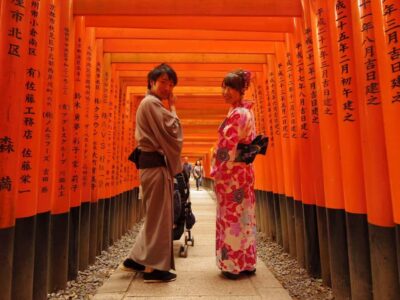
Osaka/Kyoto: Arashiyama, Nara & Fushimi Inari Shrine w/Lunch
Read our review →
Nijo Castle, Kiyomizu & Fushimi Inari Guided Tour
Read our review →
Nijo, Kinkaku-ji, Arashiyama, Kiyomizu & Fushimi Inari
Read our review →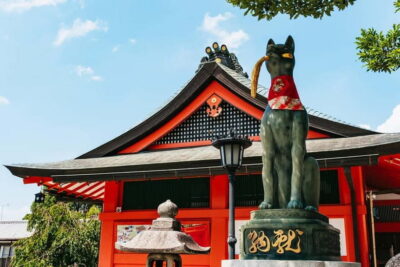
Sagano Romantic Train & Arashiyama, Kiyomizudera, Fushimi Inari Taisha Day Tour
Read our review →Browse the lists this tour appears in