Reviewed · MORNING
Explore Hidden Alleyway with a Local Expert (Morning tour)
A morning e-bike tour through Kyoto’s backstreets is interesting because it lets you cover real neighborhoods at a human pace, without turning your trip into a map-reading contest. You get an equipment rental included, plus a local guide who helps you spot the details most people miss when they wander on their own. And because it is private, the ride feels like your own slow-motion Kyoto walk, just with pedal assist.
Two things I like a lot are the guided flow (you are not stuck decoding directions) and the sense of calm the route creates, especially in and around Gion and the quieter lanes near the geisha districts. I also like that the itinerary mixes iconic sights with gentler moments by water, so the tour does not feel like a checklist.
One drawback to consider: you are still cycling in city conditions. If rain hits hard, the experience can switch plans to include a walking component by public transport, and one review noted that English can feel limited on some days.
Key highlights worth your time
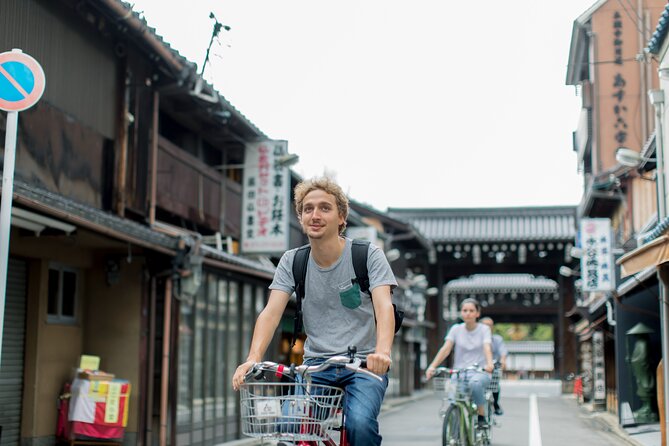
- Private, small-group feel: it is only your group, and each guide handles up to 6 people.
- Equipment rental included: no extra rental errands, you roll from the start.
- Geisha districts on bike: Miyagawacho and Gion are close enough to make the whole morning feel efficient.
- Imperial Palace grounds by bicycle: you ride the gravel paths instead of just looking from the outside.
- A river break built in: Kamo River time in Kashiwayacho gives your legs a rest.
- Guides that talk, not lecture: people highlight guides like Rich, Yuichi, and Annie for answering questions and adjusting pace.
Why an e-bike morning in Kyoto feels like a shortcut
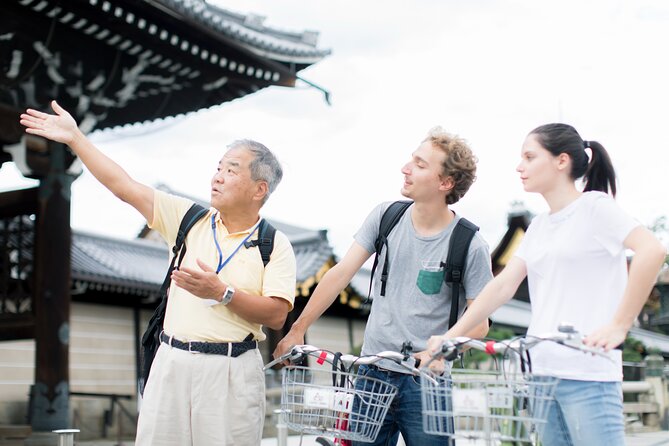
Kyoto can be intense on foot. Even if you love walking, heat, crowds, and constant turns add up fast. This is designed for the middle ground: enough time outside to see neighborhoods and atmosphere, but not so much time that your legs turn into jelly.
The real win here is that the bike removes the “distance tax.” You still move through meaningful places, but you can spend your energy on noticing things. Wooden houses along narrow lanes, the feel of a canal or stream, and the shift from one district vibe to another are much easier to experience when you can travel between them without hunting for the next bus stop or crossing the same street five times.
A big plus for first-time Kyoto days: if you want to get your bearings fast, this kind of route can help you understand where areas sit next to each other. After this, you can plan your later strolls with more confidence.
Also on the shortlist for Kyoto:
- PERFECT KYOTO 1-Day Bus Tour
★ 5.0 · 13,518 reviews - Kyoto: Fushimi Inari, Kinkakuji, Bamboo Grove 1 Day Bus Tour
★ 4.8 · 4,316 reviews - Kyoto: Tea Ceremony in a Traditional Tea House in Kiyomizu
★ 4.9 · 3,519 reviews
Price and what you actually get for $103
At $103.04 per person for about 3 hours, this is not a budget street tour. But you are paying for three practical things that add value in Kyoto:
- You get the bike setup handled (equipment rental included), which saves time and coordination.
- You get a guide for the full 3 hours in a private format, so you are not squeezed into a large group rhythm.
- You get guided access to multiple neighborhoods in one go, including the Kyoto Imperial Palace area.
To decide if it is “worth it” for you, ask a simple question: would you rather spend half a day tracing routes and paying separately for rentals and transport? If you want the morning to feel light and efficient, the price starts to make sense.
Private-group pacing, group size, and the 9:00 start
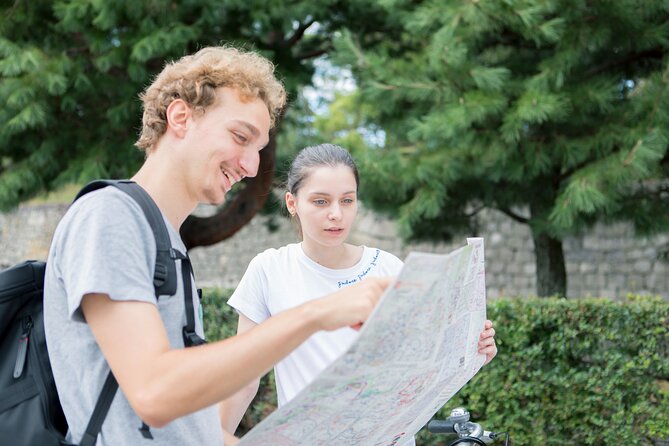
This is a private tour for your group. The per-guide cap is up to 6 guests, and if a group grows to 7 to 12 people, an extra guide can be arranged. That matters because it keeps the ride more like a shared conversation than a long line.
It starts at 9:00 am and runs about 3 hours. That timing is smart for Kyoto: you get morning energy before the heaviest foot traffic, and you still have the rest of your day for markets, temples, or a long meal.
You meet at 552-13 Higashiaburanokōjichō, Shimogyo Ward, Kyoto, 600-8235 and the tour ends back at the same meeting point. Mobile ticket in your phone helps keep the pre-ride hassle low.
Miyagawacho Kaburenjo: quiet alley vibes and old Kyoto textures
Stop 1 is Miyagawacho Kaburenjo. Miyagawacho is described as the second biggest geisha district among Kyoto’s five geisha districts. Even the quick time here can change your mood because the lanes feel more subdued than the postcard version of Gion.
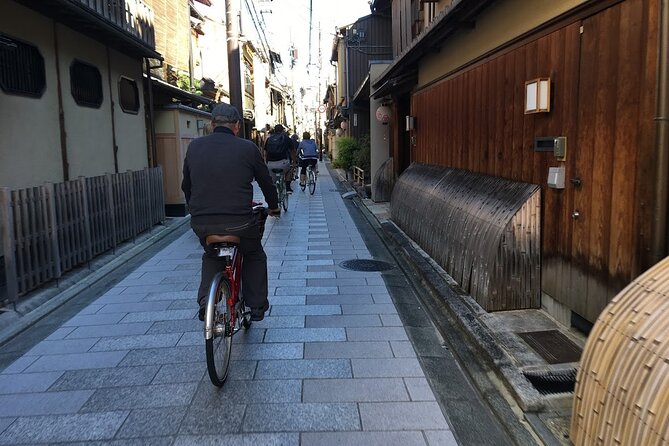
You ride or stroll through an alley lined on both sides with traditional wooden houses. That “calm of old Kyoto” feeling is the point, not just the architecture. It is the kind of place where you notice small details, the curve of the street, and the way neighborhoods keep their rhythm.
What to watch for: if you like photography, this stop gives you a better chance than the busiest lanes because it has a more restful atmosphere. Go slow with your bike if the street narrows.
Possible consideration: this is only about 15 minutes, so you will want to be decisive. If you wander off to one side, you may feel time pressure.
A change of pace from Kyoto:
- Kyoto Geisha Walking Tour: Gion District & Hidden Gems
★ 4.7 · 3,273 reviews - Kyoto: Tea Ceremony Ju-An at Jotokuji Temple
★ 4.9 · 3,207 reviews - Kyoto: Gion Magical Night Walking Tour with Geisha Trivia
★ 4.9 · 2,393 reviews - Kyoto: 45-Minute Tea Ceremony Lesson Experience
★ 4.3 · 2,378 reviews
Gion: refined geisha-district atmosphere from the saddle
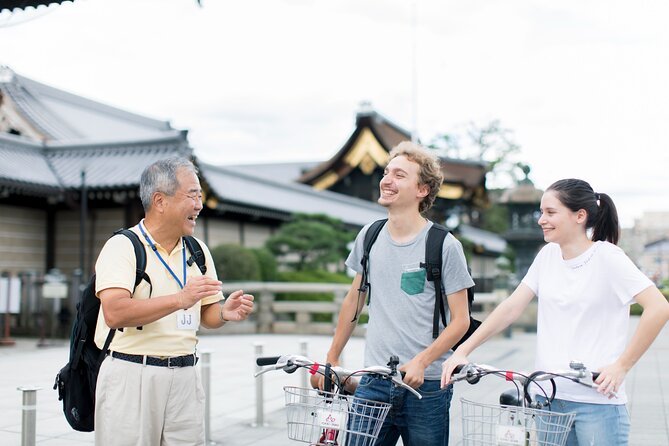
Stop 2 is Gion, where the tour leans into the classic Kyoto scene: Maiko girls and Geiko women, with an elegant and refined atmosphere that still lingers. Riding through Gion by bicycle can feel like a helpful middle step, because you get movement without being trapped in slow, stop-and-browse walking crowds.
What I like about tackling Gion this way: you are not trying to “see everything.” You get a focused slice, plus the context from your guide so it is not just scenery.
What to watch for: Gion has a lot of visual cues. Your guide’s explanations can help you interpret what you are seeing as you pass. One of the reasons this tour gets high ratings is that guides spend time answering questions, not racing ahead.
Possible drawback: Gion still has people. If you are expecting empty streets, adjust your expectations. The bike helps, but you will still be part of the neighborhood’s daytime flow.
Tatsumi Bridge and the willows by the stream
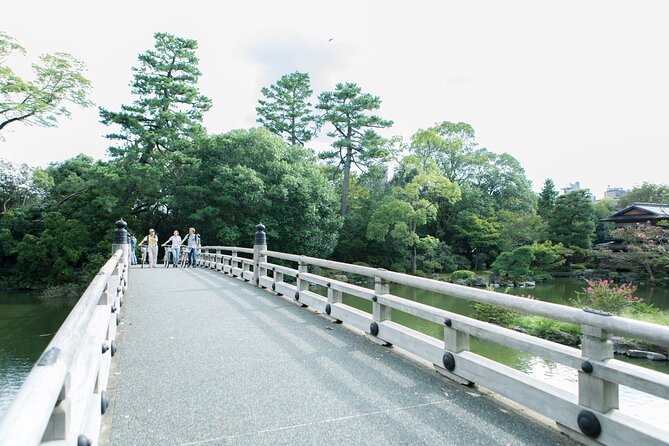
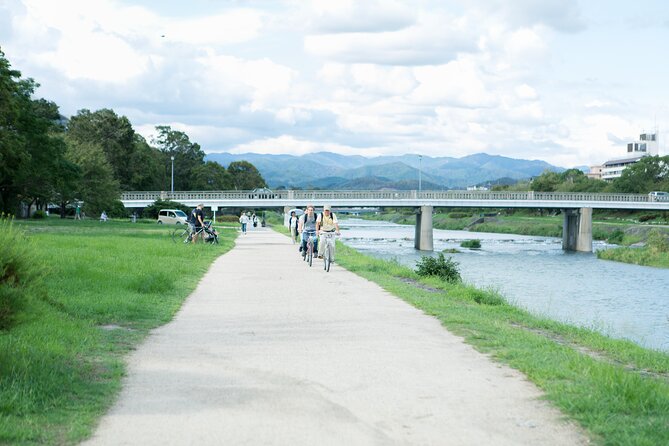
Stop 3 is Tatsumi Bridge. The tone here shifts. Instead of district streets and wooden facades, you get a path alongside a limped stream with willows swinging in the breeze.
This is a good “reset stop.” It gives your brain a break from architecture and turns the tour into a more sensory experience. The willows and water also make it easier to slow down and just look.
Why it is valuable: Kyoto is not only shrines and halls. It is also the way people live near water and how nature shapes street life. A short stop like this can make the rest of your afternoon feel more connected.
Practical note: it is listed as 15 minutes. Bring the mindset of a quick breath, not a long picnic.
Kyoto Imperial Palace: riding gravel paths in the national garden
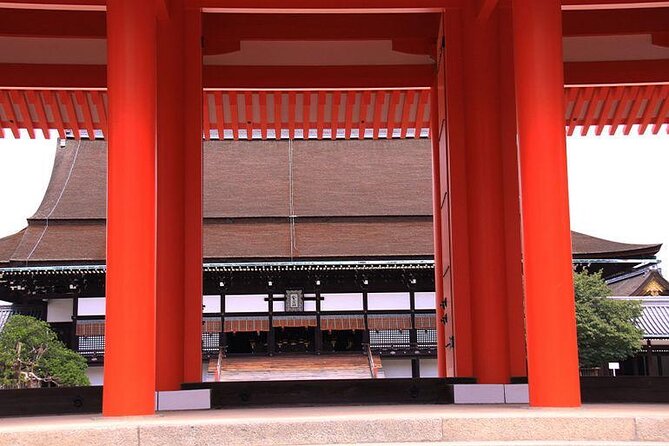
Stop 4 is Kyoto Imperial Palace. This is a big moment, because the Imperial Palace used to be the residence of Japan’s Imperial Family, and now it is open to the public as a national garden. The tour cycles along the gravel paths there for about 20 minutes.
Riding through it changes the feel of the visit. You do not just pause at a single viewpoint. You experience the layout, the open garden rhythm, and the movement of pathways. It can also be a more efficient way to see a large area during a short morning.
What you might notice: gravel paths can feel different under tire and bike compared with smoother urban roads, so ride gently and stay alert near other visitors.
Possible drawback: 20 minutes goes quickly. If this is your top priority in Kyoto, you will likely want a longer return visit later.
Kashiwayacho and the Kamo River break
Stop 5 is Kashiwayacho, where you can relax by the Kamo River. This is listed as 20 minutes with the admission included.
This is where the tour earns its “hidden alley” promise in a broader sense. Kyoto backstreets connect to water. The Kamo River stop gives you space to sit, rest your legs, and take in a Kyoto scene that is very local.
If you like breaks, this part is a good one. One review even mentioned fitting in a coffee break at request during the ride, which tells me the guide is open to small timing adjustments when it makes sense.
Practical tip: use the river stop to drink water and cool down. You have done the cycling already, so treat this as your reset before you head out for lunch.
How the bikes feel, and what to wear to avoid a sore-seat morning
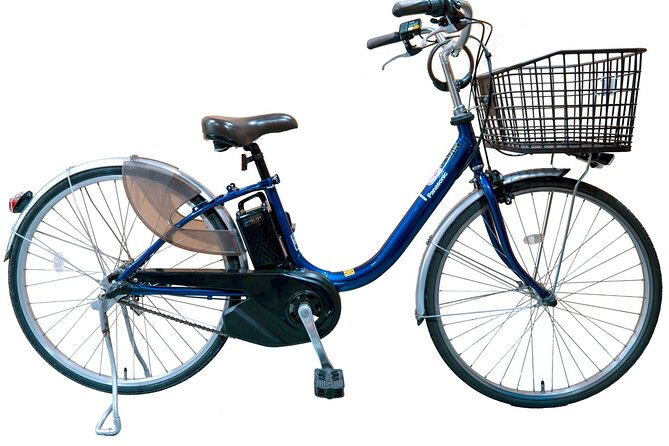
The bike is an e-bike, and you get equipment rental included. Reviews repeatedly point out that the battery-powered help makes the ride comfortable even on hot days. That is a huge deal, because it turns “bike tour” from something intimidating into something doable even if your legs are not trained for hills.
One review also suggested wearing padded pants if you are not used to cycling. That is practical advice. Even on flat city routes, a longer saddle time can create discomfort if you are not prepared.
What I’d suggest packing
- Water (you will be outside for about 3 hours)
- A light layer (mornings can feel cool, and then you heat up)
- Padded cycling shorts or comfortable padding if you have it
- Sun protection, since you will spend time outdoors in morning light
Rain plan: ponchos on bikes, or switching to bus and metro
Kyoto weather can flip fast. Here is the real strength of this tour: it operates in rain, and you are given options.
Your tour can continue as usual on bikes with rain ponchos at no extra charge. Or you can switch to a walking tour using public transportation (bus or metro), and that is included in the tour fee.
One review mentioned that rain affected the experience, and they ended up using metro and bus instead of biking. Another review praised the rain-ride continuation, so the key is flexibility on your side. If you hate wet seats and slick streets, the public transport option may feel better.
Practical consideration: if rain falls hard, communication matters more. One review noted English felt insufficient to exchange topics on a rain day. If language is a big priority for you, keep your expectations flexible and lean on body language and simple questions.
What makes the guides different on this kind of route
A lot of tours say they are informative. This one tends to earn praise because guides respond to questions and keep the ride at a comfortable pace. Multiple people highlighted guides like Rich (or Rich-San), Yuichi, and Annie as friendly, patient, and genuinely engaged.
You also get value from the guide being local to the details of neighborhoods. When you can ask, and the guide can answer clearly, the tour stops being “passing by places” and becomes “understanding why these places matter.”
How that helps you later: after a morning like this, you usually feel better equipped to pick where to spend more time. You know which area felt calm, which felt busy, and where the scenery shifts.
Who should book this hidden-alley e-bike tour
I think this tour fits best if you:
- Want a first or second day Kyoto plan that covers multiple neighborhoods fast
- Like biking but do not want a workout version of Kyoto
- Prefer a private experience with your own pace
- Want geisha districts plus a major site like the Imperial Palace, without stitching together separate days
- Would rather spend your time asking questions than studying directions
It might be less ideal if you:
- Hate riding a bike in any kind of traffic flow
- Need a fully car-free, fully quiet experience
- Are very sensitive to weather and do not like any rain compromise
Should you book this tour?
If you want a smooth morning plan that mixes Kyoto’s famous areas with calmer backstreet atmosphere, this is a strong booking. The combination of guided navigation, equipment rental included, and a route that includes Miyagawacho, Gion, the Imperial Palace grounds, and Kamo River time is exactly the kind of value that helps on a short trip.
Book it if your goal is to get oriented and see a lot without exhausting yourself. Skip it only if you are uncomfortable biking in the city or you want a long, slow deep dive into just one major attraction.
FAQ
How long is the Morning Hidden Alleyway with a Local Expert tour?
It lasts about 3 hours.
What time does the tour start?
The start time is 9:00 am.
Is this tour private?
Yes. It is a private tour, and only your group participates.
How many people can a guide handle?
The minimum is 2 guests and the maximum is 6 guests per guide. If your group is 7 to 12 people, an extra guide can be arranged.
Do I need to bring my own bike or equipment?
No. Equipment rental is included, and the tour is an e-bike experience.
Which stops are included in the route?
The tour includes Miyagawacho Kaburenjo, Gion, Tatsumi Bridge, Kyoto Imperial Palace, and Kashiwayacho by the Kamo River.
Are there entrance fees at the stops?
Miyagawacho Kaburenjo, Gion, Tatsumi Bridge, and Kyoto Imperial Palace are listed as admission ticket free. Kashiwayacho includes admission.
What happens if it rains?
The tour operates in rain. You can choose to continue as usual on bikes with rain ponchos at no charge, or switch to a walking tour using public transportation (bus or metro) included in the tour fee.
What are the age and height requirements?
Children must be at least 10 years old, 145 cm or above, and able to ride a bicycle safely on the road unassisted.
What are the cancellation rules?
The experience is listed as non-refundable and cannot be changed for any reason. If it is canceled because the minimum number of travelers is not met, you will be offered a different date or a full refund.
Latest write-ups near Kyoto
- Kyoto: Nishiki Market Tour with a Local Foodie & Tastings★ 4.5 · 67 reviews
- Kyoto Kimono Rental mimosa |Kimono/Yukata Rental Couple Plan★ 4.8 · 67 reviews
- Kyoto: Traditional Kimono Fabric Handicrafts Workshop★ 5.0 · 67 reviews
- Kyoto Tea Ceremony and Samurai Photo Session★ 5.0 · 70 reviews
- Kyoto: Replica food making experience★ 4.8 · 70 reviews
- Kyoto: Kinkakuji, Golden Pavilion Guided Tour★ 4.7 · 71 reviews
- Private departure transfer from Kyoto city to Kansai International airport★ 5.0 · 72 reviews
- Uji: Green Tea Tour with Byodoin and Koshoji Temple Visits★ 4.8 · 72 reviews
Morning, compared.
Kyoto Early Morning Tour with English-Speaking Guide
Read our review →
World Heritage Shirakawa-go Morning Guided Tour
Read our review →
Nara Early Morning Tour (Kyoto or Osaka Departure Available)
Read our review →
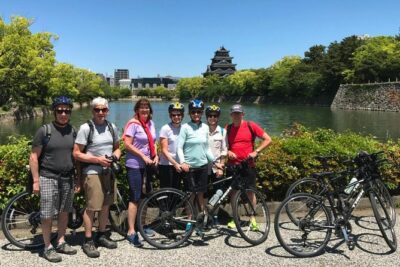
Hiroshima in a Nutshell: Morning Bike Adventure
Read our review →