Reviewed · COOKING CLASSES
Nishiki Market Food Tour with Cooking Class
Nishiki Market is fun even when you are just wandering, but this experience turns it into a practical food lesson, because you shop and then cook your own donburi bowl right after. I especially like the English-speaking local guide who can explain what you are seeing, with names like Chie and Chei showing up in different bookings. I also like that you get a true hands-on donburi cooking class where ingredients are part of the deal. One possible drawback to know upfront is that if you expect lots of extended tasting time in the market, a couple of people found the market portion lighter than they hoped.
The tour runs about 150 minutes at a relaxed pace, and it stays private so you can ask questions when something is confusing. You will start at the Western entrance of Nishiki Market, then move to a cooking studio for about an hour of prep and eating. If you want a meal you can remake at home, this format is unusually effective, not just a one-time snack stop.
Key highlights worth your time
- Start at Nishiki Market’s Western entrance so you do not waste time figuring out where to go first
- Cook your own donburi bowl from ingredients you buy during the market walk
- Choose your bowl type: kaisen-don (seafood), ten-don (tempura), or oyako-don (chicken and egg)
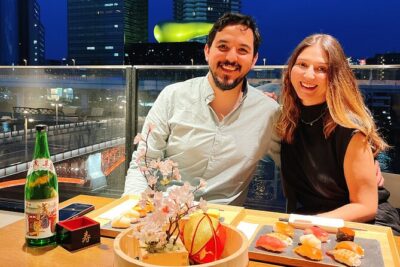
- Optional sake tasting of three types, plus free Japanese pickles tastings during the tour
- Private, English instruction with lots of room to ask questions, including substitutions when possible
Nishiki Market plus donburi cooking, why the combo works
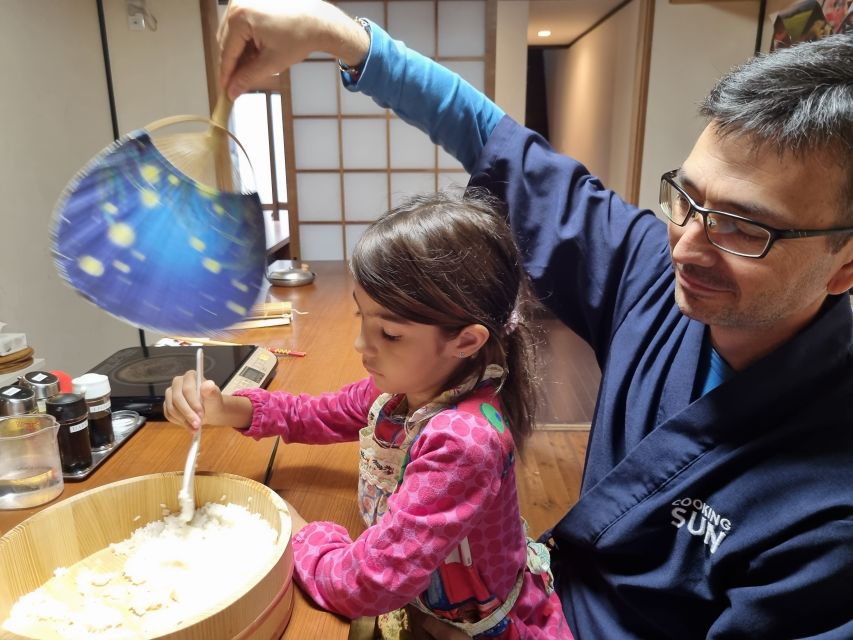
This tour works because it connects two things most visitors keep separate: shopping and cooking. Nishiki Market can be overwhelming. With a guide, you get focus, context, and the little etiquette rules that make the experience smoother.
Then comes the payoff. When you cook a bowl with ingredients you already picked out, the flavors make sense. You are not just eating, you are learning what goes where and why the bowl tastes balanced.
You also get the kind of instruction that sticks. Several bookings mention learning staples like dashi and understanding sauces, not just following a recipe step-by-step.
More Cooking Classes in Kyoto
- Ramen Cooking Class at Ramen Factory in Kyoto
★ 5.0 · 1,937 reviews - Kyoto: Ramen Cooking Class at a Ramen Factory with Souvenir
★ 4.9 · 532 reviews - Kyoto: Ramen, Gyoza, and Onigiri Cooking Class
★ 5.0 · 445 reviews
The market start: meeting at the Western entrance and getting oriented
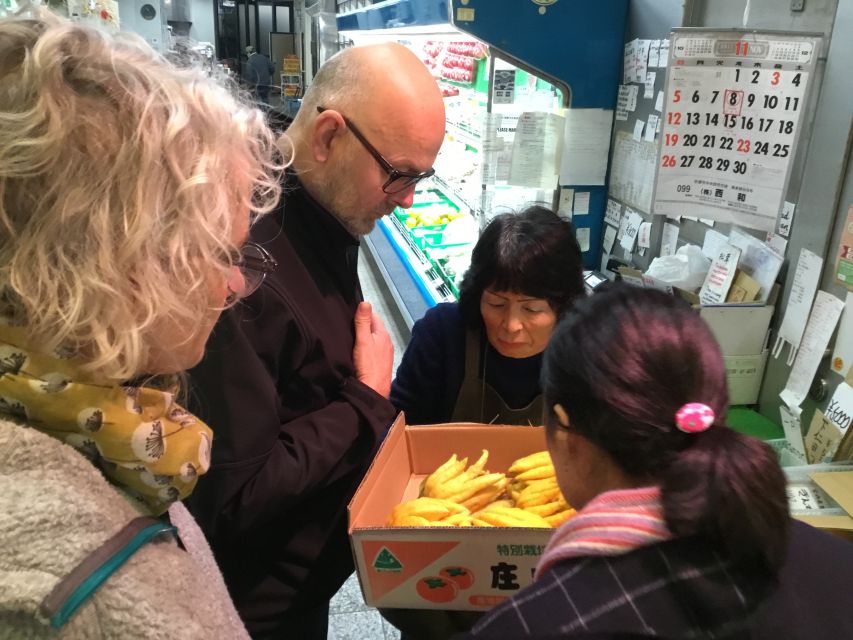
You meet at the western side entrance of Nishiki Market. That matters more than it sounds, because Nishiki is busy and easy to spiral into aimless browsing if you do not have a plan.
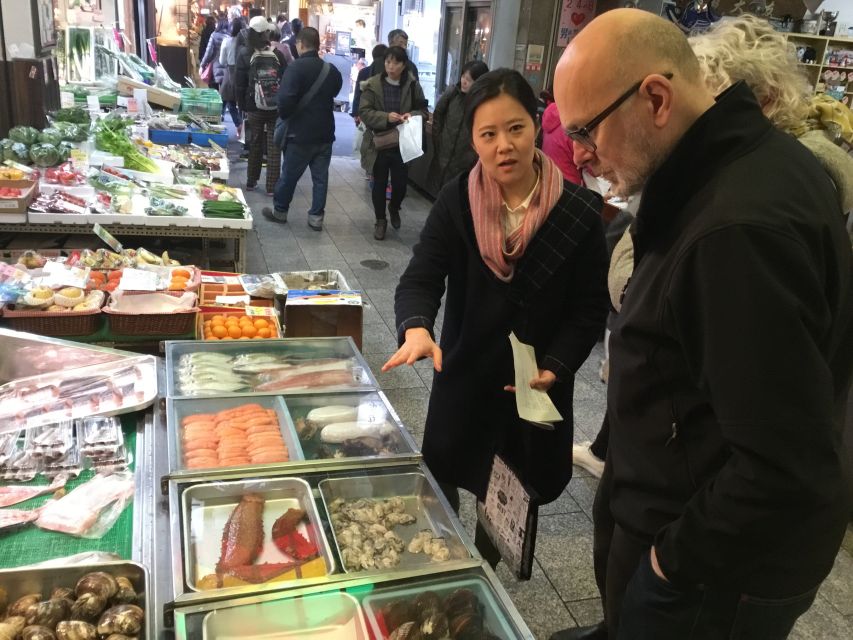
From there, you walk the market with an English guide who points out stalls and explains what is worth your attention. If you have no one explaining, the walk through can feel short, around 15 minutes. With a good guide and time for questions, it is easy to spend much longer, because you slow down to understand the food.
This is one of the tour’s best values: you are buying time back. Instead of wandering for an hour, you use that hour to learn where things are, what they are for, and what you might want to return for later.
Nishiki Market with an English local guide, what you will actually learn
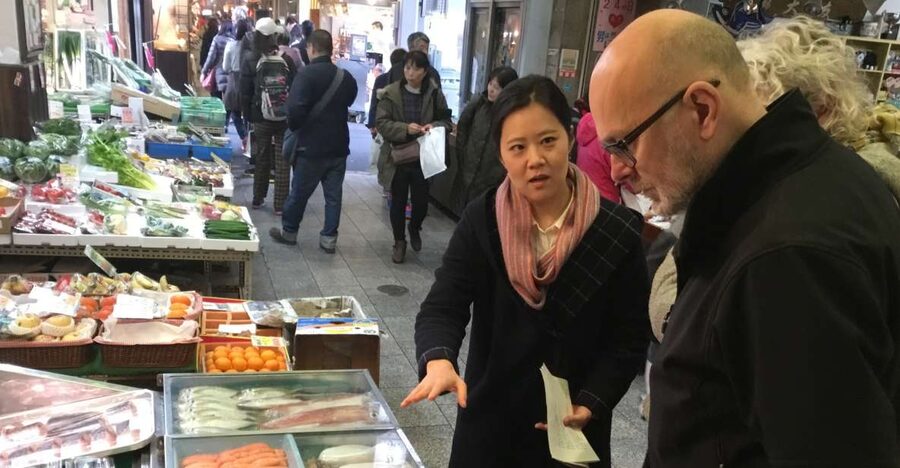
The guide’s job is not only translation, it is selecting details that help you eat smarter. You can ask questions about foods you do not recognize, and the guide can also support conversations with shop staff when needed.
A few recurring themes show up in high ratings. People like that the guide helps them prioritize in a crowded market, and that they learn more than just the obvious souvenirs. There is also practical etiquette guidance, including the rule that you generally should not eat and walk, so you know how to behave in tight spaces.
Expect plenty of real-world context. You may hear about why certain shops specialize in specific offerings, and you get recommendations you can use again on future visits. Several bookings specifically mention that guides were spot on with suggestions they later went back to buy.
Pickles tastings and the optional sake flight
One easy win built into the tour is free Japanese pickles tastings. It is small, but it sets your palate for what comes next. Pickles in Japan often act like a flavor contrast, not just a side dish, and tasting them early helps you understand the role they can play in a meal.
Then there is the optional sake tasting of three types. If you like trying regional food pairings, this is a fun add-on. If you do not want alcohol included in your plan, it is optional, so you can keep your focus on the donburi cooking.
Either way, the tastings are part of the rhythm of the tour: sample along the way, learn why it matters, then move on to the bowl you will make.
More Food & Drink in Kyoto
- Kyoto Night Foodie Tour in Gion (9+ dishes + 6 Sake tastings)
★ 5.0 · 1,762 reviews - 3-Hour Kyoto Insider Sake Brewery Tour with Tastings & Pairings
★ 5.0 · 917 reviews - Arashiyama Bamboo, Temple, Monkeys, or Secret Sake Brewery
★ 4.8 · 886 reviews - Kyoto: Insider Sake Brewery Tour with Sake and Food Pairing
★ 5.0 · 704 reviews
From market shopping to your donburi choices, kaisen-don, ten-don, oyako-don
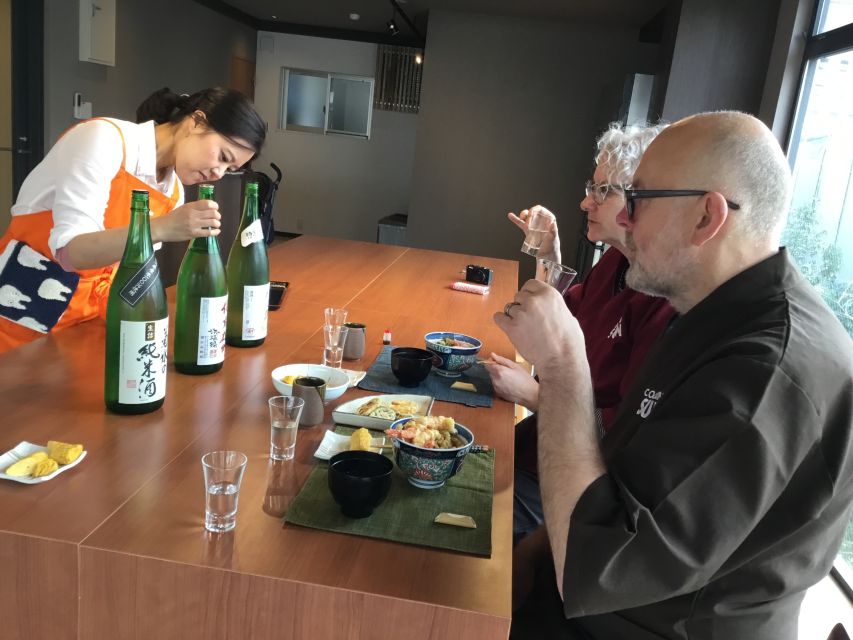
The unique part is simple: you cook your own donburi using ingredients you bought on the market walk. Ingredients cost is included, which is a big deal for value. You are not paying twice, once for the tour and again for the main shopping that makes it work.
You choose one of three bowl styles:
- Kaisen-don (seafood)
- Ten-don (tempura style)
- Oyako-don (chicken and egg)
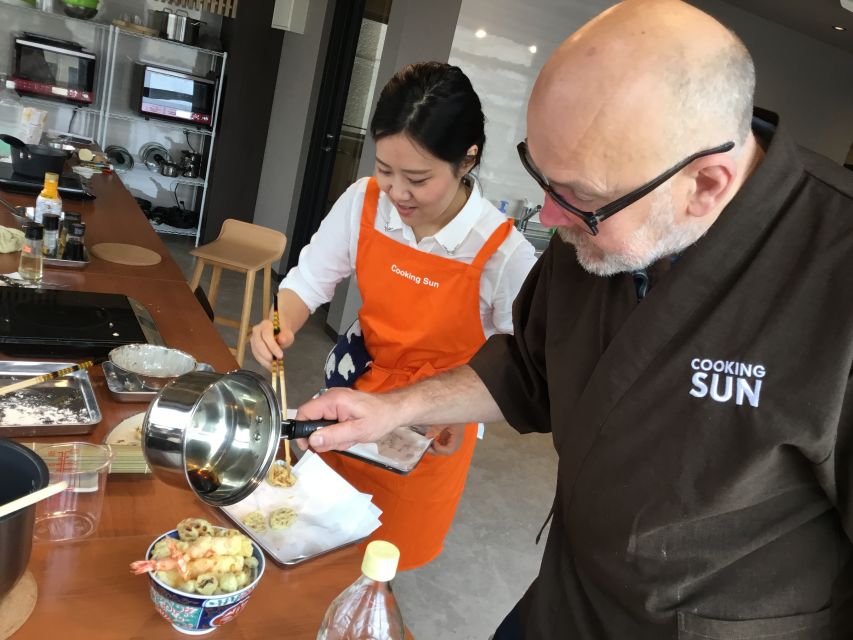
This choice affects more than the final taste. It changes what you learn in the kitchen, including how to handle ingredients and how to think about textures. Ten-don tends to focus attention on how tempura components are prepared, while oyako-don pushes you toward understanding how chicken and egg come together. Kaisen-don is about seafood selection and bowl assembly.
Also, this is a private tour, so your guide can usually help with customization. One booking includes a tofu substitution request for a chicken-based dish, and the group felt supported. If you have a preference like that, ask during the market portion, not at the very end.
The cooking studio part: prep, cooking, and eating what you made
After the market, you head to the cooking studio. Taxi cost from the market to the studio is included, so you do not have to figure out transport with a full shopping bag and a tight schedule.
The cooking and eating portion runs about an hour. That time block is realistic: long enough to cook with confidence, short enough that you are not stuck in the kitchen while hungry teammates wait.
The kitchen setup is meant for instruction, not just spectacle. Multiple bookings mention the kitchen being clean and well-stocked, and that the teachers taught each step clearly. You will likely get tips on cooking for taste and on making the bowl look good too, including how things should be layered.
And yes, you eat what you cook. That is a major difference from many food tours that stop at tasting. Here, the final reward is your bowl, plus the recipe you receive.
What you take home: recipe plus practical skills
The tour includes a recipe, which helps you recreate the bowl at home without guessing. But the real win is the way the cooking instruction connects to what you saw in the market.
Several high ratings mention learning how to make dashi and understanding sauces. Even if you never shop like a local in Japan, you can still bring home technique: knowing what makes the flavor base work, and how to balance the bowl so it tastes like a complete meal.
You may also learn brand and ingredient choices. One booking mentions getting insight on sauces and even specific brands, which is useful if your goal is to reproduce the flavor rather than just imitate the general idea.
If you are an experienced cook, you might enjoy that the class does not talk down. If you are new to Japanese cooking, you still get clear steps, with plenty of room to ask questions.
Timing and pace: 150 minutes that do not feel rushed
The schedule is designed so the two halves add up smoothly. You spend about one hour in Nishiki Market, then about one hour cooking and eating. The remaining time is for moving, briefing, and questions.
Because the tour is private, the pace is yours. If you want to slow down for an ingredient you do not recognize, you can. If you want to keep things moving, you can do that too.
This also helps families. One booking describes a family-friendly dynamic where kids stayed engaged, which usually means the teaching is broken into manageable steps, not long lectures.
Price and value: what $109 buys you, and when it feels fair
At $109 per person for 150 minutes, this is not a budget snack tour. But it is also not priced like a fine-dining experience.
The best value drivers are clear:
- Ingredients for your donburi are included
- Recipe and instruction are part of the class
- Taxi transfer between the market and studio is included
- You get tastings, including pickles and optional sake
If you were to do this on your own, buying ingredients plus paying for a structured cooking class would usually cost more. Here, the tour price bundles the shopping, the teaching, and the transfer into one plan.
Where it may not feel as good is if your main goal is lots of extra food to eat beyond the included meal. The tour does not include foods you might want to eat on your own, so you may still want to budget extra if you are a serious eater in the market.
Also, one moderate review mentioned that a couple of ingredients could have been better. That does not mean the experience is poor, but it is a reminder that seafood choices can be hit or miss depending on what is freshest and what the group ends up selecting.
Who should book this Nishiki Market donburi tour
Book it if you want any of these:
- A guided way to handle Nishiki Market crowds
- A hands-on cooking lesson where you leave with skills and a recipe
- A customizable meal, with donburi bowl options you choose in advance
- An English-speaking experience with room for questions, including practical etiquette help
It is also a solid pick for couples or small groups who want something more meaningful than tasting a few bites and moving on. If you travel with kids, the class format appears to work well because it keeps attention on steps and hands-on tasks.
Consider skipping if you only want to browse and eat at your own pace, with minimal structure. If your ideal market visit is long and freedom-heavy, the fixed time split between market and cooking may feel limiting.
Should you book it?
I think this is a strong booking for most people who like food, markets, and learning by doing. The combination of market guidance, included ingredients, and a cooking class gives you a meal plus context, not just an hour of sightseeing.
If you are the type who wants to come home and actually cook something, the recipe, dashi and sauce instruction, and the donburi you make are the real reasons to choose this. Just go in with the right expectation: this is a focused class experience inside the market, not an all-day sampling marathon.
If that sounds like your style, you will likely enjoy this one.
FAQ
Where do I meet for the Nishiki Market food tour and cooking class?
You meet at the western side entrance of Nishiki Market.
How long is the experience?
The tour lasts 150 minutes.
What do I cook during the class?
You cook your own donburi (bowl) meal. You can choose from kaisen-don (seafood), ten-don (tempura), or oyako-don (chicken and egg).
Is sake included?
A sake tasting of 3 different types is optional.
Do you provide ingredients?
Yes. The ingredients for your donburi cooking are included in the tour price.
Is the guide available in English?
Yes, the tour instructor is listed as English.
What transportation is included?
Taxi cost from the market to the studio is included.
More Shopping Tours in Kyoto
- Kyoto: Nishiki Market Brunch Walking Tour-7 Tastings+Brunch
★ 4.8 · 197 reviews - Kyoto: Local Food Tasting Tour at the Nishiki Market
★ 4.7 · 135 reviews - Kyoto: Nishiki Market and Depachika Food Tour with a Local
★ 4.7 · 76 reviews - Kyoto: Nishiki Market Tour with a Local Foodie & Tastings
★ 4.5 · 67 reviews
More Market Tours in Kyoto
- Nishiki Market Brunch Walking Tour (7 Tastings + Brunch)
★ 5.0 · 1,355 reviews - Kimono Tea Ceremony at Kyoto Maikoya, NISHIKI
★ 5.0 · 911 reviews - Kyoto Nishiki Market Food and Culture Walking Tour
★ 5.0 · 412 reviews - Kyoto: Nishiki Market Tea Ceremony with Koto Performance
★ 4.8 · 294 reviews
Latest write-ups near Kyoto
- Kyoto Private Tour Full Day with Local Guide&Nara Option(PerGroup★ 5.0 · 20 reviews
- Sacred Pathways: Discover the Philosopher’s Path of Kyoto★ 4.9 · 20 reviews
- Kyoto UNESCO World Heritage Site Private Tour with a Premium Van★ 5.0 · 20 reviews
- Hammer Pattering Experience of Ring★ 5.0 · 20 reviews
- KYOTO: Private Tea Ceremony in Hidden Townhouse (Kid-Friendly)★ 5.0 · 20 reviews
- Sushi or Traditional Japanese Cuisine in a Kyoto Home with Emika★ 5.0 · 20 reviews
- The Kyoto VIP Experience!★ 5.0 · 20 reviews
- Kyoto Customized Private Tour: See Top Attractions in 1 Day★ 4.7 · 20 reviews
Cooking Classes, compared.
Ramen Cooking Class at Ramen Factory in Kyoto
Read our review →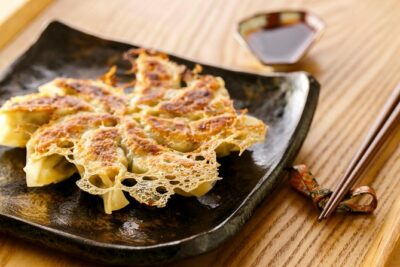
Ramen & Gyoza Cooking Class in Tokyo with Local Supermarket Visit
Read our review →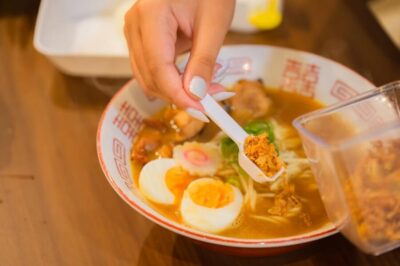
Ramen Cooking Class at a Ramen Factory with Souvenir
Read our review →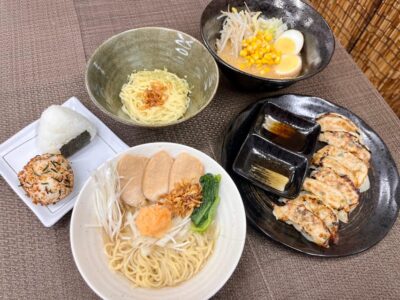
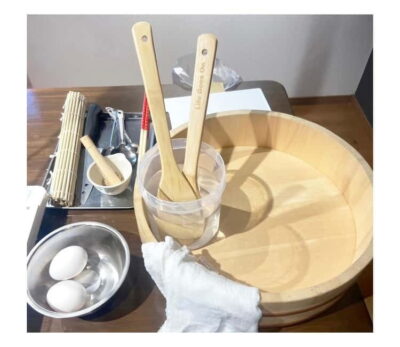
Japanese Washoku Bento Small Group Cooking Class
Read our review →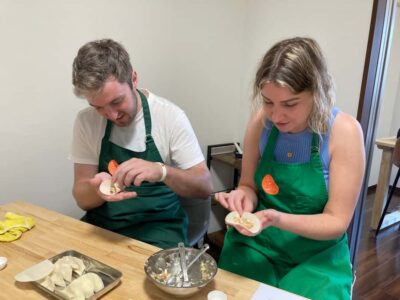
Easy Ramen Cooking Experience in Kabukicho, Shinjuku
Read our review →