
Reviewed · RAMEN EXPERIENCES
Ramen Making from Scratch +Akihabara Tour – Cooking Class
This Akihabara ramen class is interesting because it mixes Tokyo pop-culture sightseeing with hands-on cooking. You start in the electric streets, then you end up in a kitchen studio learning how ramen actually comes together.
I love the chance to make fresh noodles from flour, not just assemble a bowl. I also love that you learn Jiro-style ramen in English, so the technique and ingredient choices make sense as you cook.
One drawback to plan around: it is not a vegan or vegetarian class, and it is a bit strict about timing and basic accessibility, so it may not suit everyone.
Key things to know before you go
- Fresh noodle making from flour, with guided steps so you can actually do it
- A supermarket walk where you learn what goes into your ramen and why
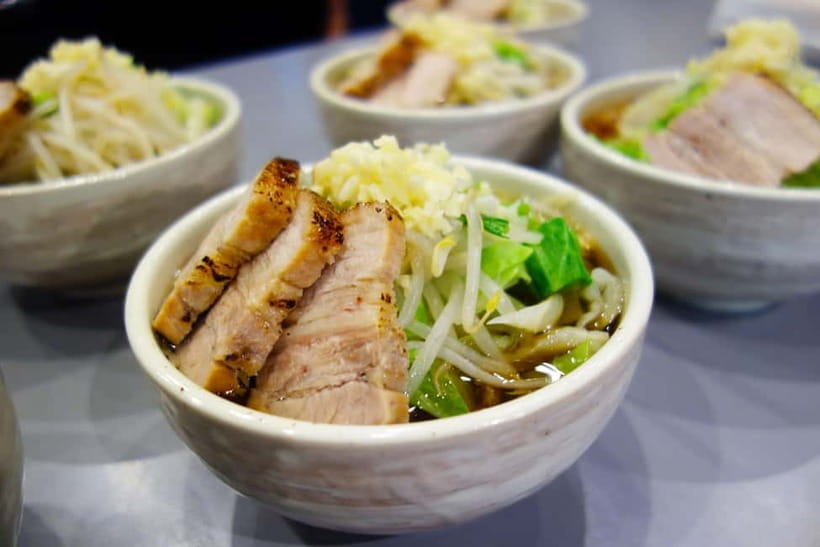
- Jiro-style ramen in English, including broth, toppings, and the build
- Small group size limited to 6 participants, so you get real attention while cooking
- Patia Kitchen Studios in central Tokyo, a comfortable studio space used by Japanese TV for Jiro-style ramen
Akihabara first, ramen later: why this order works
This experience starts where you can best “get the mood” for Tokyo. Meet at 11AM at JR Akihabara Station, outside the Central Ticket Gate, and you immediately shift into Akihabara mode: gadget shops, anime and pop-culture energy, and that nonstop street atmosphere. The walking portion is short, but it matters because it helps you settle in before you start handling ingredients and tools.
You do an easy walking loop through popular spots on the way to the supermarket, led by your guide. In practice, this means you are not just killing time in Akihabara. You are learning how to move through the neighborhood so the shopping stop feels natural and not random.
If you hate crowds or you get stressed when you are late, take this seriously. The day runs on a schedule, and if you are more than 10 minutes late, the group departs without you and you are expected to go straight to the studio.
More Cooking Classes in Tokyo
- Ramen & Gyoza Cooking Class in Tokyo with Local Supermarket Visit
★ 5.0 · 823 reviews - Tokyo: Easy Ramen Cooking Experience in Kabukicho, Shinjuku
★ 4.6 · 321 reviews - Ramen and Sushi Cooking Class with Sake Pairing Set in Tokyo
★ 5.0 · 291 reviews
The supermarket ingredient walk: where you learn what matters
Right after the quick Akihabara walk, you head into a local supermarket. This is one of the best parts because it turns ramen from a menu item into real ingredients you can recognize.
Your guide explains the ingredients used for the ramen you make that day. You also get time to look at Japanese food products in person, which is useful even if you never recreate the exact recipe at home. You start noticing how packages are labeled, how certain items are used in Japanese cooking, and what kinds of textures and flavors ramen relies on.
The practical value here is huge. Most people can follow a recipe after they get home, but fewer people understand what to substitute or what to treat as non-negotiable. This ingredient walk builds that foundation because you see the choices in front of you.
One note: the class does not offer vegan or vegetarian options. So if you are hoping to build a plant-based ramen, this is not the right fit.
Getting to the cooking studio smoothly from Akihabara
After shopping, you take a train to the kitchen studio. The ride is about 15 to 30 minutes, depending on your route.
The cooking space is Patia Kitchen Studios, described as stylish, spacious, and relaxing, and located just a few minutes from the nearest station. That sounds like marketing, but you can take it as a practical sign: you are not going to be cooking in a cramped room where your elbows bump every time you stir.
There is one logistics detail worth planning for. Transportation from Suehirocho Station to the studio is not included, so you will use your own Suica or another IC card for the local train or steps. If you do not have one, the guide helps you buy a ticket, which takes the sting out of the unfamiliar transit part.
Tip: if you have never used an IC card before, practice once in Tokyo on a small ride before your class day. It is not hard, but it removes stress.
Inside the 90-minute ramen workshop: fresh noodles and Jiro-style build
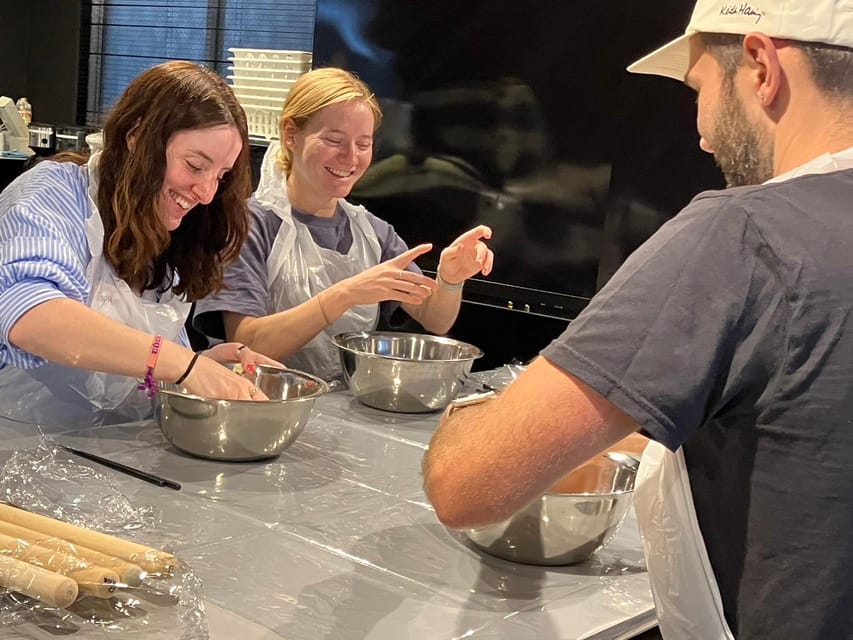
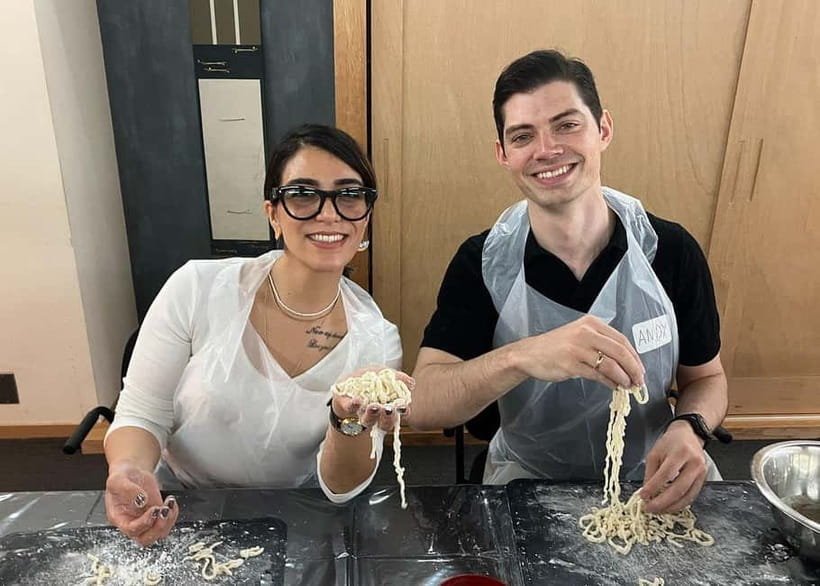
The cooking portion runs about 90 minutes, and it is the main event. You prepare the broth, make fresh noodles, and then assemble the toppings into the final bowl. The instructor and guidance are in English, which is rare for a class focused on a very specific style like Jiro.
More Ramen Experiences in Tokyo
- Eat and Drink Like a Local: Tokyo Ueno Food Tour-Taverns&Ramen
★ 5.0 · 957 reviews - Tokyo: Ramen Tasting Tour with 6 Mini Bowls of Ramen
★ 4.9 · 432 reviews - Professional Ramen & Gyoza with Ramen Chef in a restaurant!
★ 5.0 · 223 reviews - Shibuya: Ramen Dojo Tokyo | Make All 3 (Tonkotsu/Shoyu/Miso)
★ 5.0 · 214 reviews
Making noodles from flour (the skill you actually remember)
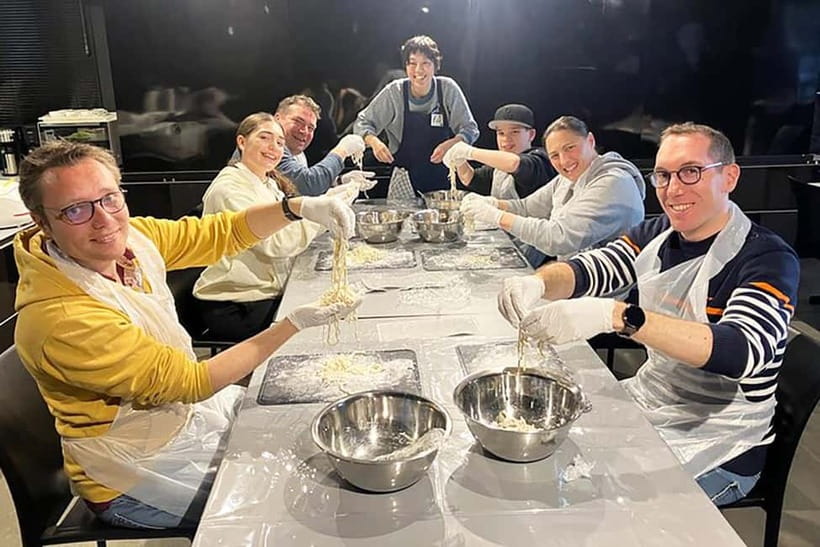
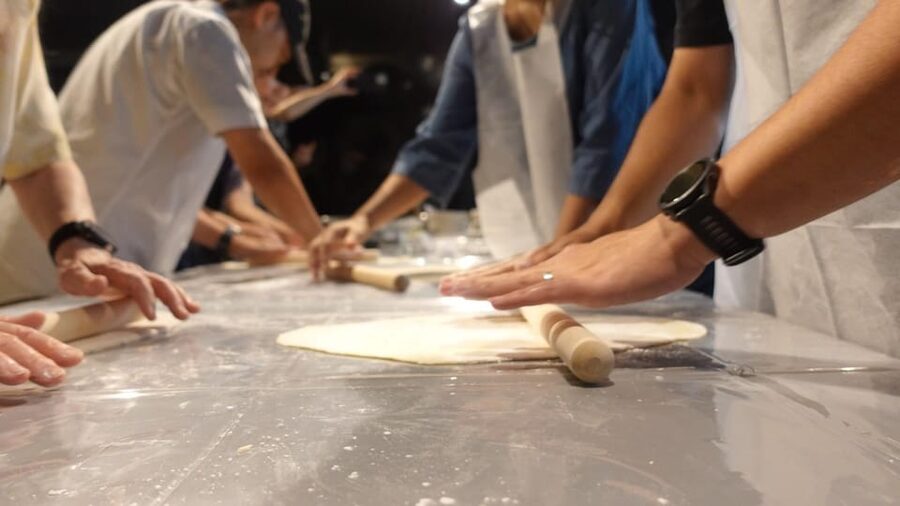
You start with flour and go all the way to fresh noodles. That is a big deal because many ramen experiences stop at topping prep. Here, you learn the process of creating noodles as part of the craft.
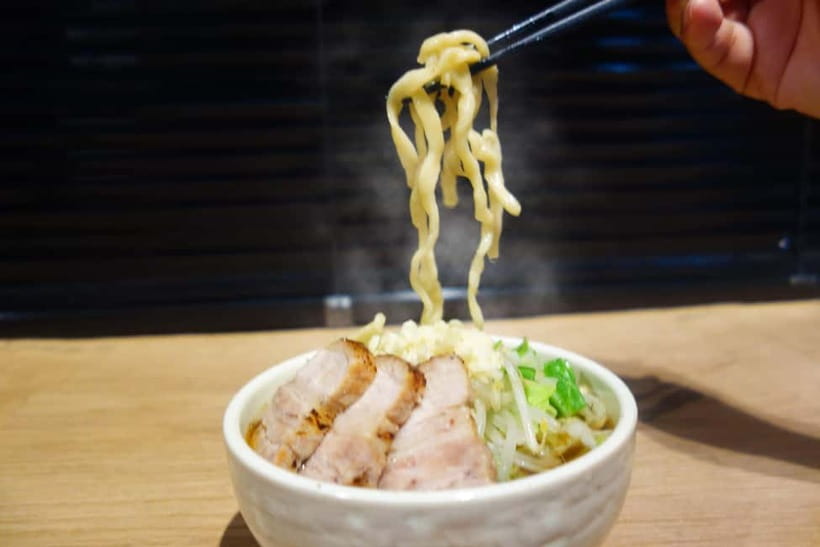
Even if you never plan to do it at home, this teaches you why ramen texture matters. The chew, the way noodles hold onto broth, and how they change after cooking are the things that make a bowl feel right. When you cook them yourself, you pay attention in a different way when you eat ramen later.
Broth and toppings, explained as you work
Next comes broth and toppings. Your instructor guides you through the workflow so you are not just doing random steps. You learn how to bring the bowl together in the right sequence, which matters because ramen is time-sensitive, especially once noodles are cooking.
Your meal ends with Jiro-style ramen you made yourself. Jiro-style is all about the experience of a hearty bowl, and in this class you get the method in a way that is easy to follow. You are not left guessing what makes it “Jiro,” because you are actively building it.
Chashu option: pork by default, chicken if you ask early
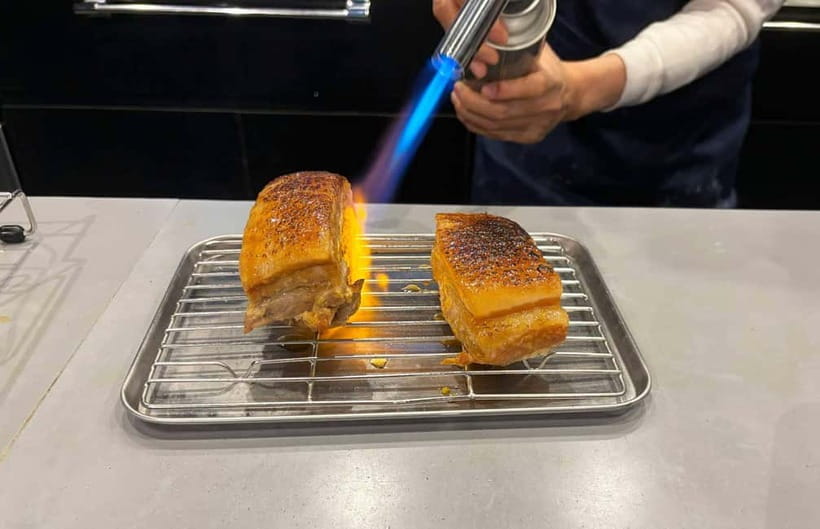
One useful detail: chashu is pork by default, but you can change it to chicken if you inform the team more than 48 hours in advance. If you are watching dietary preferences, do it early so you do not end up with an ingredient mismatch.
Where you end up after class
The class ends at the kitchen studio, which is different from the Akihabara meeting point. So plan your next activity nearby or build in extra transit time.
The finished bowl, plus photos you can actually use
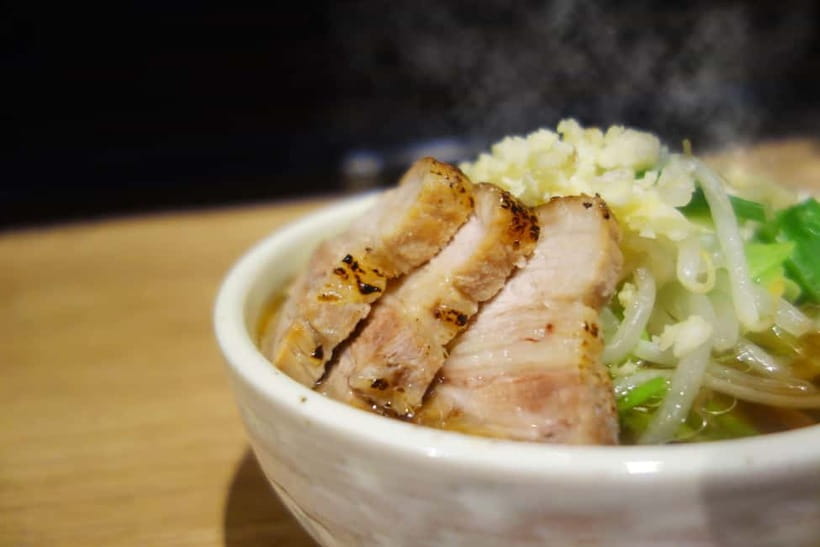
At the end, you eat your ramen. The format is hands-on and social, but it is also practical: you leave with a real sense of how a Japanese bowl is constructed, and you can compare what you made to what you eat on your own afterward.
You also get food and beverage included, plus later-downloadable photographs during the experience. That matters because a cooking class photo is often one of two things: either you get no photos, or you get a blur of your messy hands. Here, the photos are meant to be usable, so you can keep the memory without juggling your own camera settings mid-cook.
Price and value: is $120 for 3 hours worth it?
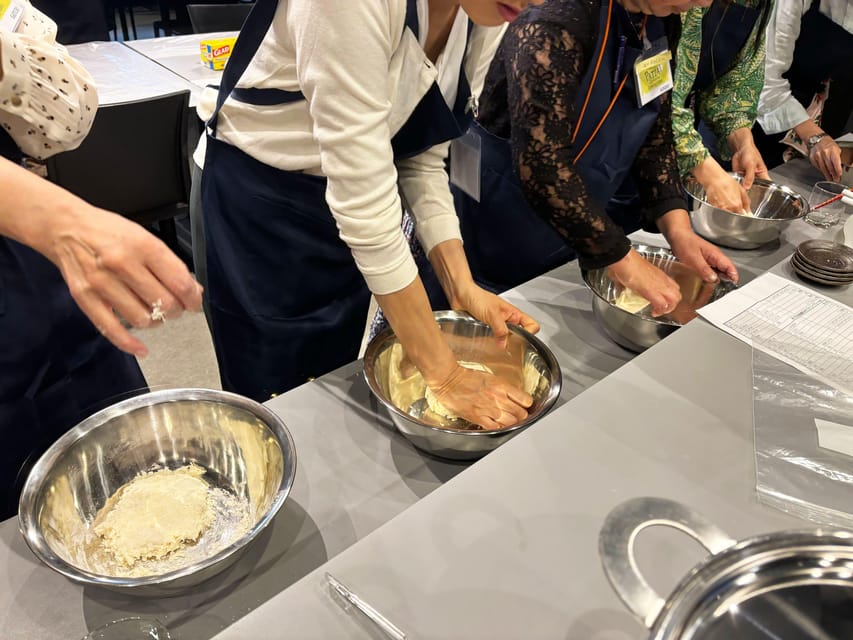
At $120 per person for 3 hours, the price sits in the middle of what you will likely pay for a serious cooking class in Tokyo. What makes it feel fair is what is included and what you actually do.
You are paying for:
- A guided ingredient walk in a supermarket (not just a quick glance outside)
- Hands-on cooking for ramen from scratch, including noodle making
- English instruction throughout
- The meal, plus food and beverage
- Later-downloadable photos
- A small group capped at 6 participants, which usually means fewer people competing for attention
If you only care about eating ramen, you could do it for less money. But if you want the skills and the “why” behind the ingredients, this is one of the better ways to spend your time. The supermarket stop plus the studio cooking time makes it feel like a full experience, not a short demo.
Group size, pace, and what to expect on your feet
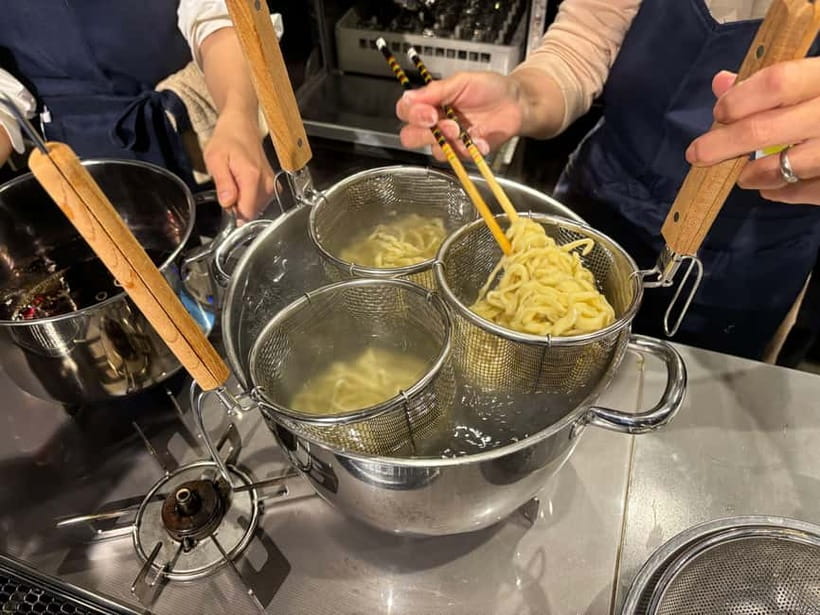
The group is limited to 6 participants, so the class does not feel like a factory line. That matters for ramen because timing and texture are everything. Smaller groups also help you ask questions, especially in a style-specific class where you might not know the terminology.
The pacing is also realistic. The walk and supermarket visit are relatively short, then you shift to cooking for the heavy lift portion. You will still be on your feet for parts of the day, and you should plan for standing while you cook and eat.
There are restrictions you should take seriously. This class is not suitable for children under 5, and it is not suitable for people with back problems or wheelchair users. Strollers are not allowed, and smoking is not allowed.
If you are within those limits, you will probably enjoy the comfort level because Patia Kitchen Studios is described as spacious and relaxing.
Who this Akihabara ramen class is perfect for
This is best for you if you fit one of these profiles:
- You want an English-led class focused on a specific style, Jiro-style ramen
- You want to learn a real technique, making noodles from flour
- You like Tokyo street exploring, especially Akihabara with its gadget and anime energy
- You prefer small groups and direct instruction rather than watching from the sidelines
It is not the right match if you are vegan or vegetarian, since the class states that options are not available. It also will not suit you if mobility limits make it hard to stand and move between Akihabara, transit, and the studio.
Should you book this ramen making class in Akihabara?
Book it if you want more than a bowl. This class gives you the full arc: Akihabara orientation, a hands-on ingredient shopping walk, and then real work in the kitchen to make a Jiro-style ramen bowl in English. The $120 price makes sense when you factor in the supermarket stop, the studio time, the meal, and the small group attention.
Skip it if ramen-making is not your goal, or if your diet needs vegan or vegetarian options. Also take the timing rules seriously, because being late can mean you end up navigating to the studio on your own.
If you are on a Japan trip that already includes eating your way through Tokyo, this is a smart add-on because it teaches you how to think about ramen, not just what it tastes like.
FAQ
What time and where do I meet for the Akihabara part?
You meet at 11AM at JR Akihabara Station, outside the Central Ticket Gate.
How long is the experience?
The total duration is about 3 hours.
Is the class taught in English?
Yes, the instructor teaches in English.
Is the group small?
Yes. The class is limited to a small group of up to 6 participants.
Is a vegan or vegetarian option available?
No. Vegan and vegetarian options are not available.
Can you change the chashu from pork to chicken?
Yes, you can switch chashu from pork to chicken if you let them know more than 48 hours in advance.
Is transportation from Suehirocho Station to the studio included?
No. Transportation from Suehirocho Station to the studio is not included. You should use your own Suica or other IC card, and the guide can help if you do not have one.
What happens if I arrive late?
If you are more than 10 minutes late, the group will depart ahead of you. You will be asked to come directly to the kitchen studio, and no refunds are made for delays.
More Anime & Pop Culture Tours in Tokyo
- Official Street Go-Kart Tour – Akihabara
★ 5.0 · 1,578 reviews - Tokyo Go Kart: Asakusa, Skytree, and Akihabara **IDP MUST**
★ 5.0 · 988 reviews - Tokyo Studio Ghibli Museum and Ghibli Film Appreciation Tour
★ 4.5 · 421 reviews - Akihabara Anime & Game Adventure Walking Tour (Group or Private)
★ 5.0 · 404 reviews
Latest write-ups near Tokyo
- Tokyo Nights: Shibuya Photo Adventure★ 5.0 · 20 reviews
- Wagyu & Sake 8 Course Tasting Dinner in Shinjuku★ 4.9 · 20 reviews
- Making Japanese desserts Nerikiri & drinking matcha in Tokyo★ 5.0 · 20 reviews
- Japanese Whisky Hunting《HIGH-QUALITY-ONLY》Rare Tasting Class★ 5.0 · 20 reviews
- Mt. Fuji 5th Station, Owakudani Ropeway, Pirate Ship plus Outlet shopping!★ 4.5 · 20 reviews
- Kintsugi Experience with Arita Ware in Tokyo (English Guide)★ 4.8 · 20 reviews
- This is Asakusa! A Tour Includes the All Must-Sees!★ 5.0 · 20 reviews
- Ebisu Local Food Tour: Shibuya’s Most Popular Neighborhood★ 5.0 · 20 reviews
Ramen Experiences, compared.

Ramen Cooking Class at Ramen Factory in Kyoto
Read our review →
Eat and Drink Like a Local: Tokyo Ueno Food Tour-Taverns&Ramen
Read our review →
Ramen & Gyoza Cooking Class in Tokyo with Local Supermarket Visit
Read our review →
Ramen Cooking Class at a Ramen Factory with Souvenir
Read our review →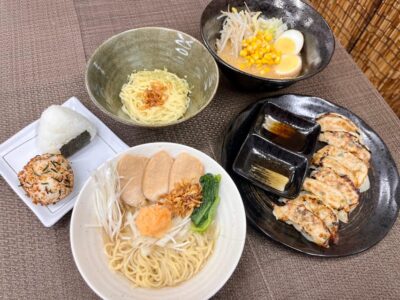

Five Must-See Highlights Walking Tour & Ramen Lunch
Read our review →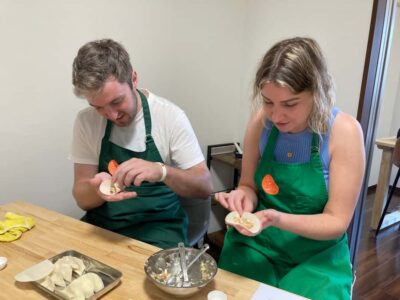
Browse the lists this tour appears in