
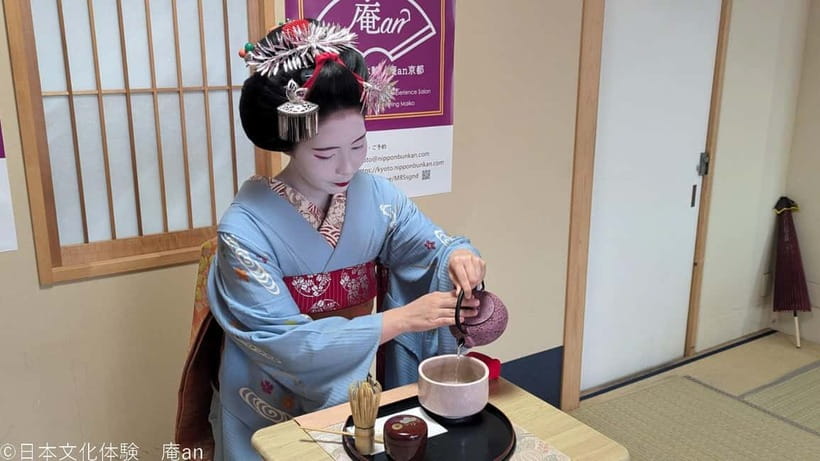
Reviewed · GEISHA & GION TOURS
Kyoto: Tea Ceremony with Maiko
This Kyoto tea ceremony with a real maiko is interesting because you do the ritual, not just watch it. You’ll learn how to make matcha, try small Japanese sweets, then get time to ask questions face to face. It feels like Kyoto made friendly, short, and personal.
What I like most is the hands-on matcha part, where you actually make your own cup, and the Q&A time where your host explains her world. One consideration before you book: the venue has no elevator, so you will be using stairs.
Quick hits before you go
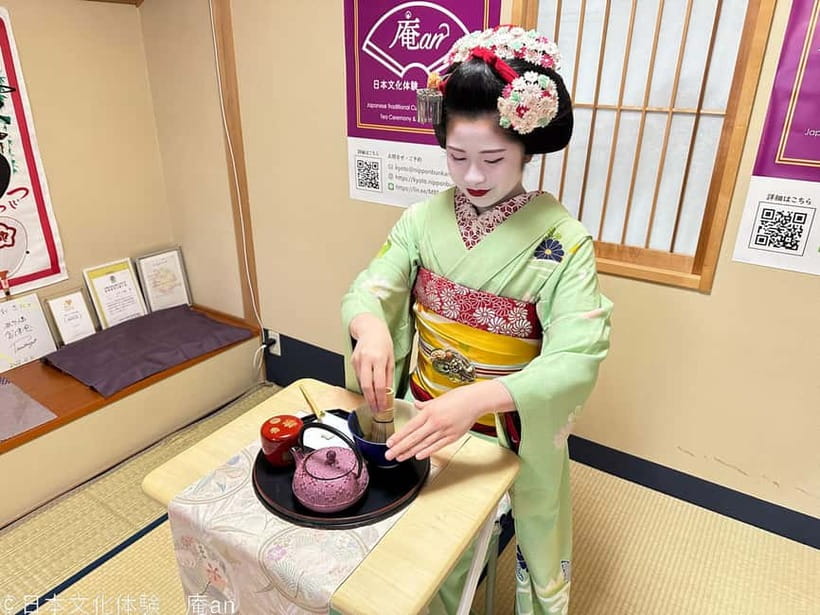
- Hands-on matcha: your host demonstrates, then you make your own tea step by step
- Ohigashi sweets included: you get two dried-type Japanese sweets with your matcha
- Up-close conversation: a Q&A session lets you ask directly and learn about daily life
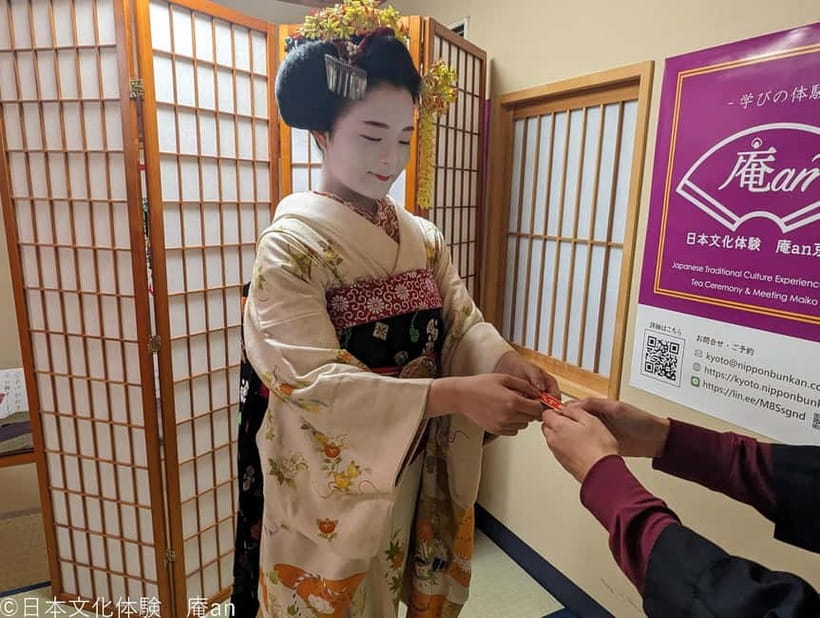
- Photo moment plus Senjafuda: you get a commemorative photo and a lucky charm called Senjafuda
- Fast Kyoto stop: it’s close to Gojo Station, and the whole program runs about 45 minutes
Kyoto in 45 minutes: why this fits a tight schedule
If you only have a day or two in Kyoto, you still want at least one cultural activity that feels real. This one is built for time limits. The program is short, the price is reasonable, and it runs like a focused experience instead of a long tour with lots of waiting.
The format is simple: greeting, tea ceremony, Q&A, photos, and your lucky charm. That means you spend most of the time where it counts, in the room with your host and your cup of tea. Kyoto can be intense when you try to do everything, so I like experiences that keep the pace steady.
Also, this is one of those activities where the main “souvenir” is not a thing you buy. The matcha you make and drink, the sweets you try, and the Q&A you ask are the memories you keep. The Senjafuda gift is a nice physical reminder, but it’s the experience that sticks.
More Tea Ceremonies in Kyoto
- Kyoto: Tea Ceremony in a Traditional Tea House in Kiyomizu
★ 4.9 · 3,519 reviews - Kyoto: Tea Ceremony Ju-An at Jotokuji Temple
★ 4.9 · 3,207 reviews - Kyoto: 45-Minute Tea Ceremony Lesson Experience
★ 4.3 · 2,378 reviews
Getting there from Kyoto Station: Gojo Station Exit 1 is the cheat code
Location matters in Kyoto, and this one is easy compared to many traditional experiences. The meeting point is a one-minute walk from Subway Karasuma Line Gojo Station Exit 1. You’re looking for the store entrance facing the main street, Gojo-dori.
A practical way to make it painless: get off at Exit 1, walk straight, cross a small street, then continue straight until you see the location above the supermarket Carnival. The final step is up the stairs, so plan a calm pace even if you spot it quickly.
Because there’s no elevator, I recommend showing up a few minutes early. Latecomers do not get special accommodation, and the experience will not be held for delays. Kyoto is great, but trains and walking can still trip you up.
What actually happens in the room, minute by minute
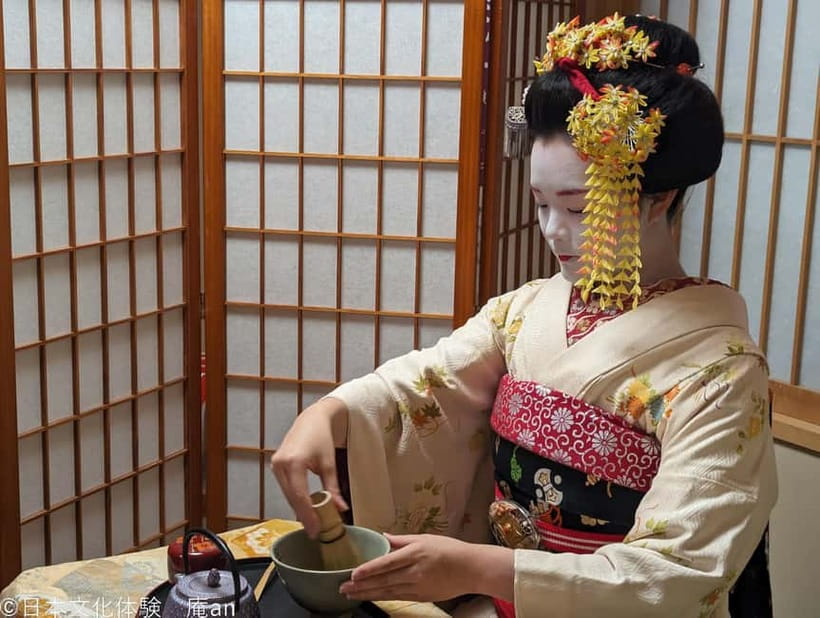
The experience runs about 45 minutes from start to departure, with a clear rhythm. You begin with a greeting from your host, then move into the tea ceremony portion.
During the tea ceremony, you’ll enjoy matcha along with two dried-type Japanese sweets. Your host demonstrates how to make matcha tea and talk you through what you should do. Then you make your own matcha. This matters because you aren’t just learning theory. You practice the motions, you taste what you made, and you get to ask questions while it’s still fresh.
After the ceremony, you shift into a Q&A session. This is where the experience becomes more than “a performance.” Your host can explain her daily life, how she experiences the role, and the path toward becoming geiko. Even if you don’t speak much Japanese, English support is provided as much as possible, and there’s a chance to get your questions answered clearly.
Then the pace turns celebratory. Around the halfway mark, you wrap the main portion and take a commemorative photo right beside your host. After that, you receive a Senjafuda lucky charm gift. When the photos are done, your host leaves the room and the program ends.
Maiko or geiko: how the host switch works
One detail to know up front: depending on the date, your host may be a maiko or a geiko. That switch can happen based on what’s available for the session.
Either way, you’re getting the same core experience structure: tea ceremony, matcha making, Q&A, close photo time, and the Senjafuda charm. So don’t stress the label too much. What matters is the interaction and instruction inside the room.
In the feedback people describe the hosts as elegant and confident, and they highlight the friendly way staff keep things moving. One specific example in the information you provided mentions Maiko Masaya San, with clear guidance and confident answers. You can treat that as a good sign that explanations are usually easy to follow, even if your Japanese is limited.
More Geisha Experiences in Kyoto:
- Kyoto Geisha Walking Tour: Gion District & Hidden Gems
★ 4.7 · 3,273 reviews - Kyoto: Gion Magical Night Walking Tour with Geisha Trivia
★ 4.9 · 2,393 reviews - Kyoto: Gion Geisha District Walking Tour – Stories of Geisha
★ 4.7 · 2,187 reviews - Best of Kyoto: Gion, Geisha, Pagodas & Cobblestones
★ 4.9 · 2,058 reviews
Matcha making and ohigashi sweets: the part you will remember
Let’s talk taste and technique. You’re served matcha, and you also get two dried-type Japanese sweets called ohigashi. These sweets are small, and the idea is to balance the tea experience, not to turn it into a snack marathon.
In the ceremony, you’ll follow the demonstration and then make your own cup. That’s the best part for many people because you leave with a new skill. You’ll understand the basics of the ritual steps, and you’ll know what to focus on during preparation and drinking.
A calm note: tea ceremonies sound serious, but this one aims for relaxed. There’s no need for special preparation. You’re welcome to join without worrying that you’ll ruin etiquette. The host will guide you through how to do it, and the translation support helps you avoid guessing.
If you like practical cultural activities, this is one of the better types of “watch and do” experiences. You can taste it right away, and you can ask about what you’re tasting.
The Q&A: how to get real value instead of running out of questions
The Q&A session is a highlight because it’s not just a script. It’s time for you to ask directly and learn about your host’s world. People tend to love this part because it changes the tone from formal to personal.
To make the most of your questions, come ready with 3 to 5 topics. Based on what the host answers in these sessions, good themes include daily life, what it’s like to be in training, and what the path toward geiko looks like. You can also ask about how she approaches tea ceremony practice and what the rituals mean in her day.
Even if you’re shy, don’t overthink it. The session is built for questions, and staff help keep the flow smooth. One detail from the information you provided is that English interpretation is available as much as possible, so it’s not purely a Japanese-only experience.
If you want a smooth experience, keep your questions short. Kyoto hosts are used to visitors who are curious but nervous. Clear and simple questions usually get the best answers.
Photo time up close: getting a souvenir moment without the awkwardness
This activity includes a photo opportunity right next to your host. It’s designed as a commemorative moment, not a chaotic line.
What I appreciate about this setup is that it focuses on a single, scheduled photo. You get to be close enough to feel the moment, and it doesn’t turn into stalking or waiting in the street. The experience is organized so you know when photo time happens.
Your host also gives you the Senjafuda lucky charm after the photo. That means the photo is more than a picture. It’s tied to a small ritual of receiving a charm, which helps the whole thing feel intentional.
The photos are also one of the main reasons this can be worth doing even if you’ve seen other tea ceremonies. This one is about interacting with a maiko or geiko, in a small room, and then receiving a meaningful gift.
Venue expectations: not an ochaya, but still calm and respectful
One practical thing to know: the venue is not an ochaya or a traditional Japanese house. It’s in a building, and the staff keep things relaxed.
That might sound like a disappointment if you expect wood and sliding doors around every corner. But I’d frame it differently. A room in a building can actually be more comfortable, especially when the whole goal is a short experience that stays on schedule.
The key is to adjust your expectations. You’re not here for a set tour of a historic home. You’re here for instruction, conversation, tasting matcha and ohigashi, and a close photo moment with your host.
Also, the stairs matter again. If stairs are difficult for you, this is the one part you should think about before booking.
Price and value: why $28 can make sense in Kyoto
At $28 per person for about 45 minutes, this isn’t one of those “pay a lot for pretty photos” experiences. It’s priced low enough to feel doable, and the time is short enough to fit into a day.
What you get is actually bundled: tea ceremony with your maiko or geiko, matcha making, two dried-type sweets, Q&A, close photo time, and a Senjafuda lucky charm gift. For Kyoto, the real cost is often the combination of access and schedule. Here, you’re paying for a host’s time in a small, focused setting.
So the value depends on your goals. If you want hands-on cultural practice plus direct interaction, it’s good value. If you want a long guided tour with broad sightseeing, then a 45-minute session may feel too short.
Still, for many visitors, this becomes a highlight because it gives you something you can’t buy at a market: the instructions, the answers, and that moment of receiving a lucky charm.
Who should book this, and who might skip it
This fits best if you want a small, structured Kyoto experience without spending hours traveling or waiting. It’s also ideal if you like meeting people and asking questions, because the Q&A is built into the program.
It’s a great choice for first-time visitors who want the Kyoto flavor in a manageable chunk. It’s also a smart pick for people who find long tours stressful.
It may not be ideal if you cannot handle stairs, because there is no elevator. It also may not be the best option if you want a large, sightseeing-style activity with lots of walking outside.
For families, children who require their own seat pay the same fee as one person. Children sitting on a parent’s lap are free if they are under 2 years old. If you’re traveling with small kids, plan around the time and the fact that it’s an indoor, scheduled experience.
Should you book the Kyoto Tea Ceremony with Maiko?
I’d book it if you want a direct Kyoto cultural moment that includes instruction, tasting, and a close meeting with a maiko or geiko. The matcha making is hands-on, the Q&A gives you real context, and the photo plus Senjafuda gift makes it feel complete.
I’d skip or reconsider if stairs are an issue for you, since there’s no elevator. Also, decide based on your energy level. This is a short, focused experience, not a long day of exploring.
If you book, show up a little early and come with a few simple questions. Kyoto rewards that kind of preparation, and your host will do the rest.
FAQ
How long is the Kyoto tea ceremony experience?
The experience lasts about 45 minutes, including the ceremony, Q&A, and photo and charm time.
Where do I meet the tour?
You meet about a one-minute walk from Subway Karasuma Line Gojo Station Exit 1. The store entrance faces Gojo-dori.
Is this close to Kyoto Station?
Yes. The program is close to Kyoto Station, and the experience takes about 30 to 40 minutes in total, with the full program scheduled for around 45 minutes.
Will I be making matcha, or just watching?
You will make matcha yourself. Your host demonstrates, then you prepare your own cup of matcha during the ceremony.
What food is included with the matcha?
You get matcha plus two dried-type Japanese sweets called ohigashi.
Do I get photos with the maiko or geiko?
Yes. You’ll have a photo opportunity right beside your maiko or geiko during the session.
What is Senjafuda?
Senjafuda is a lucky charm your host gives you as a gift at the end of the experience.
Will my host always be a maiko?
Not always. Depending on the event date and situation, the experience may be hosted by a maiko or a geiko.
Is there an elevator at the venue?
No. There is no elevator in the building, and you need to take stairs to reach the venue.
Is there English translation?
English translation is provided as much as possible. If you would like to add it, contact the organizer.
Latest write-ups near Kyoto
- Kyoto: Nishiki Market Tour with a Local Foodie & Tastings★ 4.5 · 67 reviews
- Kyoto Kimono Rental mimosa |Kimono/Yukata Rental Couple Plan★ 4.8 · 67 reviews
- Kyoto: Traditional Kimono Fabric Handicrafts Workshop★ 5.0 · 67 reviews
- Kyoto Tea Ceremony and Samurai Photo Session★ 5.0 · 70 reviews
- Kyoto: Replica food making experience★ 4.8 · 70 reviews
- Kyoto: Kinkakuji, Golden Pavilion Guided Tour★ 4.7 · 71 reviews
- Private departure transfer from Kyoto city to Kansai International airport★ 5.0 · 72 reviews
- Uji: Green Tea Tour with Byodoin and Koshoji Temple Visits★ 4.8 · 72 reviews
Geisha & Gion Tours, compared.
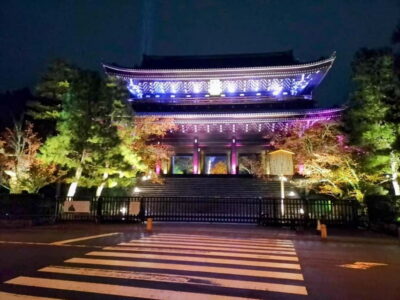
Kyoto Geisha Walking Tour: Gion District & Hidden Gems
Read our review →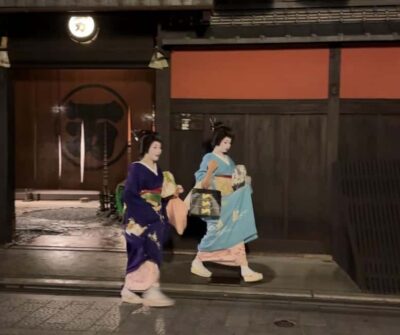
Gion Magical Night Walking Tour with Geisha Trivia
Read our review →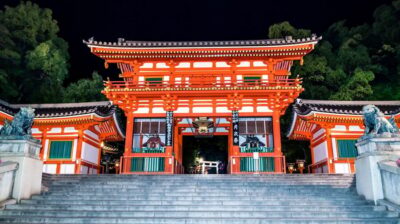
Gion Geisha District Walking Tour – Stories of Geisha
Read our review →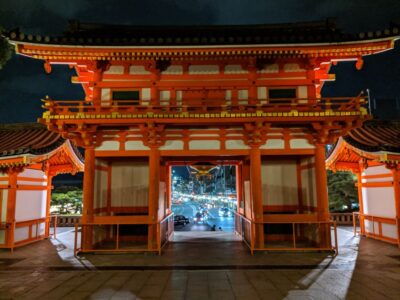
Best of Kyoto: Gion, Geisha, Pagodas & Cobblestones
Read our review →

Kyoto Night Foodie Tour in Gion (9+ dishes + 6 Sake tastings)
Read our review →
Kyoto Gion Geisha District Walking Tour – The Stories of Geisha
Read our review →
Kyoto Gion: 2-Hour Geisha Culture & History Walking Tour
Read our review →Browse the lists this tour appears in