
Reviewed · KIMONO EXPERIENCES
Kyoto: Samurai Sword & Kimono Action Filming Experience
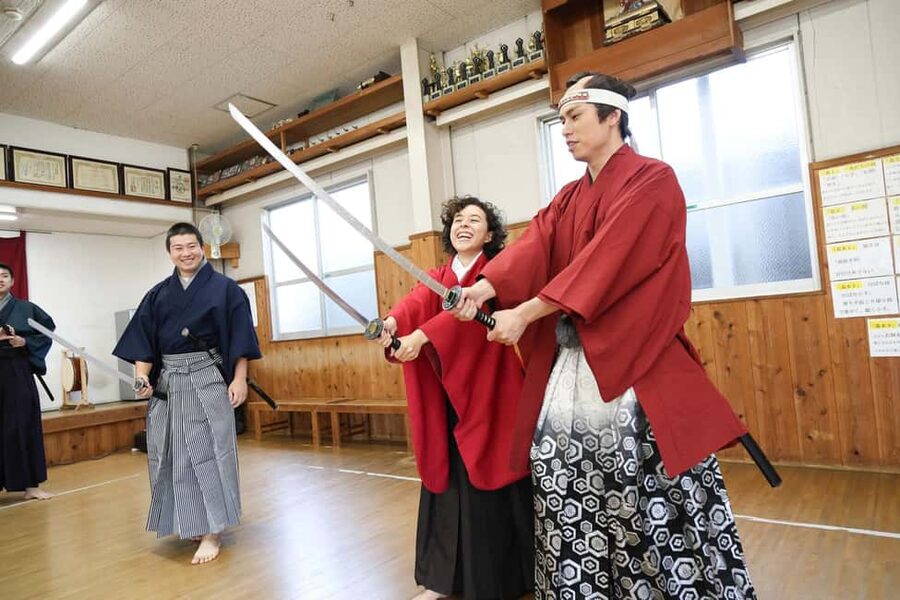
If you want Kyoto energy without lining up all day, this is an action-focused stop with a big payoff: you learn Japanese sword moves in a real temple space, then you film your own chambara-style scene. The place matters here, because Myokaku-ji is one of the only spots where this kind of hands-on sword training happens.
What I like most is the blend of practical sword technique and fun, professional guidance, plus getting to wear a kimono as part of the experience. One thing to consider, though: it is physical. You need comfortable clothes and the ability to move safely, and it is not suitable for some medical situations.
Key things to know before you go
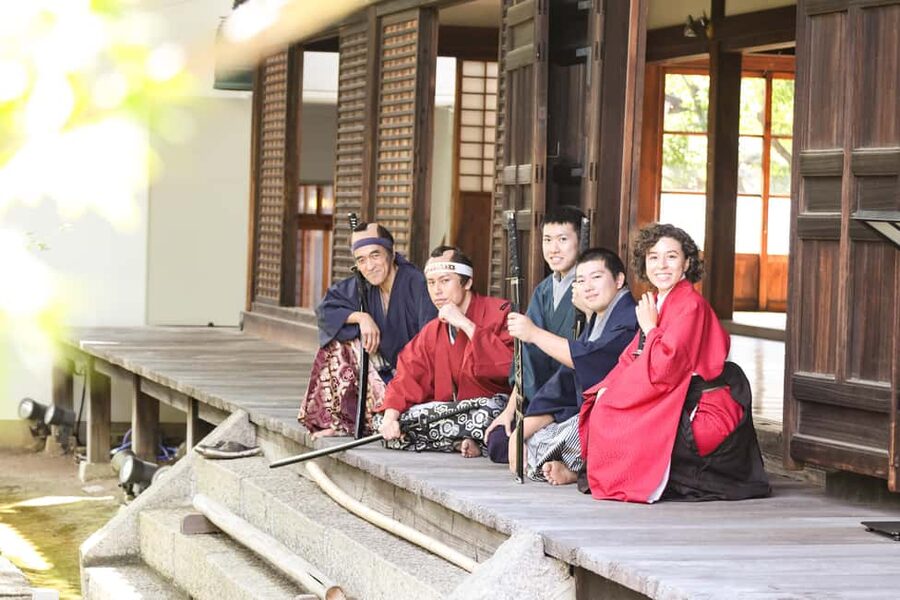
- Myokaku-ji Temple dojo setting: you train at the actual site where Sengoku-period figures are associated.
- Small group limit of 6: you get more hands-on time and corrections.
- Learn specific sword cuts: you practice moves like makkogiri and kesagiri.
- Kimono included: rental kimono is part of the price.
- Period drama performers teach and film: instructors are professional actors with screen experience.
- Your footage is downloadable: you leave with a keepsake, not just photos.
Why Myokaku-ji is the right stage for sword tricks
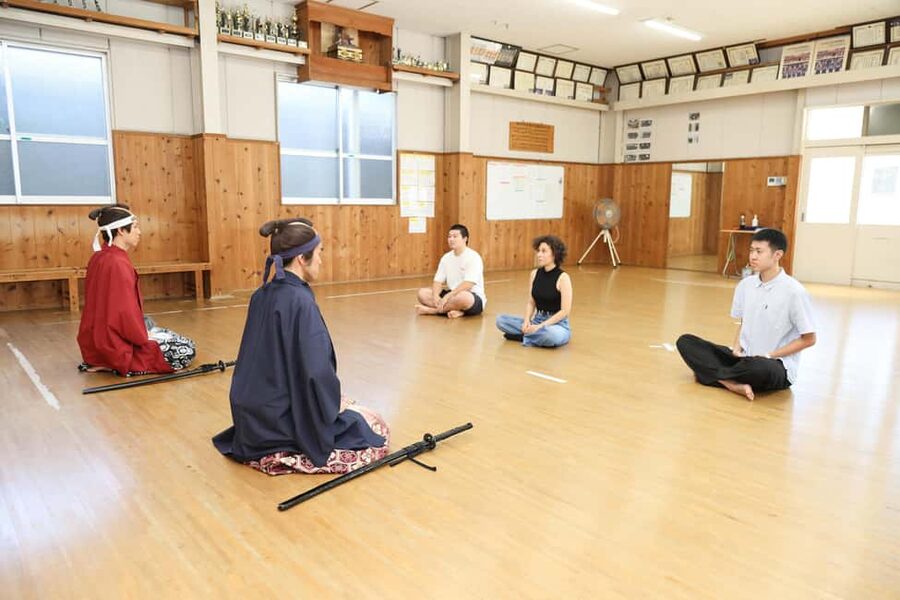
This experience is built around one key location: Myokaku-ji Temple, with training at the Myokaku-ji Dojo just inside. The unique part is that this is not just a show you watch. You practice sword techniques in the temple setting, which changes the mood from theme-park to something closer to an authentic ritual space.
There is also a storytelling layer. The site is connected to the Sengoku era, including warlords people associate with the late 1500s. Even if you only understand that background at a surface level, the setting helps. Stone, ritual space, and quiet structure make your training feel more focused.
And yes, it is fun. The instruction style from the actor-instructors tends to be patient and playful, so you are not stuck feeling awkward. I like that the experience does not treat you like a tourist who needs to stand back. You actively do the moves.
More Kimono Experiences in Kyoto
- Kimono Tea Ceremony at Kyoto Maikoya, NISHIKI
★ 5.0 · 911 reviews - Kyoto: Kimono Rental with Hairstyling and Accessories
★ 4.8 · 653 reviews - Kyoto: Kimono Tea Ceremony at Orizuruya Gion
★ 4.9 · 618 reviews
The 70-minute flow: training, kimono, performance, then filming
You’re looking at a 70-minute experience that moves in clear steps. The overall rhythm is: get ready, learn, watch, then perform and record.
First, you gather at the Myokaku-ji Dojo. It is described as the left side after you enter the main gate. From there, expect the timing to feel “workshop fast,” not slow and sightseeing-paced. This is good news if you only have a small window in Kyoto.
Then come the hands-on parts. The session includes:
- instruction on holding and wielding the sword,
- practice with sword techniques you will later show in the action sequence,
- kimono dressing,
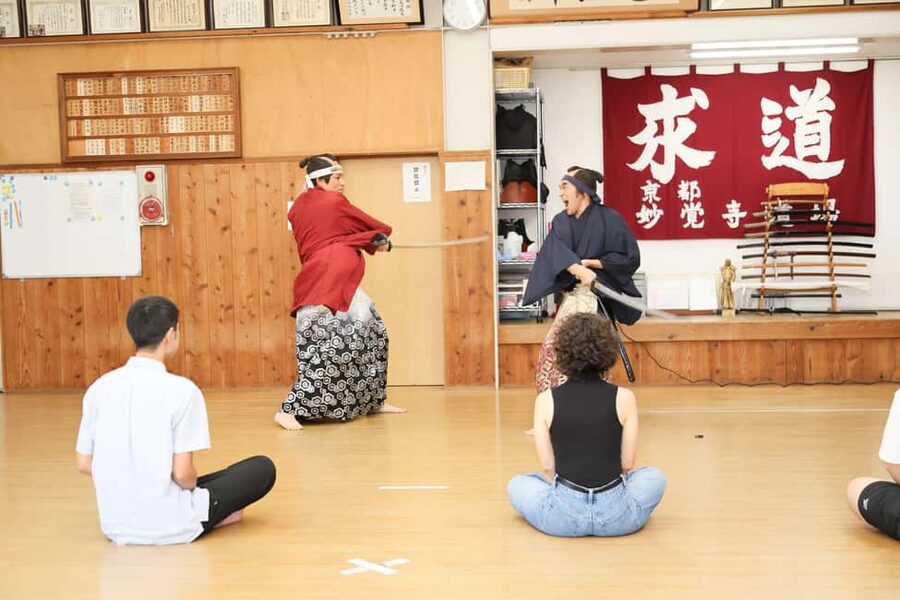
- watching a chambara performance by professional samurai actors,
- and your own filmed swordplay sequence.
The order can matter for photos. If you are trying to capture the full transformation, plan to bring extra attention to getting your kimono fit looking right before the filming moment.
Samurai sword basics you’ll actually practice
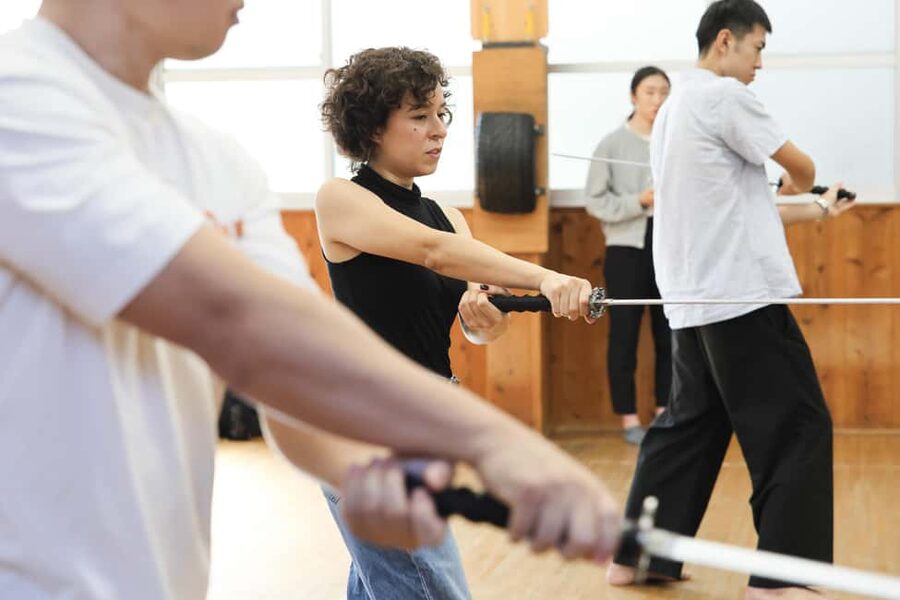
The sword portion is not random. You receive technique instruction that focuses on how to hold the blade and how to execute cuts safely and convincingly.
Two cuts you are specifically taught are makkogiri and kesagiri. If those names sound mysterious, that is fine. You do not need to know kendo terms to benefit. The instructors guide you step by step until your movements look like something from a chambara scene.
What makes this section valuable is that it is “learn and then use.” You practice sword techniques first, then you perform choreographed moves as part of the action-style segment. That gives your brain a simple goal, and it reduces the stress of wondering what you’re supposed to do.
Also, the vibe is safe by design. The experience is built for visitors, with clear guidance and a setup that focuses on instruction and performance rather than live steel.
Kimono dressing: fast, photo-ready, and part of the performance
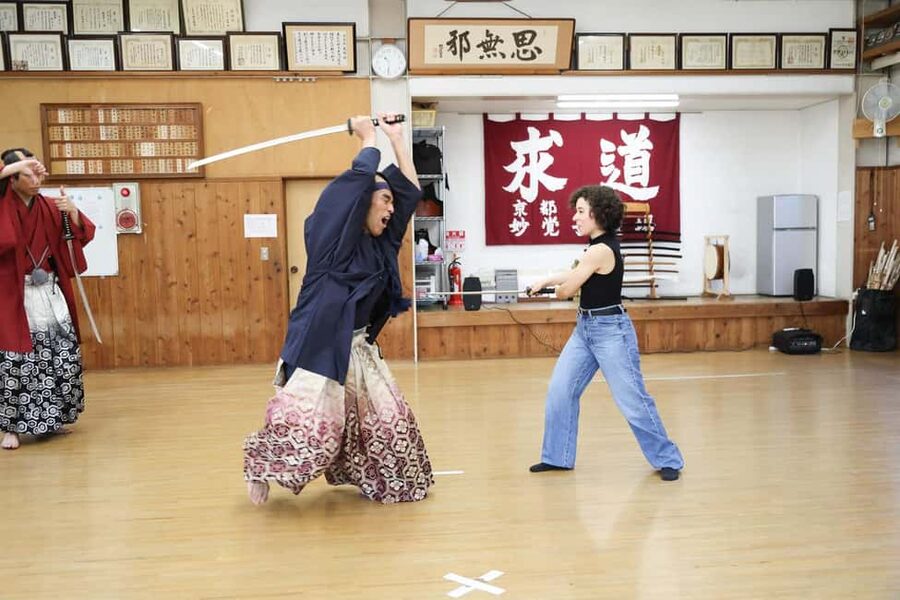
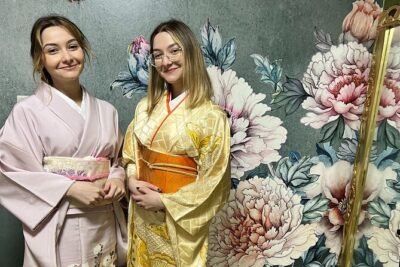
Kimono time is not an afterthought. You dress in a traditional kimono, and the rental is included in the price.
The best way to treat kimono dressing is to take it seriously for about ten minutes. The final look matters because you are wearing it during training, watching, and filming. When your sleeves and fit look right in photos and video, the whole experience feels more “movie scene” and less like a costume you threw on for a quick snapshot.
You should also expect physical considerations. Kimono dressing usually means you are standing, moving a bit carefully, and keeping your posture steady. That’s why the tour asks for comfortable clothes and physical suitability. If you have mobility limitations, this is the portion that can be most uncomfortable.
More Samurai & Ninja Experiences in Kyoto
- Kyoto Samurai Experience
★ 5.0 · 1,294 reviews - Kyoto: Kendo and Samurai Experience with Uniform and Gear
★ 4.9 · 815 reviews - Kyoto: Samurai Sword Class by Experts in Traditional Arts
★ 4.9 · 657 reviews - Skip the lines Basic Ticket at SAMURAI NINJA MUSEUM KYOTO
★ 4.5 · 632 reviews
Chambara performance by professional actors, not just a demo
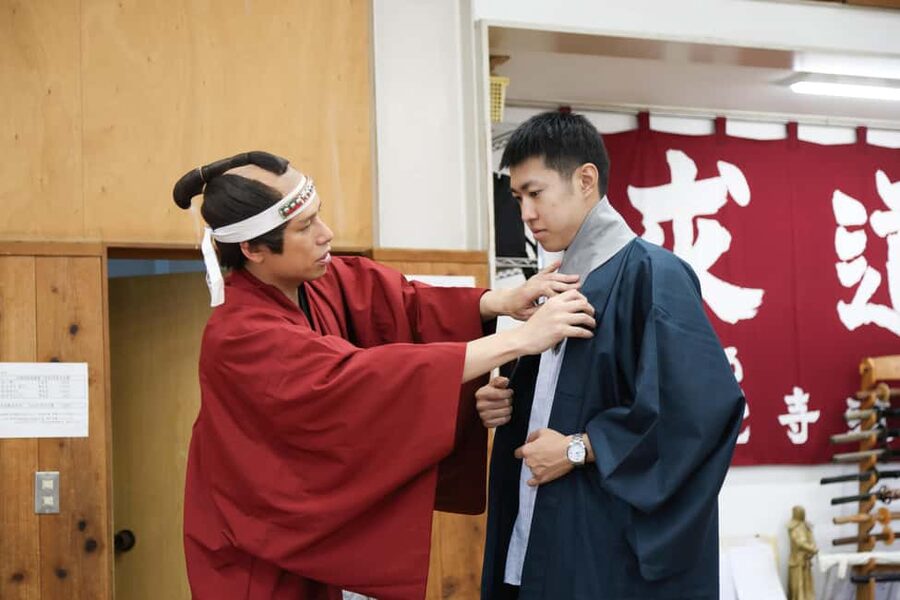
A major highlight is watching a professional chambara performance by samurai actors. These instructors are not generic stage performers. Some of them have experience acting in Japanese movies and TV shows, and names like Kesuke Irie San and Kazuya Naito San show up in the instructor lineup you may encounter.
That matters because their job is not just to show movement. It is to show what the movement looks like with real timing, stance, and presence. You watch a short performance, then you repeat the vibe through your own practice.
This part tends to be entertaining in a specific way. It is not only impressive, it is approachable. The instructors often keep things light, so you feel okay making mistakes during your own filming sequence.
Filming your own action scene, with your camera
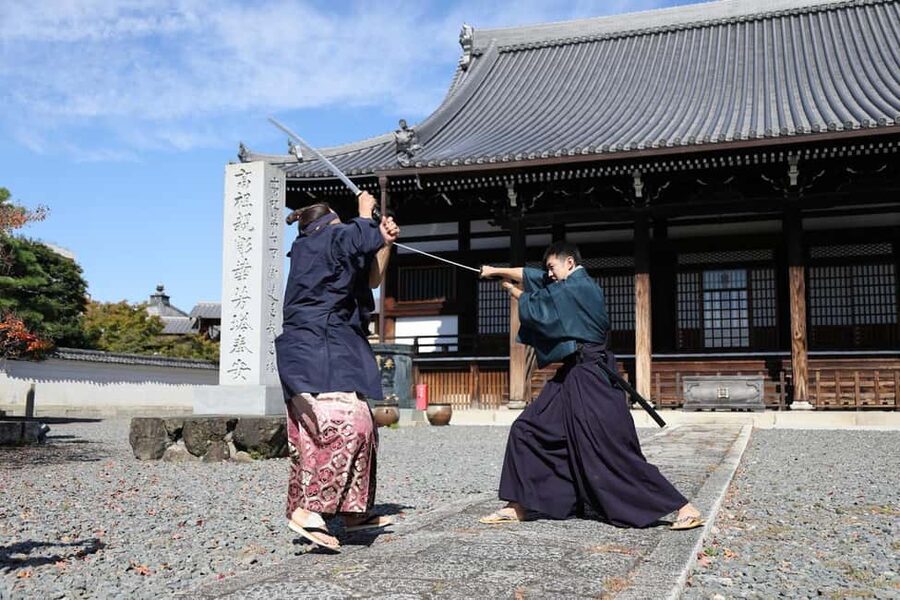
One of the reasons this experience scores so high is that you leave with more than a memory. You take part in a swordplay and filming session and can shoot the scene with your camera.
What is included:
- Photography and video recording using your camera setup during the activity.
- A photo download service so you can take your media home.
Practically, this means you want your camera ready and charged. Bring it even if you tell yourself you’ll just let the instructors handle it, because the activity is built for recording your participation.
A simple tip: during the performance portion, watch how the actors position their bodies and angles. Then when it’s your turn, copy the stance and keep your movements big enough to read on video. Quiet, tiny movements look subtle in person, but cameras love clarity.
Also, there is a separate segment where you perform the sword techniques you learned. The swordplay session ends after that part, so don’t assume there is unlimited filming time. In other words: be ready when they call you in.
Where the value comes from in the $127 price
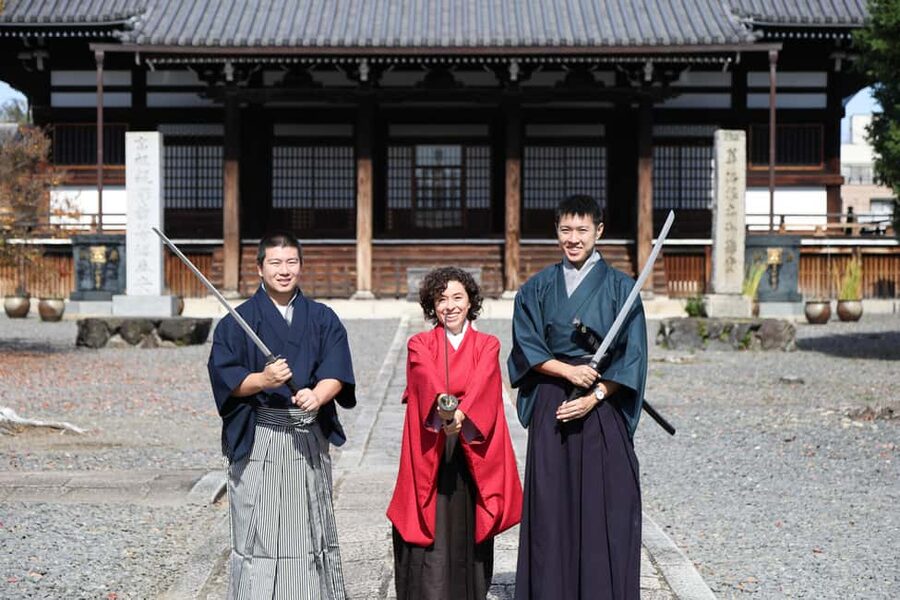
At $127 per person for 70 minutes, the price can look steep on the surface. But you are not just paying for an activity. You are paying for a full production-style package.
Here is where the value comes from:
- Kimono rental is included.
- Professional instruction and a chambara performance are part of the structure.
- Your photos and video are handled, plus the download service.
- There is indemnity insurance specified by the provider.
Also, the group is small, limited to 6 participants. Small group time is where money actually turns into something you feel. You are more likely to get corrections and guidance instead of being rushed through.
If you price out kimono rental plus a one-off photo session plus an instructor-led activity, this starts to feel more reasonable. The experience bundles it into one tight block, so you spend less time coordinating and more time doing.
Meeting point, timing, and what to bring (so you don’t waste time)
Plan for a short, efficient day. The meeting point is the Myokaku-ji Dojo, to the left after you enter the main gate of Myokaku-ji Temple.
You should bring:
- a camera (and make sure it is charged),
- comfortable clothes suitable for physical activity.
A few “day of” realities:
- You will be moving, practicing stance and cuts.
- You’ll want to avoid stiff shoes or clothing that restricts your legs or back.
- You can take photos and videos during the experience.
Not allowed: smoking, alcohol, and drugs. That is mostly standard, but it’s worth noting so you do not get turned away.
Skip the line with a separate entrance
Another practical advantage is the skip-the-line setup through a separate entrance. That matters in Kyoto, where time can disappear fast. You do not want your whole plan eaten up by waiting around before you even start training.
If you are pairing this with other temple visits nearby, the separate entrance can help keep your day from running late. Just remember: this is a timed experience, so arrive at the meeting point and get settled.
Who this is best for, and who should skip it
This is best for you if you enjoy hands-on activities, playful performance, and leaving with recorded content. It is also a good fit if you want something different from the usual temple photo stops.
It is likely a strong match if you:
- want a fun action scene experience in a real temple setting,
- like structured instruction and clear goals,
- enjoy wearing traditional clothing for photos and video.
It is not suitable for:
- children under 5,
- pregnant women,
- people with back problems,
- people with pre-existing medical conditions,
- people over 95.
If any of those apply, skip it. Even with careful instruction, the format involves physical movement and controlled stances.
Should you book this Samurai Sword and Kimono Filming Experience?
Book it if you want a Kyoto activity that combines training, performance, and media you can keep, in a tight 70-minute window. The small group size, professional actor energy, and the fact that kimono rental and downloadable footage are included are the big reasons this is good value.
Skip it if you want a mostly relaxed cultural tour where you just observe. This is interactive. You’ll be dressed, moving, learning cuts like makkogiri and kesagiri, watching chambara, then filming your own sequence.
If you’re unsure, use this rule of thumb: if you are willing to look a little silly while learning sword tricks, you will probably love it. If you need a low-mobility, sit-and-watch experience, look for something else.
FAQ
Where is the meeting point for the experience?
Meet at the Myokaku-ji Dojo, to the left after entering the main gate of Myokaku-ji Temple.
How long is the experience?
It lasts 70 minutes.
Is the kimono rental included in the price?
Yes. Rental kimono is included.
Can I take photos and video with my own camera?
Yes. You are welcome to take photos and videos during the experience, and the activity includes photography and video recording with your camera.
What is included besides the training and filming?
Included are a photo download service, photography and video recording (with your camera), rental kimono, and indemnity insurance specified by the provider.
What should I bring with me?
Bring a camera and comfortable clothes suitable for physical activity.
Is there a limit on group size?
Yes. It is a small group limited to 6 participants.
Who should not book this experience?
It is not suitable for children under 5, pregnant women, people with back problems, people with pre-existing medical conditions, and people over 95.
Latest write-ups near Kyoto
- Kyoto: Nishiki Market Tour with a Local Foodie & Tastings★ 4.5 · 67 reviews
- Kyoto Kimono Rental mimosa |Kimono/Yukata Rental Couple Plan★ 4.8 · 67 reviews
- Kyoto: Traditional Kimono Fabric Handicrafts Workshop★ 5.0 · 67 reviews
- Kyoto Tea Ceremony and Samurai Photo Session★ 5.0 · 70 reviews
- Kyoto: Replica food making experience★ 4.8 · 70 reviews
- Kyoto: Kinkakuji, Golden Pavilion Guided Tour★ 4.7 · 71 reviews
- Private departure transfer from Kyoto city to Kansai International airport★ 5.0 · 72 reviews
- Uji: Green Tea Tour with Byodoin and Koshoji Temple Visits★ 4.8 · 72 reviews
Kimono Experiences, compared.
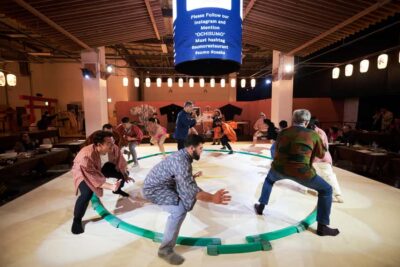
Sumo Show & Experience w/ Optional Kimono & Hot Pot
Read our review →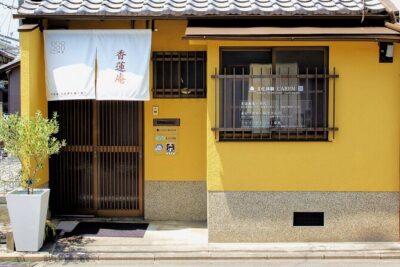
KYOTO Tea Ceremony with kimono near by Imamiya Jinjya Shrine
Read our review →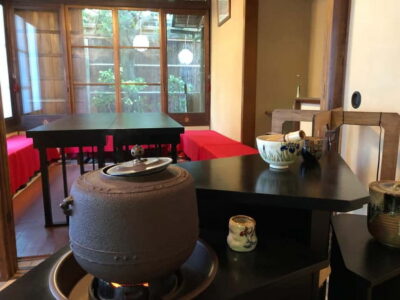
Kimono and Tea Ceremony Experience at Cultural Asset
Read our review →
Browse the lists this tour appears in