
Reviewed · KNIFE MAKING EXPERIENCES
Gifu Samurai Sword Town;Japanese Damascus Knife Making Experience
This experience is interesting because it turns Gifu’s famous sword and cutlery town into something personal. You craft a Damascus knife, then do the satisfying part, a sharpness test that shows the difference a good edge makes.
What I like most is the hands-on pace, you actually assemble, polish, sharpen, and sign your knife with a craftsman guiding you. I also love the focus on upkeep, you learn the sharpening basics so your knife stays top-notch after the class ends.
One thing to consider is that the final cost can change depending on which of the three knife styles you choose, so check that before you lock in your selection.
Key highlights worth penciling in
- Knife Museum + G.SAKAI factory: see the history and modern production side by side
- Damascus knife building in a small group (max 5) so you get real attention
- Sharpness test on fresh vegetables to feel the results immediately
- Learn sharpening for long-term care, not just a one-time tutorial
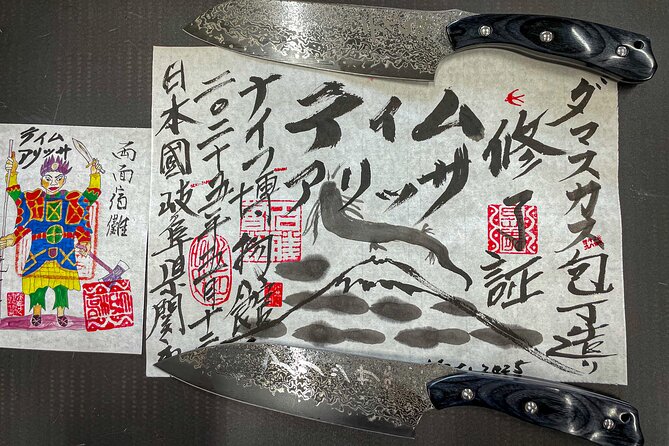
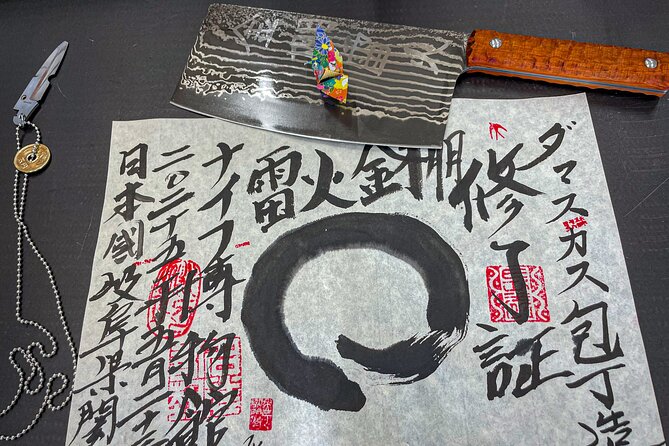
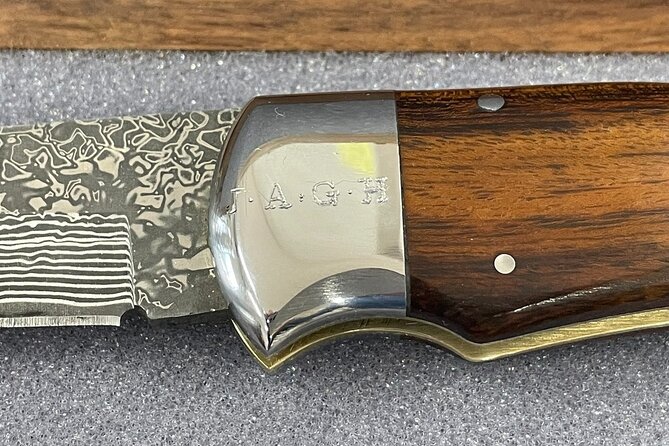
- Three knife styles to choose from: kitchen, folding hunting, or Chinese Damascus
Seki’s sword-making legacy, and what you’re really learning
Gifu’s Seki City has knife DNA. Iron sand from the Nagaragawa River helped the area become a major sword-making center as far back as the 13th century. By the Edo period, there were several hundred blacksmiths producing Samurai swords and knives, and that old-school know-how never fully left.
Today, Seki is often grouped with Sheffield in the UK and Solingen in Germany as one of the world’s top cutlery manufacturing places. That matters because you’re not doing this in a random workshop. You’re doing it in a town that still treats knives as serious craft, not cosplay props.
In this class, you’re really learning two things at once. First, how Damascus-style knives are treated and finished, so you end up with a usable blade, not just a pretty pattern. Second, you learn the basics of sharpening, which is what separates a fun souvenir from a kitchen tool you’ll actually reach for.
More Samurai & Ninja Experiences in Takayama
- Ninja Experience in Takayama – Basic Course
★ 5.0 · 62 reviews - Ninja Experience in Takayama – Basic Course
★ 4.6 · 59 reviews - Knife Making Experience in Samurai Sword Town
★ 5.0 · 29 reviews
Knife Museum and the G.SAKAI factory: the warm-up before you build
The day starts at Sekitomioka Station in Seki, with the workshop located near the G.SAKAI area. You’ll begin at a Knife Museum set in an attractive Canadian-style log house right next to the factory.
The museum part is more than decorative. You get to see rare cutlery items and exhibits from around the world, which helps you understand where different knife styles come from. It also sets expectations for what you’re about to make, because you’ll notice how craft shows up in proportions, finish, and edge geometry.
Then you go into the factory and watch how quality Japanese knives are made nowadays. This is where you get context for what you’ll do later in the atelier. Even if you only understand the basics, you’ll sense the difference between fast production and careful finishing, and that makes the hands-on stage feel more meaningful.
One more practical note. The workshop area is near public transportation, but it’s not exactly in a tourist strip. If you like structure, arrive a few minutes early so the museum and factory visits feel relaxed instead of rushed.
Choosing your Damascus knife style: kitchen vs hunting vs Chinese
Before you start assembling, you pick one of three knife types. That choice is important because it changes what you’re building and what you’ll likely use it for.
Here’s the lineup:
- Japanese Damascus Kitchen Knife for everyday cooking
- Folding Damascus Hunting Knife for a portable option
- Chinese Damascus Kitchen Knife for traditional Chinese cooking styles
The price can vary based on which knife you choose, so treat the selection as part of your budgeting. A kitchen knife is the easiest way to turn this into daily value once you’re back home. A folding hunting knife can be a better match if you love the outdoors or want something compact.
I also like that you’re not forced into a single generic souvenir. You get to choose the end result based on your real habits, kitchen life, or hobby life. That’s the kind of option that makes a workshop feel respectful, like the class is built around you.
In the atelier: assemble, polish, sharpen, and write your name
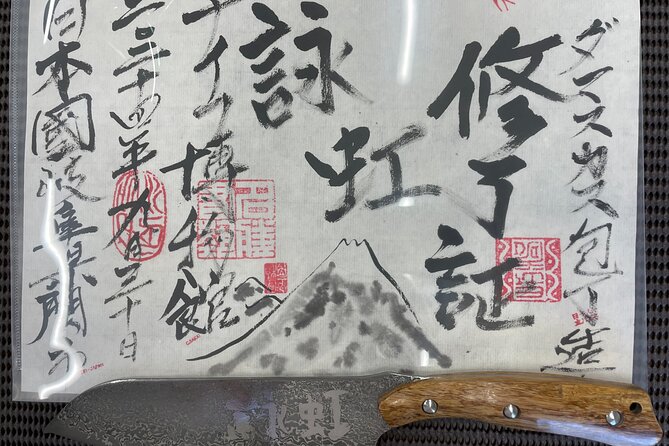
The core of the experience happens in the atelier, where you construct your own knife under guidance. You’ll go through steps like assembling, polishing, sharpening, and then writing your name on it.
That sequence matters. Assembly helps you understand the basic construction and how parts come together. Polishing is where the knife stops looking like material and starts looking like a tool. Then sharpening is where the transformation becomes obvious, because the edge is what turns a blade into something that performs.
The name-writing moment is small, but it changes how you think about the knife. It becomes yours in a literal way. When you hold it later, you remember the process and you’re more likely to maintain it instead of letting it sit in a drawer.
The group is kept small, with a maximum of 5 travelers, which helps a lot during hands-on work. In bigger groups, you often spend half the time waiting. Here, you can ask questions and get corrections while you’re actually doing the work.
You’ll also get to feel how craftsmen think about finishing and edge readiness. That’s hard to learn from videos. In a workshop like this, you’re learning by doing, then receiving guidance while your hands are still fresh on the task.
And from what people say about the hosts, the atmosphere is friendly, not stiff. Names that come up in reviews include Hiro, Sumi, and Yoshi. One strong theme is that they handle both the craft side and the experience side, so even if you don’t know anything about knives, you don’t feel lost.
More Knife Making in Takayama:
- Authentic knife making experience at a blacksmith in Kyoto
★ 4.8 · 350 reviews - Tokyo: Knife Making Workshop (Sharpening, Engraving)
★ 4.9 · 153 reviews - Kyoto: Beginner Knife Sharpening & Handle Fitting Workshop
★ 4.9 · 141 reviews - Experience Big soba knife Soba Making Class in Tokyo Kappabashi
★ 5.0 · 71 reviews
The sharpness test on fresh vegetables, plus the real sharpening skill
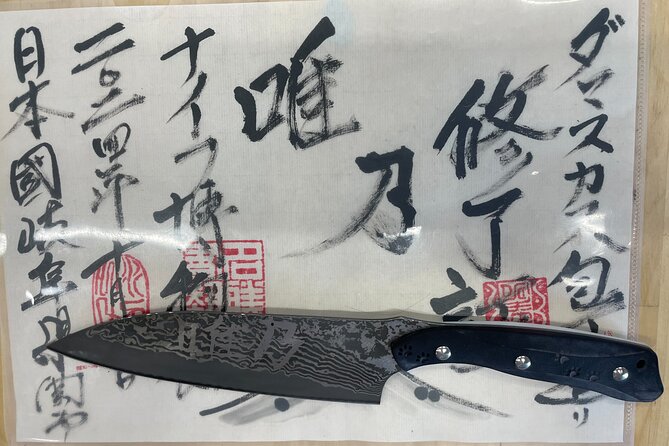
After your knife is made, you get to test it. This class includes a sharpness test using fresh vegetables, so you can see what an effective edge feels like right away.
This part is the payoff. Cutting vegetables with a newly sharpened knife is one of those simple moments that tells you the truth faster than any explanation. A dull edge squeezes and drags. A good edge glides.
What I like about adding this test to the workshop is that it makes the lesson practical. You’re not leaving with instructions that you might or might not use. You’re leaving with a baseline. You know what sharp should feel like, so when you sharpen later, you’ll recognize the difference.
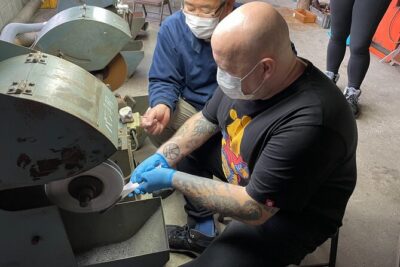
Then the class turns toward maintenance. You learn the art of knife sharpening, with the goal of keeping your knife razor sharp for years. Even if you only pick up the basics, that knowledge changes your long-term experience with the knife.
And here’s the subtle value. People often spend money on knives, then ignore sharpening until things are bad. This workshop flips that pattern. You learn early, while the knife is still new, so you’re more likely to care for it the right way.
Time, price, and getting there without headaches
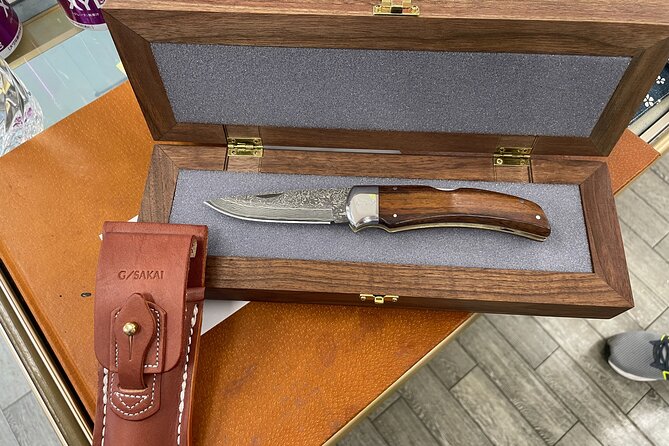
This experience runs about 2 hours 30 minutes. Start time is 10:30 am, and the day ends back at the meeting point. That makes it easy to plan around other Seki stops or a return trip.
Price is listed as $250.38 per person, and you may pay more depending on the knife type you choose. If you’re thinking about value, I’d compare it to what you’d spend on a high-quality knife plus sharpening help. Here, you’re getting:
- A guided knife-making process
- A sharpness test on fresh vegetables
- A sharpening lesson
- A finished knife that you build yourself
So you’re not just paying for the finished object. You’re paying for the craft coaching and the skills you can carry home.
Transportation-wise, the tour offers pickup, and it’s also near public transportation. If you’re traveling from Kyoto, it’s doable as a day trip. The train time is roughly 1.5 to 2 hours, which is a comfortable window for a morning workshop and a later dinner back in Kyoto.
One more reason this schedule works well. A 2.5 hour workshop is long enough to feel like a real activity, but short enough that you’re not wiped out the rest of the day. You’ll still have energy to explore Seki or return to your main base.
Who should book this (and who might not)
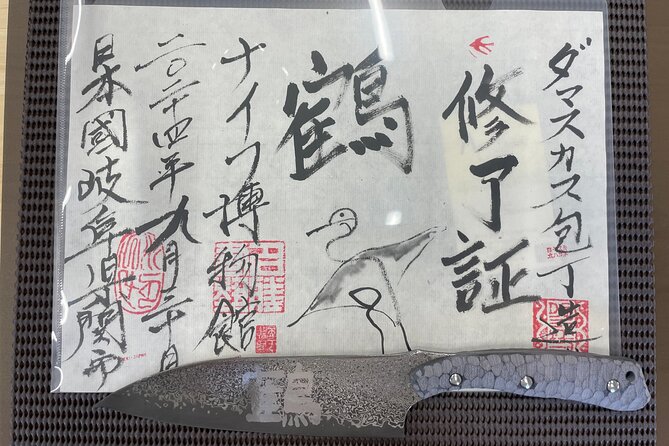
This is best for you if you:
- Want a hands-on craft experience with a real, usable outcome
- Care about cooking tools, not just souvenirs
- Like learning practical skills, especially knife maintenance
- Appreciate seeing how a Japanese cutlery town works, museum first, factory next
It’s also a good fit if you’re traveling with someone who enjoys practical hobbies. One reason this class gets strong recommendations is that it feels like a shared project, not a passive tour where you just watch.
You might reconsider if you already feel comfortable with sharpening and you only want a basic tourist activity. Also, if your main goal is a bargain, remember the knife style you pick can affect your final price.
Finally, the location can take a little effort to reach compared with major city attractions. The payoff is that you end up in the real manufacturing area, not just a photo stop. If you prefer convenience over authenticity, plan a bit more time for getting there.
Should you book this Gifu Samurai Sword Town knife-making experience?
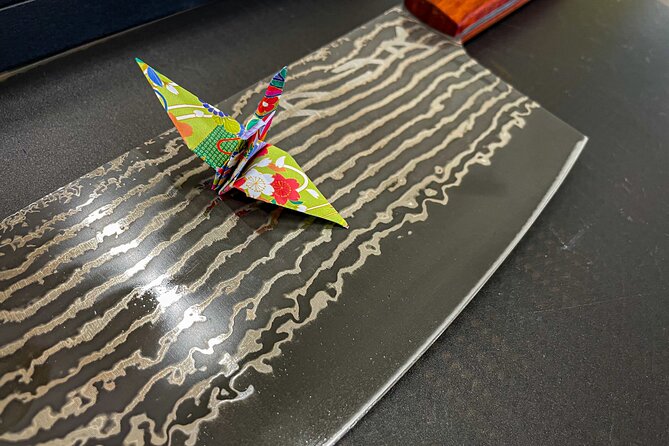
I think you should book it if you want an authentic Japan craft day where you leave with something you can use and a skill you can maintain. The hands-on making, the fresh vegetable sharpness test, and the sharpening lesson all point to real-world value, not just a nice memory.
If you’re on the fence, ask yourself one question: do you like learning by doing, with your hands, under guidance? If yes, this workshop is exactly that. If you just want to watch and take photos, you might enjoy parts of it, but you may not feel satisfied afterward.
For me, the strongest reason to book is the combination. You get Seki’s cutlery context, you make your knife, and you learn how to keep it sharp. That trio is why this experience tends to stick with people long after they’ve left the workshop.
FAQ
What is the duration of the knife-making experience?
It lasts about 2 hours 30 minutes.
Where does the tour start, and what time does it begin?
The start point is Sekitomioka Station (Hidase, Seki, Gifu 501-3911, Japan), and the start time is 10:30 am. The activity ends back at the meeting point.
How many knives can I choose from, and what types are available?
You can choose from three types: a Japanese Damascus Kitchen Knife, a Folding Damascus Hunting Knife, or a Chinese Damascus Kitchen Knife. The prices vary depending on the knife type you choose.
What will I do during the workshop?
You’ll visit the Knife Museum, enter the factory to see how Japanese knives are made, and then construct your own knife in the atelier by assembling, polishing, sharpening, and writing your name on it. You’ll also test your knife’s sharpness by cutting fresh vegetables, and you’ll learn essential knife sharpening skills.
Is pickup offered, and is it near public transportation?
Yes, pickup is offered. It is also near public transportation.
Can I cancel for a full refund?
You can cancel for a full refund if you cancel at least 24 hours before the experience’s start time. Cancellation is free, and if you cancel less than 24 hours before start time, the amount you paid will not be refunded.
Latest write-ups near Takayama
- From Takayama: Alpine Splendor – Shinhotaka Ropeway and Kamikochi★ 5.0 · 91 reviews
- Takayama: Onigiri and miso soup making at a buddhist temple★ 4.9 · 93 reviews
- Private-group Morning Cycling Tour in Hida-Furukawa★ 5.0 · 105 reviews
- Private Afternoon Cycling Tour in Hida-Furukawa★ 5.0 · 109 reviews
- From Takayama: Guided Day Trip to Takayama and Shirakawa-go★ 4.9 · 113 reviews
- Departing from Takayama [Regular sightseeing bus] World Heritage Sites Shirakawago and Gokayama Ainokura★ 4.5 · 137 reviews
- Takayama Half-Day Private Tour with Government Licensed Guide★ 5.0 · 69 reviews
- 1-Day Takayama Tour: Explore Scenic Takayama and Shirakawago★ 5.0 · 113 reviews
Knife Making Experiences, compared.
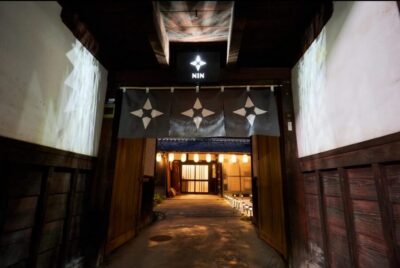
Authentic knife making experience at a blacksmith in Kyoto
Read our review →
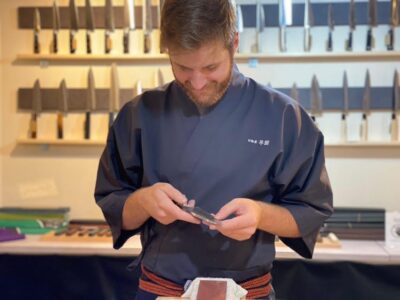
Beginner Knife Sharpening & Handle Fitting Workshop
Read our review →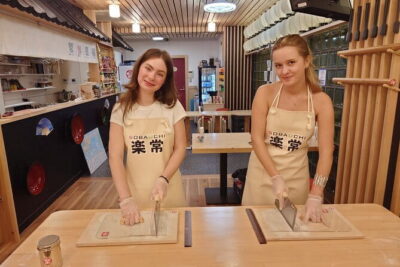
Experience Big soba knife Soba Making Class in Tokyo Kappabashi
Read our review →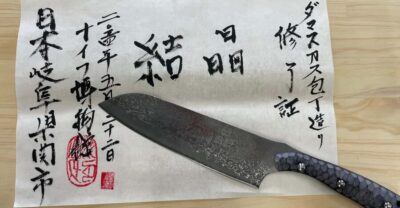
Seki: Samurai Knife Making Experience at the Knife Museum
Read our review →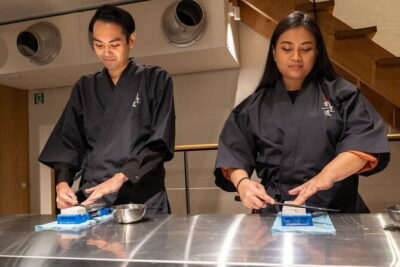
Browse the lists this tour appears in