
Reviewed · PEACE MEMORIALS
Hiroshima Peace Park & Atomic Bomb Dome Guided Walk
This Hiroshima Peace Memorial Park walk is interesting because it turns a heavy site into something you can actually understand, step by step. I like how the guide, Adina, points out details that are easy to miss on your own, and I also like that the route includes both science-and-context stops (like the museum) and the human tributes (like memorial cenotaphs and prayer sites). One consideration: this is not a casual sightseeing loop, so expect emotional weight and steady walking in the sun.
You’ll meet at the Gates of Peace area and follow a thoughtful path that ends at the Atomic Bomb Dome. The tour runs about 2 hours, and it is led in English plus Urdu and Hindi. The main drawback is practical, not spiritual: you’ll want comfortable shoes and water, because you’re moving between many stations without long breaks.
Key highlights to know before you go
- Gates of Peace orientation at the start, setting a tone of unity and reflection
- Fountain of Prayer for a moment focused on the victims, not just dates and facts
- Dr. Marcel Junod monument to learn how a Swiss doctor aided survivors
- Peace Memorial Museum context for what happened on August 6, 1945
- Naming and remembrance through the Children’s Peace Monument and Korean victims tributes
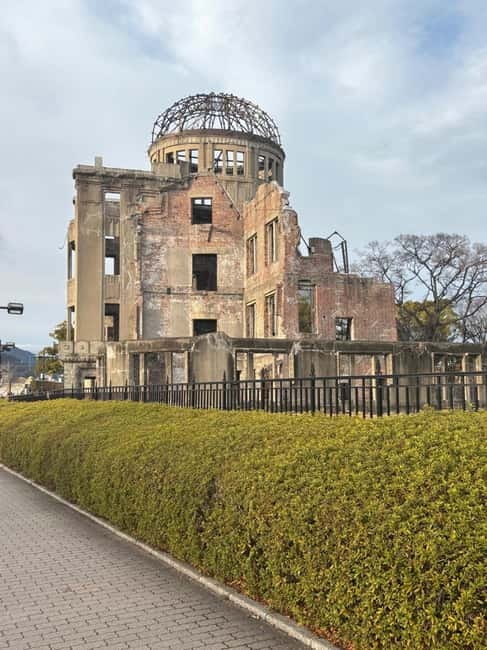
- Peace Bell, Peace Tower, then the Atomic Bomb Dome for a final, hard-to-forget reminder
Why this Hiroshima Peace Park walk lands harder than a self-guided visit
Hiroshima Peace Memorial Park can feel like a blur if you’re just scanning signs. This guided walk helps you connect the dots between the structures, the meanings, and the timeline. You get a route that’s paced for attention, not speed, and the guide keeps the story clear as you move.
In my view, the biggest value is interpretation. Each stop is more than a photo spot. For example, the Prayer Fountain is about reflection, the Peace Memorial Museum gives history for Aug 6, 1945, and the later stops shift into memorial naming and global symbolism. When you hear those links aloud, you don’t just walk past things, you understand what you’re looking at.
The other standout is the guide style. People praised Adina for taking time, explaining carefully, and staying patient. One review specifically noted that he even explained nuclear reaction details in a way that made the science easier to grasp. That matters here, because Hiroshima is both moral and technical, and this tour tries to respect both sides.
Other Peace Memorial visits:
- Hiroshima Historical Walking Tour – Why A-Bomb was Dropped
★ 4.8 · 893 reviews - Hiroshima: Miyajima Peace Memorial Icons of Peace and Beauty
★ 4.9 · 361 reviews - Hiroshima/Guided Virtual Tour of Peace Park/PEACE PARK TOUR VR
★ 5.0 · 157 reviews
Getting oriented at the Gates of Peace
Your walk starts at the Gates of Peace, a symbolic entrance that frames the whole experience. The guide’s first task is practical: help you get your bearings fast so the park doesn’t feel like a random collection of monuments. You’ll hear what the gates represent, and it sets a different mood than just arriving and taking pictures.
This opening moment matters because Hiroshima Peace Memorial Park is large and layered. Without context, it’s easy to focus on the most famous site and miss the meaning scattered across the rest of the grounds. Starting at the gates pushes you to treat the park like one connected message.
Prayer Fountain, Flame of Peace, and the idea of remembering with purpose
Next you’ll pause at the Prayer Fountain, where the tone becomes personal. This stop is not about facts alone. It is about acknowledging the victims and letting the site do its work in silence for a moment, then hearing a guide-led explanation that keeps it from becoming vague.
A short walk later, you’ll reach the Flame of Peace. The flame is a clear visual symbol tied to a commitment to a nuclear-free world. I like this part because it helps you move from grief to responsibility. You’re still in remembrance mode, but the tour nudges you to think about what comes after.
A practical tip: since both of these stops can be exposed, bring water and plan your photo breaks. You will likely want both hands free for camera and phone, so avoid heavy bags.
Dr. Marcel Junod, the Rest House, and why survivor stories matter
One of the most meaningful stops is the Monument of Dr. Marcel Junod. This is where the Swiss doctor comes into focus, and you learn how he aided survivors. That small human anchor can make the broader event feel less distant. It also prevents the experience from becoming only numbers on a timeline.
You’ll also visit the Rest House, described as a witness to the past. Even without turning it into a lesson in architecture, you can feel the point. These buildings are not abstract. They are pieces of what remained, which helps the story feel less like history class and more like a place you’re standing inside.
If you’re the type who likes details, this is where you’ll probably appreciate the guide most. Reviews praised Adina for pointing out elements people typically skip. This portion fits that pattern, because monuments and structures can look similar at first glance unless someone gives you the right lens.
More Walking Tours in Hiroshima:
- Hiroshima Peace (Heiwa) Walking Tour at World Heritage Sites
★ 5.0 · 872 reviews - Hiroshima City 4hr Private Walking Tour with Licensed Guide
★ 5.0 · 437 reviews - Hiroshima Walking Tour Why A Bomb was dropped to Hiroshima
★ 5.0 · 347 reviews - Miyajima Half-day Trip Historical Walking Tour
★ 5.0 · 284 reviews
Peace Memorial Museum: the August 6, 1945 timeline that makes everything else click
The Peace Memorial Museum is the tour’s factual anchor. You’ll spend time with the history of August 6, 1945, and the museum content ties together what you’ve been hearing at the memorial sites.
I recommend you approach the museum with two goals:
- Learn the timeline clearly, so the later memorials don’t feel like disconnected tributes.
- Watch for the emotional cues the museum gives you. You don’t want to “speed-read” here. The subject deserves a slower pace.
One rule to know: food and drinks are not allowed inside the museum. So save snacks for outside, and keep your water bottle handy for the walking sections.
Hiroshima Victims Memorial Cenotaph, Korean victims tribute, and the power of naming
The next stretch focuses on memorial structure and remembrance. You’ll visit a Hiroshima victims memorial cenotaph and later pay tribute at a Korean atomic bomb victims cenotaph. The tour also includes the Children’s Peace Monument, which honors young lives lost.
Why this section matters: it shifts the emphasis from events to people. Even if you know the general history, naming and specific memorials help you understand scale and specificity. It also broadens the story beyond a single national frame, which feels important for anyone trying to understand who was affected.
If you’re sensitive to heavy content, take your time here. You will be tempted to rush for the famous end point, the Atomic Bomb Dome. Resist that. The earlier memorials are what make the final stop hit harder.
Hiroshima National Peace Memorial, Peace Bell, and Peace Tower
You’ll see the Hiroshima National Peace Memorial and then move into a more ceremonial zone with the Peace Bell and Peace Tower.
The Peace Bell experience is meant for global harmony. It’s one of those moments where a simple action becomes symbolic, and the guide helps you connect it to the tour’s overall message. I like this stop because it gives you a chance to shift from receiving information to actively participating in the theme.
Then the Peace Tower adds another layer of symbolism, keeping the focus on peace as more than a slogan. It’s tied to the way the park blends remembrance with an intention for the future.
A practical note: you’ll likely see other visitors pausing for photos. Keep your movements slow and respectful. This is a place where noise feels out of place.
Children’s Peace Monument: why this stop deserves your full attention
The Children’s Peace Monument is the part of the tour that often changes people’s tone. It is built to honor young lives, and the message tends to land even if you think you already know the history.
I’d treat this stop like a pause, not a checkpoint. Let the guide’s explanation sink in, then spend a little quiet time looking. If you take photos, do it thoughtfully rather than at high speed.
This is also a good place to notice the difference between memorials. Some are designed for reflection, some for education, and some for emotional recognition. This one leans hard into emotional recognition, which is why it stands out in a tour like this.
Atomic Bomb Dome and the Hypocenter Monument: what you feel at the end
The final stretch is where the park becomes brutally real. You’ll visit the Atomic Bomb Dome, followed by the Hypocenter Monument for a moment to reflect on the instant that changed history.
The Dome is the most famous visual, and it can tempt you into turning it into a quick photo moment. Don’t. The guide’s pacing helps, but you still need to choose to slow down.
At the Hypocenter Monument, the tone shifts into a specific focus on the moment. That combination is powerful: you see the symbol of destruction, then you ground the story in the location and what it meant. This is where the museum context you got earlier matters. It gives shape to what your eyes can only suggest.
When people leave this area, they often look quiet. That reaction is normal. It is not a failure to feel. It’s part of how this site communicates.
Price and value for a 2-hour guided walk
At $21 per person for around 2 hours, this is good value if you care about understanding what you’re seeing. Hiroshima Peace Memorial Park has enough moving parts that a self-guided visit can be rewarding, but it can also become confusing. Here, you get a guided thread that connects the memorials, the museum, and the symbolic stops.
You’re also paying for time and explanation. The reviews you shared repeatedly praise Adina for careful explanations and patience, and for highlighting details people might miss. That kind of guidance is exactly what can make $21 feel like a bargain on a site where you really want context.
One caution on value: if you prefer to read everything yourself and don’t want to hear commentary, you may feel the tour is more structured than you need. But if you like clarity, this tour is built for you.
Practical tips so you enjoy the walk and stay comfortable
Here’s how to make this smoother, with minimal fuss:
- Wear comfortable shoes, because you’ll cover multiple stations close together and stay upright for long stretches.
- Bring water and sunscreen, especially if you’re visiting on a bright day.
- Bring a camera, since you’ll want photos at multiple symbolic points.
- Plan for museum rules: no food or drinks inside.
- Keep expectations respectful and realistic. This is a memorial site, not a themed attraction.
Also, check the accessibility notes carefully. The activity info says wheelchair accessible, but it also states it is not suitable for wheelchair users and people with mobility impairments. If that affects you, I’d contact the provider before booking and ask what route support looks like in practice.
Who should book this walk, and who might want a different option
I’d recommend this guided walk if:
- You want a coherent story across memorials, not just a list of places.
- You like guides who explain slowly and clearly, not rushed points.
- You want both human remembrance and the science and history framing.
You might choose a different option if:
- You dislike emotional memorial sites.
- You need long seated breaks, because this is a steady walk across many stops over about 2 hours.
- You strongly prefer self-guided reading without group pacing.
The guide’s language options also help. With English, Urdu, and Hindi, it’s easier for more visitors to follow the meaning, not just the location names.
Should you book this Hiroshima Peace Park guided walk?
Yes, I’d book it if your goal is understanding. At $21 and roughly 2 hours, you’re getting more than entry points and photos. You’re getting an organized route through grief, history, and symbolism, with a guide who is described as patient and careful about explanations.
If you’re visiting Hiroshima for the first time, this walk is a strong way to get meaning fast. And if you already know some history, the memorial naming and the context stops can still deepen what you think you know.
Just go in ready for a serious mood, dress for walking, and take your time at the stops that ask you to slow down.
FAQ
How long is the Hiroshima Peace Park & Atomic Bomb Dome guided walk?
The tour duration is listed as 2 hours.
What does it cost?
The price is listed as $21 per person.
Where do I meet the guide?
You meet at the Gates of Peace, in front of an Italian restaurant (coordinates: 34.3906308, 132.4516662).
What languages is the live guide available in?
The guide is listed as English, Urdu, and Hindi.
What major places are included on the tour?
Included stops cover the Gates of Peace, Monument of Dr. Marcel Junod, Fountain of Prayer, Flame of Peace, Hiroshima Peace Memorial Museum entry, Rest House, Children’s Peace Monument, Korean Victims Memorial, Peace Bell experience, Peace Tower, Atomic Bomb Dome, and Hypocenter Monument.
Are meals included, and can I eat inside the museum?
Meals are not included. Food and drinks are not allowed inside the museum.
Is this tour wheelchair accessible?
The activity information says wheelchair accessible, but it also lists that it is not suitable for wheelchair users and people with mobility impairments. If you have mobility needs, it’s best to ask the provider directly before booking.
Latest write-ups near Hiroshima
- Hiroshima: Atomic Bomb Dome and Peace Memorial Museum 3 hours★ 5.0 · 20 reviews
- Hiroshima: City and Miyajima Bike and Boat Tour★ 5.0 · 20 reviews
- Miyajima Guided Tour and Fresh Oyster Farm Tour★ 5.0 · 20 reviews
- Hiroshima: Tour of Atomic Bomb Dome & Peace Memorial Museum★ 5.0 · 20 reviews
- Miyajima Highlights: Itsukushima Shrine & Island Nature★ 5.0 · 21 reviews
- Miyajima Highlights: Itsukushima Shrine & Island Nature★ 4.9 · 21 reviews
- Dinner Cruise on HANAIKADA (Raft-Type Boat) with Scenic View of Miyajima★ 5.0 · 21 reviews
- History of Hiroshima Group Walking Tour★ 5.0 · 23 reviews