
Reviewed · SUSHI MAKING CLASSES
Kid-Friendly Sushi Making Class in Tokyo (English-Led)
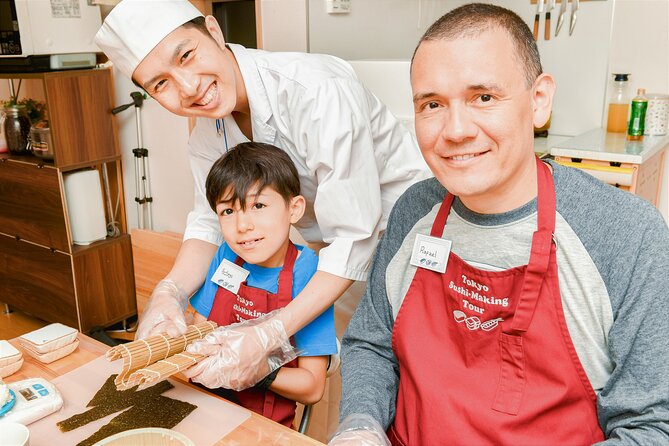
Tokyo is full of places to watch sushi being made. This is different, because you get to make it yourself, in a small group with hands-on guidance designed for kids 8 and up. I like that the class mixes practical technique with culture, and I also like that you learn how to eat sushi properly, not just how to roll it. One thing to plan for: the class typically uses raw salmon and tuna, but there are non-raw, vegetarian, and gluten-free options if you arrange that in advance.
It runs about 2 hours 30 minutes, starting at 10:30 AM at Kita-Senju, then you cook, learn, and sit down to eat what you made. With a maximum of 8 people, you’re not stuck in a big demo line. If you want a simple, structured family activity that teaches real skills you can reuse at home, this is a smart pick.
Quick hits before you go
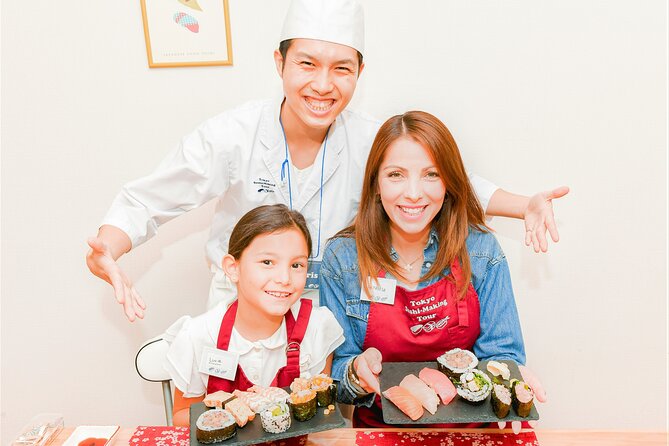
- Small group of up to 8 means more personal attention while you handle rice, tools, and fish prep safely (as instructed)
- English-speaking instructors keep the pace comfortable for kids and first-timers
- Four sushi varieties plus nigiri gives you variety, not just one repeat technique
- Sushi etiquette quiz and Japanese phrases turn a cooking class into a mini cultural lesson
- Dietary accommodations exist, including a non-raw fish menu, but you must request them ahead of time
Where the class is and why Kita-Senju is a good base
You’ll meet at the East exit of Kita-Senju Station at 10:30 AM. The class venue is in the Adachi City area, listed at 3-5 Senjuasahicho, Adachi City, Tokyo 120-0026. The schedule ends back at the meeting point, which is handy if you’re using public transit and want a clean finish to your morning.
Kita-Senju isn’t as famous as the center of Tokyo for food tours, but that can be a plus. You get a local-feeling neighborhood day, and it’s still reachable from major areas like Asakusa, Akihabara, Ueno, and Ginza. For families, I like that the transit plan feels straightforward and the class doesn’t pull you deep into a maze of transfers.
More Sushi Making Classes in Tokyo
- Sushi Making Tokyo Roll and Authentic Japanese Sushi Class
★ 5.0 · 3,971 reviews - Tokyo: Roll and Authentic Sushi Making Class in Asakusa
★ 4.9 · 1,957 reviews - Make Sushi and Create Unforgettable Memories in Tokyo
★ 5.0 · 1,413 reviews
The small-group setup and what you can expect from the instructor
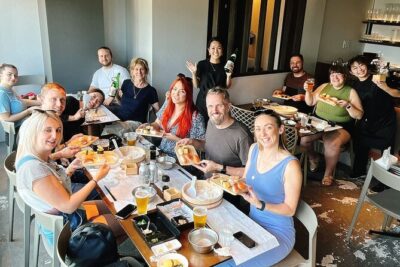
This class is built for 8 travelers max, which matters more than most people think. In a bigger group, you’re often waiting your turn. Here, you can actually practice the motions: shaping, pressing, rolling, and arranging. That’s especially helpful if you’re traveling with kids who learn best by doing.
Instructors lead in English, and they teach with a “watch, do, adjust” style. In examples from past classes, instructors like Nat and Morris have been praised for being patient, clear, and able to answer questions. That’s exactly what you want in a mixed group of adults and children, including cooking novices.
You’ll also start with a relaxed tone. It’s not a stern, “only pros allowed” workshop. The goal is confidence: you’ll learn enough to replicate sushi steps at home instead of leaving with only photos.
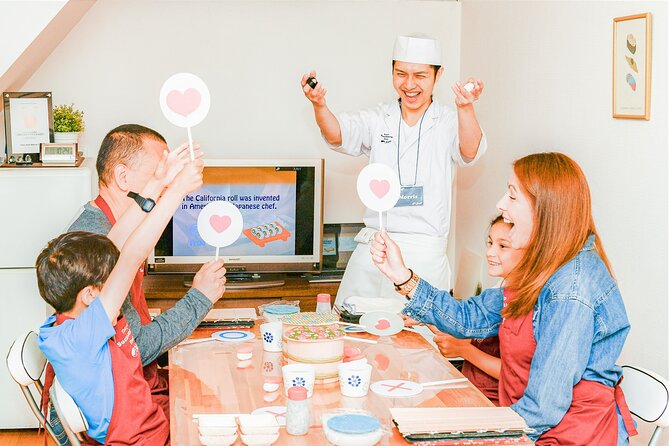
The warm-up: quiz on etiquette and sushi trivia, plus Japanese phrases
Before hands-on rolling and shaping, you get a classroom-style moment that still feels fun. You’ll do a quiz focused on sushi etiquette and sushi trivia. Expect questions that cover how sushi is meant to be eaten and what different forms generally mean. It’s a good way to get everyone thinking before the kitchen work begins.
You’ll also pick up useful Japanese phrases and travel tips. The useful part is that you’re not collecting random words. You’ll usually get phrases tied to food basics and small real-life interactions, the kind you can actually use the same week you’re in Japan.
If you’re bringing kids, this warm-up is a smart design choice. It gives them something to focus on right away, and it turns the class into a game before it becomes a meal-making project.
Perfecting sushi rice: the step that makes or breaks your sushi
A big chunk of a sushi class should be the rice, because everything else depends on it. You’ll learn to craft vinegared rice, including what to do and what to watch for as it cools and gets mixed.
Here’s why this part is valuable. At home, most people fail with sushi rice due to timing and texture, not lack of effort. Vinegar seasoning changes the flavor and helps the rice behave properly for rolling and shaping. Getting the rice right also makes the rest of the session easier. When the rice is sticky in the right way, you’ll form nigiri without it crumbling, and rolls hold together better.
Even if you’re not a “kitchen person,” this is the kind of skill you can take home. After the class, you’ll have a clearer mental checklist for rice every time you cook it.
A change of pace from Tokyo:
- Mt Fuji and Hakone 1-Day Bus Tour Return by Bullet Train
★ 5.0 · 26,383 reviews - 1-Day Tokyo Bus Tour
★ 5.0 · 14,250 reviews - Tokyo: TOKYO SKYTREE® Admission ticket
★ 4.5 · 11,192 reviews - Tokyo: teamLab Planets TOKYO Digital Art Museum Entry Ticket
★ 4.6 · 9,779 reviews
Four sushi styles you’ll make, and why each one matters
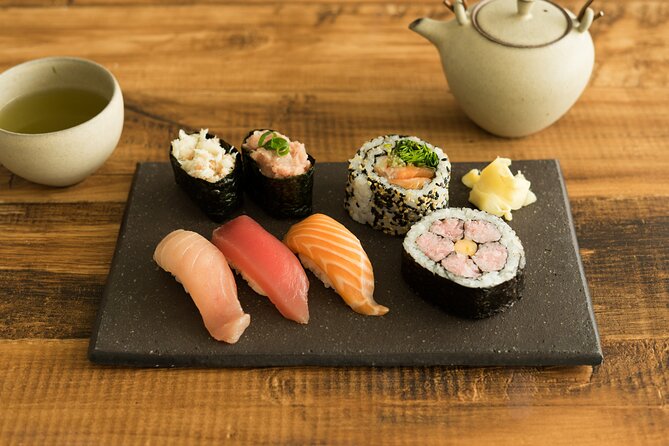
This class has built-in variety. You’ll craft four different types of sushi, which keeps both adults and kids interested, and it trains you on different techniques.
1) Decorative Sushi Roll
You’ll make a roll that’s designed to look good on the plate. Decorative sushi can sound fussy, but in a good class it becomes a confidence builder. When you see the pattern come together, it’s a payoff moment for kids and adults, because you can tell the visual outcome right away.
This is also a technique lesson. You learn how the filling, rice placement, and rolling pressure work together. Even if your decorative results aren’t identical the first time at home, the method transfers.
2) California Roll
This is one of the most recognizable roll styles, and that’s the point. You’ll learn the mechanics of rolling and how to assemble fillings so the roll slices cleanly.
For many families, California roll is also where kids get excited. It’s familiar enough to try, and it’s not intimidating as a starter project compared with more intricate forms.
3) Nigiri-Sushi
Nigiri is the opposite of rolling. Instead of making a cylinder, you form rice into a shape and top it. This teaches a different set of hands-on skills, including how to handle rice without overworking it.
If you’re learning sushi for the first time, nigiri helps you understand the purpose of sushi rice texture. When rice is right, nigiri feels light and holds together, instead of turning into a sticky mess.
4) Battleship Roll
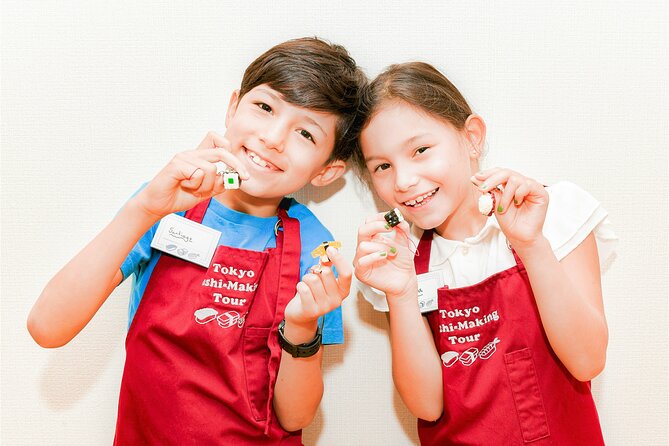
The battleship roll adds a playful, structured element to the class. It’s another hands-on technique that pushes you beyond one “standard” rolling method. Kids often love this part because it feels like a themed food project.
More importantly, it helps you learn that rolls can be shaped in different ways and still taste great. That’s the bridge between learning a class recipe and actually making sushi on your own later.
What you’ll eat at the end, and how to make it last as a memory
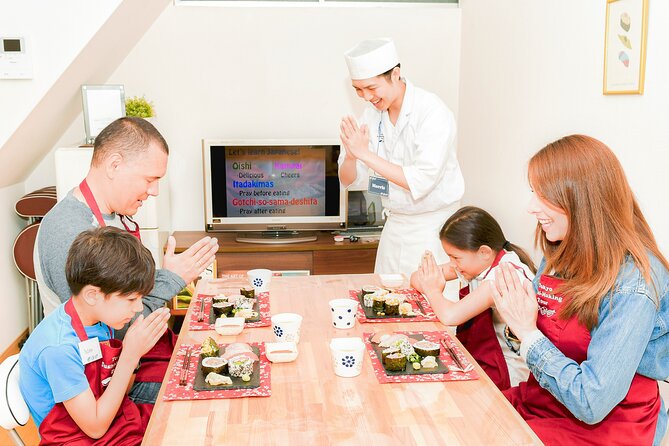
The class ends with you savoring the sushi you crafted. This matters for two reasons.
First, you’re not just cooking and leaving. You taste what you made while the techniques are still fresh in your mind, so you remember the difference between what felt right and what didn’t.
Second, it’s a family-friendly reward loop. Kids can take pride in a finished plate, and adults get the satisfaction of knowing it wasn’t just instruction, it was also a meal.
If your group includes picky eaters, it’s still usually a win because you can serve different pieces from your own creations, and you get to see what different sushi styles taste like side by side.
Raw fish vs non-raw fish, plus vegetarian and gluten-free options
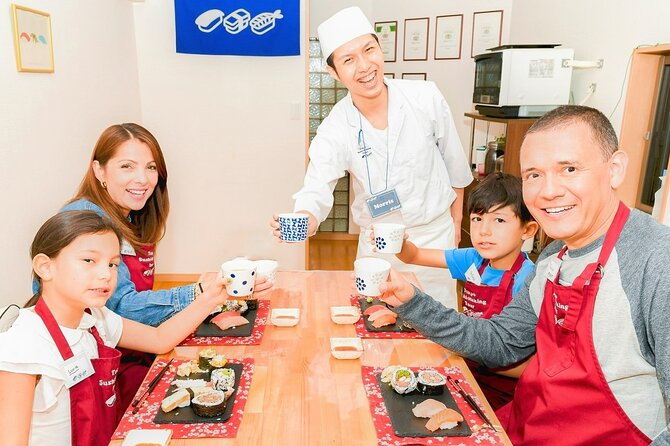
This is one of the most practical things to confirm early. The class typically uses raw salmon and tuna, but the menu can be adapted if you tell the provider in advance.
Your options may include:
- a Non-Raw Fish Menu
- Vegetarian Menu
- Gluten-Free Menu
Because the data specifically says you need to inform them in advance, don’t assume you can make changes on the spot. If you have allergies or strong preferences, send the request when you book. If you’re traveling with kids, this also helps you avoid last-minute worry about what’s on the plate.
It’s worth considering this even if everyone in your group eats fish. Kids can be curious, and a non-raw option can keep the class comfortable while still teaching the core sushi-making skills.
How long the class really feels, and whether kids can handle it
The duration is listed as about 2 hours 30 minutes. That’s long enough to learn multiple techniques and eat a real meal, but not so long that it drags.
Because the format is hands-on and structured (rice, quiz warm-up, four sushi varieties, then eating), the time moves. The maximum group size of 8 also helps the pace stay smooth. In a kitchen environment, pacing is everything. If you’ve got an 8-year-old (or a 10-year-old who’s still full of energy), this timing is usually realistic.
The age note says the class is suitable for children aged 8 and above. If your kids are younger than that, you’ll want to think twice, because the activity is practical and requires focus while handling ingredients and tools.
Price and value: what $68.97 buys you in Tokyo
The price is $68.97 per person for a class that runs about 2.5 hours with instruction in English and a maximum group size of 8. You’re also paying for the full teaching flow: sushi history, etiquette trivia, Japanese phrases, sushi rice technique, multiple sushi styles, plus the meal you eat at the end.
Is it cheap? No. But value comes from what’s included. This isn’t a quick tasting where you watch someone else cook. It’s a skills class where you make sushi pieces and take home the approach.
A helpful way to think about the math:
- You’re paying for guided technique (not just ingredients)
- You’re paying for small-group attention
- You’re paying for a complete, teachable sequence that ends with a real meal
If you’re in Tokyo for a family trip and you want one activity that’s educational, hands-on, and food-centered, the price starts to feel like a reasonable trade.
Where this class fits in your Tokyo itinerary
This class is scheduled at 10:30 AM, which makes it ideal as a morning plan. You can place it early, then spend the afternoon wandering through neighborhoods like Asakusa or Akihabara, depending on where you’re staying.
Since it ends back at the meeting point, you’re not stuck with a complicated “now what” situation. For families, that means fewer transit headaches and more time for the rest of your day.
Also, because it teaches etiquette and Japanese phrases tied to food culture, it can make your later sushi meals more satisfying. Even if you don’t copy every technique, you’ll likely feel more confident ordering and eating.
Should you book this Tokyo sushi making class?
Book it if you want:
- a kid-friendly sushi experience with real hands-on practice
- an English-led class that teaches sushi etiquette and not just recipes
- a small group experience where a guide can actually respond to questions
- menu options like non-raw fish, vegetarian, or gluten-free if needed
Skip it or reconsider if:
- your group is uncomfortable with the idea of raw fish and you haven’t planned a non-raw option
- you’re hoping for a very short activity, because this is a full cooking session at around 2.5 hours
- your kids aren’t in the 8+ range, since the class is designed for that age window
If you’re trying to make one cooking experience count in Tokyo, this is the kind of class that gives you something you can use again at home: sushi rice technique, shaping skills, and the basics of how sushi is meant to be eaten.
FAQ
How long is the sushi making class?
It runs for about 2 hours 30 minutes (approx.).
What time does the class start?
The start time is 10:30 AM.
Where do we meet for the class?
You’ll meet at the East exit of Kita-Senju Station. The listed meeting point address is 3-5 Senjuasahicho, Adachi City, Tokyo 120-0026, Japan.
How many people are in each class?
The class has a maximum of 8 travelers.
Is the class taught in English?
Yes. The instructors are English-speaking.
What sushi will we make?
You’ll make vinegared sushi rice and create four sushi varieties, including Decorative Sushi Roll, California Roll, Nigiri-Sushi, and Battleship Roll.
Are there options for non-raw fish or dietary restrictions?
Yes. The class can provide a Non-Raw Fish Menu, Vegetarian Menu, and Gluten-Free Menu. You need to inform them in advance.
Do we eat the sushi we make?
Yes. The activity ends with you savoring the sushi you crafted.
Is there a ticket we receive?
Yes. The experience uses a mobile ticket.
Is there free cancellation?
Yes, free cancellation is available. You can cancel up to 24 hours before the experience start time for a full refund.
Latest write-ups near Tokyo
- Tokyo Nights: Shibuya Photo Adventure★ 5.0 · 20 reviews
- Wagyu & Sake 8 Course Tasting Dinner in Shinjuku★ 4.9 · 20 reviews
- Making Japanese desserts Nerikiri & drinking matcha in Tokyo★ 5.0 · 20 reviews
- Mt. Fuji 5th Station, Owakudani Ropeway, Pirate Ship plus Outlet shopping!★ 4.5 · 20 reviews
- Japanese Whisky Hunting《HIGH-QUALITY-ONLY》Rare Tasting Class★ 5.0 · 20 reviews
- Kintsugi Experience with Arita Ware in Tokyo (English Guide)★ 4.8 · 20 reviews
- This is Asakusa! A Tour Includes the All Must-Sees!★ 5.0 · 20 reviews
- Tokyo: Karate Experience with Former All-Japan Champion★ 5.0 · 20 reviews
Sushi Making Classes, compared.
Sushi Making Tokyo Roll and Authentic Japanese Sushi Class
Read our review →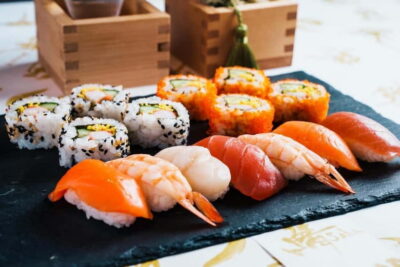
Roll and Authentic Sushi Making Class in Asakusa
Read our review →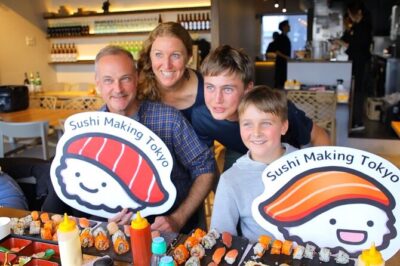
Make Sushi and Create Unforgettable Memories in Tokyo
Read our review →
Sushi Making Class in a Happi Coat near a Famous Spot
Read our review →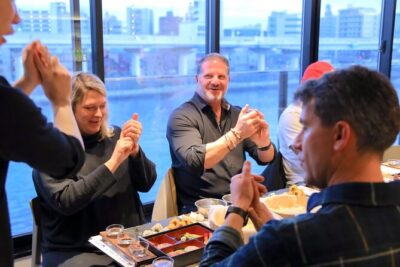
Sushi Making Osaka Roll and Authentic Japanese Sushi Class
Read our review →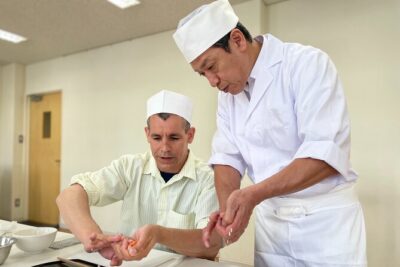
Tokyo Sushi Making Class in Tsukiji with Professional Chef
Read our review →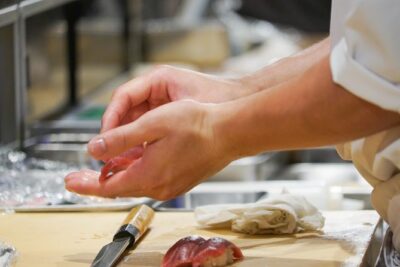
Tokyo Night Foodie Tour in Shinjuku – Seasonal Sushi, Wagyu Beef
Read our review →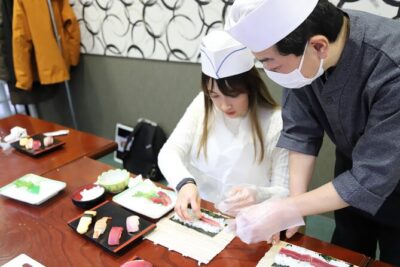
Tsukiji Fish Market Guided Tour and Sushi Making with Pro Chef
Read our review →Browse the lists this tour appears in