Reviewed · SAKE TASTINGS
Cozy Tokyo Class: Ramen, Sushi, Sake Pairing & Cultural Exchange
Tokyo has a way of making food feel like a scavenger hunt, even when you’re not trying. This class turns that chaos into something cozy and hands-on, because you actually cook iconic Japanese dishes in a small room with helpful English-friendly hosts. I like how it keeps things intimate (you are not yelling over a crowd), and I also love that you get recipes to recreate what you make after the last bite is gone.
One thing to consider: the class format sounds like it centers on ramen plus another dish such as sushi or gyoza, and the exact pairing can vary. If you’re laser-focused on one specific menu, it’s worth double-checking what day you’re booked.
Key things I’d circle before you book
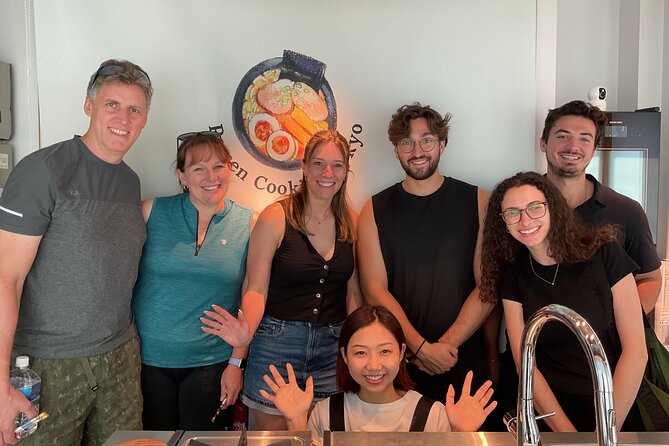
- Small-group setting capped at four in the description, with a maximum of eight travelers listed
- Hands-on ramen plus another Japanese dish like sushi, with gyoza offered as an option
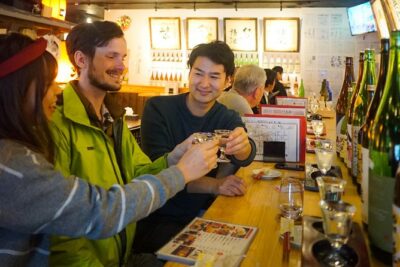
- Unlimited sake pairing along with Japanese beer or non-alcoholic drinks
- English-friendly hosts plus cultural conversation during cooking
- Detailed recipe gift so you can cook again at home
- 3-hour timing that fits a tight Tokyo schedule without feeling rushed
A cozy kitchen in Tsukishima, where cooking feels personal
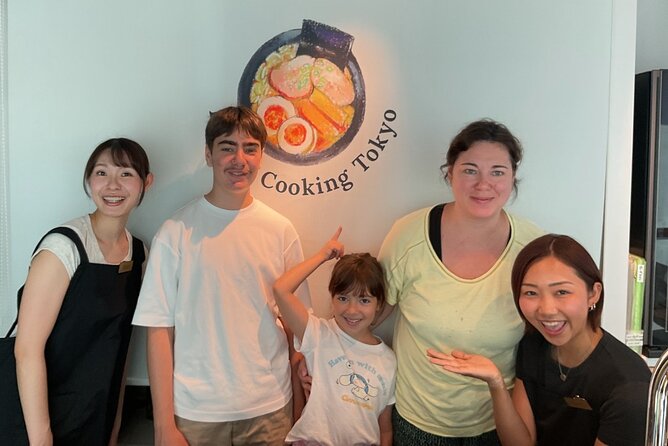
This experience is built for people who want Tokyo food knowledge without paying Tokyo prices for one more meal you eat while standing up. The venue is in Tsukishima, at 2-chōme135 HAUS Tsukishima in Chuo City, Tokyo (Japan, 104-0051). It’s easy enough to reach by public transportation, and the class ends back at the meeting point, so you’re not stuck planning what to do next immediately after dinner time.
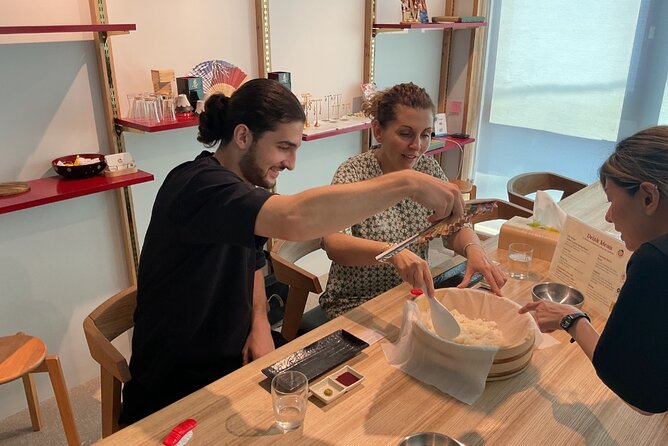
What makes it feel special is the room size and pace. The description promises a small group capped at four people, and the listing also states a maximum of eight travelers. Either way, the vibe stays calm. You can hear the instructions, ask a question, and actually stand close enough to see what the host is doing with your own hands.
If you’re traveling solo, you still get that small-group attention. If you’re traveling with family or friends, it’s also a good pick because the activities are built for different skill levels. You do not need fancy knife skills, but if you already cook at home, you’ll still have enough structure to notice differences in technique and seasoning.
More Food & Drink in Tokyo
- Tokyo: Shinjuku Food Tour (13 Dishes at 4 Local Eateries)
★ 5.0 · 6,603 reviews - Tokyo Tsukiji Fish Market Food and Culture Walking Tour
★ 5.0 · 3,184 reviews - Tokyo: Shinjuku Food Tour (15 Dishes and 4 Eateries)
★ 4.9 · 2,033 reviews
What you make: ramen plus sushi (or gyoza) in one relaxed session
The “big promise” here is that you make two iconic Japanese dishes. The overview stresses ramen and gyoza, while the class description says you learn to create ramen and sushi, with gyoza as optional. In plain terms, expect ramen as the anchor dish, then a second dish that can be sushi or gyoza depending on the version you join.
Here’s why that matters for your decision. Ramen is the kind of dish that seems simple until you’re suddenly controlling broth flavor, noodles, and toppings in your own kitchen. Learning it in a coached way helps you understand what you can change without ruining the result. For the second dish, sushi or gyoza gives you a different kind of payoff: sushi teaches assembly and balance, while gyoza is all about filling, shaping, and that satisfying crisp.
Also, ramen plus sushi or gyoza is a smart way to use limited Tokyo time. You get to bring home technique, not just taste. And because the class is only about three hours, you’re not waiting all day to start cooking.
The hands-on flow: learning by doing, not watching
A good cooking class gives you two things: enough guidance to avoid mistakes, and enough freedom to actually practice. This one leans hard into the first part. Hosts guide you through steps in a relaxed rhythm, so you’re not panicking about timing. From the reviews, the instruction style stands out: the hosts explain at a good pace, and the hands-on format makes the results feel repeatable.
I’d expect the sequence to feel like this:
- You start with ingredients and setup, with the hosts keeping things organized in the small space.
- You then cook ramen step by step, where small choices make a big difference.
- After that, you shift to the second dish, either sushi-style preparation or gyoza-style making, depending on the class.
- Near the end, you eat what you made, with drinks included, so you can compare flavors while they are still fresh and hot.
In the reviews, names come up again and again. Hosts such as Umi San, Kou San, Komi, Alissa, and others like Risa and Namiko are described as welcoming and fun, with English that works well for tourists. You’ll probably get called on during the process, which is a plus if you want more than a passive experience.
One practical note: because this is a working kitchen experience, bring a little patience. Even if you’re a strong cook at home, your pace will be dictated by the group and the workflow in the room. The upside is that the hosts are there to keep you on track.
Sake pairing and drinks: included, and not just for show
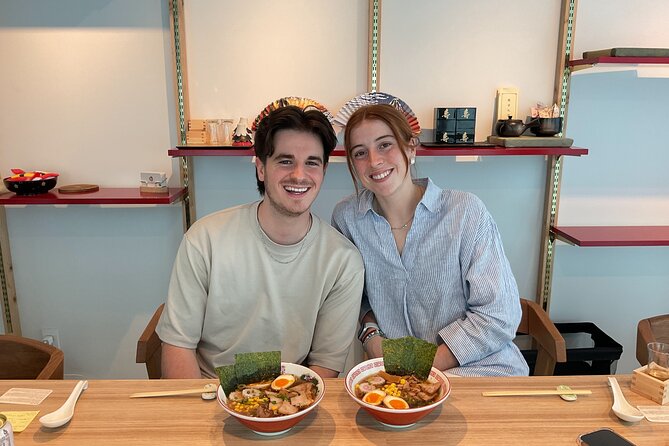
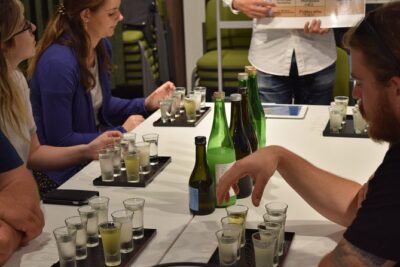
This is one of the best value parts of the experience. You get unlimited sake pairings during the class, plus Japanese beer, and non-alcoholic beverage options. That changes the whole tone. You’re not just learning technique, you’re also learning how Japanese drinks are treated as a companion to flavors.
From the reviews, hosts are generous with the sake. The pairing element also makes sense for culture exchange. If you’re chatting over the cooking process, alcohol can make it easier to ask questions and relax, especially if you’re not used to speaking in a second language. Just remember, you still need to cook safely. The class is hands-on, so pace yourself.
If you prefer not to drink alcohol, the availability of non-alcoholic beverages is a relief. I like that you can still enjoy the class socially and focus on the food without feeling forced into drinking.
More Ramen Experiences in Tokyo
- Eat and Drink Like a Local: Tokyo Ueno Food Tour-Taverns&Ramen
★ 5.0 · 957 reviews - Ramen & Gyoza Cooking Class in Tokyo with Local Supermarket Visit
★ 5.0 · 823 reviews - Tokyo: Ramen Tasting Tour with 6 Mini Bowls of Ramen
★ 4.9 · 432 reviews - Tokyo: Easy Ramen Cooking Experience in Kabukicho, Shinjuku
★ 4.6 · 321 reviews
Cultural exchange that actually happens while you cook
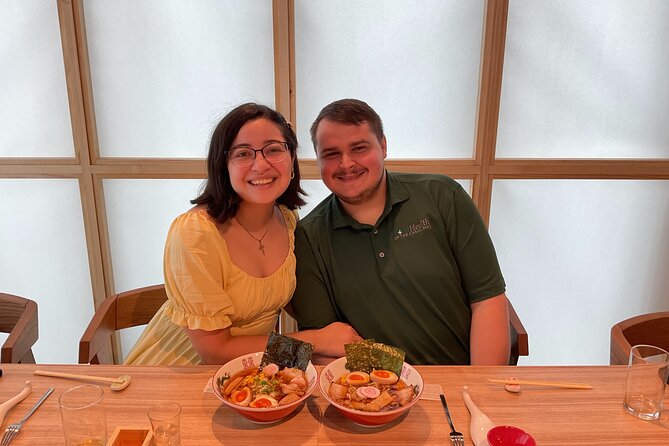
Food classes can turn into a script: do this, mix that, eat the result. This one adds real conversation. The theme is Beyond Cooking, Feel the Connection, and that shows in how hosts talk about Japanese culinary traditions while you work.
In the reviews, people highlight welcoming attitudes and meaningful cultural conversations. You’re not just learning recipe steps, you’re picking up why certain tastes and textures matter. That’s the difference between learning to copy a dish and learning to understand it well enough to adjust it at home.
For me, the best part of cultural exchange is when it removes mystery. Ramen stops being a one-time restaurant miracle and becomes a set of controllable decisions. Sushi stops being intimidating and becomes a sequence you can practice. Even gyoza, which looks like it requires perfect folding, becomes something you can learn with guidance.
And if you’re traveling with someone who thinks cooking is boring, this class still has a social edge. Conversation happens naturally because the hosts keep things warm and the small-group format makes it easy to talk.
Fresh ingredients, clear steps, and the payoff of eating your own food
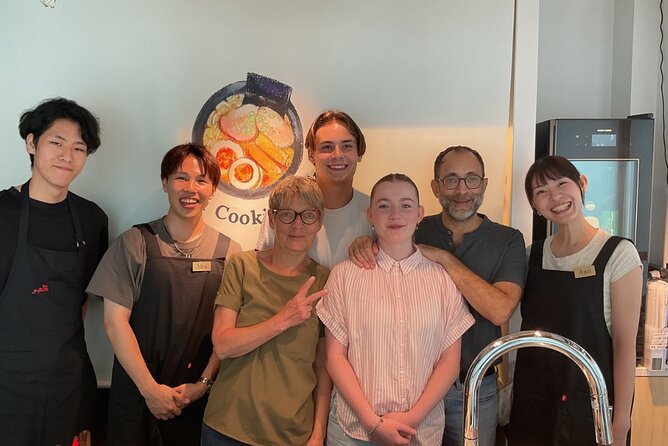
The reviews repeatedly mention the same theme: the ingredients taste fresh, and the hosts keep the instructions clear. That matters more than you might think. A cooking class can be fun but still end in disappointment if the flavors don’t land or if the steps were too vague.
Here’s what you’re aiming for at the end:
- Your ramen should taste like ramen, not like a soup that happens to have noodles.
- Your second dish should feel finished, not improvised.
- You should be able to identify what makes each bite work, so you can recreate it later.
You also get the satisfaction of eating the food you made with the people you cooked with, and you are doing it in a comfortable setting. That’s a big reason this class earns such strong recommendations.
Finally, the recipe gift is a real advantage. It’s one thing to take photos. It’s another thing to take home a guide you can follow. After a Tokyo trip, it’s easy to forget what you learned. The included recipes help you lock it in.
Price and value: $79 for a 3-hour food lesson with drinks
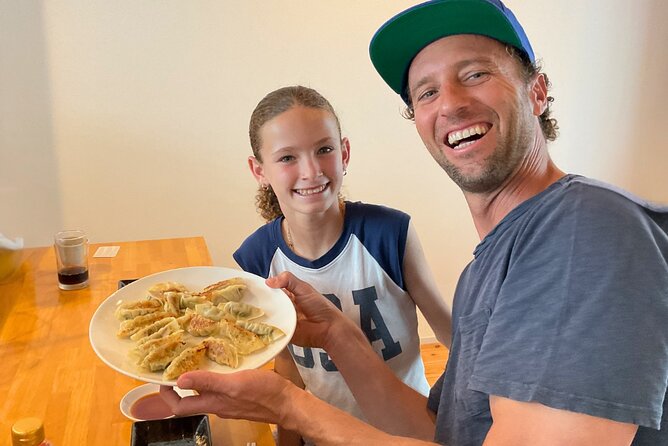
At $79 for about three hours, this can be strong value if you compare it to the cost of a single sit-down meal plus nothing else. Here, the money buys:
- Instruction and hands-on coaching
- Ingredients used in your dishes
- Unlimited sake pairing, plus beer or non-alcoholic drinks
- A detailed recipe you can keep
That combination is why this type of class works well for visitors. In Tokyo, you can spend a lot and still get only the eating part. Here you get the how and the why, plus the social side.
Is it “cheap”? No. But it’s priced like a small-group experience with included alcohol and real teaching time. If you like learning by doing, it’s a smart use of your Tokyo budget.
One more practical value point: the small-group structure makes the time feel efficient. You spend three hours cooking, not wandering or waiting. For many people, that’s the difference between feeling like they got something memorable versus feeling like they tried a tour checkbox.
Who this is best for, and who should double-check
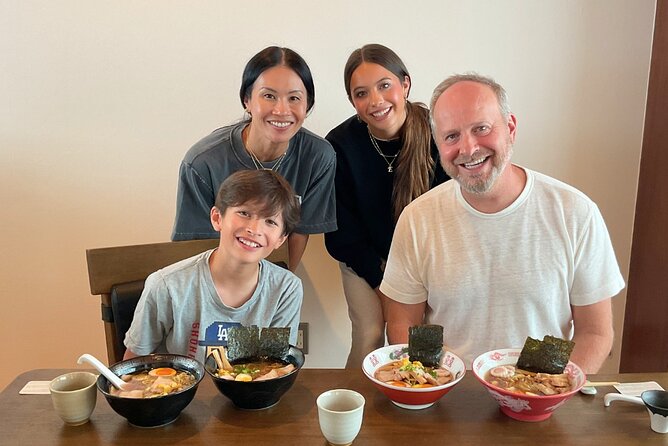
This fits best if you want a calm, friendly class where your questions are welcome and your cooking skills do not need to be perfect. The experience is suitable for all ages and skill levels, which makes it a strong choice for mixed groups like parents plus kids, or friends with different comfort levels in the kitchen.
It also works well if you’re the type who likes eating but wants the real story behind the food. The cultural exchange component is not a lecture. It’s woven into the cooking, and that keeps it practical.
If you’re the kind of person who wants very specific dishes only, double-check whether your booking will include sushi or gyoza alongside the ramen. The provided descriptions mention both possibilities, so it’s smart to confirm before you go.
Quick practical tips before your class
Based on how these classes tend to run, I’d do three simple things:
- Arrive on time to start cooking right away, since the class is only about three hours.
- Plan to use the recipes later. Take a moment near the end to scan what you’ll want to repeat, because the goal is to recreate it at home.
- Pace your drinks. Sake pairing is included and unlimited, but you’re working with hot food and kitchen tools.
If you want to make the most of the small-group setup, come ready with one or two questions. Hosts named like Umi San, Kou San, Komi, and Alissa are described as friendly and excited to teach, so questions are part of the flow.
Should you book Cozy Tokyo Class: Ramen, Sushi, Sake Pairing & Cultural Exchange?
If you want a small, structured Tokyo experience that gives you more than a meal, I’d book this. The ingredients are fresh, the hosts are described as warm and genuinely proud to teach, and the English-friendly instruction plus recipe handout makes it practical for cooking later.
I’d hesitate only if you have a strict requirement for a specific second dish, since the class description points to either sushi or gyoza alongside ramen. If you’re flexible and excited to learn technique, you’ll likely find this class a standout use of time in Tokyo.
FAQ
How long is the cooking class?
The class runs for about 3 hours.
What dishes will I learn to make?
You’ll learn to create ramen and either sushi or an optional gyoza version, depending on the class format.
Is sake included?
Yes. The experience includes unlimited sake pairings, and it also offers Japanese beer or non-alcoholic beverages.
Is transportation included?
No. Private transportation is not included.
Where does the class meet?
The meeting point is in Tsukishima, Chuo City, Tokyo: Japan, 104-0051 Tokyo, Chuo City, Tsukuda, 2-chōme135 HAUS Tsukishima. It ends back at the meeting point.
What is the cancellation policy?
Free cancellation is available. You can cancel up to 24 hours in advance for a full refund, and cancellations made less than 24 hours before the experience start time are not refunded.
More Sushi Making Classes in Tokyo
- Sushi Making Tokyo Roll and Authentic Japanese Sushi Class
★ 5.0 · 3,971 reviews - Tokyo: Roll and Authentic Sushi Making Class in Asakusa
★ 4.9 · 1,957 reviews - Make Sushi and Create Unforgettable Memories in Tokyo
★ 5.0 · 1,413 reviews - Tokyo: Sushi Making Class in a Happi Coat near a Famous Spot
★ 4.9 · 1,377 reviews
More Sake Tastings in Tokyo
- Ramen and Sushi Cooking Class with Sake Pairing Set in Tokyo
★ 5.0 · 291 reviews - Sake Tasting Masterclass in Shinjuku (8+ Varieties with a Pro)
★ 5.0 · 271 reviews - Sake Omakase in Tokyo: Guided Tasting by Certified Sommeliers
★ 5.0 · 239 reviews - Tasting All Types of Sake with Sommelier
★ 5.0 · 151 reviews
Latest write-ups near Tokyo
- Tokyo Customized Private Tour: See Top Attractions in 1 Day★ 4.8 · 67 reviews
- From Tokyo: Top 5 Scenic Spots of Mount Fuji Full-Day Tour★ 4.5 · 67 reviews
- Traditional Japanese Music ZAKURO SHOW in Tokyo★ 5.0 · 67 reviews
- Tokyo: Shinjuku Izakaya and Golden Gai Bar Hopping Tour (2h)★ 4.9 · 67 reviews
- Tsukiji: Unlimited Sake Tasting Experience★ 4.9 · 67 reviews
- Samurai Ninja Museum Asakusa: Kid-Friendly Ninja Training★ 4.7 · 67 reviews
- Private Harajuku Omotesando Architecture Walking Tour★ 5.0 · 67 reviews
- Tokyo: Not a show- a professional sumo practice with experts★ 4.9 · 67 reviews
Sake Tastings, compared.

Kyoto Night Foodie Tour in Gion (9+ dishes + 6 Sake tastings)
Read our review →
1-Day Snow Monkeys, Zenko-ji Temple & Sake in Nagano
Read our review →
3-Hour Kyoto Insider Sake Brewery Tour with Tastings & Pairings
Read our review →
Arashiyama Bamboo, Temple, Monkeys, or Secret Sake Brewery
Read our review →

Insider Sake Brewery Tour with Sake and Food Pairing
Read our review →