
Reviewed · WAGASHI & MOCHI MAKING
TokyoSumoShow, ChickenHotPot, and Mochi-Pounding by Pro Wrestlers
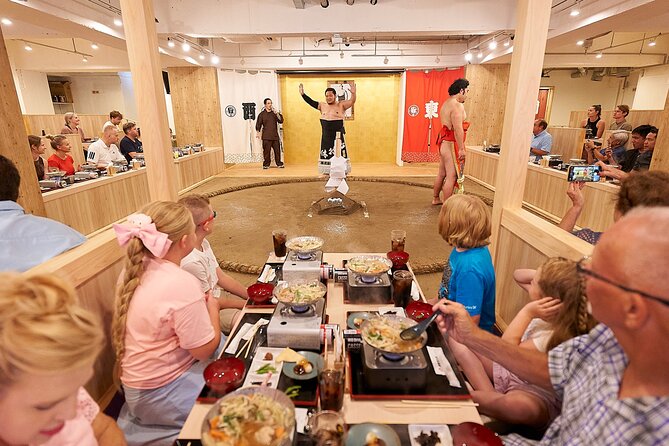
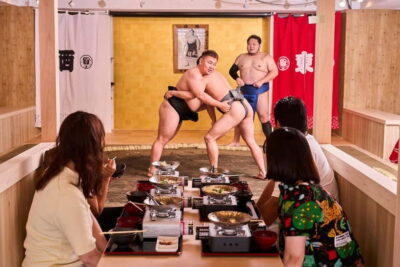
Tokyo Ryogoku is the sumo heartland, and this experience leans into that idea hard, with big personalities and hands-on moments. At SUMOLAND Tokyo Ryogoku, you get a ring-focused show plus close-up interaction, not just stadium-style watching.
I especially liked the chicken chanko hot pot, prepared for you by sumo wrestlers and supervised by the Isegahama stable. I also loved that you can jump into the culture yourself with mochi pounding and then a sumo bout challenge on the day’s program.
One thing to watch for: participation in the hands-on parts can be limited to one person per group or decided by lottery, and seats are assigned by the venue so you cannot pick them.
Key Highlights You Can Plan Around
- Former top-division wrestlers run the ring entrance ceremony and take part in the program.
- Chanko hot pot is a real sumo food experience, with chicken and the kind of meal sumo wrestlers are known for.
- Mochi pounding is kid-friendly, and it is one of the easiest ways to get involved without needing prior experience.
- You may get limited turns for mochi pounding or the sumo bout challenge if the group is large.
- Box seats versus standard seats matter if you are traveling with a child on your lap.
- English-friendly pacing helps most visitors follow along, including on-screen Japanese words and practice moments.
Why SUMOLAND in Ryogoku Feels More Real Than a Typical Show
Sumo in Tokyo can look similar from a distance, even if you catch a match. Here, the setting is purpose-built for getting close. You are in the Ryogoku area, where sumo is not a random theme, it is the neighborhood identity.
I like that the program is supervised by a 63rd Yokozuna, which gives it a serious sporting backbone while still keeping things playful. The staff clearly want you to understand what you are seeing, not just clap when prompted.
You should think of this as entertainment plus education. It is not morning practice and not an official tournament, so the vibe is more performance-based than ritual-and-grit. If you come expecting a pro-style tournament feel, you might wish for more formal structure.
More Wagashi & Mochi Making in Tokyo
- Tokyo Sumo Experience: Chanko & Mochi with a Former Pro
★ 4.8 · 567 reviews - Tokyo: Matcha Making Experience with Mochi Sweets in Asakusa
★ 4.9 · 388 reviews - Private Mochi Sweets Making class near Shibuya area
★ 5.0 · 93 reviews
Getting to SUMOLAND TOKYO RYOGOKU and Finding the Right Entrance
SUMOLAND Tokyo Ryogoku is in the Ryogoku area, listed at 1F Takashima Ryogoku Mansion, 4-32-19 Ryogoku, Sumida City. It is a short walk from Ryogoku Station, and the location is marked by big sumo wrestler signage and flags.
The easy win here is that you can slot it into a day without needing a complicated route. Ryogoku itself is handy for connecting onward to other famous neighborhoods, including Asakusa, Akihabara, Nihonbashi, and Tokyo Skytree.
You will want to arrive a little early. The show runs on schedule, and you do not want to miss the opening flow. Also, having a few minutes buffer helps if you need time to settle your group, find your assigned seats, and get comfortable before the ring entrance ceremony kicks off.
Chicken Chanko Hot Pot First, Then Sumo Action
This experience starts with the meal, and that is a smart design. You eat chicken chanko hot pot, and the meal is part of the pacing, so you are not sitting hungry and waiting for the first performance.
Chanko is sumo cuisine, and you can feel why wrestlers stick to it. It is warming, filling, and built for the kind of training schedule sumo is known for. More practically, eating first gives you something to focus on while the venue shifts into show mode.
A lot of people mention the food as a big part of their enjoyment. The most common compliments point to the broth and the comfort factor. That said, there are also a few reviews that say the meal is only okay, so keep expectations realistic. You are buying a sumo-themed performance plus a chanko meal, not a fine-dining tasting menu.
Plan to skip alcoholic drinks and bottled water, since those are not included. If you have your own water preference, bring it or plan to buy nearby after you arrive.
The Ring Entrance Ceremony and the Show Flow You Will Actually Notice
The program is built around a clear sequence, and once you understand the rhythm, it is much easier to follow. Former top-division wrestlers perform a ring entrance ceremony, setting the tone right away.
Then the sumo show begins, supervised by a Yokozuna. This matters because it keeps the event from turning into random crowd entertainment. The goal is to show you techniques and mindset in a way you can grasp quickly.
One small tip: you may see videos or segments that explain what you are about to watch. A couple of visitors wished for more narration during those moments. So if you are the kind of person who reads everything and wants every detail explained out loud, arrive with the mindset that you will catch the big ideas more than every technical rule.
In general, the show works because it repeats key concepts at the right times. The interaction parts keep you from feeling like you are watching from a distance.
A change of pace from Tokyo:
- Mt Fuji and Hakone 1-Day Bus Tour Return by Bullet Train
★ 5.0 · 26,383 reviews - 1-Day Tokyo Bus Tour
★ 5.0 · 14,250 reviews - Tokyo: TOKYO SKYTREE® Admission ticket
★ 4.5 · 11,192 reviews - Tokyo: teamLab Planets TOKYO Digital Art Museum Entry Ticket
★ 4.6 · 9,779 reviews
Mochi-Pounding Challenge: Traditional Craft Meets Big Laughs
The mochi-pounding portion is one of the easiest ways to get a hands-on win. The challenge is set up so kids welcome it too, which makes it a great family activity even if your group has different ages.
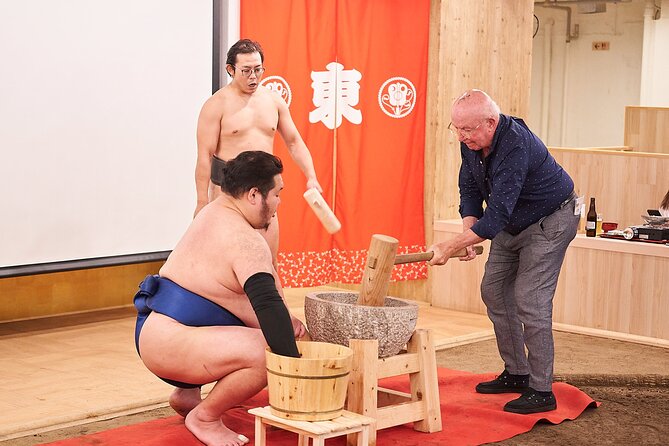
Mochi pounding is exactly what it sounds like. You work through a traditional-style mochi-making process with the wrestlers. It is likely to get noisy, and it will probably get messy. That is part of the fun, and it is also why it is memorable. You are not just watching power on display, you are feeling it through the action.
Keep in mind the participation note. If many guests join the mochi challenge, participation may be limited to one person per group or decided by lottery. That means your plan should include a backup possibility: you might participate, or you might just cheer along.
If you want the best odds, go as a prepared group and be ready to follow instructions quickly when your turn comes. The venue is running a schedule, and the staff need you to move fast when they call names.
The Sumo Bout Challenge: When You Stop Watching and Start Testing It
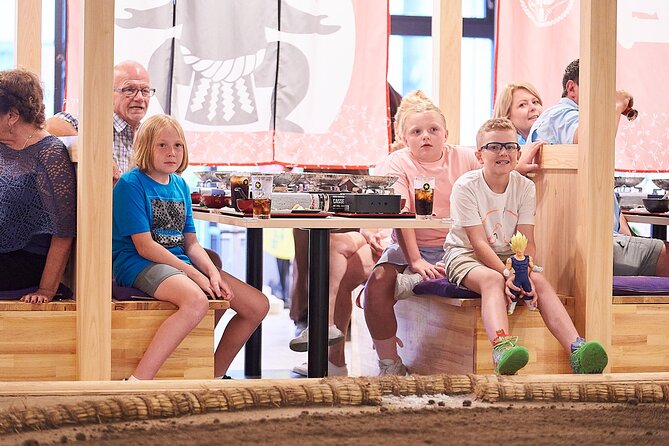
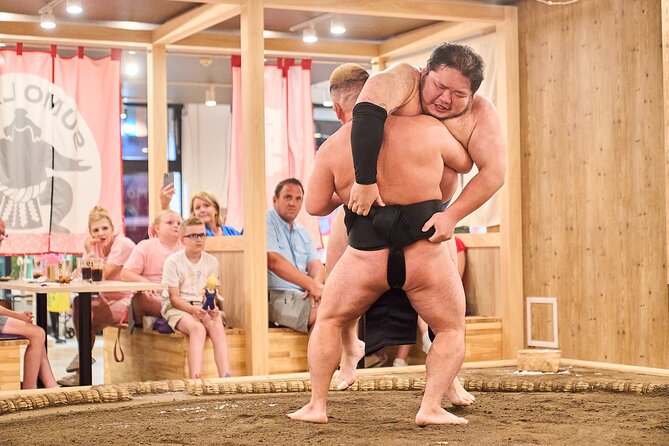
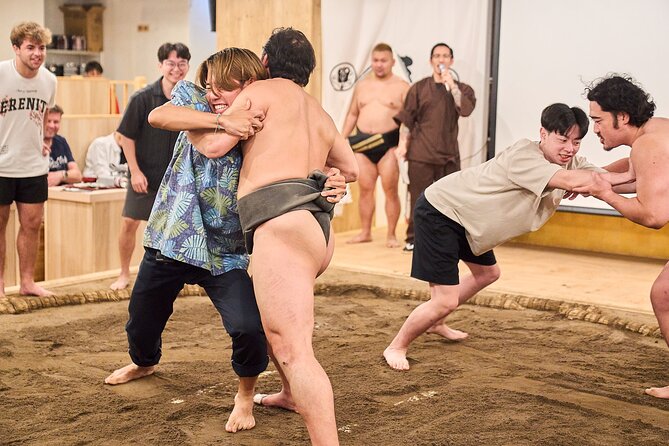
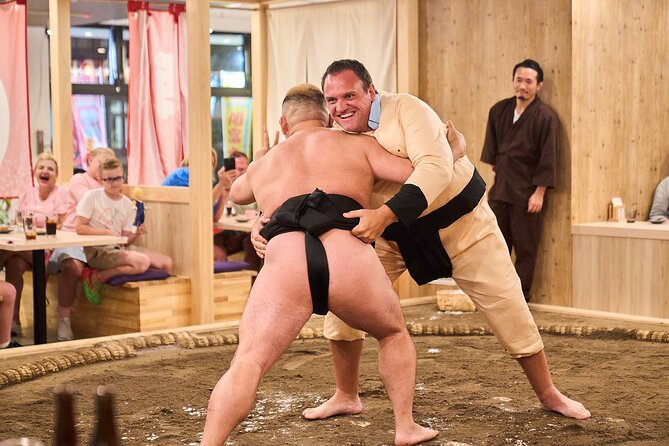
The sumo bout challenge is the other big interactive segment. This is where you step into the ring and take on a real sumo wrestler. Kids are welcome here too, which is rare for many combat-sport style experiences.
What makes this valuable is that it teaches you something you cannot get from videos: how much technique and balance matters, even when you know the basic idea of sumo. The wrestlers are close by, and you can see how they control space.
The same participation limitation applies here as well. If the crowd is large, participation may be limited to one person per group or decided by lottery. If you are traveling as a family of four, do not assume everyone will necessarily get a bout chance.
I also like that the interaction is designed to be safe and guided. You are not being thrown into a chaotic free-for-all. You are learning the basics and trying it with professionals who understand how to manage beginners and different ages.
Photo Time With the Wrestlers and the Included Souvenir
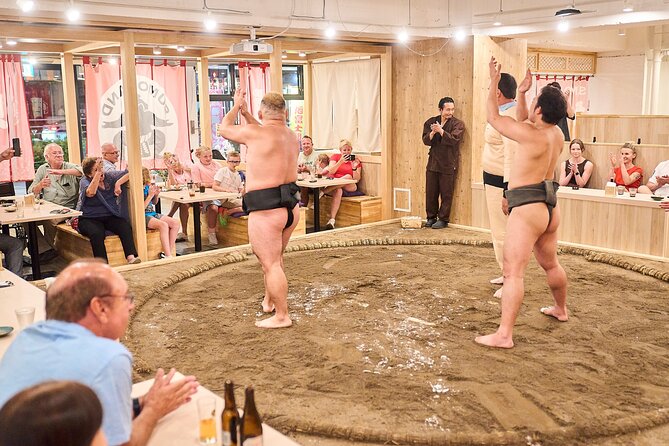
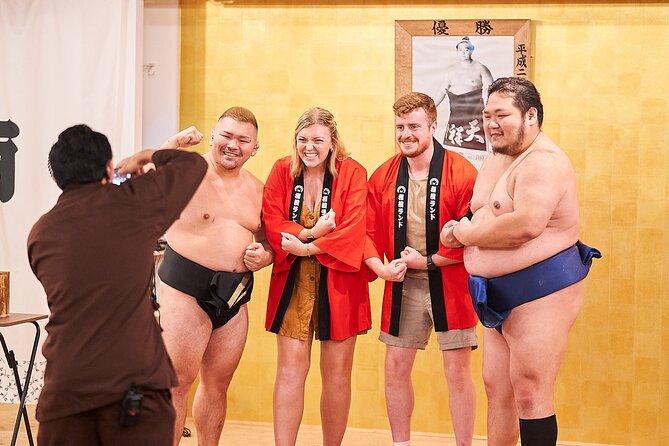
After the main action, you get photo time with the wrestlers. This is the moment that turns the whole day into a souvenir you can bring home without much effort. If you care about photos, be ready. When the venue calls it, it happens on schedule.
You also receive an included お土産 souvenir. The listing notes that souvenirs may vary by season, so you cannot plan your exact item in advance. Still, getting something included makes the ticket feel more complete.
A small practical note: if you are traveling with multiple devices, make sure one person is in charge of taking photos and knows the plan. Photo time moves like an event, not like a casual hangout.
Price and Value: What $106.12 Actually Buys You
At $106.12 per person, this is not a budget snack-stop. But it can still be good value if you think about what is bundled.
You are getting:
- Admission to the SUMOLAND program
- Chicken chanko hot pot
- An included souvenir
- A full performance that includes ring entrance, show segments, mochi pounding, and a sumo bout challenge on the day’s schedule
The value comes from two things. First, the staff and wrestlers make it interactive, so you are not just paying for a seat. Second, chanko is part of sumo culture, not an afterthought. If you like food experiences that match the theme, this ticket pulls its weight.
Where the value might feel weaker is if you only care about eating and you are not into shows. The meal is there, and it can be great, but the reason people glowing is the sumo content and the participation.
So, if you are on a trip where you want one high-impact activity that works for mixed ages, this price can make sense.
Food Rules, Dietary Options, and What to Do If You Have Limits
This part is important, because food planning is often where family plans break.
Vegetarian and vegan meals are available, but you need to request them at least 2 days in advance. Gluten-free and halal meals are not available. If that affects you, plan to bring your own food.
Also note what is not included: alcoholic beverages and bottled water. If you rely on a certain drink for health reasons, do not assume it is included.
I like how straightforward the rules are here. You just need to plan early if you have dietary restrictions. If you forget and show up hoping for a special meal, the chances are lower, since gluten-free and halal are specifically listed as not available.
For picky eaters, the chanko experience is mostly about the broth and warm comfort. Kids often like the mochi portion too, but that depends on the mochi schedule and who gets the participation turn.
Who This Fits Best (and Who Might Want Something More Traditional)
This is a strong pick for:
- Families with kids, because mochi pounding and the sumo bout challenge are described as kids welcome
- First-time Tokyo visitors who want a sumo experience that is easy to understand quickly
- People who like interactive shows where you try the activity instead of only watching
It can be less ideal if you are chasing a traditional, no-frills sumo day. One common expectation shift: this is a tourist attraction, designed for fun and engagement. The atmosphere is lively, and the program format is entertainment-first.
If you are a die-hard sumo fan who wants tournament structure and strict rules discussion, you might wish for more depth and more narration. That feedback shows up for some visitors.
But if you want to leave Tokyo with a stronger appreciation for how difficult sumo actually is, this format works. Getting close and trying basic moves makes the power and balance feel real.
Logistics That Can Make or Break Your Day
This event runs about 1 hour 30 minutes to 2 hours, so plan a comfortable buffer before or after. You will want time to get there, settle in, and not feel rushed.
Seats are assigned by the venue and you cannot select them. That is usually fine, because the setup is designed for viewing and interaction. Some people say there are no bad seats, but your exact view depends on the venue layout.
If you are traveling with a child, pay attention to seat type. For standard seats, it is dangerous to sit while holding a child on your lap, so reserve for the exact number of people. Box seats are described as safer. Box seats allow seating up to six people and can accommodate a child on your lap.
Also, participation might be limited if too many people want the hands-on moments. If your group is especially focused on the bout or mochi pounding, decide in advance how you will handle it if you get selected for watching instead of participating.
My Booking Advice: How to Get the Best Odds of Enjoying It
If you are deciding between different activities in Tokyo, I suggest booking this when you want maximum energy in a short time window. It is structured, fast-moving, and built to keep you engaged.
Here is how you can make it smoother:
- Arrive a few minutes early so the opening and entrance ceremony start without stress
- If you have dietary needs, submit your request at least 2 days ahead for vegetarian or vegan options
- If your group includes kids, set the expectation that everyone might not get the same participation turn
- Bring what you need for comfort, since bottled water and alcohol are not included
One more practical tip: if you like language, watch for the Japanese words and translation segments. Some visitors highlight that the staff provide Japanese words, translate, and then have you practice. It is a small thing, but it makes the show easier to follow.
Should You Book SUMOLAND Tokyo Ryogoku?
I think you should book this if you want a fun, interactive sumo experience that is easy to understand and works across ages. The combination of ring action, mochi pounding, and chanko hot pot is the kind of Tokyo memory that feels different from another museum or another dinner.
Skip it or adjust expectations if you want a strict tournament feel, or if your priority is gourmet dining. The meal is part of the experience, and it can be delicious, but the main value is the sumo performance plus hands-on moments.
If your group is flexible and you like “try it, then laugh” travel experiences, this is an excellent match.
FAQ
What is included in the SUMOLAND ticket?
Your ticket includes the entrance fee, chicken chanko hot pot, and an included souvenir (お土産).
How long does the experience take?
Plan for about 1 hour 30 minutes to 2 hours.
Are kids allowed to join the mochi pounding and sumo bout challenge?
Yes. Mochi pounding is described as kids welcome, and the sumo bout challenge is also described as kids welcome.
Can I request a vegetarian or vegan meal?
Vegetarian and vegan meals are available upon request, as long as you request them at least 2 days in advance. Gluten-free and halal meals are not available, and you may bring your own food.
Can I choose seats, and is it safe to hold a child on my lap?
Seat locations are assigned by the venue and cannot be selected. For standard seats, it is listed as dangerous to sit while holding a child on your lap, so you should reserve for the exact number of people. Box seats are described as safe, and box seats can fit up to six people and can include a child on your lap.
What is the cancellation policy for a full refund?
You can cancel up to 24 hours in advance for a full refund. If you cancel less than 24 hours before the start time, the amount paid is not refunded.
Latest write-ups near Tokyo
- Tokyo Customized Private Tour: See Top Attractions in 1 Day★ 4.8 · 67 reviews
- From Tokyo: Top 5 Scenic Spots of Mount Fuji Full-Day Tour★ 4.5 · 67 reviews
- Tokyo: Shinjuku Izakaya and Golden Gai Bar Hopping Tour (2h)★ 4.9 · 67 reviews
- Traditional Japanese Music ZAKURO SHOW in Tokyo★ 5.0 · 67 reviews
- Tsukiji: Unlimited Sake Tasting Experience★ 4.9 · 67 reviews
- Tokyo: Not a show- a professional sumo practice with experts★ 4.9 · 67 reviews
- Samurai Ninja Museum Asakusa: Kid-Friendly Ninja Training★ 4.7 · 67 reviews
- Private Harajuku Omotesando Architecture Walking Tour★ 5.0 · 67 reviews
Wagashi & Mochi Making, compared.
Tokyo Sumo Experience: Chanko & Mochi with a Former Pro
Read our review →
Matcha Making Experience with Mochi Sweets in Asakusa
Read our review →
Traditional Mochi Pounding Experience with Tasting
Read our review →
Private Mochi Sweets Making class near Shibuya area
Read our review →
Kyoto Food Tour of 10 Tastings with Wagyu, Mochi & More Surprises
Read our review →
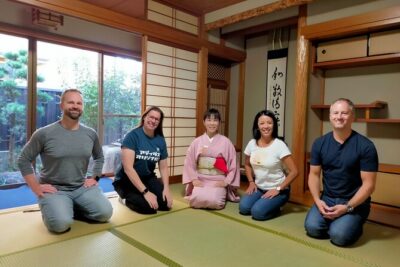
Kyoto near Fushimiinari Wagashi making&Small Group Tea Ceremony
Read our review →Browse the lists this tour appears in