
Reviewed · KINTSUGI WORKSHOPS
Tokyo: Kintsugi Art Repair Workshop
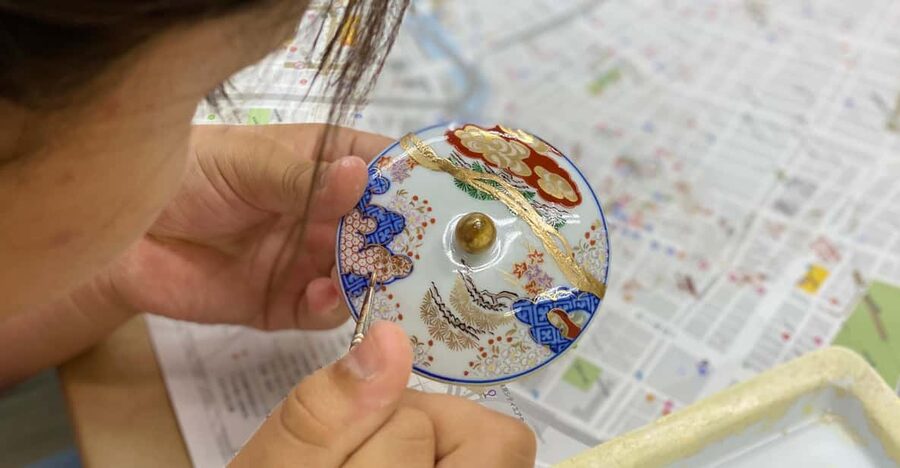
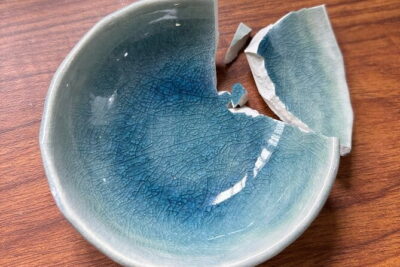
This Tokyo Kintsugi workshop is interesting because you are not just watching art, you are repairing a broken ceramic into something intentional and eye-catching. Kintsugi treats cracks like part of the design, not a problem to hide, and the process is surprisingly calming.
I love the hands-on structure of the class. In about 90 minutes you practice the key steps, guided in real time by instructors with English interpretation. I also like the small group size, capped at 5, which makes it easier to ask questions and get patient, practical support.
One drawback to plan for: time is limited. If your crack or chip is larger than the workshop can handle, or if it involves the wrong part (like a mug handle), your piece may not be finished within the scheduled 90 minutes.
Key things to know before you go
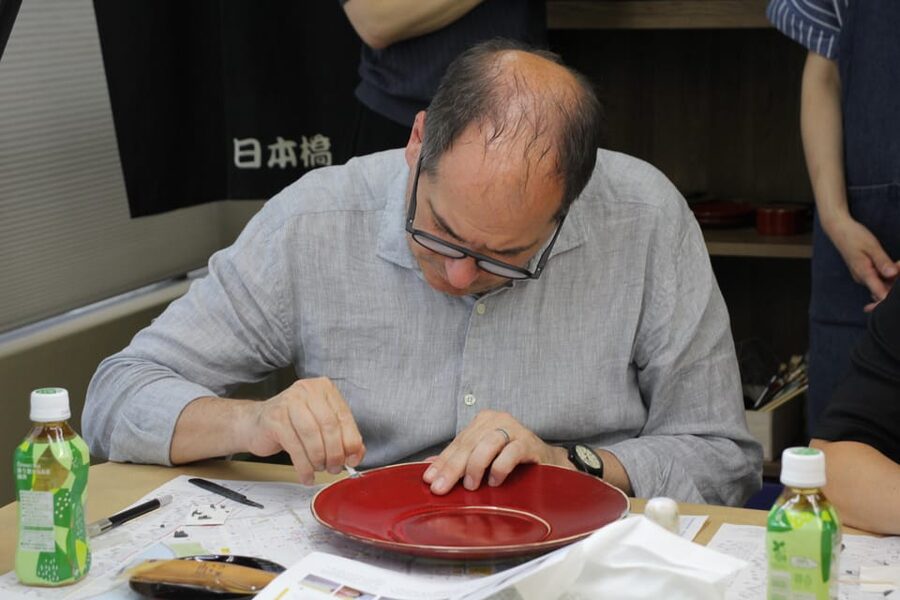
- Gold-lacquer seam technique: you learn how to apply gold along the repair lines for a finished, wearable-in-your-eyes look
- Materials included: you just show up in comfortable clothes, no special supplies needed
- Small group, up to 5: a calmer pace than bigger classes, with lots of hands-on guidance
- Nihonbashi location: you can reach it in about 15 minutes by subway from Asakusa
- A real take-home souvenir: you leave with a restored ceramic piece, mostly for display but usable for dry food
Gold-lacquer art repair in Nihonbashi, not far from Asakusa
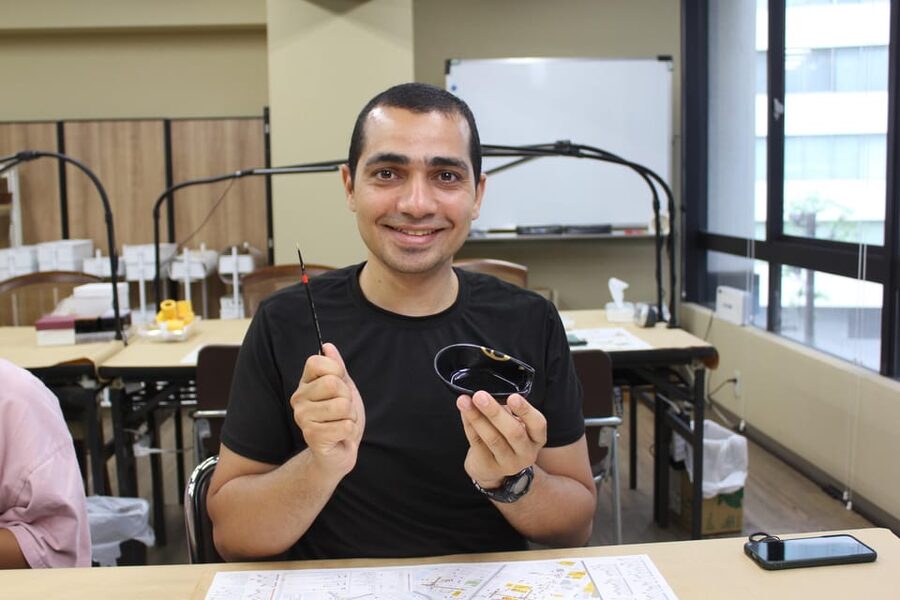
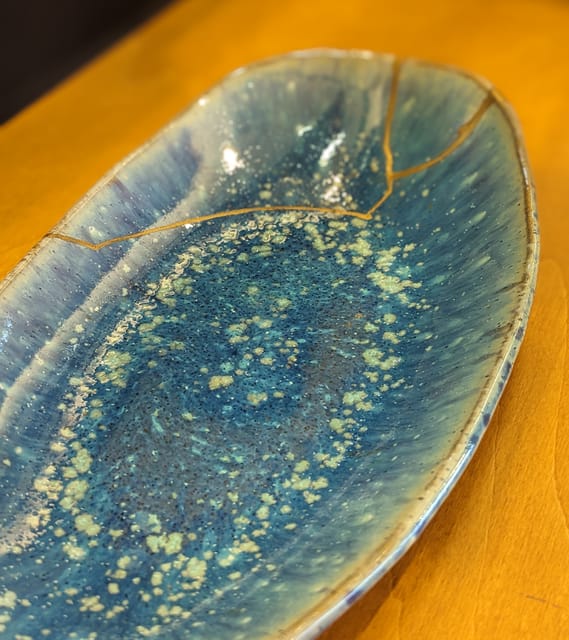
Kintsugi is one of those traditions that feels philosophical at first glance, then gets practical the moment you start working. Instead of tossing broken pottery, you treat the break like a new line on the surface, then build it back with lacquer and gold so the damage becomes part of the story.
This workshop is set up for that exact shift in mindset. You work in a small setting where the focus stays on your piece and your steps, not on a rushed lecture. And the location makes it easy to fit into a Tokyo day without turning it into a logistical project.
If you are starting your Tokyo trip from the Asakusa area, this is a convenient move. The workshop is about 15 minutes by subway from Asakusa, and the meeting point is in central Nihonbashi, a part of Tokyo that is easy to navigate once you have your bearings.
More Kintsugi Workshops in Tokyo
- Kintsugi Experience: Art of Golden Joinery in Tokyo
★ 5.0 · 467 reviews - Authentic Pure Gold Kintsugi Workshop with Master Taku in Tokyo
★ 5.0 · 217 reviews - Kintsugi Workshop Class in Shibuya, Tokyo with mon cadeau
★ 5.0 · 74 reviews
Getting to Nihonbashi Mutoh Main Store and what to expect on arrival
You meet at Nihonbashi Mutoh Main Store, in the Nihonbashi Mutoh building (日本橋滄浪閣 Bldg.). The full address is:
〒1030023 JP Tokyo 1-8-13 Nihonbashihoncho, Chuo City
Show up at least 5 minutes early. The experience starts promptly, so building in a little buffer helps you avoid that stress feeling that ruins the whole vibe.
Inside, you are stepping into a store environment, not a generic classroom. Several participants have commented that the shop itself is beautiful and worth a quick look, especially if you like Japanese crafts you can actually buy and use after the workshop. You may even spot items like tenugui (cloths) and other ceramic or lacquer pieces before you sit down to work.
What you can make, and the limits that affect your outcome
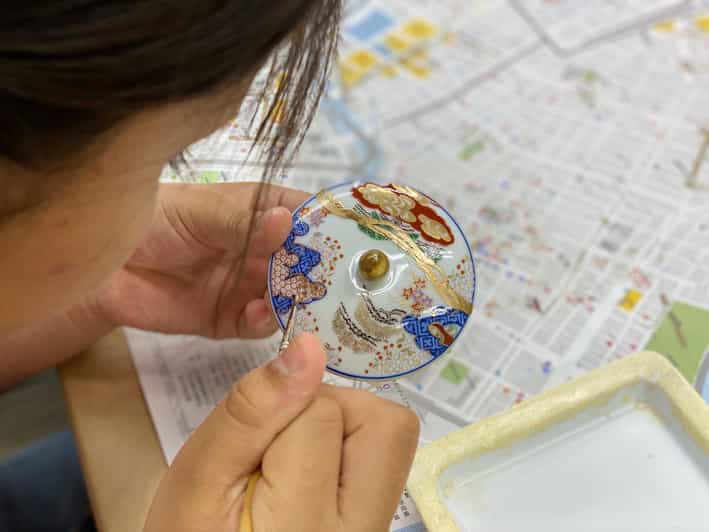
Here is the practical part you want to read twice: the workshop is designed around ceramic vessels and repair sizes that fit a 90-minute session.
Key limits to keep in mind:
- You can repair ceramic vessels only.
- It is intended for pieces up to φ15 cm diameter and height up to 15 cm.
- The repair generally covers 1 to 2 cracks.
- Chipped and cracked mug handles are not repairable.
- If you bring a vessel with a crack or chip that is bigger than the workshop can reasonably finish, it may not be completed within 90 minutes.
If you do not bring anything, you can still make a piece during the session. That matters because it keeps the experience simple. You do not have to worry about whether your particular object is eligible, and you are less likely to feel pressure to rush the repair.
One more useful note: the finished piece can be used to hold dry food items, but it is primarily meant for decorative purposes. So if you are thinking of turning it into daily kitchenware, plan to treat it like a beautiful craft object first.
The 90-minute Kintsugi flow, step by step
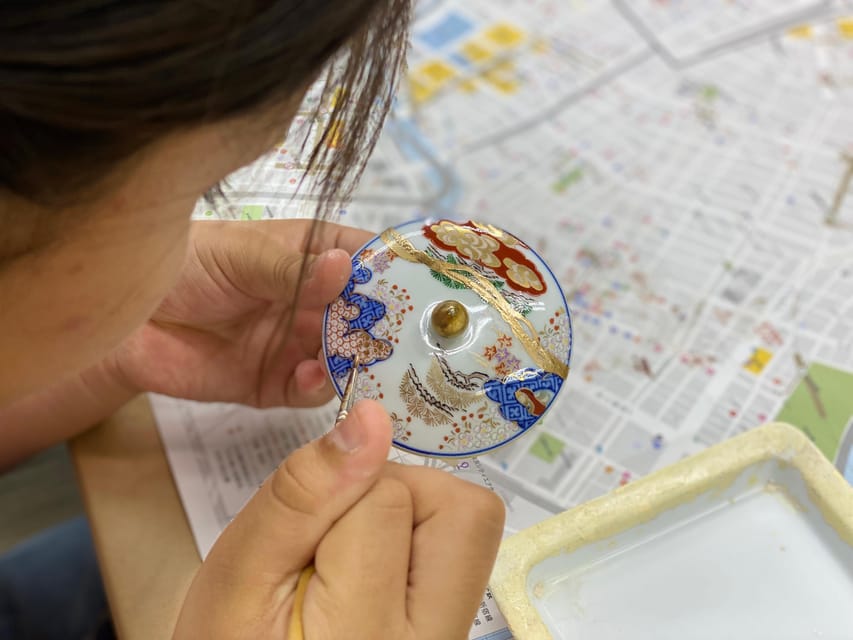
The class is built around a clear Kintsugi sequence: you repair, fill, refine, then finish with a gold effect along the seams. The end goal is not just a functional glue job. It is a line of gold that makes the fracture visually coherent and even elegant.
Even though the exact steps can vary slightly depending on the item and the crack size, you can expect this general arc:
A change of pace from Tokyo:
- Mt Fuji and Hakone 1-Day Bus Tour Return by Bullet Train
★ 5.0 · 26,383 reviews - 1-Day Tokyo Bus Tour
★ 5.0 · 14,250 reviews - Tokyo: TOKYO SKYTREE® Admission ticket
★ 4.5 · 11,192 reviews - Tokyo: teamLab Planets TOKYO Digital Art Museum Entry Ticket
★ 4.6 · 9,779 reviews
1) Choosing your object and prepping for the repair
You will be guided to select the piece you will work on. If you bring your own ceramic vessel, you get help confirming whether it fits the workshop limits. Comfortable clothes are the only requirement, so you can focus on doing the work rather than gathering tools.
2) Re-aligning broken parts and building the repair structure
A big part of Kintsugi is getting the break to sit correctly again. You will practice the practical side of alignment, then move into the materials used to bond and build the repair line.
Participants have described working through steps that include replacing or re-adhering broken pieces, plus using putty to fill gaps before finishing. The goal is a surface that feels stable and looks intentional.
3) Filling and smoothing so the seams can shine
For any larger chipped areas, you should expect some filling work. That might include adding material to level gaps and then sanding or refining surfaces for a smoother finish. This is where the process shifts from restoration to craft.
4) Applying the gold along cracks
This is the part most people are there for. Kintsugi is famous because the seams are emphasized, not hidden. You apply a metallic look along the repair lines so the break reads like design.
One practical reality: in a traditional setting, Kintsugi can take longer than a workshop day. A past participant noted that this kind of session is a shortened version, since full traditional processes can take about a month. The workshop version is still meaningful because you learn the logic and technique, just in a time-compressed format.
5) Finishing and taking home your restored piece
Once your repair is complete, you take your piece home. Even if it is mainly decorative, it is a real keepsake because you made it with guidance, not just watched it happen.
Instructor support and English interpretation that keeps you on track
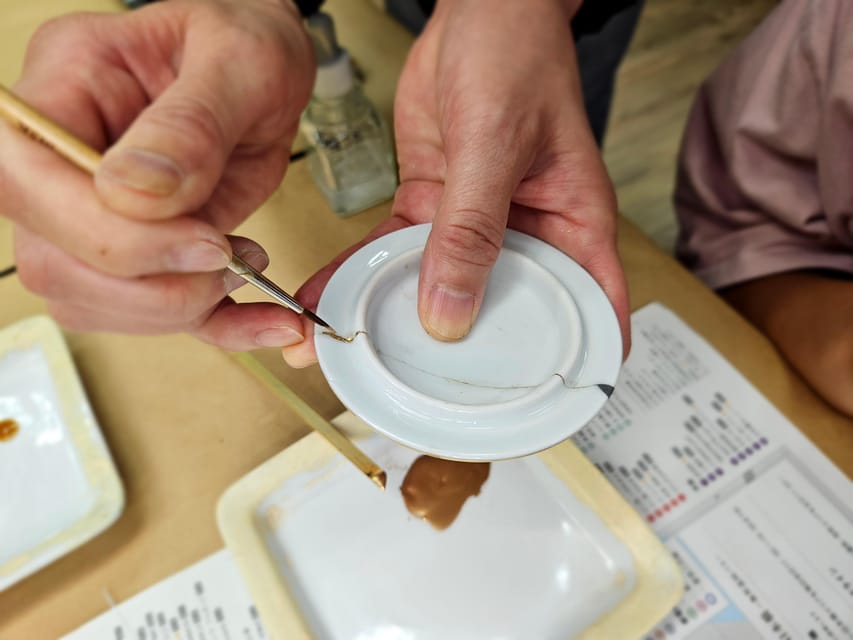
This workshop runs with a professional instructor and English interpretation, and it is designed for people who want a hands-on experience without getting stuck in a language barrier. The class language support can include both an instructor and an interpreter working together.
Past sessions have highlighted a very patient teaching style, with instructors using clear explanations while staying hands-on at your worktable. In particular, instructor Hijiri has been praised for being knowledgeable, gentle, and actively supportive through the steps.
What that means for you: you are not left guessing. When you need to slow down, ask what you are doing, or fix a step that feels unclear, the format supports that. It is one reason this class gets strong ratings compared to activities that feel more like sitting and watching.
The atmosphere also tends to be quiet. More than once, participants have described the experience as relaxing, even peaceful. That matters in Tokyo, where a lot of cultural activities can feel like sensory speed runs. Here, the work keeps your attention focused, and the pacing helps you actually absorb what you are doing.
The workshop store, souvenirs, and what to buy after you learn
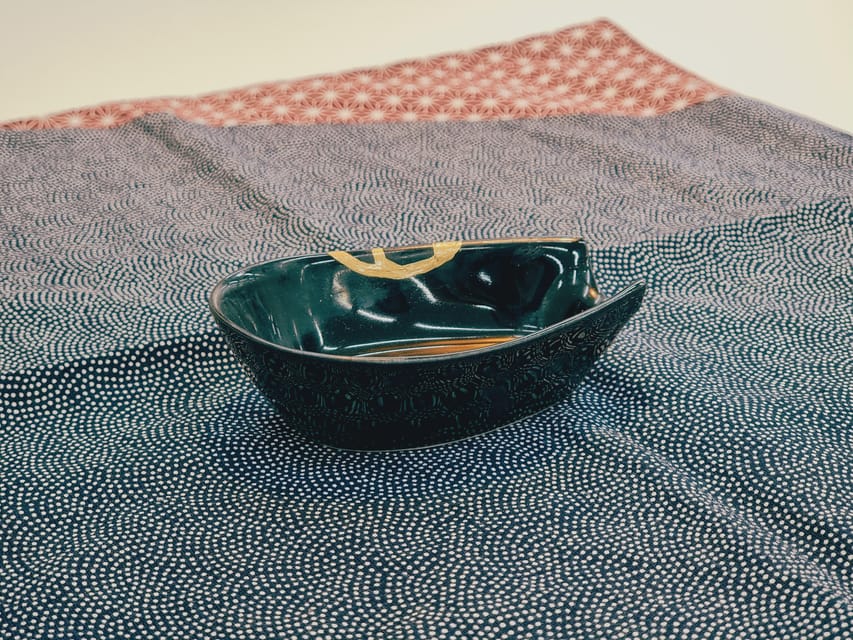
The Nihonbashi Mutoh Main Store is not just the meeting point. It is also a place you can browse. People have bought tenugui with seasonal designs, and the shop appears to carry kintsugi-related works as well as new ceramics and lacquer items.
If you like the idea of bringing home more than one souvenir, you can use the workshop as a shopping filter. After you understand how gold seams and repair lines are supposed to look, your eye sharpens for quality details in the items you purchase.
Good news: you do not need to make shopping part of your day. The workshop itself is your main event, and you leave with your own restored ceramic piece, which is usually the most satisfying souvenir because it has your hands attached to it.
Price and value: is $125 worth it in Tokyo?
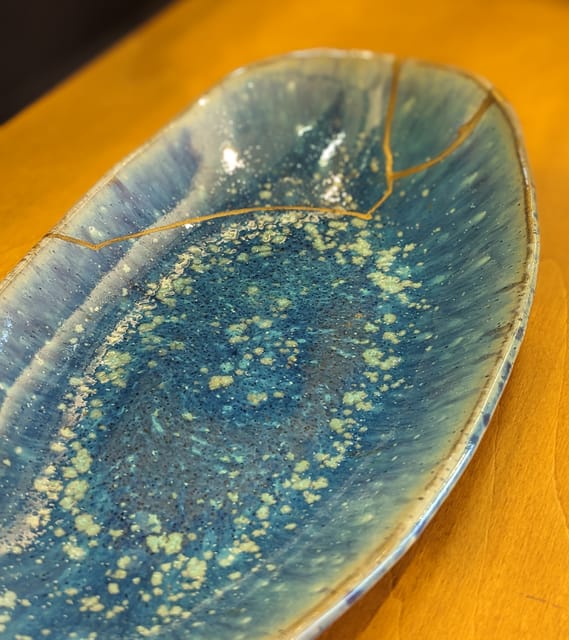
At $125 per person for a 90-minute class, this is not a budget activity. But it can be fair value if you think about what you are actually paying for: guided technique, time with an instructor, and a take-home art object that you helped create.
Here is what makes the price feel more reasonable than many creative classes:
- Materials are provided, so you are not adding extra costs or sourcing supplies on your own.
- The group is small (up to 5), which increases the attention you get.
- You leave with a unique repaired ceramic piece. Many workshops give you an item, but this one is tied to a very specific cultural technique.
- The location is practical, with that 15-minute subway link from Asakusa, which saves you time compared to a far-flung class.
So the real question becomes: do you want a hands-on cultural workshop where the result is something you keep? If yes, the cost makes more sense. If you mainly want a quick cultural taste with minimal crafting time, you might feel the format is a bit too fast and technique-focused.
Also note: the class is recommended for ages 13 and up. If you are traveling with teens or adult friends, you will likely get the most out of it.
Who this Tokyo Kintsugi workshop fits best
This is a great fit if you:
- Want a short, focused cultural activity that fits into a busy Tokyo schedule.
- Like hands-on crafts more than museums.
- Enjoy the idea of learning a traditional technique with a clear visual result.
- Want a take-home souvenir that feels personal and meaningful.
It is also a smart choice if you enjoy quiet experiences. Multiple participants have described it as calm and relaxing, almost like a structured mental reset.
But it might not be the best fit if you:
- Want a long, deep theoretical lesson. This workshop is about technique and making.
- Have a ceramic with a mug handle crack, or a much larger or more complex break than the class limits. The repair eligibility rules matter here.
- Are expecting a fully traditional multi-week timeline. This is a workshop-length, faster version.
Should you book the Kintsugi Art Repair Workshop in Tokyo?
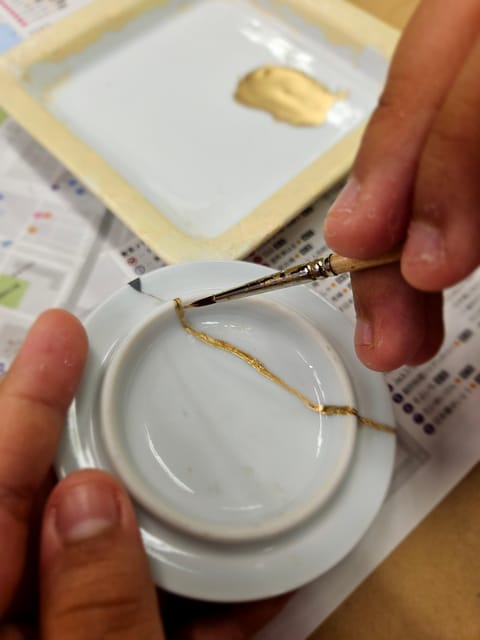
If you want to learn Kintsugi in a way that is hands-on, guided, and time-efficient, I think this is an excellent booking. The combination of small group size, English support, materials included, and a take-home restored ceramic makes it feel like more than a class. It is a real cultural craft experience with a physical result.
I would particularly recommend it if you are pairing it with other downtown Tokyo stops, since the Nihonbashi meeting point is easy to reach. And if you are the type of person who likes process as much as the final object, the step-by-step repair flow is the whole point.
If you are bringing your own ceramic, double check that it fits the limits (ceramic vessels, appropriate size, and cracks you can finish in the session). If you do not, plan to make the workshop piece instead, which keeps the experience smooth and avoids disappointment.
FAQ
How long is the Kintsugi workshop?
The workshop lasts 90 minutes.
What is the price per person?
The price is $125 per person.
Where is the meeting point?
You meet at Nihonbashi Mutoh Main Store (日本橋滄浪閣 Bldg.), 〒1030023 JP Tokyo 1-8-13 Nihonbashihoncho Chuo City.
Is the workshop taught in English?
Yes. The instructor provides English guidance and there is English interpretation.
Do I need to bring materials or tools?
No. All materials are provided, and you only need comfortable clothes.
What are the age requirements?
The experience is for ages 13 and up. Minors must be accompanied by a guardian.
Can I bring my own ceramic item to repair?
Yes, you can bring a ceramic vessel to restore, but it must be a ceramic vessel only, within up to φ15 cm diameter and height up to 15 cm, with 1 to 2 cracks. Chipped and cracked mug handles are not repairable. Also, a piece with a bigger crack or chip may not be fully completed in 90 minutes.
How big is the group?
The workshop is a small group limited to up to 5 participants.
What can I do with the finished piece?
The finished ceramic piece can be used to hold dry food items, but it is primarily intended for decorative purposes.
Is there free cancellation?
Yes. You can cancel up to 3 days in advance for a full refund.
Latest write-ups near Tokyo
- Tokyo Nights: Shibuya Photo Adventure★ 5.0 · 20 reviews
- Wagyu & Sake 8 Course Tasting Dinner in Shinjuku★ 4.9 · 20 reviews
- Making Japanese desserts Nerikiri & drinking matcha in Tokyo★ 5.0 · 20 reviews
- Japanese Whisky Hunting《HIGH-QUALITY-ONLY》Rare Tasting Class★ 5.0 · 20 reviews
- Mt. Fuji 5th Station, Owakudani Ropeway, Pirate Ship plus Outlet shopping!★ 4.5 · 20 reviews
- Kintsugi Experience with Arita Ware in Tokyo (English Guide)★ 4.8 · 20 reviews
- This is Asakusa! A Tour Includes the All Must-Sees!★ 5.0 · 20 reviews
- Tokyo: Karate Experience with Former All-Japan Champion★ 5.0 · 20 reviews
Kintsugi Workshops, compared.
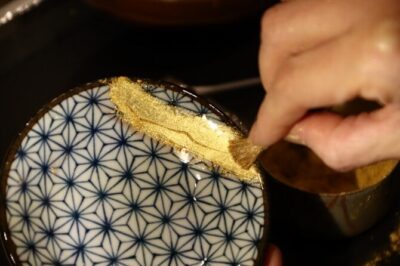
Kintsugi Experience: Art of Golden Joinery in Tokyo
Read our review →
Authentic Pure Gold Kintsugi Workshop with Master Taku in Tokyo
Read our review →
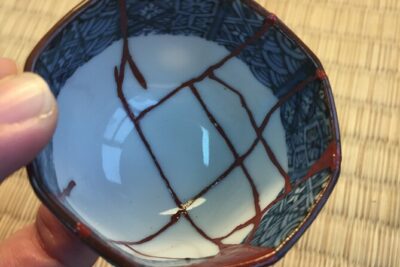
1.5〜2 Hours Traditional Kintsugi Work Shop in Namba Osaka
Read our review →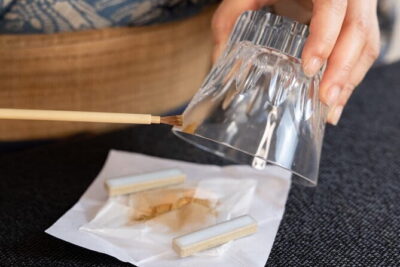
Kintsugi Workshop Class in Shibuya, Tokyo with mon cadeau
Read our review →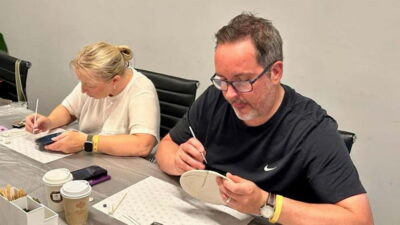
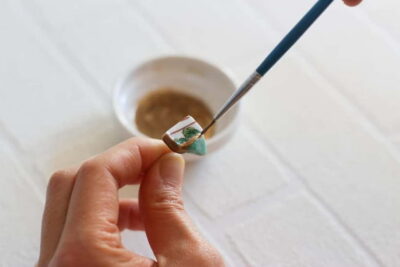
Kintsugi Experience in Naha, Okinawa – Art from Broken Pieces!
Read our review →Browse the lists this tour appears in