
Reviewed · SAMURAI & NINJA EXPERIENCES
Kyoto: Samurai Kenbu Traditional Sword Dancing Show
Kyoto’s Samurai Kenbu Traditional Sword Dancing Show is interesting because it turns samurai culture into movement you can actually watch and understand, not a lecture you have to endure. You sit down, you hear the context, and then you see how controlled sword forms can tell a story, including the feeling of responsibility that comes with carrying a blade.
What I like most is the combo of clear English narration with staged demonstrations that keep changing, and the fact that the ending is hands-on. One possible drawback is that you cannot record during the performance, and the sword time is short, so if you are hunting for intense sparring or a long training session, this may feel more like an introduction than a full class.
Key highlights to know before you go
- English and Japanese narration helps you follow the samurai story and techniques as they happen
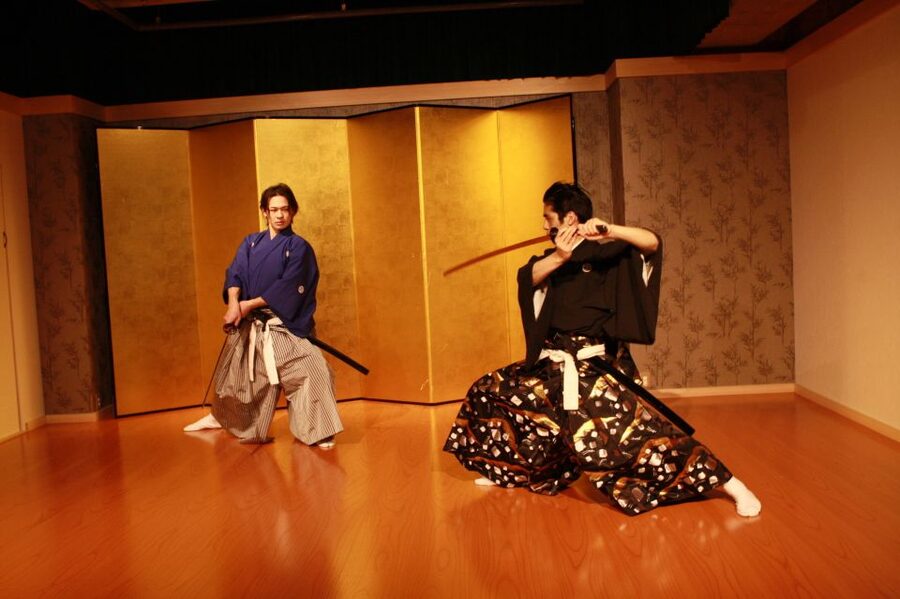
- Kenbu demonstrations show traditional and newer styles through a series of staged scenes
- Fan techniques appear alongside sword work, since the folding fan is part of the samurai toolkit
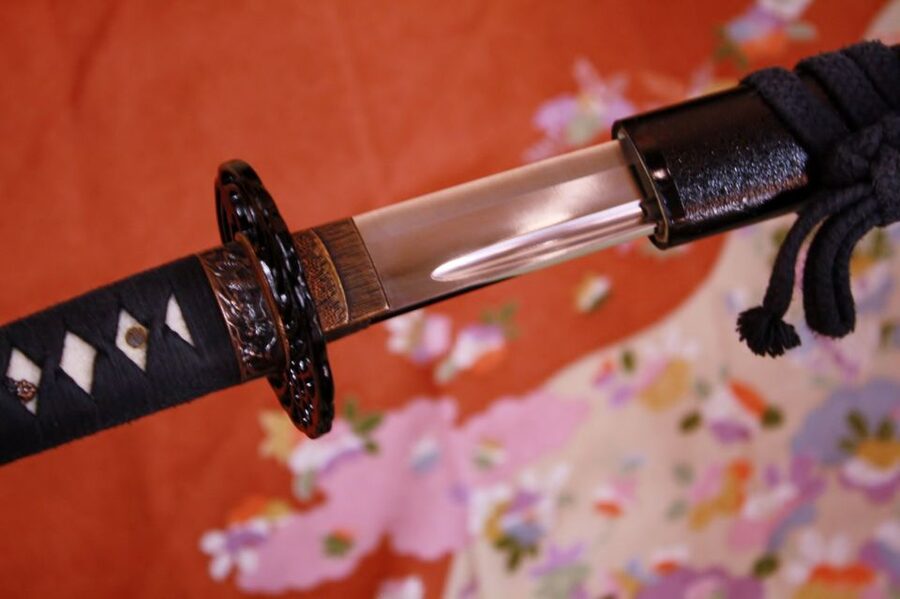
- A short sword lesson lets you safely handle a blade for a minute or two
- Photo time after the show gives you a chance to capture the moment, without disrupting the performance
- Small, theater-style setup makes it easier to focus on technique, posture, and stage details
Stepping into feudal Japan at Samurai Kenbu Theater
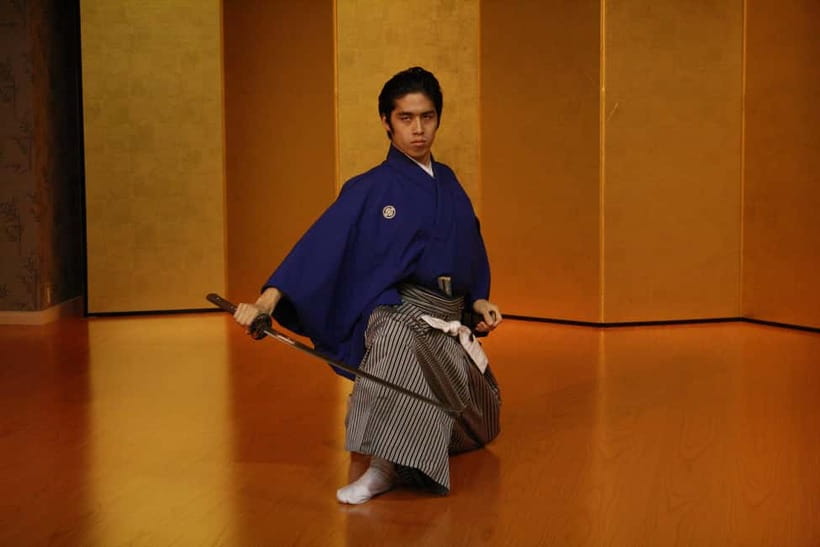
This experience is built like a live performance with an educational spine. You are taken into Japan’s feudal era, with Kenbu dating back more than 700 years, and you get explanations tied to samurai culture from roughly the 12th to the 19th centuries. The show is not trying to turn samurai into action movie chaos. It is aiming for precision, grace, and controlled power.
When you arrive at the Samurai Kenbu Theater in Kyoto, the first real “this is a traditional place” moment is practical. You take off your shoes, just as the theater asks. That small rule matters more than you might expect, because it sets the tone: this is a cultural performance space, not a generic tourist attraction hall.
The show also has a strong narrative flow. Before you see each set of movements, a performer narrates what you are about to watch and why it mattered in samurai life. That is a big deal if you do not already know the basics of sword etiquette or why Kenbu is performed the way it is.
More Samurai & Ninja Experiences in Kyoto
- Kyoto Samurai Experience
★ 5.0 · 1,294 reviews - Kyoto: Kendo and Samurai Experience with Uniform and Gear
★ 4.9 · 815 reviews - Kyoto: Samurai Sword Class by Experts in Traditional Arts
★ 4.9 · 657 reviews
What the Kenbu story and staged sword-dancing are really showing
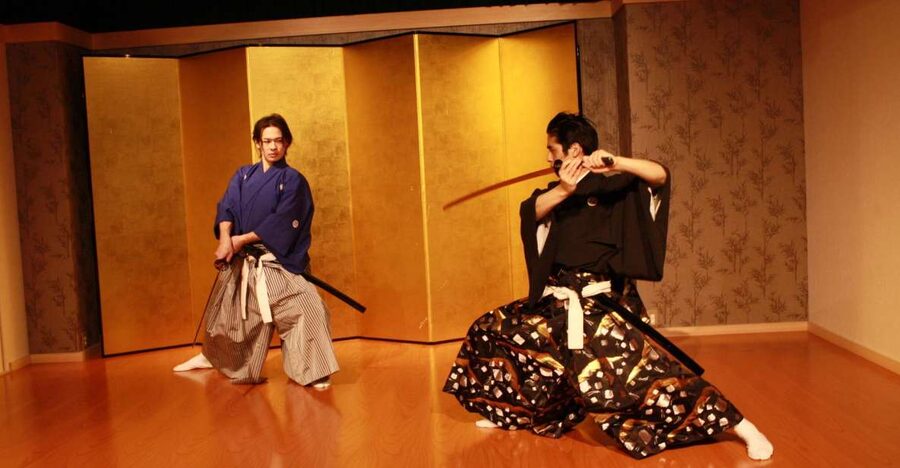
Kenbu, as presented here, is about movement with meaning. You watch a series of demonstrations where the sword work is matched to story elements, poems, and samurai practice. The effect is that the performers look like they are drawing diagrams in the air, each change in posture and angle signaling something specific.
You will see the sword swing through complex motion patterns. But the show is not only about swinging. It also focuses on how the performer transitions between stances, how the sword stays controlled, and how the pace changes to match the story. That is where the “grace, beauty, strength” description becomes real on stage.
A neat detail is that the narration covers more than plot. You hear about the responsibility of carrying a samurai sword, and why discipline and care are part of the culture, not just the dramatic image. Even if you only catch pieces of the historical context, you can feel the emphasis on control and respect.
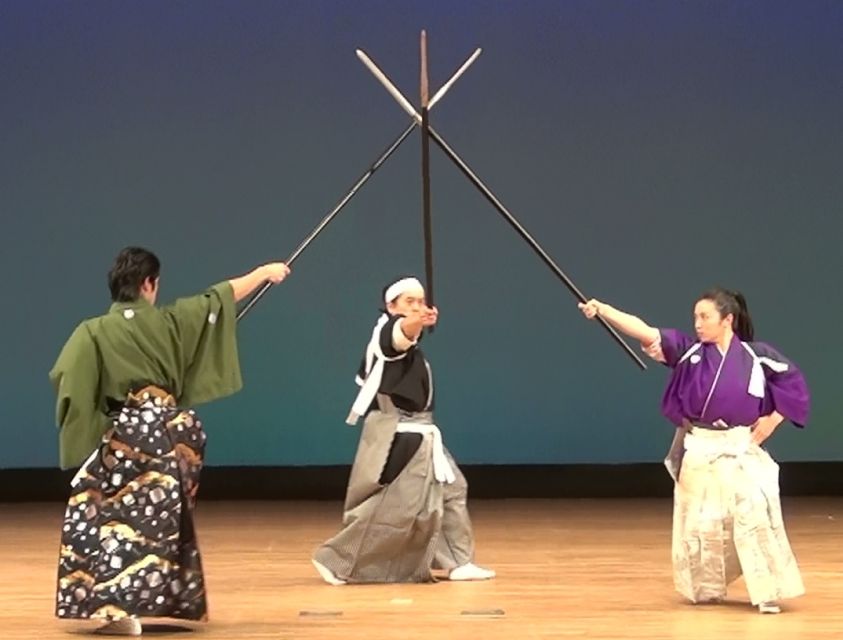
The show includes both traditional and newer Kenbu styles. So it does not feel frozen in one “museum” look. Instead, you see how the art form can preserve its roots while still adapting in performance.
The fan part is not an afterthought
One thing I appreciate is that the show treats the folding fan as more than set dressing. You get demonstrations of techniques using the fan alongside sword movements, and the narration connects the fan to samurai practice. That matters for two reasons.
First, it reminds you that samurai culture was not only about swords. Second, it gives you another visual element to track, which makes the hour feel less repetitive.
If you like small technique details, watch how the performer uses the fan in sync with timing and posture. You are not just seeing an extra prop. You are seeing another tool used to express control, rhythm, and presence in the same performance language as Kenbu.
The “responsibility” theme: why it lands in real life
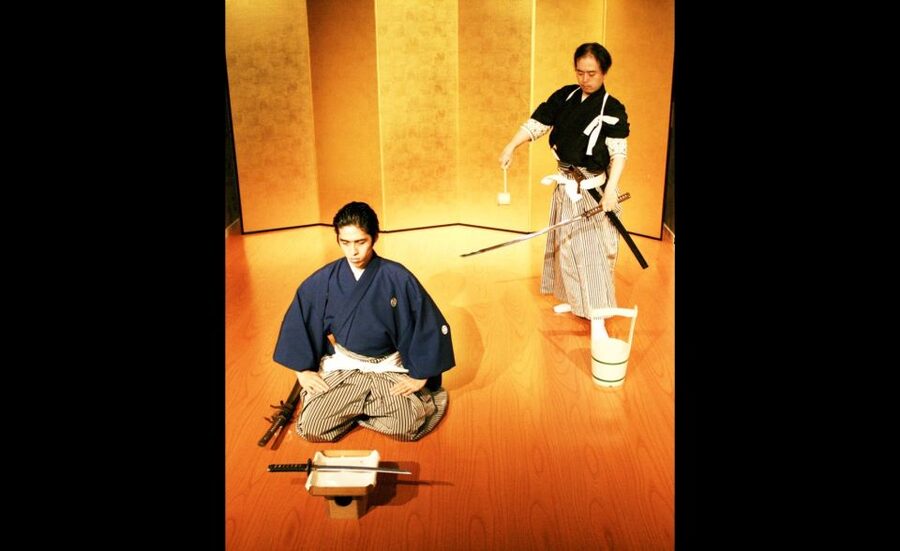
A lot of sword-themed shows focus only on flash. Here, the storyline emphasizes the weight of responsibility that comes with a blade. That theme shows up in the narration and also in how the performers handle the moment when the show shifts from storytelling into demonstration.
You get the sense that Kenbu is a discipline. It is not presented as a way to “be cool,” it is presented as training of the body and mind, using performance to carry forward technique and values.
That is also why the mini lesson at the end feels grounded. You are not thrown into adrenaline. You are guided into careful handling and basic form, which gives the responsibility message a practical connection instead of leaving it as a vague moral.
A change of pace from Kyoto:
- PERFECT KYOTO 1-Day Bus Tour
★ 5.0 · 13,518 reviews - Kyoto: Fushimi Inari, Kinkakuji, Bamboo Grove 1 Day Bus Tour
★ 4.8 · 4,316 reviews - Kyoto: Tea Ceremony in a Traditional Tea House in Kiyomizu
★ 4.9 · 3,519 reviews - Kyoto Geisha Walking Tour: Gion District & Hidden Gems
★ 4.7 · 3,273 reviews
The mini sword lesson: what you get, and what you do not
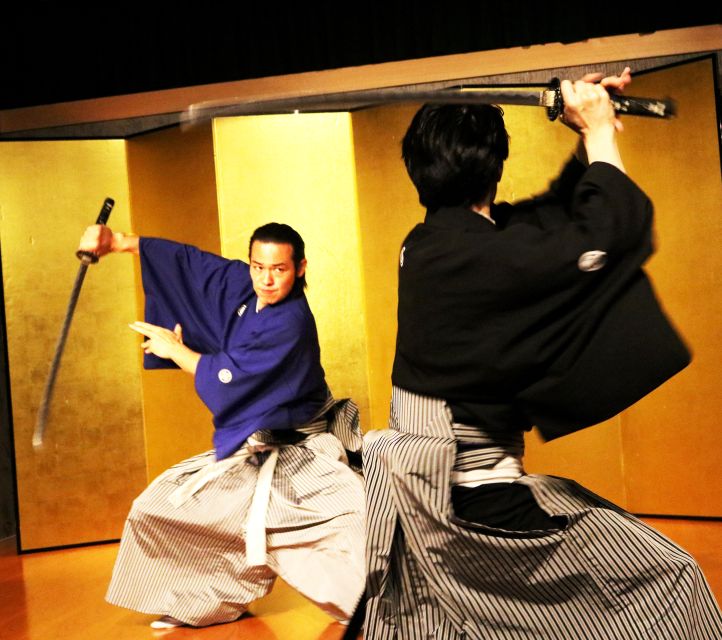
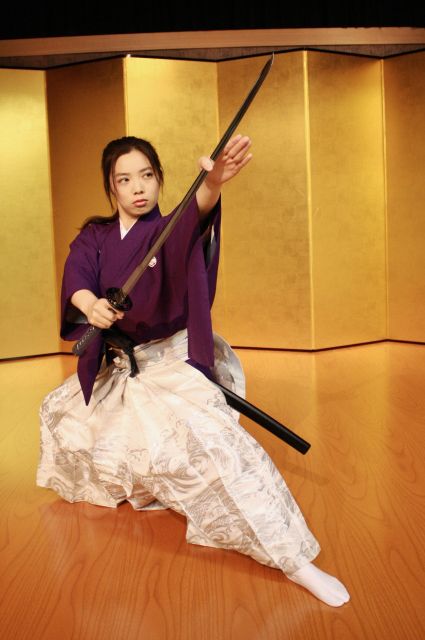
The ending is the part most people remember, because you get to try. After the demonstrations, you move into a short hands-on segment. You will pick up a sword, slowly pull the blade from the scabbard, and grasp the blade. Then, at the instructor’s command, you start with gentle swings and gradually add more force.
This is a key point for your expectations. The lesson is intentionally short. It is a first touch, not a full skill-building class. But even a short try can be a reality check. Holding and controlling a sword for the first time is harder than it looks on stage.
You may also have a chance to practice with the fan if there is time. So you get a quick taste of both components of the show: sword technique and fan technique. It helps if you like learning by doing, even when the time is limited.
The instructors are English and Japanese, and the teaching style is friendly. Several people highlight that the performers put everyone at ease during the lesson, including first-timers who are nervous about holding a katana.
Photo time after the show: how to make it work
During the performance, photos and videos are not allowed. That rule is not there to ruin your fun. It protects the viewing experience for everyone and keeps the theater focused.
The upside is that you get camera time after the show. When the performers return, the show pauses the performance flow and gives you a moment to capture photos. People also mention that there are opportunities where staff may help snap photos, which is useful if you want a clean picture but do not love selfie angles.
My practical tip: keep your phone ready but put it away until you are clearly allowed. You will save yourself stress and get to enjoy the show without worrying about whether you are about to break a rule.
Logistics that affect your comfort in the hour
Because this is a one-hour experience, the small rules matter. Plan to arrive 5 to 15 minutes early. The theater does not have a waiting room, and people without an appointment cannot wait in the room. So if you roll in late, you will likely feel rushed.
There is no room for large luggage or travel bags, so travel light. If you are carrying day bags, keep them compact.
The show is also wheelchair accessible, but the lack of waiting space is still something to keep in mind when you plan your arrival time and where you will stand while waiting outside.
And one more thing that is easy to overlook: the theater asks that you do not attend under the influence of alcohol. Simple, but worth noting.
Value for $32: what you actually get in 1 hour
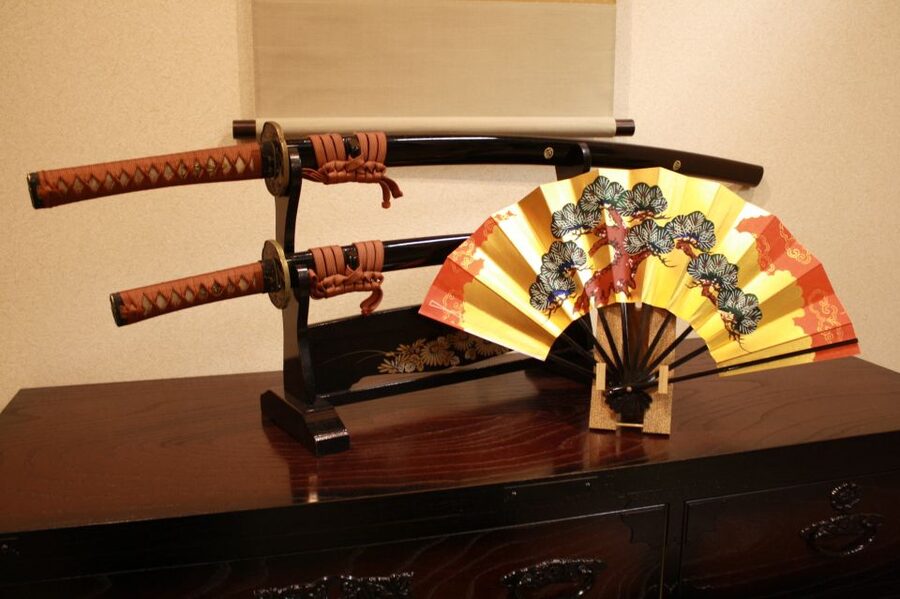
At about $32 per person for roughly 1 hour, this can be good value if you want a compact cultural experience with a hands-on ending. You are paying for a live performance that includes English narration, plus a supervised sword-handling mini lesson.
Where the value is strongest is the balance. You get staged history and technique, then you get a short practical try with expert guidance. That combination is hard to find in Kyoto in a single hour at a fixed price.
Where you should be cautious is if you are expecting a long, intensive sword class or a major fight demonstration. The show is not built as a full kendo-style training session. It is an art and storytelling format, with a brief taste of technique at the end.
In other words, it is best viewed as an introduction with real performers and a safe experience with a blade, not a replacement for formal lessons.
Who this Kenbu show suits best
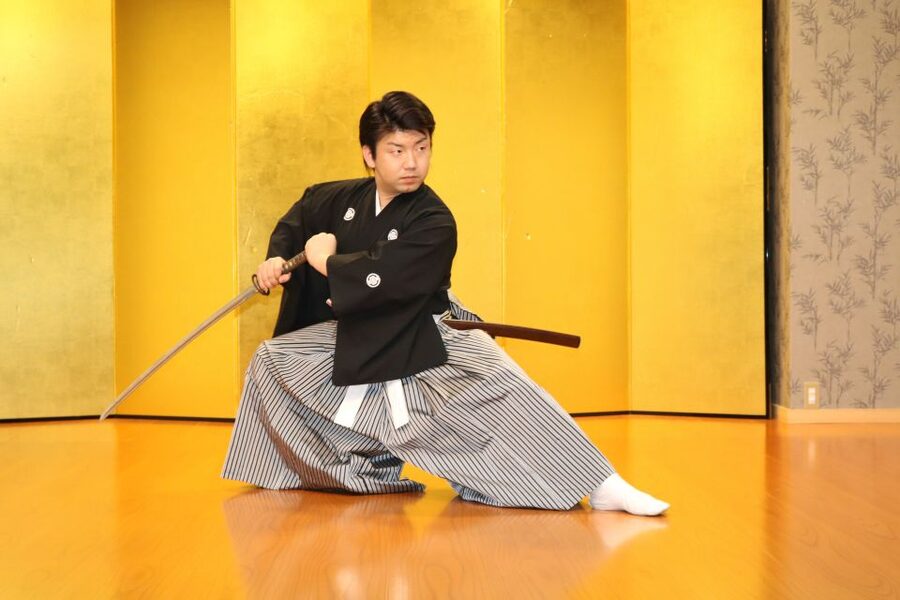
This is a great match if you enjoy:
- Samurai culture and stage storytelling, especially when it is explained in plain language
- First-time interest in katana handling, where you learn basic care and stance rather than trying to fight
- A one-hour activity that fits cleanly into a Kyoto day without dragging
It also works well for families, since the performance is staged like short tales with clear narration and the interactive segment is brief and supervised.
If you are a hardcore sword training person, you might crave more time and more technical repetition. If your goal is a big action spectacle, you may leave wanting more. But if your goal is to understand how Kenbu works and try it safely for a moment, this hits the mark.
FAQ
FAQ
How long is the Samurai Kenbu show?
The experience lasts about 1 hour.
Where do I meet for the show?
Meet at the Samurai Kenbu Theater in Kyoto. It is about a 4-minute walk from Subway Sanjo Keihan Station (Kyoto City Subway), and about a 5-minute walk from Sanjo Station on the Keihan Main Line.
Is the show narrated in English?
Yes. Instruction and narration are available in English and Japanese.
Can I take photos or videos during the performance?
No. Photos and videos are requested to be avoided during the show. You do get time for photos after the performance.
What do I do during the short sword lesson?
You will hold a sword for a short time, slowly pull it from the scabbard, grasp the blade, and swing gently at first, then with more force at the instructor’s command. If there is time, you may also learn some fan use.
Is the venue wheelchair accessible?
Yes, the theater is listed as wheelchair accessible.
Should you book this Kenbu show?
If you want a one-hour Kyoto activity that blends samurai storytelling, clear English narration, and a supervised chance to hold and swing a sword, I think you should book it. The price feels fair for what you get: a real stage performance plus hands-on instruction, with photo time after.
Skip it only if your priority is a longer, heavier training session or a big fight-style demonstration. Otherwise, this is one of those experiences where you leave with both an understanding of Kenbu and a short personal memory of handling the blade.
Latest write-ups near Kyoto
- Kyoto: Nishiki Market Tour with a Local Foodie & Tastings★ 4.5 · 67 reviews
- Kyoto Kimono Rental mimosa |Kimono/Yukata Rental Couple Plan★ 4.8 · 67 reviews
- Kyoto: Traditional Kimono Fabric Handicrafts Workshop★ 5.0 · 67 reviews
- Kyoto Tea Ceremony and Samurai Photo Session★ 5.0 · 70 reviews
- Kyoto: Replica food making experience★ 4.8 · 70 reviews
- Kyoto: Kinkakuji, Golden Pavilion Guided Tour★ 4.7 · 71 reviews
- Private departure transfer from Kyoto city to Kansai International airport★ 5.0 · 72 reviews
- Uji: Green Tea Tour with Byodoin and Koshoji Temple Visits★ 4.8 · 72 reviews
Samurai & Ninja Experiences, compared.
Samurai Ninja Museum Guided tour and Experience
Read our review →
Kendo and Samurai Experience with Uniform and Gear
Read our review →
Samurai Sword Class by Experts in Traditional Arts
Read our review →
Skip the lines Basic Ticket at SAMURAI NINJA MUSEUM KYOTO
Read our review →
Samurai Sword & Archery Class from Samurai Descendant
Read our review →
Browse the lists this tour appears in