
Reviewed · HISTORICAL TOURS
Hiroshima: History of Hiroshima Group Walking Tour
Hiroshima Peace Memorial Park is one of those places where photos can feel incomplete, and a guide can turn a walk into real understanding. I like that this tour is led by specialists with Masters and PhD-level training in fields like history and peace studies, and you also get local perspective from guides such as Tomas and Camille.
What I really love is the way the walk connects the dots from what Hiroshima was like before August 6, 1945, to what happened during the bombing, and to what life looked like after. I also like the storytelling approach many guides use, including personal family connections shared by guides like Cva, Moe, and others.
One consideration: this is emotional material, and the 2-hour format means you move through a lot of stops. If you need extra time to process, you may want to plan a bit of quiet time after you finish at the Hypocenter area.
Key things I’d circle before you go
- PhD and Masters-level expertise behind the guided narration, not just casual commentary
- Peace Memorial Park highlights in one loop, from the Peace Gates to the Hypocenter area
- Monuments tied to survivor stories, so names and symbols feel human, not abstract
- Hiroshima National Peace Memorial Hall entrance included, so you do not have to hunt for tickets
- A final focus at the Atomic Bomb Dome and Hypocenter, where the meaning clicks into place
- A respectful pace with room for questions, even when the topic is heavy
Why Hiroshima Peace Memorial Park works best with a guide
If you come to Hiroshima just to collect landmarks, you will still see powerful sites. But the park was designed to hold memory in very specific ways, and a good guide helps you read it.
This tour leans on experts: guides with advanced education in areas like tourism, anthropology, history, and peace studies. That matters because you are not only learning facts. You are learning how Hiroshima is asked to remember, and why certain places and symbols were chosen for public reflection.
Also, the guides are not generic tour narrators. Many have years living in Hiroshima, and in practice that local grounding shows up in how they answer questions. People like Tomas and Camille are praised for being passionate and clear, and Cva and Moe are praised for balancing seriousness with a warm, approachable tone.
More Historical Tours in Hiroshima:
- Hiroshima Historical Walking Tour – Why A-Bomb was Dropped
★ 4.8 · 893 reviews - Hiroshima Peace (Heiwa) Walking Tour at World Heritage Sites
★ 5.0 · 872 reviews - Miyajima Half-day Trip Historical Walking Tour
★ 5.0 · 284 reviews
Meeting at the Gates of Peace, then settling into a clear 2-hour plan
You start at the Gates of Peace, located next to the Italian restaurant Mario. That is a helpful anchor because the area can feel busy and confusing at first, especially when you are focused on finding the exact meeting point.
From there, the tour is built for a walk that feels structured but not rushed. You get short guided stops at the key memorials, then a longer patch of free time midway through the park. That combination works well in a space like this. You learn what each landmark is meant to communicate, then you get a pause to absorb and take photos when you need to.
Bring comfortable shoes and dress for the weather. Some guides have handled tough winter conditions like heavy snow, so you can expect the route to be walked even when conditions are not perfect. Your best move is simple: wear shoes you can stand and walk in for the full 2 hours.
The first stretch: Mother and Baby, the Prayer Fountain, and the cenotaphs
The tour begins with a quick intro at the Gates of Peace, then you step into the first cluster of memorials.
First up is Mother and Baby in the Storm (about 5 minutes). This is a strong opening because it sets the tone right away: Hiroshima’s remembrance is not just about politics or military strategy. It is about people, family, and survival in the most immediate human terms.
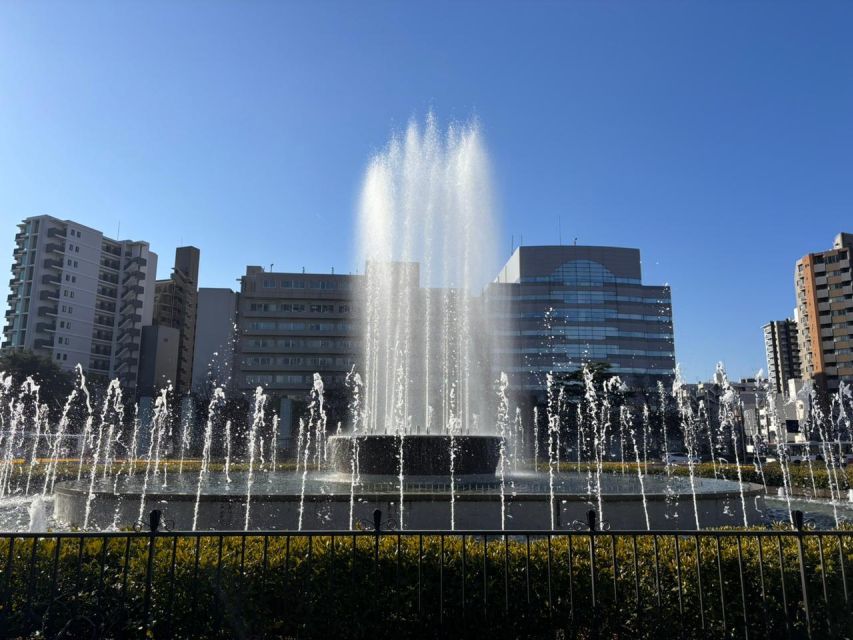
Next you visit the Prayer Fountain (around 10 minutes). This stop is useful because it slows you down and gives you a chance to connect the physical setting of the park with the purpose behind it: reflection and remembrance.
Then comes the Hiroshima Victims Memorial Cenotaph (about 10 minutes). Cenotaphs can look similar from a distance, but a guide gives you the threads to follow. You are guided to read the space as a statement, not just as a landmark photo stop.
After that, you move to Flame of Peace (about 5 minutes). The key value here is what the guide does with it: they connect symbols you might otherwise overlook to the stories and testimonies of people affected by the atomic bombing. It is the difference between seeing an object and understanding why it exists in public view.
Practical tip: in this first stretch, pay attention to what the guide says about how Hiroshima remembers. If you treat this walk like a guided reading session, everything later will feel clearer.
Hiroshima National Peace Memorial Hall: where the story gets heavier
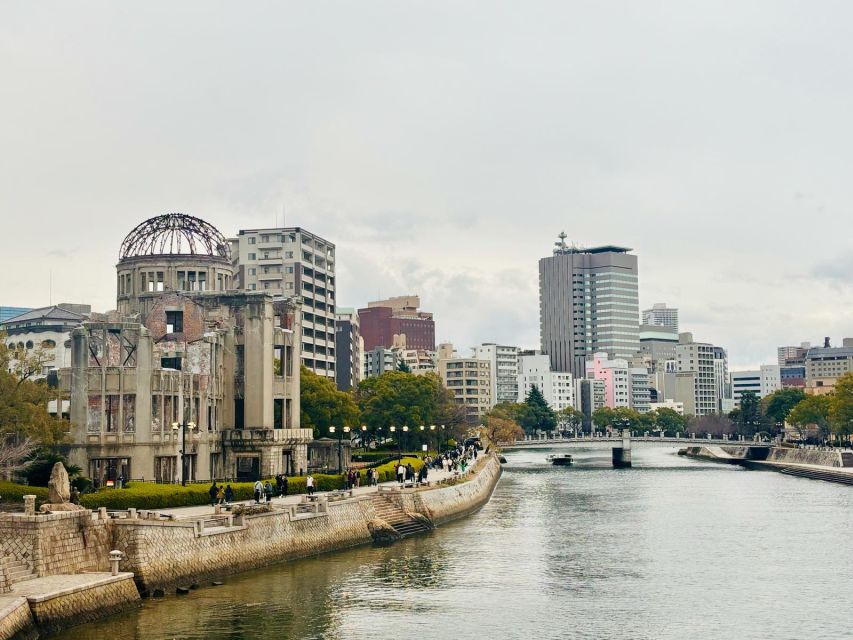
You then reach Hiroshima National Peace Memorial Hall (about 15 minutes). Entrance to this hall is included, so you do not have to figure out tickets while you are trying to keep your place in the walk.
This stop is important because it deepens the context without turning the experience into an all-day museum marathon. You get a guided visit, which helps if you are new to Hiroshima’s timeline or if you have only seen high-level summaries before.
The park’s design can be a bit like a guided essay, each section adding meaning. The hall helps you understand what you are looking at, not just where you are walking. And since guides often have academic training in history and peace studies, you should expect clear framing around what happened and why it is remembered.
More Walking Tours in Hiroshima:
- Hiroshima City 4hr Private Walking Tour with Licensed Guide
★ 5.0 · 437 reviews - Hiroshima Walking Tour Why A Bomb was dropped to Hiroshima
★ 5.0 · 347 reviews - Hiroshima: Food and Culture Guided Walking Tour with Dinner
★ 4.9 · 212 reviews - Hiroshima: Peace Walking Tour of World Heritage Sites
★ 4.9 · 190 reviews
Mid-walk free time to catch your breath
After the hall, you get about 20 minutes of free time. That is not filler. It is your chance to step back from the guided pacing, read signage at your own speed, and decide what you want to focus on next.
If you feel emotionally overwhelmed, this break is a good moment to step aside for a moment, regroup, and come back when you can. If you are doing fine and want photos, this free window is also a good way to get them without feeling like you are rushing every stop.
Children’s Peace Monument, burial mounds, and the Bell of Peace
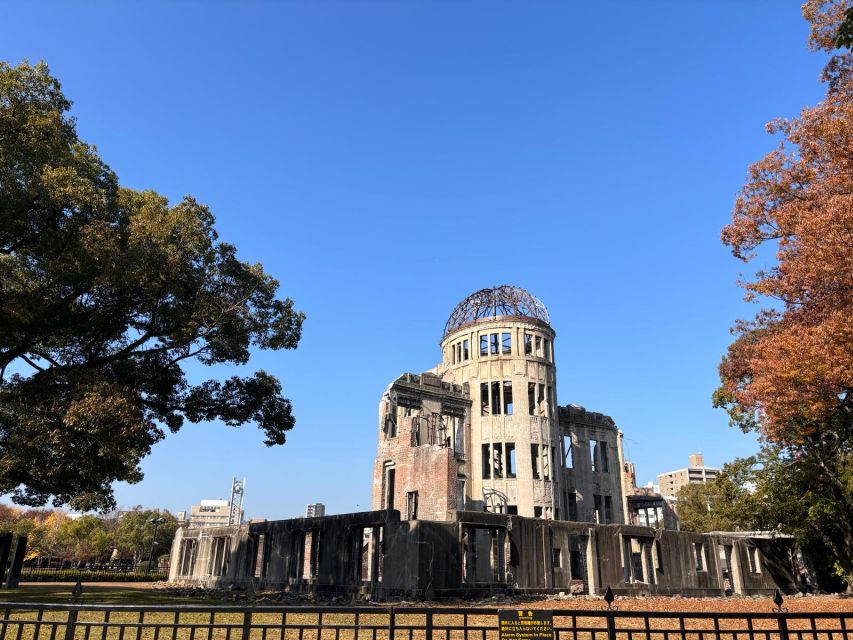
Next you visit the Children’s Peace Monument (about 10 minutes, with a photo stop). This is where the tour often lands on one of its most personal messages: the bombing’s effects did not stay in the past. They carried forward into families, including children.
Then you go to the Atomic Bomb Memorial Burial Mound (about 10 minutes). A guided stop like this matters because it prevents you from walking past something solemn and treating it like just another structure. You learn what the memorial is communicating and how it fits into the broader park message.
You also visit the Korean Atomic Bomb Victims Cenotaph (about 5 minutes). This is a shorter stop, but it is also meaningful because it expands the remembrance frame beyond a single national story. The tour’s guiding theme is that the bombing’s impact is both direct and indirect, and the memorial sites help you see that.
After that you reach the Bell of Peace (about 10 minutes, with another photo stop). Bells can feel like they belong to festivals. Here, the purpose is different. The guide’s narration helps you treat the moment as a peace message, not a spectacle.
One reason the pacing works: these stops form a chain. You move from children-focused remembrance, to burial remembrance, to broader victim remembrance, then to a peace symbol you can carry out of the park in your head.
Atomic Bomb Dome and Hypocenter: the final stretch, and the meaning it completes
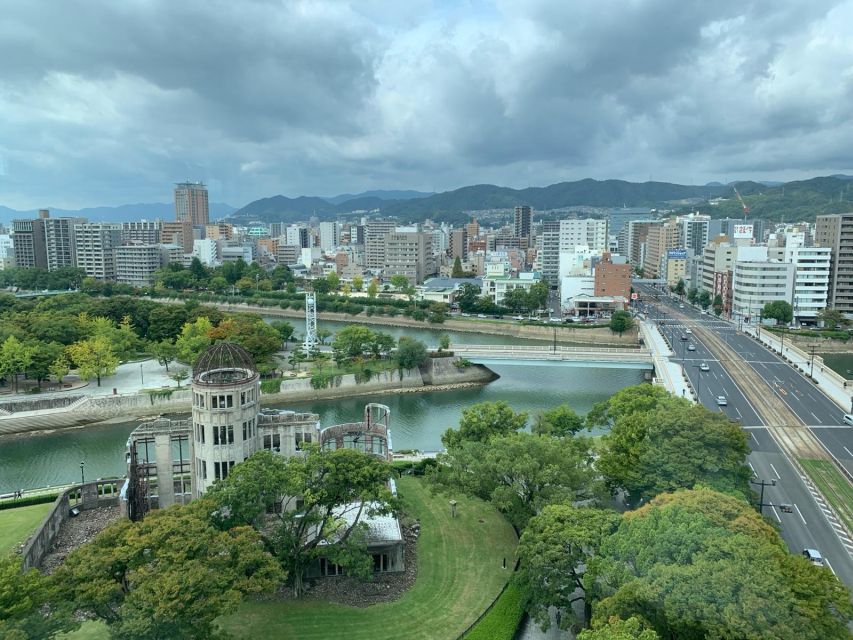
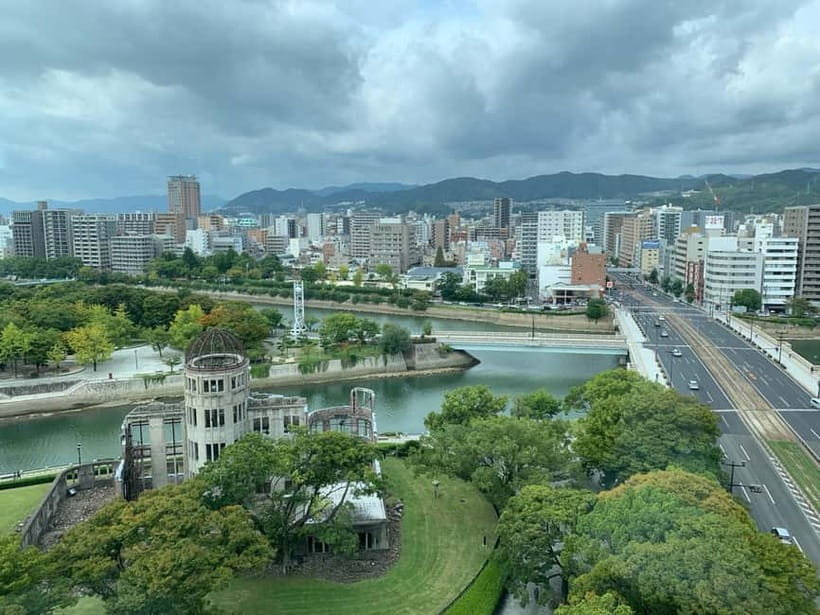
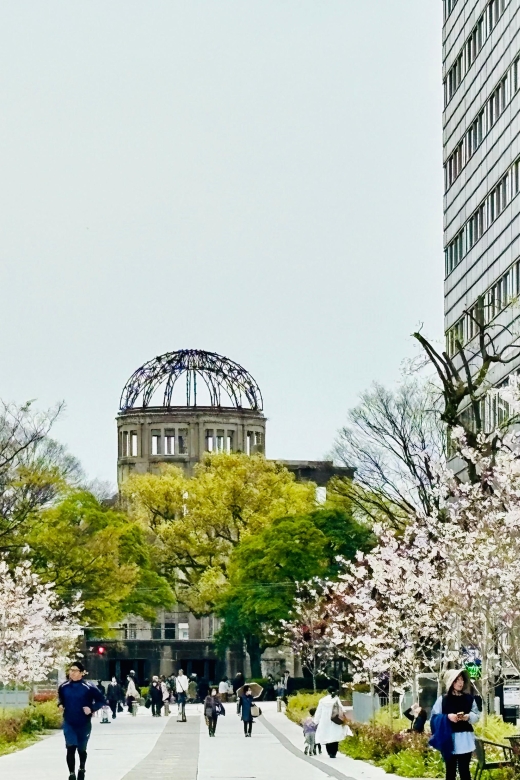
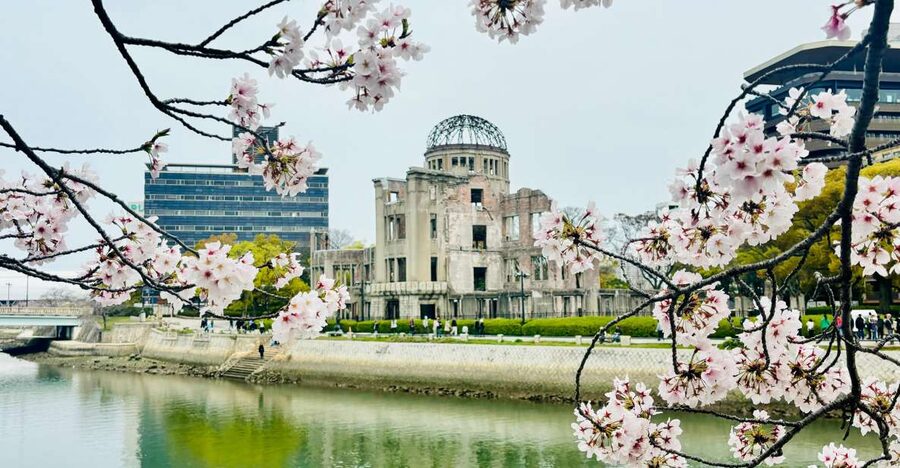
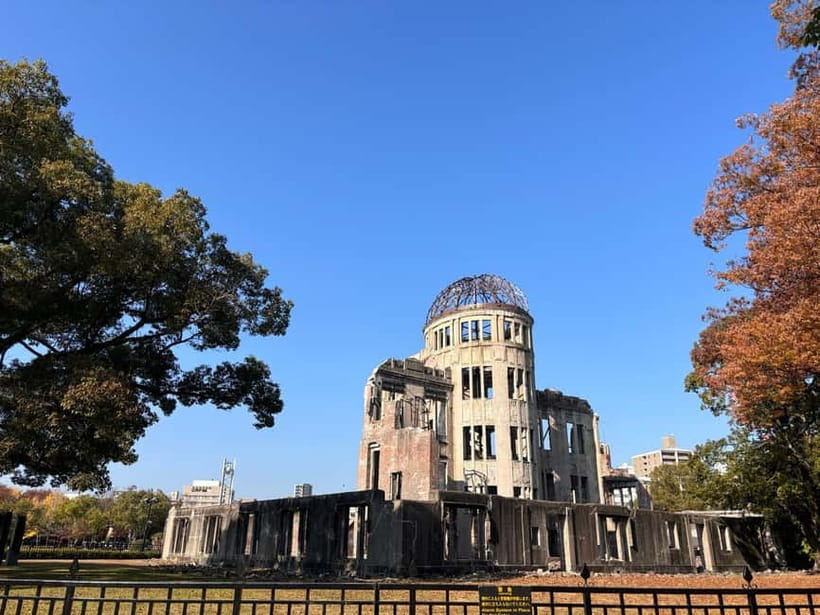
The last major section is the one most people come for: the Atomic Bomb Dome. You get about 15 minutes here, including a photo stop and sightseeing.
The Dome is special because it is described as the only structure left standing after the blast. That one detail is powerful, and the tour builds on it. By the time you reach this point, you have already been guided through the park’s symbols and victim memorials, so the Dome is no longer just a famous photo location. It becomes a visual anchor for the story you have been walking through.
From there, you visit the Hypocenter area (about 10 minutes, with another photo stop and guided sightseeing). This is the finish in meaning, not just in geography. You are encouraged to connect what you learned earlier to where the bombing’s impact is being marked.
Finally, the tour ends at the Hiroshima Atomic Bomb Hypocenter Monument. The wrap-up matters because it turns a series of stops into a coherent takeaway. You leave with a clearer picture of August 6, 1945, how Hiroshima was affected, and how that history shapes present-day life and peace messaging in the city.
What $35 gets you in real terms, not just as a number
At $35 per person for a 2-hour English walking tour, the value is mostly about two things: guidance quality and included access.
First, you are paying for expert-led explanation across many monuments in a compact route. You are not spending time figuring out what each site means, and you are not relying on random reading or guesswork.
Second, entrance to Hiroshima National Peace Memorial Hall is included. Even if you love wandering independently, adding a guided hall visit at a fixed price can reduce stress. You get a narrative arc that helps the park’s layout make sense.
Would I call it a bargain? It is not a budget walking tour. But in a place like this, paying for a guide who can speak with care and accuracy is part of what makes the time worth it.
Who this tour suits, and who should plan differently
This tour is a great fit if you want:
- A clear guided introduction to Hiroshima’s WWII bombing and its aftermath
- A walk where monuments are connected to human stories and testimony
- A route that helps you see the park without getting lost in details
It may be less ideal if:
- You are very sensitive to emotional content and would rather take sites slowly without narration
- You prefer long, unstructured time in memorial spaces rather than a 2-hour loop
- You want to avoid group energy entirely. One booking noted the group felt large and made it harder to keep everyone’s attention, so if small groups are your priority, you may want to adjust your expectations
Tips that make the walk feel easier (and more meaningful)
A few practical moves can help you get more out of the experience.
- Wear shoes you trust. You will be standing and walking between multiple memorials in a short window.
- Keep a light list in your head. Focus on one theme: before the bombing, the bombing day, or after the bombing, then let the guide fill the details around it.
- Ask questions when you have them. Many guides are praised for staying open to questions, even at emotional moments.
- Take breaks if you need them. The tour includes a chunk of free time, and you can also pause quietly at points that hit you hardest.
Should you book this Hiroshima Peace Memorial Park walking tour?
If you want a respectful, focused introduction to Hiroshima that goes beyond surface photos, I think you should book it. The biggest reason is simple: the tour is designed to connect the park’s symbols to the human impact of August 6, 1945, and you do it with guides who bring academic background and local perspective.
Book it if you like structured walking tours with time to reflect, and if you value having a narrator who can explain why this place looks the way it does and what it is asking you to remember.
Skip it only if a guided format feels too much for you, or if you know you will want a longer self-paced visit to process everything at your own speed. If that is your style, consider using this as inspiration, then plan extra time on your own afterward.
FAQ
Where is the meeting point for the tour?
The tour meets at the Gates of Peace, located next to the Italian restaurant Mario.
How long is the walking tour?
The duration is 2 hours.
Is the tour guided and in English?
Yes. It includes a live tour guide and the tour is in English.
How much does the tour cost?
The price is $35 per person.
What does the tour include besides the guided walking?
Entrance to Hiroshima National Peace Memorial Hall for Atomic Bomb Victims is included.
What are the main places you visit at Hiroshima Peace Memorial Park?
The tour covers the Peace Memorial Park, including stops such as Mother and Baby in the Storm, Hiroshima National Peace Memorial Hall for Atomic Bomb Victims, Children’s Peace Monument, the Bell of Peace, the Atomic Bomb Dome, and the Hypocenter area, finishing at the Hiroshima Atomic Bomb Hypocenter Monument.
Is the tour wheelchair accessible?
Yes, the tour is wheelchair accessible.
What should I bring?
Bring comfortable shoes and weather-appropriate clothing.
Is there free cancellation, and can I pay later?
You can cancel up to 24 hours in advance for a full refund. You can also reserve now and pay later.
Latest write-ups near Hiroshima
- An Amazing set of Cultural experience: Kimono, Tea Ceremony and Calligraphy★ 5.0 · 69 reviews
- Hiroshima: Private Walking Tour with a Local★ 4.6 · 70 reviews
- Hiroshima: Miyajima Island Half-Day Tour with Guide★ 4.9 · 71 reviews
- Kimono and Tea Ceremony in Miyajima★ 5.0 · 73 reviews
- Hiroshima and Miyajima Private Guided Tour★ 4.5 · 75 reviews
- HIROSHIMA ORIZURU TOWER Admission Ticket★ 4.6 · 75 reviews
- Hiroshima & Miyajima: UNESCO A-Bomb Dome & Itsukushima★ 5.0 · 76 reviews
- Hiroshima to Miyajima: Private Custom Tour with Ferry Ride★ 4.9 · 77 reviews
Historical Tours, compared.
World Heritage Shirakawa-go and Experience Tours from Kanazawa
Read our review →
Imperial Palace and Shogun Historical Walking Tour
Read our review →
World Heritage Kyoto & Nara Uji Authentic Matcha Experience
Read our review →
Kyoto Gion: 2-Hour Geisha Culture & History Walking Tour
Read our review →
World Heritage Shirakawa-go Morning Guided Tour
Read our review →
Hiroshima Peace (Heiwa) Walking Tour at World Heritage Sites
Read our review →
Shinjuku Historical Walking Tour & Secret Backstreets
Read our review →Browse the lists this tour appears in