Reviewed · MORNING
Kyoto Morning Tour from Kyoto or Osaka
This Kyoto morning highlights tour works well if you want to get your bearings fast, then go explore on your own. I like that it hits three major UNESCO-listed stops in one half day, and I like that the price includes entrance fees and transport so you are not doing math all morning. One thing to consider is that the Kyoto Imperial Palace can be closed on certain days, and the tour will swap in another site instead.
The route is timed for convenience, with an air-conditioned vehicle between landmarks and a drop-off near Kyoto Station. I also appreciate the group size cap (up to 40), which keeps things moving, even if you still do some walking and standing. The potential drawback is hearing and pace: in crowded areas, audio can be tricky, and some parts feel quick if your ideal pace is slow and scenic.
Key points before you go
- Three top UNESCO stops packed into one half-day morning plan
- Nijo Castle, Kinkakuji, and the Imperial Palace grounds are the core itinerary
- Air-conditioned bus handles the time between Kyoto highlights
- Entrance fees are included, so you avoid extra tickets mid-tour
- Swaps happen on closure days for the Imperial Palace and sometimes Nijo Castle
- End location near Kyoto Avanti and Kyoto Station makes it easy to continue your day
Why this half-day Kyoto plan makes sense
Kyoto is the kind of city where you can spend a full day just choosing which neighborhood to wander. This tour is different. It is built for people who want the headline sights, plus enough context to understand what you are looking at when you return later on your own.
The tour takes you to three places that each represent a different slice of Kyoto’s past. You start with the power of the shogunate at Nijo Castle, then shift to the refined showpiece of Kinkakuji (the Golden Pavilion). Finally, you see what imperial life looked like before the capital moved to Tokyo. It is a clean storyline. Even if you are not chasing deep details, the combination helps you connect dots.
Value is also pretty clear. At $87.19 per person, you are paying for guide interpretation, rides between stops, and the admission fees. Food is not included, but you do not get hit with surprise ticket costs at three of the biggest sites. If you are paying for taxis and individual tickets all morning, this starts to look smarter.
Also on the shortlist for Kyoto:
- PERFECT KYOTO 1-Day Bus Tour
★ 5.0 · 13,518 reviews - Kyoto: Fushimi Inari, Kinkakuji, Bamboo Grove 1 Day Bus Tour
★ 4.8 · 4,316 reviews - Kyoto: Tea Ceremony in a Traditional Tea House in Kiyomizu
★ 4.9 · 3,519 reviews
Getting to the meeting point near Kyoto Station (and why it matters)
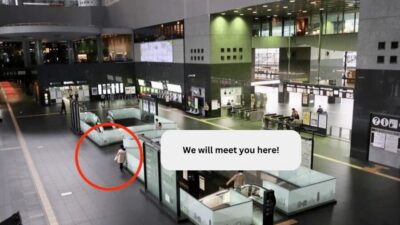
You meet at Kyoto Avanti, specifically 31 Higashikujō Nishisannōchō in Minami Ward. The tour ends in the same spot, in front of Kyoto Avanti across from Kyoto Station’s Hachijo Exit. It is a practical location because you are already near major train connections, so finishing here makes sense if you are coming from Osaka or spending time around Kyoto Station afterward.
Two logistics points can save you stress:
- Seats are not designated, so be ready to take whatever spot is available on the bus.
- The order of activities and arrival times may shift because of road conditions and congestion. You are still seeing the same three core areas or their replacements.
If you are coming from Osaka, plan your day so you are not rushed. This tour drops you back by Kyoto Station, but it does not include return transportation from Kyoto to Osaka.
Nijo Castle: shogun power, and why the details matter
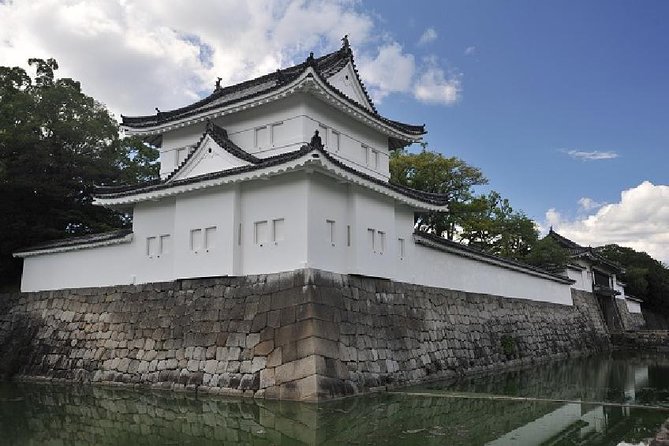
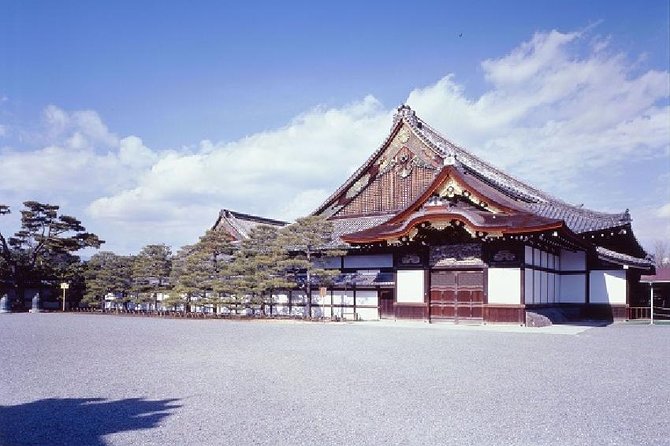
Nijo Castle is where the morning starts, with around 50 minutes on site and admission included. It is a World Heritage Site, built on the orders of Tokugawa Ieyasu, the first shogun of the Tokugawa shogunate. You are not just seeing a castle. You are walking through a system of architecture meant to signal rank, control, and ceremony.
The castle complex includes several connected structures made of cypress wood. Inside, the standout is the Ninomaru Palace, where you see elaborate carvings and decorative work. You will also notice the golden-leaf style interior areas, plus multiple gardens throughout the grounds.
What to watch for, if you like history without getting lost:
- Look for the contrast between the formal, symbolic interiors and the more open garden spaces.
- Pay attention to how the layouts connect, because the palace design is part of the story.
A heads-up that affects planning: Nijo Castle has closure days, especially certain Tuesdays in particular months, plus a closure window from Dec. 26 to Jan. 3. When that happens, the tour visits Ryoan-ji instead. That swap is not a refund trigger, so it helps to check the calendar for your travel date.
Kinkakuji Golden Pavilion: the one-way flow and the steps
Next comes Kinkakuji Temple, also a World Heritage Site, with about 45 minutes and admission included. This is the iconic Golden Pavilion, a wooden structure covered in thin layers of pure gold, set within a serene pond setting.
This stop is the one most people picture before they arrive. Even with limited time, it can still feel special because Kinkakuji is a visual target. The architecture and the reflections in the pond area are what you will remember.
Practical tip: the experience involves a one-way system, including a climb over uneven rocky steps. That matters if you do not love stairs or if you are traveling with older family members. You may want to pace yourself and keep water in mind, since there is no food included.
Audio can also be a factor here. Some guests found it hard to hear the guide clearly in the busier parts of the temple due to crowding. If you want more of the guide’s commentary, try to position yourself closer to the front when the group gathers.
A change of pace from Kyoto:
- Kyoto Geisha Walking Tour: Gion District & Hidden Gems
★ 4.7 · 3,273 reviews - Kyoto: Tea Ceremony Ju-An at Jotokuji Temple
★ 4.9 · 3,207 reviews - Kyoto: Gion Magical Night Walking Tour with Geisha Trivia
★ 4.9 · 2,393 reviews - Kyoto: 45-Minute Tea Ceremony Lesson Experience
★ 4.3 · 2,378 reviews
Kyoto Imperial Palace: what you see, and what happens when it is closed
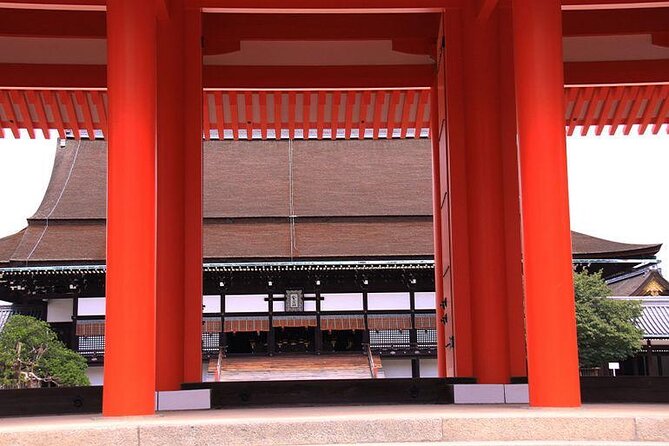
The last core stop is Kyoto Imperial Palace, around 40 minutes. In your morning plan, this is the emotional shift from shogun power and temple spectacle into imperial space. It was used as the Emperor’s residence until about 150 years ago.
You will view the former site of imperial enthronement ceremonies and see an interior design that leans toward elegant simplicity, rather than heavy ornament. This is the kind of place where the meaning can be more in the layout and formality than in loud visuals.
But here is the catch that can change the whole morning:
- The Kyoto Imperial Palace is closed to visitors on Mondays (and sometimes the following day if Monday is a holiday).
- It can also be closed on days when there is an event connected to the Imperial Household Agency.
If the Imperial Palace is closed, the tour visits Kitano Tenmangu Shrine instead. If the closed day falls on the 25th, the replacement is Nishi Hongan-ji Temple.
This is worth thinking about before you book. If the palace visit is your main reason for choosing this tour, you should check your date against the closure patterns. On days it is open, this stop is a strong finale. On days it is not open, it can feel like your top priority got swapped for something else.
Transport and timing: comfortable rides, tight windows
The tour includes travel between sites in an air-conditioned vehicle. The bus element is one of the best perks, especially if you are starting from Kyoto or Osaka and do not want to manage trains and buses while you also carry the energy needed for multiple major stops.
The total duration is about 4 hours 40 minutes. That is short enough that you can still have time later in Kyoto, but long enough that the stops are meaningful. The tradeoff is that you will not linger. Some people find the walking and transitions fast. If you want to sit for a long time and soak in one spot, this might feel like a sprint.
One practical detail: after the Kyoto Imperial Palace portion, the bus stops by a lunch venue for a one-day tour. You are not getting a meal included with this half-day tour. After that, you are dropped off at Kyoto Station area.
Group size, guide style, and how well you can hear the commentary
This tour runs with a maximum of 40 travelers. That is large enough to move efficiently, small enough that you can still spot the guide when you turn corners.
Guide style really drives how much you get out of the morning. In the feedback, names like Mr. Harada, Casey (KC), Jun, and Jessie stand out for being organized, funny, and engaged. When the guide is good at pacing and explaining the significance of what you are seeing, the quick schedule can still feel satisfying.
Audio is the wild card. Some people reported difficulty hearing in crowded areas. One issue mentioned is that the guide’s microphone system with headphones might not be used, which can make it harder to catch every detail if you fall behind. Your best move is simple: stay near the guide during explanations, and do not worry if you miss a sentence. You will still see the big visuals clearly.
Price and value: is $87.19 a good deal?
At $87.19 per person, this is not the cheapest way to see Kyoto. But it is priced like a convenience package, and the included items matter.
Here is what you are paying for that changes the math:
- Licensed English guide interpretation
- Entrance fees for Nijo Castle and Kinkakuji Temple
- Transportation between the stops
Not included:
- Food and drinks
- Hotel pick-up and drop-off
- Return transport expenses from Kyoto to Osaka
So the value depends on you. If you are arriving in Kyoto with limited time and you want three UNESCO sites without ticket lines and route planning, it can be a strong deal. If you already have the freedom to take taxis or trains and you only care about one or two of these places, you may be better off building your own day.
For many people doing a tight itinerary, this hits a sweet spot: you buy time, you buy logistics, and you still get to enjoy Kyoto on your own afterward.
Who this tour fits best
This tour is a good fit if:
- You are short on time and want a fast start in Kyoto
- You want to see Nijo Castle, Kinkakuji, and the Imperial Palace area in one morning
- You prefer guided context over solo wandering between far-apart landmarks
- You want an end point near Kyoto Station, so you can transition to the rest of your day
It may be less ideal if:
- The Kyoto Imperial Palace is your absolute must-see, and you will be upset if it is closed on your date
- You hate uneven steps or you need a slower pace
- You want deep, unhurried time at each location, with plenty of breathing room between stops
Should you book this Kyoto morning tour?
I would book it if your goal is to get the core Kyoto highlights efficiently, and you feel comfortable with a schedule that moves. The included admissions and transport are the big reasons it makes sense, especially if you are starting from Kyoto or Osaka and want your morning handled.
I would hesitate if your visit day is a known risk for closures, and you are traveling on a Monday or a day that might involve Imperial Household Agency events. In that case, confirm what your morning would look like with the stated replacements.
If you do book, I suggest you show up a bit early at Kyoto Avanti, wear shoes that can handle temple stone and rocky steps, and keep your expectations aligned with a half-day highlight tour. You will likely leave with photos, good context, and a clearer sense of where you want to return later.
FAQ
What is the meeting point and where do I end the tour?
You meet at Kyoto Avanti, 31 Higashikujō Nishisannōchō, Minami Ward, Kyoto. The tour ends in front of Kyoto Avanti across from Kyoto Station Hachijo Exit.
Which attractions are included in the tour?
The main stops are Nijo Castle, Kinkakuji Temple (Golden Pavilion), and Kyoto Imperial Palace. On closure days, the tour visits replacement sites instead.
What happens if Kyoto Imperial Palace is closed?
Kyoto Imperial Palace is closed to visitors on Mondays (or the following day if Monday is a holiday) and on days when there is an Imperial Household Agency event. If it is closed, the tour visits Kitano Tenmangu Shrine. If the closed day falls on the 25th, the tour visits Nishi Hongan-ji Temple.
Does the price include entrance fees and transportation?
Yes. Entrance fees and transportation costs are included in the tour price. Food and drinks are not included.
Is hotel pick-up included?
No. The tour does not include hotel pick-up and drop-off. You start at the Kyoto Avanti meeting point.
Can I cancel for a full refund?
Yes, you can cancel for a full refund if you cancel up to 24 hours in advance of the experience’s start time. If you cancel less than 24 hours before the start time, the amount paid is not refunded.
Latest write-ups near Kyoto
- Kyoto: Nishiki Market Tour with a Local Foodie & Tastings★ 4.5 · 67 reviews
- Kyoto Kimono Rental mimosa |Kimono/Yukata Rental Couple Plan★ 4.8 · 67 reviews
- Kyoto: Traditional Kimono Fabric Handicrafts Workshop★ 5.0 · 67 reviews
- Kyoto Tea Ceremony and Samurai Photo Session★ 5.0 · 70 reviews
- Kyoto: Replica food making experience★ 4.8 · 70 reviews
- Kyoto: Kinkakuji, Golden Pavilion Guided Tour★ 4.7 · 71 reviews
- Private departure transfer from Kyoto city to Kansai International airport★ 5.0 · 72 reviews
- Uji: Green Tea Tour with Byodoin and Koshoji Temple Visits★ 4.8 · 72 reviews
Morning, compared.
Kyoto Early Morning Tour with English-Speaking Guide
Read our review →
World Heritage Shirakawa-go Morning Guided Tour
Read our review →
Nara Early Morning Tour (Kyoto or Osaka Departure Available)
Read our review →
Hiroshima in a Nutshell: Morning Bike Adventure
Read our review →