
Reviewed · TEA CEREMONIES
Nagoya: Japanese Traditional Sweets making and Tea Ceremony
This Nagoya workshop is interesting because it turns wagashi making into a short, guided art project, then pairs it with a proper matcha ritual. I love that you start with Kyoto-sourced white and red bean paste and shape it into seasonal Nerikiri sweets. I also like that instructors such as Mariko and Saki keep the steps clear, so you are not stuck guessing while your dessert takes shape. One possible drawback: it is hands-on and educational, but it is not a full, long tea ceremony, and the venue is on the 3rd floor with no elevator.
For me, the best part is the pacing. You get 95 minutes to make, learn, and taste, right near Kokusai Center Station, so this is a smart “one-stop cultural reset” when you want something different from temples and trains.
Key points to know before you go
- Kyoto bean paste base used for both white and red flavors, then colored for seasonal designs
- Two seasonal sweets you make yourself, including Nerikiri styles like Kinton Nerikiri
- Single-origin Uji matcha with a grinding demo before you whisk
- Tea guidance you can use at home, including how to drink matcha properly
- You eat what you made, with your own matcha pairing the sweetness
- Optional add-ons like a take-out box or a completion certificate for a fee
Nagoya Wagashi and Matcha in 95 Minutes, Why It Feels Just Right
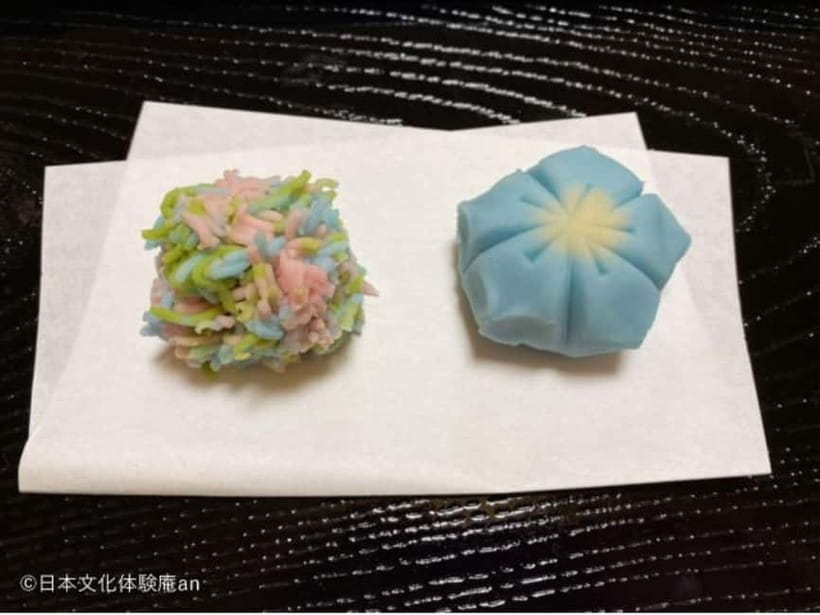
If your Nagoya plan includes time pressure, this kind of class is a great fit. You are not looking at a half-day commitment, but you still get the full story arc: making something delicate, learning the tea basics, and tasting the results together.
The experience also makes a strong argument for staying present. Nerikiri is not “just candy,” it is a craft where color, softness, and shape matter. Then matcha comes in to balance everything, with the instructor guiding you through how the tea should be prepared and enjoyed.
At $18 per person for a 95-minute hands-on workshop, you are paying for three things: ingredients quality, guided technique, and a sit-down tasting at the end. If you like foodie culture that is practical, this is the sweet spot.
More Tea Ceremonies in Nagoya:
- Kimono Rental and Tea Ceremony Experience in Inuyama
★ 5.0 · 15 reviews - Kyoto: Tea Ceremony in a Traditional Tea House in Kiyomizu
★ 4.9 · 3,519 reviews - Kyoto: Tea Ceremony Ju-An at Jotokuji Temple
★ 4.9 · 3,207 reviews
Where You Start: Finding the Workshop Near Kokusai Center Station
You meet just a 1-minute walk from Exit 3 of the Subway Sakura-dori Line at Kokusai Center Station. If you are coming from Nagoya Station, plan for about a 13-minute walk on the Sakura-dori side.
The venue is on the 3rd floor, and there is no elevator, so it helps to travel light. Also, the session runs on schedule, and they cannot hold the event for delays, so give yourself a little buffer if you are hopping between stations.
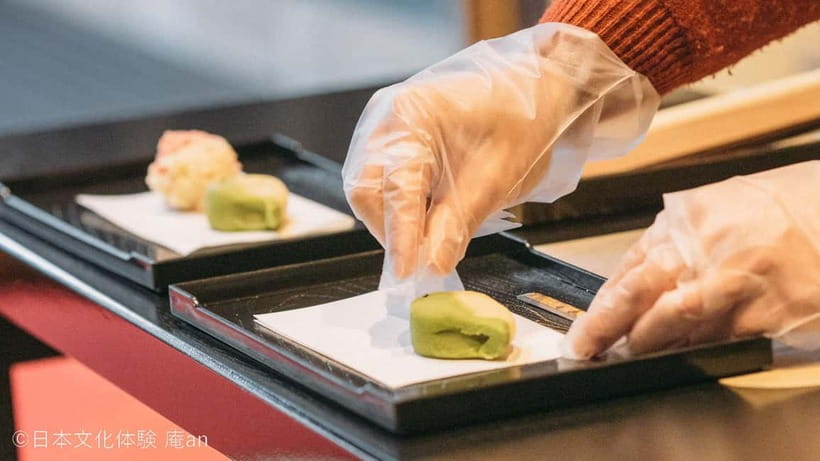
Once you arrive, the session begins with an introduction to traditional sweets so you understand what you are making and why it matters. Then the real fun starts, with coloring and shaping Nerikiri.
Nerikiri Making: Coloring Bean Paste and Shaping Seasonal Flowers and Fruits
Nerikiri is one of Japan’s higher-end traditional sweets, known for its detailed, decorative shapes. In this class, you start at the beginning: coloring the white bean paste. That step matters, because it sets up both the look and the feel of the final sweet.
The bean paste itself is produced by long-established Kyoto shops, using both white and red bean paste. You are not working with mystery ingredients. The instructor frames it as premium base material, and that helps you trust the process when the texture shifts as you handle it.
You then progress into crafting your sweets. The goal is to make seasonal designs, which is why the exact sweets can vary by time of year. Some people have made styles like ginkgo leaf and chestnut, which gives you a sense of the seasonal thinking behind wagashi.
What the crafting feels like in real time
You will spend time coloring, then shaping, and finally refining the details. This is the kind of work where small adjustments make a big difference, so you get a genuine sense of craft, not just assembly.
You also learn that Nerikiri is more than pretty decoration. The technique is meant to create a soft, balanced sweetness that pairs well with tea, and your bean paste choice affects that balance.
A change of pace from Nagoya:
- From Nagoya: Gujo, Hida Takayama, and Shirakawa-go Day Tour
★ 4.4 · 398 reviews - Ghibli Park 1-Day Bus Tour from Nagoya
★ 4.5 · 277 reviews - From Nagoya: Hida Takayama & Shirakawa-go Tour w/Opt. Lunch
★ 4.5 · 256 reviews - Hiking the Historic Nakasendo Trail [1 Day Tour from Nagoya]
★ 5.0 · 104 reviews
Making Two Seasonal Sweets, The Sweetest Part of the Whole Class
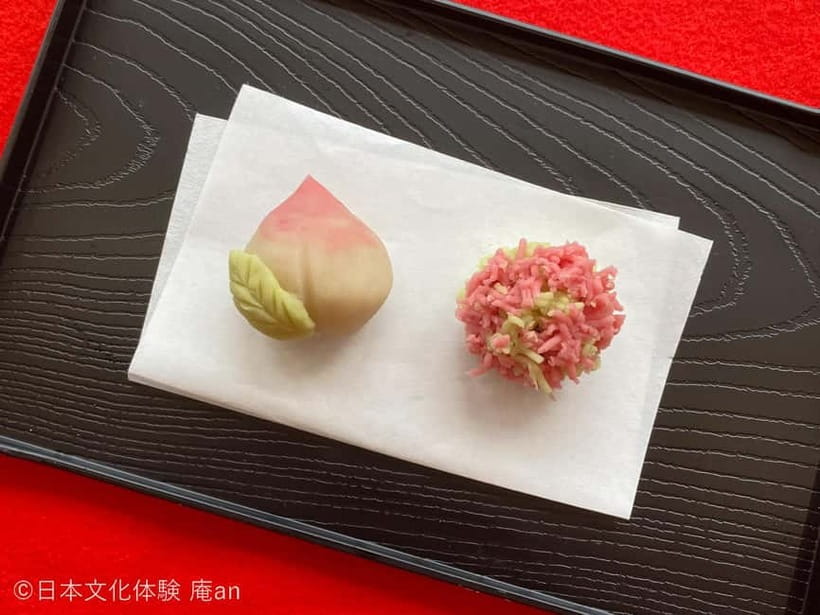
A big reason this workshop works is that you do not make just one simple item. You make two kinds of Japanese traditional sweets that match the season.
That doubles the value. You get more practice time, more chance to improve your hands-on technique, and more variety at the end when you sit down to eat.
One sweet tends to focus on the floral or fruit-like appearance typical of Nerikiri, while the other follows a similar high-detail approach. The session includes a specific segment on crafting Kinton Nerikiri, which is a good sign if you want to go beyond basic sweets making and learn a style with its own identity.
If you are traveling with a friend, this also becomes a fun compare moment. You can look at both sweets and see how your color choices, shaping, and finishing influenced the final look.
The Tea Portion Starts After a Short Break
After your sweets-making segment, you get a break, then the class shifts from “hands” to “tea.” Even if you are not a tea person yet, this structure helps. Your body is tired from shaping, and your brain gets to reset before learning matcha technique.
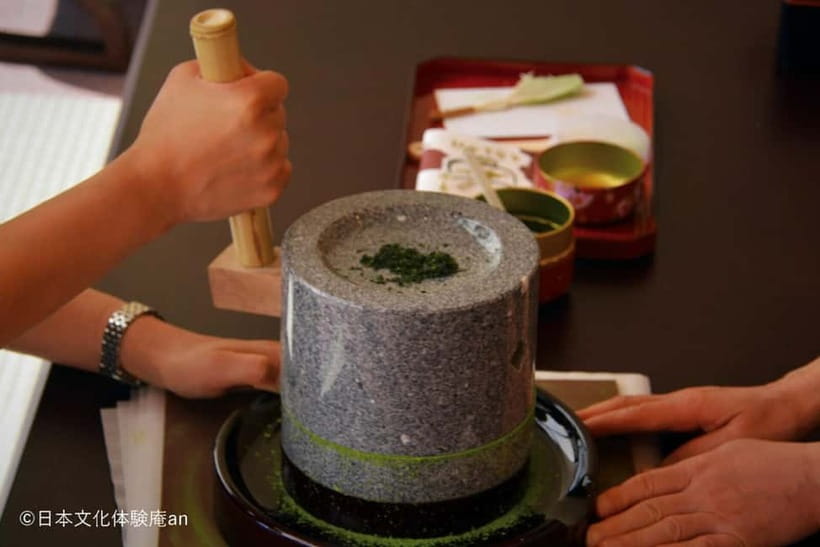
The tea section starts with an explanation of matcha and traditional tea steps, then moves into a matcha grinding demonstration. Watching the process is useful because it explains why matcha is treated with care, not tossed together like instant powder and water.
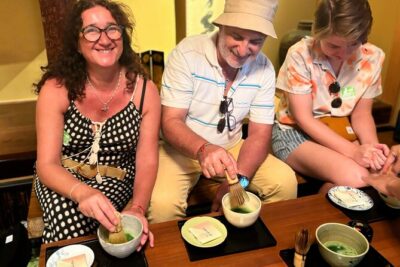
Then it is your turn, and that is the point. You do not just watch someone else make tea, you learn the routine well enough to drink your own.
Matcha Grinding and the Tea Ceremony Experience (What You Actually Learn)
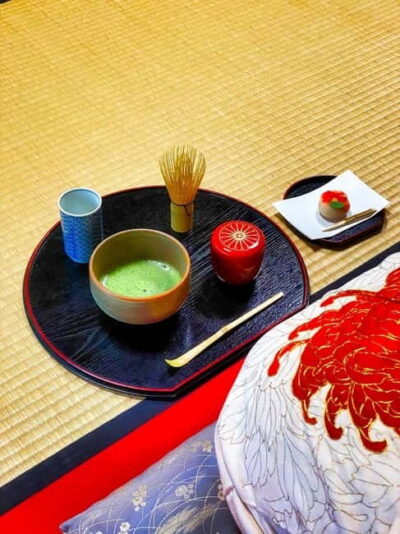
This is where the class earns its keep. You use Uji Matcha, described as single-origin special Matcha, and you learn how to prepare it properly.
The grinding demonstration is the first clue that matcha is not an afterthought. Grinding sets up the texture of the final tea, and the instructor frames matcha as an ingredient you should respect.
The tea-ceremony portion includes the steps, then you take part in the experience. You also get help with how to enjoy matcha, including proper drinking style. People who care about technique tend to leave with a more practical understanding of what to do and what to pay attention to.
One realistic note: this is a workshop, so it is not built to be a long formal tea event with lots of extras. Instead, it is focused, guided, and designed to pair with your wagashi.
Pairing Your Sweets With Your Own Matcha, Why It Works
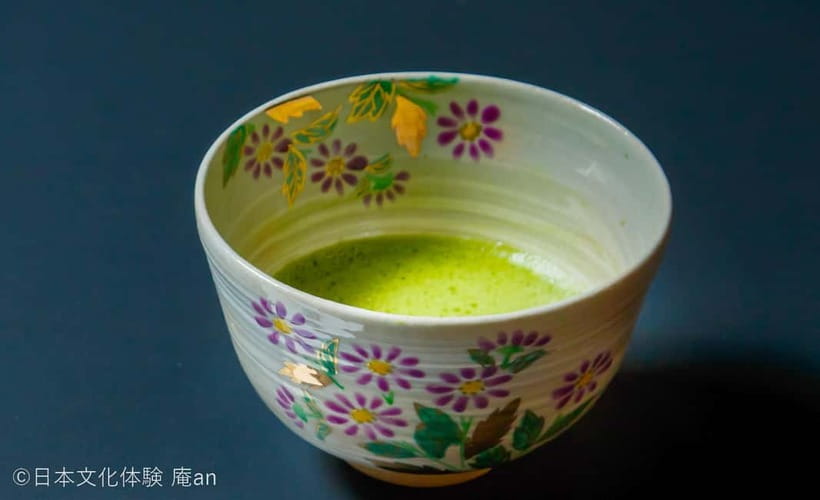
The pairing is not random. The class emphasizes that the high-quality white and red bean paste sweetness balances the taste of matcha.
In plain terms, that means your desserts are not competing with the tea. The sweetness gives comfort, then matcha brings structure and a slightly grassy, clean finish. When you taste both together at the end, it makes the craft feel purposeful instead of just decorative.
You also get to eat what you made. That part matters because it turns the class into a complete loop: you craft it, then you understand the result. Many workshops end with tea somewhere along the way, but here your sweets and tea are linked as a planned pairing.
There is also a picture time moment near the end, which helps you remember what you shaped, not only what you learned.
Price and Value: Is $18 Worth It for Wagashi and Matcha?
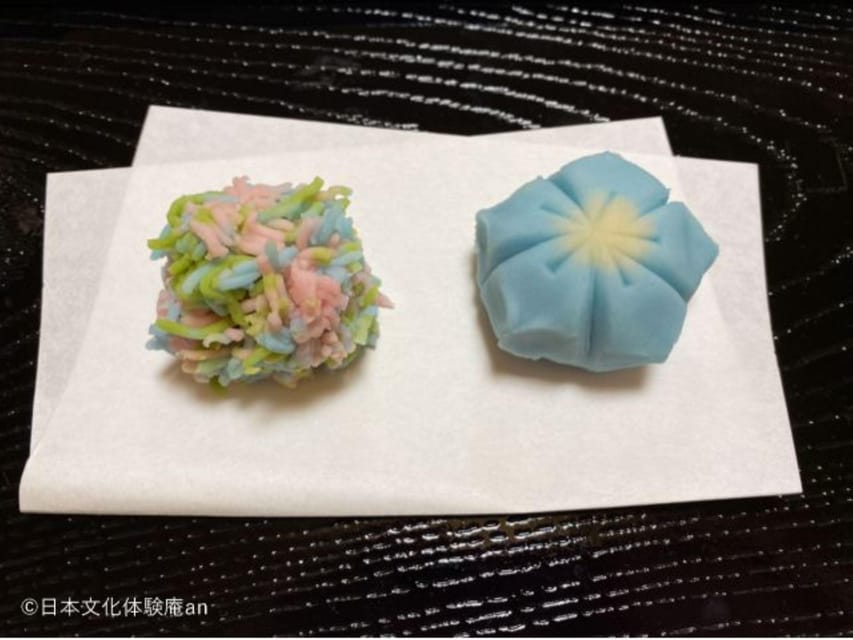
At $18 per person for 95 minutes, the value comes from what you actually get, not from vague promises.
You receive:
- instruction through a full wagashi workflow (including coloring and shaping)
- a second sweet to make, so you get more practice and variety
- a matcha segment with grinding demonstration
- a tea-ceremony experience paired to the sweets you made
If you compare this to doing it on your own, you are paying for the premium ingredient access, plus technique and timing. You do not have to track down Kyoto bean paste sources or figure out how matcha should be handled for best flavor.
And if you want extras, there are add-ons. A sweets take-out box is available for 100 JPY, and a completion certificate costs 300 JPY. If you care about documentation, share the names you want printed in advance, since otherwise the certificate is prepared with a blank space.
Who Should Book This Nagoya Experience, and Who Might Not Love It
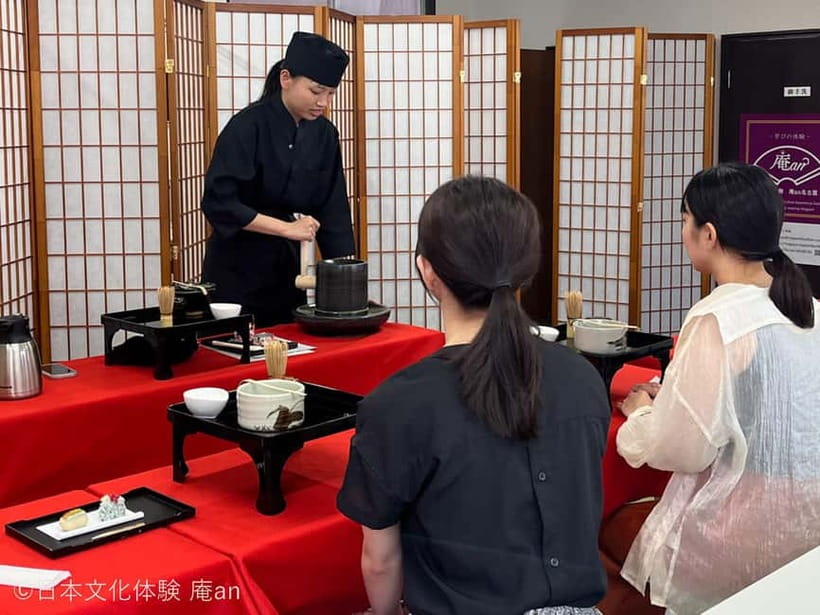
This class is best for you if:
- you want a hands-on cultural activity with an edible payoff
- you are new to wagashi and want a clear intro to Nerikiri
- you like food crafts with a calm, guided rhythm
- you want to learn matcha basics you can reuse later
It may not be the best fit if:
- you are specifically chasing a long, highly formal tea ceremony with lots of ceremonial pauses and roles
- you dislike 3rd-floor venues without an elevator
Families can also do well with this kind of structured workshop, since the instruction is step-by-step and designed to keep people involved.
Should You Book It? My Practical Recommendation
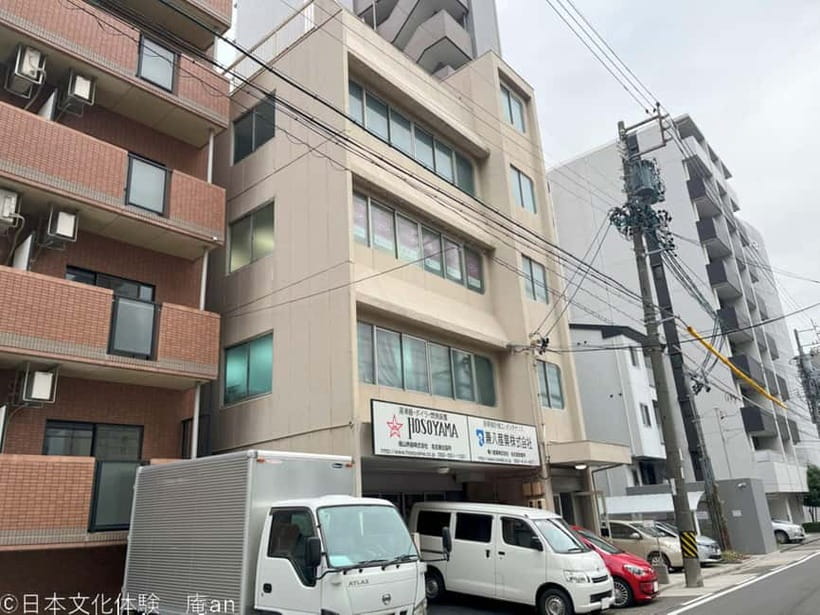
I would book this if you have a day in Nagoya where you want a hands-on, no-stress cultural stop that ends with something you made and something you can taste immediately. The combination of Kyoto bean paste, seasonal Nerikiri craft, and Uji matcha is a strong trio for the price.
If you have limited time, the 95-minute format is the real lifesaver. You get real technique and a clear outcome, without needing to rearrange your whole itinerary.
If you want to avoid disappointment, the key is expectation setting. Treat it as a focused workshop, not a multi-hour ceremonial performance. If that sounds like your pace, you are going to enjoy this one.
FAQ
How long is the Nagoya Japanese Traditional Sweets making and Tea Ceremony experience?
The experience lasts 95 minutes.
What will I make during the class?
You will make two Japanese sweets that match the season, starting with Nerikiri, including coloring the white bean paste, and then crafting your sweets. You will also take part in a matcha tea-ceremony experience.
What matcha is used?
The tea experience uses Uji Matcha, described as single-origin special Matcha.
Where is the meeting point?
You meet 1 minute walk from Exit 3 of the Sakura-dori Line Kokusai Center Station, or about 13 minutes walk from the Sakura-dori side of Nagoya Station.
Are English instructions available?
English translation will be provided as much as possible, and the class language is Japanese. If you want to add English support, you can contact in advance.
Is the venue accessible by elevator?
The venue is on the 3rd floor and there is no elevator.
Latest write-ups near Nagoya
- Magome-juku, Tsumago-juku & Ena-kyo 1d Bus Tour from Nagoya★ 4.6 · 75 reviews
- Nagoya Highlight Tour guided by a friendly local★ 5.0 · 86 reviews
- From Nagoya: Hida Takayama & Shirakawa-go Tour w/Opt. Lunch★ 4.5 · 256 reviews
- Hiking the Historic Nakasendo Trail [1 Day Tour from Nagoya]★ 5.0 · 104 reviews
- Ghibli Park 1-Day Bus Tour from Nagoya★ 4.5 · 277 reviews
- Nagoya Full-day Private Custom Tour with National Licensed Guide★ 5.0 · 61 reviews
- Nagoya Samurai & Toyota Tour guided by a friendly local★ 5.0 · 24 reviews
- Nagoya: Traditional Japanese Sweets-Making Workshop★ 4.6 · 14 reviews
Tea Ceremonies, compared.
Tea Ceremony in a Traditional Tea House in Kiyomizu
Read our review →
World Heritage Kyoto & Nara Uji Authentic Matcha Experience
Read our review →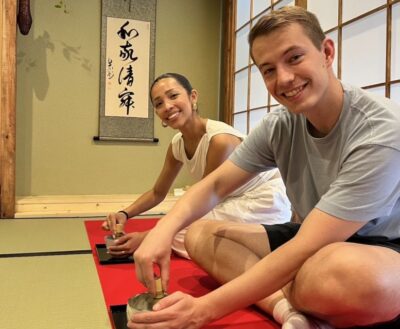
Browse the lists this tour appears in