Reviewed · GUIDED
Nara 8hr Private Tour – Kyoto DEP. with Licensed Guide
A Nara day trip from Kyoto is interesting because you can switch from temple queues to a single, walkable day of giant-buddha awe and free-roaming deer. With a licensed local guide like Haru, Ken, or Taku, the day usually moves with purpose, not chaos.
I love that you choose 3 to 4 sites, so you are not stuck doing everything at a rushed pace. I also love the emphasis on big, memorable stops like Todai-ji and the deer park, where the history makes more sense once someone explains what you are actually looking at.
One consideration: this is a walking day, and most temple and garden entrances are not included in the price, so plan for separate admission fees and comfortable shoes.
Key things that make this Nara tour work
- Pick your pace with 3 to 4 sites, not a rigid checklist
- Todai-ji plus Nara Park gives you the two biggest Nara hits in one sweep
- Kasuga Taisha and Wakakusayama add shrine atmosphere and viewpoint payoff
- Horyu-ji option brings you to one of Japan’s oldest temple complexes
- Naramachi and gardens (Isuien, Yoshikien) balance the day after temple intensity
Nara in one day, why it feels bigger than it should
Kyoto has a lot of iconic stuff. But Nara has a different kind of punch. It is the former capital, and it shows in the temples, the older layouts, and the way the deer park sits right beside the major religious sites. Even when you only see 3 or 4 locations, you tend to come away with a clear sense of why Nara matters.
The tour’s biggest strength is not that it tries to cram in every famous name. It’s that it gives you a guided day with choices, so you can aim at what you care about most. Many people also seem to love how the guide keeps the schedule moving and helps you avoid getting stuck trying to figure things out on your own.
Also on the shortlist for Kyoto:
- PERFECT KYOTO 1-Day Bus Tour
★ 5.0 · 13,518 reviews - Kyoto: Fushimi Inari, Kinkakuji, Bamboo Grove 1 Day Bus Tour
★ 4.8 · 4,316 reviews - Kyoto: Tea Ceremony in a Traditional Tea House in Kiyomizu
★ 4.9 · 3,519 reviews
Private tour value at $201.51 per person, where it really pays off
At $201.51 per person for about 8 hours, this is not the cheapest option. But it can be good value if any of these are true for you:
- You want to see major sites without wasting half a day on confusion.
- You care about getting context for what you are seeing, not just photo stops.
- You are traveling with a small group and prefer a plan that fits your interests.
Two cost notes matter. First, entrance tickets are not included for most stops. Second, transportation fees are not included, and the tour does not include a private vehicle. That means you are paying for the guide and route planning, while you still handle your travel logistics and site admissions.
If you go in expecting a guided itinerary with separate admission costs, the pricing makes more sense.
The 8-hour structure: walking tour, guide meeting, and a realistic pace
This is a private walking tour. You do not ride around in a private car with the guide. You meet on foot within a designated Kyoto area, then you handle the transit to Nara using public options (private vehicle is not included, and transportation fees are not included).
In practice, the pacing is usually strongest when you pick 3 to 4 sites that are close enough to chain together. When you do, you get a full day that feels like you actually saw Nara, not like you hurried through a list. Also, since each chosen stop is roughly 30 minutes, it helps to decide what you want more of: architecture details, shrine vibes, museum time, or outdoor views.
How your guide chooses 3 to 4 sites, and how to pick yours
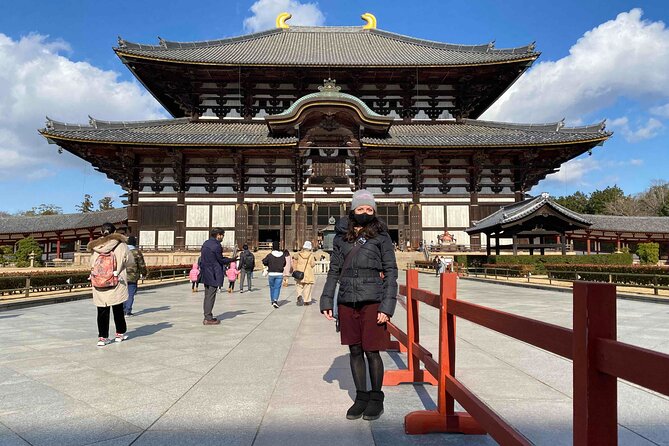
The tour lets you choose from a set of Nara highlights. Here’s how I suggest you narrow it down.
If it is your first Nara day from Kyoto, I’d aim for:
- Todai-ji
- Nara Park
- Kasuga Taisha
- plus one add-on based on your mood: Wakakusayama views, Horyu-ji history depth, or a quieter garden like Isuien.
If you care about older temple architecture, consider swapping Nara Park time for Horyu-ji and spending your park time just enough to enjoy deer and the main atmosphere.
If you care about Japanese religion in a broad sense, add a mix like Kofuku-ji and one of the medicine or recovery-linked temple options such as Yakushiji or Shin-Yakushiji.
A change of pace from Kyoto:
- Kyoto Geisha Walking Tour: Gion District & Hidden Gems
★ 4.7 · 3,273 reviews - Kyoto: Tea Ceremony Ju-An at Jotokuji Temple
★ 4.9 · 3,207 reviews - Kyoto: Gion Magical Night Walking Tour with Geisha Trivia
★ 4.9 · 2,393 reviews - Kyoto: 45-Minute Tea Ceremony Lesson Experience
★ 4.3 · 2,378 reviews
Todai-ji and the Great Buddha: the stop that anchors the whole day
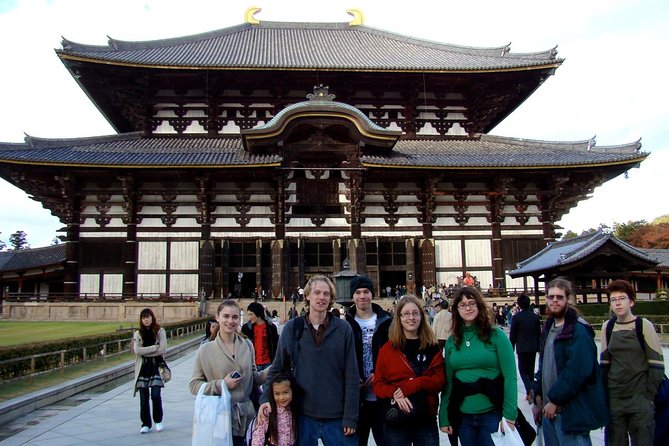
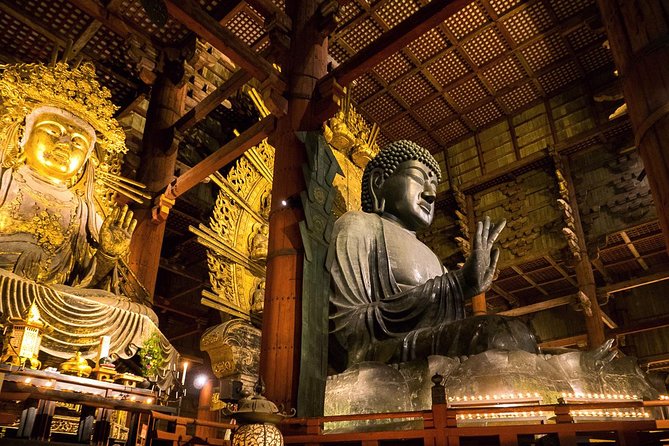
Todai-ji is one of Nara’s headline acts, built in 752. The point is scale, but also meaning. You see why this was treated as a major religious center and why people still travel here for the experience.
What you’ll do here tends to include time at the main complex and time to appreciate the hall and Buddha presence. Reviews often call out the way the monumental approach and the massive buildings change how you see the place. One guide-led detail that shows up a lot: people notice the famous door and the pillar hole tradition near the huge structure, where you crawl through to wish for academic success.
Practical note: Todai-ji can be crowded, especially during school trip times. A good guide helps you make smart use of short windows so you still get calm moments to look.
Admission for Todai-ji is not included in the price.
Nara Park deer time, plus what to do when the park gets busy
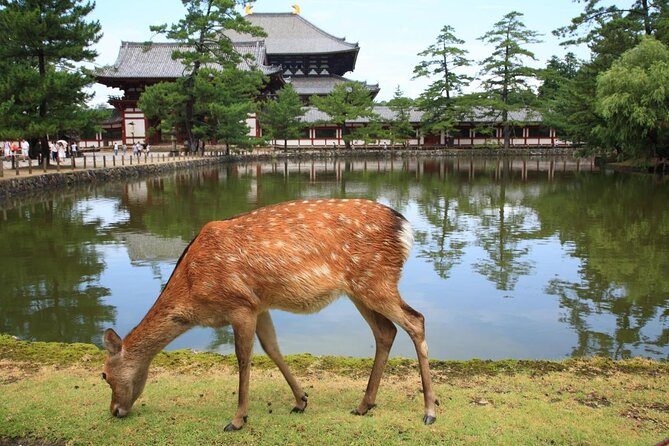
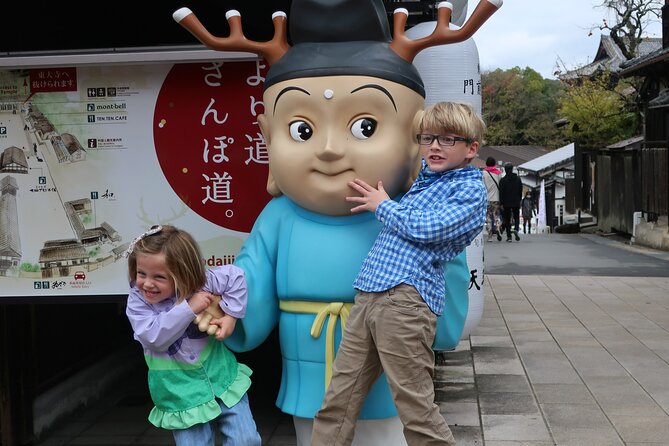
Nara Park is a large central park and a hub for several attractions. It’s also where the deer became part of the identity of this city. You get to watch them graze and move around freely, and if you want, you’ll likely enjoy the playful, slightly chaotic energy from up close.
You also get something useful from the park stop: it physically connects Todai-ji, Kasuga Taisha, and other nearby sights. That makes your day feel connected, not like separate taxi rides to random points.
Good to know: Nara Park entry is free, but it still helps to budget small expenses for snacks and deer treats if you want to participate.
Kasuga Taisha and Wakakusayama: shrine calm and viewpoint payoff
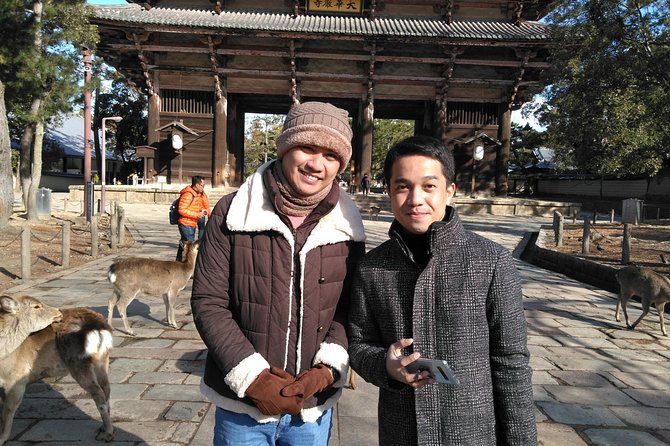
Kasuga Taisha is Nara’s celebrated shrine, dedicated to the deity believed to protect the city. It’s famous for a long, atmospheric approach and for the feeling of being in a shrine setting rather than on a regular street.
This is also where the tour shines if your guide takes a minute to explain what you are seeing. One recurring theme is how guides connect the shrine to Nara’s broader religious story, so you don’t just see buildings, you understand the role.
After Kasuga, the option of Wakakusayama adds a different kind of Nara view. Mount Wakakusayama is about 350 meters tall and sits behind Nara Park, with open sightlines over the area.
Kasuga Taisha entry is free, while Wakakusayama admission is not included.
If you want the cleanest mix of photos plus insight, this combo is a strong fourth pick.
Horyu-ji and the older-temple reality check
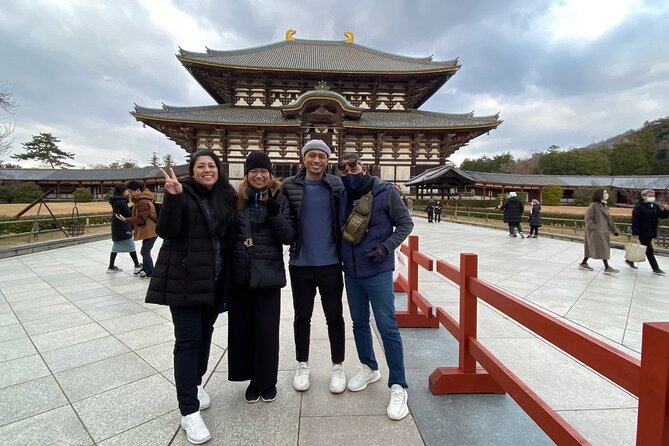
If you’re into early Buddhism and architecture, choose Horyu-ji. It was founded in 607 and is known as one of the oldest temple complexes in Japan. People often love this stop because it gives you an older baseline that makes Nara’s other temples feel like chapters in one long story.
Some guides emphasize that it contains the world’s oldest surviving wooden building, which makes it feel both historic and surprisingly human-sized when you are standing there.
Admission is not included for Horyu-ji.
This is the kind of stop that rewards a guide who slows down at key structures so you can appreciate what is old and what is new.
Kofuku-ji, Yakushiji, and Shin-Yakushiji: temple variety in a single day
Not everyone wants the same type of temple experience back-to-back. This is where Nara has you covered because the options vary.
- Kofuku-ji relates to the powerful Fujiwara clan. If you choose it, you tend to get more of the temple complex vibe and big historical influence.
- Yakushiji was built in the late 7th century with a story tied to recovery. The layout is described as strictly symmetric, which makes it a good choice if you like architecture order.
- Shin-Yakushiji is linked to the Nara period and focuses on Yakushi Buddha, the patron of medicine in Japanese Buddhism. It’s a solid option if you want the “religion and human concerns” angle.
For these three, entrance tickets are not included.
If you already picked Todai-ji and Kasuga, adding one of these can keep the day from feeling repetitive.
Nara National Museum and Heijō Palace Site: when you want brains, not only photos
Two options bring you inside or to historical remnants.
At the Nara National Museum, you focus on Japanese Buddhist art. This is your choice if you like seeing objects and understanding religious symbolism beyond temple structures. Museum time can also be a smart break if weather turns.
At the Heijō Palace Site Historical Park, you get a sense of how Nara functioned as a capital. The palace area stretched about one kilometer by one kilometer. It is not a full restored palace you walk through, but it gives a clear frame for why so many religious institutions mattered nearby.
Both are ticketed stops where admission is not included in the tour price.
Naramachi and the gardens: the softer side of Nara
Nara is not only temples. You also have the chance to slow down in traditional town streets and gardens.
Naramachi is the former merchant district, with preserved residential buildings and warehouses. It’s an Edo-era style neighborhood where you can browse shops and sit for a break if your schedule allows. This stop tends to add a human scale to your day after the massive temple scale.
For gardens:
- Isuien Garden uses a technique called borrowed scenery, with Mount Wakakusayama and the Todaiji gate used as part of the view concept. It’s a visually smart option if you like design that uses the surrounding setting.
- Yoshikien is another garden option, named after the Yoshikigawa River and built on the site of former Kofuku-ji priests’ quarters.
Both Isuien and Yoshikien have admission not included.
If your group includes different energy levels, this is where you can balance the day.
Toshodai-ji and the Ganjin connection: Buddhism’s network story
Toshodai-ji was founded in 759 by Ganjin, a Chinese priest invited to Japan to train priests and strengthen Japanese Buddhism. This is one of the spots that helps explain how Japan’s religious culture was not isolated. It moved across borders through scholars and teachers.
If you want a meaningful stop that connects to the wider East Asian context, this one delivers.
Admission is not included.
What the best guides do differently, and why it shows in the day
The most praised aspect across the experience is the guide quality. Names that came up repeatedly include Junichi, Haru, Ken, Yuka, Taku, and Maya. What stands out is less about memorized facts, and more about how the guide actually runs the day.
Here are a few ways that tends to show up:
- They ask what you want to see and then shape the 3 to 4 sites around you, not around their own preference.
- They help you with real-world navigation, including tips for moving through public transport and getting oriented quickly.
- They adjust when conditions change, including rain. One guide was praised for keeping the tour moving even with an afternoon downpour.
- They give practical context at stops, so Todai-ji or Kasuga Taisha feels like it has a story, not just a set of photos.
If you end up with a guide like Ken, Taku, or Junichi, you should expect a day that feels planned but not stiff.
One more caution: English level can vary by individual guide. There was at least one complaint about communication, while the agency’s response emphasized that guides are government certified. So if language is critical for your comfort, I’d make sure you select a tour option that clearly states English speaking and then communicate any specific needs before the day.
Practical tips before you book
Here’s what you should do to get the most from this kind of tour.
- Choose sites that match your energy. If you want architecture and museum time, pick fewer outdoor-only stops.
- Plan for separate admission fees. Todai-ji, Wakakusayama, Horyu-ji, Kofuku-ji, Yakushiji, Shin-Yakushiji, Nara National Museum, Heijō Palace Site, Toshodai-ji, Isuien, and Yoshikien typically have paid admissions listed as not included.
- Bring comfortable walking shoes. It’s a walking tour, and you want your feet to be happy.
- Decide your lunch style. Some guides have led people to specific spots like ramen and local sushi styles, and others helped find vegetarian options. If dietary needs matter, tell your guide early so your day stays smooth.
Should you book this Nara private tour?
I’d book it if you want a high-impact Nara day without the stress of figuring out logistics across multiple sites. With a private, licensed guide, the value is strongest when you care about context, not just checkmarks.
Skip it or rethink your plan if:
- You hate walking and want minimal time on foot.
- You already feel confident navigating Nara on your own and do not need guided explanations.
- Your budget is tight once you add multiple site admissions.
If your goal is to see Nara’s best-known religious landmarks plus at least one extra flavor like old town streets or garden design, this tour fits that goal well. Pick 3 to 4 stops that match your style, and you will come away with a day that actually feels like Nara, not a hurried montage.
FAQ
How many sites are included in the tour?
You can customize the day to visit 3 to 4 sites from the options provided.
Is it a full day and is there walking?
The tour runs for about 8 hours and it is a walking tour. Pickup is described as on foot, and you meet the guide on foot within a designated Kyoto area.
Are entrance fees included for temples and attractions?
No. The tour notes that entrance tickets are not included for many stops. Nara Park and Kasuga Taisha are listed as free, but other sites have admissions not included.
What about transportation to and from Nara?
Transportation fees are not included, and a private vehicle is not included. You will use public transportation for getting around.
Where do we meet the guide in Kyoto?
You meet your guide on foot within a designated area in Kyoto.
Is this tour private for my group only?
Yes. It is a private tour, and only your group participates. You cannot combine multiple tour groups.
Is the guide licensed and English speaking?
The tour includes a licensed local English speaking guide and is described as using a government-licensed and multilingual guide.
Are service animals allowed?
Yes, service animals are allowed.
Can I cancel for a full refund?
Yes. The policy states free cancellation up to 24 hours before the experience’s start time for a full refund.
Latest write-ups near Kyoto
- Kyoto: Nishiki Market Tour with a Local Foodie & Tastings★ 4.5 · 67 reviews
- Kyoto Kimono Rental mimosa |Kimono/Yukata Rental Couple Plan★ 4.8 · 67 reviews
- Kyoto: Traditional Kimono Fabric Handicrafts Workshop★ 5.0 · 67 reviews
- Kyoto Tea Ceremony and Samurai Photo Session★ 5.0 · 70 reviews
- Kyoto: Replica food making experience★ 4.8 · 70 reviews
- Kyoto: Kinkakuji, Golden Pavilion Guided Tour★ 4.7 · 71 reviews
- Private departure transfer from Kyoto city to Kansai International airport★ 5.0 · 72 reviews
- Uji: Green Tea Tour with Byodoin and Koshoji Temple Visits★ 4.8 · 72 reviews
Guided, compared.
Tokyo 6hr Private Tour with Government-Licensed Guide
Read our review →
Shinjuku Local Bar and Izakaya Guided Walking Tour
Read our review →
Private City Highlights Tour with Local Guide
Read our review →
Kyoto Early Morning Tour with English-Speaking Guide
Read our review →
Tokyo 4hr Private Tour with Government-Licensed Guide
Read our review →
Kyoto 6hr Private Tour with Government-Licensed Guide
Read our review →