
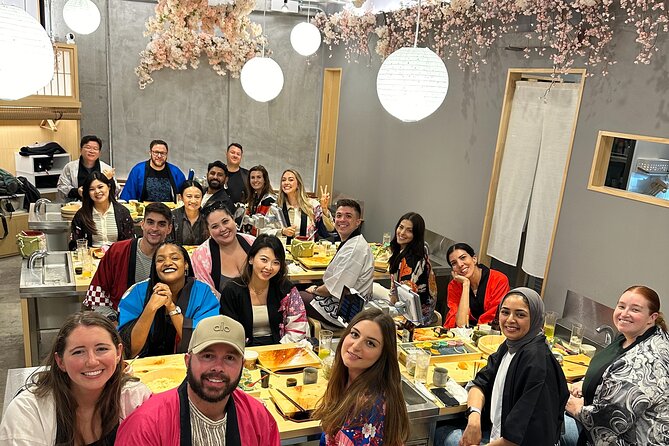
Reviewed · SUSHI MAKING CLASSES
Popular Sushi Making Class near Tokyo Tower
A sushi class near Tokyo Tower is fun because it mixes real food skills with a very Tokyo-style photo moment. I love the hands-on pace, and I also love that the chef teaches in English, with instructors like Keiko, Yuki, and Mickie showing the steps clearly. The one thing to plan for is that this is a short, structured session, so if you want a slow, ultra-custom lesson, you may feel slightly rushed.
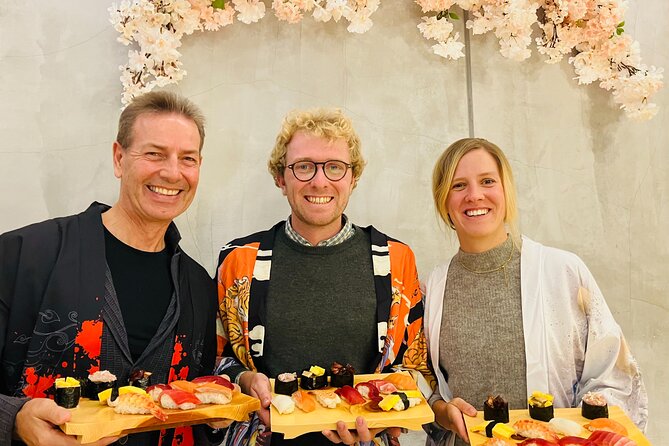
If you’re into Japanese cuisine, this is a smart way to learn what matters in sushi before you order at a restaurant. I like that you’ll make and eat what you create, and that you get to dress up and take pictures with what you made. One possible drawback: a few people noted that the fish and rice can be more modest than expected, so keep your expectations realistic for a 1.5-hour, hands-on class.
Key Things to Know Before You Go
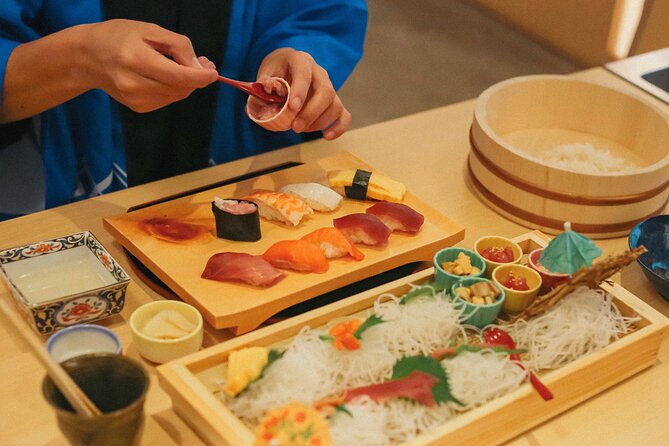
- English instruction at the counter: You’ll follow along step by step, even if your Japanese is limited.
- You eat what you make: The class ends with a meal made from your own handiwork.
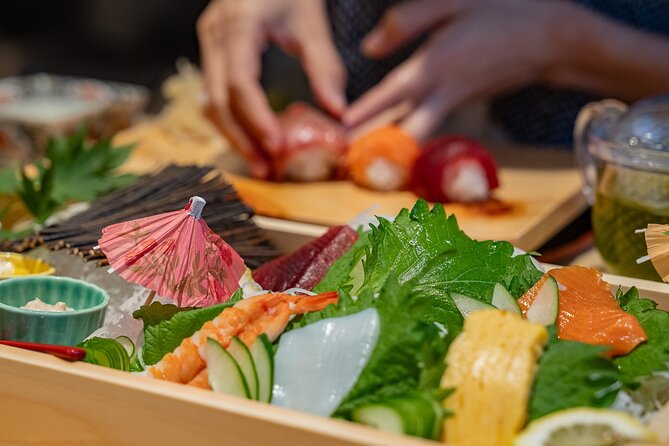
- Salmon and tuna are part of the plan: Expect nigiri-style assembly using common sushi ingredients.
- Kimono and photo time: Dress up for pictures, and yes, you’ll likely get help capturing the moment.
- Small groups, max 14: It stays organized, but busy sessions may seat you with other customers.
- Diet options if you message ahead: Vegetarian, vegan, and gluten-free are listed as available with advance notice.
Where Higashiazabu Fits Next to Tokyo Tower
This sushi experience is based in Higashiazabu, close enough to Tokyo Tower that it works like a convenient add-on to a broader day in Minato City. The start point is at 1-chōme-6-8 Higashiazabu, Minato City, Tokyo 106-0044, and the activity ends back there. In other words, you’re not spending the whole time on trains and transfers. You’re starting near the sights and keeping the focus on food.
What I like about this area is how walkable it can feel when you’re moving between iconic stops around Tokyo Tower, Zojo-ji, Shiba Park, and Roppongi. That matters because the class itself is only about 1 hour 30 minutes, so you want your time around it to feel simple.
The session also runs throughout the day, and the check-in uses a mobile ticket, which is handy when you’re bouncing between temples, viewpoints, and food. There’s a max group size of 14, and one note to keep in mind: depending on how busy the venue is, you may be seated with other customers. That is normal for a class setup, and usually it just means you share the same training vibe rather than getting a private room.
More Sushi Making Classes in Tokyo
- Sushi Making Tokyo Roll and Authentic Japanese Sushi Class
★ 5.0 · 3,971 reviews - Tokyo: Roll and Authentic Sushi Making Class in Asakusa
★ 4.9 · 1,957 reviews - Make Sushi and Create Unforgettable Memories in Tokyo
★ 5.0 · 1,413 reviews
The 1.5-Hour Sushi Making Class: What You Actually Do
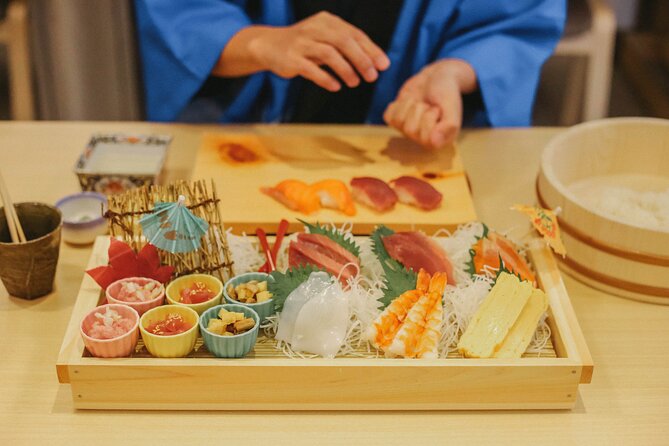
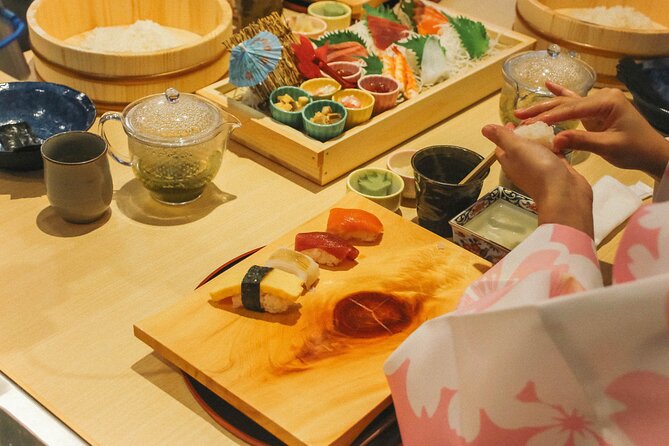
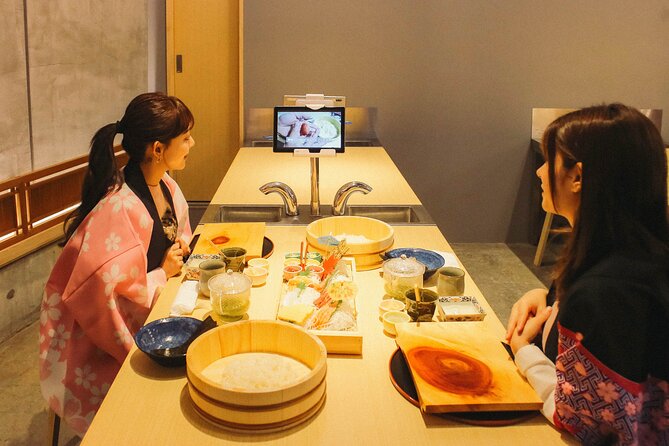
This is a hands-on class, not a lecture. You’ll work at your seat with instruction in English, and you’ll also have a video instruction available beside you while you learn. The format is designed to get you building sushi quickly, so you can taste it right after.
Here’s the core rhythm:
- Learn the basics of sushi making, with attention on the key steps.
- Assemble your sushi pieces using the ingredients provided.
- Sit down and eat what you made.
The rice technique is a big deal. Several people highlight that the lesson helps you understand how to roll and shape correctly, not just how to copy the final look. If you’ve ever wondered why your sushi rice turned out too firm or too loose at home, this is the kind of skill-building class that can close that gap.
You may also get the chance to dress up. Multiple accounts mention kimono dressing, and some describe props like samurai-themed items for photos. It’s not required to enjoy the lesson, but it does make the experience feel like a real Tokyo activity rather than just a meal course.
Rice Skills, Nigiri Assembly, and English-Friendly Chef Coaching
The most praised part of the class is how clearly the instructor guides you through assembly. People mention that the chef demonstrates each step, then watches closely while you practice. That is especially useful if you’re self-conscious about cooking in front of others. You’ll have helpers too, and in family groups, it can mean kids get individual attention while adults focus on their own sushi.
A few specific things you can take home:
- How to handle the rice properly so it shapes cleanly.
- How to position fish correctly on the rice for a nice nigiri-like bite.
- Assembly technique that makes the final piece look and feel right.
In one example, someone said they found it surprisingly easy and surprisingly replicable at home. That lines up with what a good sushi class should do for you: teach you a process you can repeat, not just a one-time trick.
Also, the class isn’t just about the steps. Some people mention that the instructor shared information about ingredients and Japanese food culture while you’re working. When the teaching includes why a step matters, you’re more likely to remember what you should do next time you’re at a sushi counter.
What You Eat, and Why the Kimono Photo Moment Feels Worth It
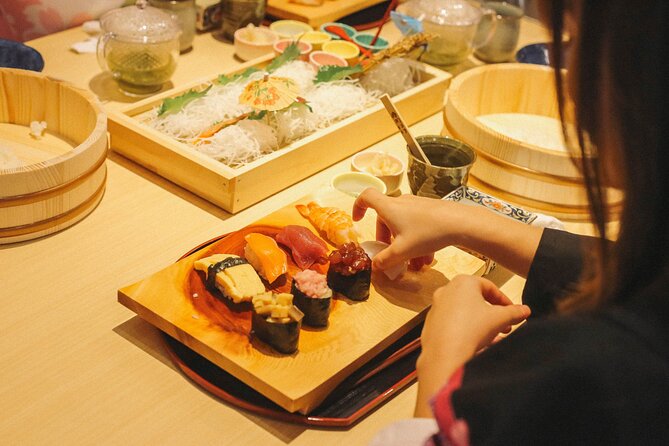
This experience ends with a meal you crafted yourself. That’s one of the big value drivers here. Instead of paying for a tasting and leaving hungry, you build the sushi pieces and then eat them.
Portion expectations from the accounts are in the general range of about 10 to 12 pieces, though you’ll see variation. Some mention fewer pieces like eight, and that’s not necessarily bad, because the point is learning the technique and eating what you made, not loading up on volume. The ingredients mentioned include salmon and tuna, and people repeatedly describe the fish and rice as fresh and delicious.
Now, the photo part is real. Multiple people talk about:
- Dressing up in kimono
- Getting photos taken by staff
- In some cases, holding props and getting a video-like keepsake
I actually think this is part of the value, especially if you’re traveling solo or as a couple. Most sushi meals in Tokyo are great, but you don’t usually get a structured, guided photo moment that connects to your actual meal. Here, your hands made it, and your pictures show it.
One balanced note: a couple of accounts were less thrilled, saying the experience can feel rushed or the fish quality was not what they wanted. That’s why I’d treat this as a skills-and-fun activity first. The sushi is part of the payoff, but not every batch will satisfy everyone’s exact taste expectations.
A change of pace from Tokyo:
- Mt Fuji and Hakone 1-Day Bus Tour Return by Bullet Train
★ 5.0 · 26,383 reviews - 1-Day Tokyo Bus Tour
★ 5.0 · 14,250 reviews - Tokyo: TOKYO SKYTREE® Admission ticket
★ 4.5 · 11,192 reviews - Tokyo: teamLab Planets TOKYO Digital Art Museum Entry Ticket
★ 4.6 · 9,779 reviews
The Tokyo Tower Neighborhood Loop: Tower, Zojo-ji, Shiba Park, and More
Even though the main focus is the class, your route is built around the Tokyo Tower area and nearby highlights. Think of this as a compact sightseeing wraparound, useful for getting bearings and stacking a few “I’m here” moments into your day.
Tokyo Tower
Tokyo Tower is the obvious anchor. You’ll likely get time to see it and take a look in the surrounding area. If you time it for evening, it can be extra memorable, and it’s also a great visual landmark for how close everything is.
Zojo-ji
Zojo-ji adds contrast fast. It’s a temple stop that keeps the day from becoming all modern city scenes. If you like cultural context between food moments, this is a good emotional reset.
Azabujuban and Shiba Park
These stops help you connect the dots between neighborhoods. Azabujuban gives you that local Minato feel, and Shiba Park is a nice breathing space when you’re pairing food with walking. The main drawback is simple: it’s not a long, deep visit. You’ll see enough to enjoy the vibe, not enough to treat it like a half-day temple tour.
TeamLab Borderless Tokyo at Azabudai Hills
TeamLab Borderless is listed as part of the stops. In a short activity, you may not get the full experience you’d get on a dedicated visit, but you’ll still get the location and the buzz factor. If you care most about TeamLab installations, plan a separate block of time later in your itinerary, so you don’t feel like you’re rushing.
Azabudai Hills and Hamarikyu Wharf
Azabudai Hills brings you back to modern Tokyo design and urban energy. Hamarikyu Wharf is the tonal change. It feels more water-focused, and that’s a helpful contrast when your day has both temple and city views. Again, expect it as a quick stop within the flow rather than a slow wander.
Tokyo City View Observation Deck (Roppongi Hills)
This is the classic payoff viewpoint. Observation decks are worth it in Tokyo because they give you scale. A tip: if you care about photos, go when you can get decent light. The list doesn’t say how long you’ll stay here, so treat this as a chance to reach the viewpoint area, not a promise of a long sit-down.
The National Art Center, Tokyo, and Roppongi
The National Art Center gives you a cultural stop that fits the “Minato area” theme. Roppongi caps the loop with city energy. The drawback is that if you’re trying to pack too much, the route can feel like a fast checklist. In practice, the sushi class is the real event, so let the sights support it.
Who This Sushi Class Fits Best, Plus Set Expectations
This class is best for:
- First-timers who want sushi skills without guessing.
- Couples and families who want an activity with a meal built in.
- Home cooks who want technique they can repeat later.
It’s especially good if you enjoy structured, step-by-step instruction. People mention the space is clean, organized, and designed for teaching. Also, staff helpers can guide kids so parents can work without constantly juggling.
You’ll also want to bring the right mindset about sushi. This is not a traditional omakase counter where every decision is tailored to your palate and preferences. It’s a fun, guided class that teaches the fundamentals: shaping rice correctly, placing fish well, and understanding what makes sushi feel balanced.
Practical expectation check:
- You’ll likely make enough sushi to feel satisfied, with accounts suggesting around 10 to 12 pieces for many sessions.
- You may find the rice texture and fish quality better than expected, but a few mixed comments exist. If you’re extremely picky about seafood quality, keep your expectations grounded in the reality of a class format.
One more helpful detail: if you have food allergies, you should message in advance. The class also states vegetarian, vegan, and gluten-free options are available if you request ahead of time. If you wait until the day of, there’s a risk they may not be able to accommodate you.
Should You Book This Near Tokyo Tower?
I’d book it if you want a memorable Tokyo food activity that includes real instruction, a meal you made yourself, and a photo-friendly dress-up moment. The price, at $87.55 per person, is not bargain-basement, but it buys you chef coaching, ingredients, and the fact that you leave fed. For many visitors, that combination is the sweet spot.
Book it especially if you’re:
- Short on time and want Tokyo Tower-area convenience
- New to sushi and want to learn what to look for later
- Traveling with kids who will enjoy making something, not just watching
Skip it or choose your expectations carefully if you’re looking for a private, slow cooking experience or you’re extremely sensitive to fish and rice quality comparisons. It’s still fun, still educational, but it’s best treated as an activity with sushi as the payoff, not a premium seafood tasting.
FAQ
How long is the sushi making class?
The experience runs about 1 hour 30 minutes (approx.).
How much does it cost?
The price is $87.55 per person.
Where does the experience start and end?
It starts at 1-chōme-6-8 Higashiazabu, Minato City, Tokyo 106-0044, Japan, and ends back at the meeting point.
Do I get to eat the sushi I make?
Yes. The class includes making sushi and then eating what you crafted.
Is the class taught in English?
Yes. A sushi chef teaches you in English.
What ages can participate?
Fees apply from age 4 years old. Children under 4 are mentioned as able to share a dish.
Can they accommodate dietary restrictions like vegetarian or gluten free?
Vegetarian, vegan, and gluten free options are available if you request them in advance. Requests made on the day may not be accommodated.
What if I have allergies?
Let them know in advance by message about any food allergies.
How big are the groups?
There is a maximum of 14 travelers. Depending on how busy the venue is, you may be seated with other customers.
What is the cancellation window?
You can cancel up to 24 hours in advance for a full refund. If you cancel less than 24 hours before the start time, the amount paid is not refunded.
Latest write-ups near Tokyo
- Harajuku Private Tour: Kawaii Fashion & Animal Cafe Included★ 5.0 · 69 reviews
- Mt Fuji Customizable Private Tour English Speaking Driver Pick-up★ 5.0 · 69 reviews
- Tokyo Night Cooking Class: 5 Home-Cooked Japanese Dishes★ 5.0 · 70 reviews
- Tokyo: Sumida Aquarium Entry Ticket★ 4.6 · 70 reviews
- Private Customizable Walking Tour of Tokyo★ 5.0 · 70 reviews
- Official Japan Go-Kart Through Tokyo Bay / Ginza (IDP Required)★ 4.5 · 71 reviews
- Wagyu Beef and Sake Pairing Foodie Tour in Tokyo★ 5.0 · 71 reviews
- Japanese Traditional Music Show in Tokyo★ 5.0 · 72 reviews
Sushi Making Classes, compared.
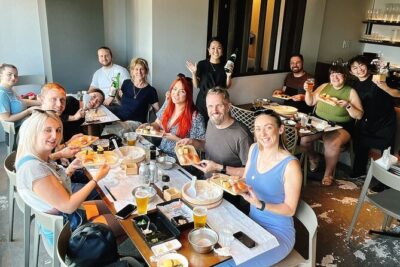
Sushi Making Tokyo Roll and Authentic Japanese Sushi Class
Read our review →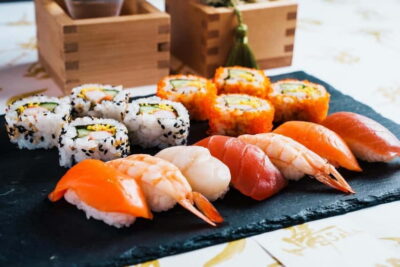
Roll and Authentic Sushi Making Class in Asakusa
Read our review →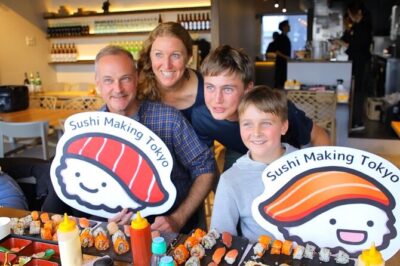
Make Sushi and Create Unforgettable Memories in Tokyo
Read our review →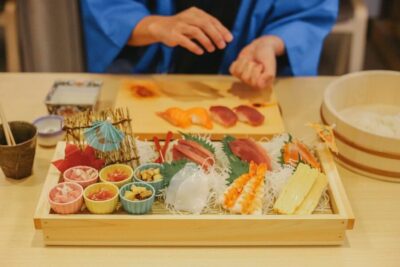
Sushi Making Class in a Happi Coat near a Famous Spot
Read our review →
Sushi Making Osaka Roll and Authentic Japanese Sushi Class
Read our review →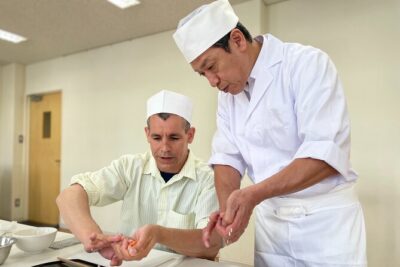
Tokyo Sushi Making Class in Tsukiji with Professional Chef
Read our review →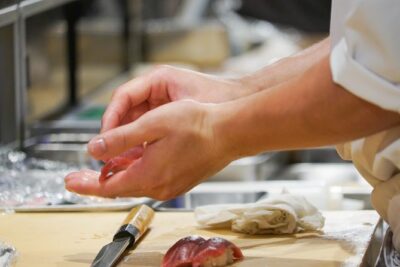
Tokyo Night Foodie Tour in Shinjuku – Seasonal Sushi, Wagyu Beef
Read our review →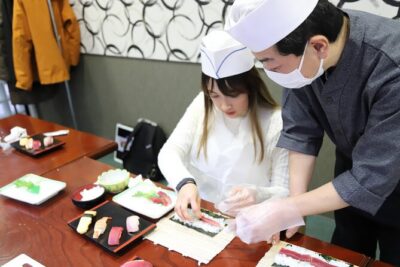
Tsukiji Fish Market Guided Tour and Sushi Making with Pro Chef
Read our review →Browse the lists this tour appears in