Reviewed · GUIDED
Private Kyoto Tour with Licensed Guide & Vehicle (Max 15 persons)
Kyoto is one of those cities where the famous places are easy to find, but the getting-there part can feel like a logic puzzle. This private 6-hour tour is interesting because you roll around in a private vehicle with a licensed local English guide, so you spend your energy on temples, alleys, and views instead of maps and transfers.
I especially like that you can choose your day from a set of standout sights, rather than being locked into a fixed route. You’ll build a plan with 3-4 stops that fit what you care about most, whether that is the torii at Fushimi, the old-street vibe of Higashiyama, or the Zen calm of Ginkakuji.
One drawback to consider is that 6 hours goes fast, even with a car. You will not see everything on the wider Kyoto list, and entrance fees plus lunch are not included, so you will want some cash or a card ready for paid sites.
Key things to know before you go
- Private vehicle saves your time: You avoid the Kyoto subway and bus maze and get dropped close to the sights.
- Pick 3-4 stops from a big menu: The tour is flexible, so you can tailor it to first-timers, temple lovers, or shoppers.
- Expect short, efficient time at each stop: Many places are quick hits, so choose what you really want to see.
- Most major temples have separate entry fees: Only some spots are free, like Fushimi Inari, Gion, and Nishiki Market.
- Guides are strong at customizing in real life: Names like Michi, Noriko, Shuji, Yuka, and Ken come up for tailoring pacing, explaining what matters, and keeping the day moving.
- Mobility needs can be handled with planning: One guide (Shuji) specifically preplanned for a wheelchair, and another (Noriko) adjusted walking and stairs based on a guest’s comfort.
Why Kyoto feels easier with a private car for 6 hours
Kyoto’s public transport works, but it can feel slow and confusing when you are hopping between neighborhoods. With this format, you skip the “Which bus do we take?” stress and just enjoy the ride between stops. The tour is also private, so you are not squeezed into the flow of a large group tour at each place.
Door-to-door hotel transfers are included, and you get mobile ticket support. That matters in Kyoto, where meeting points can be tight, and “walk 10 minutes from the station” turns into 25 minutes once you factor in crowds and wrong turns.
The pacing is built around a simple idea: you get guide-led context and practical logistics in one package. Having a driver is especially useful for photo stops, quick alley walks, and getting close enough to temples that your legs are not burning before noon.
Also on the shortlist for Kyoto:
- PERFECT KYOTO 1-Day Bus Tour
★ 5.0 · 13,518 reviews - Kyoto: Fushimi Inari, Kinkakuji, Bamboo Grove 1 Day Bus Tour
★ 4.8 · 4,316 reviews - Kyoto: Tea Ceremony in a Traditional Tea House in Kiyomizu
★ 4.9 · 3,519 reviews
Price and what $634.72 per group really covers
The price shown is $634.72 per group (up to 2) for about 6 hours. That can sound high until you break down what you are buying: a licensed local English guide plus a private vehicle for your entire outing, not a per-person entry or ticket add-on.
Your guide is not just walking alongside you. The tour is set up as a guided, customizable day where you choose 3-4 sites from the options, and the guide helps you hit them efficiently. This is the kind of day where paying for organization can beat paying for taxis hour after hour.
What is not included is equally important. Entrance fees, lunch, and personal expenses are on you. If you pick places like Nijo Castle, Kiyomizu-dera, Kyoto Imperial Palace, or multiple Zen temples, you should expect separate ticket costs.
A practical tip: bring some small cash for admission and snacks. One guest specifically advised having cash for entrance fees, even when the tour is well planned.
Building your perfect day by choosing 3-4 stops
Kyoto is spread out. Even in a private car, you cannot do everything in one afternoon. The smartest approach is to choose stops that either:
- Cluster in the same general region, or
- Give you a clear theme, like torii and shrines, classic temple Zen, or historic districts and food streets
Here is the good news: your stop list has variety. You can do city highlights (Gion, Pontocho, Nishiki Market), big-name temples (Kiyomizu-dera, Kinkakuji), UNESCO-level culture (Nijo Castle), and even quieter mountain-area flavor (Kibune, Kurama).
A lot of the guides who lead these tours are praised for listening and adjusting. Michi is noted for customizing and even staying past the tour to help with lunch plans. Noriko is praised for matching pace to the guest, including reducing stairs and walking. Olive and Yuka are praised for strong English and helpful route decisions. Ken gets mentioned for knowledge plus photo-friendly placement.
If you want the best result, send your preferences early, especially if you have any must-sees or you want to avoid heavy stairs.
Stop-by-stop guide to the Kyoto highlights you can plug in
Below are the sights you can choose from, with what each one gives you and where you should expect tradeoffs. Think of these as your menu, not a promise that you will see all 24 in one day.
A change of pace from Kyoto:
- Kyoto Geisha Walking Tour: Gion District & Hidden Gems
★ 4.7 · 3,273 reviews - Kyoto: Tea Ceremony Ju-An at Jotokuji Temple
★ 4.9 · 3,207 reviews - Kyoto: Gion Magical Night Walking Tour with Geisha Trivia
★ 4.9 · 2,393 reviews - Kyoto: 45-Minute Tea Ceremony Lesson Experience
★ 4.3 · 2,378 reviews
Fushimi Inari-taisha Shrine
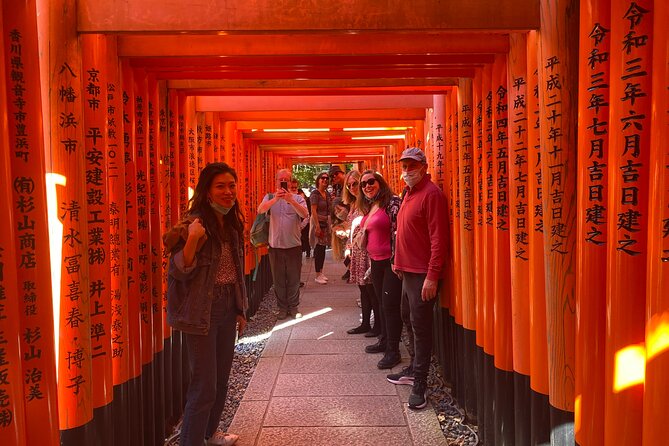
This is the torii-gate shrine that defines Kyoto for many first-timers. The big value is that your guide can route you through the experience so you spend more time walking the right parts and less time figuring out where to go next. It is also free to enter, which helps budget.
Tradeoff: it is popular, and the crowds can feel dense. With a private format, you are still better off than trying to self-navigate on a tight timeline.
Nijo Castle
A UNESCO World Heritage site built in 1603 as Kyoto residence of Tokugawa Ieyasu, the first shogun of the Edo Period. A guide-led visit helps turn the fortress into a timeline you can actually remember, rather than just walls and rooms.
Tradeoff: admission is not included, so factor in extra cost if you pick it.
Gion
Gion is Kyoto’s famous Geisha District feel, with narrow lanes that can be intimidating when you first arrive. Going with a guide cuts down on the getting-lost factor and often helps you find lanes and viewpoints that are not instantly obvious.
Tradeoff: it is busy, and you should expect people around every corner. It is free to enjoy the area, which is great for a short stop.
Nishiki Market Shopping District
Often called Kyoto’s kitchen, Nishiki Market is a narrow, five-block shopping street with many shops and restaurants. This is a perfect quick-hit stop for tasting snacks, grabbing gifts, and learning what locals actually buy and eat.
Tradeoff: it is also crowded. Your goal here is quick bites and shopping, not leisurely strolling for hours.
Kiyomizu-dera Temple
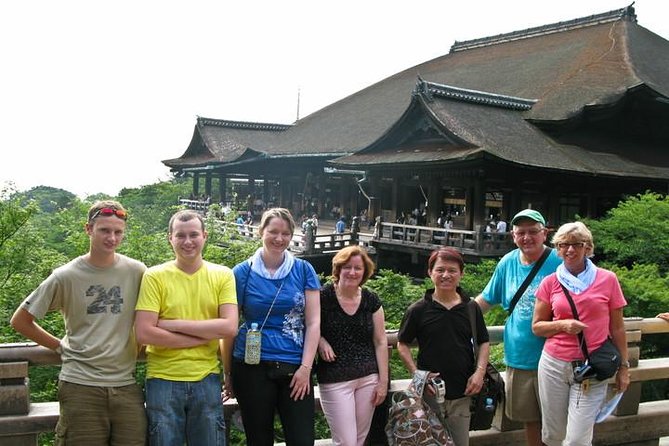
One of Kyoto’s most popular temples. Having a guide matters because Kiyomizu-dera can feel like a stampede of viewpoints, but explanations make the place click.
Tradeoff: admission is not included, and it is the kind of site where crowds can spike. Build your day so you are not rushing between far-away neighborhoods right before this.
Kyoto Imperial Palace
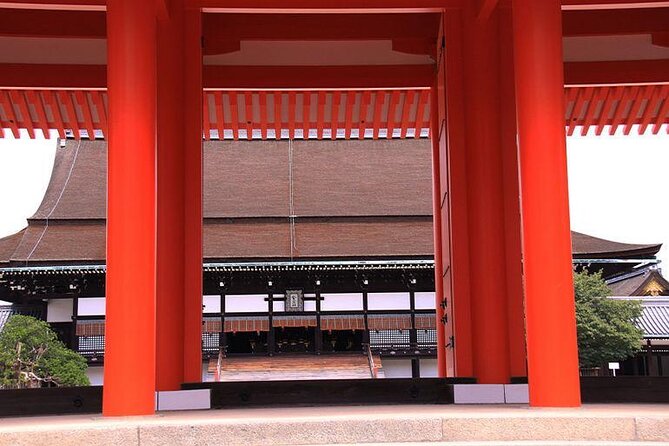
The former residence of Japan’s Imperial Family until 1868, when the emperor and capital moved from Kyoto to Tokyo. Your guide can help you understand how the palace functioned and why the grounds matter.
Tradeoff: admission is not included, and it may feel more formal than the walking-and-street vibe of areas like Gion.
Pontocho
Pontocho is an atmospheric dining alley running between Shijo-dori and Sanjo-dori, one block west of the Kamogawa River. Even a short stop can feel special because the alley is narrow and visually distinct.
Tradeoff: it is a place to walk and look, not a “see everything” stop. Admission is free to enjoy the area.
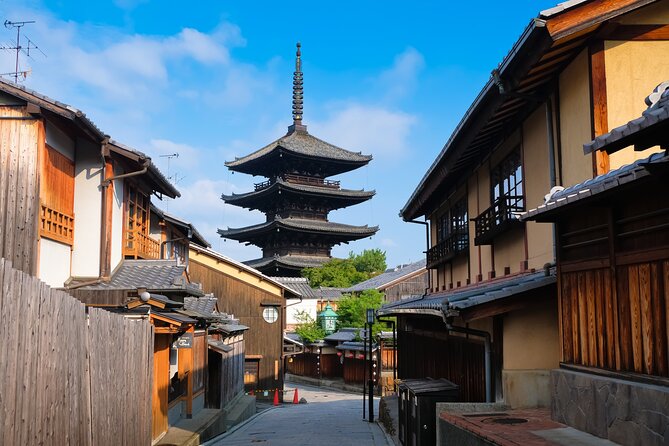
Higashiyama Ward
Higashiyama is a historic district along the lower slopes of Kyoto’s eastern mountains. This is where traditional old Kyoto vibes make sense, and you can appreciate how neighborhoods and walking streets shape the experience.
Tradeoff: it can be crowded during peak hours. It is free to explore, so you get value even with a short time window.
Ginkakuji Temple
Ginkakuji, also known as the Silver Pavilion, is a Zen temple tied to Ashikaga Yoshimasa’s 1482 retirement villa. A guide-led explanation turns the buildings and gardens into a story, instead of just a pretty stop.
Tradeoff: admission is not included, and it can be crowded in good weather.
Nanzenji Suirokaku
Nanzenji Temple sits at the base of the Higashiyama mountains and is a major Zen site. This is often a great pick if you want something calmer and more spacious than the most famous downtown hotspots.
Tradeoff: admission is not included, and the grounds can take a bit more walking than people expect.
Tofuku-ji Temple
Tofukuji is a Zen temple in southeastern Kyoto, founded in 1236 at the behest of powerful Fujiwara leaders. It is especially famous for autumn colors, and your guide can help you time what you see best based on the season.
Tradeoff: admission is not included. If you are visiting outside autumn, you can still enjoy it, but you might want to set expectations around fall-focused visuals.
Toji
Toji is an important temple founded in the late 700s after the capital moved to Kyoto. It is a good choice when you want a big historic anchor day that does not rely purely on street views.
Tradeoff: admission is free based on the tour info, which is a value win.
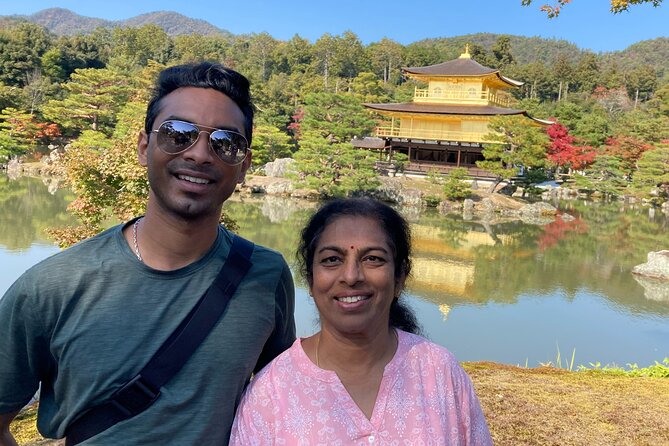
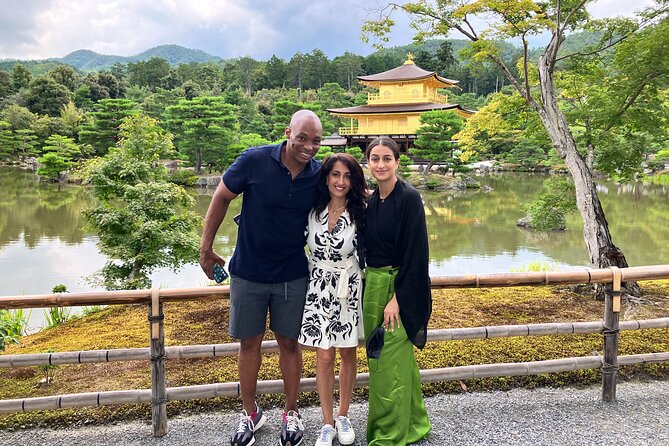
Kinkakuji Temple
The Golden Pavilion, a Zen temple whose top two floors are covered in gold leaf. This is the kind of place where a guide helps you navigate crowd flow so you get the “must-see” views without wasting time.
Tradeoff: admission is not included, and it is often crowded. Even so, a private plan helps you manage the pressure.
Ninna-ji Temple
Ninnaji is a World Heritage listed temple and head temple of the Omuro School of the Shingon sect, founded in 888. This stop can add variety if you already picked several famous Zen icons.
Tradeoff: admission is not included.
Shugakuin Imperial Villa
Shugakuin Imperial Villa was built in the 17th century by Emperor Gomizuno and is managed by the Imperial Household Agency. It is a strong option when you want refined garden-and-villa atmosphere rather than market streets.
Tradeoff: admission is not included, and the experience may feel more “grounds and structure” than shopping.
Kibune River
Kibune is a small town in a forested valley in northern Kyoto, developed around Kifune Shrine. It is a nice switch from the city grid, with more nature energy.
Tradeoff: admission is not included. It is also the kind of area where you should be prepared for more travel time if it is not already near the rest of your picks.
Kurama-dera
Kurama is less than one hour from Kyoto city center, known for Kurama-dera and a hot spring. If you like mountain-temple scenery, this is a good way to add a different side of Kyoto.
Tradeoff: admission is not included.
Ryoan-ji Temple
Ryoanji is famous for Japan’s most well-known rock garden, and it draws lots of daily attention. This is a great stop when you want quiet concentration and a different visual style than the torii or alley districts.
Tradeoff: admission is not included, and it can feel crowded depending on the time.
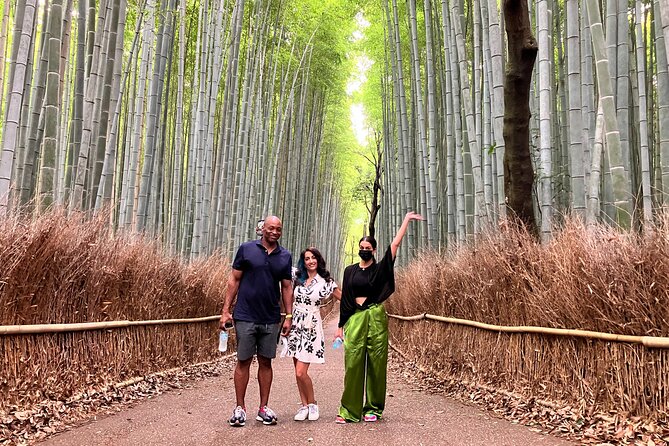
Arashiyama
Arashiyama is a popular tourist district on Kyoto’s western outskirts, with roots going back to the Heian period. This is a “big mood shift” stop, especially if your day starts in central Kyoto.
Tradeoff: admission is not included, and the area can be busy. Your guide can help you pick where to spend your short time.
Katsura Imperial Villa
Katsura Imperial Villa is one of the finest examples of Japanese architecture and garden design, completed in 1645 as a residence. This is a great choice if you love gardens, symmetry, and careful design.
Tradeoff: admission is not included.
Daikaku-ji Temple
Daikakuji is in the Sagano district, originally built as a detached palace of Emperor Saga. If you want a calmer-feeling temple break, this often fits.
Tradeoff: admission is not included.
Tenryu-ji Temple
Tenryuji is described as the most important temple in Arashiyama, ranked first among Kyoto’s five great Zen temples, and registered as a world heritage site. It is a strong pick if you want prestige plus a recognizable Arashiyama setting.
Tradeoff: admission is not included.
Yoshimine-dera
Yoshiminedera is a Tendai sect temple in Kyoto’s western mountains, built along slopes, with an approach that feels similar in spirit to Kiyomizudera on the other side of town. It is a short stop that can add variety if you are already doing western Kyoto.
Tradeoff: it is only listed for a short time, and admission is not included.
Kennin-ji Temple
Kenninji is close to Hanamikoji and Shijo streets. The grounds are expansive and it has two karesansui dry landscape gardens, which can be a nice contrast to crowded streets right outside.
Tradeoff: admission is not included, and the tour info suggests this can be a short stop.
What the day looks like on the ground, with fewer “oops” moments
In a well-run private tour, the best moments happen between stops. Your guide handles the “what is the next move” part, from routing to where you pause for photos and where you keep walking.
Time at each stop is fairly tight in this format, so you get a guided highlight rather than a full day of slow wandering. That is not a failure. It is how you stay sane and still hit the real icons of Kyoto in one afternoon.
You also get flexibility for comfort. One guide (Noriko) was praised for adjusting to a guest who did not want too much walking or stairs. Another (Shuji) preplanned for a wheelchair. If you have mobility limits, tell the provider in advance so the guide can shape the route around you.
Food and shopping breaks that actually fit the schedule
You cannot count on a long sit-down lunch here. Lunch is listed as not included, but you can plan quick bites around food-focused areas.
Nishiki Market is the star for snacks and small purchases. It is also a good place for local treats that are easy to grab and eat on the go. Pontocho can work for a look at dining atmosphere, especially if you time it when lights and crowds are building.
If you want souvenirs and gifts, your best “shopping density” usually happens during market and historic-street stops, not inside temple gift shops where your time is limited.
The biggest quality signal: guides who tailor, not just recite
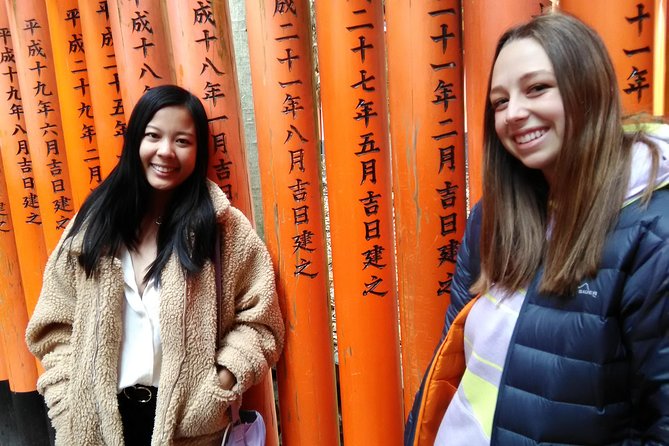
This is where the reviews really point: guides like Michi, Noriko, Olive, Yuka, Ken, Chiyuki, and Hiroko are praised for customizing the flow to what the group wants and for explaining what you are seeing in clear English.
A few specific strengths show up repeatedly:
- Helpful pacing and route changes when the day gets crowded
- Humor and lively storytelling that keeps kids or active adults engaged
- Photo-friendly guidance, like knowing where the best angles are
- Going beyond the basic script, like extra help after the tour window
That is the difference between watching Kyoto through a window and actually understanding why these places matter.
Should you book this private Kyoto tour?
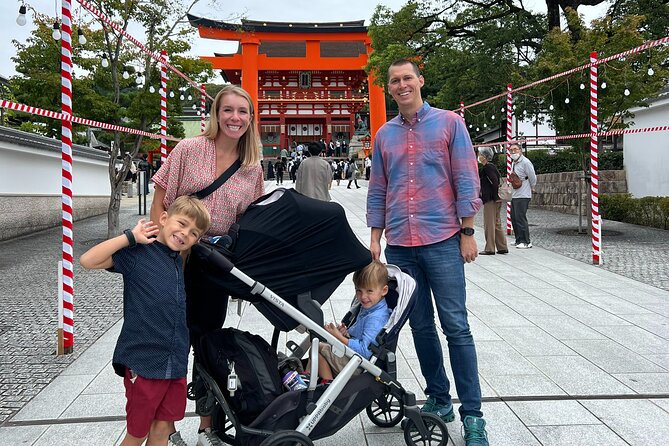
Book it if:
- You want to see major Kyoto highlights in one day without fighting the transit system
- You like structure, guide explanations, and efficient stop planning
- You care about customizing 3-4 sights to your personal interests
- You want door-to-door pickup and a comfortable vehicle for a full half-day
Skip it, or choose a lighter plan, if:
- You want a slow, deep Kyoto immersion with long stays at every temple
- You expect entrance fees and lunch to be included
- You do not want to prioritize, since 6 hours means tradeoffs
FAQ
How long is the private Kyoto tour?
It runs for about 6 hours.
Does the tour include hotel pickup and drop-off?
Pickup is offered, and door-to-door hotel transfers are included.
What size group is this tour for?
It is a private tour where only your group participates, and the maximum is listed as up to 15 persons.
Are entrance fees included?
Entrance fees are not included. Some stops are free to enjoy, but several temples and attractions have separate admission.
Is lunch included?
Lunch is not included.
Is a mobile ticket provided?
Yes, a mobile ticket is included.
Can I cancel for a full refund?
Yes, free cancellation is available up to 24 hours in advance of the experience start time.
Latest write-ups near Kyoto
- Kyoto: Nishiki Market Tour with a Local Foodie & Tastings★ 4.5 · 67 reviews
- Kyoto Kimono Rental mimosa |Kimono/Yukata Rental Couple Plan★ 4.8 · 67 reviews
- Kyoto: Traditional Kimono Fabric Handicrafts Workshop★ 5.0 · 67 reviews
- Kyoto Tea Ceremony and Samurai Photo Session★ 5.0 · 70 reviews
- Kyoto: Replica food making experience★ 4.8 · 70 reviews
- Kyoto: Kinkakuji, Golden Pavilion Guided Tour★ 4.7 · 71 reviews
- Private departure transfer from Kyoto city to Kansai International airport★ 5.0 · 72 reviews
- Uji: Green Tea Tour with Byodoin and Koshoji Temple Visits★ 4.8 · 72 reviews
Guided, compared.
Tokyo 6hr Private Tour with Government-Licensed Guide
Read our review →
Shinjuku Local Bar and Izakaya Guided Walking Tour
Read our review →
Private City Highlights Tour with Local Guide
Read our review →
Kyoto Early Morning Tour with English-Speaking Guide
Read our review →
Tokyo 4hr Private Tour with Government-Licensed Guide
Read our review →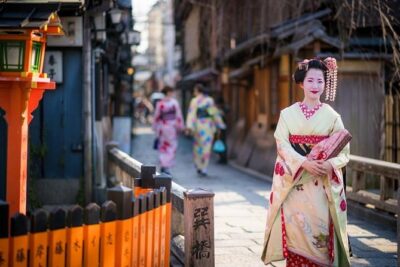
Kyoto 6hr Private Tour with Government-Licensed Guide
Read our review →