
Reviewed · SUSHI MAKING CLASSES
Taisho Sushi Making Class in Tokyo
This Taisho Sushi Making Class in Tokyo is interesting because it is built for results. You come in as a beginner, and you leave knowing how to shape sushi, roll it correctly, and eat it the right way, all without booking a full-day food tour marathon.
I especially like two things. First, you learn grip procedures on models before you touch real fish and rice. Second, you get the kind of class structure where you actually make and eat what you produce, not just watch from the sidelines.
One heads-up: the experience is quick, about 1 hour (approx.), and it can feel intense if you want a slower, more teacher-student pace.
Key Things I’d Mark as Must-Know

- Model practice first: you rehearse your grip before making real nigiri
- Nigiri with real fish and rice: seasonal neta, shaped and served so you eat what you make
- Gunkan lesson included: you learn the front and back of nori and how to roll it
- Dietary options: vegan and vegetarian options are available for non-fish eaters
- Small-ish class feel: capped at a maximum of 50 travelers, and it runs like an interactive workshop
- Hands-on sushi etiquette: you get instruction on proper sushi-eating habits
Why This Taisho Class Feels Like Training, Not Just a Tasting
If your goal is sushi skills, not just sushi vibes, this class is aimed squarely at technique. The host describes the style as similar to practices used in sushi chef training schools, the kind of stuff you would normally see with long tuition and lots of repetition.
What makes that practical for you is the order of operations. You do not start with raw fish and hope for the best. You first build muscle memory with practice tools (models), then you step into real ingredients when your hand placement and pressure feel more natural.
And yes, sushi schools can sound intimidating. This workshop keeps it friendly and beginner-ready, while still giving you the “repeat until it works” approach. That is exactly what you want when you only have an hour or so.
More Sushi Making Classes in Tokyo
- Sushi Making Tokyo Roll and Authentic Japanese Sushi Class
★ 5.0 · 3,971 reviews - Tokyo: Roll and Authentic Sushi Making Class in Asakusa
★ 4.9 · 1,957 reviews - Make Sushi and Create Unforgettable Memories in Tokyo
★ 5.0 · 1,413 reviews
The Cooking Flow: Models, Nigiri, Then Gunkan
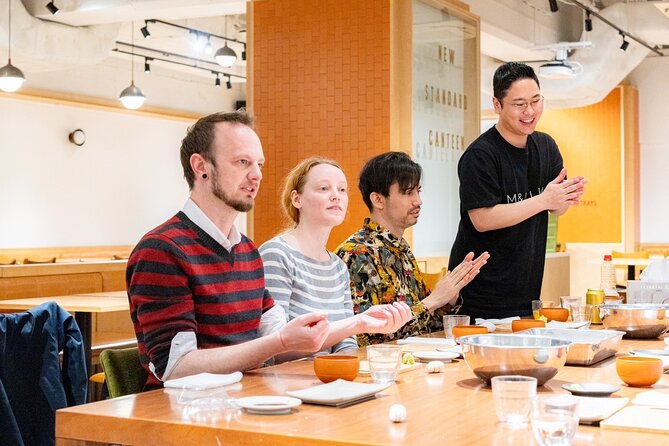
Here is how the class experience typically moves, and why each phase matters.
Step 1: Grip procedure practice using models
You begin with practice grip procedures using models. The idea is simple: it is very difficult to make sushi perfectly the first time with real fish and rice. So you repeat the steps on a model first, several times.
For you, this is the difference between a souvenir class and a skill class. You start learning the feel of the movements. You are not spending your first minute panicking about rice consistency or shaping pressure.
Step 2: Nigiri lecture, then hands-on nigirizushi with real fish and rice
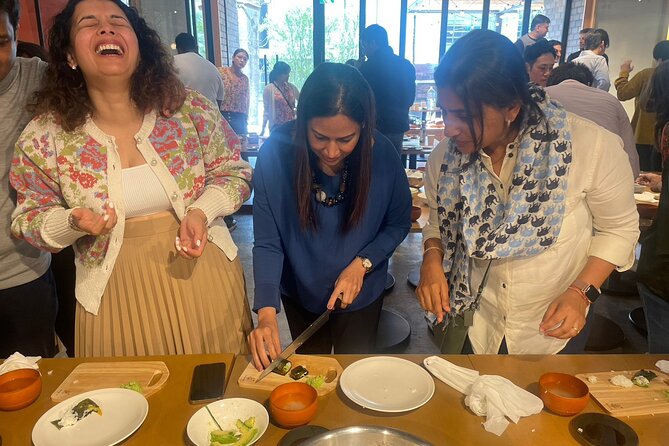
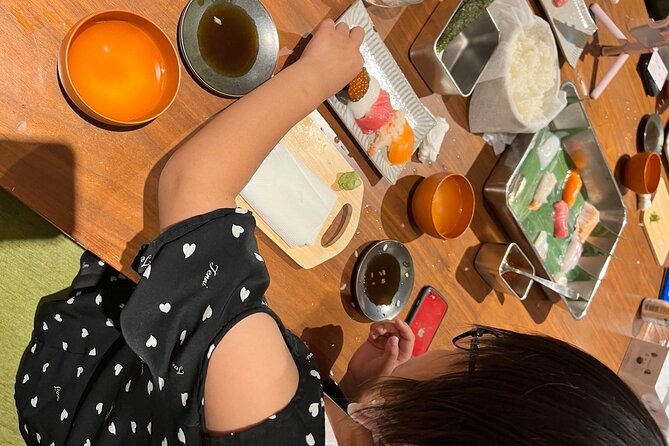
After you get your grip rehearsal down, the class moves into nigiri. You get a lecture on nigirizushi, then you make your own using real fish and rice.
The fish topping, the neta, varies depending on the season. That matters for value. You are not stuck with the same generic combo all year. You get the best variety and quantity available during the season, up to the point where you are full.
A change of pace from Tokyo:
- Mt Fuji and Hakone 1-Day Bus Tour Return by Bullet Train
★ 5.0 · 26,383 reviews - 1-Day Tokyo Bus Tour
★ 5.0 · 14,250 reviews - Tokyo: TOKYO SKYTREE® Admission ticket
★ 4.5 · 11,192 reviews - Tokyo: teamLab Planets TOKYO Digital Art Museum Entry Ticket
★ 4.6 · 9,779 reviews
Step 3: Gunkan lecture, plus nori rolling tips
Once the nigiri practice is underway for a while, you get instruction on gunkan. Gunkan is often described as warship-like because of its shape, like a little ship floating in a sea of rice.
This part also includes ingredient examples such as salmon roe and negitoro. You also learn specific technique points, like the fact that nori has a front and a back, and you need to roll it the right way.
Those details are small, but they are the kind of things that separate “I made sushi” from “I made sushi that behaves like sushi.” Nori technique affects how it holds, how it tastes, and how the final bite feels.
What You’ll Actually Make and Eat (So You Leave Full and Fluent)
This class is not only instruction. The workshop ends with you eating your creations, so you get the payoff right away.
You should plan to eat:
- Hand-made maki and nigiri as part of the overall program
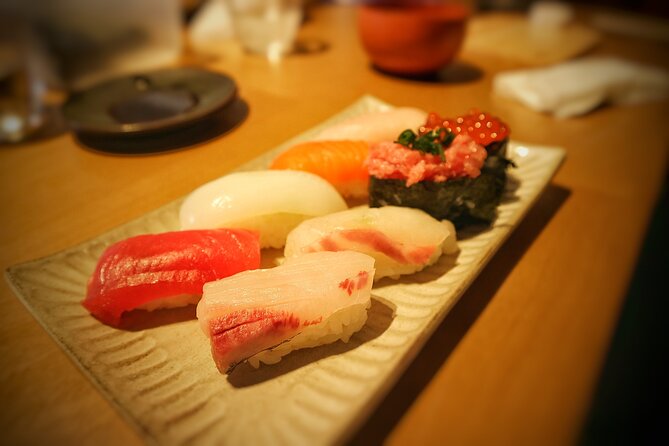
- Nigirizushi made with real fish and rice, with seasonal neta
- Gunkan-style items, with examples like salmon roe and negitoro
- A portion large enough to reach the point where you are full
That last point matters. Many classes have a “taste-size” meal, which is fine if your only goal is to learn. But if you want value, you want enough food that the class fee does not feel like paying for tiny bites.
Based on how the experience is structured, you are meant to consume what you make while you are still in learning mode. It is also when etiquette instruction becomes practical, because you can use it immediately.
Vegan and Vegetarian Options: What You Should Expect
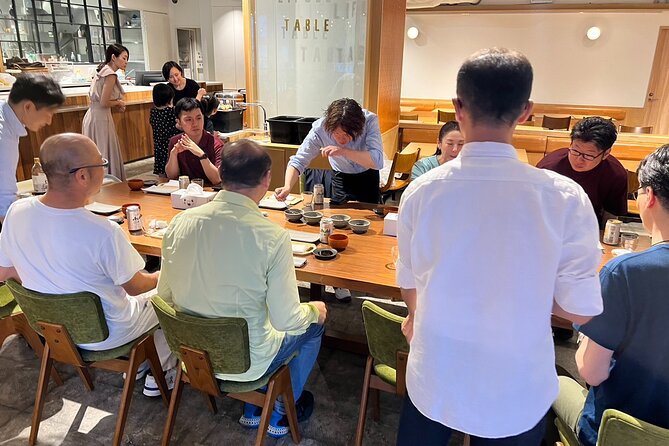
You do not have to sit out if you avoid fish. The class offers vegan and vegetarian options for non-fish eaters.
Now, since the exact menu substitutions are not listed here, keep expectations grounded. You should expect the class to adapt ingredients so you can still participate fully in the making and eating sections. The main promise is that you can come empty-handed and still get hands-on sushi skills, even if you are not using fish.
If you are traveling with mixed diets, this is a good sign. You can all join the same class without splitting into separate experiences. That keeps the day simple and keeps everyone eating together.
Price and Value: What $109.01 Buys in Tokyo
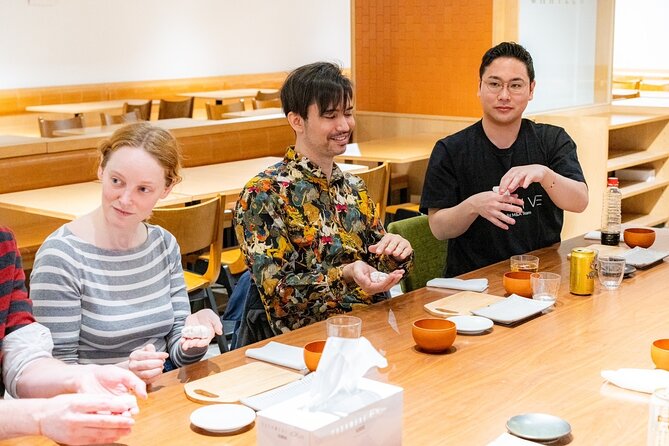
At $109.01 per person, this is not a bargain-basement food activity. But it also is not priced like a luxury banquet either.
The value angle here is that you are paying for three things that cost time and skill:
- Instruction with hands-on practice, including repeated model training
- Use of real sushi ingredients once you move past the models
- A full end-of-class meal that includes what you make
Because the class ends with you eating your creations, you are getting more than “education.” You are also getting actual food output, with seasonal variety.
Booking patterns also suggest demand. On average it is booked about 23 days in advance. If you have specific dates in Tokyo, booking earlier is smart just to avoid being locked out of your time window.
Time, Group Size, and How the Workshop Feels
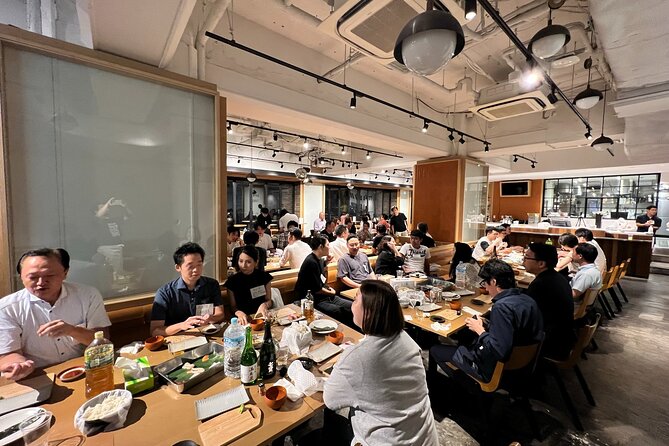
The duration is listed as about 1 hour (approx.), though the provider also describes it as a best 90-minute sushi-making experience. Either way, treat it as an express format.
That matters because sushi technique is physical. With limited time, the class focuses on the most essential steps:
- Grip and shaping fundamentals first
- Nigiri hands-on practice next
- Gunkan and nori technique after
Group size is capped at a maximum of 50 travelers. That sounds like a lot on paper, but in a sushi-making setting the group needs to be organized so each person can practice. You likely want to think of it as a workshop with enough structure that you are not stuck standing around.
If you are with kids or with a multi-generational group, this express nature can work well. You get an activity with a clear beginning, a clear making flow, and then the satisfying moment when everyone eats.
Where You Start in Kojimachi, Chiyoda
The meeting point is at 1-chōme-4-4 Kōjimachi, Chiyoda City, Tokyo 102-0083, Japan. The activity ends back at the meeting point.
A few practical points that help your day run smoothly:
- You’ll receive a mobile ticket
- It’s near public transportation
- Service animals are allowed
If you are coming from a hotel, build time for station navigation and a quick walk to the exact meeting location. Tokyo transfers can be fast, but signs are everything, and you do not want to show up rushing.
The Sushi Etiquette Lesson You Can Use Immediately
Sushi is not just ingredients. It is manners, timing, and how you handle each bite.
This class includes instruction in proper sushi-eating etiquette, and the best part is that you can apply it while you are eating what you made. That is the moment etiquette stops being “rules” and starts being technique.
Even if you know some basics already, I like that the class specifically calls out etiquette. It signals that the experience is teaching you how to be a thoughtful diner, not just a kitchen imitator.
Who This Experience Fits Best
This class is ideal if you:
- Love sushi and want to learn the hands-on parts quickly
- Are pressed for time but still want real practice with sushi tools and rice
- Prefer a structured class flow, model training first, real ingredients second
- Want to eat what you make, instead of leaving hungry after a demo
It is also a solid pick for groups. The workshop format is built for shared activity, not a quiet tasting.
It might be less ideal if you:
- Want a slow, deep dive into every single sushi component, rice seasoning, and knife details
- Are hoping for a long chef-style apprenticeship feel
- Are extremely sensitive to a fast schedule and want a more leisurely lesson pace
Practical Tips Before You Go
These are small, but they make the class easier to enjoy.
- Come hungry. The workshop ends with you eating your creations, and the variety is meant to take you up to the point where you are full.
- If you are not eating fish, plan to tell the operator your needs clearly so the vegan or vegetarian options are set correctly.
- Watch the early model practice. It might feel repetitive, but that repetition is the whole point of learning grip procedures before real ingredients.
Should You Book the Taisho Sushi Making Class?
If you want a practical sushi skill lesson in Tokyo that respects your time, I’d book it. The big reason is the training-style structure: model practice first, then real nigiri and gunkan with seasonal ingredients, and you eat your results at the end.
It also has strong signs of value for the money. You are not paying just for a quick taste. You are paying for hands-on shaping and a meal payoff, plus technique reminders like nori front and back.
If you have the kind of trip where you want to do one “learn it and take it with me” activity, this is a great choice.
FAQ
How long is the Taisho Sushi Making Class?
The duration is listed as about 1 hour (approx.). The provider also describes the experience as a best 90-minute sushi-making experience, so plan for a quick class format and some scheduling buffer.
Where does the class meet in Tokyo?
The meeting point is at 1-chōme-4-4 Kōjimachi, Chiyoda City, Tokyo 102-0083, Japan. The activity ends back at the same meeting point.
Do I need to bring any cooking equipment?
No. The class is designed so you can come empty-handed, with all equipment and materials provided.
Are vegan or vegetarian options available?
Yes. Vegan and vegetarian options are available for non-fish eaters.
How big is the class group?
The activity has a maximum of 50 travelers.
What is the cancellation policy?
Free cancellation is available. You can cancel up to 24 hours in advance for a full refund, and cut-off times are based on the local start time of the experience. If the experience is canceled because a minimum traveler number is not met, you will be offered another date or a full refund.
Latest write-ups near Tokyo
- Tokyo Customized Private Tour: See Top Attractions in 1 Day★ 4.8 · 67 reviews
- From Tokyo: Top 5 Scenic Spots of Mount Fuji Full-Day Tour★ 4.5 · 67 reviews
- Tokyo: Shinjuku Izakaya and Golden Gai Bar Hopping Tour (2h)★ 4.9 · 67 reviews
- Traditional Japanese Music ZAKURO SHOW in Tokyo★ 5.0 · 67 reviews
- Tsukiji: Unlimited Sake Tasting Experience★ 4.9 · 67 reviews
- Samurai Ninja Museum Asakusa: Kid-Friendly Ninja Training★ 4.7 · 67 reviews
- Tokyo: Not a show- a professional sumo practice with experts★ 4.9 · 67 reviews
- Private Harajuku Omotesando Architecture Walking Tour★ 5.0 · 67 reviews
Sushi Making Classes, compared.
Sushi Making Tokyo Roll and Authentic Japanese Sushi Class
Read our review →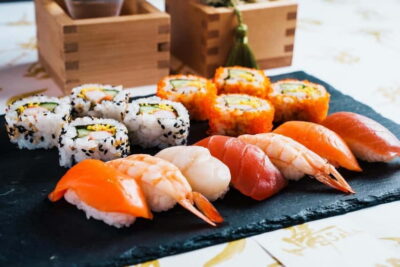
Roll and Authentic Sushi Making Class in Asakusa
Read our review →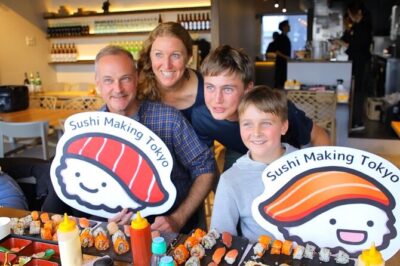
Make Sushi and Create Unforgettable Memories in Tokyo
Read our review →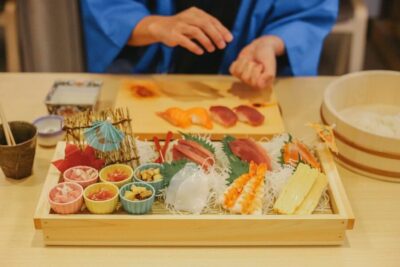
Sushi Making Class in a Happi Coat near a Famous Spot
Read our review →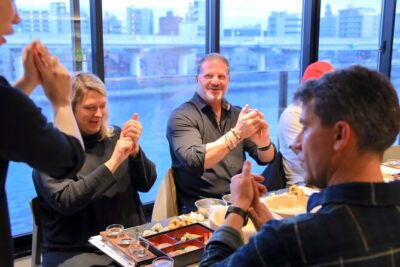
Sushi Making Osaka Roll and Authentic Japanese Sushi Class
Read our review →
Tokyo Sushi Making Class in Tsukiji with Professional Chef
Read our review →
Tokyo Night Foodie Tour in Shinjuku – Seasonal Sushi, Wagyu Beef
Read our review →
Tsukiji Fish Market Guided Tour and Sushi Making with Pro Chef
Read our review →Browse the lists this tour appears in