
Reviewed · WAGYU & KOBE BEEF EXPERIENCES
Tokyo: Wagyu and Sushi Gastronomic Journey
Tokyo is the kind of city where you can go from neon street theater to quiet ritual in a few steps. This Wagyu and sushi gastronomic journey uses Shinjuku as the backdrop, mixing high-end Japanese comfort food with alley wandering in the spots that locals actually talk about.
I especially like the pairing of Wagyu education with real tastings. I also like that the route is practical and atmospheric, sliding from Kabukicho energy to the small-bar world near Omoide Yokocho, with a calm pause at Hanazono Shrine.
The main drawback to consider is the setting. Kabukicho and Golden Gai are nightlife zones, so you will do a good amount of walking, and the vibe can feel loud, crowded, and a bit smoky at times. If you are only interested in daytime sightseeing, this may feel like the wrong hour.
Key takeaways before you go
- Small-group pacing with a live English guide, limited to 10 participants
- Two food venues plus dinner gives you a full meal, not just samples
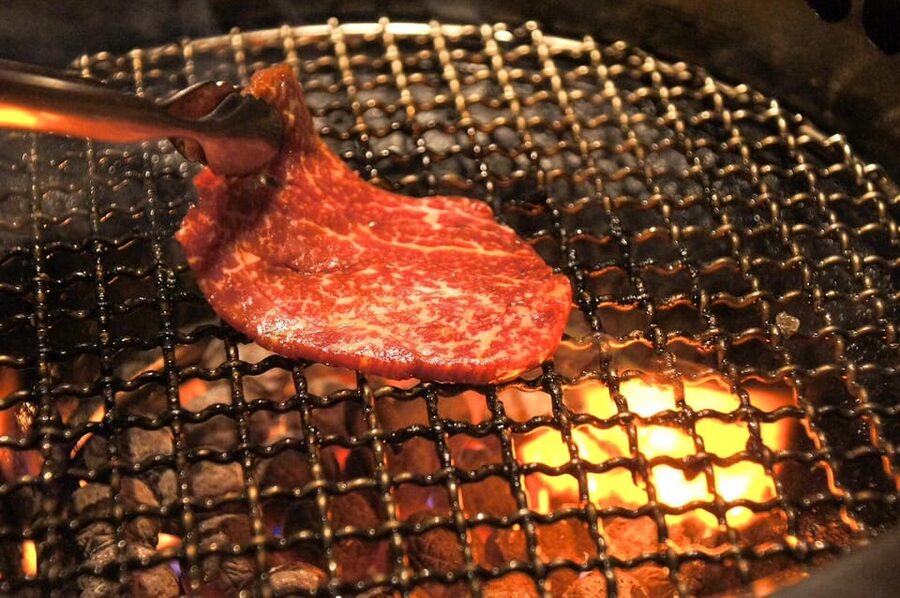
- Wagyu beef history plus regional flavor cues, then you taste the difference
- Golden Gai and Omoide Yokocho show how Tokyo drinks and eats in tight spaces
- Godzilla at Shinjuku Toho and Kabukicho landmark energy to anchor the night
Wagyu, sushi, and Shinjuku’s two very different moods
This tour is interesting because it treats food like a map. You are not just eating in one restaurant and going home, you are walking through Shinjuku’s moods while you learn what to look for in the food, from Wagyu cuts to how sushi is built.
What I like is how the evening balances two kinds of Japanese experience. First you get the skill side, watching sushi craft and learning how chefs think about texture and freshness. Then you get the social side, stepping into the alley bar culture where yakitori and drinks are part of everyday rhythm.
The best part is that the locations make sense together. Shinjuku is loud and fast, but the route includes a breather, Hanazono Shrine, so your brain resets between bites. That contrast can make the food feel more vivid, even if you are not a big foodie.
More Sushi Making Classes in Tokyo
- Sushi Making Tokyo Roll and Authentic Japanese Sushi Class
★ 5.0 · 3,971 reviews - Tokyo: Roll and Authentic Sushi Making Class in Asakusa
★ 4.9 · 1,957 reviews - Make Sushi and Create Unforgettable Memories in Tokyo
★ 5.0 · 1,413 reviews
Starting at 3rd Burger, then getting your bearings fast
You meet just in front of the 3rd Burger, in the Nishishinjuku area. From there, the group moves through major Shinjuku zones with a guide to keep you from getting lost in the sprawl.
Timing matters here. The tour runs about 3 to 3.5 hours, so you want to arrive on time and stay present. In neighborhoods like this, being late can throw off the group pace because you cannot just “wait a few minutes” without creating a ripple.
Also, plan on being comfortable walking. Shinjuku is not designed for a slow stroller pace, and this tour leans into walking time so you can experience Kabukicho and Golden Gai beyond the headlines.
Kabukicho first half: neon energy with a food-first lens
Kabukicho is Tokyo’s entertainment district, and this is where the evening turns bright and loud. You will move with a guide through the area and pick up context for what you are seeing, from the neon glow to the way crowds and small venues function here.
One of the most fun landmark anchors is the Godzilla Head on top of the Shinjuku Toho Building. Even if you have seen Godzilla before, it hits differently at street level, when it is surrounded by signage, motion, and people on their own nighttime schedules.
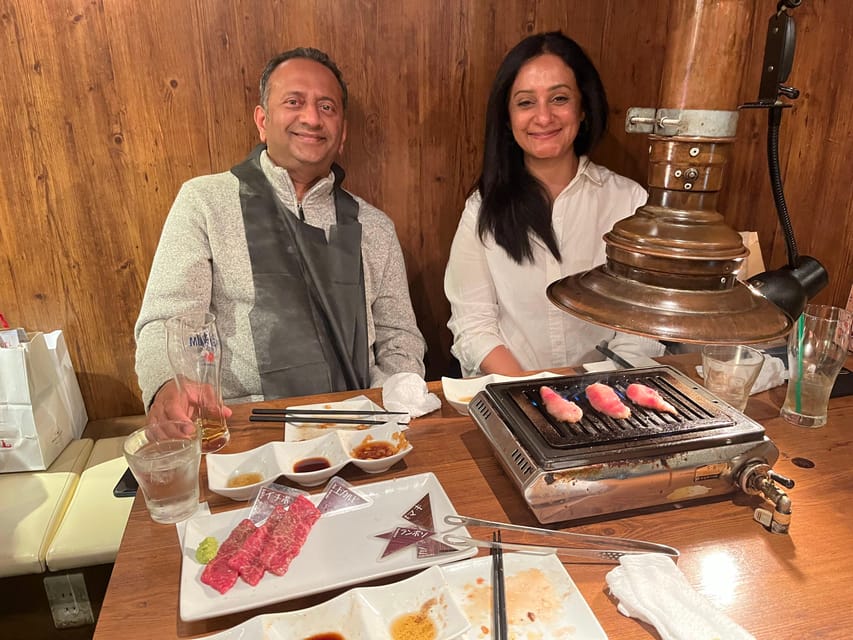
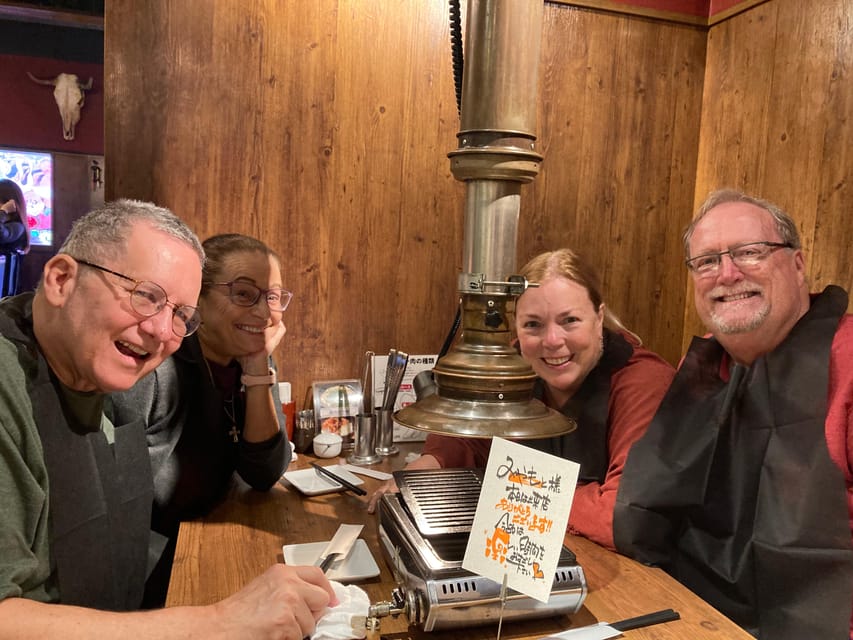
In this part of the walk, you are also building appetite. The goal is not to admire every screen, it is to connect the neighborhood to the food culture you will taste later. For many people, this is also where Japanese BBQ becomes real, because Wagyu is not an idea anymore, it is an upcoming bite.
A practical note: Kabukicho can be busy, especially around popular nightlife hours. Wear shoes that you trust, and keep your phone for photos only, not for navigating.
Omoide Yokocho and tiny-bar culture: ordering without the stress
Omoide Yokocho is known for its narrow, alley-style bar atmosphere, with tiny spots that serve comfort-food favorites like yakitori. This is the kind of place where Tokyo feels intimate, because everything is close, loud, and communal.
What you get from including this area is a look at how Japanese evenings actually work. Alcohol and small plates are often part of the same flow, and the bar culture is built for short, frequent orders rather than a single long meal.
The tour’s value here is the guide. You do not need to play guessing games on what to order or how to think about each dish. With expert guidance, you can focus on taste, texture, and what each bite is trying to communicate.
If you are sensitive to strong smells from cooking or crowds, this part may feel intense. You can still enjoy it, just go in expecting that it is not a quiet, sit-down restaurant lane.
More Wagyu & Kobe Beef in Tokyo
- Tokyo Night Foodie Tour in Shinjuku – Seasonal Sushi, Wagyu Beef
★ 5.0 · 1,161 reviews - Tokyo: Wagyu and 7 Japanese Dishes Cooking Class
★ 4.9 · 273 reviews - Small-Group Wagyu Beef and 7 Japanese Dishes Tokyo Cooking Class
★ 5.0 · 190 reviews - Wagyu & Sake Pairing in Shinjuku – Steak, Shabu-Shabu & More
★ 5.0 · 112 reviews
Hanazono Shrine stop: the calm break that makes the meal land
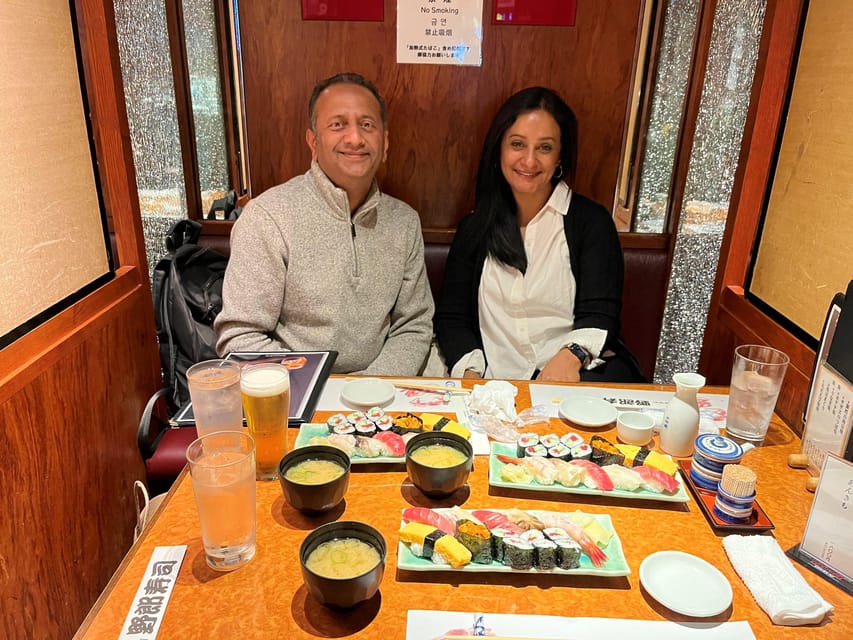
Between loud streets, the tour includes Hanazono Shrine, a quiet pocket of tradition in the Shinjuku area. This stop matters because it changes your rhythm, even if you only spend a short time there.
I like these pauses because they give your senses a reset. When you are switching from bar lighting and heat to a calm shrine environment, you notice things differently, including flavors after the fact.
It is also a good chance to observe Tokyo beyond food and nightlife. A shrine visit is not about checking a box. It is about seeing how traditional practices sit inside a modern, entertainment-heavy neighborhood.
If you prefer your tours with a little meaning and not only a “party crawl,” this stop is one of the reasons the experience feels more complete than a simple meal.
Golden Gai alleys: microbars, post-war storytelling, and drink-by-design
Golden Gai is where the night gets interesting in a totally different way. This is a maze of narrow alleys with over 200 small bars, many with distinct personalities and themes.
The guide’s job here is not just route-finding. It is helping you understand why Golden Gai feels like a time capsule, even while Tokyo keeps moving. The evening becomes a mix of street-level curiosity and practical enjoyment, where you learn what to notice in the spaces you enter.
I also like that Golden Gai is less about flashy spectacle and more about atmosphere. You are inside small bars, which means you tend to slow down. That slowing can make the food and drinks feel more intentional, and it keeps the group conversation lively.
One consideration: this area is all about nightlife energy. If you want a quiet, museum-style evening, Golden Gai will feel like sensory overload.
What you actually eat: Wagyu first, then sushi with chef-level focus
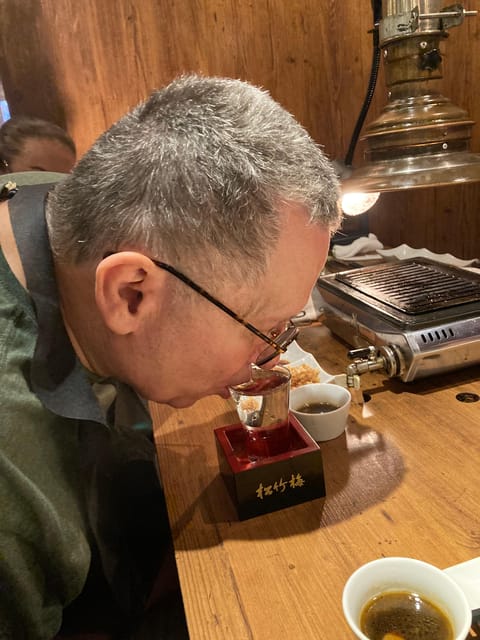
This tour’s heart is the food pairing: Wagyu beef and sushi. The experience is set up so the tasting connects to learning, not just consumption.
With Wagyu, you get guidance on the beef’s history and how flavor shows up across regional variations. That matters because Wagyu can be described with big words, but you taste it through small differences, like richness, melt, and the way fat coats the palate.
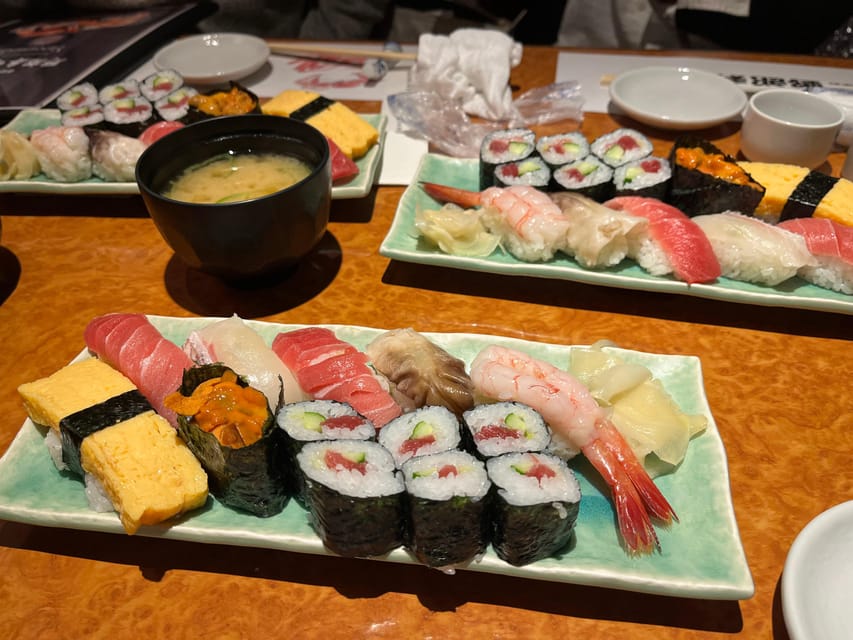
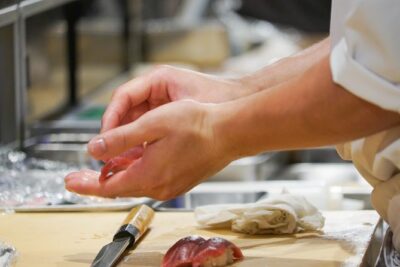
Then comes sushi, where the guide helps you read what the chef is doing. You will see sushi made with careful precision, and you will learn how traditional techniques and seasonal ingredients shape the final bite. Even if you are new to sushi, you can follow along and understand why each piece feels different.
In the reviews, this is where the emotional reaction comes from. People describe the Wagyu as an ultimate treat and the sushi as a perfect pairing, with guides making the experience feel friendly and personal. One guide name that pops up in past departures is Emma, mentioned as fun and engaging, with a warm, talk-to-you vibe.
That guide energy matters because it keeps the learning relaxed. You are not sitting through a lecture, you are tasting while someone points your attention at the right details.
Value check: what $154 really covers in Shinjuku
At $154 per person for a 3-hour experience, the price is not “budget Tokyo.” But it is also not random tourism pricing. You are paying for a small group, a live guide in English, dinner, and two distinct food venues.
Alcoholic beverages are included only if you are age 20 or above, so factor that into your planning if you do not drink. Transportation is not included, and it can range from 200 yen to 800 yen depending on how you arrive. That means your real out-of-pocket cost will depend on your hotel and how you handle transit.
Here is why I think it can still be good value. You are getting both an educational component and the meal component together. The guide does not just point you to restaurants; you get help understanding what you are eating, which makes the food feel less like an expensive “try it” and more like a learn something evening.
For people coming to Tokyo with limited time in Shinjuku, this also reduces guesswork. Instead of hunting for quality sushi and a Wagyu experience and then paying solo, you get a guided sequence that makes sense in one night.
Group size, guide energy, and timing that keeps it fun
This is a small group tour limited to 10 participants, and that size is a big part of why these kinds of food evenings work well. You get enough attention to ask questions, but you are not trapped in a big bus group where nobody hears anything.
The tour is led by a live guide in English. In past experiences, the guide style has been described as personable, enthusiastic, and able to mix food knowledge with easy conversation. That combination helps if you are traveling alone or you do not speak Japanese, because it lowers the anxiety of ordering and walking into unfamiliar spots.
Duration is listed as 3 hours, with some departures running 3 to 3.5 hours. That is long enough to feel like a real evening, but not so long that you burn out on nightlife noise. If you are planning the rest of your night, leave a little room after the tour to decompress.
Who should book this Shinjuku Wagyu and sushi journey?
Book it if you want a guided food night that goes beyond a single restaurant. This works especially well if you like the idea of watching sushi made with care, learning why Wagyu tastes the way it does, and then experiencing Shinjuku neighborhoods that feel different in every corner.
It is also a great fit if this is your first time with Japanese BBQ or if you want help ordering and understanding what you are tasting. The reviews repeatedly point to guides making the experience feel memorable, friendly, and well paced.
Think twice if you strongly prefer daytime activities. This is a nighttime walk through nightlife districts, with a shrine stop for contrast, and the overall feel is about eating and drinking in active Tokyo areas.
Should you book it?
If your Tokyo plan includes Shinjuku, I think this is a smart “one night” choice for food lovers who want both tastings and context. The two venues plus dinner, the small-group size, and the English guidance make the evening easier to enjoy than DIY hunting.
If you hate crowded nightlife scenes or you want a quiet, cultural tour only, this may feel too much like a night out. For everyone else, it is a solid way to connect wagyu flavor, sushi craft, and the street-level Shinjuku atmosphere in about three hours.
FAQ
How long is the Wagyu and sushi gastronomic journey in Shinjuku?
The tour runs for about 3 hours, and it may be around 3 to 3.5 hours depending on the departure.
What is the price per person?
The price is listed as $154 per person.
Where do I meet the tour group?
You meet in front of the 3rd Burger.
How big is the group?
This is a small-group tour limited to 10 participants.
What language is the live guide?
The live tour guide speaks English.
What’s included in the price?
Included are a local guide, alcohol for participants aged 20 and above, dinner, and visits to two distinct food venues.
What is not included?
Transportation costs are not included (listed as a range from 200 yen to 800 yen), and there is no hotel pickup or drop-off.
Are alcoholic beverages included for everyone?
Alcoholic beverages are available only for participants aged 20 and above.
What if I need to cancel?
Free cancellation is available up to 24 hours in advance for a full refund.
What happens if the operator cannot reach you on tour day?
If there is no contact from the guest by the day of the tour, the tour may be canceled, and a full refund will be issued.
Latest write-ups near Tokyo
- Harajuku Private Tour: Kawaii Fashion & Animal Cafe Included★ 5.0 · 69 reviews
- Mt Fuji Customizable Private Tour English Speaking Driver Pick-up★ 5.0 · 69 reviews
- Tokyo Night Cooking Class: 5 Home-Cooked Japanese Dishes★ 5.0 · 70 reviews
- Tokyo: Sumida Aquarium Entry Ticket★ 4.6 · 70 reviews
- Private Customizable Walking Tour of Tokyo★ 5.0 · 70 reviews
- Official Japan Go-Kart Through Tokyo Bay / Ginza (IDP Required)★ 4.5 · 71 reviews
- Wagyu Beef and Sake Pairing Foodie Tour in Tokyo★ 5.0 · 71 reviews
- Experience Big soba knife Soba Making Class in Tokyo Kappabashi★ 5.0 · 71 reviews
Wagyu & Kobe Beef Experiences, compared.
Tokyo Night Foodie Tour in Shinjuku – Seasonal Sushi, Wagyu Beef
Read our review →
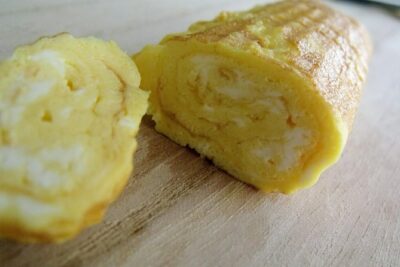
Small-Group Wagyu Beef and 7 Japanese Dishes Tokyo Cooking Class
Read our review →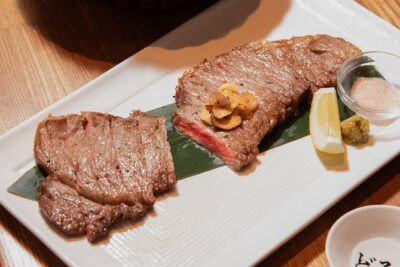
Wagyu & Sake Pairing in Shinjuku – Steak, Shabu-Shabu & More
Read our review →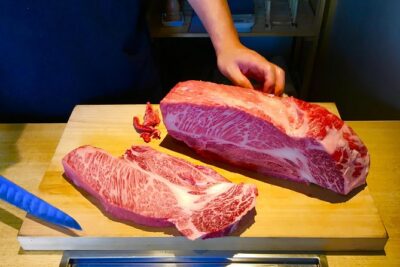
Tokyo Wagyu & Sake Pairing Tasting Experience with Local Flavors
Read our review →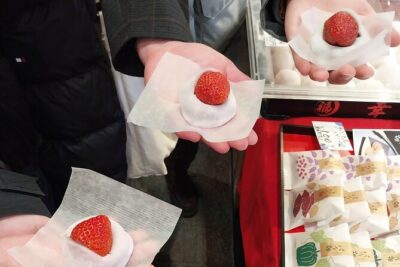
Kyoto Food Tour of 10 Tastings with Wagyu, Mochi & More Surprises
Read our review →
Wagyu Beef and Sake Pairing Foodie Tour in Tokyo
Read our review →
Browse the lists this tour appears in