Reviewed · MORNING
Traditional Japanese Washi Papermaking- Kyoto morning
What makes this Kyoto morning washi class interesting is that you are not just buying paper products. You are making traditional washi paper yourself from raw materials, then decorating it with seasonal botanicals. I especially like the small group size up to 4, and the fact that the team includes bilingual instruction so the craft makes sense as you do it.
The main thing to consider is time. You have about 1 hour, so if you want a very large number of keepsakes, you may want to plan on adding the optional extra hour of unlimited paper making.
Key things to know before you go
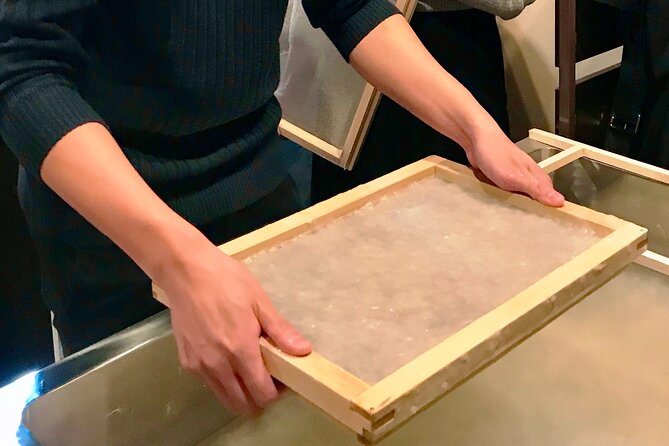
- Hands-on washi paper from raw materials, not a demonstration from behind a counter
- Seasonal decoration options, including cherry blossoms, maple leaves, and paper cut-outs
- Bilingual instruction (Japanese and English) so you can follow each step
- You choose what to make, including postcards, a table mat, a wraparound lampshade, or a tapestry panel
- Small class (max 4 travelers) for real attention while you work
- Optional extra hour for unlimited paper making, at your expense
Why This Kyoto Washi Workshop Fits a Morning So Well
Kyoto can feel like constant motion, especially if you are stacking temples, markets, and transit. This kind of workshop is a good reset because it asks your hands to work, not just your feet. You end with a finished, usable souvenir you can actually bring home, not a photo you have to remember later.
I like that the class is hands-on from the start. You learn how the paper is formed, then you get to design your own piece using seasonal pressed flowers and leaves. And because the instructors speak both Japanese and English, you are not stuck guessing what each step is supposed to do.
Also on the shortlist for Kyoto:
- PERFECT KYOTO 1-Day Bus Tour
★ 5.0 · 13,518 reviews - Kyoto: Fushimi Inari, Kinkakuji, Bamboo Grove 1 Day Bus Tour
★ 4.8 · 4,316 reviews - Kyoto: Tea Ceremony in a Traditional Tea House in Kiyomizu
★ 4.9 · 3,519 reviews
Where the Workshop Is, and the Easiest Way to Get There
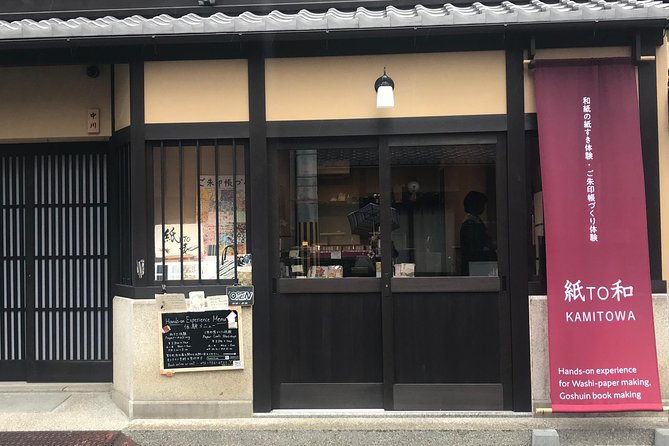
You meet at 345 Sanjōchō, Nakagyo Ward, Kyoto 604-8205. The good news is you are close to transit. It is about a 9-minute walk from Shijo Station (Kyoto Metro Karasuma Line) at Exit #24, or a 6-minute walk from Karasuma Oike Station (Kyoto Metro Karasuma Line) at Exit #6.
There is also a nearby Hankyu option: it is about a 6-minute walk from Karasuma Station on the Hankyu Line. You do need to make your own way to the workshop, since transportation to and from the class is not included.
The 1-Hour Flow Inside a Traditional Japanese House
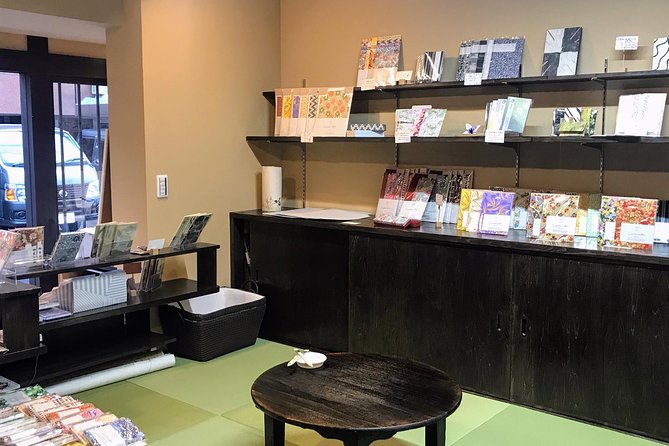
The class experience is built around a simple rhythm: introductions, instruction, then making. You go to a traditional Japanese-style house location in central Kyoto, meet the team, and learn how traditional washi paper is made under their watch.
Even though the timeline is short, the work is not rushed in a sloppy way. The whole point is that you go step-by-step and you finish with something you designed yourself. By the end, you have a unique handmade paper souvenir to take home.
One practical detail: the activity ends back at the meeting point, so you can walk back into your morning plans easily.
What You Actually Learn When You Make Washi Paper
This workshop is designed so you understand the “why” behind each step, not just the “do this, then that.” You start from raw materials and learn how a sheet of washi paper is formed. The instructors explain the process while you work, so you can adjust as you go if something does not look right.
Many students also say the class includes short educational media during downtime while paper dries. In past sessions, a video is shown to explain the history and the fuller papermaking process, which helps connect your hands-on work with the bigger tradition behind it.
A detail that matters for first-timers: the process has many steps, but the class is paced so it still feels manageable within about 60 minutes. If you like structure, you will likely appreciate that you are guided through the whole flow rather than left to figure it out.
A change of pace from Kyoto:
- Kyoto Geisha Walking Tour: Gion District & Hidden Gems
★ 4.7 · 3,273 reviews - Kyoto: Tea Ceremony Ju-An at Jotokuji Temple
★ 4.9 · 3,207 reviews - Kyoto: Gion Magical Night Walking Tour with Geisha Trivia
★ 4.9 · 2,393 reviews - Kyoto: 45-Minute Tea Ceremony Lesson Experience
★ 4.3 · 2,378 reviews
Decorating Your Paper With Cherry Blossoms, Maple Leaves, and Cut-Out Shapes
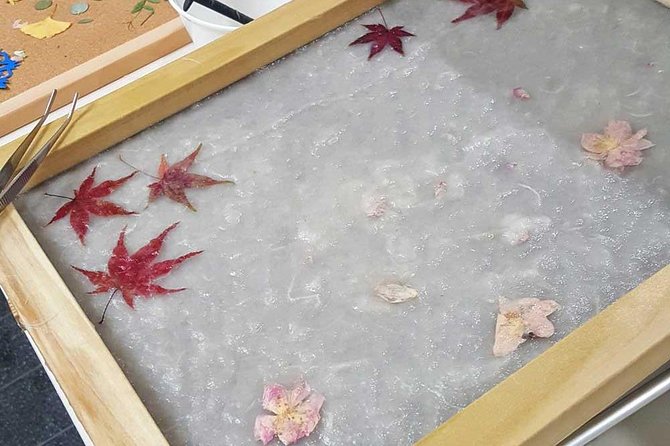
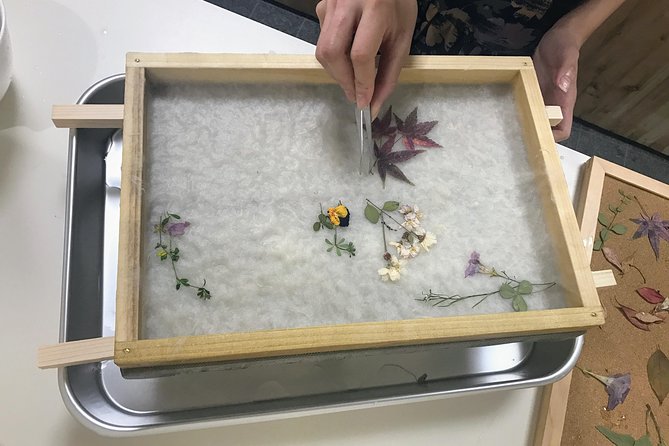
The fun part is that your finished sheet is not generic. You design your piece using seasonal pressed flowers and leaves. The options include cherry blossoms and maple leaves, plus paper cut-outs.
What I think works best is to treat the decoration as composition, not decoration by default. If you want a cleaner look, spread botanicals more sparsely so the paper texture can show through. If you want bold color and pattern, cluster elements so your design has a clear focal area.
Also, think about what you are making. Postcards and a table mat reward designs that read clearly from up close. A lampshade or larger panel benefits from placement that looks good from different angles. You will get to choose what you create, so use that choice to guide your decoration decisions.
Your Take-Home Project: From Postcards to a Lampshade
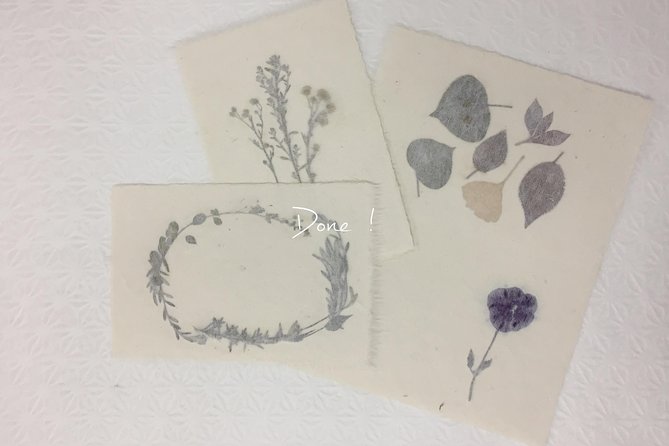
You get to craft your own item from the washi paper you made. The class offers several outcomes, including a set of postcards, a table mat, a wraparound lampshade, or a tapestry panel.
This is where value shows up. Craft classes often stop at making paper, then you wait around for final finishing elsewhere. Here, you are making the paper and using it to create a specific keepsake. Even if you only have an hour, you leave with something designed by you, not just sheets stored in a bag.
A few reviews also mention the finished products are packaged well. That matters because handmade paper can be fragile, especially if your Kyoto day includes other stops.
Small-Group Attention, Bilingual Teaching, and the Hiro and Junko Factor
With a maximum of 4 travelers, you should expect real interaction. This is not a “watch and hope” experience. The team works with you step-by-step so you can keep moving while still getting support when you need it.
In feedback, the instructors are often identified by name, including Hiro and Junko. You might work with them directly, and either way you will benefit from their approach: calm guidance, gentle corrections, and explanations that stay understandable even if you are new to the craft.
The class also seems to work for families. Reviews include examples of children enjoying it, as long as kids are accompanied by an adult.
Price and Value: Is $33.03 Worth It?
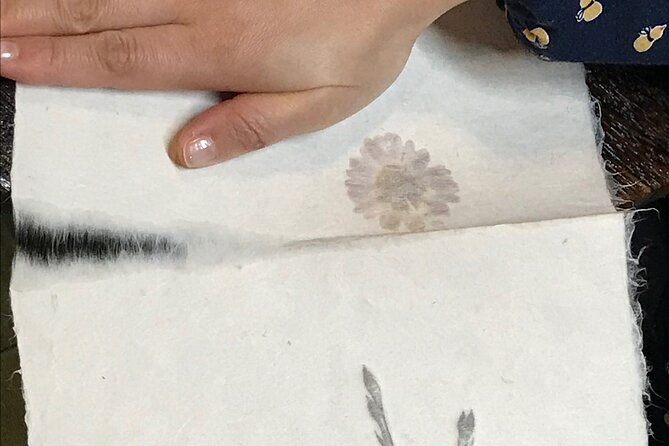
At $33.03 per person, this workshop is priced like a focused, small-class cultural activity. You are not paying for a long, multi-day course. You are paying for a guided, hands-on session that turns raw materials into something you can display or use.
The value is strongest if you fit the workshop’s purpose: you want to learn a traditional art and you want a tangible souvenir. If you just want a quick photo stop, the time spent making will feel like more effort than payoff.
One more value point: the price includes all taxes, fees, and handling charges. So you are not surprised later by “extras” that were baked into the fine print.
The Optional Extra Hour for Unlimited Paper Making
There is an optional add-on for an additional hour of unlimited paper making. It is described as your expense, so you should expect to pay extra if you choose it.
When does this make sense?
- If you want multiple gifts for friends and family
- If you want to experiment more with placement of botanicals and cut-outs
- If you think you will get slower once you relax into the process
When it might not make sense:
- If your schedule is tight and you already have your main keepsake
- If you prefer one focused item over making several
If you are the type who likes to create and keep improving, the extra hour is where you can turn one sheet into a small set.
Practical Tips for Carrying Your Handmade Souvenir Out of Kyoto
You will have to handle your finished paper item after class. That is normal for craft workshops in Japan, but it is still worth planning for.
Some past students suggest planning to carry items yourself if you do not use any drop-off option offered in the moment. Others note the products are packaged well, which helps if your next stop is a museum bag, lunch, or a longer walk.
My practical advice: bring a sturdy bag and keep the finished piece flat. Avoid cramming it under heavy items in your tote. If you are mixing this workshop with other Kyoto errands, treat it like a delicate purchase, because it is.
Who Should Book This Kyoto Washi Workshop, and Who Might Skip It
This is a great fit if:
- You want a real craft skill to try during your Kyoto stay
- You like traditional techniques and seasonal design with pressed botanicals
- You want a calm indoor break from busy sightseeing days
- You enjoy classes where the group stays small and you get guidance
It may not be your best fit if:
- You want a deep, multi-session course
- You hate structured step-by-step instruction
- You only want a short cultural stop with minimal effort
The class is small, guided, and creative. That combination is why people keep recommending it.
Should You Book This Kyoto Morning Washi Class?
If you enjoy making things and you want a souvenir that feels personal, I think this workshop is an easy yes. For the money, you get bilingual instruction, a guided process from raw materials to a finished paper design, and you leave with a project you can actually use or display.
The only reason I would hesitate is the time limit. Plan what you want to make, and if you want more than one item, consider the optional extra hour. Otherwise, go in with curiosity, take your time placing the cherry blossoms and maple leaves, and you will walk out with something that looks like Kyoto in a way a postcard never can.
FAQ
How long is the traditional Japanese washi papermaking class?
It lasts about 1 hour (approx.).
What is the price per person?
The price is $33.03 per person.
Where is the meeting point?
The meeting point is 345 Sanjōchō, Nakagyo Ward, Kyoto 604-8205, Japan.
Is transportation to and from the workshop included?
No. Transportation to/from the workshop is not included.
Do the instructors speak English?
Yes. The class is operated by a multi-lingual guide (Japanese and English).
What can I make during the class?
You can make a set of postcards, a table mat, a wraparound lampshade, or a tapestry panel using washi paper you make and design yourself.
Is there an option to make more paper?
Yes. You can add an additional hour of unlimited paper making (your expense).
How many people are in a class?
The workshop has a maximum of 4 travelers.
How close is it to public transportation?
It is near public transportation, about a 9-minute walk from Shijo Station Exit #24 or a 6-minute walk from Karasuma Oike Station Exit #6. It is also about a 6-minute walk from Karasuma Station on the Hankyu Line.
What is the cancellation policy?
You can cancel for a full refund up to 24 hours in advance of the experience start time.
Latest write-ups near Kyoto
- Kyoto: Nishiki Market Tour with a Local Foodie & Tastings★ 4.5 · 67 reviews
- Kyoto Kimono Rental mimosa |Kimono/Yukata Rental Couple Plan★ 4.8 · 67 reviews
- Kyoto: Traditional Kimono Fabric Handicrafts Workshop★ 5.0 · 67 reviews
- Kyoto Tea Ceremony and Samurai Photo Session★ 5.0 · 70 reviews
- Kyoto: Replica food making experience★ 4.8 · 70 reviews
- Kyoto: Kinkakuji, Golden Pavilion Guided Tour★ 4.7 · 71 reviews
- Private departure transfer from Kyoto city to Kansai International airport★ 5.0 · 72 reviews
- Uji: Green Tea Tour with Byodoin and Koshoji Temple Visits★ 4.8 · 72 reviews
Morning, compared.
Kyoto Early Morning Tour with English-Speaking Guide
Read our review →
World Heritage Shirakawa-go Morning Guided Tour
Read our review →
Nara Early Morning Tour (Kyoto or Osaka Departure Available)
Read our review →

Hiroshima in a Nutshell: Morning Bike Adventure
Read our review →