Reviewed · MARKET TOURS
Tsukiji Fish Market: Street Food & Culture Walking Tour
Tsukiji Fish Market is interesting because it is not a museum. It is a working food system, still shaped by how fish is handled, seasoned, and sold day after day in Tokyo. Walking it with a local guide turns the chaos into a story you can follow, from temple etiquette to the first bite.
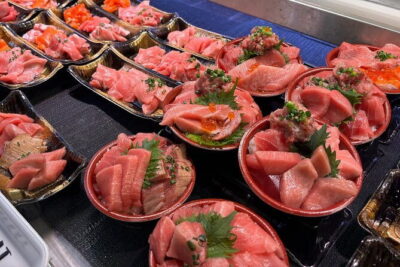
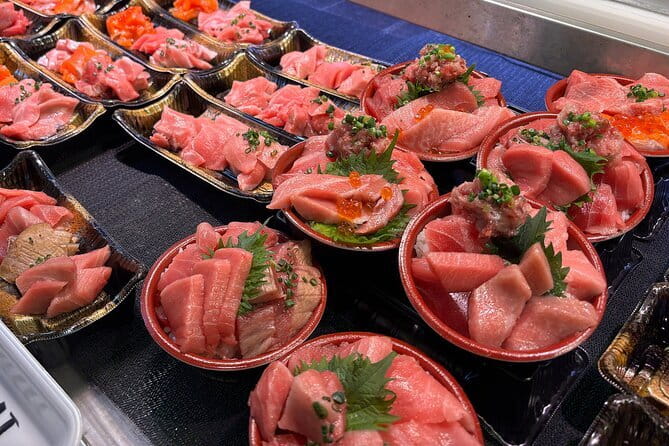
I love the way this tour leans hard into street food flavor. You get tastings of things like fresh tuna, wagyu, and other traditional bites, plus a special wasabi set that the guide helps you use properly so it actually improves what you eat. That small detail makes a big difference.
One possible drawback: the outer market can feel different on Wednesdays, Sundays, and national holidays because about half the shops may be closed. You can still tour and taste, but the lineup of stalls and the day’s energy may not match a typical visit.
Key things you will notice on this tour
- Tsukiji Hongwanji Temple start to set the tone before you hit the market
- Outer Market food tastings focused on what to try and how to order
- Fresh wasabi set added by the guide to sharpen the flavors you taste
- Japanese cooking insights that explain why certain ingredients and preservation methods matter
- Small group feel, and sometimes it can even turn into a more personal experience
- English live guide who helps you read what you are seeing and eating
Tsukiji Hongwanji Temple: the calm warm-up before the market
This tour begins at Tsukiji Hongwanji Temple, also written as Tsukiji Hongan-ji. The first thing I like is that it does not start with food. It starts with a short temple visit where you get a quick sense of the place and what it is doing in the daily rhythm of the area.
You will spend about 20 minutes with a guided stop at the temple, and the tone is gently respectful. In at least one case, the guide walked people through a purification step before entering. Even if you are not trying to memorize the ritual, you will leave with a better sense of how Japanese spaces teach you how to behave, even in a food-focused neighborhood.
Practical note: Tsukiji is an area where you will be walking and standing. That temple stop is a nice reset for your legs, and it also gives you a mental handle on what you will see next. After this, the outer market makes more sense because you are not only chasing snacks. You are watching a culture.
More Food & Drink in Tokyo
- Tokyo: Shinjuku Food Tour (13 Dishes at 4 Local Eateries)
★ 5.0 · 6,603 reviews - Tokyo Tsukiji Fish Market Food and Culture Walking Tour
★ 5.0 · 3,184 reviews - Tokyo: Shinjuku Food Tour (15 Dishes and 4 Eateries)
★ 4.9 · 2,033 reviews
Outer Market route: how the tastings actually work
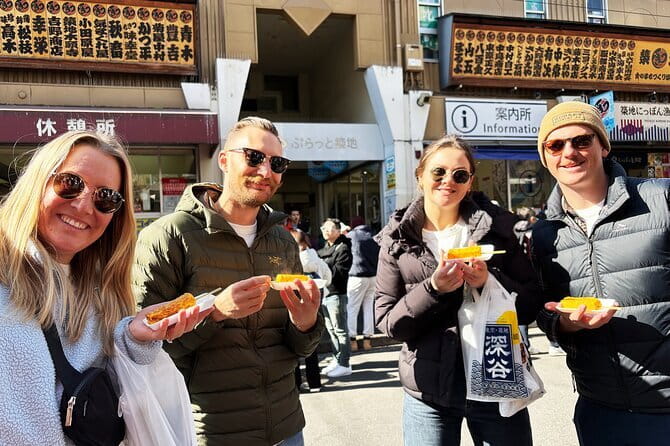
The main portion of the experience happens in the Tsukiji Outer Market. This is where the tour earns its keep: you are not just wandering with a loose suggestion list. A guide helps you move through the area in a way that saves time and helps you hit the right stands.
Expect a first guided stretch, then food tasting, plus time for a food market visit. The tour also includes an additional short guided segment inside the outer market, so it does not feel like you got dropped into a maze and left to figure it out.
What you will taste depends on what stalls are open and what day it is, but the tour is built around Japan’s everyday market favorites. The big categories you should look forward to include:
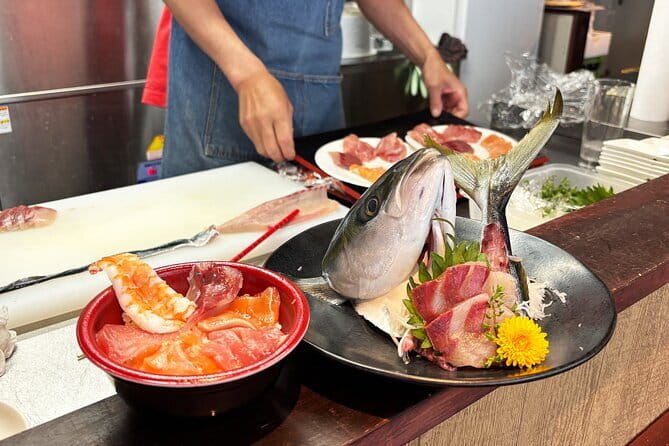
- Fresh tuna tastings in multiple styles
- Wagyu bites, including grilled or skewer style options in some stops
- Other traditional street foods the guide chooses for quality and variety
The consistent theme from the experience details and the strong guide feedback is that tastings are not random. Guides tend to prioritize places that are worth the line and worth your appetite. One traveler described having a guide stand in lines to get the best bites. That is exactly the kind of “quiet service” that you do not get when you self-tour.
Also, the tour is set up for an English live guide experience. That matters because market food can be confusing if you are staring at a menu you cannot read, or if you do not know what to ask for. The guide can help you pick something that makes sense right now, not something you will regret because you guessed.
The special wasabi set: why it changes your bite
One highlight of this tour is the special wasabi set the guide uses as part of the tastings. That might sound like a small add-on, but it is one of the best ways to understand Japanese flavor logic.
Wasabi works because it is not just heat. It is aroma and timing. A guide helps you use it so it improves the dish instead of overpowering it. In the feedback you will see mentions of freshly grated wasabi and extra wasabi touches, which usually means you get a more direct, sharper flavor than pre-made versions.
Here is how you can use the wasabi moment to get more out of the day:
- Pay attention to what you taste before and after wasabi.
- Ask the guide what type of bite you should pair it with.
- Notice whether the wasabi lifts the tuna and wagyu flavors, or whether it changes the texture and finish.
This is one of those “small detail” experiences that makes the food feel educational without turning it into a classroom. You are learning by eating, and you get to compare what your brain expects versus what your mouth actually gets.
Japanese cooking and preservation tips you can spot on the stalls
This tour is not only about what to eat. It is also about why ingredients and methods taste the way they do.
The experience description points to traditional preservation techniques that enhance umami. That means you will hear explanations for why certain seafood is treated a certain way, why particular seasonings show up together, and how Japanese street food often aims for clean, precise flavors rather than heavy sauce.
In practical terms, those cooking insights help you do two things during the market:
- You understand what you are buying, even if you cannot read every label.
- You can choose what to eat again later, after the tour, because you know what to look for.
You will likely also hear about the craftsmanship behind Tsukiji’s food culture. That shows up in how vendors prepare items, how they portion tastings, and how they keep ingredients at their best for service. You do not need to become a seafood scientist. You just need the guide’s framing so you notice the care.
And because the guide is part of the experience, you can ask practical questions on the spot. People mentioned guides who answered cultural questions and helped them identify ingredients and cooking methods. That is exactly the kind of interactive value that makes the tour feel more than a snack stop.
More Market Tours in Tokyo
- Tokyo: Tsukiji Fish Market Food and Walking tour
★ 5.0 · 1,724 reviews - Tokyo: Tsukiji Fish Market Guided Walking Tour
★ 4.9 · 1,397 reviews - Tokyo Sushi Making Class in Tsukiji with Professional Chef
★ 5.0 · 1,177 reviews - Tsukiji Fish Market Guided Tour and Sushi Making with Pro Chef
★ 5.0 · 775 reviews
Temple etiquette plus market hustle: what the guide handles for you
Tsukiji can be tricky even for confident walkers. This is one of those places where the physical flow matters. Crowds, quick vendor decisions, and the “who is ordering what” rhythm can intimidate you if you go alone.
The strongest praise across the experience is about guides who make you comfortable fast. Guides are described as attentive to preferences, good at English explanations, and skilled at getting you into the right spots. You will also see comments about how guides help people try foods they would not usually pick, without turning it into a pressure tactic.
For you, that usually means:
- Less time guessing what to buy
- Less time stuck in lines when the guide already knows where to go
- Better odds of tasting a balanced range of items, not just one kind of fish over and over
Even logistics can be handled better than you might expect. One person noted that meeting place confusion got solved when the guide called to confirm. That tells me the guides are used to smoothing out real-world issues, which matters when you are in a dense area with multiple landmarks.
Pricing for a 2-hour Tokyo food experience: is $22 worth it?
Let’s talk value in plain terms. This tour is $22 per person and runs about 2 hours. The price is not covering a full seafood feast. Instead, it is paying for guide time, planning, and the temple plus outer market coordination, including tastings.
So what does that mean for value?
You are mostly paying for:
- A guide who can steer you to strong vendors
- Help translating market choices into good bites
- A structure that keeps you moving and tasting within the time window
- Extra moments like the special wasabi set and the cooking explanations
If you self-tour, you can absolutely eat at Tsukiji. But you will spend more time:
- figuring out where to go,
- deciding what is actually good,
- and dealing with queueing without local strategy.
For many people, paying $22 is a shortcut to the “best way to start” Tsukiji. One comment highlighted that the tour helped people know where to begin and gave confidence to try new foods. That is the kind of value that sticks for the rest of your Tokyo trip, because you learn how to read the area.
Also, small group availability helps. Even if you are not in a private setup, a small group tends to mean you get more interaction, not just a fast walk-by.
Timing matters: what changes on Wednesdays, Sundays, and holidays
The tour includes a heads-up: on Wednesdays, Sundays, and national holidays, about half of the shops in the Tsukiji Outer Market may be closed. Tours still happen, but the experience can differ from usual.
Here is what that means for your planning:
- You might see fewer tasting options in certain lanes.
- The guide might adjust the route to the open stalls.
- You may not get the same variety as a weekday tour.
If your schedule is flexible, a weekday often gives you more storefront options. If your only chance is one of those days, do not skip the tour just because it is not “perfect.” You can still get a guided introduction and taste testing, and the temple stop remains a consistent highlight.
Who should book this Tsukiji street food culture walk
This is a great fit if you want your Tokyo food to be less guesswork and more guided eating. It is especially good for:
- People who want fresh tuna and wagyu tastings without hunting for the right stands
- First-time visitors who need help figuring out how to move through Tsukiji
- Food lovers who like context, not just consumption
- Anyone who values an English guide and a more intimate pace
You might consider skipping or pairing differently if:
- You are visiting specifically for a very specific stall list on a holiday or Sunday and you need that exact lineup.
- You want a totally independent, wander-anywhere style of market visit where you call every shot.
Also, if mobility is a concern, this tour is listed as wheelchair accessible, which is a real advantage in a market area where sidewalks and crowds can get tight.
Should you book this Tsukiji Fish Market street food tour?
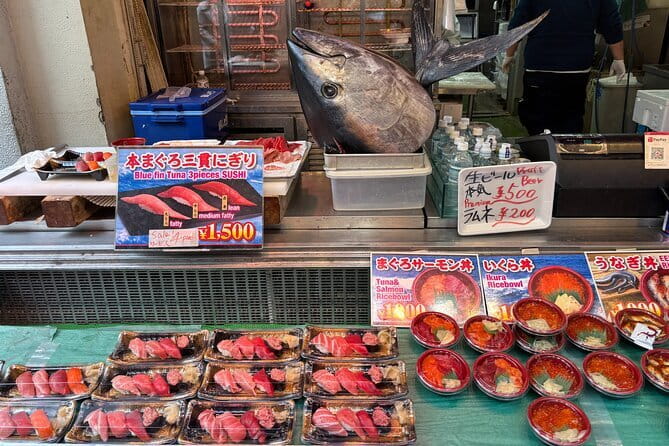
Book it if you want Tsukiji to feel understandable in two hours. For the $22 price, what you are really buying is a guide’s sorting power, a structured route through the outer market, and tastings that are set up to teach you what to eat and why.
Skip it if you are the type who prefers to roam completely unassisted and you already know exactly which stalls you want to hit. In that case, you can build your own day.
My quick recommendation: if you are excited about street food culture, fresh seafood tastings, and using a guide to avoid dead ends, this tour is one of the most practical ways to start Tsukiji in Tokyo.
More Walking Tours in Tokyo
- Tokyo: Imperial Palace and Shogun Historical Walking Tour
★ 5.0 · 2,251 reviews - Tokyo: Shinjuku Local Bar and Izakaya Guided Walking Tour
★ 4.9 · 1,794 reviews - Tokyo: Asakusa Walking Tour with Sensoji Temple Visit
★ 4.8 · 1,583 reviews - Tokyo Castle & Imperial PalaceーShogun Walking Tour
★ 4.7 · 1,068 reviews
More Shopping Tours in Tokyo
- Tokyo: Tsukiji Fish Market Food and Culture Walking Tour
★ 4.7 · 757 reviews - Tsukiji Fish Market: Street Food & Culture Walking Tour
★ 5.0 · 669 reviews - Tsukiji Fish Market Small-Group Food Walking Tour
★ 5.0 · 621 reviews - Tokyo: Tsukiji Fish Market Sushi Making Class with Pro Chef
★ 4.9 · 506 reviews
Latest write-ups near Tokyo
- Tokyo Customized Private Tour: See Top Attractions in 1 Day★ 4.8 · 67 reviews
- From Tokyo: Top 5 Scenic Spots of Mount Fuji Full-Day Tour★ 4.5 · 67 reviews
- Tokyo: Shinjuku Izakaya and Golden Gai Bar Hopping Tour (2h)★ 4.9 · 67 reviews
- Traditional Japanese Music ZAKURO SHOW in Tokyo★ 5.0 · 67 reviews
- Tsukiji: Unlimited Sake Tasting Experience★ 4.9 · 67 reviews
- Tokyo: Not a show- a professional sumo practice with experts★ 4.9 · 67 reviews
- Samurai Ninja Museum Asakusa: Kid-Friendly Ninja Training★ 4.7 · 67 reviews
- Private Harajuku Omotesando Architecture Walking Tour★ 5.0 · 67 reviews
Market Tours, compared.
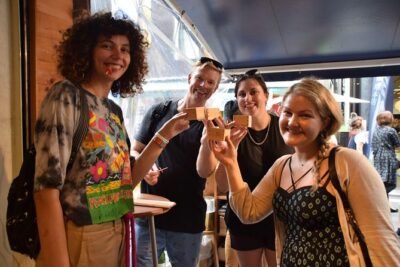
Tokyo Tsukiji Fish Market Food and Culture Walking Tour
Read our review →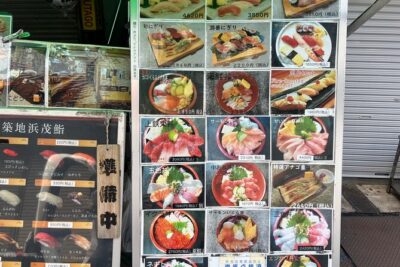
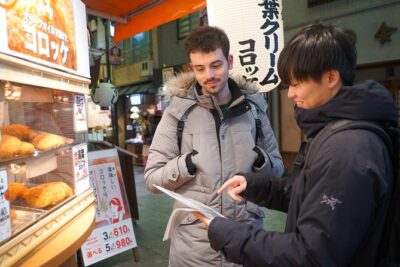
Nishiki Market Brunch Walking Tour (7 Tastings + Brunch)
Read our review →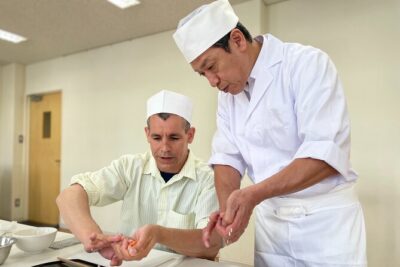
Tokyo Sushi Making Class in Tsukiji with Professional Chef
Read our review →
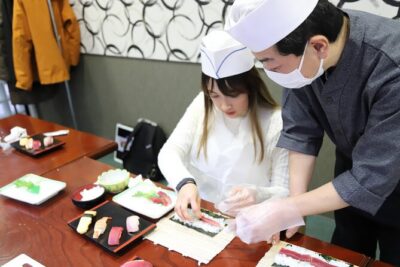
Tsukiji Fish Market Guided Tour and Sushi Making with Pro Chef
Read our review →