
Reviewed · KINTSUGI WORKSHOPS
Kyoto: Kintsugi Jewelry Workshop with Natural Stones
Kintsugi is the kind of Japanese craft where damage does not get erased, it gets highlighted. Doing it for jewelry, right near Fushimi Inari Taisha, makes the whole idea feel personal and portable, in the best way. You work in a 100-year-old Kyoto townhouse, so the mood is calm from the first minute.
I love two things most. First, you get hands-on help while choosing your pieces, from pottery shards to colorful stones, shells, and pearls. Second, the class explains the meaning behind kintsugi, including the idea of wabi-sabi, not just the steps.
One drawback to plan around: this workshop is not suitable for wheelchair users, and the approach is walk-in, with no nearby vehicle access.
Key highlights you can plan around
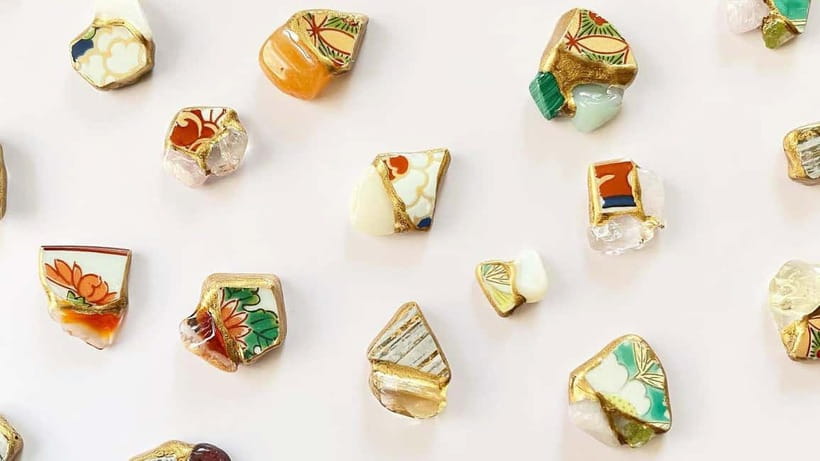
- Make wearable kintsugi art using synthetic lacquer and gold powder lines
- Choose shards by pottery style, including Arita, Karatsu, Oribe, Kyoto, Shigaraki, and Hagi
- Pick your materials mix with natural stones, shells, and pearls (plus stained glass)
- Select the jewelry type you want, from earrings and rings to brooches, tie pins, and cufflinks
- Work in a small group (up to 10) with step-by-step guidance from the instructor
- Relax in a historic townhouse setting, just a few minutes from Fushimi Inari Taisha
Kintsugi jewelry in a 100-year-old Kyoto townhouse near Fushimi Inari Taisha
This workshop works because it gives you two wins at once: a meaningful craft and a great break from Kyoto crowds. You are in Honshu, in Kyoto, and the setting matters. The class happens in a traditional one-story townhouse that is about a 3-minute walk from Fushimi Inari Taisha, and you meet at a location reachable on foot from the Keihan Ryukoku Daimae-Fukakusa Station or JR Inari Station (about a 5-minute walk).
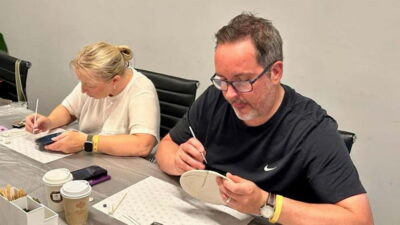
Inside, the vibe is quiet and focused. You are not just watching someone create, you are building your own piece, in a space that feels like it belongs to Kyoto’s older rhythms. Several people specifically praised the calm pace and the way the instructor guided the process without rushing.
The format also keeps the meaning close. Kintsugi is often explained as a way of repairing ceramics so the repair becomes part of the object’s story. Turn that into jewelry, and suddenly the gold seams are not just decorative, they are symbolic.
More Kintsugi Workshops in Kyoto:
- Kintsugi Experience: Art of Golden Joinery in Tokyo
★ 5.0 · 467 reviews - Authentic Pure Gold Kintsugi Workshop with Master Taku in Tokyo
★ 5.0 · 217 reviews - Kintsugi Workshop in Naha, Okinawa
★ 5.0 · 79 reviews
What you make: gold seams on pottery shards, turned into jewelry you can wear
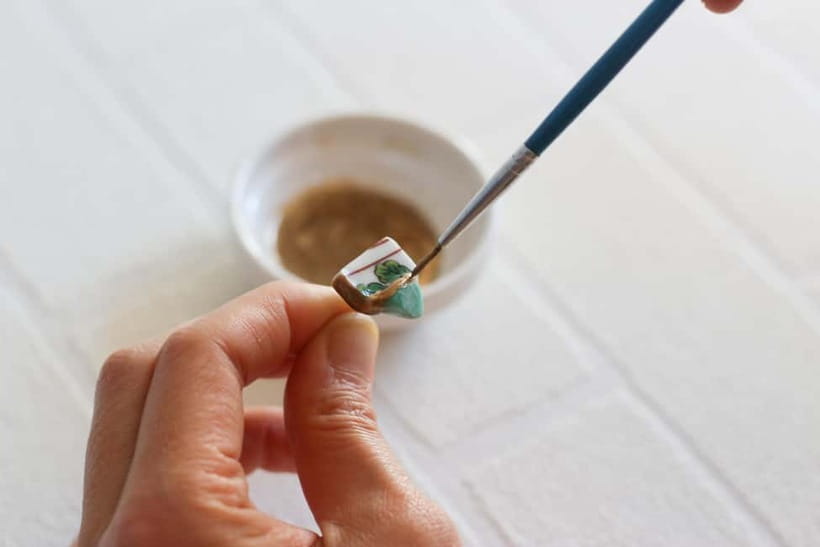
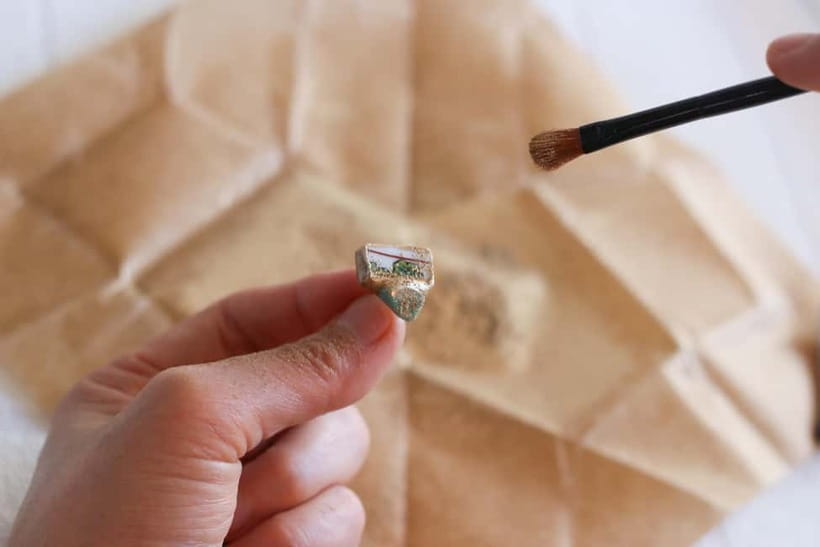
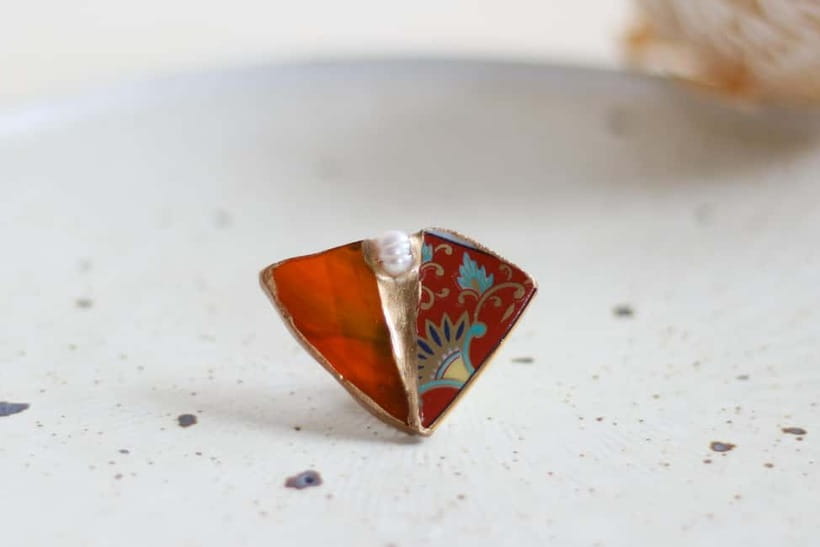
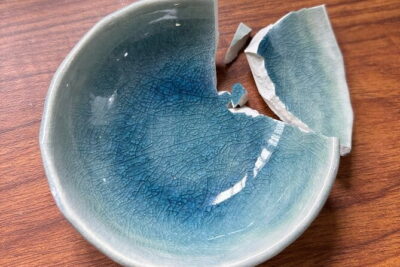
The core idea is simple: you use kintsugi techniques to connect broken pottery pieces, then repurpose that beautiful repaired look into jewelry. You use synthetic lacquer and gold powder to create the signature gold lines on top of the pottery fragments.
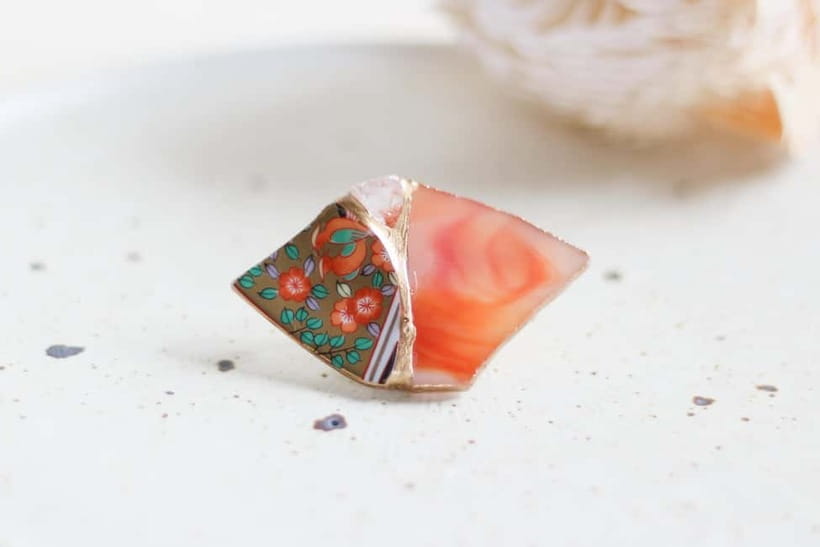
What makes this different from a typical souvenir craft is that you’re not just gluing gems to metal. You are working with upcycled pottery shards, then combining them with stones and other materials to create something one-of-a-kind. The result is jewelry that has texture, color, and a visible repair aesthetic. You can actually see the meaning.
You also have real control over your final style. The workshop includes choices like earrings and brooches, and it also offers other accessory types. The idea is that you walk out with jewelry that fits your taste, not just something that looks “fine” as a travel keepsake.
The hands-on flow: learn kintsugi meaning, then design and finish your piece
Here is what the session feels like from start to finish, based on how the workshop is described and how it is taught.
You begin with an introduction to kintsugi and why it matters in Japanese culture. You learn the historical significance of the technique, and the instructor connects it to the concept of wabi-sabi, the acceptance of imperfection and the beauty of time and wear.
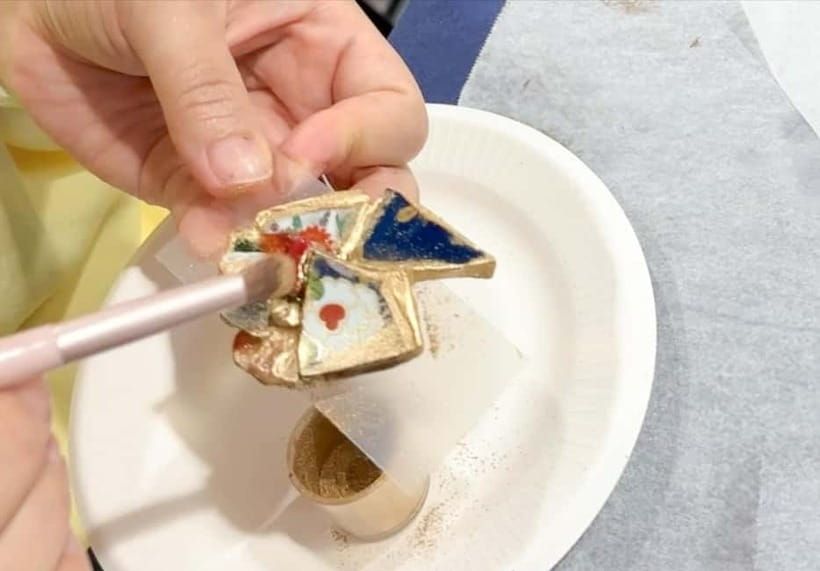
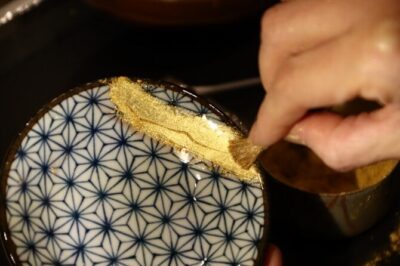
Then comes the practical part. The instructor demonstrates the steps for using synthetic lacquer and gold powder. This is the technical heart of kintsugi, the part where the gold lines create that distinct repaired look.
After you understand the process, you shift into design mode. You choose pottery fragments (including multiple regional pottery types) and then select natural stones, stained glass, shells, and pearls to pair with them. This is where the workshop becomes relaxing. People liked having plenty of time to decide, and the instruction style is described as patient and unhurried.
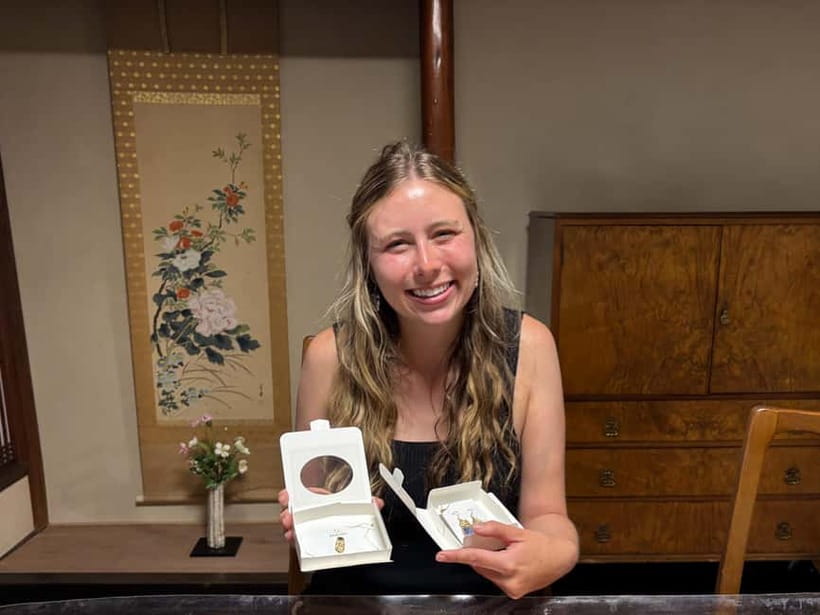
Once your design is set, you create your jewelry using the kintsugi method. You finish the accessory during the class, and you can take it home the same day. That same-day takeaway is a big practical plus, especially in Kyoto, where plans change and the weather can shift.
Pottery types and material options that make your piece truly unique
Your choices are a big part of the value here. Instead of a single template, you build from a selection of broken ceramics plus a menu of extra materials.
For pottery shards, the workshop includes options such as:
- Arita
- Karatsu
- Oribe
- Kyoto
- Shigaraki
- Hagi
Those names are not random. They signal different regional traditions and styles of Japanese ceramics. Even if you do not know the details ahead of time, you get a chance to hear what the varieties represent and how they affect the look of your design. Several people specifically said they learned about pottery origins and how the upcycled fragments carry character.
You can also add materials like:
- stained glass
- natural stones
- shells and pearls
This matters because it changes the personality of your jewelry. Some combinations feel more modern and colorful, others feel more subtle and quiet. Since each pottery shard is unique, your gold seam will land in a slightly different way. That is the point. The workshop is built to produce one-of-a-kind results.
You also get to choose the jewelry item style. Options include earrings, rings, necklaces, brooches, tie pins, cufflinks, and more. If you want to wear it often, earrings and rings are obvious picks. If you prefer something more dramatic and conversation-starting, brooches are a great choice.
A change of pace from Kyoto:
- PERFECT KYOTO 1-Day Bus Tour
★ 5.0 · 13,518 reviews - Kyoto: Fushimi Inari, Kinkakuji, Bamboo Grove 1 Day Bus Tour
★ 4.8 · 4,316 reviews - Kyoto: Tea Ceremony in a Traditional Tea House in Kiyomizu
★ 4.9 · 3,519 reviews - Kyoto Geisha Walking Tour: Gion District & Hidden Gems
★ 4.7 · 3,273 reviews
Relaxed, small-group instruction, led by a patient host
A small group makes a difference in crafts. Here the class is limited to 10 participants, so you are not competing for attention. You can ask questions, get corrections, and slow down when you want to.
English instruction is included, and Japanese is also available from the instructor. People repeatedly praised the guidance style, describing the host as patient and calm, with step-by-step help.
One review detail that stood out: the instructor was willing to spend more time than the set allotment to help people finish thoughtfully, without pressuring them. That is not guaranteed in every class, but it lines up with the overall tone of the workshop: careful, unhurried, and supportive.
This is also a workshop where the pace can be part of the reward. If you’ve been walking Kyoto all day, this is a good switch. Your hands do the work, your mind slows down, and you leave with something you made, not something you just bought.
Price and value: what $106 covers and why it feels fair
At $106 per person for 150 minutes, the price makes sense if you think about what’s included. You are not paying only for instruction. You are also paying for:
- materials, including synthetic lacquer and gold powder
- pottery shards and decorative elements like stones, shells, and pearls
- assistance from the instructor
- a structured session in a historic setting
In other words, you’re covering the cost of consumables and the setup of a guided craft. If you were to buy the materials separately and try to replicate this at home, it would quickly become more expensive and way more frustrating.
Another value point: the workshop is designed so you can walk out with more than a single item. Some people specifically said they made two pieces of jewelry at this price. Even if your pace leads to one perfect item instead of two, you are still getting a full 150-minute session with guidance and enough time to plan a real design.
So, the best way to think of the cost is simple: you’re paying for a guided way to make meaningful kintsugi jewelry without guessing what to buy, how to match materials, or how to get the gold line effect right.
Getting there without stress: stations, a narrow alley, and no parking
Logistics are part of the experience here, so plan for a short walk.
The meeting point is about a 5-minute walk from either:
- Keihan Ryukoku Daimae-Fukakusa Station
- JR Inari Station
The atelier itself is near Fushimi Inari Taisha, about a 3-minute walk away.
Two practical warnings:
- There is no parking available at the atelier.
- The street in front of the atelier is a narrow alley that is unsuitable for vehicles.
So I recommend arriving on foot or by public transit. This is one of those Kyoto areas where getting close is not the same as being able to drive close. Plan to park elsewhere if you are driving, and then walk the last bit.
Also look for the traditional one-story house feel, with a white curtain hanging at the entrance. The photo map you receive helps, so use it rather than relying only on memory.
Who should book this workshop, and who might skip it
This workshop is a strong fit if you want a Kyoto activity that is:
- calm and hands-on
- creative, but supported by guidance
- meaningful, with context about kintsugi and wabi-sabi
- rewarding even on an indoor day
It’s especially good for people who like craft with a story. The gold repair aesthetic is symbolic, and you get to connect that meaning to your own design choices.
It may not be ideal if:
- you need wheelchair access (this one is not suitable)
- you prefer high-energy sightseeing over quiet making
If you are traveling with time pressure, the 150-minute duration is long enough to make something you actually like, but not so long that it ruins a day of Kyoto temple visits. It also works well as a counterbalance to the day’s walking, especially when you want a break.
Should you book this Kyoto kintsugi jewelry workshop?
I’d book it if you want a memorable Kyoto souvenir that you can wear and actually think about. The combination of upcycled pottery shards, gold powder kintsugi technique, and natural stone choices makes the final result feel personal. Add the small-group setting and patient instruction, and you get a craft experience that does not feel rushed.
Skip it if wheelchair access is required, or if you know you dislike slow, detail-based work. Also keep the no-parking setup in mind. This is a walk-to place.
If you do book, I suggest you go with an idea for what you want to wear, not just what you want to make. Then the material choices, like the pottery types and the stone combinations, turn into real design decisions rather than last-minute guessing.
FAQ
How long is the Kyoto kintsugi jewelry workshop?
The workshop lasts 150 minutes.
How much does it cost?
The price is $106 per person.
What is included in the workshop fee?
It includes the kintsugi jewelry making workshop, materials such as synthetic lacquer and gold powder, a choice of pottery shards and natural stones and pearls, and assistance from an instructor.
Are there language options?
Yes, instruction is available in English and Japanese.
How many people are in the group?
The workshop is a small group, limited to 10 participants.
Can I take my jewelry home the same day?
Yes, you can take your creations home on the same day.
What materials are used to create the kintsugi gold effect?
You use synthetic lacquer and gold powder, along with selected pottery shards and decorative materials like natural stones, shells, and pearls.
Is the workshop designed to help with allergies?
The workshop uses synthetic lacquer to avoid allergic reactions.
Where do I meet, and is parking available?
Meet about a 5-minute walk from Keihan Ryukoku Daimae-Fukakusa Station or JR Inari Station. There is no parking available at the atelier, and the street in front is a narrow alley unsuitable for vehicles.
Is the workshop wheelchair accessible?
No, it is not suitable for wheelchair users.
Latest write-ups near Kyoto
- Kyoto Private Tour Full Day with Local Guide&Nara Option(PerGroup★ 5.0 · 20 reviews
- Sacred Pathways: Discover the Philosopher’s Path of Kyoto★ 4.9 · 20 reviews
- Kyoto UNESCO World Heritage Site Private Tour with a Premium Van★ 5.0 · 20 reviews
- Hammer Pattering Experience of Ring★ 5.0 · 20 reviews
- KYOTO: Private Tea Ceremony in Hidden Townhouse (Kid-Friendly)★ 5.0 · 20 reviews
- Sushi or Traditional Japanese Cuisine in a Kyoto Home with Emika★ 5.0 · 20 reviews
- The Kyoto VIP Experience!★ 5.0 · 20 reviews
- Kyoto Customized Private Tour: See Top Attractions in 1 Day★ 4.7 · 20 reviews
Kintsugi Workshops, compared.
Kintsugi Experience: Art of Golden Joinery in Tokyo
Read our review →
Authentic Pure Gold Kintsugi Workshop with Master Taku in Tokyo
Read our review →
1.5〜2 Hours Traditional Kintsugi Work Shop in Namba Osaka
Read our review →
Kintsugi Workshop Class in Shibuya, Tokyo with mon cadeau
Read our review →
Kintsugi Experience in Naha, Okinawa – Art from Broken Pieces!
Read our review →Browse the lists this tour appears in