
Reviewed · WORKSHOPS
Tokyo: Gameboy Mod Workshop at Akihabara
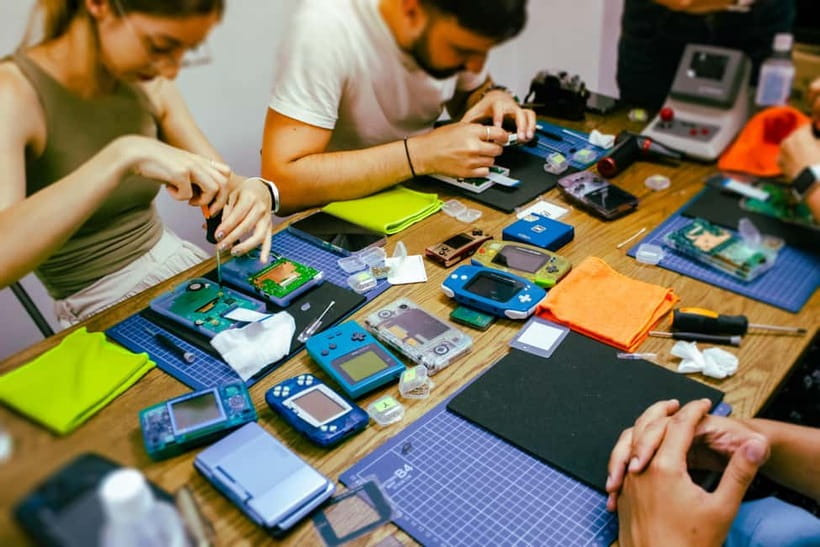
This Tokyo Akihabara workshop is interesting because you end with a real, working, personalized Game Boy, not a photo-op souvenir. I love the pick-your-own hardware approach, and I also like that you do the real work, taking it apart and rebuilding it. One drawback to plan for up front: the workshop is on the second floor of Wakita Building with no elevators or escalators.
For $360 for 2 hours in a small group, you walk out with a customized DMG-01 you can actually play. And because the shop is run by Game Boy fans, the experience feels more like a hands-on club meet than a classroom. Staff members you might hear around the room include Ro, Gabi, Franz, and Shio San.
Quick highlights you will care about
- Your own device to build: you get to pick and assemble your Game Boy from provided parts
- Color and button choices: customize shell, buttons, and other visible parts
- Hands-on take-apart rebuild: you learn by doing, with staff close by
- A short tech and console history lesson: you connect what you build to how handheld gaming evolved
- A fun group size: limited to small groups, capped at 4 participants
- Play-ready end result: you leave with a functioning console plus game shopping time
Walking Into Akihabara’s Game Boy Mod Workshop, Where the Fun Turns Real
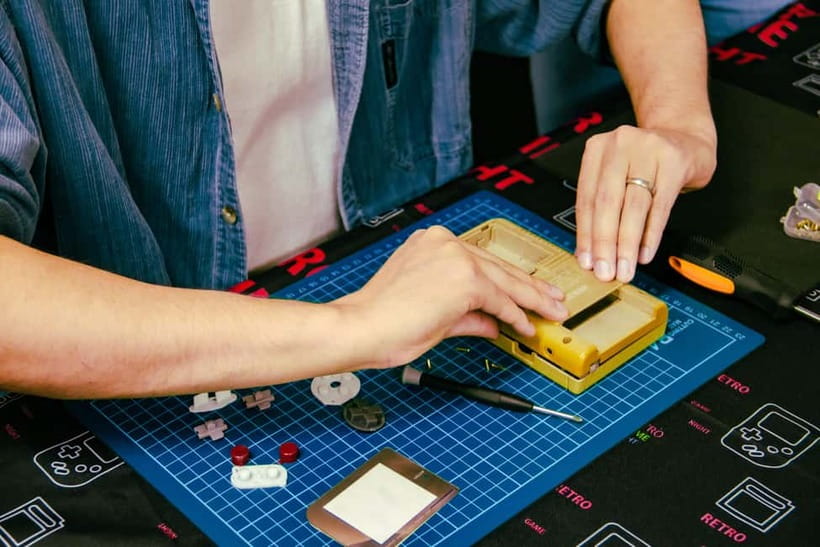
Akihabara has plenty of places that sell retro gear. This is different. Instead of hunting through shelves, you sit down with the parts, tools, and guidance to make your own Game Boy, then you keep it.
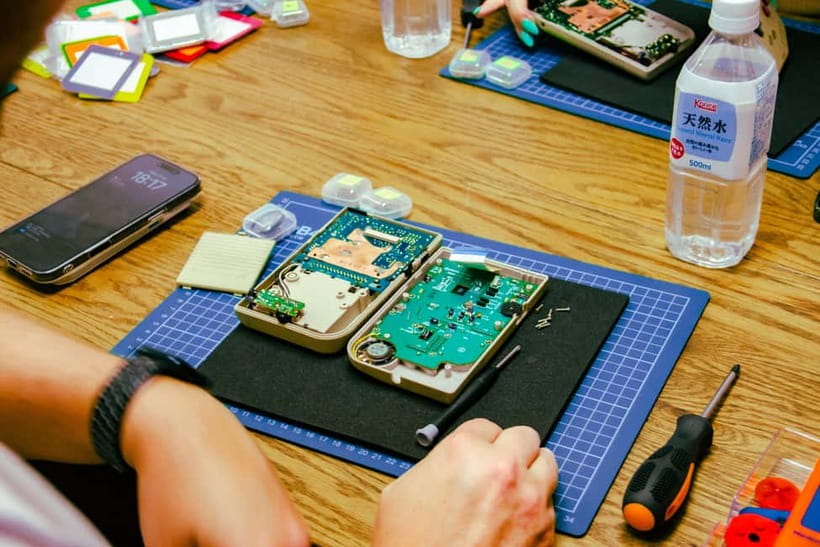
What I like most is that the workshop treats the build like the main event. You do more than decorate a case. You work through the internals, learn how it comes apart, then rebuild it so it powers up and plays.
And because the group is small, you are not stuck waiting for help. When something feels fiddly, a Gameboy Master or instructor can spot the issue fast. In one example, a solo builder mentioned that when there was a snag, staff stepped in quickly. That is exactly the kind of support that makes a workshop like this worth doing, especially if you are not a tech hobbyist.
More Anime & Pop Culture Tours in Tokyo:
- Official Street Go-Kart Tour – Akihabara
★ 5.0 · 1,578 reviews - Tokyo Go Kart: Asakusa, Skytree, and Akihabara **IDP MUST**
★ 5.0 · 988 reviews - Tokyo Studio Ghibli Museum and Ghibli Film Appreciation Tour
★ 4.5 · 421 reviews
Finding Wakita Building, Second Floor Check-in That Matters
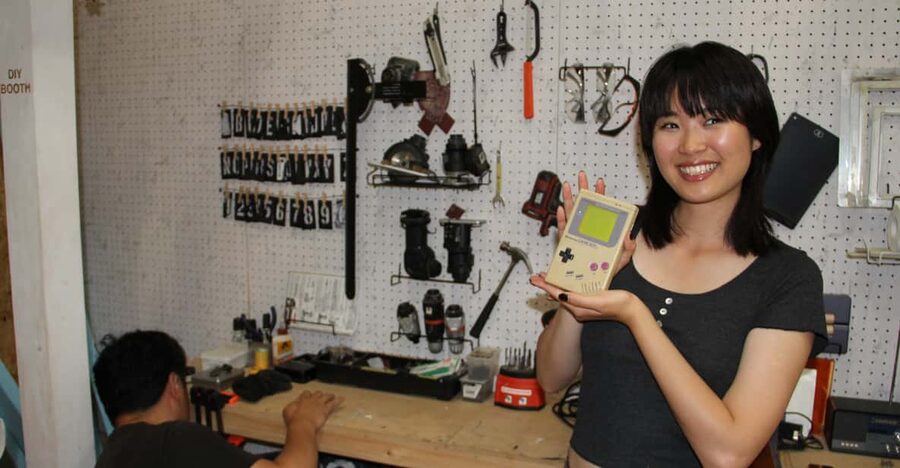
You meet on the second floor of Wakita Building in Akihabara. That sounds simple until you show up with luggage, energy levels, and no elevator.
If stairs are a problem for you, plan ahead. The activity is not wheelchair accessible, and there are no elevators or escalators, because it is located on that second floor. For everyone else, just give yourself a few extra minutes to locate the exact room inside Wakita Building.
Also, arrive ready to focus. This is a small-group, hands-on session. Once you are seated, the pace is quick enough that you want to be present, not still figuring out where you are supposed to stand.
The Start: History of Handheld Nintendo Consoles and a Tech Demo That Gets You Up to Speed
Most of the room energy before you build is spent on context. You get a mini lesson on the history and influence of the Game Boy and the wider handheld Nintendo world, and it is designed to make the hardware make sense.
A bunch of builders specifically called out that staff make the history lesson feel digestible, not like a lecture. People also mentioned they enjoyed seeing different Game Boy versions and getting hands-on demos of console parts, so you understand what you are looking at before you start taking anything apart.
If you like nerding out, this part pays off. You are not just assembling random pieces. You are learning why specific design choices happened, how handheld gaming evolved, and how that translates into what you are about to customize.
Names you might recognize from participant stories include Ro and Gabi, and other staff like Franz and Shio San. The common theme is the same, they talk with real enthusiasm and answer questions in English and Japanese.
Picking Your Dream Game Boy Shell, Buttons, and Parts
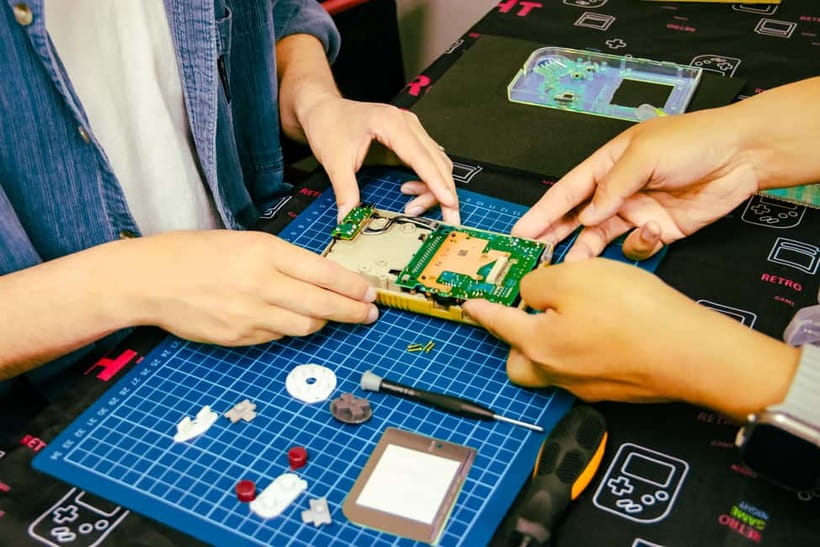
This is where the workshop becomes personal. You are not assigned a random unit and told to follow along blindly. You get to pick your very own device and then customize it with choices for colors, buttons, and provided parts.
In practice, this means you can shape the look to match your tastes. Some people end up going for something classic and clean. Others go bolder, mixing colors and selecting button and screen-area parts that feel more custom than store-bought.
One reason this matters is psychological. If you enjoy the decision-making, the building feels like your project, not a task. Reviews repeatedly highlight that participants felt they had enough choice and enough time to think, then commit to their final build.
You also get to see that the workshop has options for different kinds of preferences. A participant mentioned they could make a special color variant. Another described choosing among a large assortment of parts and supporting materials based on their interests. In other words, you are not stuck with a single preset.
A change of pace from Tokyo:
- Mt Fuji and Hakone 1-Day Bus Tour Return by Bullet Train
★ 5.0 · 26,383 reviews - 1-Day Tokyo Bus Tour
★ 5.0 · 14,250 reviews - Tokyo: TOKYO SKYTREE® Admission ticket
★ 4.5 · 11,192 reviews - Tokyo: teamLab Planets TOKYO Digital Art Museum Entry Ticket
★ 4.6 · 9,779 reviews
The Main Event: Taking Apart and Rebuilding a DMG-01
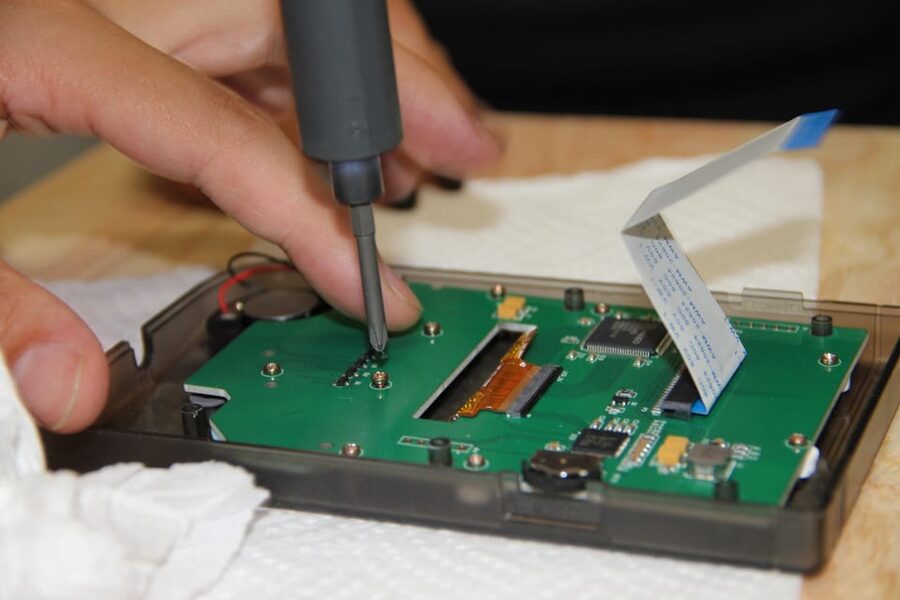
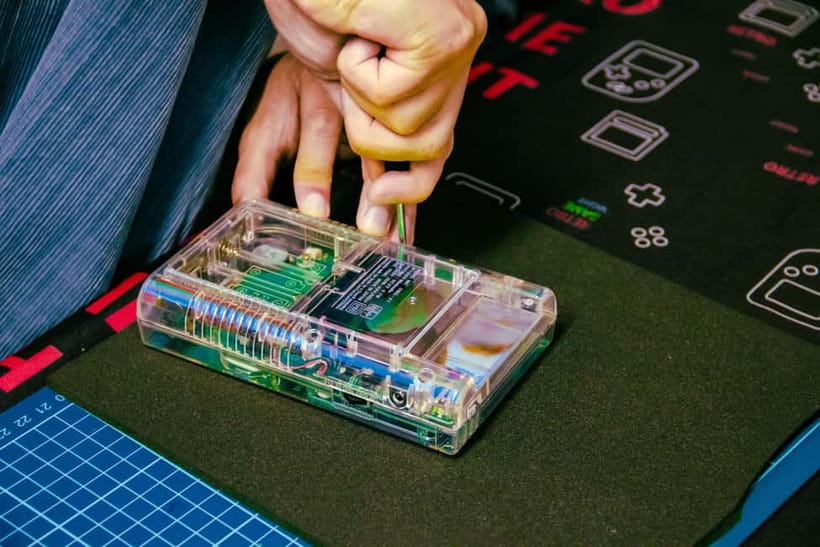
Now you get your hands on it. The workshop focuses on building a vintage DMG-01 style Game Boy using provided components. You take it apart, rebuild it, and put the customization choices into action.
This is where the small group size helps a lot. With only up to 4 participants, the instructors can check your progress, help with delicate steps, and keep the session flowing. Several participants highlighted that nothing felt rushed and that staff were patient while they built.
What you learn here is not just mechanical. You learn the rhythm of troubleshooting. If a connector is not seated right, you notice it. If something feels off, you ask. That is what turns a souvenir into a skill.
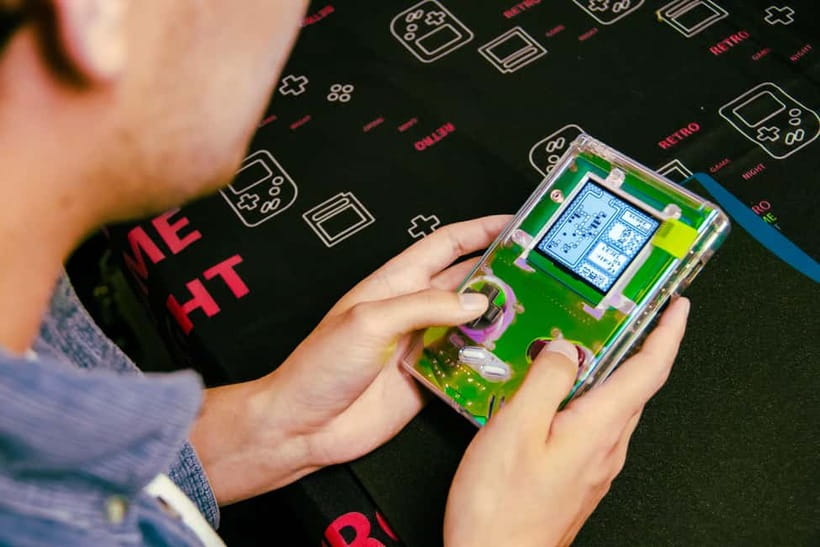
Also, the end goal is not a display model. The point is to leave with a fully functioning Game Boy you can enjoy immediately. Some builders mentioned modern upgrades like a backlit screen and other improvements. Even if you are only interested in the nostalgia, those practical upgrades make a big difference for actually playing.
And yes, it still feels like a retro project. You get that satisfying moment where you close it up and power it on, knowing you did the work. For plenty of people, that is the highlight, and they come away feeling proud.
What Happens After You Finish: Playing, Shopping for Games, and Taking It Home
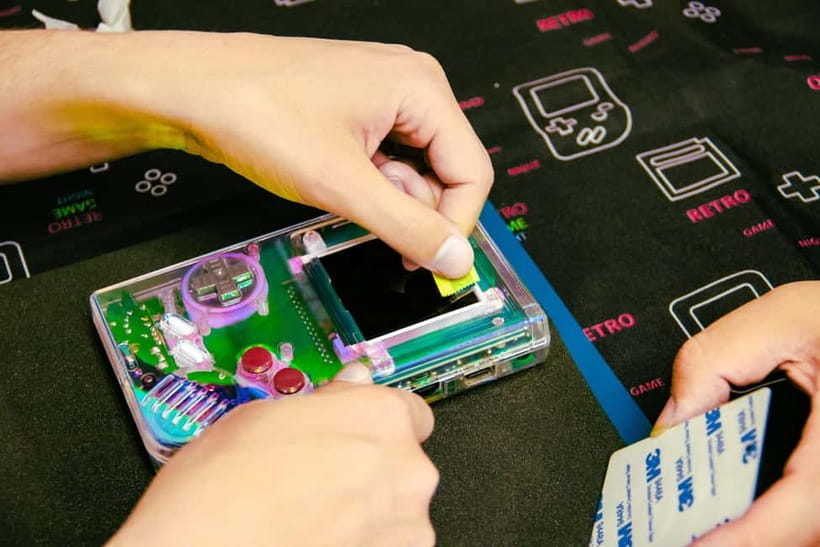
Once the build is complete, the workshop shifts from construction mode to play mode. Many participants noted that after assembling their Game Boy, they were able to buy retro games to go with it, rather than needing to track down titles on your own around the city.
One review specifically described being able to choose a game priced at 1000 yen, and that you can purchase additional games if you want. Even if that exact deal varies session to session, the important takeaway is consistent: you will have access to a selection of games you can try and bring home.
This is a smart value feature. In Akihabara, games can be pricey, and retro market pricing varies wildly depending on condition and rarity. Several participants compared pricing favorably versus other stores, saying it was better than what they saw elsewhere, like Super Potato.
It is also a great way to leave the workshop with an immediate reason to power on the console. A custom Game Boy looks cool, but it hits different when you start playing right away with a title you picked on the spot.
Price and Value: Is $360 for 2 Hours in Akihabara Fair?
$360 is not a budget price. If you are trying to do the cheapest thing in Tokyo, this is not it.
But if you think about what is included, the value story gets more reasonable. You are paying for a hands-on build of a working vintage-style console, guided support in a small group, provided parts, and the staff time it takes to run a technical workshop safely and repeatedly for tiny groups.
A few reviews also point out that it is a fair deal given the effort involved in sourcing enough retro hardware to keep the workshop running twice a day. That is the kind of cost you do not see at a typical souvenir shop.
So who is this $360 best for?
- People who want a real custom souvenir, not just a purchased object
- People who enjoy tech projects, even if you are a beginner
- Anyone who wants a playable Game Boy to take home, with modern usability improvements
If you are purely craving nostalgia with zero interest in tinkering, you might feel the price harder. But if you like the idea of selecting colors, rebuilding a DMG-01, and walking out with something you can use, the value is easier to justify.
Who This Workshop Suits Best, From Solo Builders to Nintendo Fans
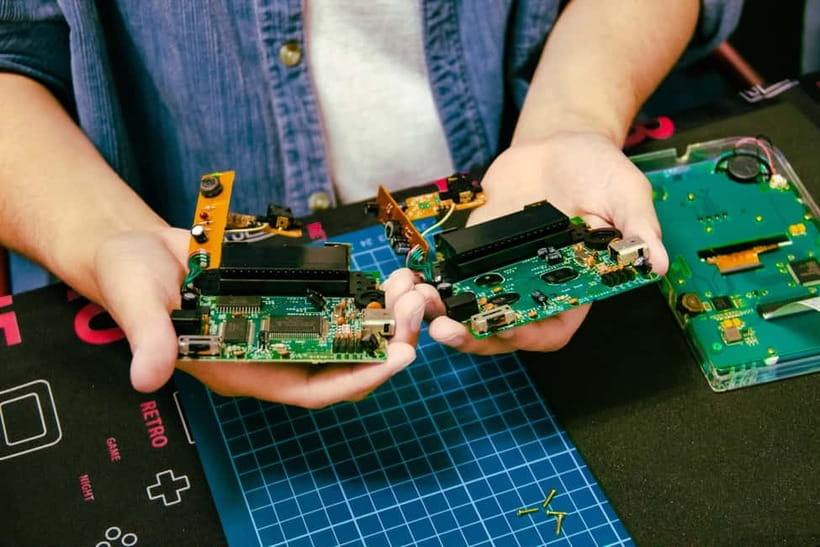
This experience works well for multiple traveler types.
If you are traveling solo, it still feels social because the staff actively support you and you are not stuck in a big crowd. A solo participant mentioned the process went smoothly and that help was quick when needed.
If you are traveling with a friend or partner, both can get fully involved. Couples and small groups are a natural fit because the activity is limited to a maximum of 4 participants, so you will not be separated into random lines.
It also suits families, with at least one parent describing a great experience for a 14-year-old daughter. That said, this is still a technical build, so kids who are patient with small steps and instructions will enjoy it more.
And if you are a true Nintendo and handheld fan, this is the kind of activity you will remember for years. The reason is simple. You do not just consume handheld gaming history. You create a piece of it.
Things to Consider Before You Book
Before you book, here are the practical points that can make or break your day.
First, the second floor location means stairs. If you need elevator access, you should know the workshop does not offer wheelchair accessibility.
Second, you are paying for an expert-led build. That means you should show up ready to participate. If you hate hands-on tasks or you want to mostly watch, you might be happier with a different Akihabara activity.
Third, the session lasts 2 hours. It is enough time to learn and build, but it is not a slow hobby weekend. If you get impatient, focus on asking questions early and taking your time during the steps you feel unsure about.
Should You Book the Akihabara Game Boy Mod Workshop?
I recommend booking if you want a Tokyo souvenir with real emotional value. A custom Game Boy is not just cute, it is personal, functional, and built by your own hands.
I would skip it if you are looking for the lowest-cost activity, or if stairs are a dealbreaker. Also skip if your idea of fun is browsing only, because you will be doing a real take-apart and rebuild.
If you do book, I suggest you go in with a simple goal: pick the look you truly want, pay attention during the history and tech demo, and let the staff like Ro, Gabi, Franz, and Shio San guide you through any tricky moments. Then you get the best payoff, you leave Akihabara with a working Game Boy that still feels like yours when the novelty wears off.
FAQ
What is the meeting point for the Tokyo Gameboy mod workshop in Akihabara?
The meeting point is on the second floor of Wakita Building. You should follow the provided address directions to find the workshop there.
What Game Boy will I build, and what can I customize?
You will build a vintage DMG-01 Game Boy using provided parts. You can personalize the device with options that include changing the screen, buttons, and colors, plus other customization choices like the clamshell look.
How long is the workshop?
The duration is 2 hours.
How many people are in the group?
The workshop is a small group limited to 4 participants.
What languages are used during the workshop?
The instructor and staff provide instruction in English and Japanese.
Is the workshop wheelchair accessible?
No. The workshop is on the second floor without elevators or escalators.
How much does it cost, and are there cancellation options?
The price is $360 per person. You can cancel up to 24 hours in advance for a full refund, and there is also an option to reserve now and pay later.
Latest write-ups near Tokyo
- Tokyo Customized Private Tour: See Top Attractions in 1 Day★ 4.8 · 67 reviews
- From Tokyo: Top 5 Scenic Spots of Mount Fuji Full-Day Tour★ 4.5 · 67 reviews
- Tokyo: Shinjuku Izakaya and Golden Gai Bar Hopping Tour (2h)★ 4.9 · 67 reviews
- Traditional Japanese Music ZAKURO SHOW in Tokyo★ 5.0 · 67 reviews
- Tsukiji: Unlimited Sake Tasting Experience★ 4.9 · 67 reviews
- Tokyo: Not a show- a professional sumo practice with experts★ 4.9 · 67 reviews
- Samurai Ninja Museum Asakusa: Kid-Friendly Ninja Training★ 4.7 · 67 reviews
- Private Harajuku Omotesando Architecture Walking Tour★ 5.0 · 67 reviews
Workshops, compared.
Sushi Making Tokyo Roll and Authentic Japanese Sushi Class
Read our review →

Roll and Authentic Sushi Making Class in Asakusa
Read our review →
Ramen Cooking Class at Ramen Factory in Kyoto
Read our review →
Sushi Making Class in a Happi Coat near a Famous Spot
Read our review →
Sushi Making Osaka Roll and Authentic Japanese Sushi Class
Read our review →Browse the lists this tour appears in