
Reviewed · KNIFE MAKING EXPERIENCES
Authentic Knife Making Experience at a Blacksmith in Kyoto
In Kyoto, this is interesting because you make a knife with your own hands, not just watch someone else. You’ll start with hot metal and end with a handmade Japanese knife around 13 to 15 cm, the kind of practical souvenir you can actually use.
Two things I really like: the workshop is built for small-group attention, so you get help while you’re figuring out tools and technique. And I like that the class covers the full arc, forging to sharpening and polishing, guided by staff including Diaki, who steps in when you need corrections.
One consideration: it’s strenuous hammering. The workshop asks for moderate physical fitness because you’ll shape metal, then do grinding and finishing work. If you know your grip tires quickly, pace yourself and ask for technique tweaks early.
Key Takeaways
- You leave with a functional blade sized roughly 13 to 15 cm, handmade so it may vary by person
- A full knife-making workflow in about 3 hours, including forging, sharpening, and polishing
- Small group, max 6 travelers, so you get real guidance instead of standing on the sidelines
- Traditional costume + uniform provided, so you do not need to source protective clothing
- Iron handle, no wooden handles, using a simple, traditional method
- Studio NIN for the forging focus, designed so more people can experience the process (forging is the core)
Why Forging a Japanese Kitchen Knife in Kyoto Feels Personal
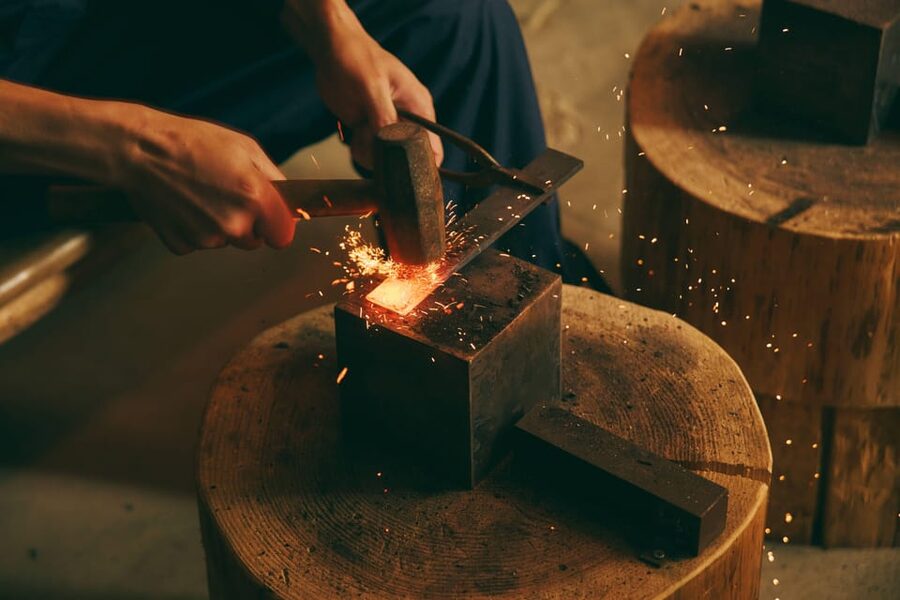
Knife making in Japan is usually something you hear about, admire, and maybe read a book on. Here, you do it. You hammer, you grind, you sharpen. That switch from spectator to maker is the whole point, and it’s why this is such a memorable Kyoto activity.
You’ll also get the right scale for a first-timer. The class is built around what matters most in Japanese knife craft, forging. In the overview, the studio notes that a more traditional, longer process for larger cooking knives can take more than 5 hours and cost more than $400. This workshop is shorter at about 2.5 hours of forging focus inside an overall ~3-hour experience, so you still get the heart of the skill.
More Knife Making in Kyoto:
- Authentic knife making experience at a blacksmith in Kyoto
★ 4.8 · 350 reviews - Kyoto: Beginner Knife Sharpening & Handle Fitting Workshop
★ 4.9 · 141 reviews - Tokyo: Knife Making Workshop (Sharpening, Engraving)
★ 4.9 · 153 reviews
Studio NIN in Kyoto: What the Start Feels Like
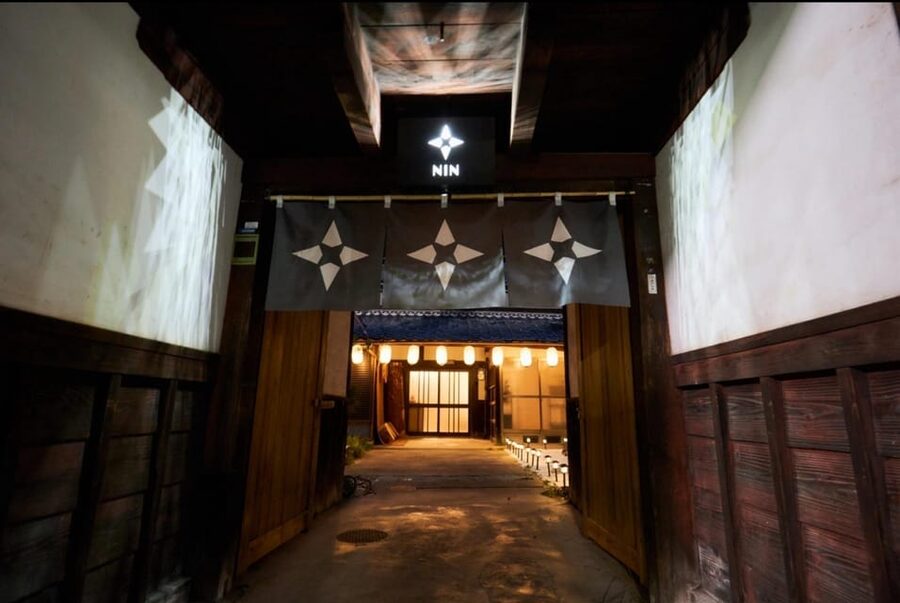
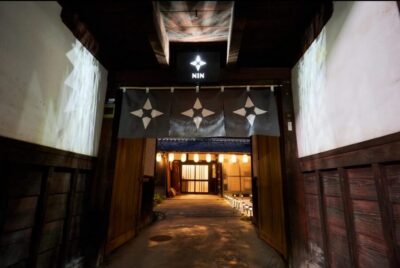
You meet at studio NIN, at 八瀬168-1 Yasenosechō, Sakyo Ward, Kyoto, 601-1254, Japan. The activity ends back at the same meeting point, which makes the day feel tidy. It also helps if you are trying to fit this into a short Kyoto stay.
The workshop is near public transportation, but it can be a bit “local” in feel since the area is residential. I’d plan to give yourself a little buffer time to find the exact spot, especially if your phone connection is spotty. A phone map alone can be tricky in quieter neighborhoods.
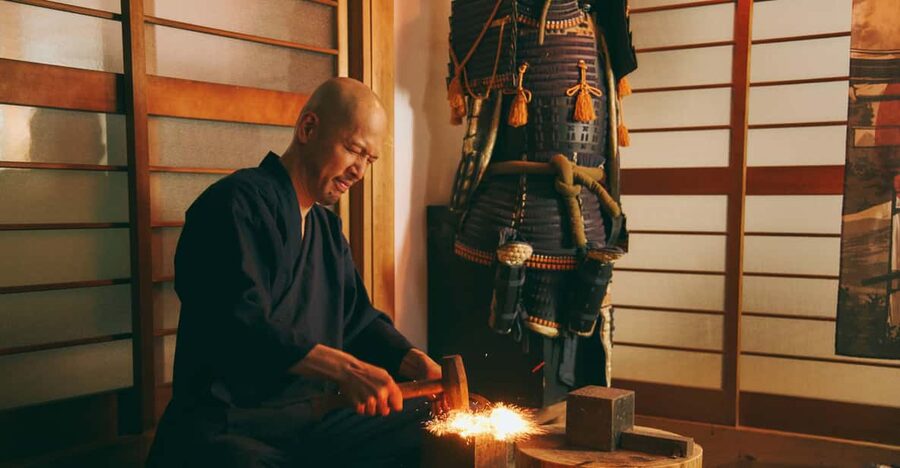
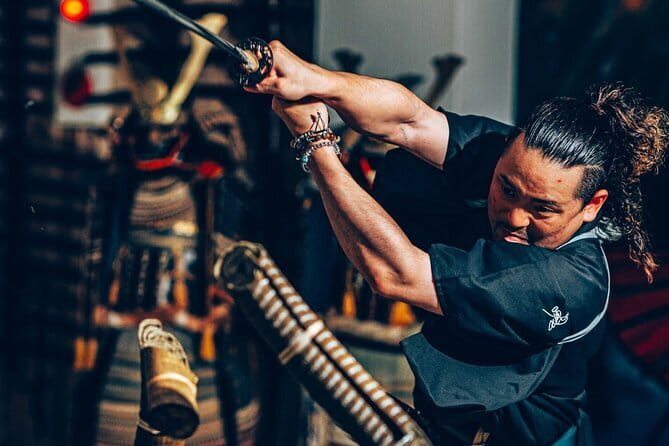
Once you arrive, you change into the workshop uniform. Part of the experience includes dressing up in traditional costumes, which turns a practical lesson into something more theatrical. It’s not just for photos. It signals you’re in a craft space, where safety and attention matter.
Stop at Rurikoin: Where the Tools and Setup Click
The itinerary includes Stop 1: Rurikoin, and that’s where the real workshop atmosphere comes through. This is where you get oriented to the room, the workflow, and the tools you’ll use.
Here’s what you should expect at this stage:
- staff guide you through how to handle and use the tools
- you start learning the steps in order, so forging does not feel like a random hammering session
- you get a sense of what is in your control versus what the staff will correct for you
This setup matters because knife making is physical and technical at the same time. If you jump straight into forging without an approach, you can waste time. The workshop structure is there to keep you moving toward a usable end product.
The Main Event: Hammering Hot Steel for Your Blade
The forging process is the centerpiece of the experience. The workshop highlights forging depth, and that shows in how the class feels. This is not a sit-back-and-smile activity. You are shaping a piece of metal into a knife blade by hand, using the tools and traditional process used for Japanese kitchen knives.
You’ll learn:
- how to use the tools safely and correctly
- how forging changes the metal’s form, not just its appearance
- how to manage effort over the session so you don’t rush the work
Several parts of the class are timed to fit the group size and the “first knife” goal. The overview specifically says studio NIN wants as many people as possible to experience forging, so they keep it around a two and a half hour forging experience inside an overall ~3-hour activity.
Also, the blade size you make is around 13 to 15 cm. Because it’s handmade, expect slight variations. That’s normal and part of why the knife feels personal.
A change of pace from Kyoto:
- PERFECT KYOTO 1-Day Bus Tour
★ 5.0 · 13,518 reviews - Kyoto: Fushimi Inari, Kinkakuji, Bamboo Grove 1 Day Bus Tour
★ 4.8 · 4,316 reviews - Kyoto: Tea Ceremony in a Traditional Tea House in Kiyomizu
★ 4.9 · 3,519 reviews - Kyoto Geisha Walking Tour: Gion District & Hidden Gems
★ 4.7 · 3,273 reviews
Grinding, Sharpening, and Polishing: Turning Metal into a Tool
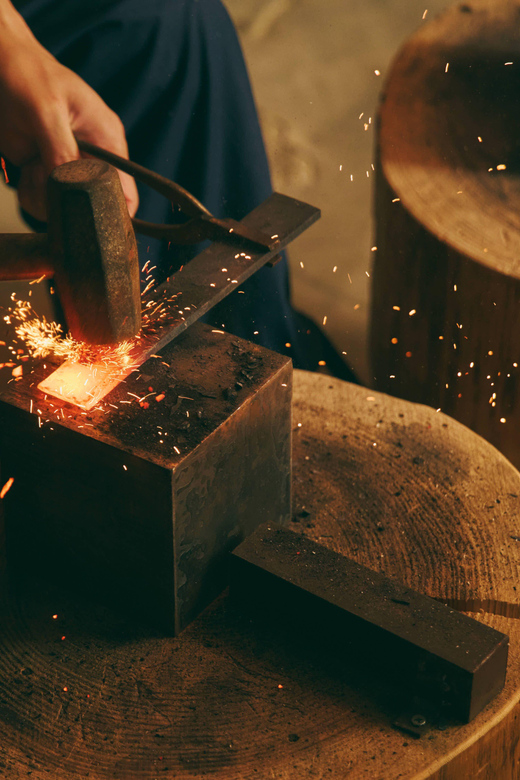
After forging, the work shifts from shaping to finishing. The class includes:
- sharpening
- polishing
This is where you see why Japanese kitchen knives are so focused on precision. Forging builds form. Grinding and sharpening build function. Polishing is what makes the blade look right and feel smooth to handle.
What to watch for here is consistency. A knife edge is not just about being sharp. It’s about the angle and the evenness of the work. Since you are a beginner, staff typically provide guidance when your technique needs adjustments.
The workshop style is very hands-on, but you are not totally on your own. The small group format (max 6) means you can get corrections quickly, before small mistakes turn into a finish you dislike.
Your Take-Home Knife: Size, Materials, and Real-World Travel Tips
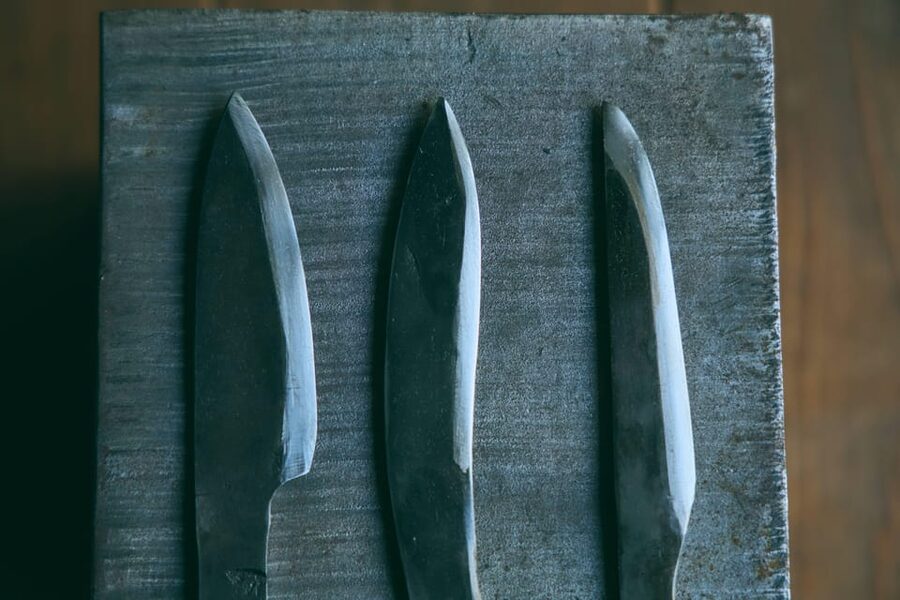
Your final knife is a handmade blade roughly 13 to 15 cm with an iron handle. The class notes there are no wooden handles. That matters for expectations: you are not building a classic “chef’s knife with a wood grip” souvenir. You’re making a simpler, traditional iron-handled knife as part of the traditional method.
From a traveler’s perspective, the best part is that you can treat it as a real keepsake, not a decorative prop. Multiple people rate this as a top Kyoto activity because you go home with something you can use.
One travel consideration: plan for transport. A knife blade can create carry-on problems, so if you’re flying, it’s smart to assume you may need to check a bag. At minimum, pack the knife securely and be ready for baggage rules.
Some participants also mention the knife is wrapped and presented nicely, including a gift-bag style wrap and a small photo included at no extra cost. So yes, it’s giftable when you want it to be.
Value at $158.52: What You’re Really Paying For
At $158.52 per person, the price feels reasonable if you compare it to what it would cost to have a handmade knife made through a longer process. The workshop itself gives you a comparison point: a regular cooking knife tradition can take more than 5 hours and costs more than $400.
You’re not getting a full custom, long-form production knife. You are getting the most important lesson and the full workflow, including forging, sharpening, and polishing, in a time-boxed class.
You also avoid extra hassle. The workshop provides:
- uniform
- English guide
- a set of tools used to make knives
Not included are snacks and private transportation, so you’ll want to handle meals and getting there on your own.
The value question for me is simple: do you want a “cool story” or do you want a real physical result? This workshop sells the result, and that’s why the ratings are so strong.
Who This Workshop Is Best For (And Who Should Think Twice)

This is best for people who like hands-on activities and want a deeper maker experience in Kyoto. It’s especially good for:
- adults and couples who want something different from temples and shopping
- anyone interested in craftsmanship and kitchen tools
- families with kids who can follow safety instructions and handle some physical effort
The workshop is built for a small group with plenty of attention from staff, including English support. That makes it more approachable even if you have zero blacksmithing background.
Who should think twice? If you cannot handle moderate physical fitness, or you know hammering and grinding will be uncomfortable, this may not be a great fit. The class is safe and guided, but it is still physical.
Practical Tips Before You Go
Based on how the workshop is described and how it’s run, here are the decisions that matter most:
- Arrive early enough to feel unhurried
The location is near public transit, but the address sits in a residential-feeling area. Give yourself time to confirm the exact meeting spot.
- Go in ready to work
You are forging, sharpening, and polishing. Comfortable movement matters more than fashion.
- Treat staff guidance as part of the lesson
Ask for angle and technique corrections early, especially during grinding and finishing. That’s where beginners can lose the edge they want.
- Plan baggage like a knife is a knife
If you fly home, assume you will need a checked bag to avoid carry-on headaches.
Should You Book Atelier NIN for Knife Making in Kyoto?
If you want a Kyoto activity that creates a real object, not just photos, I’d book this. The workshop is built around forging, the hardest part to learn, and you still get the full chain to a polished, finished knife in about 3 hours.
Book it if you:
- like hands-on crafts and don’t mind getting a workout from hammering and grinding
- want a small-group class with English support
- want a souvenir that is practical, about 13 to 15 cm, and iron-handled
Skip it if:
- you expect a light, sit-and-watch experience
- you cannot meet the moderate physical fitness requirement
FAQ
What is the duration of the knife making experience?
The experience lasts about 3 hours.
How many people are in the group?
The class has a maximum of 6 travelers.
What does the experience include?
It includes a uniform, an English guide, a set of tools used to make knives, and instruction through dressing up, tool use, forging, sharpening, and polishing.
Is protective clothing provided?
Yes. A uniform is provided, and you do not need to source protective clothes.
What size knife will I make?
The knife size is approximately 13 to 15 centimeters, and because it is handmade, it may vary depending on the person.
Are snacks included?
No, snacks are not included.
Where do I meet and where does it end?
You meet at studio NIN 八瀬168-1 Yasenosechō, Sakyo Ward, Kyoto, 601-1254, Japan, and the activity ends back at the meeting point.
Can I cancel for a full refund?
Free cancellation is available. You can cancel up to 24 hours in advance for a full refund.
Latest write-ups near Kyoto
- Kyoto Tea Ceremony and Samurai Photo Session★ 5.0 · 70 reviews
- Kyoto: Replica food making experience★ 4.8 · 70 reviews
- Kyoto: Kinkakuji, Golden Pavilion Guided Tour★ 4.7 · 71 reviews
- Private departure transfer from Kyoto city to Kansai International airport★ 5.0 · 72 reviews
- Uji: Green Tea Tour with Byodoin and Koshoji Temple Visits★ 4.8 · 72 reviews
- Kyoto: Geisha Dinner & Gion Cultural Walk★ 5.0 · 73 reviews
- Kyoto: Toei Kyoto Studio Park Admission Ticket★ 4.1 · 73 reviews
- Kimono and Yukata Experience in Kyoto★ 4.5 · 73 reviews
Knife Making Experiences, compared.
Authentic knife making experience at a blacksmith in Kyoto
Read our review →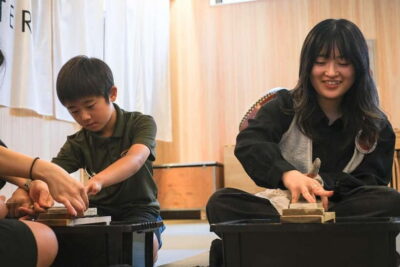
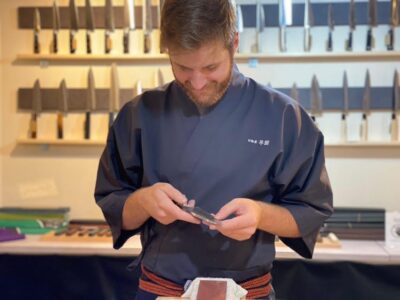
Beginner Knife Sharpening & Handle Fitting Workshop
Read our review →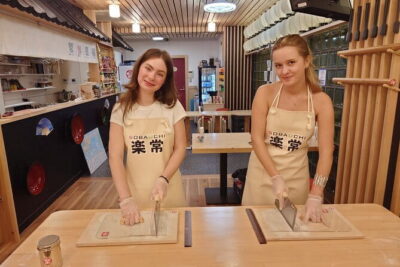
Experience Big soba knife Soba Making Class in Tokyo Kappabashi
Read our review →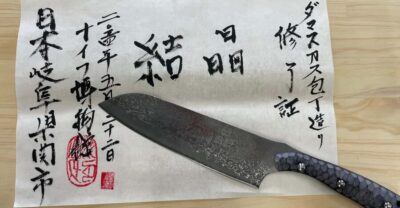
Seki: Samurai Knife Making Experience at the Knife Museum
Read our review →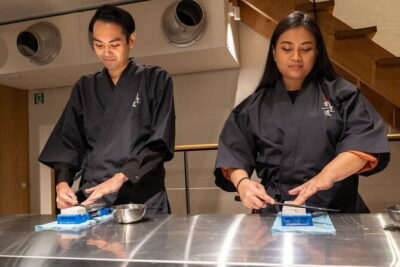
Gifu Samurai Sword Town;Japanese Damascus Knife Making Experience
Read our review →Browse the lists this tour appears in