

Reviewed · RAMEN EXPERIENCES
Kyoto Ramen Spoon Painting & Michelin Cooking Class
This is interesting because it mixes craft and cooking in one plan. You paint a ramen spoon souvenir, then learn how to make a Michelin-nominated style bowl, all in a real restaurant kitchen.
I especially like two parts: the ramen spoon keepsake (paint it, then it gets baked overnight), and the hands-on teaching from chefs like Master Shin or Chef Amiru, where you build your ramen step by step.
One possible drawback: the schedule is tight for 1.5 hours total, and the workshop can take a moment to find, so you will want a little extra buffer time.
Key things I’d circle first
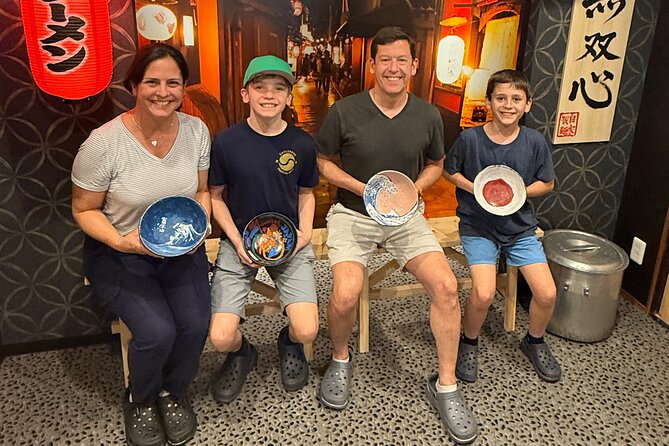
- Two-in-one experience: paint a spoon and cook ramen on the same day
- Small group limit (max 12): more attention while you work at the counter
- Real restaurant training: lessons happen in a working ramen kitchen
- In-house ingredients: noodles, soup, soy sauce, and pork are made from scratch at the shop
- You eat what you cook: no awkward waiting, just a meal at the end
Ramen Spoon Painting Meets a Michelin-Style Cooking Lesson
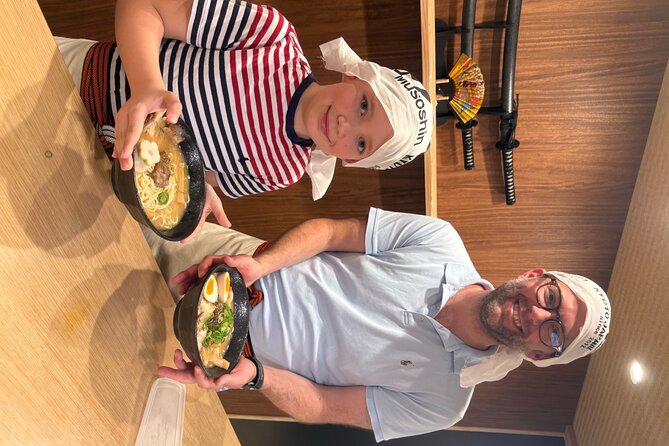
Kyoto has no shortage of food experiences. What makes this one different is the combination. You start by making a souvenir spoon, then you move straight into cooking ramen in a kitchen environment where ramen is not a hobby, it is the job.
The experience runs with Musoshin Ramen Academy (無双心ラーメンアカデミー). Musoshin began in Kyoto in 2022 and has grown to multiple ramen restaurants in Kyoto and Toronto. The Toronto location has been nominated for Michelin for three consecutive years, and the recipe is the same across their restaurants, which gives the class a clear “this is how we do it” feel.
The tone is also very practical. You are not just watching. You’re working, tasting, and learning what each component does. The chef instruction is often led by people like Master Shin, and on some dates Chef Amiru shows up as well, so expect high-energy teaching and a lot of patience while you learn.
More Cooking Classes in Kyoto
- Ramen Cooking Class at Ramen Factory in Kyoto
★ 5.0 · 1,937 reviews - Kyoto: Ramen Cooking Class at a Ramen Factory with Souvenir
★ 4.9 · 532 reviews - Kyoto: Ramen, Gyoza, and Onigiri Cooking Class
★ 5.0 · 445 reviews
The Higashiyama start, and why the temple stops matter
Your experience begins at 440-5 Nishigomonchō, Higashiyama Ward, Kyoto and ends back at the same meeting point. That matters because it keeps the day from turning into a complicated hop-and-scoot around town.
You also have three temple stops built into the flow: Kiyomizu-dera Temple, Kennin-ji Temple, and Sanjusangendo Temple. Even if your main goal is ramen, these breaks are useful. They help you transition from Kyoto walking mode into kitchen mode without needing extra planning.
Practical note: this is about 1 hour 30 minutes total, so you should assume there will be a quick pace while you move between sights and get seated for cooking. If you like slow, lingering sightseeing, pair this with a longer, separate temple plan later in your trip. If you like tight, efficient mornings or afternoons, this structure fits well.
Painting Your Ceramic Ramen Spoon, Then Baking It Overnight
The spoon painting is one of the biggest “instant fun” parts. You work in a ramen-restaurant workshop setting, and you paint a ceramic spoon meant to become a souvenir. The idea is simple, which makes it even more enjoyable: you’re not trying to copy a perfect design. You’re making something personal that connects to your ramen lesson.
Then comes the part you do not have to sweat. Your painted spoon is baked in a kiln overnight. That means you get a finished, durable keepsake rather than something fragile that will chip if you look at it wrong. Reviews also highlight that the spoon turns into a treasured piece to bring home, because you made it with your own hands.
What to keep in mind as you paint:
- Go with the colors and patterns you enjoy, not what you think will be correct.
- Plan on taking a bit of time to look at what you’re doing, because this is the souvenir you’ll live with after Kyoto.
- Wear sleeves you are comfortable getting a little messy in, since pottery painting can get hands involved.
The spoon section also sets up a nice mindset shift. You stop thinking of ramen as something you order, and start thinking of it as something you build.
Inside Musoshin’s kitchen, learning ramen you can actually repeat
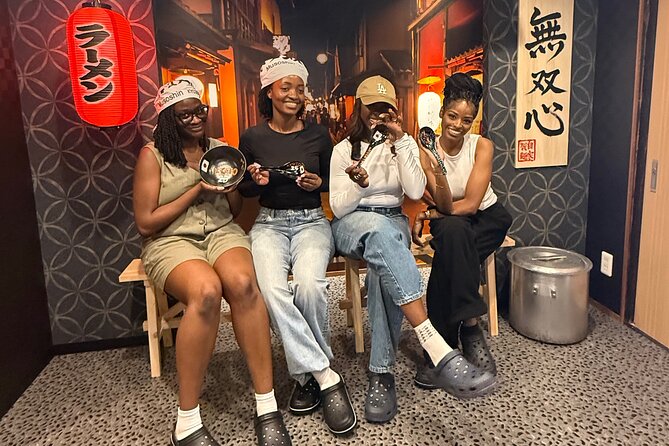
After the spoon, you head into the cooking lesson. This is run by Musoshin Ramen, and the kitchen teaching is the real heart of the class.
In many cooking classes, you chop, heat, and hope. Here, you learn why ramen works. You get taught step by step, including the methodology behind ramen, its components, and how the parts fit together. That is a big deal for anyone who has ever tried to recreate ramen at home and ended up with soup that tastes flat.
You will cook with ingredients brought from the restaurant. The class is structured so customers handle the cooking, while the “restaurant groundwork” is already handled by the Academy. That makes the lesson more achievable within the short time window.
Chefs mentioned in the experience include Master Shin, plus Chef Amiru in at least one class. Whoever is leading your session, the style you can expect is active and hands-on. People are encouraged, guided, and corrected while you work, rather than left to figure things out solo.
More Ramen Experiences in Kyoto
- Kyoto Ramen and Gyoza Cooking Class with Professional Chefs
★ 5.0 · 282 reviews - Home style Ramen and Homemade Gyoza in Kyoto
★ 5.0 · 152 reviews - Kyoto Michelin Ramen Workshop or Painting Ramen Essentials
★ 4.9 · 100 reviews - Kyoto Ramen & Gyoza Cooking Class with Professional Chefs
★ 4.8 · 100 reviews
Musoshin’s in-house noodle and soup approach (and why your bowl tastes better)
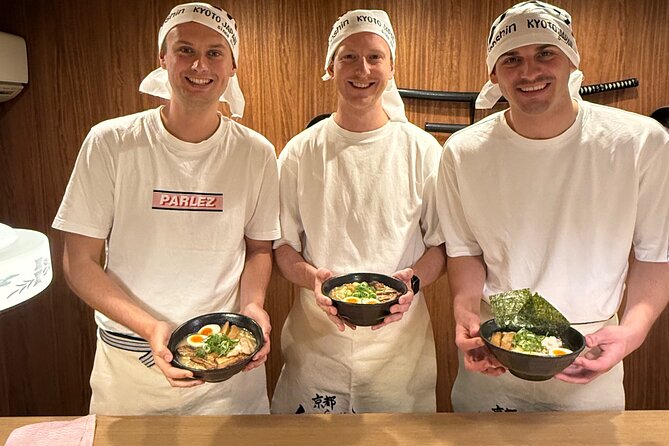
What you’re being taught is more than technique. It is also ingredient discipline.
Musoshin’s stated process is very specific:
- Noodles are made every morning at the shop.
- They are then allowed to sit overnight so they can be used the next day.
- The ramen soup is made for 12 hours.
- Ramen soy sauce and roast pork are handmade.
They also insist on making ingredients in-house, and they bring what you need to the workshop so you cook with the same backbone they use in their restaurants.
Why this matters for you as a home cook:
- When noodles and broth have been treated with time and care, your results are more consistent.
- When soy sauce and pork are made to fit the soup, you do not end up with a “good idea, wrong flavor” bowl.
- When you are taught the ramen as components, you learn what to prioritize if you run out of ingredients at home.
If you are a ramen lover, this is the part that turns your class from fun into useful. You leave with a mental checklist, not just a memory of eating.
What you eat at the end, plus vegetarian and allergy-friendly handling
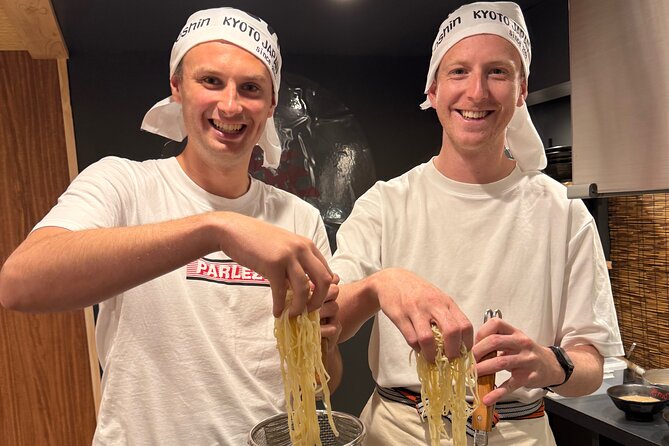
The experience is designed so you do not arrive hungry and then wait. One of the promises is simple: you cook and then feast on your own ramen at the end.
The class includes ramen bowlware and work essentials such as a ramen bowl, a ramen spoon, an apron, and part of the ramen components. That setup makes it feel more like a guided meal-making session than a casual demo.
Vegetarian options are also part of the program. If you want vegetarian or vegan, the cooking class can accommodate it, based on instruction you receive during the meal prep. That is a big plus for mixed groups.
Allergy handling is mentioned as well. One class experience notes that allergies were handled appropriately. So if you have allergies, this is one of the few food activities in Kyoto where you can have a more confident conversation about it, but you should still make your needs clear when you book.
The end result is not just “ramen.” It is your ramen. That changes how it tastes. When you assemble the bowl yourself, you understand what you did right, and you can spot what you would tweak if you make it again later.
Price and logistics: is $65.89 worth it?
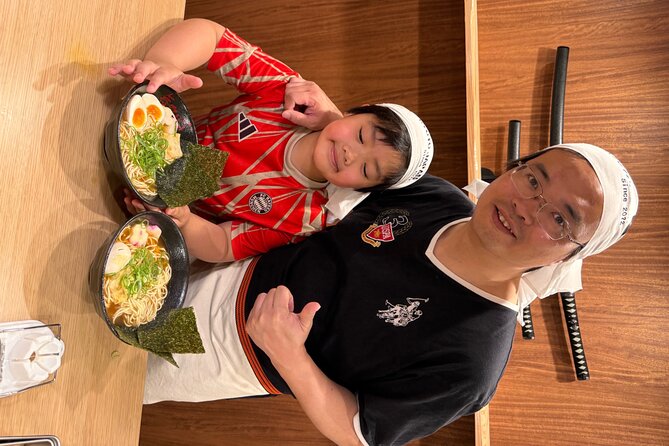
At $65.89 per person for about 1 hour 30 minutes, you’re paying for two things at once: a guided souvenir project and a chef-led ramen cooking lesson.
You do not just get instruction. You get materials and the meal payoff. Plus, the soup process behind the scenes is time-intensive, including the 12-hour soup and the overnight noodle resting. Even though you are not making the entire system from scratch, you are working with restaurant-grade components and learning how they come together.
Also, the group size is capped at 12 people, which matters for value. Smaller groups tend to mean less waiting, more chances to ask questions, and more time for a chef to adjust what you’re doing.
Demand is high, with the experience being booked multiple times recently. That is a good sign, but it also means you should not assume you can grab a last-minute slot during peak days.
Who should book, and who should skip
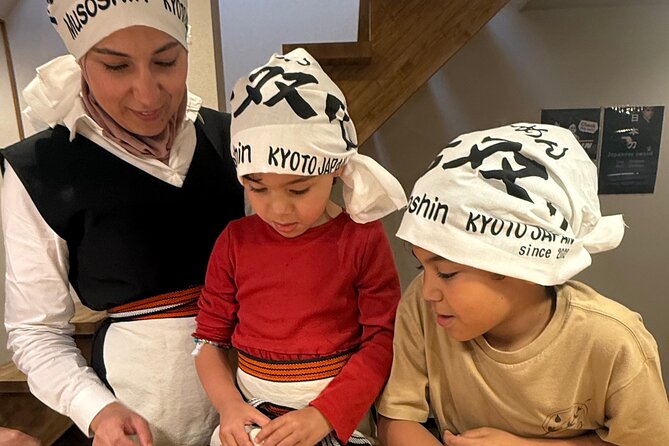
This is a strong fit if:
- You love ramen and want more than just tasting.
- You like hands-on workshops with real chef guidance.
- You want a Kyoto souvenir that ties directly to the food you made, not a generic trinket.
- You are traveling with adults or mixed ages, since the class has been described as enjoyable for both.
You might want to consider a different option if:
- You do not want any cooking involved. This is interactive.
- You are extremely short on time and hate moving quickly between points. The experience is compact.
- You prefer a purely sightseeing day. This includes three temple stops, but it is still centered on the ramen workshop.
If you are the type who keeps a travel food journal, this will feed it. The ramen-making steps and ingredient approach give you details you can actually remember and reuse.
Should you book this Kyoto ramen class?
If your trip has room for one “hands-on, learn something” food experience, I’d book it. The pairing of ramen spoon art with a Michelin-nominated style ramen lesson is rare, and the small group size makes it feel personal rather than rushed.
Choose it even more confidently if:
- You want vegetarian options handled within the class.
- You enjoy learning why food tastes the way it does.
- You want a souvenir you genuinely made, then got baked into a finished keepsake.
If you only want to eat ramen, there are plenty of places to do that in Kyoto. But if you want the story behind the bowl and a practical skill you can repeat at home, this is one of the better bets.
FAQ
What do I do during the experience?
You start by painting a ramen spoon souvenir. Then you cook ramen using ingredients brought from the restaurant, and you eat the ramen you make at the end.
How long is the class?
The experience is approximately 1 hour 30 minutes.
How large is the group?
The class has a maximum of 12 travelers, so it stays small.
Is there a vegetarian option?
Yes. Vegetarian and vegan options are available.
Do I get to take the spoon home?
Yes. You paint a ceramic ramen spoon, and it is baked in a kiln overnight, so you end up with a finished souvenir you can keep.
Is free cancellation available?
Yes. You can cancel up to 24 hours in advance for a full refund.
Latest write-ups near Kyoto
- Kyoto Private Tour Full Day with Local Guide&Nara Option(PerGroup★ 5.0 · 20 reviews
- Sacred Pathways: Discover the Philosopher’s Path of Kyoto★ 4.9 · 20 reviews
- Kyoto UNESCO World Heritage Site Private Tour with a Premium Van★ 5.0 · 20 reviews
- Hammer Pattering Experience of Ring★ 5.0 · 20 reviews
- KYOTO: Private Tea Ceremony in Hidden Townhouse (Kid-Friendly)★ 5.0 · 20 reviews
- Sushi or Traditional Japanese Cuisine in a Kyoto Home with Emika★ 5.0 · 20 reviews
- The Kyoto VIP Experience!★ 5.0 · 20 reviews
- Kyoto Customized Private Tour: See Top Attractions in 1 Day★ 4.7 · 20 reviews
Ramen Experiences, compared.
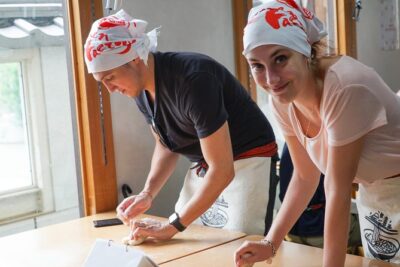
Ramen Cooking Class at Ramen Factory in Kyoto
Read our review →
Eat and Drink Like a Local: Tokyo Ueno Food Tour-Taverns&Ramen
Read our review →
Ramen & Gyoza Cooking Class in Tokyo with Local Supermarket Visit
Read our review →
Ramen Cooking Class at a Ramen Factory with Souvenir
Read our review →

Five Must-See Highlights Walking Tour & Ramen Lunch
Read our review →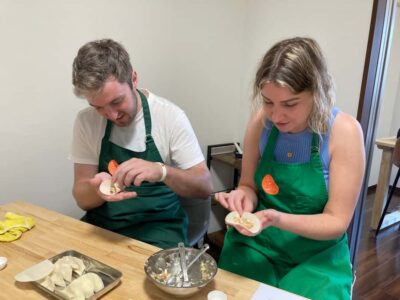
Browse the lists this tour appears in