Reviewed · MARKET TOURS
Tokyo Tsukiji Fish Market Food and Culture Walking Tour
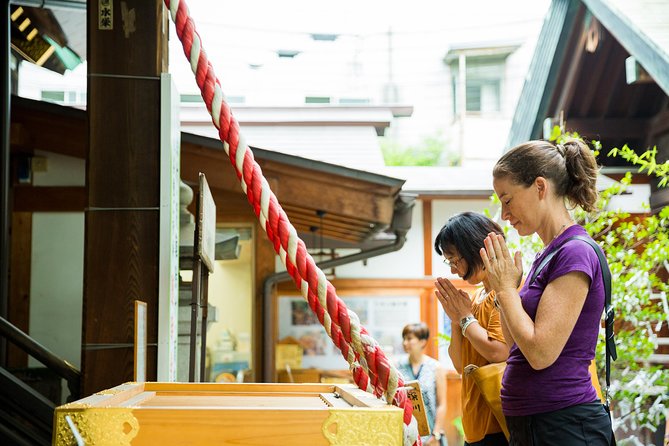
Tsukiji is interesting because it feels like a real working food world, not a theme park. You start at Tsukiji Hongan-ji Temple, then walk into the market lanes where seafood is handled fast, traded daily, and eaten with real local confidence. I like that your guide can turn the chaos into something you can actually follow, with helpful examples from past groups where guides like Kiyo and Naz explained what you were seeing and what it means.
I also like the food rhythm. This is not one big sit-down meal and done. You get a string of tastings, plus a final stop where you end with either sushi or a seafood bowl. One key drawback to be aware of up front: this tour is fish-focused. It does not accommodate vegetarian, halal, gluten-free, or allergy-related requests, and if you cannot eat fish, you cannot join.
Key things to know before you go
- Meet at the Hongan-ji Temple gate: arrive on time, the group leaves at the start time sharp.
- Expect nonstop walking: comfort comes from good shoes, not from a slow pace.
- Food is “samples plus a finish”: you will get lunch at the end, but plan on tasting rather than expecting an unlimited feast.
- Closed days change what you can try: the Uogashi wholesale stop is closed on Wednesdays and Sundays, and some items may not be served then.
- Group size stays small: maximum 20 travelers, which helps you move through crowds and hear your guide.
- Sushi or bowl, depending on the day: your final meal may vary.
Getting oriented at Tsukiji Hongan-ji Temple
The tour starts at the main gate of Tsukiji Hongan-ji Temple in the Tsukiji area (Google Maps can point you toward the backside, so aim for the front). This matters more than it sounds, because the group leaves at the start time sharp, and the tour cannot be extended for late arrivals.
What I like about this start point is that it gives you a calmer entry. Before you hit the market’s narrow lanes, you’re in a spot that helps you reset your brain. Your guide also sets context, including why the market is famous and why top chefs visit to source ingredients.
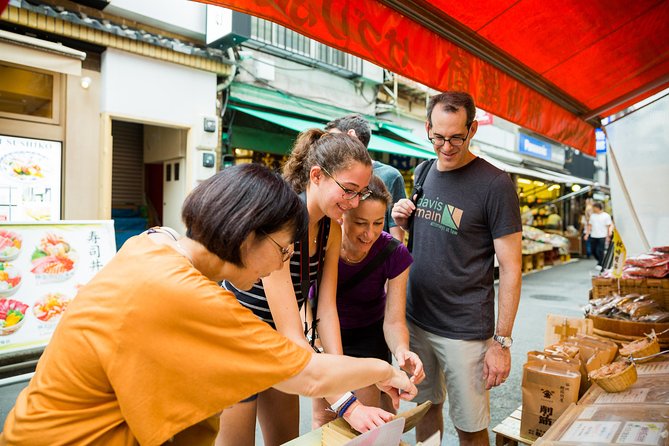
Bring the basics: walking shoes, a bottle of water if you like, and a mindset of seeing rather than analyzing. The market moves quickly, and your best strategy is to follow your guide’s lead and ask questions as you go.
More Food & Drink in Tokyo
- Tokyo: Shinjuku Food Tour (13 Dishes at 4 Local Eateries)
★ 5.0 · 6,603 reviews - Tokyo: Shinjuku Food Tour (15 Dishes and 4 Eateries)
★ 4.9 · 2,033 reviews - Best of Shinjuku: Izakaya Food Tour (4 Stops, 14+ Tastings)
★ 5.0 · 1,863 reviews
Tsukiji Jogai Market: history, snack tastings, and seafood you can spot fast
Your first real chunk of time is in Tsukiji Jogai Market, about 1 hour 30 minutes. This is where you get the sights, sounds, and smells that people mean when they say Tsukiji feels unlike anywhere else.
You will walk past outer stalls and learn how the market works, including why it has been around for decades and why chefs come here for quality seafood. The tour also sets you up for tasting, because the snacks help you understand Japanese flavors before you’re asked to jump into raw fish, seaweed, and briny items.
What you may try here:
- dashi soup
- green tea
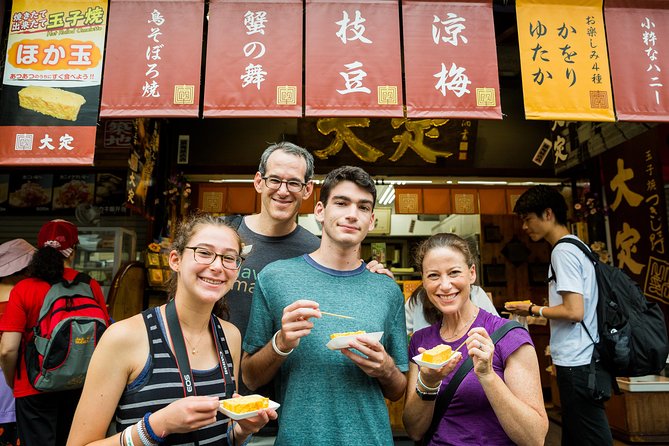
- small bites from snack stalls as you pass
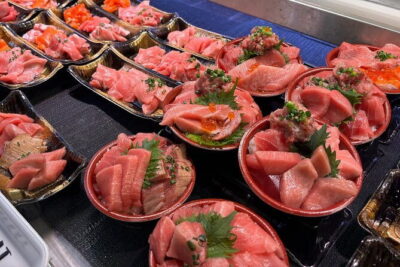
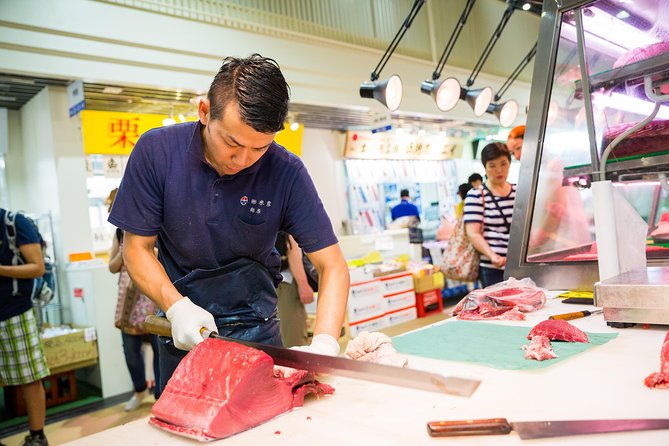
And along the way, your guide may point out things like stacked sea urchin (uni) in boxes, vendors carving bluefin tuna, or pufferfish being visible in tanks. Even if you’ve seen seafood photos before, this is the real scale, and seeing how it’s handled gives you a better sense of what you’ll taste later.
A practical tip: don’t worry about memorizing every vendor name in Jogai. Your goal is to build a “flavor map” in your head. If you understand how dashi works, how seaweed tastes, and why freshness matters, your later sushi or seafood bowl will make more sense.
The Old Tsukiji lanes: where you learn to taste like a local
Next is the Old Tsukiji Market area, about 30 minutes. This part is shorter, and the best use of time is to slow down just enough to notice how food is presented and how people shop.
You’re still learning. Your guide helps connect the market’s food culture to daily eating habits, and this is often where you start picking up the “small logic” of Japanese food markets: the idea that you can buy ingredients, try small samples, and make decisions quickly based on freshness and how the food is prepared.
If you need kitchen tools, this is one of the areas where the tour can stop for shopping. That’s a nice extra for anyone who wants more than souvenirs and wants practical items you might actually use back home.
One drawback to consider here is that this stop is not built like a long, separate meal. If you’re someone who hates waiting between tastings, you might feel the tour timing more in this section. The tradeoff is that it keeps the overall walk focused and gives you time to reach the final seafood finish.
Tsukiji Uogashi: the mini wholesale view and what changes on closure days
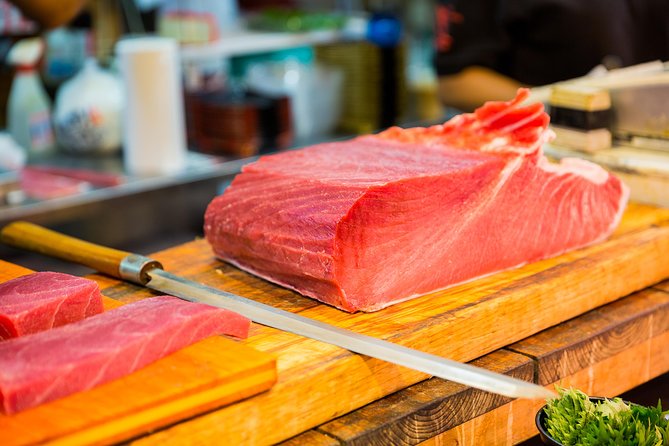
Then you head to Tsukiji Uogashi, also about 30 minutes. This is where you pass by a mini wholesale market and get a look at the range of seafood on display. The goal is to show you the ingredient variety, including why Tsukiji isn’t just about one famous fish.
A big heads-up: this Uogashi stop is closed on Wednesdays, Sundays, and other closed market days. If your visit lands on one of those days, you may not see the same wholesale flow. The tour also notes that some items like Japanese omelette, fish cake, and fruits may not be served because the shops are closed.
So here’s how to keep it enjoyable: if you’re going on a closure day, treat it as a different Tsukiji day, not a missed opportunity. The market still has plenty to see, and your guide will work with what is open.
More Market Tours in Tokyo
- Tokyo: Tsukiji Fish Market Food and Walking tour
★ 5.0 · 1,724 reviews - Tokyo: Tsukiji Fish Market Guided Walking Tour
★ 4.9 · 1,397 reviews - Tokyo Sushi Making Class in Tsukiji with Professional Chef
★ 5.0 · 1,177 reviews - Tsukiji Fish Market Guided Tour and Sushi Making with Pro Chef
★ 5.0 · 775 reviews
Wrapping at the Tsukiji Fish Market: sushi or a seafood bowl to finish the story
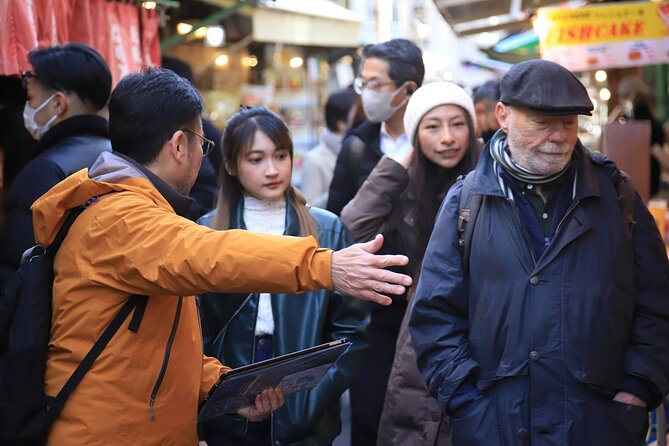
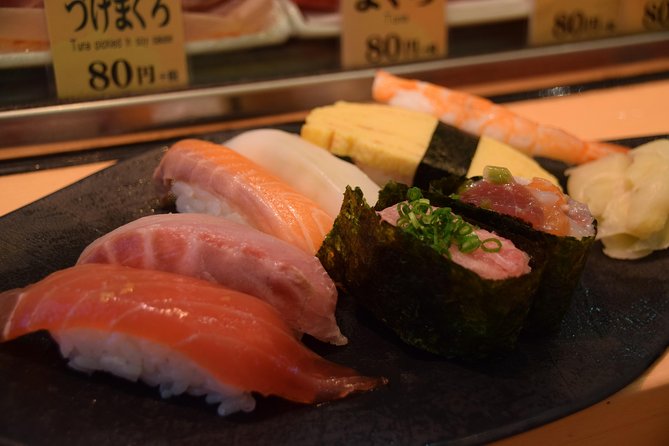
The tour wraps at the Tsukiji Fish Market stop, about 30 minutes, and ends with a delicious fish bowl or sushi. Your final meal choice can vary by day and time, so you’ll want to be flexible.
This ending is where all the earlier tasting context pays off. If you tried dashi and green tea snacks earlier, you’ll be better prepared for how Japanese dishes can balance saltiness, umami, and clean seafood flavors.
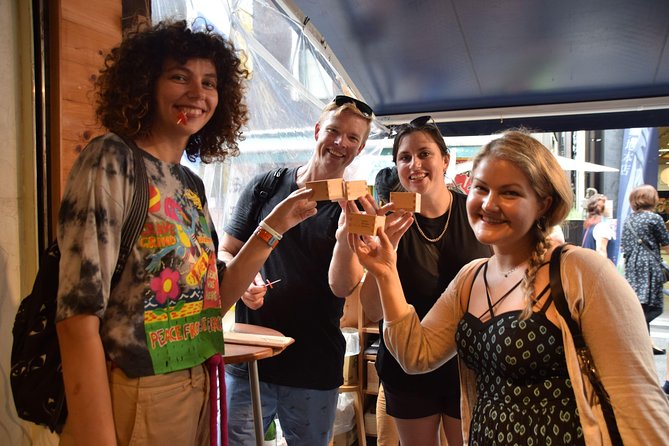
Depending on the day, you might also experience food preparation moments. People have highlighted things like watching fish being prepared and even joining in with sushi making during some departures. You should not assume that every date includes hands-on prep, but it tells you the tour isn’t just “walk and eat.” It’s designed to make the fish feel real, not just photographed.
What you’ll likely taste: wagyu skewers, fish cake, uni, and more
Food on this tour is built around seafood culture, with a few meat and snack anchors so you get variety.
From the tour description and what’s been highlighted across past experiences, you can expect items like:
- high-grade Wagyu beef skewers
- fresh sushi or a seafood bowl (depending on the day)
- seafood bites such as fish cakes
- seasonal fruit
- dashi soup and green tea
- seaweed and other small tastings along the way
Some groups have also called out additions such as Japanese omelette. On closure days, that specific item may not be served.
If you’re wondering what to do if you’re nervous about trying something new, I’d take the approach your guide is clearly trained for: try one bite, let your brain catch up, then decide on a second. Tsukiji rewards openness. It’s hard to regret tasting something like uni when you’re in the place that made it a star.
Also, the tour includes lunch and snack. That means you should show up able to eat, but you don’t need to arrive starving with zero plan. The structure is samples first, then a satisfying finish.
Guide style and pacing: how you get value in 3 hours
This tour is about 3 hours total, and it walks through multiple areas of the Tsukiji food zone. You’ll want moderate physical fitness, because the market is not built for long slow pauses.
The biggest value here is not the price tag. It’s what the guide saves you from:
- figuring out where to go inside crowded lanes
- guessing which stalls are worth your time
- misunderstanding what you’re looking at
Past groups highlight a common theme: guides bring history and practical food tips, and they often help with recommendations so you don’t end up buying random snacks that don’t match the quality you came for.
That said, there is a real human factor. One experience described the pace as slow and the guide as less enthusiastic. Another noted that the final restaurant felt like a tourist trap for them. You can’t remove every risk in a human-led tour, but you can reduce it: go in with flexible expectations, and think of this as a tasting and learning walk, not a guaranteed nonstop buffet.
Price and value: why $99.49 can make sense here
At $99.49 per person, you’re paying for three things at once:
1) a guided route through a complicated market layout
2) translation and food context
3) included food (lunch and snack)
Also, admission for the stops is listed as free for this activity, which helps keep the experience focused on the guide and tastings rather than entry fees.
When a tour includes both guidance and food, you should judge it by how much easier it makes your day. If you try Tsukiji on your own, you’ll spend extra time just figuring out what is open, where the best tastings are happening, and how to navigate the seafood chaos safely and politely.
If you’re a seasoned Tokyo shopper who already knows the market rhythm, you might decide you can DIY. But for many visitors, the “time saved plus food you might miss” is exactly what makes Tsukiji feel worth the effort.
Who this Tsukiji tour is perfect for, and who should skip it
This tour is a great fit if you:
- eat fish and want seafood culture at street level
- like learning while you walk, not after you’re back at your hotel
- want help navigating Tsukiji without wasting half a day
- enjoy guided tastings like dashi soup, green tea, fish cake, and wagyu skewers
You should think twice if you:
- don’t eat fish. The tour states you won’t be able to join if you can’t eat fish.
- need vegetarian, halal, gluten-free, or allergy-related accommodations. The tour does not accommodate those requests.
Also, alcohol is a minor detail you should still know about. The tour notes a minimum drinking age of 20. If you’re under 20, they offer another drink instead.
Finally, closure days matter. If you’re visiting on a Wednesday or Sunday, expect some stops and items to be different because Uogashi is closed and some foods may not be served.
Book it or skip it: my quick call
Book this tour if you want Tsukiji to be more than a visual stop. The combination of guided navigation, included lunch and snack, and tastings like Wagyu skewers plus sushi or a seafood bowl makes it a strong “first real market experience” in Tokyo.
Skip it if you’re restricted by diet, or if you want a totally flexible, pick-your-own-adventure market day. This tour is structured, and you get the best experience when you’re happy to follow the route and try what’s offered.
If your priority is maximum food volume above all else, don’t treat this like an all-you-can-eat mission. It’s built for tasting, learning, and ending with a real seafood finish, which is exactly what most first-timers want.
FAQ
What should I wear for this Tsukiji walking tour?
Wear comfortable walking shoes. The tour is mainly walking, and you will move through market areas where sturdy footwear helps a lot.
Where is the meeting point?
Meet at the main gate of Tsukiji Hongan-ji Temple. The tour notes that Google Maps may lead you to the backside, so aim for the front side.
How long is the tour?
The tour runs for about 3 hours.
What food is included during the tour?
You get lunch and snack included. You’ll also have an assortment of tastings along the way, and you end with either sushi or a seafood bowl, depending on the day.
Can I join if I am vegetarian, halal, gluten-free, or have allergies?
This tour cannot accommodate vegetarian, halal, gluten-free, or allergy-related requests. Also, if you cannot eat fish, you will not be able to join.
Are there drinking age rules?
Yes. The minimum drinking age is 20. If you are under 20, the tour offers another drink instead.
What if the market stop is closed on certain days?
The Tsukiji Uogashi wholesaler market is closed on Wednesdays, Sundays, and other closed market days. On those days, some items like Japanese omelette, fish cake, and fruits may not be served because shops are closed.
Can I get a refund if I cancel?
Yes, free cancellation is available. You can cancel up to 24 hours in advance for a full refund.
More Walking Tours in Tokyo
- Tokyo: Imperial Palace and Shogun Historical Walking Tour
★ 5.0 · 2,251 reviews - Tokyo: Shinjuku Local Bar and Izakaya Guided Walking Tour
★ 4.9 · 1,794 reviews - Tokyo: Asakusa Walking Tour with Sensoji Temple Visit
★ 4.8 · 1,583 reviews - Tokyo Castle & Imperial PalaceーShogun Walking Tour
★ 4.7 · 1,068 reviews
More Shopping Tours in Tokyo
- Tokyo: Tsukiji Fish Market Food and Culture Walking Tour
★ 4.7 · 757 reviews - Tsukiji Fish Market: Street Food & Culture Walking Tour
★ 5.0 · 669 reviews - Tsukiji Fish Market Small-Group Food Walking Tour
★ 5.0 · 621 reviews - Tokyo: Tsukiji Fish Market Sushi Making Class with Pro Chef
★ 4.9 · 506 reviews
Latest write-ups near Tokyo
- Tokyo Customized Private Tour: See Top Attractions in 1 Day★ 4.8 · 67 reviews
- From Tokyo: Top 5 Scenic Spots of Mount Fuji Full-Day Tour★ 4.5 · 67 reviews
- Traditional Japanese Music ZAKURO SHOW in Tokyo★ 5.0 · 67 reviews
- Tokyo: Shinjuku Izakaya and Golden Gai Bar Hopping Tour (2h)★ 4.9 · 67 reviews
- Tsukiji: Unlimited Sake Tasting Experience★ 4.9 · 67 reviews
- Private Harajuku Omotesando Architecture Walking Tour★ 5.0 · 67 reviews
- Tokyo: Not a show- a professional sumo practice with experts★ 4.9 · 67 reviews
- Samurai Ninja Museum Asakusa: Kid-Friendly Ninja Training★ 4.7 · 67 reviews
Market Tours, compared.
Nishiki Market Brunch Walking Tour (7 Tastings + Brunch)
Read our review →
Tokyo Sushi Making Class in Tsukiji with Professional Chef
Read our review →
Tsukiji Fish Market Guided Tour and Sushi Making with Pro Chef
Read our review →
Tsukiji Fish Market Food and Culture Walking Tour
Read our review →