
Reviewed · KNIFE MAKING EXPERIENCES
Tokyo: Knife Making Workshop (Sharpening, Engraving)
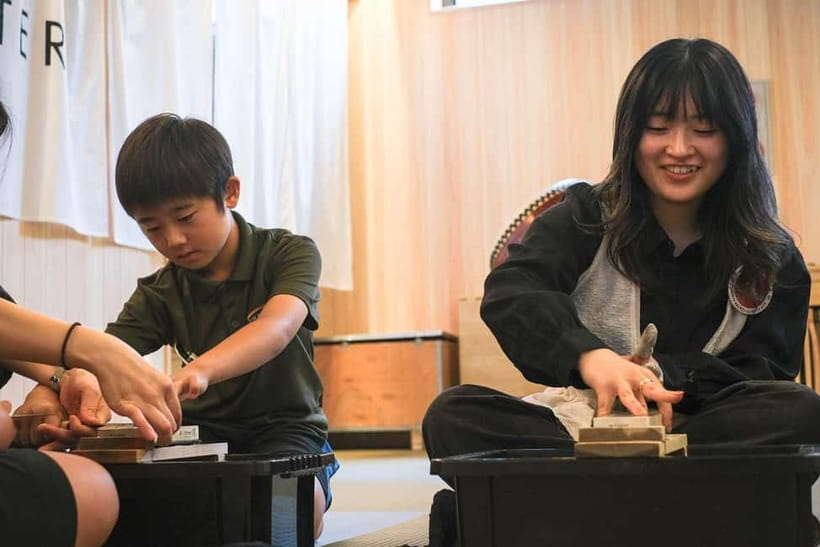
This Tokyo knife workshop is interesting because you do not just watch craft, you make a functional knife, then finish it with your own Japanese engraving. The process is hands-on and very tactile, from sharpening the blade to hammering on the handle.
I love two things most: the English coaching that keeps you on the right moves, and the Japanese knife history lesson that makes the whole craft feel connected to real life, not just a souvenir. You also get time to chat with the staff and ask questions as you work, which helps it land on a human level.
One consideration is planning for cost and logistics. You start with a standard take-home knife, but bigger blade upgrades can add fees, and you’ll need a plan for how to pack or ship your knife box when you leave Japan.
Key Points Before You Go
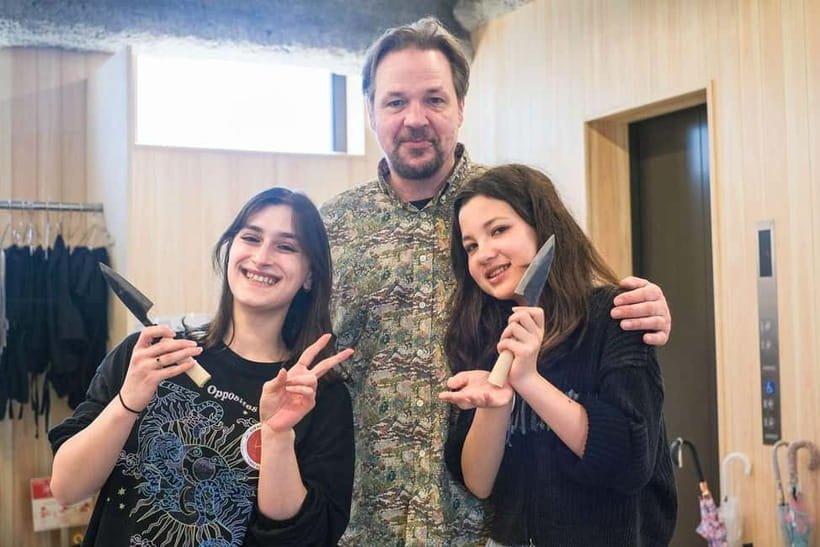
- Asakusa, 5th floor start: Meet at BUB Activity Center in the Heiwa Building, elevator up to floor 5.
- Pick up to five blade styles: Choose what you want to sharpen, with some bigger options costing extra.
- Sharpening feels meditative: Concentration work with staff correcting your technique.
- Engrave your name in Japanese: You’ll add your name on the handle, then attach it with a traditional hammer.
- Take home more than a knife: Snacks, aesthetic packaging, and a customized key-holder come included.
- Friends can observe: There is an observation option, but an observation fee may apply.
Asakusa Meeting Point and What You Put On Before You Start
You will start in the heart of Tokyo, in Asakusa. The meeting point is BUB Activity Center in the Heiwa Building, Taito-ku. Take the elevator to the 5th floor, then follow the crew’s lead once you arrive.
Before you touch anything sharp, you get set up like you are stepping into a working craft room. You’ll put on a light version of a haori (a kimono-style jacket) provided by the staff to protect your clothes from accidental stains. It is a small thing, but it helps you stay relaxed and focused on the task instead of fussing about your outfit.
You’ll also get a badge with your name written in Japanese letters. It sounds simple, but it adds a nice “this is your project” feeling when you move from intro talk into hands-on work.
More Knife Making in Tokyo:
- Experience Big soba knife Soba Making Class in Tokyo Kappabashi
★ 5.0 · 71 reviews - Tokyo Keen Japanese Knife and Sashimi Workshop
★ 5.0 · 46 reviews - Authentic knife making experience at a blacksmith in Kyoto
★ 4.8 · 350 reviews
Choosing Your Knife: Picking a Blade That Matches Your Cooking
The workshop gives you a meaningful choice up front. You can select the type of knife you want to sharpen during your session, with up to five types available. Some larger or specialized blades may cost extra, but you are not forced into upselling. The idea is to help you match the knife to how you cook.
At the end, you take home a standard size knife described as a multi-tasking option. You can treat it as your entry point into Japanese-style kitchen tools. If you want to go further, the class setup gives you a chance to upgrade toward a more specific style, and you’ll learn enough to decide what makes sense for you.
In practical terms, this choice matters because Japanese knives are not all the same shape or purpose. Even without going too technical, the workshop helps you understand that different blade types behave differently in the kitchen, so the upgrade conversation feels grounded.
Sharpening the Blade: A Hands-On, Concentrated Skill
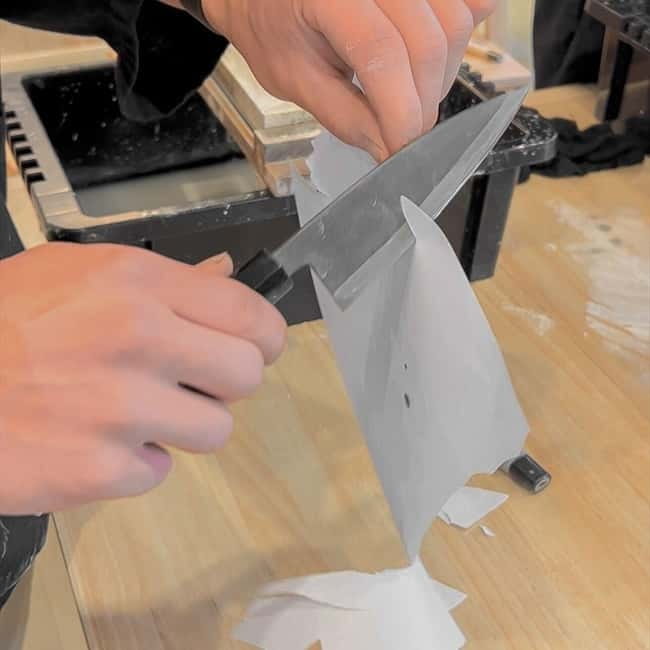
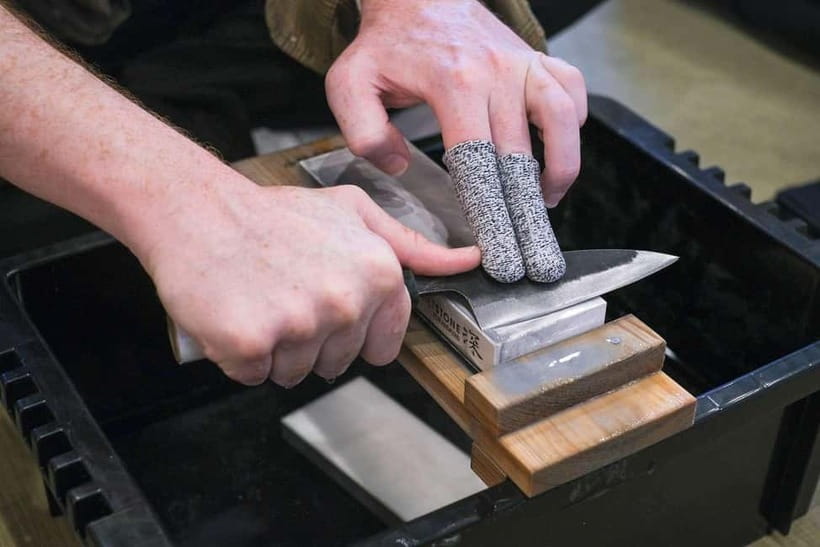
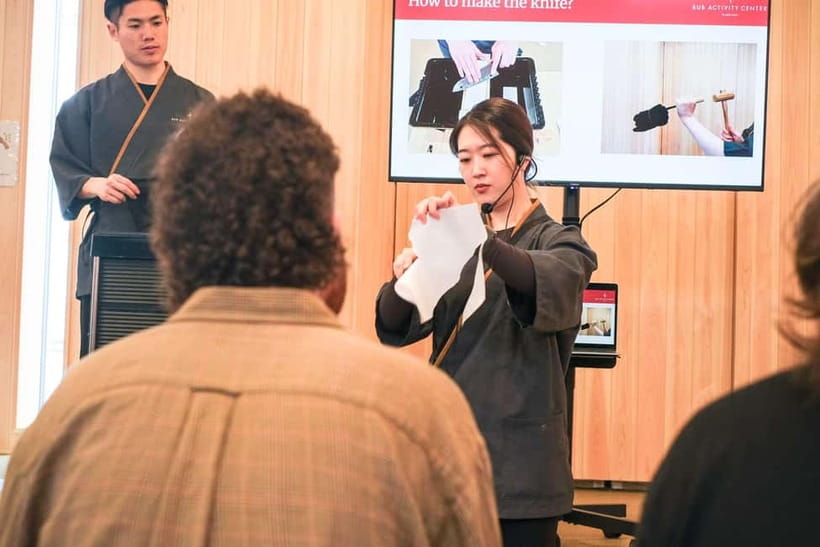
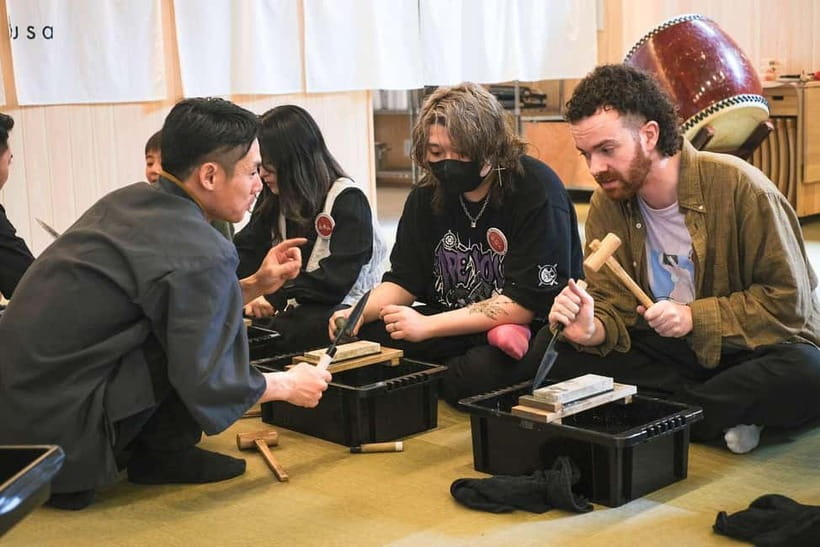
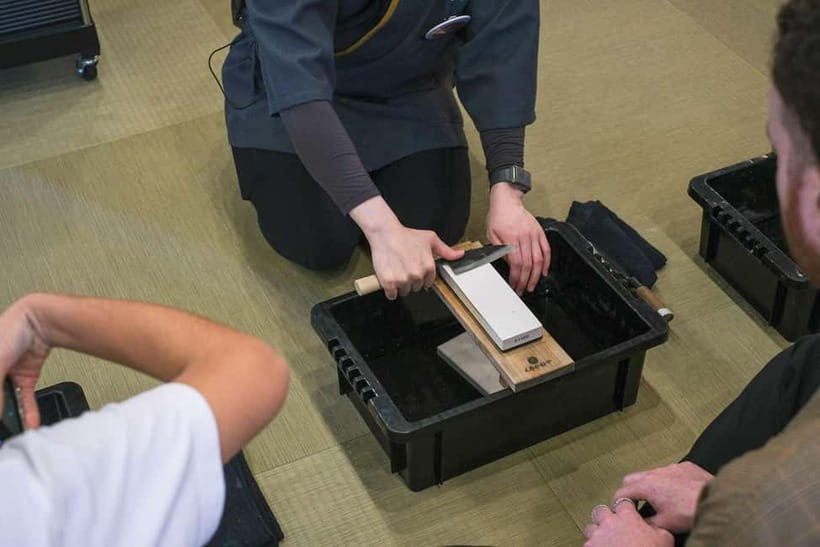
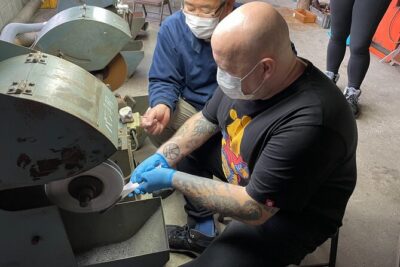
This is the heart of the experience. You sharpen your chosen blade and then learn the step-by-step rhythm of a careful, controlled process. It can feel meditative, but it is not passive. You are learning through repetition and correction, not just listening.
The crew is set up for close guidance. Several English-speaking staff members stay with you while you sharpen, and they correct your movements. The tone is friendly, not stiff. If you are worried you might not have the “right touch,” that anxiety fades fast, because you get real-time help.
You’ll also be doing the work with other people in the room, but the class is still structured enough that you get personal attention. In the reviews, people consistently praised how the staff keep an eye on technique and help you finish the job when needed, including cases where timing gets tight.
One thing I like about this setup is that the difficulty feels honest. Sharpening is hard work. You will notice a difference as you go, and you will understand what “effort creates results” means with your own hands.
Learning Knife and Sword History Without Making It Boring
Alongside the hands-on skill, you get a cultural intro to Japanese knives and swords. You’ll learn the history behind Japanese knives and swords, including a basic framing of how Japanese swords (like katanas) differ from Western sword traditions. You’ll also get explanations about Japanese kitchen knives, which helps you make sense of what you are doing with your blade.
This part matters because sharpening becomes more than a trick. When you understand why these knives look and perform the way they do, the technique you practice feels purposeful. You also get a chance to ask questions and chat, and the staff are prepared to handle different English levels with clear explanations.
During this time, you can have tea or juice. There are soft drink options too. Little comfort details like this keep the pace human, especially because sharpening needs focus and patience.
A change of pace from Tokyo:
- Mt Fuji and Hakone 1-Day Bus Tour Return by Bullet Train
★ 5.0 · 26,383 reviews - 1-Day Tokyo Bus Tour
★ 5.0 · 14,250 reviews - Tokyo: TOKYO SKYTREE® Admission ticket
★ 4.5 · 11,192 reviews - Tokyo: teamLab Planets TOKYO Digital Art Museum Entry Ticket
★ 4.6 · 9,779 reviews
Engraving Your Name in Japanese and Attaching the Handle
Once the blade work is underway, you move into the art side: engraving. You engrave your name in Japanese letters on the knife handle. The engraving portion is genuinely challenging, so if you are worried about handwriting or precision, do not stress too much. The crew helps and teaches basics if you’re interested, and they guide you through the steps.
You can also engrave additional markings, such as a picture or your own idea, depending on what the class allows. The point is personalization. Your knife becomes a souvenir you can actually use, not just something decorative that never leaves the shelf.
Then comes the satisfying finishing step, attaching the handle using a traditional hammer. That is one of those moments where the craft feels complete, because you go from separate components to a finished tool. The sound of effort turning into a customized knife is part of the experience, not an afterthought.
In multiple accounts, people called the engraving fun but tricky, which is exactly what you want from a workshop. It gives you pride at the end, even if you know you are not a master calligrapher or metalworker.
What You’ll Eat, Drink, and Receive Along With the Knife
This workshop does not treat “snacks” as filler. You get Japanese snacks and tea, plus soft drinks as an option. After the sharpening work, that kind of break feels earned.
The included take-home items are also a big part of the value. You receive:
- A standard size knife (described as multi-tasking) to take home
- The customized crafting experience itself
- Japanese snacks and drinks
- Bilingual staff assistance
- Aesthetic packaging
- A customized key-holder with a unique design
Packaging matters more than people think. A good presentation makes it easier to store your knife safely at home and easier if you want to gift it. The aesthetic packaging also makes the whole experience feel like a real craft purchase, not a hurried activity.
Knife Transport in Real Life: Packing the Box or Shipping It
Your biggest practical headache might not be making the knife. It will be getting it home.
The workshop notes that you should put your knife box into your check-in luggage, or ask the staff to ship it. If you are short on luggage space, the “ask to ship” option can be a lifesaver, but you’ll want to plan early so you are not scrambling at the end of your trip.
Also, because the class creates a personalized souvenir, you’ll want to treat the packaging and box carefully. Plan where it goes in your luggage system before you leave the session.
Price and Value: Is $161 a Fair Deal for 90 Minutes?
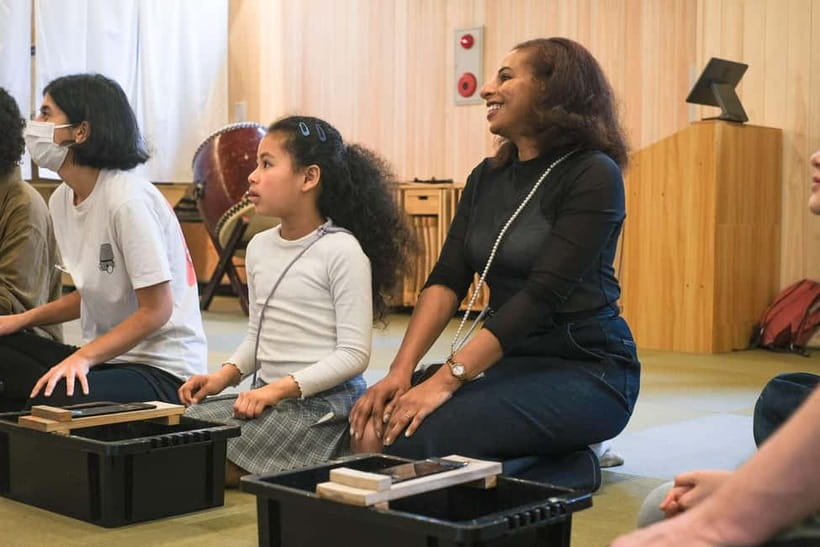
At $161 per person for about 90 minutes, the price is not cheap. But it can feel fair because you are paying for three things at once: instruction, tools and materials, and a take-home crafted object.
You are not leaving with a handmade knife that someone else finished. You sharpen and customize your knife and engrave your handle. That makes the souvenir less generic. You also get included extras like snacks, bilingual support, and a key-holder, plus aesthetic packaging.
Where value can swing for different people is the upgrade options. Some knife types can cost extra, so if you choose a larger or specialized blade, your total will rise. That’s not a problem if you go in with a plan, and the workshop helps you choose based on the knife types available.
If you’re the type of traveler who likes skills you can use, this is stronger value than a purely decorative workshop. You’ll likely use your knife at home, and you’ll know more about care and sharpening than you would after a quick shopping stop.
Logistical Stuff That Actually Helps: Timing, Rules, and Friends Watching
The activity runs about 1.5 hours. That is a reasonable block to fit between other Asakusa plans, and it is long enough to do real work, not just a demo.
English is the instructor language, and bilingual staff assistance is included. Staff energy is repeatedly praised, with many people highlighting how friendly and attentive the guides are, and how clear the communication feels even for people who are not confident speaking Japanese.
There are basic rules. Alcohol and drugs are not allowed. So keep it simple and plan for a normal, focused class.
If you want to come with a friend or family member, you can. There is an observation fee on site if someone wants to watch rather than participate. That is a useful option if only one person in your group wants to make a knife.
The workshop is also wheelchair accessible, which is a genuine plus if you need that kind of access planning.
Who This Workshop Fits Best
This workshop fits best if you want a hands-on Tokyo activity that produces something you can bring home and actually use. It is also a strong choice if you enjoy learning craft techniques with real guidance.
It suits beginners. The class is described as suitable for beginners with no prior experience required. So if you are new to sharpening or Japanese kitchen knives, you should still feel welcome.
It is also a good match for people who enjoy conversation and cultural context. The history portion and the chance to chat with the staff are part of what people keep mentioning.
If you are shopping-heavy and already know exactly which knives you want to buy, this might feel like slower work. But it can still be worth it because you’ll learn how to evaluate a knife and how care and sharpening affect performance.
Should You Book This Knife Workshop in Tokyo?
If your idea of a great souvenir is a functional object made by your hands, book it. The workshop gives you a clear path: choose a knife type, sharpen with close coaching, engrave your name in Japanese, then assemble the final product with a traditional hammer. You also get cultural context, tea and snacks, and included presentation items.
I would book it especially if you:
- Want a beginner-friendly skill you can use after the trip
- Care about doing the work yourself, not just watching
- Like the idea of taking home something personal, like your name in Japanese on the handle
- Prefer English support and patient instruction
If you have zero interest in sharpening or Japanese kitchen tools, you might find the concentration part too much. And if you are very budget-tight, watch the potential extra fees for larger knife types.
Overall, this is the kind of Tokyo experience that turns learning into a real, useful item. It’s practical, it’s hands-on, and it sticks with you long after you’ve left Asakusa.
FAQ
Where is the knife making workshop located in Tokyo?
The meeting point is BUB ACTIVITY CENTER, Tokyo, Taito-ku, Asakusa, 2 Chome 6-11, Heiwa Building. Take the elevator to the 5th Floor.
How long is the workshop?
The duration is about 90 minutes, approximately 1.5 hours.
Is the workshop taught in English?
Yes. The instructor is English, and bilingual staff assistance is included.
What do I take home at the end of the class?
You take home a customized knife crafting result that includes a standard size multi-tasking knife. You also receive aesthetic packaging and a customized key-holder as part of what is included.
Can I engrave my name in Japanese?
Yes. You’ll engrave your name in Japanese letters on the handle during the workshop.
Are there extra charges for certain knives?
Some bigger knife types may require an additional fee, such as u
suba, deba, and petit yanagiba. The standard knife is included.
Can friends or family watch if they do not participate?
Yes, there is an observation option. An observation fee may be charged on site.
Is the workshop wheelchair accessible?
Yes, the activity is wheelchair accessible.
How should I transport the knife when I leave Japan?
You should put your knife box into your check-in luggage, or ask the staff to ship it.
Is there free cancellation and can I pay later?
Free cancellation is available up to 24 hours in advance for a full refund. The experience also offers reserve now, pay later.
Latest write-ups near Tokyo
- Harajuku Private Tour: Kawaii Fashion & Animal Cafe Included★ 5.0 · 69 reviews
- Mt Fuji Customizable Private Tour English Speaking Driver Pick-up★ 5.0 · 69 reviews
- Tokyo Night Cooking Class: 5 Home-Cooked Japanese Dishes★ 5.0 · 70 reviews
- Tokyo: Sumida Aquarium Entry Ticket★ 4.6 · 70 reviews
- Private Customizable Walking Tour of Tokyo★ 5.0 · 70 reviews
- Official Japan Go-Kart Through Tokyo Bay / Ginza (IDP Required)★ 4.5 · 71 reviews
- Wagyu Beef and Sake Pairing Foodie Tour in Tokyo★ 5.0 · 71 reviews
- Experience Big soba knife Soba Making Class in Tokyo Kappabashi★ 5.0 · 71 reviews
Knife Making Experiences, compared.
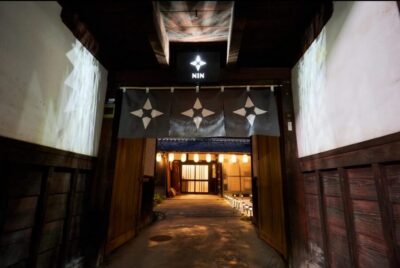
Authentic knife making experience at a blacksmith in Kyoto
Read our review →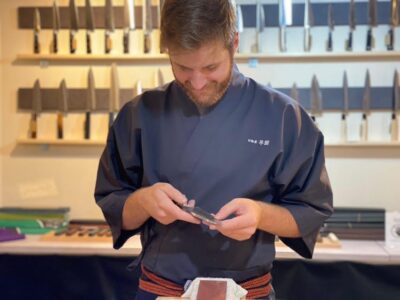
Beginner Knife Sharpening & Handle Fitting Workshop
Read our review →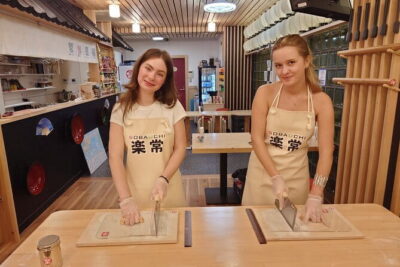
Experience Big soba knife Soba Making Class in Tokyo Kappabashi
Read our review →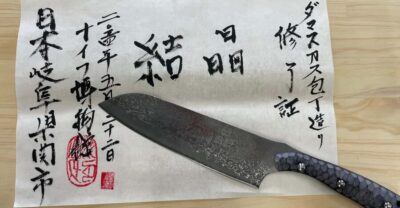
Seki: Samurai Knife Making Experience at the Knife Museum
Read our review →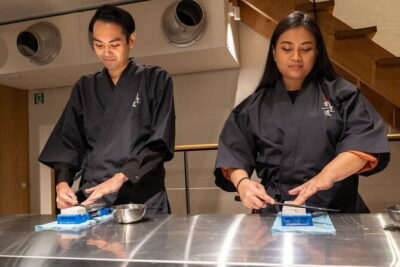
Gifu Samurai Sword Town;Japanese Damascus Knife Making Experience
Read our review →Browse the lists this tour appears in