
Reviewed · KIMONO EXPERIENCES
Elegant Tea Ceremony While Wearing Kimono Experience in Kyoto
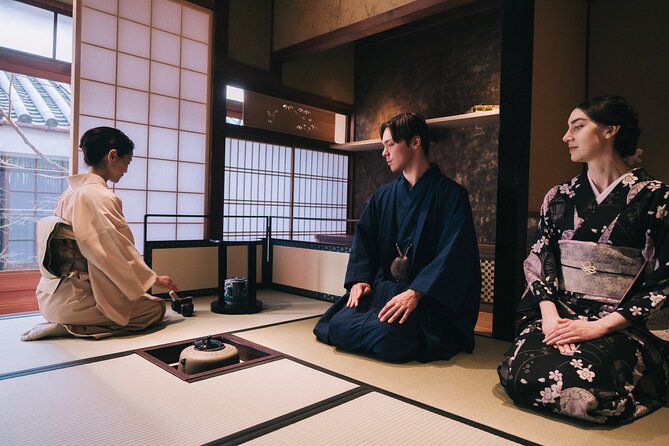
Kyoto does tea in a very specific way, and this experience lets you do it yourself, not just watch. At Nishiki Orizuruya, you start with kimono rental and move straight into a guided tea ceremony near Nishiki Market.
Two things I like a lot are the hands-on format and the care they put into your look. Women also get free hair styling, and the whole session runs with English guidance so you actually know what you are doing. That matters when you are whisking matcha and learning the rhythm of the ceremony.
One thing to keep in mind: if you want a deep, step-by-step explanation of the history behind every motion, you might feel slightly underfed on context. Some parts focus more on doing the craft and enjoying the atmosphere than on long lectures, and weekends can get crowded.
Key Highlights You Should Know Before You Go
- Kimono rental included, with women receiving free hair styling
- English-guided tea ceremony with a professional tea master
- Choose your add-on: calligraphy, gold leaf art, or Nishiki Market walking
- Small group size (up to 10 travelers) for a more personal feel
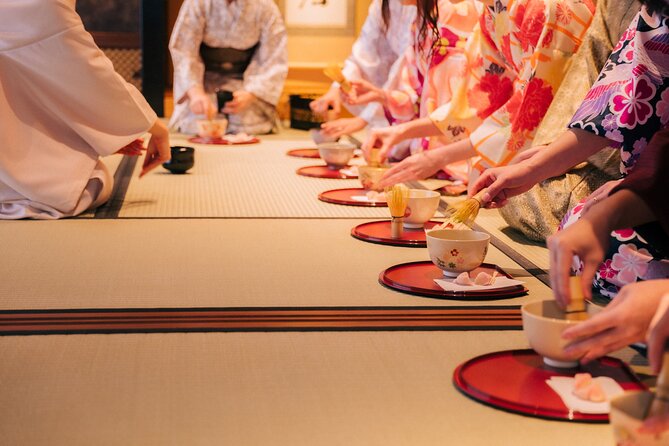
- Seasonal wagashi + matcha, with sweets from a 100-year-old confectionery
- Comfort help like a chair option if you do not want to sit on the floor
Nishiki Orizuruya, and Why the Location Is a Big Deal
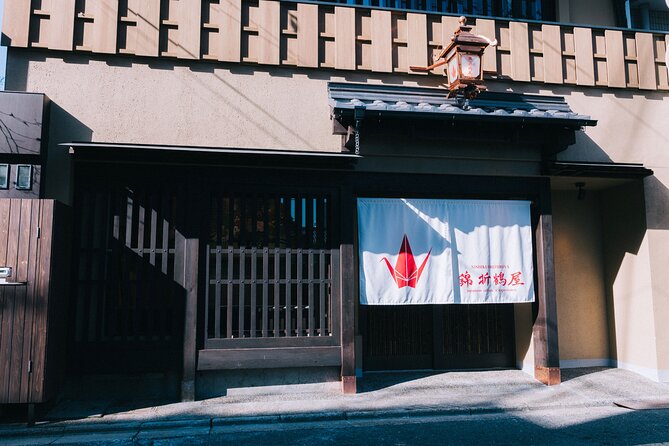
This is one of those Kyoto set-ups where you can “do culture” and still have time to roam on your own. Nishiki Orizuruya sits about a minute walk from Nishiki Market, so you are not trekking across town just to get to the tea house.
I like that practical location because it makes your day easier. You can pair the ceremony with market browsing before or after, and you are not stuck between distant neighborhoods. Also, you are in a zone packed with traditional shops and food culture, so the experience does not feel isolated.
Finally, the experience is kept small, with a maximum of 10 travelers. That usually means less waiting around and more attention from the staff during dressing and during the ceremony.
More Kimono Experiences in Kyoto
- Kimono Tea Ceremony at Kyoto Maikoya, NISHIKI
★ 5.0 · 911 reviews - Kyoto: Kimono Rental with Hairstyling and Accessories
★ 4.8 · 653 reviews - Kyoto: Kimono Tea Ceremony at Orizuruya Gion
★ 4.9 · 618 reviews
Kimono Fitting and Hair Styling, Where Your Day Starts to Feel Special
Your experience starts at the Nishiki Orizuruya meeting point at 452 Jūmonjichō, Nakagyo Ward, Kyoto. Plan to arrive at least 10 minutes early. That buffer helps because getting dressed is not a quick, generic thing, it is careful work.
If you are traveling with women, this part is a standout. The package includes kimono rental, and women get free hair styling. Reviews highlight that the staff are patient and detail-oriented, and they accommodate different sizes. You will also have a chance to pick out your kimono and accessories, which turns the dressing session into part of the fun, not just a formality.
If you have mobility or comfort concerns, look out for practical support. One review specifically notes a chair was provided if sitting on the floor was not comfortable. That is the kind of small detail that keeps a cultural activity from becoming a pain test.
Quick reality check: the experience is more about kimono presentation for women, and some feedback suggests men may not find the kimono selection as exciting. If you are traveling as a mixed group, it is still great for everyone, but set your expectations for what feels “personal” in the process.
The 90-Minute Tea Ceremony, What You Actually Learn to Do
The heart of the experience is a formal Japanese tea ceremony led in English by a tea master. You will not just sip. You will learn the process and actively prepare your own matcha.
Here is what makes this more than a performance. You see the demonstration first, then you prepare your matcha using a bamboo whisk. That gives you the chance to understand the movements, timing, and how the tea should look and feel while you whisk.
The ceremony also includes pairing it with traditional sweets, wagashi, made for the season. Reviews call out the overall atmosphere as serene and intimate, and the staff work hard to make you feel welcome. One named tea host mentioned in a review, Ruriko, is praised for explaining the true meaning behind the ceremony.
Even if you do not catch every detail, you will still walk away with the practical “feel” of what matcha making is like. That is what turns it into a memory you can recreate at home, even if you cannot recreate the exact room.
Matcha and Wagashi, the Sweet Spot Between Craft and Comfort
Food is part of the point here, and they do it carefully. After the tea demonstration and your own whisking, you get to savor matcha paired with traditional seasonal sweets.
The sweets are from a 100-year-old confectionery, which is a detail worth appreciating when you are deciding if the experience feels special enough for the price. You are not just getting a generic snack. You are getting a curated pairing that belongs with the tea ceremony.
A helpful note for planning: one review says the team accommodated allergies for sweets and tea. If you have dietary restrictions, it is smart to mention them when you check in, so they can handle it without last-minute stress.
More Tea Ceremonies in Kyoto
- Kyoto: Tea Ceremony in a Traditional Tea House in Kiyomizu
★ 4.9 · 3,519 reviews - Kyoto: Tea Ceremony Ju-An at Jotokuji Temple
★ 4.9 · 3,207 reviews - Kyoto: 45-Minute Tea Ceremony Lesson Experience
★ 4.3 · 2,378 reviews - Kyoto: Table-Style Tea Ceremony at a Kyo-Machiya
★ 4.9 · 1,211 reviews
Pick Your Path After Tea, One Ticket, Three Kinds of Culture
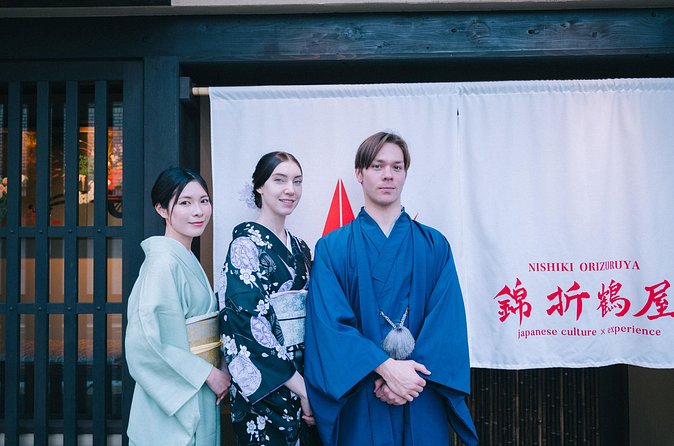
After the tea ceremony, you choose one of three add-on experiences. This is one of the smartest parts of the design, because Kyoto has more than one way to do “traditional art.”
Your choices:
- Tea Ceremony and Calligraphy (about 130 minutes total)
- Tea Ceremony and Gold Leaf (about 130 minutes total)
- Tea Ceremony and Nishiki Tour (about 150 minutes total)
In each option, you keep the same core: kimono, matcha, and the tea room experience. The difference is what you do next, which helps you match the activity to what your group likes best.
Calligraphy With a Brush and Ink, Your Favorite Kanji on Paper
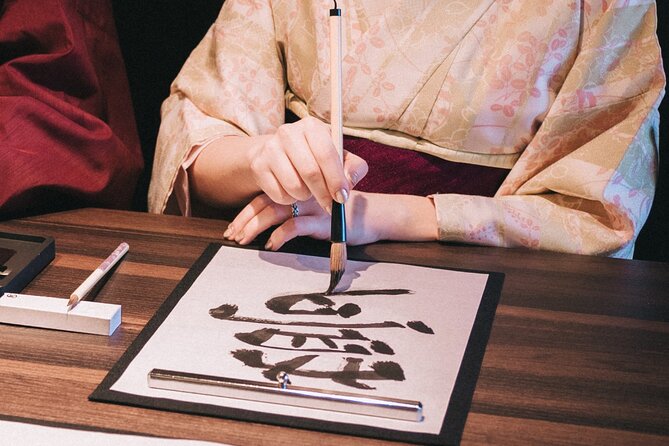
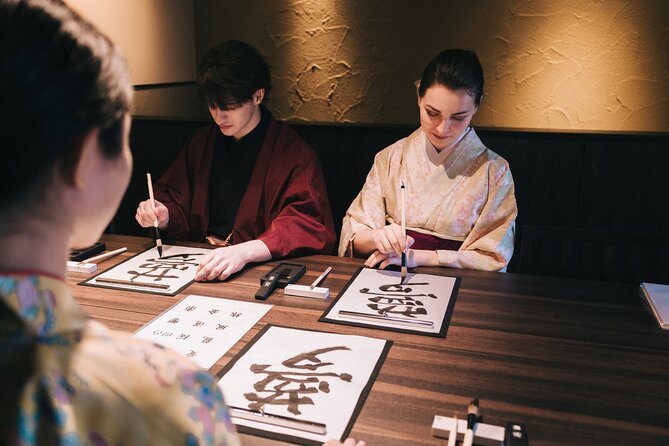
If you love writing arts, go for the calligraphy option. You will learn to write your favorite kanji using a brush and ink on washi paper.
This is not just about copying. It is a hands-on session where you get the sensation of brushwork and ink flow. For many people, that is the real souvenir. Photos are nice, but writing a kanji yourself gives you something you can frame and explain later.
Reviews also mention how families enjoyed the calligraphy segment. One review focused on the way the tea ceremony increased appreciation for matcha, and they also did calligraphy as part of the same day. That combo works well because calligraphy and tea both reward calm focus.
Practical thought: bring a kanji you can pronounce and spell confidently, or ask for help during the session. Since your goal is your own character, you want to get it right.
Gold Leaf Plate Workshop, High-Purity Craft in Small-Scale Form
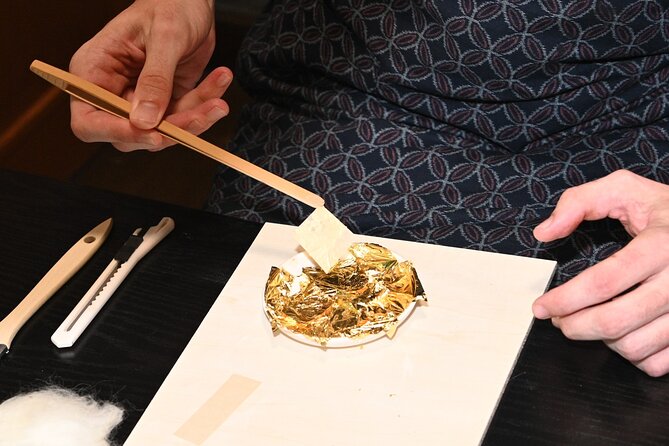
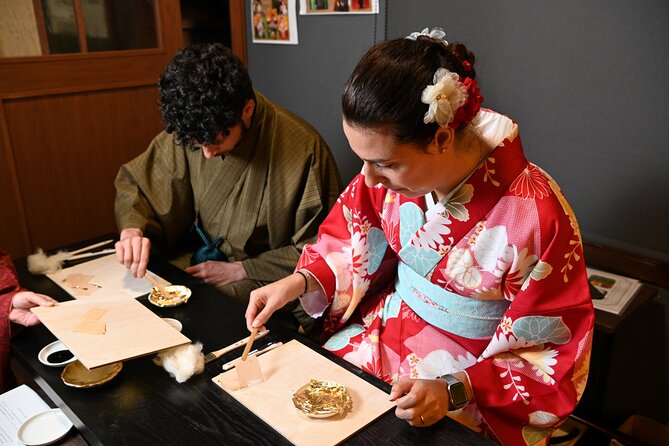
The gold leaf option is for you if you want something visually satisfying and a little more playful. After your tea, you join a hands-on gold leaf workshop and decorate a small plate using high-purity gold leaf.
This kind of craft is great for first-timers because the result looks impressive even when it is your first try. Reviews emphasize the hands-on nature, and the plate becomes a takeaway you can actually use or display.
The gold leaf process also tends to work well for mixed ages. If you are traveling with a group that wants variety from the tea, gold leaf hits that balance.
The Nishiki Market Walking Option With an English Guide
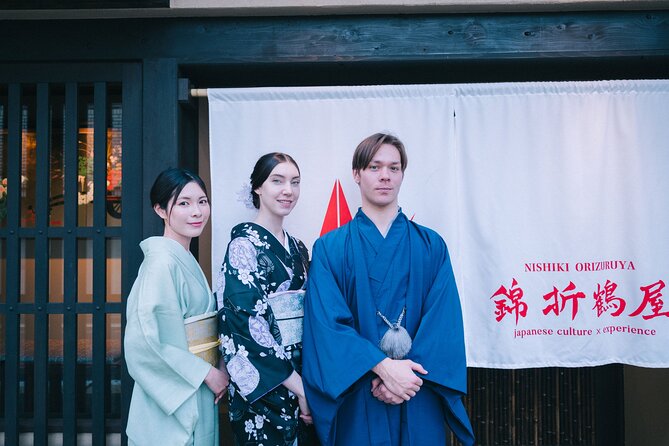
If you are trying to get your bearings in Kyoto’s food scene, choose the Nishiki tour option. It pairs your tea ceremony with exploring Nishiki Market and nearby local shrines and shopping streets with an English-speaking guide.
Nishiki Market is often called Kyoto’s Kitchen, and this add-on uses that idea in a smart way. Instead of walking through it blindly, you get a guide to connect what you see with Kyoto food culture and the surrounding historic area.
Reviews specifically praise market guidance, including a mention of Lina as a fantastic guide. That is exactly what you want here, because markets can be overwhelming, and not knowing what to try is a missed opportunity.
A tip for enjoying this segment: wear shoes you can walk in comfortably. The kimono is part of the fun, but Nishiki Market walking means real footwork.
Photo Moments and Staying Comfortable in a Kimono
This experience is built for photos, and the staff generally help. Reviews mention plenty of photo opportunities while dressed, and the dressing team takes care with accessories and hair decorations.
One detail I find especially useful for planning: some reviews note you may be allowed to keep your kimono on until 6pm and walk around the area afterward. That turns the day into more than a “two hours and done” activity. It gives you time to enjoy Nishiki Market streets in full costume.
Comfort matters though. If you are not used to formal kimono posture or sitting on the floor, plan for adjustments. The chair option mentioned in a review is a strong sign they think about comfort, but you still want to be realistic about how your body feels in a more structured outfit.
Price and Value, How $50.58 Really Adds Up
At $50.58 per person, the price feels more like a bundle than a basic workshop. You are paying for:
- Kimono rental
- Free hair styling for women
- English-guided tea ceremony
- Making your own matcha using a bamboo whisk
- Seasonal wagashi sweets
- A choice of an added art or a market tour option
Then there is the time factor: the main experience is about 2 hours 30 minutes total, depending on which option you pick. That is a good chunk of your day for one set ticket.
Also, the group size matters. Up to 10 travelers means you are less likely to be rushed through the dressing or the craft. In Japan, where many cultural experiences can be assembly-line quick, small-group attention is part of what you are paying for.
If you are comparing this to a standard tea tasting without kimono or without hands-on instruction, the value jumps. Here, you are learning, crafting, and participating, not just sampling.
Who Should Book This, and Who Might Want Another Style of Tea Day
This works best for you if:
- You want a classic Kyoto cultural experience with clear structure
- You care about kimono styling and want the staff to handle the details
- Your group likes hands-on learning, not just watching
- You want a full day-feel without committing to a whole half-day tour
It may feel less ideal if:
- You want lots of deep historical lecture for every tea step
- You are expecting a long market guide talk, since the market option is only the add-on portion
- Your group is mostly male and not interested in kimono selection, since the dressing part is more centered on women’s styling
That said, the core tea ceremony and matcha making are still the centerpiece for everyone.
Timing and What to Do When You Have Limited Kyoto Time
If your Kyoto schedule is tight, this is a solid “one-stop” experience. It gives you both craft and context: matcha preparation plus either calligraphy, gold leaf, or a market stroll.
Arrive a little early so your kimono fitting does not feel rushed. Then give yourself permission to slow down inside the tea room. The point of tea is not speed. If you treat it like a checklist, you will miss the calm part.
Afterward, especially if you keep your kimono longer, plan an extra window for walking around the Nishiki area. It is one of the easiest places to turn a craft experience into a memorable day.
The Practical Stuff That Makes the Day Go Smooth
A few things to keep your expectations clean:
- You’ll get a mobile ticket
- You receive confirmation within 48 hours of booking, based on availability
- The experience is near public transportation
- The maximum group size is 10 travelers, which helps with attention
- Children age 5 and up can join, with no child discount
- Crowds can happen on weekends, holidays, and during special events
One more practical note: keep an eye on your belongings. The organizer says you are responsible for your own items, so bring only what you need.
Should You Book This Elegant Kimono and Tea Experience?
In my view, yes, if you want Kyoto to feel hands-on and graceful, not just scenic. The combination of kimono rental, English-guided tea ceremony, matcha whisking, and a choice of art or market exploration gives you strong value for the price.
I would book it if:
- you like structured experiences that still leave room to enjoy the surrounding area
- you want a real craft souvenir, like your calligraphy or gold leaf plate
- you want the day to include both culture and food energy, thanks to the Nishiki connection
I would think twice if you mainly want heavy lecture on tea history, or if your schedule is so packed you cannot handle weekend crowds. Otherwise, this is the kind of Kyoto activity that makes people ask, what did you do there?
FAQ
Where does the experience start?
It starts at Nishiki Orizuruya, 452 Jūmonjichō, Nakagyo Ward, Kyoto, 604-8121, Japan. It ends back at the meeting point.
How long does the experience take?
The duration is about 2 hours 30 minutes (approx.).
What is included in the experience?
It includes a kimono rental. Women also receive free hair styling. You also get an English-guided tea ceremony, including preparing matcha and enjoying seasonal sweets. You then choose an additional activity.
What are the available add-on options after the tea ceremony?
You can choose one of these: calligraphy (writing your favorite kanji), gold leaf art (decorating a small plate with high-purity gold leaf), or a Nishiki Market walking tour with an English-speaking guide.
Is the tea ceremony guided in English?
Yes. The guidance is provided in English.
Is there a limit on group size?
Yes. The experience has a maximum of 10 travelers.
Is the experience suitable for children?
Children aged 5 and above may join. There is no child discount.
Is a mobile ticket used?
Yes. The tour includes a mobile ticket.
What if there is bad weather like a typhoon?
The tour can be canceled in severe weather or natural disasters, and it will be fully refunded.
Can I cancel and get a refund if I change my mind?
This experience is non-refundable and cannot be changed for any reason, so cancellation means you would not receive a refund.
Latest write-ups near Kyoto
- Kyoto Private Tour Full Day with Local Guide&Nara Option(PerGroup★ 5.0 · 20 reviews
- Sacred Pathways: Discover the Philosopher’s Path of Kyoto★ 4.9 · 20 reviews
- Hammer Pattering Experience of Ring★ 5.0 · 20 reviews
- Kyoto UNESCO World Heritage Site Private Tour with a Premium Van★ 5.0 · 20 reviews
- KYOTO: Private Tea Ceremony in Hidden Townhouse (Kid-Friendly)★ 5.0 · 20 reviews
- Sushi or Traditional Japanese Cuisine in a Kyoto Home with Emika★ 5.0 · 20 reviews
- The Kyoto VIP Experience!★ 5.0 · 20 reviews
- Kyoto Customized Private Tour: See Top Attractions in 1 Day★ 4.7 · 20 reviews
Kimono Experiences, compared.
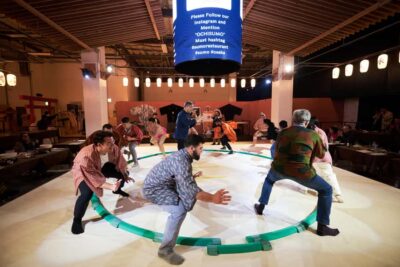
Sumo Show & Experience w/ Optional Kimono & Hot Pot
Read our review →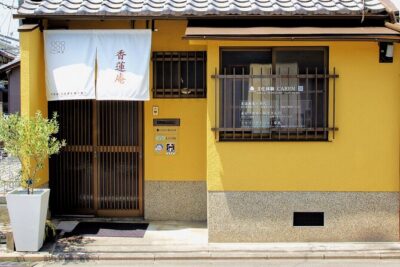
KYOTO Tea Ceremony with kimono near by Imamiya Jinjya Shrine
Read our review →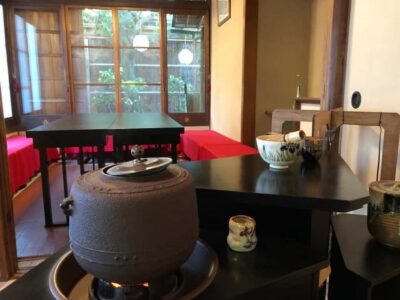
Kimono and Tea Ceremony Experience at Cultural Asset
Read our review →

Browse the lists this tour appears in