
Reviewed · COOKING CLASSES
Gyoza Cooking Class in Kyoto: Traditional Japanese Dumplings
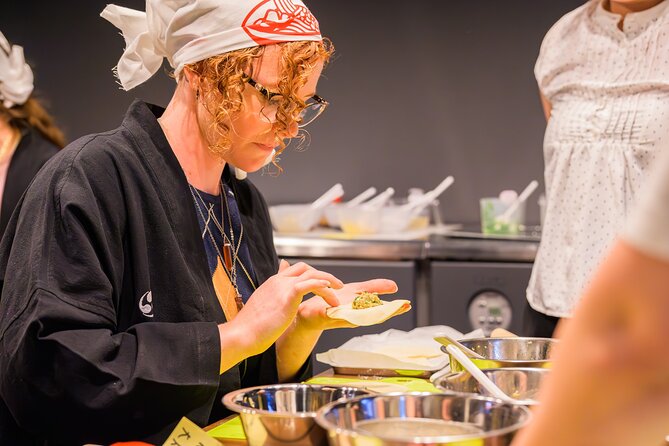
Kyoto dumplings plus a cultural story is a fun combo, and this class keeps it practical. You learn traditional gyoza step by step inside a Kyoto townhouse, then you can add the optional samurai armor dress-up and photos afterward. It’s the kind of evening that feels local, not tourist-y.
I especially like two parts. First, you make the wrappers from scratch, not just stuff dumplings. Second, you cook them using a professional baking machine, so your results are closer to what you’d find in a proper kitchen. One consideration: the price is on the higher side, so you will want to treat it as a skill class, not a quick snack.
Key Highlights You’ll Care About
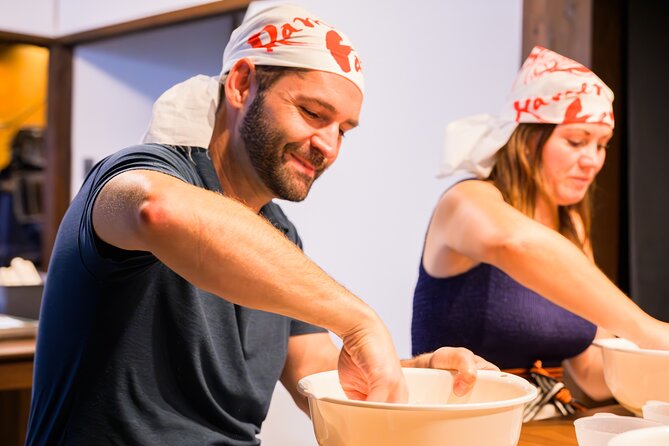
- Make wrappers from scratch, then learn how to wrap gyoza properly
- Choose your own filling, so you control the flavor profile
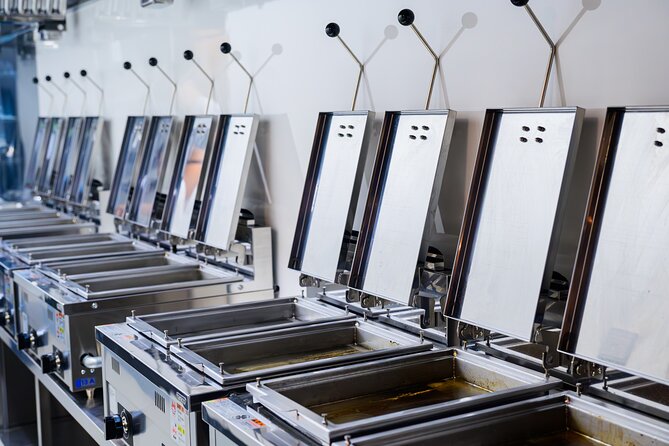
- Use a professional baking machine, not a stove-only demo
- Small group size (max 20), which helps you stay hands-on
- Optional samurai armor dress-up for memorable photos
- English-speaking instructors like Hama, Maya, and Ryo (depending on your session)
Why This Kyoto Gyoza Class Feels More Like a Skill Than a Show
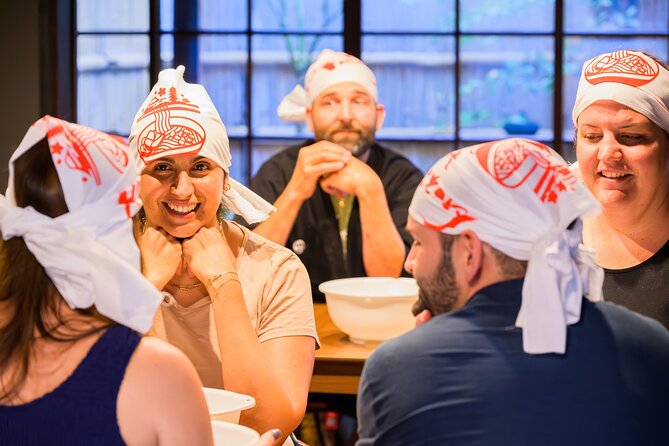
This isn’t a sit-and-watch food tour. The core of the experience is hands-on dumpling making, from dough to finished gyoza. You’ll get that satisfying moment when you see your own folds hold together, and the dumplings start cooking the way they should.
The Kyoto townhouse setting matters too. A normal restaurant class can feel rushed. A traditional home-like space gives you more time for the basics, and it makes the whole thing feel like you’re learning something that belongs in everyday Japanese life. Add in the optional samurai armor photo moment, and you get a blend that works for both food lovers and culture-focused travelers.
Finally, I like that the cultural layer is light but present. You learn a bit about samurai culture and Japanese history alongside the gyoza origin story, so the class has context without turning into a lecture.
More Cooking Classes in Kyoto
- Ramen Cooking Class at Ramen Factory in Kyoto
★ 5.0 · 1,937 reviews - Kyoto: Ramen Cooking Class at a Ramen Factory with Souvenir
★ 4.9 · 532 reviews - Kyoto: Ramen, Gyoza, and Onigiri Cooking Class
★ 5.0 · 445 reviews
Price and What $118.19 Buys You (Beyond the Dumplings)
At $118.19 per person, this is not the budget end of Kyoto cooking. But the value is in what’s included, not in just the food you eat.
Here’s what you’re paying for:
- An English-speaking instructor guiding you through the full process
- Cooking tools provided for the class
- Hands-on instruction that covers wrappers, filling, wrapping, and cooking
- Use of a professional baking machine, which you usually do not get in cheaper classes
- A take-home feel, since multiple instructors and sessions mention souvenir items like an apron and headband
If you go in expecting a quick tasting, you may feel the cost. If you go in expecting to leave with a repeatable technique, it makes more sense. In one session, people describe making around 10 to 12 gyoza per person, which helps justify the time and hands-on pace.
Getting to the Class: Kyoto Townhouse, Public Transit Nearby
The class starts at 230-1 Kamimyōkakujichō, Nakagyo Ward, Kyoto, 604-0025, Japan. It also ends back at the meeting point.
One practical point I appreciate: it’s near public transportation. That matters in Kyoto, where private transport can get pricey fast. The listing also notes that private transportation is not included, so plan to handle getting there on your own.
Also note the time window. It’s listed at about 1 hour 30 minutes. In real life, you’ll likely find sessions run close to that, so I’d treat it as a fixed block in your evening, not something you can easily stretch or shorten.
Your Start-to-Finish Flow: What Happens in the 1.5 to 2 Hour Window
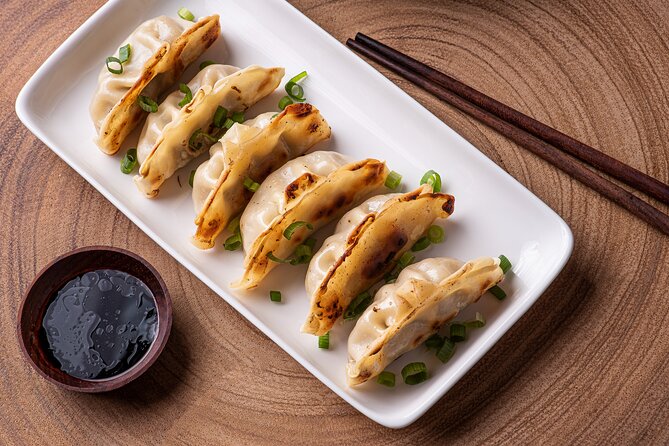
The experience is structured so you’re doing something almost the whole time. You begin with the dumpling plan, then you move into the hands-on parts in sequence.
You can expect these core stages:
- Learn how gyoza are put together and how the process works
- Pick your favorite filling
- Make gyoza wrappers from scratch
- Practice wrapping technique so the shape holds
- Cook the gyoza using a professional baking machine
- Optional samurai armor dress-up for photos after the class
That structure is one reason people love it. You’re not waiting around for long stretches. Instead, you’re building skills in a logical order, which helps if you’re cooking for the first time.
A change of pace from Kyoto:
- PERFECT KYOTO 1-Day Bus Tour
★ 5.0 · 13,518 reviews - Kyoto: Fushimi Inari, Kinkakuji, Bamboo Grove 1 Day Bus Tour
★ 4.8 · 4,316 reviews - Kyoto: Tea Ceremony in a Traditional Tea House in Kiyomizu
★ 4.9 · 3,519 reviews - Kyoto Geisha Walking Tour: Gion District & Hidden Gems
★ 4.7 · 3,273 reviews
Choosing Your Filling, Then Making Wrappers From Scratch
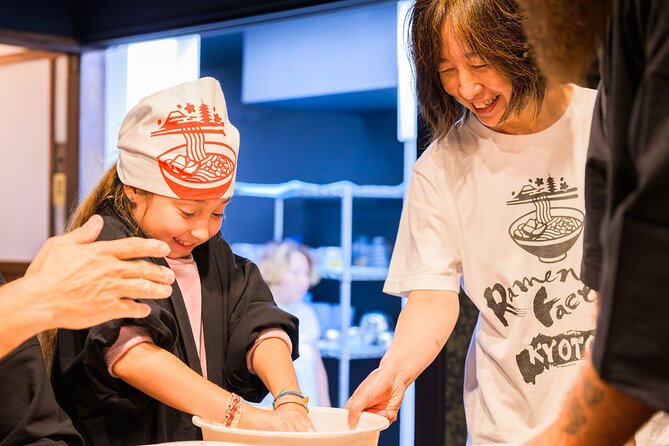
The class starts with the filling choice. Being able to pick what you like is more than a perk. It makes the class feel personal, and it also affects what you’ll remember later when you try to cook at home.
Then comes one of the biggest differences between this and many “dumpling” experiences: you make the wrappers from scratch. That means you learn how the dough behaves and how the wrapper becomes pliable enough to fold.
I find this especially useful if you’re the type who wants to recreate the dish later. Telling a friend you made dumplings is fun. Telling them you made the wrappers too is the kind of detail that makes your next cooking night feel special.
Wrapping Gyoza Like You Mean It (Not Just Folding Anything)
Wrapping is where skill shows. The class focuses on the art of wrapping, so you understand how to fold so the gyoza keep their shape.
Based on what people describe, the instruction includes clear practice steps. That helps a lot if your hands are not used to repeating precise motions. You’re likely to start with a few awkward folds, then improve as you go, which makes the final batch much more satisfying.
If you’re cooking with kids or teens, this part can be a great confidence builder. It’s hands-on, visible progress, and you can see the difference between early attempts and later ones.
Cooking with a Professional Baking Machine: Getting Results, Fast
Gyoza are not just about taste. They’re also about texture, which is why cooking method matters. This class uses a professional baking machine, so you’re not guessing on heat level or timing on a home burner.
That’s a big deal if your goal is to replicate the experience later. You learn how the cooking process works when the equipment is built for the task. You also learn what properly cooked gyoza look and feel like, which is the shortcut to better results next time.
After you wrap, you cook, and the smell alone usually makes the whole room feel like you’re in a real kitchen. Even if you’re not a confident cook, this part tends to build momentum because it’s less theory and more action.
The Cultural Layer: Gyoza Origins and Samurai-Era Atmosphere
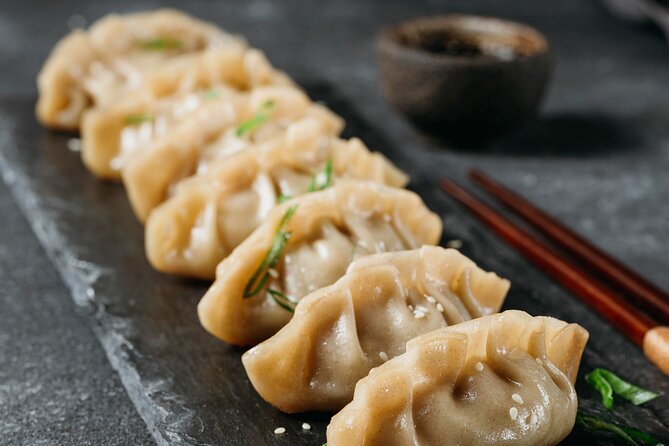
Gyoza originated in China, but they became something distinctly Japanese over time, with different styles and sizes. This class uses that origin story as a way to connect food with identity and history.
Then you get additional context tied to samurai culture and Japanese history. It’s not meant to turn the class into a history seminar. It’s more like a guided narrative that makes the dumplings feel like part of Kyoto life rather than just an activity you did for fun.
In short: you leave with a flavor memory and some background to attach to it. That’s a more meaningful souvenir than another photo, even if you do take photos.
Optional Samurai Armor and Photos: A Fun Add-On With Real Impact
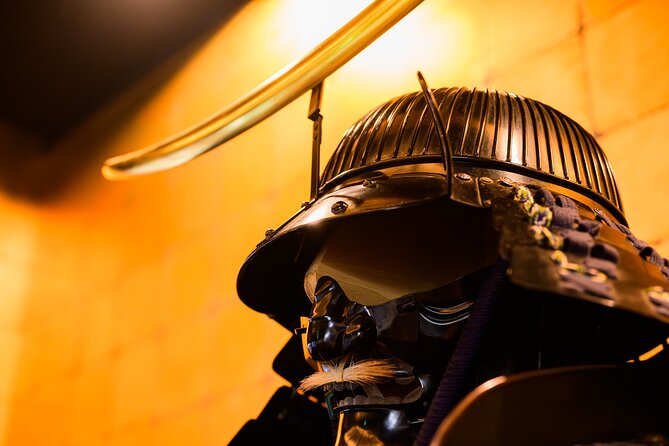
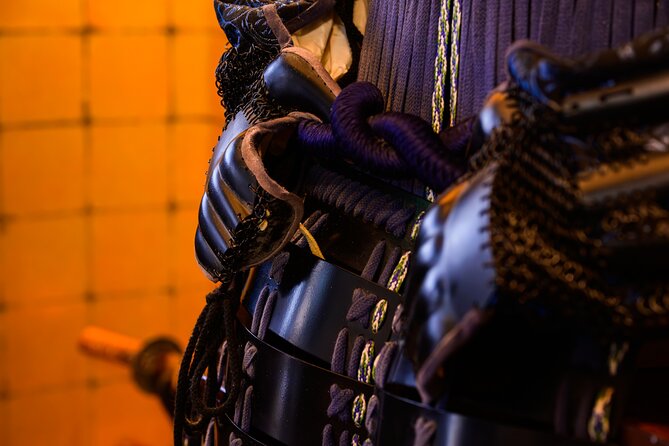
After cooking, you have the option to dress up in samurai armor and take memorable photos.
I like this segment because it’s optional. If you’re here mainly for cooking, you can skip it. If you want that classic Kyoto story moment, you can add it without sacrificing the main point of the class.
Some people also mention souvenirs like an apron and headband, which makes the experience feel more tangible. It’s a small detail, but in a skill class, a take-home item reinforces the idea that you actually learned something.
How Many Gyoza You’ll Make (And Why That Matters)
You’re not just making one or two dumplings. One review notes making about 10 to 12 gyoza per person. That number matters because it affects two things:
- The experience feels complete, not rushed
- You can share what you made, right away or later
If you’re traveling with friends or family, the ability to take home a batch or immediately share food is a big part of why this kind of class works. It turns a cooking lesson into something social, which is how most great food moments happen.
Who This Class Is Best For in Kyoto
This is a strong match if you want:
- A hands-on Kyoto food experience where you learn technique, not just taste
- Clear, step-by-step instruction in English
- A small group setting (max 20) where you are not lost in the crowd
- A fun evening that works for adults, and can work well for older kids and teens too
It may be less ideal if:
- You’re only interested in eating gyoza, not making them
- You have limited time and need a shorter stop
- You are price sensitive and want the cheapest possible cooking option
The good news: because you make both wrappers and dumplings, you’re buying a repeatable skill. That’s the best kind of travel value.
Should You Book This Kyoto Gyoza Cooking Class?
Book it if you want to leave Kyoto with a real cooking memory, not just a plate and a photo. You’ll get English instruction, tools, wrapper-making practice, and cooking on equipment meant for the job. The optional samurai armor dress-up adds fun without taking over the main experience.
Skip it if you’re chasing a bargain or you already feel confident making dumplings and only want to taste. In that case, you might prefer a simpler food stop.
If you decide to go, my best advice is to treat this like a skill workshop. Show up hungry, focus on the steps, and you’ll get the kind of “I can do this at home” payoff that makes the price feel fair.
FAQ
How long is the gyoza cooking class?
The class lasts about 1 hour 30 minutes.
What is the price per person?
The price is $118.19 per person.
Where does the class meet in Kyoto?
The meeting point is at 230-1 Kamimyōkakujichō, Nakagyo Ward, Kyoto, 604-0025, Japan.
Is the instructor English-speaking?
Yes. An English-speaking instructor is included.
Are cooking tools provided?
Yes. Cooking tools are provided for the class.
Do I make the gyoza wrappers myself?
Yes. You will learn to make gyoza wrappers from scratch.
Can I choose my gyoza filling?
Yes. You can choose your favorite filling.
Is samurai armor part of the experience?
Samurai armor dressing is optional. You can dress up and take photos if you want.
Can I cancel for a full refund?
Yes, you can cancel up to 24 hours in advance for a full refund. If you cancel less than 24 hours before the start time, the amount paid is not refunded.
Latest write-ups near Kyoto
- Kyoto: Nishiki Market Tour with a Local Foodie & Tastings★ 4.5 · 67 reviews
- Kyoto Kimono Rental mimosa |Kimono/Yukata Rental Couple Plan★ 4.8 · 67 reviews
- Kyoto: Traditional Kimono Fabric Handicrafts Workshop★ 5.0 · 67 reviews
- Kyoto Tea Ceremony and Samurai Photo Session★ 5.0 · 70 reviews
- Kyoto: Replica food making experience★ 4.8 · 70 reviews
- Kyoto: Kinkakuji, Golden Pavilion Guided Tour★ 4.7 · 71 reviews
- Private departure transfer from Kyoto city to Kansai International airport★ 5.0 · 72 reviews
- Uji: Green Tea Tour with Byodoin and Koshoji Temple Visits★ 4.8 · 72 reviews
Cooking Classes, compared.
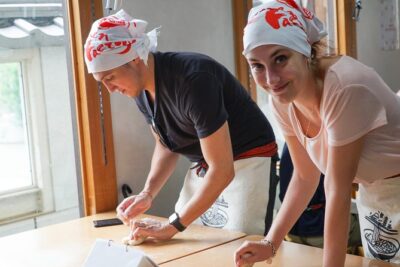
Ramen Cooking Class at Ramen Factory in Kyoto
Read our review →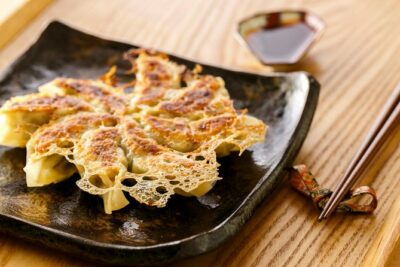
Ramen & Gyoza Cooking Class in Tokyo with Local Supermarket Visit
Read our review →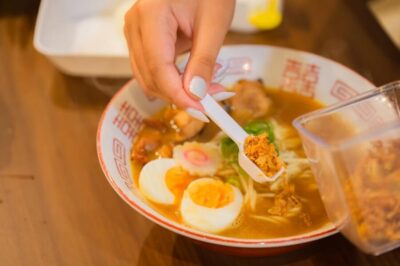
Ramen Cooking Class at a Ramen Factory with Souvenir
Read our review →
Japanese Washoku Bento Small Group Cooking Class
Read our review →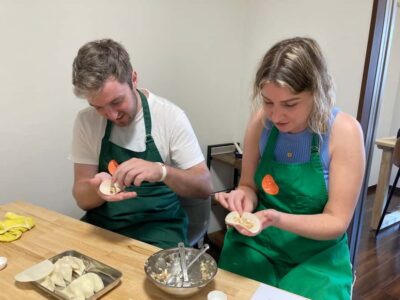

Easy Ramen Cooking Experience in Kabukicho, Shinjuku
Read our review →
Ramen and Sushi Cooking Class with Sake Pairing Set in Tokyo
Read our review →Browse the lists this tour appears in