
Reviewed · PEACE MEMORIALS
Hiroshima History Tour : A-Bomb Dome, Peace Memorial & City
This tour is interesting because you are not just sightseeing Hiroshima landmarks. You are walking with Japanese local guides who carry family or personal ties to the atomic bombing, so the places land in a very human way.
I love how it pairs the big memorial sites with time in calmer corners of the city, including the gardens, so the story does not only feel heavy. I also love that the tour is flexible and customizable, so your guide can slow down for what you care about and match the pace to your group.
One possible drawback is that it is a walking tour and it is scheduled for “good weather,” so plan for a fair amount of time on your feet and be ready for rain-day changes if needed.
Key highlights
- Family-tied guides share perspectives shaped by memory and everyday life, not a scripted talk
- Skip-line entry to the Peace Memorial Museum plus about an hour inside
- A tight but thoughtful route that hits the Children’s Peace Monument, the Atomic Bomb Dome, and the hypocenter area
- Shukkeien Garden time included, with admission handled for you
- Private format means it is only your group, not a mixed crowd
- Photo data provided so you can focus on listening, not camera duty
Pricing and what you really get for $105.42
This comes in at $105.42 per person for an approximate 3-hour private walking tour. For that price, you are paying mostly for guided time, plus a big chunk of the entry costs and practical extras.
The value jumps out because the Peace Memorial Museum admission is included with skip-line entry, and Shukkeien Garden admission is included too. That means you are not juggling tickets while trying to take in places that deserve your full attention.
You will still want to budget for local transit if you do not use the offered pickup. Public transportation is listed as ¥240.00 per person, and private transportation is not included.
Other Peace Memorial visits:
- Hiroshima Historical Walking Tour – Why A-Bomb was Dropped
★ 4.8 · 893 reviews - Hiroshima: Miyajima Peace Memorial Icons of Peace and Beauty
★ 4.9 · 361 reviews - Hiroshima/Guided Virtual Tour of Peace Park/PEACE PARK TOUR VR
★ 5.0 · 157 reviews
Meeting up, getting around, and the walk you should expect
This is a private tour, so it is only your group with your guide. Pickup is offered, which helps if you want less effort at the start, especially if you are coming straight from your hotel.
That said, it is not a car tour. You should expect a steady walking rhythm across multiple city stops, and the overall experience is designed as a walking loop that takes roughly 3 hours.
The tour is also weather-dependent, so if Hiroshima weather turns, you may be moved to another date or refunded. It is a good reminder to build some flexibility into your day around the museum-area sites.
Hiroshima Peace Memorial Museum: facts first, then meaning
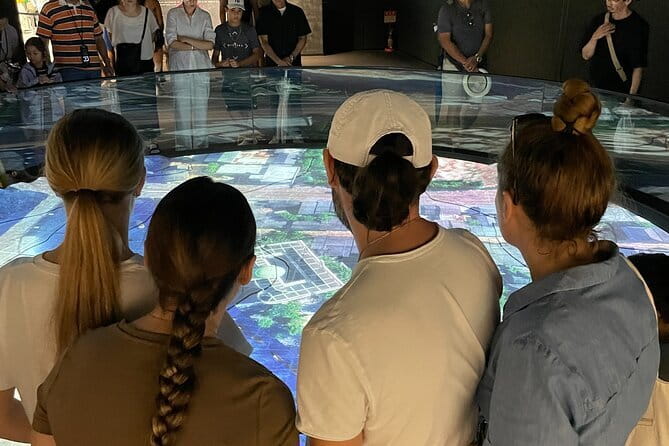
The tour begins at the Hiroshima Peace Memorial Museum, and it works best if you treat this as your anchor stop. You get about an hour inside, with admission included, and the listing notes skip-line entry.
Why this matters: the museum is where you will see the history laid out through exhibits, paintings made by A-bomb survivors, and data. It is the part that turns distant dates and headlines into something concrete you can hold in your mind.
I also like that the approach is not just “read and move on.” With a local guide, you are more likely to notice how the exhibits are organized to show cause, consequence, and the human cost behind the numbers.
Possible drawback: museums can feel intense, and you cannot always “speed-run” grief. If you prefer lighter context first, you might want a slower arrival here, or tell your guide you want to pause more than average.
Peace Memorial Park and Children’s Peace Monument: the quiet between monuments
After the museum, you move into Peace Memorial Park for a stroll and short visits to monuments. The park time is about 20 minutes, with free admission for what you stop at along the way.
This segment is less about formal exhibits and more about learning how to look. A big part of the value comes from hearing the kind of thoughts that only someone who grew up in Hiroshima can share, especially while you are standing in the open air at memorial points.
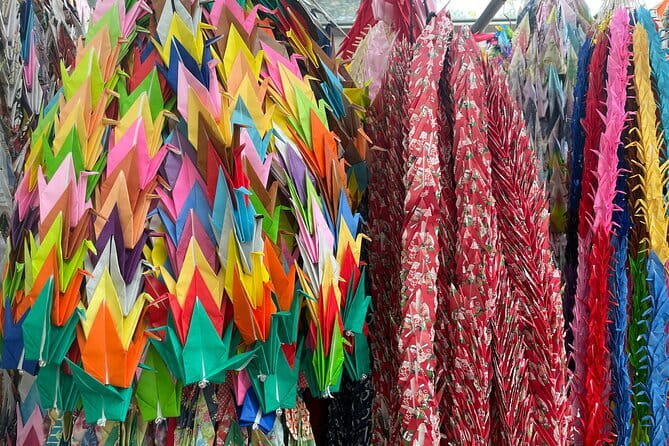
Then you hit the Children’s Peace Monument, with a very short stop of about 5 minutes. The story centers on Sadako and the origami cranes, a well-known symbol of remembrance that you will likely feel more deeply when it is explained by someone connected to Hiroshima’s everyday life.
Practical tip: keep your phone put away for a minute. In places like this, I find it helps to let the quiet do some work before you start collecting photos.
More Historical Tours in Hiroshima:
- Hiroshima Peace (Heiwa) Walking Tour at World Heritage Sites
★ 5.0 · 872 reviews - Miyajima Half-day Trip Historical Walking Tour
★ 5.0 · 284 reviews - Hiroshima: History of Hiroshima Group Walking Tour
★ 4.8 · 266 reviews - Hiroshima: Peace Walking Tour of World Heritage Sites
★ 4.9 · 190 reviews
Atomic Bomb Dome: UNESCO landmark, seen with context
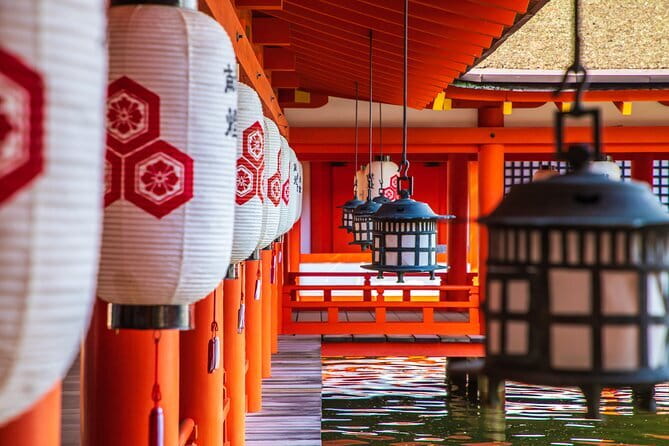
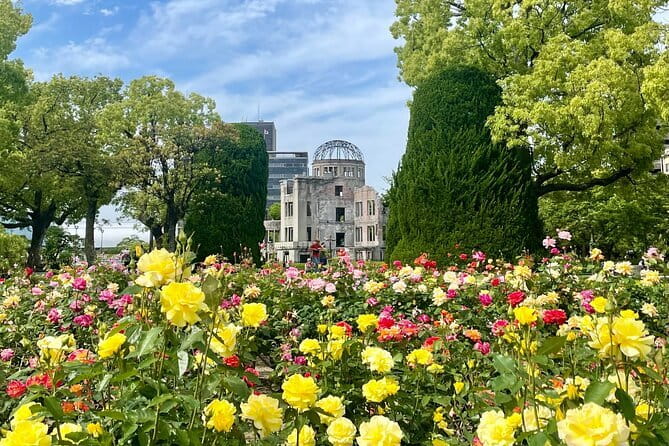
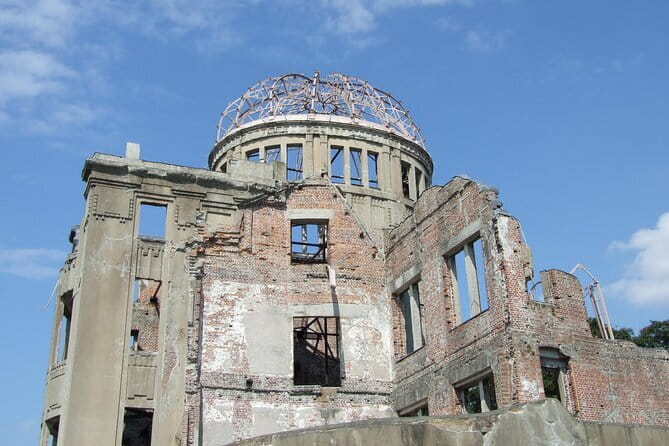
Next up is the Atomic Bomb Dome, also a UNESCO World Heritage Site. You get about 20 minutes here, and it is one of those places where the guide’s framing changes what you see.
The building remains in its original appearance because it sits almost directly below the hypocenter area. That detail is not just trivia, it is the point, and your guide will help you understand why the Dome functions as a symbolic marker of the tragedy of war.
This is a good time for questions. If you only know general history, you will likely leave with clearer answers about what “surviving structure” really means in Hiroshima’s story.
Possible drawback: because it is a famous landmark, you may be there among lots of visitors depending on the time of day. The private guide still helps because you are not stuck reading plaques alone.
Hypocenter monument: the impact point you cannot unsee
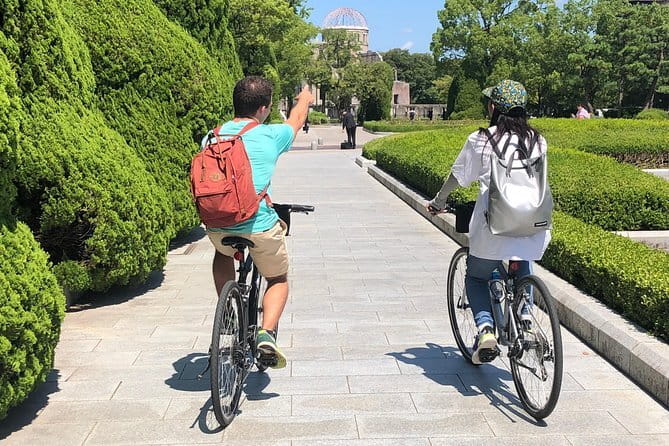
Right after the Dome, you stop at the hypocenter monument for about 10 minutes. It is described as being right above where the bomb exploded near the Shima hospital area.
This stop works as the emotional “compression point” of the route. Your guide will ask you, in a careful way, to imagine standing there at that moment, and to understand how the geography links to the events.
I like that this section is short. For me, a longer pause can make it harder to process the scale without breaking focus, and the way the tour builds toward it feels designed for steady absorption.
Hiroshima Castle replica, plus a chance to enter if you want
Then you go to Hiroshima Castle for a brief photo-oriented stop, about 15 minutes. The castle you see is a replica, since the original was destroyed by the atomic bombing.
If you want more, entry to the museum inside is optional, and the listing notes it is not included. This gives you flexibility, depending on whether you want to stay in the memorial thread or switch to a different angle on the city’s long timeline.
Even if you just do the outside viewing, the castle stop adds something important: it reminds you that Hiroshima is not only the bombing. It is also a place that rebuilt, planned, and carried forward other cultural threads.
Shukkeien Garden: where the tour lets you breathe
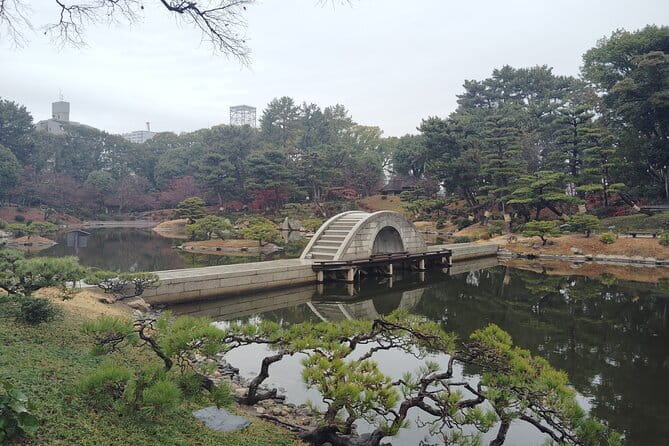
The final major stop is Shukkeien, a Japanese garden that is included with admission. You get about 45 minutes here, which is a generous ending, and it is a contrast you will feel immediately after the memorial sites.
Shukkeien is described as one of the oldest Japanese gardens, created in 1620. The layout includes a pond, trees, and gentle undulations, and it was associated with a samurai who settled in the area.
I like ending here because it gives your brain a new “focus muscle.” After intense context, you get calmer visuals and space to reflect. You can watch how the garden directs your sightlines, and you can appreciate the idea of continuity.
Seasonal note: one guide-related experience mentioned the Momiji festival at Shukkeien, and it sounded stunning. If your dates align with autumn colors, you might catch a special atmosphere, but it will depend on timing.
Why these guides change the experience
The most praised part of this tour is the guides themselves, and that makes sense. Some guides are second-generation atomic bomb survivors. Others were born and raised in Hiroshima, often with family members affected by the bombing.
What you should expect is not a memorized script. The tour is described as perspectives passed down quietly through families and everyday life, which is why it can feel different from a standard lecture-style tour.
In practice, this means you will notice small details as your guide connects them to personal stories. People also mention that the guides were warm, accommodating, and able to explain the history in clear, organized ways.
It also helps that guides are available in English and Japanese. Even if you prefer English, having a guide who can adjust phrasing and pacing keeps the conversation natural.
Who this tour is best for, and who should rethink it
This tour fits best if you want a meaningful, guided walk and you are comfortable with solemn subject matter. It is a strong choice for solo travelers, couples, and families because the tour is flexible and customizable to your pace and interests.
It also helps that the tour is private. If you have kids, it can be easier to keep things grounded when the guide can tailor the rhythm rather than moving with a large group.
The main “pass if” moments are practical. The listing says not to participate if you have cold symptoms, and it requires good weather. If you are dealing with mobility limitations, the walking component is something you should plan around.
Tips to make your time with the guide count
Ask your guide what you should notice at each stop. Because this tour is designed around conversations and perspective, questions can turn good sightseeing into real understanding.
Plan your day so you are not rushing. The route spends time at the museum, several memorial moments, and then Shukkeien, so you will feel the value most when you let the sequence do its work.
And because photo data of the tour is included, you do not have to treat every moment like a camera contest. I would use your phone sparingly and save energy for listening.
Should you book this Hiroshima History Tour?
Book it if you want Hiroshima’s key sites handled with care and context, guided by locals who bring family-linked perspective. You get skip-line museum entry, Shukkeien admission, a route that covers the Dome and hypocenter area, and a finish that helps you process what you just learned.
Skip it if you want a self-guided experience with no emotional framing, or if you cannot handle walking and a weather-dependent schedule. It is also not a casual “see and leave” tour. It is built for reflection.
If you are visiting Hiroshima for the first time and you care about understanding what the landmarks mean, this is one of the more practical ways to do it, without missing the places that matter most.
FAQ
How long is the Hiroshima History Tour?
It runs for about 3 hours (approx.).
Is this a private tour or shared group?
It is a private tour. Only your group participates.
Does the price include museum and garden admission?
Yes. Entry fees for the Hiroshima Peace Memorial Museum and Shukkeien Garden are included.
Do you get skip-line entry to the Peace Memorial Museum?
Yes. The museum entry is listed as SKIP LINE.
Is lunch included?
No. Lunch and any food or drink are not included.
Is pickup available, or do I need to use public transportation?
Pickup is offered. Private transportation is not included, and public transportation is listed as ¥240.00 per person.
What if weather is bad?
The experience requires good weather. If it is canceled due to poor weather, you will be offered a different date or a full refund.
Can I get a refund if I cancel?
Yes. Free cancellation is available up to 24 hours in advance for a full refund.
Latest write-ups near Hiroshima
- An Amazing set of Cultural experience: Kimono, Tea Ceremony and Calligraphy★ 5.0 · 69 reviews
- Hiroshima: Private Walking Tour with a Local★ 4.6 · 70 reviews
- Hiroshima: Miyajima Island Half-Day Tour with Guide★ 4.9 · 71 reviews
- Kimono and Tea Ceremony in Miyajima★ 5.0 · 73 reviews
- Hiroshima and Miyajima Private Guided Tour★ 4.5 · 75 reviews
- HIROSHIMA ORIZURU TOWER Admission Ticket★ 4.6 · 75 reviews
- Hiroshima & Miyajima: UNESCO A-Bomb Dome & Itsukushima★ 5.0 · 76 reviews
- Hiroshima to Miyajima: Private Custom Tour with Ferry Ride★ 4.9 · 77 reviews