

Reviewed · COOKING CLASSES
Kyoto: Hands-on Takoyaki and Okonomiyaki Cooking (1 Hour)
Kyoto has a lot of food experiences, but this one is interesting because you actually cook two Kansai classics yourself in just 1 hour. You start with batter, get hands-on with the tools, and end with the food you made, served in a relaxed setup. In my view, it is a rare case where the pace stays friendly even if you are new to Japanese cooking.
I also like the beginner-friendly approach and the fact it is small, limited to 6 participants, so you get real help instead of feeling lost. In at least one recent class, the instructor Marie was singled out as especially warm and engaging. One thing to consider: like many short classes, the experience depends heavily on timing and prep, so if your visit is tight, you will want to arrive a few minutes early.
Key Points to Know Before You Go
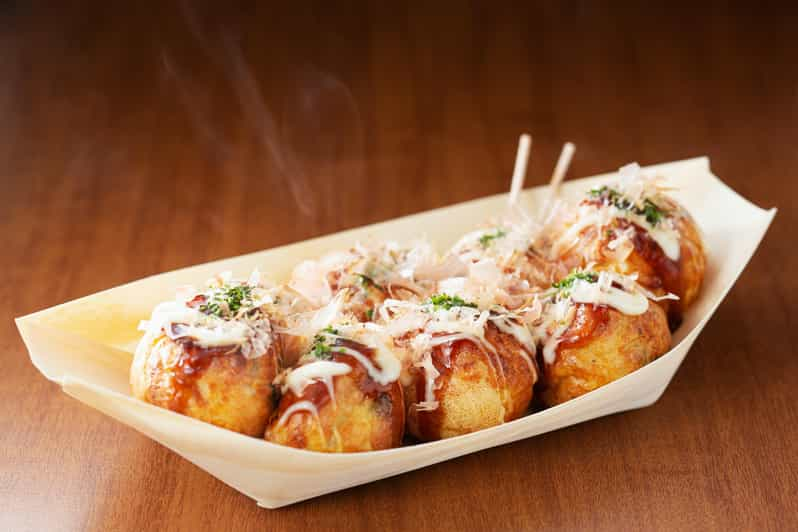
- You cook both dishes in one short session, takoyaki and okonomiyaki, using a similar ingredient approach that makes the learning stick.
- Small group size (up to 6) means questions get answered as you work, not after the fact.
- Dietary flexibility is built in, with gluten-free, vegan, and halal-friendly options available if you request them when booking.
- Super close to transit, about a 10-minute walk from Shijo Station or Karasuma Station, so you can fit this into a busy Kyoto day.
- Instructors are experienced and guided, with a December 2025 update focused on smoother class flow within the limited time.
- You get the tools and ingredients, including aprons and cooking utensils rental, so you are not scrambling for supplies.
Why This Kyoto Takoyaki and Okonomiyaki Class Works in One Hour
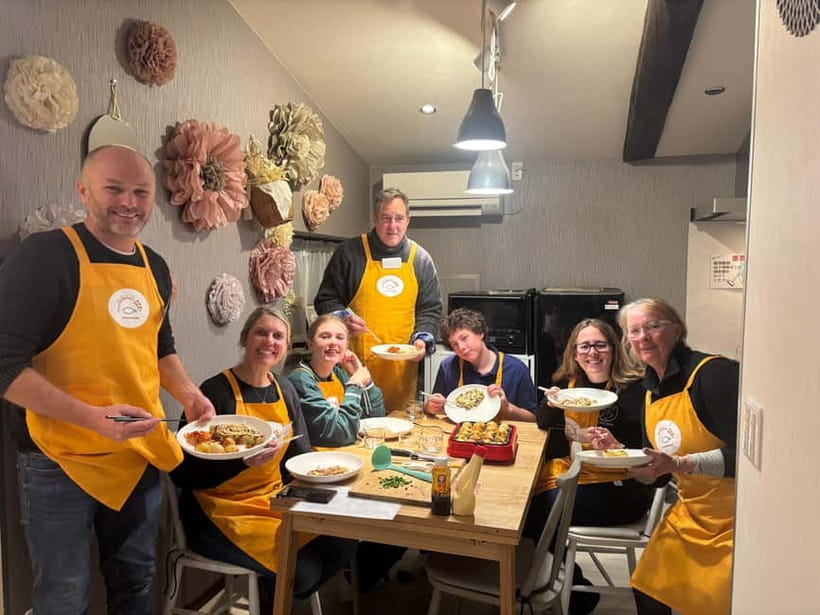
This class is basically for people who love Japanese street food, but do not want a long, heavy cooking course. In one hour, you can learn the core moves that make takoyaki and okonomiyaki taste like the real thing, then eat what you made. That time limit sounds short until you realize both dishes share a similar logic: batter, heat control, and a few signature add-ons.
I like that it is not presented as a lecture. It is hands-on, guided, and paced so you can keep up even if you have never cooked with Japanese ingredients before. You prep at your own pace, and the instructor supports you with tips as you go.
The other reason it works so well is mental. Two dishes in one session reduces decision fatigue. Once you understand how to handle the batter and how the pan wants to behave, you can apply that learning to both foods. You finish feeling like you learned something practical, not just watched something.
More Cooking Classes in Kyoto
- Ramen Cooking Class at Ramen Factory in Kyoto
★ 5.0 · 1,937 reviews - Kyoto: Ramen Cooking Class at a Ramen Factory with Souvenir
★ 4.9 · 532 reviews - Kyoto: Ramen, Gyoza, and Onigiri Cooking Class
★ 5.0 · 445 reviews
Getting There: Shijo or Karasuma, Plus the 3rd-Floor Doorbell (302)
Logistics matter in Kyoto, and this experience nails the accessibility part. It is about a 10-minute walk from either Shijo Station or Karasuma Station, which is handy when you are bouncing between Nishiki Market, Gion, and other central neighborhoods.
If you are coming from JR Kyoto Station, expect roughly 15 minutes by train or bus, then a short walk. A second useful anchor point is Nishiki Market, which is about a 15-minute walk away. That makes it easy to pair this class with sightseeing, especially if you want something more active than just eating.
For meeting, you take the elevator to the third floor and press the doorbell for 302. I recommend you plan to arrive a few minutes early. With a class this short, you do not want to start late and compress your cooking time.
What You Cook: Takoyaki and Okonomiyaki in Kansai Style
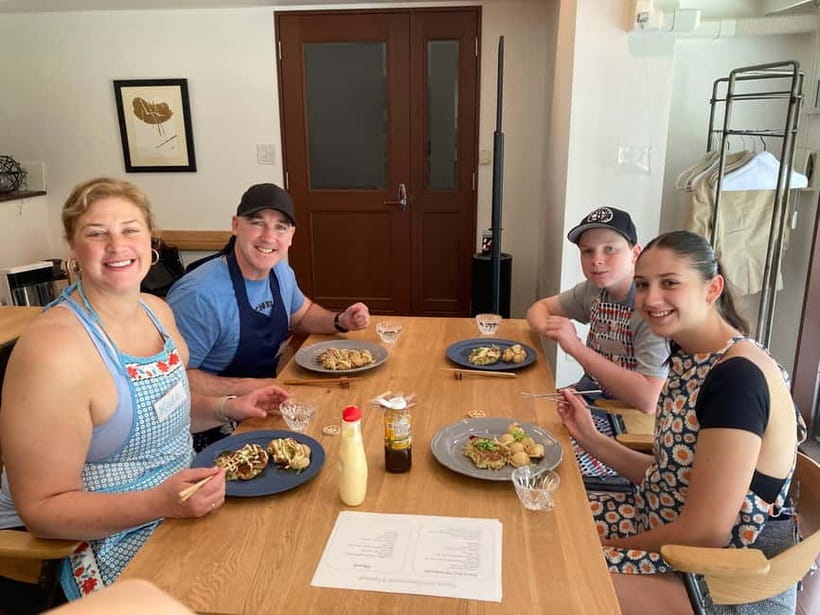
Okonomiyaki and takoyaki are everyday comfort foods in Japan. What makes them especially “Kyoto-worthy” is the Kansai connection. Okonomiyaki has been enjoyed since the Taisho era (1912 to 1926), and takoyaki since the Showa era (1926 to 1989). You are not just making trendy snacks, you are making foods that have had a long life in Japanese everyday culture.
Here is what you should expect from the cooking goals:
- Takoyaki teaches you how to work with batter in a special mold, and how to get those characteristic round pieces.
- Okonomiyaki teaches you how to handle thicker batter and toppings so you get a satisfying texture and balance.
The big learning win is that these are not totally unrelated projects. They often use overlapping ingredient ideas and similar seasoning logic, so you can connect the dots during the hour. One review even pointed out that making both dishes in a short class works because the ingredients and methods overlap, but you still learn the nuances of each.
After cooking, you sit down and eat what you made. That last step matters. You get to taste the result immediately, which helps you connect technique to flavor while everything is still fresh in your brain.
The 1-Hour Flow: Prep, Cook, Then Eat What You Made
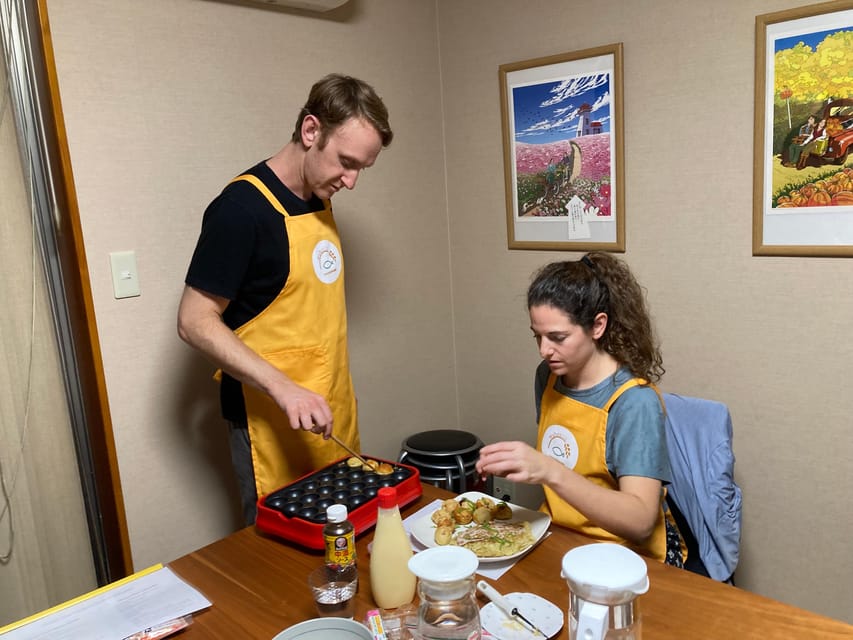
The class is structured as a guided cooking session, not a long demonstration. You will be cooking at your own pace with support from your instructor. Instead of you staring at a recipe card for most of the time, you get help when you need it, plus practical tips that make a difference with pan heat and timing.
A typical hour tends to follow this rhythm:
- Get set up with aprons and utensils rental, then review what you will cook.
- Work on batter and assembly so you know what you are aiming for before heat hits.
- Cook takoyaki using the mold and techniques that help the rounds form properly.
- Cook okonomiyaki, focusing on texture and toppings so it comes together as more than just batter.
- Eat together in a relaxed way after you finish cooking.
Because the class is limited to 6 participants, the instructor can actually help while you are mid-cook. The November and August reviews also underline that the experience is social in a good way. You can ask questions about Japan and about ingredients while you work, which is exactly the type of “learning by doing” that makes travel stick.
One practical caution based on real experiences: short classes can be vulnerable to timing hiccups. There has been at least one instance where the host arrived late and the session felt improvised. It is a reminder to stay flexible in tight itineraries. The good news is that a December 2025 update specifically focused on having classes led or supervised by experienced instructors and refining the flow so you can enjoy the cooking comfortably within the limited time.
A change of pace from Kyoto:
- PERFECT KYOTO 1-Day Bus Tour
★ 5.0 · 13,518 reviews - Kyoto: Fushimi Inari, Kinkakuji, Bamboo Grove 1 Day Bus Tour
★ 4.8 · 4,316 reviews - Kyoto: Tea Ceremony in a Traditional Tea House in Kiyomizu
★ 4.9 · 3,519 reviews - Kyoto Geisha Walking Tour: Gion District & Hidden Gems
★ 4.7 · 3,273 reviews
Dietary Options: Gluten-Free, Vegan, and Halal-Friendly Without Extra Stress
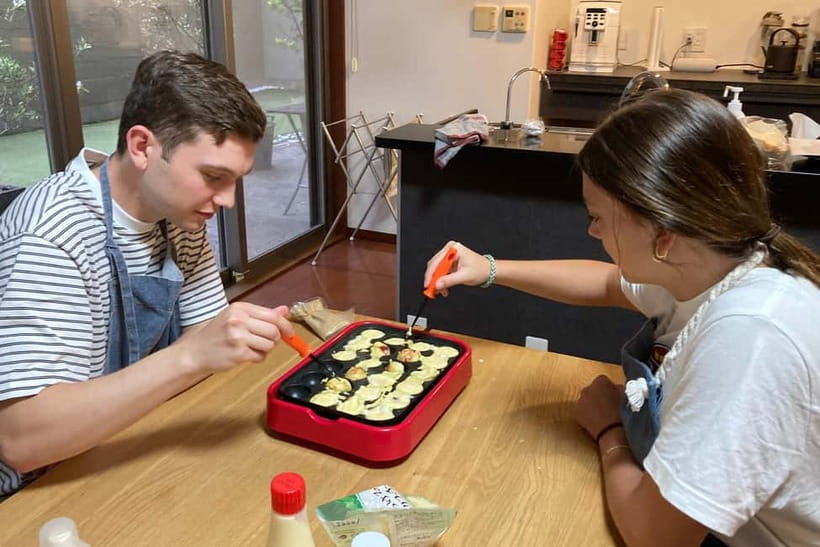
Food restrictions can make cooking classes stressful, especially when the plan is built for one version of ingredients. This class is designed to handle alternatives, including gluten-free, vegan, and halal-friendly options. The key is simple: you must inform the team at booking if you need gluten-free, vegan, halal-friendly ingredients, or you have allergies.
The class adjusts ingredients accordingly. That means you can participate without feeling like you need to do mental math around what is in the batter or toppings. For people who usually avoid certain foods, this kind of flexibility is a big value add.
If you are traveling with restrictions, I recommend you be very direct when booking:
- Tell them your dietary preference category, like gluten-free or vegan.
- List allergies clearly.
- Ask what the swap means for the final taste or texture if you want that clarity.
The class is still about enjoying cooking, not about lecturing you on substitutions. So the goal is: you cook, you eat, you go back out into Kyoto with a new skill.
Price and Value: What You Get for $56
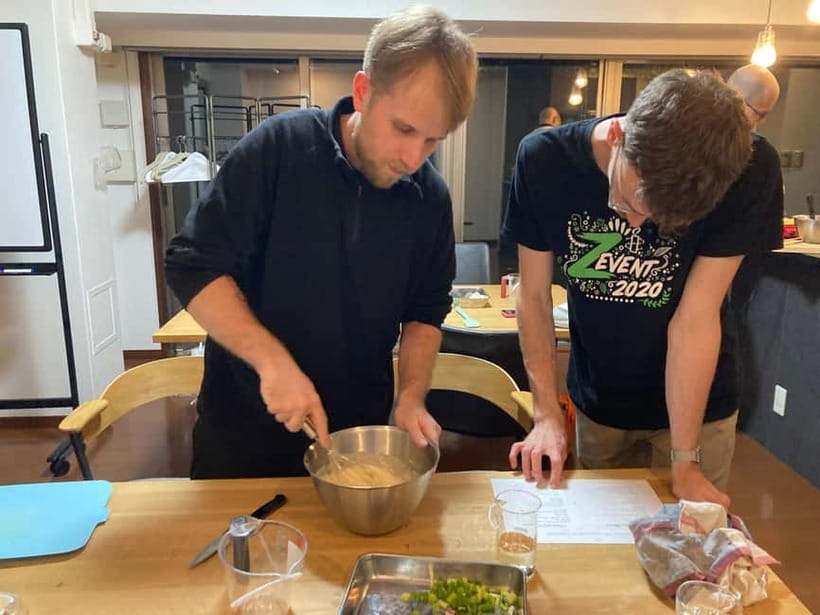
At $56 per person for a 1-hour experience, you are paying for three things: instruction, ingredients, and gear. The included items are the experience cost, the ingredient (lunch or dinner food), and aprons and cooking utensils rental.
That matters more than it sounds. If you try to recreate this on your own in Kyoto, you would spend money on ingredients, plus time figuring out where to buy the right items, and you would still be without a knowledgeable guide to troubleshoot when your batter behaves differently than expected. Here, the class removes those friction points.
Also consider what you are “buying,” not just what you are “getting.” You are buying a short, high-impact skill. Once you learn how to cook takoyaki and okonomiyaki techniques in a guided setting, you can recognize them better when you eat them later around Kyoto. You also get confidence, which makes future food choices easier.
One more value factor: small group size. With up to 6 participants, you get more personal attention than larger cooking demos. That increases the odds you will actually finish your dishes the way you want, rather than rushing through steps you do not fully understand.
Who This Kyoto Cooking Class Suits Best, and Who Might Skip
This class is a great fit if you:
- Want a short activity that still feels hands-on and memorable
- Are in central Kyoto and want something easy to reach from Shijo or Karasuma
- Like the idea of cooking Kansai comfort foods and eating right after
- Need gluten-free, vegan, or halal-friendly options with advanced notice
- Prefer small group guidance over big tours
You might consider skipping if you:
- Are extremely sensitive to timing and hate the idea of a late start, since a short class has less buffer
- Prefer long, detailed cooking lessons with lots of extra explanation and recipes you can take home in-depth (this is designed to fit within 1 hour)
- Want only sightseeing photos or only a quick tasting, because this is about cooking, not just eating
If you are the kind of traveler who likes to learn one practical technique in each place you visit, this hits the sweet spot. One review also mentioned a private class feel with only 2 participants, which is a strong sign that the experience can become even more interactive when the group is smaller.
Should You Book This 1-Hour Kyoto Takoyaki and Okonomiyaki Class?
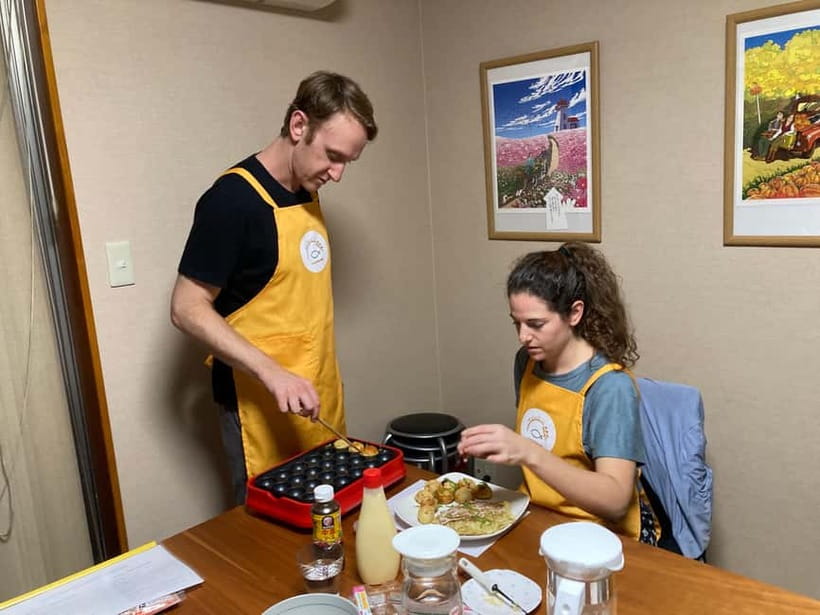
Yes, I think you should book it if you want a straightforward way to learn Kyoto-adjacent, Kansai-style comfort food with real guidance. The combination of hands-on cooking, small group size, and dietary support makes it a smart choice for many diets and many experience levels.
Book with confidence if your schedule is flexible enough for a 1-hour format and you can arrive on time. If timing is razor-thin, keep your plans light around that hour. And if you have food restrictions, send them clearly at booking, so the ingredients match your needs.
In Kyoto, one of the best ways to feel like you truly experienced the place is to do something small and real. This class is exactly that, batter to plate, in a single evening hour.
FAQ
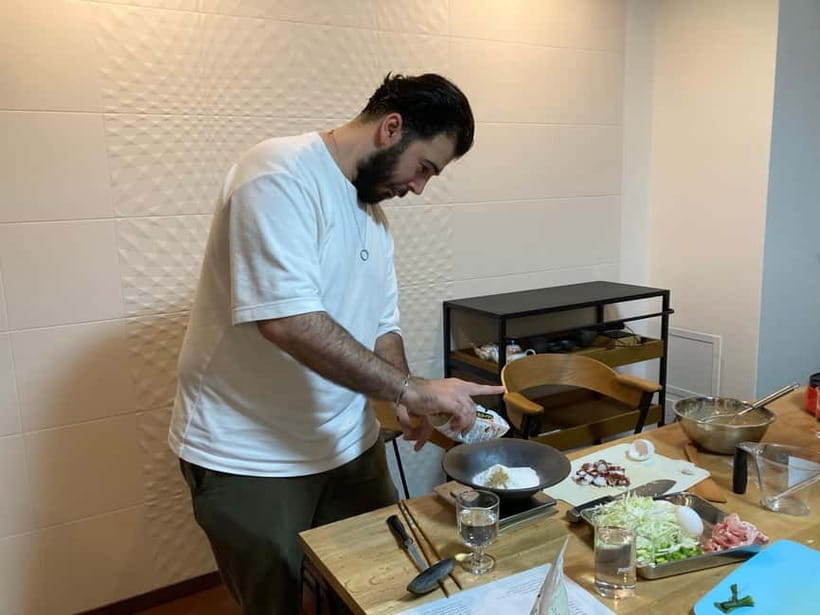
How long is the Kyoto takoyaki and okonomiyaki cooking experience?
The class lasts 1 hour.
Where do I meet the instructor?
You will take the elevator to the third floor and press the doorbell for 302.
Is this class suitable if I need gluten-free, vegan, or halal-friendly options?
Yes. Gluten-free, vegan, and halal-friendly options are available. Let the provider know at booking if you have dietary restrictions or allergies so they can prepare the ingredients accordingly.
What is included in the price?
The price includes the experience cost, ingredients for lunch or dinner food, and aprons plus cooking utensils rental.
How large is the group?
The group is small, limited to 6 participants.
What is the cancellation and payment flexibility?
You can cancel up to 24 hours in advance for a full refund. You can also reserve now and pay later.
Should You Book This 1-Hour Kyoto Takoyaki and Okonomiyaki Class?
If you want a quick, hands-on cooking session that teaches you two classic Kansai foods, this is worth your time. With small-group attention, ingredient support for gluten-free or vegan needs, and easy access near Shijo or Karasuma, it fits well into a packed Kyoto itinerary. I would book it especially if you value actually cooking and eating what you make, rather than just watching a demonstration.
Latest write-ups near Kyoto
- Kyoto Private Tour Full Day with Local Guide&Nara Option(PerGroup★ 5.0 · 20 reviews
- Sacred Pathways: Discover the Philosopher’s Path of Kyoto★ 4.9 · 20 reviews
- Kyoto UNESCO World Heritage Site Private Tour with a Premium Van★ 5.0 · 20 reviews
- Hammer Pattering Experience of Ring★ 5.0 · 20 reviews
- KYOTO: Private Tea Ceremony in Hidden Townhouse (Kid-Friendly)★ 5.0 · 20 reviews
- Sushi or Traditional Japanese Cuisine in a Kyoto Home with Emika★ 5.0 · 20 reviews
- The Kyoto VIP Experience!★ 5.0 · 20 reviews
- Kyoto Customized Private Tour: See Top Attractions in 1 Day★ 4.7 · 20 reviews
Cooking Classes, compared.
Ramen Cooking Class at Ramen Factory in Kyoto
Read our review →
Ramen & Gyoza Cooking Class in Tokyo with Local Supermarket Visit
Read our review →
Ramen Cooking Class at a Ramen Factory with Souvenir
Read our review →
Japanese Washoku Bento Small Group Cooking Class
Read our review →
Easy Ramen Cooking Experience in Kabukicho, Shinjuku
Read our review →
Ramen and Sushi Cooking Class with Sake Pairing Set in Tokyo
Read our review →Browse the lists this tour appears in