
Reviewed · TEA CEREMONIES
Kyoto: Nara & Traditional Matcha Experience Bus Tour
This is interesting because you get two famous Kyoto-area worlds in one smooth day, ancient Nara sights plus a hands-on matcha experience in Uji. I especially like the sheer scale at Todaiji Temple and the fact that the deer moment at Nara Park feels guided, not random chaos. One drawback to plan for, it is a full day with stairs and hills, so comfort matters, especially if you move slowly.
The tour feels well paced for first-timers. Guides such as At-chan and Rino, and others like Mai or Nanami, bring the history down to human size, with clear English and practical tips while you’re on the bus. Then you get real breathing space in Uji for shopping and tea-town wandering.
You also get good value for the price because admissions and the matcha experience fee are included, and the bus has free Wi-Fi. Still, it starts early at Kyoto Station, so set your alarm and be ready to hit the ground running.
Key things I’d circle before you book
- World Heritage highlights in a single day: Todai-ji, Kasuga Taisha, and Byodoin Temple are all on the UNESCO list.
- Todaiji Daibutsuden is a wow-moment: one of the largest wooden buildings and home to the Great Buddha of Nara.
- Nara Park deer time, with an actual game plan: you can buy rice crackers and learn how the feeding works on-site.
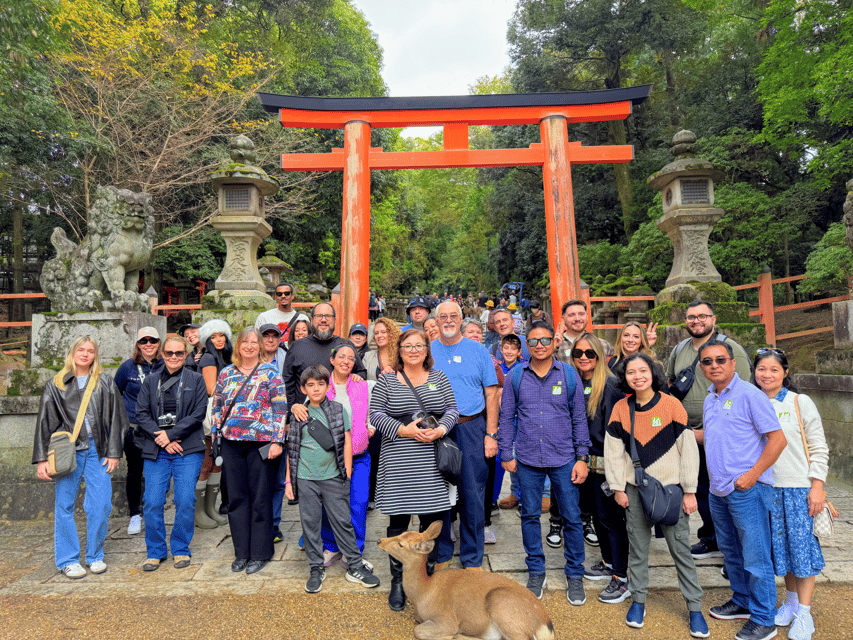
- Kasuga Taisha’s lantern magic: you get time to notice the 3,000 stone lanterns that define the approach.
- Uji is matcha country, not just a photo stop: you’ll make matcha from scratch and have free time nearby to shop.
- Comfort upgrades on the coach: air-conditioned transport plus free Wi-Fi and antibacterial coating.
Meeting at Kyoto Station, then straight into ancient Nara
Most people start their first Kyoto week by bouncing between neighborhoods. This tour skips that shuffle. You meet in front of Tully’s Coffee at Kyoto Avanti, and check-in begins at 7:50 AM with an 8:00 AM departure. That early start matters because Nara can get busy, and the program is built to get you into the key sites while there’s still breathing room.
Once you’re on the air-conditioned coach, you settle in quickly. There’s free Wi-Fi, and the bus also runs with antibacterial coating and regular ventilation. You’ll also hear live commentary from the English-speaking guide, plus audio headsets for several languages (including French, German, Italian, Spanish, Portuguese, and Ukrainian). This matters on a day packed with temple rules and cultural context. Headsets help when your attention is split between the guide and what you’re seeing in front of you.
On the ride to Nara, the coach passes by familiar Kyoto landmarks like Fushimi Castle and the Heijokyo palace area. Even if you do not get out for photos there, it gives you useful orientation for how Kyoto’s story fits together with the wider Kansai region.
Then, the pace shifts from transit to walking, and the tone becomes “see it, then move.” This is not slow tourism. It’s a guided highlights day, and you’ll want comfortable shoes from the first steps.
More Tea Ceremonies in Kyoto
- Kyoto: Tea Ceremony in a Traditional Tea House in Kiyomizu
★ 4.9 · 3,519 reviews - Kyoto: Tea Ceremony Ju-An at Jotokuji Temple
★ 4.9 · 3,207 reviews - Kyoto: 45-Minute Tea Ceremony Lesson Experience
★ 4.3 · 2,378 reviews
Todai-ji and the Great Buddha: when scale hits you in the chest
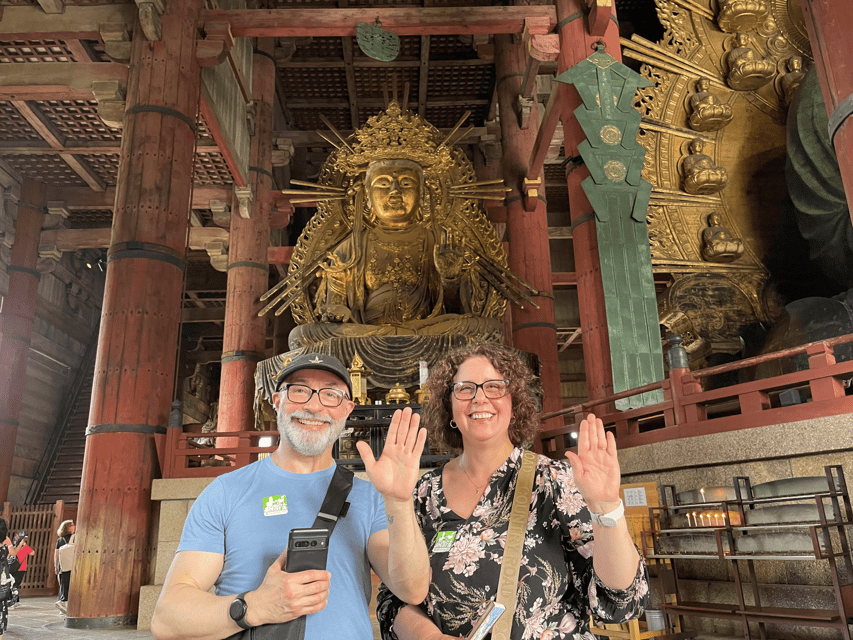
Todai-ji is the anchor stop, and it earns the hype. The highlight is the Daibutsuden Hall, where the Great Buddha of Nara is housed. This hall is one of the largest wooden buildings in the world, and that size is hard to explain until you’re standing inside and your brain has to adjust to it.
The program gives you about 50 minutes here. That’s enough time to take in the hall, look around the complex at a relaxed pace, and still avoid the “one quick glance and run” feeling that some day tours create. If you like temples for architecture as much as for spirituality, you’ll appreciate how Todai-ji’s layout guides your eyes and slows you down without trying too hard.
Practical tip: bring water and pace yourself when you’re inside big halls. You’ll feel the crowd flow, and you don’t want to get dehydrated while you’re trying to read details and enjoy the atmosphere. The tour provides the entry admission fee, so you’re not doing ticket math in your head mid-day.
Also, Todai-ji and Nara Park are adjacent. That means once you’ve finished inside, you can go right into the next mood shift, from wooden monument to wide-open park.
Nara Park deer time: cute, fast, and very real
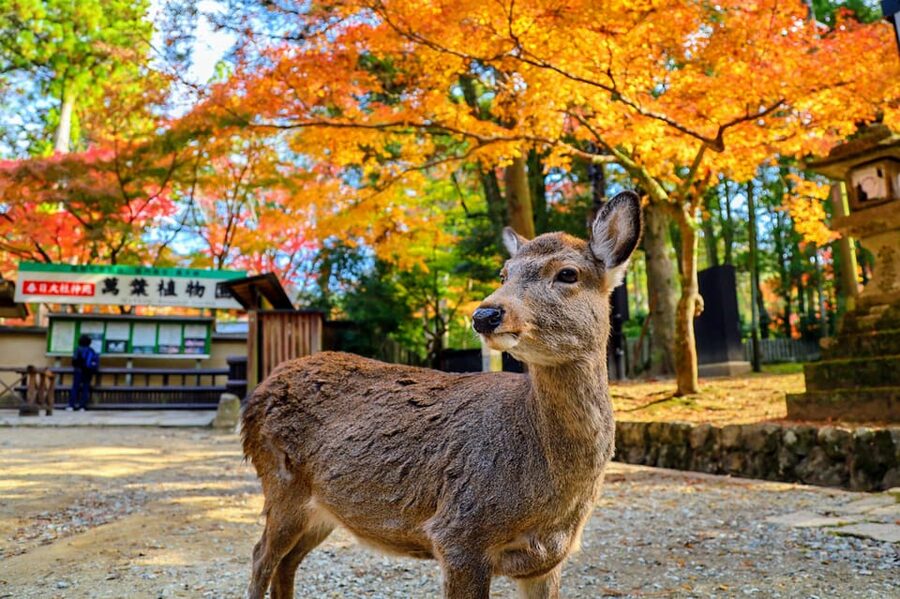
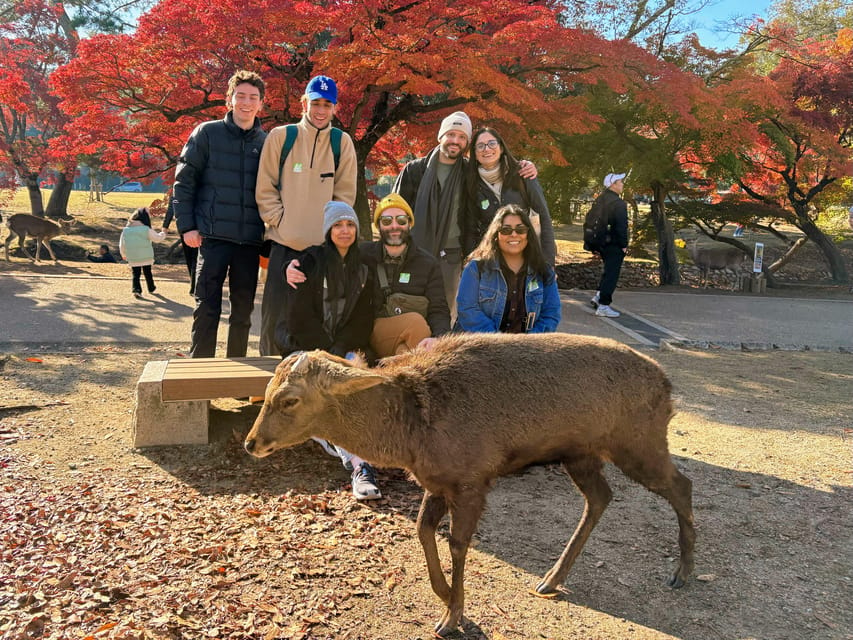
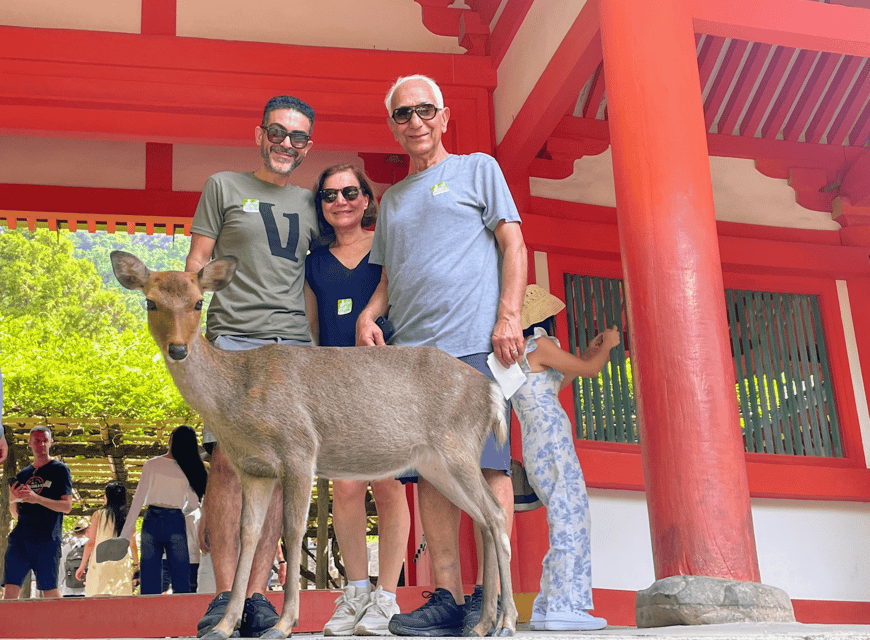
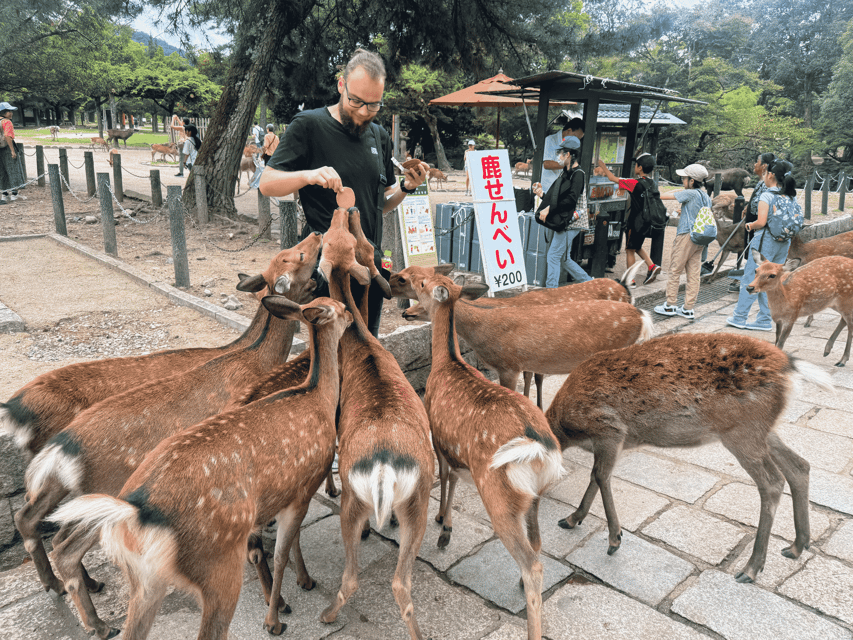
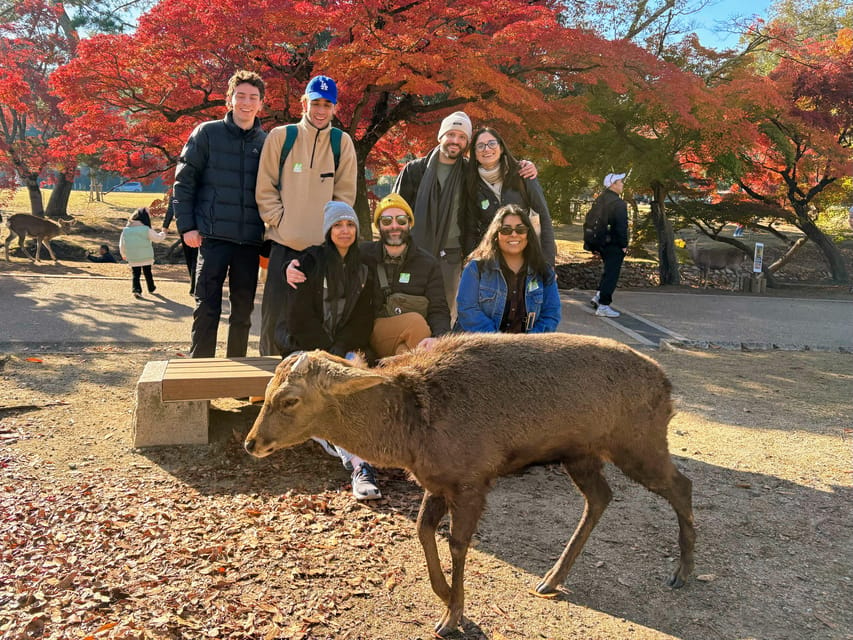
Right next door, Nara Park is where the day becomes memorable in an immediate, silly way. The tour’s plan gives you about 30 minutes here, which is just enough to walk through the park and still get to Kasuga Taisha without feeling rushed.
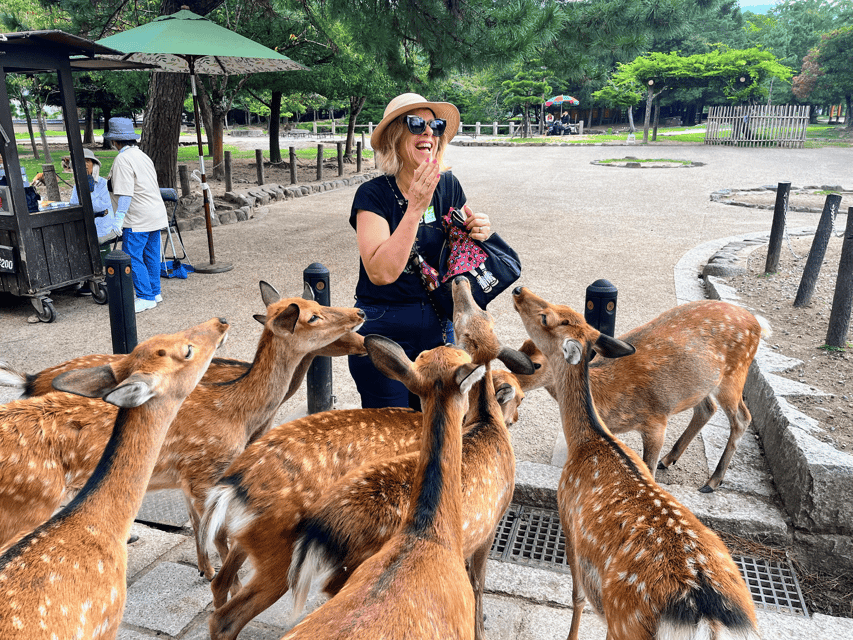
Here’s what I’d emphasize: the deer experience can be charming, but you need to treat it like an interaction, not a postcard photo. The tour includes a setup for this by encouraging you to buy rice crackers sold along roadside stalls and near the shrines. When you feed them, you might get a little bow from the deer, which is exactly the kind of moment that makes the tour feel special.
Practical approach:
- Keep crackers visible but do not wave them around.
- Stay aware of where deer are moving through the pathways.
- Don’t get so focused on photos that you forget where other people are walking.
One note for your expectations: the deer are wild. That means behavior varies, and you should keep your hands and space under control. A bit of caution makes the experience better, not worse.
Kasuga Taisha and the 3,000 stone lantern walk
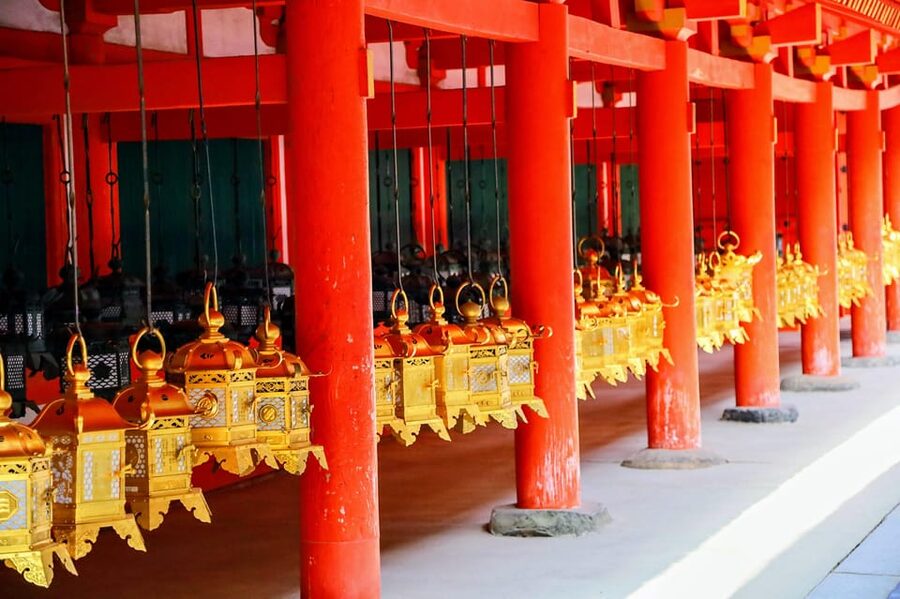
After Nara Park, you head to Kasuga Taisha Shrine. You’ll get around 30 minutes here, which is a solid amount for soaking in the atmosphere without getting lost in the details for hours.
Kasuga Taisha’s identity is the lanterns. You’ll see the famed 3,000 stone lanterns, and the effect is more emotional than it sounds. Even if you don’t memorize dates or names, you can feel the visual rhythm. The tour gives you time to notice how the lanterns frame views and create that “this feels older than the street outside” feeling.
This is also where your guide’s explanations start paying off. A good guide helps you understand why the place looks the way it does, and what those lanterns represent in the shrine’s culture. From the experience style shared by guides like At-chan and Nanami, you can expect not just facts, but little bits of context that make the environment make sense.
If you want photos, go for the lantern corridors and the approaches rather than only the biggest signposts. Those smaller views usually look the most Kyoto-area timeless.
A change of pace from Kyoto:
- PERFECT KYOTO 1-Day Bus Tour
★ 5.0 · 13,518 reviews - Kyoto: Fushimi Inari, Kinkakuji, Bamboo Grove 1 Day Bus Tour
★ 4.8 · 4,316 reviews - Kyoto Geisha Walking Tour: Gion District & Hidden Gems
★ 4.7 · 3,273 reviews - Kyoto: Gion Magical Night Walking Tour with Geisha Trivia
★ 4.9 · 2,393 reviews
Lunch stop and why a break matters on a full-day tour
Between Nara and Byodoin, you’ll have lunch. The program includes about 50 minutes for it, and there’s a Japanese lunch option if you chose it. Even if your lunch taste preference is simple, I love the structure here. You get a set time to refuel so the afternoon temples don’t feel like a slog.
The schedule is also realistic. This day has multiple walking components, plus stairs and hills. A mid-day meal break makes the matcha portion more enjoyable, not rushed.
If you did not book the lunch option, plan on buying food and drinks on your own during the stop. Bring cash, since you’ll likely need it for smaller vendors and shops.
Byodoin Temple: the Phoenix Hall silhouette and UNESCO gravity
Byodoin Temple is next, and it’s a favorite for good reason. It’s known for the Phoenix Hall, made famous by how it appears on Japan’s 10 yen coin. The program gives you about an hour here, which is enough time to appreciate the hall, take in the grounds, and still move with the group schedule.
What makes this stop more than just a famous photo is the UNESCO context. Byodoin Temple is registered as part of the Historic Monuments of Ancient Kyoto. That designation matters because it frames how you look at what you’re seeing. You’re not only sightseeing, you’re looking at preserved cultural form.
Also, the timing helps. You get Byodoin after Nara, so your brain is already in “temple mode.” That continuity keeps the day from feeling like disconnected errands.
If you like symbolic art, spend a bit of time thinking about why the Phoenix image stuck around so long. Symbols travel well across centuries, and Byodoin is a great example.
Uji free time and the tea-town feel you can actually explore
Then you roll into Uji, the tea area that’s strongly associated with matcha. This is where the tour stops being only temples and turns into a culture-and-flavor day.
You’ll get about 70 minutes of free time and the matcha workshop portion. Uji is smaller and calmer than Kyoto. That’s part of the appeal, you get to slow down slightly and look around without the same crowd pressure. Near the matcha area, you’ll find small shops and restaurants, so it’s a good chance to browse for tea and snacks rather than buying everything at the last minute.
This extra time is also useful because it gives you control. If you want to shop for matcha tea right away, you can. If you want photos of streets and temple-adjacent corners, you can.
The program also sets you up for the matcha lesson because you’re in the right place physically. Tea town context changes the experience, even if you’re just there for the workshop.
Making matcha in Uji, from powder to a drink you made
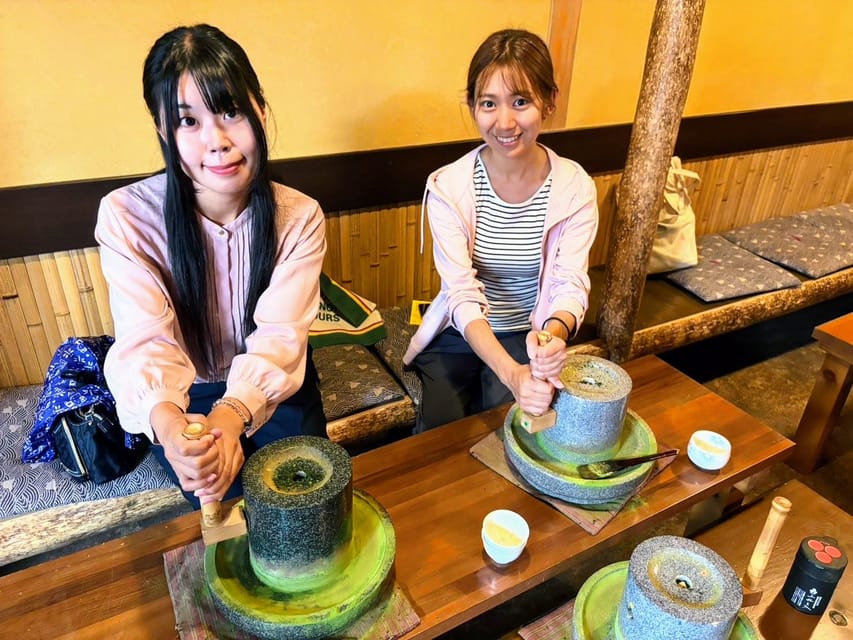
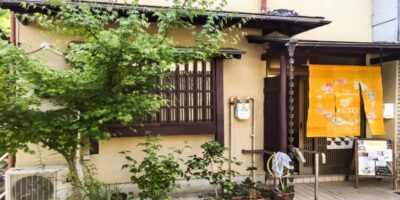
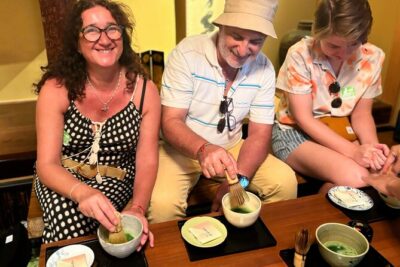
This is the centerpiece for the food-and-culture side of the tour. Matcha is powdered finely ground green tea leaves, and the workshop is designed so you make Uji matcha from scratch. The idea is simple, but it’s satisfying: you do the steps, you learn what makes the taste different, and you take home the memory of doing it yourself.
The tour’s framing is practical. Matcha isn’t only for tea ceremonies. It’s used in sweets and cooking too. That matters because it helps you connect what you drink to what you see in Japanese menus later. After you make it here, you’ll understand why matcha desserts have that distinct taste instead of calling it just green-flavored.
Because you’re in Uji, the workshop does not feel like a generic “try matcha once” stop. It feels like the source area. You’ll also have time right near the workshop to buy souvenirs, and this is where many people pick up tea gifts or special tins.
If you’re the type who wants to do one real hands-on activity instead of only taking photos, this is that moment.
Getting around comfortably, plus how the guide keeps the day from falling apart
A highlights day lives or dies by logistics. This tour uses a deluxe coach, and it comes with free Wi-Fi to keep you calm between stops. Audio headsets in multiple languages help you follow along even when you’re walking away from your guide at a temple entrance.
But the bigger win is how the guide works the group. Guides such as At-chan and Rino are repeatedly praised for being friendly, organized, and attentive. You’ll likely get cultural tips during the bus rides, including small Japanese phrases and basic number help, which makes signs and shop counters a little less intimidating later in your trip.
That’s the unglamorous superpower of a good guided day trip. You leave feeling like Japan became easier to navigate, not harder. Many guides also adjust pace for the weather and group energy, and that keeps you from overheating or feeling trapped in long waits.
Who this Kyoto-to-Nara-to-Uji day works best for
This is a great fit if:
- You want World Heritage sites in one day without planning every transport step.
- You like hands-on experiences, especially food culture like matcha.
- You’re a first-timer in Kyoto who wants structure but still some time to roam in Uji.
It’s a tougher fit if:
- You have mobility impairments or use a wheelchair. The tour notes it isn’t suitable, and the day involves walking, stairs, and hills.
- You hate early starts. You depart at 8:00 AM from the Kyoto Avanti Tully’s.
Also, no pets are allowed, so plan accordingly if you’re traveling with one.
Price and value: is $122 fair for what you get?
At about $122 per person, you’re paying for more than transport. You’re buying time, guidance, and included entrances and activity fees.
Here’s what you get that reduces the cost of doing it on your own:
- Professional English-speaking guide plus multi-language audio headsets
- Admission fees for Todai-ji and Byodoin
- Matcha experience fee in Uji
- Air-conditioned coach with free Wi-Fi
When a day trip includes those admissions and a hands-on workshop, the price feels more reasonable. You also avoid ticket lines at major sites, which saves time and stress.
Yes, you can DIY Kyoto and Nara with trains and buses. But that DIY cost comes with planning and ticket headaches. If you want an efficient, guided day with fewer decisions, this one is priced like a convenience product, and it fits that role well.
Should you book this Nara and matcha day tour?
I’d book it if you want one well-structured day that covers Nara’s top icons and ends with a real activity in Uji. The mix is smart: monumental temples in Nara and a calmer tea-town finish where you actually make something you can taste.
Skip it if you’re already temple-saturated and you hate walking uphill or climbing stairs. Also skip if you want a slow, unstructured day. This tour moves, and it expects you to keep up.
If you want a day that feels both iconic and hands-on, this Kyoto-area combo is one of the better use-of-time options.
FAQ
Where is the meeting point for this tour?
You meet in front of Tully’s Coffee at the Kyoto Avanti store (in Kyoto Station area). Check-in starts at 7:50 AM and departure is at 8:00 AM.
How long is the tour?
The duration is listed as 510 minutes, about 8.5 hours.
What’s included in the price?
Included are a professional English-speaking guide, air-conditioned coach transportation with free Wi-Fi, admission fees for Todai-ji and Byodoin Temple, and the fee for the matcha experience in Uji. If you selected it, lunch is included as well.
Is there a lunch option, and what does it include?
There is a lunch break with about 50 minutes. Guests who booked the tour with the lunch option enjoy a Japanese lunch.
What language support do I get besides the English guide?
You can use audio headsets with languages including Spanish, French, Italian, German, Portuguese, and Ukrainian.
Do I need to buy tickets for Todai-ji and Byodoin?
Admission fees for Todai-ji and Byodoin Temple are included, and the tour notes that ticket lines are skipped.
What should I bring?
Bring comfortable shoes, water, and cash.
Is the tour suitable for wheelchair users or limited mobility?
No. The tour is not suitable for people with mobility impairments and wheelchair users. The day includes walking up stairs and hills.
Latest write-ups near Kyoto
- Kyoto: Nishiki Market Tour with a Local Foodie & Tastings★ 4.5 · 67 reviews
- Kyoto Kimono Rental mimosa |Kimono/Yukata Rental Couple Plan★ 4.8 · 67 reviews
- Kyoto: Traditional Kimono Fabric Handicrafts Workshop★ 5.0 · 67 reviews
- Kyoto Tea Ceremony and Samurai Photo Session★ 5.0 · 70 reviews
- Kyoto: Replica food making experience★ 4.8 · 70 reviews
- Kyoto: Kinkakuji, Golden Pavilion Guided Tour★ 4.7 · 71 reviews
- Private departure transfer from Kyoto city to Kansai International airport★ 5.0 · 72 reviews
- Uji: Green Tea Tour with Byodoin and Koshoji Temple Visits★ 4.8 · 72 reviews
Tea Ceremonies, compared.
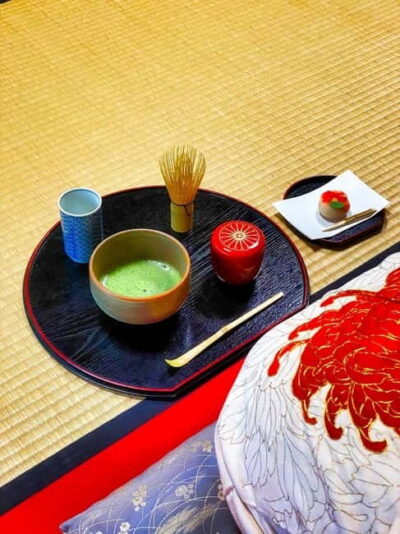
Tea Ceremony in a Traditional Tea House in Kiyomizu
Read our review →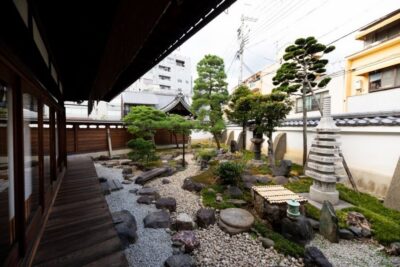
World Heritage Kyoto & Nara Uji Authentic Matcha Experience
Read our review →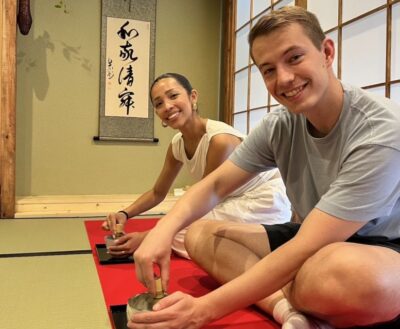
Browse the lists this tour appears in