
Reviewed · TEA CEREMONIES
Osaka: Japanese Traditional Sweets Making and Tea Ceremony
In Osaka, this workshop is interesting because you go from shaping high-grade Nerikiri wagashi to drinking your own Uji matcha within 95 minutes. You are not just watching a craft, you are doing it, hands-on, with seasonal design cues.
I like that the class uses white and red bean paste produced by Kyoto’s long-established shops, which makes the wagashi taste feel properly refined. I also love that you make two sweets that match the season, so the results look like they belong on a Japanese sweets menu, not a generic craft project.
One thing to consider: the instructor is Japanese and English support is provided as much as possible, so if you need clearer English coverage, you should ask in advance. Also, the building has no elevator, so you’ll be using stairs.
Key things I’d mark on your Osaka plan
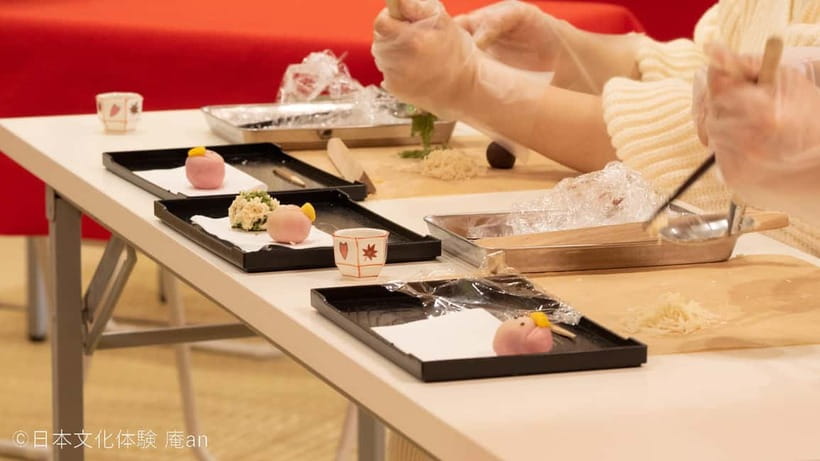
- Two Nerikiri sweets made to fit the season, shaped from colored bean paste
- Kyoto long-established bean paste for that balanced, not-too-sweet finish
- Single-origin special Matcha plus a grinding demonstration
- Tea ceremony practice at the end, then you eat the sweets you made
- Close to multiple stations around Higobashi, Watanabebashi, Yodoyabashi, Kitashinchi, and Osaka Station
Nerikiri and matcha, in 95 minutes
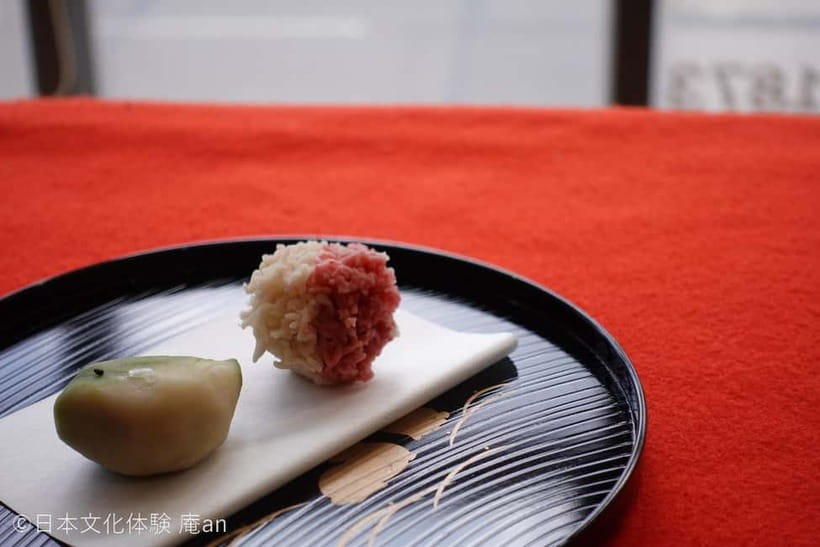
This is one of those Osaka experiences that fits into real travel life. Big sightseeing days can get loud and rushed, and this one slows you down on purpose, with a calm, step-by-step pace.
You start by making Nerikiri, a higher-end Japanese sweet known for its shaped, seasonal look. The class begins with you coloring white bean paste, then moves into crafting flower and fruit forms that match the season. The idea is simple, but the execution takes focus, which is part of the charm.
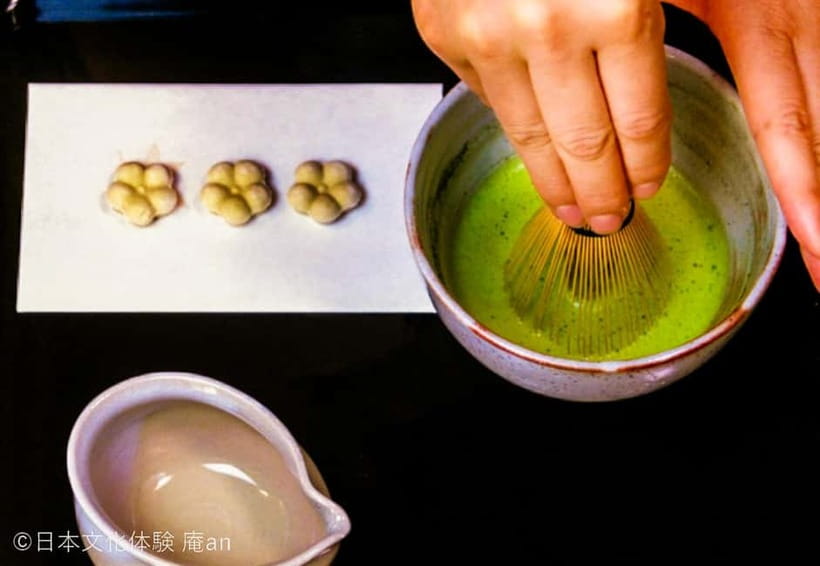
Then the tone shifts to tea. You grind matcha, learn the basic tea-ceremony flow, and finally drink your own matcha alongside the sweets you prepared. When everything connects like this, the lesson sticks better, and the tasting feels earned.
More Tea Ceremonies in Osaka
- Osaka: Tea Ceremony Experience
★ 4.9 · 1,426 reviews - Tea Ceremony Experience in Osaka Doutonbori
★ 5.0 · 754 reviews - Matcha Making Class in Osaka with Authentic Japanese Sweets Set
★ 5.0 · 509 reviews
Price and value, for a crafts plus tea ceremony combo
At $18 per person for 95 minutes, the value is strongest if you want both sides of Japanese sweets culture: wagashi craft and matcha etiquette. This is not just a tea talk, and it’s not just a dessert-making class.
Your ingredients matter. The workshop uses white and red bean paste from Kyoto’s long-established shops, and that makes a real difference in flavor balance. The schedule also includes Uji matcha, plus a matcha grinding demonstration and a tea-ceremony experience, so you’re not paying for an add-on you barely touch.
If you compare it to paying separately for a basic wagashi craft and then a separate tea lesson, this kind of combined format is usually the better deal. It also gives you a full, satisfying “create, learn, taste” arc in one sitting.
Getting there around Higobashi, Watanabebashi, and Yodoyabashi
Location is a win here, if you like walking a little. The meeting point is near several train lines, so you can pick the route that matches your day.
Here’s what the walk looks like:
- 1 minute walk from Exit 10 of Osaka Metro Yotsubashi Line Higobashi Station
- 5 minutes walk from Exit 7 of Keihan Nakanoshima Line Watanabebashi Station
- 7 minutes walk from Exit 10 of Osaka Metro/Keihan Line Yodoyabashi Station
- 10 minutes walk from Exit 11-5 of JR Tozai Line Kitashinchi Station
- 15 minutes walk from Osaka Station South Central Gate
If you are using a map app, give yourself a few extra minutes. The area is easy enough on foot, but the exact building front can be a little tricky to pinpoint. Arriving early also helps because they cannot hold the event for delays.
By car, they suggest nearby coin parking.
The 10:00 to 17:00 window that matters for planning
Operation hours run from 10:00 to 17:00, so you’ll want to book a time that fits between your morning and lunch or between lunch and evening plans. The total duration is 95 minutes, and the pacing is built around a fixed start.
Plan to be on time. They also note that delays cannot be accommodated, so treat this like a timed reservation, not a flexible drop-in workshop.
Also, there is no elevator in the building. You will need to take stairs to reach the venue areas, so pack accordingly if you have heavy bags.
A change of pace from Osaka:
- Osaka Go Karting Tour with Funny Costume
★ 5.0 · 2,658 reviews - Osaka Castle: Museum and Tower Entry Ticket
★ 4.5 · 2,380 reviews - Osaka: Shinsekai Food Tour with 13-15 Dishes at 5 Eateries
★ 4.8 · 2,204 reviews - Osaka Food Tour: 13 Dishes at 5 Local Eateries
★ 5.0 · 2,149 reviews
From colored bean paste to two Nerikiri sweets
The Nerikiri part is the core of the experience, and it’s where you get the most “I made this” pride. You start with an explanation of Japanese traditional sweets, then move straight into working with the paste.
Step 1: Coloring the white bean paste
You’ll begin by coloring the white bean paste. This is not just mixing color, it’s getting the texture and consistency right so the paste handles cleanly during shaping.
This matters because Nerikiri is about control. If the paste is too firm or too soft, it gets harder to create the sharp, decorative shapes.
Step 2: Making the seasonal Nerikiri (flower style)
Next, you craft a flower shaped Nerikiri. The focus is on shaping colored paste into seasonal forms, and you’ll follow the instructor’s lead on how to press, fold, and detail the look.
You will make two Japanese sweets during the session, and they are designed to match the season. That seasonal matching is more than decoration. In Japanese sweets, the theme is part of the message, like a seasonal “look and feel” cue that changes across the year.
Some sessions also include a specific Nerikiri style such as Kinton Nerikiri, so you might see variations depending on what’s scheduled.
A craft where patience pays off
This workshop is a fine-motor class. You are working with bean paste, which is forgiving compared to cake batter, but the details still take care. I’d suggest bringing a calm mindset. If you expect speed, you’ll feel rushed. If you expect slow focus, it’s satisfying.
At the end of the sweets making, you’ll have two pieces of Nerikiri that you can enjoy later with matcha.
The break that resets the pace
At about the mid-point, you get a break. The structure is designed so you do not go straight from shaping paste into tea protocol without a breather.
This timing also helps if you are traveling all day. When you take a short pause, you can come back ready to learn the tea flow instead of half-focused.
Matcha grinding and tea ceremony: the practical part
Tea is the second half, and it’s where the lesson becomes cultural, not just culinary.
Grinding demonstration
You’ll watch or take part in a matcha grinding demonstration. The point is to show how matcha turns from powdered ingredient into the base you’ll whisk for your tea.
This step also helps you understand why the ceremony cares about procedure. If you have never seen the powder preparation process, the rest of the tea steps make more sense once you’ve seen where it starts.
Tea-ceremony experience
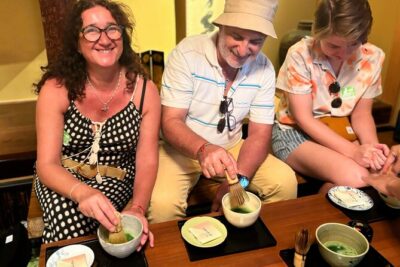
Then you move into the tea ceremony experience. The class covers the basics of how to prepare and handle the tea, and you’ll get to experience the flow as part of the guided session.
One useful detail from the way the class is taught is that you are not just asked to mimic motions. You can ask questions, and the instructor explains the tradition as you go. In past sessions, instructors like Maiko and Jun have been praised for clear guidance, and others like Mihiko have managed English support while still keeping the flow manageable.
If your Japanese is limited, that flexible instruction style matters. You should still expect some Japanese terms, but you are not left totally stranded.
Picture time
Near the end, there’s picture time. So yes, you’ll get a moment to capture your finished sweets and the tea setup. This is also a good time to check that you have what you want before eating.
Taste time: matcha and wagashi together
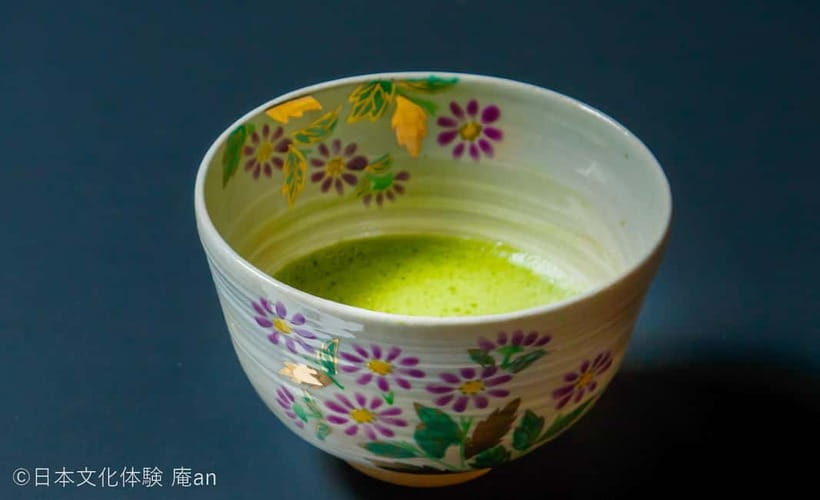
After the ceremony portion, it’s eating and drinking time. The workshop is designed so the sweet you shaped earlier becomes the pairing for your tea.
The bean paste quality is the key here. The class specifically highlights the balance between high quality white and red bean paste and matcha. In plain terms, that balance helps keep the tea from tasting too sharp and the sweets from tasting too heavy.
When it works well, this pairing is the whole point of wagashi and matcha together. One is structured and decorative, the other is grounded and earthy, and together they feel balanced rather than sweet-sweet.
What language to expect, and how to set yourself up
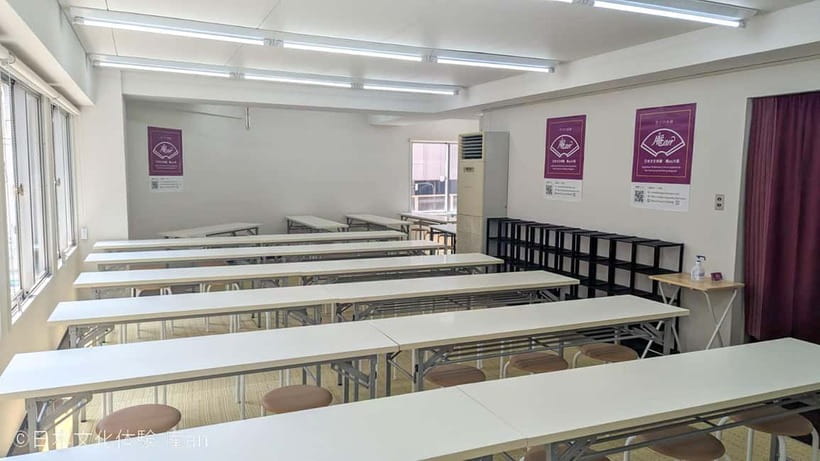
Languages are listed as Japanese, with English translation provided as much as possible. Some sessions have instructors who switch between Japanese and English smoothly, so you might have an easier time than you fear.
Still, the safest approach is this: if English matters to you, contact the provider to request additional English translation. The info says this can be arranged if you reach out ahead of time.
Also note that those who do not participate in the experience will not be allowed to enter. So you should plan on actually making the Nerikiri and taking part in the tea portion.
If you are traveling with kids, there is a clear note: children who sit on their parents’ lap are free of charge if they are under 2 years old. Older kids are not addressed in the info provided, so check your age needs when you book.
Extras you might want: take-out box and completion certificate
Your sweets take-out box is not included. If you want to bring your wagashi home, the price is 100 JPY.
There’s also an experience completion certificate that costs 300 JPY if you want a memento.
If you are trying to keep costs down, you can skip these. If you like taking home proof of effort, the certificate is a straightforward add-on.
Who this workshop suits best
This is ideal if you:
- like hands-on crafts and want a real skill, not just a photo stop
- want a quieter cultural break inside a busy Osaka trip
- care about tea culture and enjoy learning the basics through doing
- prefer structured timing, because it’s all planned within 95 minutes
It may be less ideal if you:
- need guaranteed English translation without any Japanese terms
- dislike stairs and tight meeting times, since the building has no elevator and delays are not accommodated
If you end up in a smaller class, the experience can feel more personal. Some past sessions have been described as small or even just two participants, and that kind of scale tends to make explanations easier to follow.
Should you book this Osaka Nerikiri and tea ceremony class?
If your schedule can fit 10:00 to 17:00 and you are okay with stairs and a strict start time, I think this is a strong booking. For $18, you get two seasonal Nerikiri sweets, a matcha grinding demonstration, and a tea ceremony experience where you actually taste what you made. That mix is hard to beat for the time.
Book it if you want something authentic that feels practical, not staged. And do yourself a favor by arriving a few minutes early and, if English matters, requesting translation support ahead of time. With that in place, you’ll leave with better tea habits, a solid understanding of Nerikiri basics, and sweets you made yourself.
FAQ
How long is the experience?
The experience runs for 95 minutes.
What is the price per person?
The price is $18 per person.
What does the class include?
It includes the experience itself and use of the required tools.
What is not included?
A sweets take-out box is not included (100 JPY), and an experience completion certificate is not included (300 JPY).
Where do I meet the instructor?
The meeting point is near Higobashi Station (1 minute walk from Exit 10) and also reachable from Watanabebashi Station, Yodoyabashi Station, Kitashinchi Station, and Osaka Station.
Is there an elevator in the building?
No. There is no elevator, so you will need to use stairs.
Are there any language accommodations?
English translation is provided as much as possible. If you want to add English translation, you should contact the provider. The instructor is Japanese.
Latest write-ups near Osaka
- PRIVATE 6hr, Food tour from Osaka Castle, Kuromon, Dotonbori.★ 5.0 · 68 reviews
- 90 min Shared Handmade Udon Experience★ 5.0 · 70 reviews
- Ramen and Gyoza Cooking Class in Osaka Dotonbori★ 5.0 · 73 reviews
- Osaka: Sushi Making in Spacious Studio (SAME-DAY OK!)★ 5.0 · 75 reviews
- Osaka E-Bike Tour With A Local Guide★ 4.7 · 75 reviews
- 1.5〜2 Hours Traditional Kintsugi Work Shop in Namba Osaka★ 5.0 · 75 reviews
- Retro Osaka Street Food Tour: Shinsekai★ 4.5 · 77 reviews
- Osaka: Osaka Castle Guided Tour with Local Guide★ 4.7 · 78 reviews
Tea Ceremonies, compared.
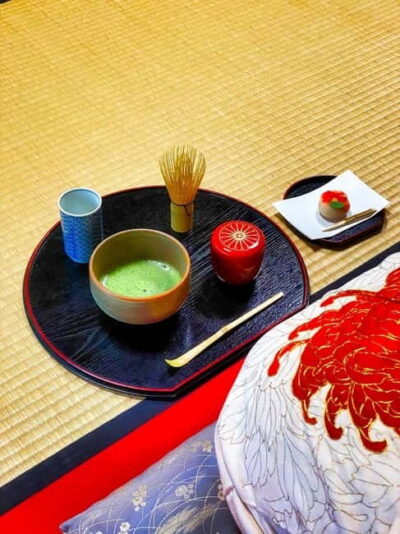
Tea Ceremony in a Traditional Tea House in Kiyomizu
Read our review →
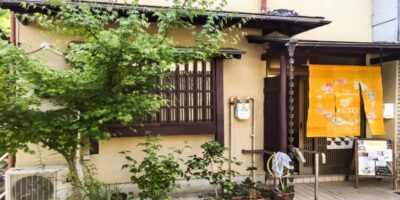
World Heritage Kyoto & Nara Uji Authentic Matcha Experience
Read our review →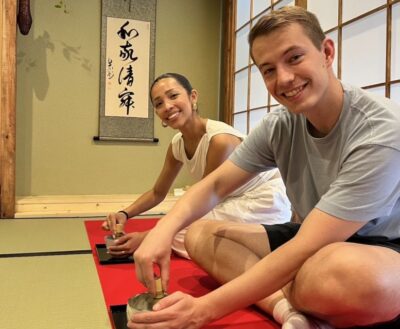
Browse the lists this tour appears in