
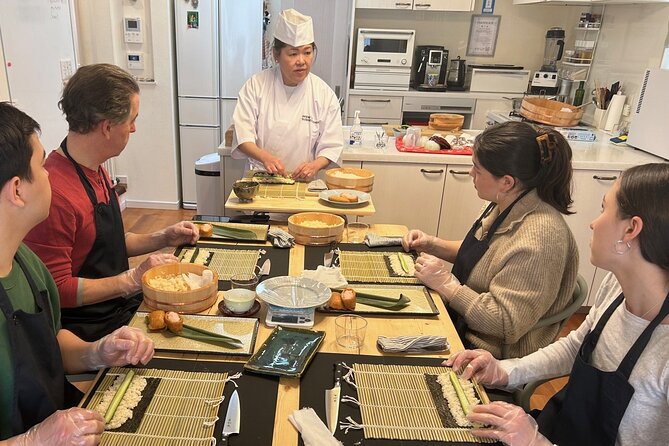
Reviewed · SUSHI MAKING CLASSES
Sushi Cooking Class: AKEMI’s SUSHiKiTCHEN in Tokyo
What makes this sushi class a standout is the setting: you cook in the chef’s own Tokyo home, not a busy restaurant. You get hands-on guidance, plus food culture lessons you can actually use the next time you sit down to eat sushi.
I love the small-group setup, capped at five students, so you are not stuck watching from the sidelines. I also love the ingredient story, the rice is specially blended and ordered from Hachidaime Gihey in Kyoto, and the fish is fresh neta sourced from Toyosu and Tsukiji markets.
One thing to consider: it is a home cooking experience in a residential area, so you should plan to arrive a bit early and give yourself time to find the meeting spot without stress.
Key highlights you can plan around
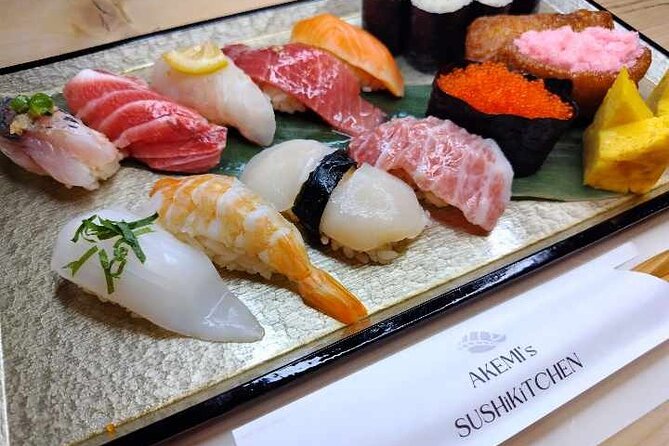
- A home kitchen in a quiet residential Tokyo area, so the class feels relaxed and focused
- Max five students, which usually means you can ask questions and get corrections in real time
- Four types of sushi made during the lesson, then served as the meal you create
- Edomae training plus English from Akemi, making technique clear even if you are new to sushi
- Real sushi-grade ingredients, including special Kyoto rice and fresh neta from Toyosu and Tsukiji
- Etiquette and terminology included, so you understand what to do and what to say at the table
Sushi at kitchen-counter level, in a real Tokyo home
I have always found sushi classes in restaurants can be tricky. The space is loud, the staff is busy, and you often learn through watching instead of doing. This class works differently because you step into Akemi’s home kitchen in Shibuya, Sasazuka area. That matters. Your attention stays on the rice, the knife work, the fish, and the small decisions that separate good sushi from great sushi.
You should expect a calm, practical lesson. There is time to ask questions and adjust your technique. And since the class is designed around making and eating what you prepare, the experience is not just a demo. You are actively building the meal from scratch.
Also, you will likely feel right at home right away. The class is hosted by Akemi, and Dan is part of the hosting team too, which helps keep things friendly and easygoing. When the host team sets a relaxed tone, you tend to learn faster.
More Cooking Classes in Tokyo
- Ramen & Gyoza Cooking Class in Tokyo with Local Supermarket Visit
★ 5.0 · 823 reviews - Tokyo: Easy Ramen Cooking Experience in Kabukicho, Shinjuku
★ 4.6 · 321 reviews - Ramen and Sushi Cooking Class with Sake Pairing Set in Tokyo
★ 5.0 · 291 reviews
Where you meet in Tokyo, and why arriving early helps
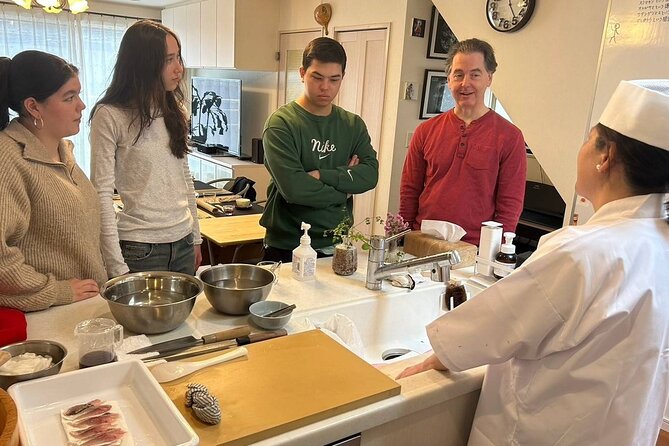
You meet at Tamanosato Sasazukaten 1-chōme-56-18, Sasazuka, Shibuya, Tokyo 151-0073. The activity ends back at the meeting point.
The practical takeaway for your day plan: use public transportation, because it is described as near it, but still aim to arrive early. Home cooking classes can have small timing dependencies. If you show up rushed, you miss the start, and the whole flow of the lesson gets harder.
If you are doing this between other Tokyo stops, I suggest building a buffer. Sushi involves hands, timing, and rice temperature. The class is about 2 hours 30 minutes, so you want to stay on schedule.
The real value: small group attention and hands-on technique
This is not a big tour with a single group lecture. The class is limited to a maximum of five students, and the overall activity notes a maximum of six travelers. Either way, the point is the same: you get personal attention.
That personal attention is what makes technique sink in. Sushi is full of tiny steps, and those steps are easier to correct when someone can watch your hands. You will likely get guidance on things like how you handle rice, how you assemble, and how you work with fish. The goal is not perfection on your first try. The goal is giving you a repeatable method you can actually remember.
Akemi brings serious training too. She has 7 years of restaurant experience in Japan and has completed the Edomae Sushi Technique Acquisition Course at the Tokyo Sushi School. That combination matters. You are not just getting a fun cooking party, you are learning an approach rooted in traditional technique, explained in clear English.
Ingredients that change the final result
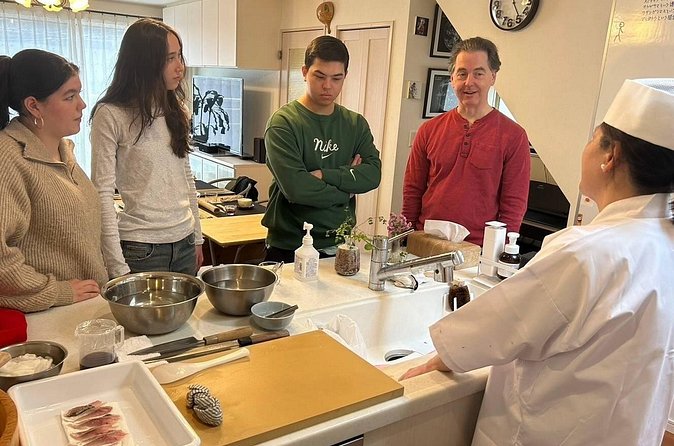
Let’s talk ingredients, because this is where the class earns its price.
Akemi sources the best ingredients for making sushi. The rice is not an off-the-shelf choice. It is a blended rice specially ordered from Hachidaime Gihey in Kyoto, founded in 1787. That is a long time for a reason. Rice quality affects everything: texture, stickiness, and how the sushi rice holds together.
Then there is the fish, the neta. Instead of using whatever is convenient, the fish is sourced directly from Toyosu and Tsukiji fish markets. Netas from reliable markets tend to be fresher and handled with the kind of care sushi needs.
Why you should care: sushi is all about balance. If the rice is right but the fish is tired, the flavor falls flat. If the fish is great but the rice is wrong, the bite feels off. This class sets you up with ingredients that allow you to taste the difference your technique creates.
More Sushi Making Classes in Tokyo
- Sushi Making Tokyo Roll and Authentic Japanese Sushi Class
★ 5.0 · 3,971 reviews - Tokyo: Roll and Authentic Sushi Making Class in Asakusa
★ 4.9 · 1,957 reviews - Make Sushi and Create Unforgettable Memories in Tokyo
★ 5.0 · 1,413 reviews - Tokyo: Sushi Making Class in a Happi Coat near a Famous Spot
★ 4.9 · 1,377 reviews
Your sushi lesson: four types you make, then eat
The lesson culminates in a meal you make yourself. You learn how to make four types of sushi during the 2 hours 30 minutes.
Even if you have never tried sushi before, the class is designed so you can still succeed. That usually means the steps are taught in a logical order, from prep to assembly, with enough structure that you are not guessing.
Here is the kind of learning you can expect at your station:
- Rice work: sushi rice is the foundation. You will practice handling it so it stays workable and tasting right.
- Assembly technique: you will learn how to form and portion sushi in a way that matches the style you are making.
- Fish handling: neta is treated carefully because texture and cut matter for mouthfeel and flavor.
You do not just get a lecture and then a finished plate. You do the work. And that is why the meal tastes better than restaurant sushi sometimes does for first-timers. You know what you did right, and you know what took focus.
The cultural lesson, sushi words, and eating etiquette you can use
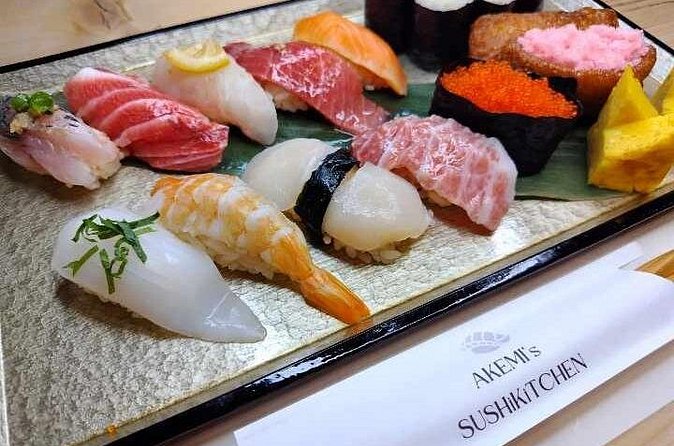
Sushi is not just food. It is also a mini language of etiquette and terms. This class includes insights into Japanese food culture and the history of sushi, plus essential terminology and eating etiquette.
This part is valuable for two reasons.
First, you get context. When you understand where sushi came from and why people eat it the way they do, it becomes less mysterious. It is easier to enjoy, and easier to make choices when you order.
Second, you learn table behavior that you can carry over immediately. Even people who think they know sushi often learn something small but useful, like how to think about how you handle it or how etiquette works in a traditional setting.
You will also pick up sushi terminology used around the dish. That means you can talk about what you like, not just name a few items. Once you know the words, ordering becomes simpler.
And yes, the class is designed so that even Japanese guests have said they learned a lot about their own food culture. That tells me the instruction goes beyond the obvious basics.
How the timing works during a 2.5-hour class
A typical 2 hour 30 minutes cooking class can either feel rushed or balanced. Here, the structure is built around learning plus a final shared payoff: you eat what you made.
In practice, you should expect the lesson to move through phases:
1) intro to the ingredients and technique
2) hands-on practice making sushi
3) the cultural and etiquette pieces woven into the learning
4) finishing and sharing the meal
Because everything culminates in your creations, you do not feel like you are waiting around for the end. Even when you are listening, it is usually linked to what you are doing with your hands.
The small group size helps timing too. You are not stuck behind someone who needs lots of extra time, and you are not left alone while a larger crowd cycles through the same steps.
Price and value: $105.68 for technique, ingredients, and a full meal
At $105.68 per person, this is not a cheap snack stop. But it is also not priced like a high-end private chef experience. The value comes from what you get for that money:
- Hands-on instruction in a small group of up to five students
- Real technique teaching, not a generic overview
- High-quality ingredients, including special sushi rice from Hachidaime Gihey and fresh neta from Toyosu and Tsukiji
- A meal you create, so you leave fed, not just educated
If you compare it to eating sushi elsewhere, this class is different. You are paying for the learning and the experience of doing it yourself. That is often the tipping point for me. If you like cooking, the price makes more sense because you get a skill you can repeat.
Who should book Akemi’s Sushi Kitchen, and who might not love it
This class is a great fit if you:
- want real sushi technique, not just a meal
- are traveling as a couple, solo, or small group and want personal attention
- enjoy learning why things work, rice, fish, and etiquette included
- are a beginner and want confidence through step-by-step guidance in English
It might feel like less of a match if you:
- only want to eat sushi and do not care about technique or cultural context
- hate structured activities and want total freedom, because this class is clearly planned around making four types of sushi in a limited time
Book it or skip it: my practical verdict
If you want an authentic, hands-on sushi experience in Tokyo, I think this is an easy yes. The small group size, Akemi’s restaurant background and formal Edomae training, and the ingredient quality make it feel worth your time. You also walk away with knowledge beyond the plate, sushi terminology and etiquette included.
The only real reason to skip is if you do not want instruction or you are trying to cram in too many activities and you cannot protect the 2.5-hour window. Otherwise, this is one of those experiences that gives you both a good meal and a skill you can carry home.
FAQ
How long is the sushi cooking class?
The class lasts about 2 hours 30 minutes.
How many people are in the class?
The lesson is limited to a maximum of five students, and the activity notes a maximum of 6 travelers.
Where is the meeting point in Tokyo?
You meet at Tamanosato Sasazukaten 1-chōme-56-18 Sasazuka, Shibuya, Tokyo 151-0073, Japan.
What will I make during the lesson?
You will learn how to make four types of sushi.
Do I need prior sushi experience?
No. Even if you have never tried sushi before, you can be confident you will enjoy your hand-prepared meal.
Is the class taught in English?
Yes. Akemi offers an educational lesson in English.
What ingredients are used?
The sushi rice is blended and specially ordered from Hachidaime Gihey in Kyoto, and the fresh fish, called neta, is sourced from Toyosu and Tsukiji fish markets.
Can I get a full refund if I cancel?
Yes. You can cancel up to 24 hours in advance for a full refund. If you cancel less than 24 hours before the start time, the amount paid is not refunded.
Latest write-ups near Tokyo
- Tokyo Customized Private Tour: See Top Attractions in 1 Day★ 4.8 · 67 reviews
- From Tokyo: Top 5 Scenic Spots of Mount Fuji Full-Day Tour★ 4.5 · 67 reviews
- Traditional Japanese Music ZAKURO SHOW in Tokyo★ 5.0 · 67 reviews
- Tokyo: Shinjuku Izakaya and Golden Gai Bar Hopping Tour (2h)★ 4.9 · 67 reviews
- Tsukiji: Unlimited Sake Tasting Experience★ 4.9 · 67 reviews
- Private Harajuku Omotesando Architecture Walking Tour★ 5.0 · 67 reviews
- Samurai Ninja Museum Asakusa: Kid-Friendly Ninja Training★ 4.7 · 67 reviews
- Tokyo: Not a show- a professional sumo practice with experts★ 4.9 · 67 reviews
Sushi Making Classes, compared.
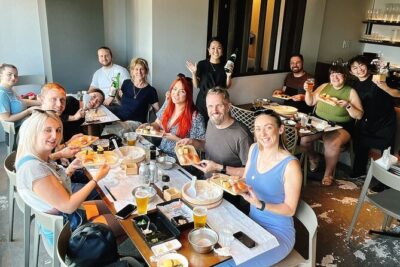
Sushi Making Tokyo Roll and Authentic Japanese Sushi Class
Read our review →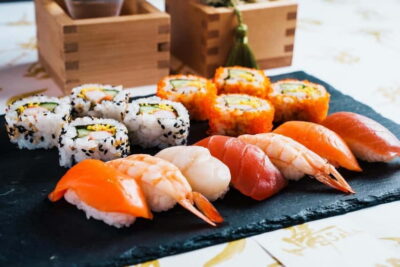
Roll and Authentic Sushi Making Class in Asakusa
Read our review →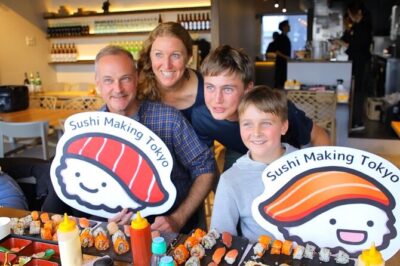
Make Sushi and Create Unforgettable Memories in Tokyo
Read our review →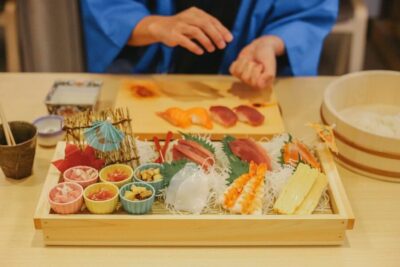
Sushi Making Class in a Happi Coat near a Famous Spot
Read our review →
Sushi Making Osaka Roll and Authentic Japanese Sushi Class
Read our review →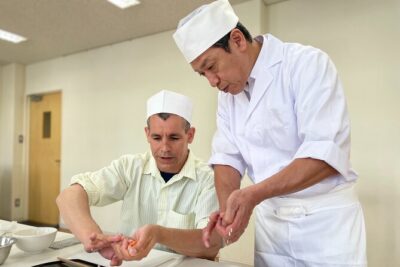
Tokyo Sushi Making Class in Tsukiji with Professional Chef
Read our review →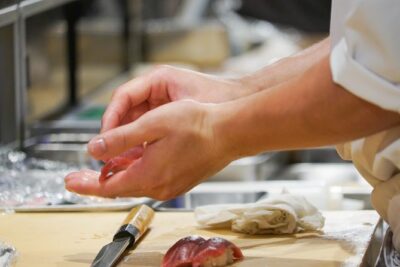
Tokyo Night Foodie Tour in Shinjuku – Seasonal Sushi, Wagyu Beef
Read our review →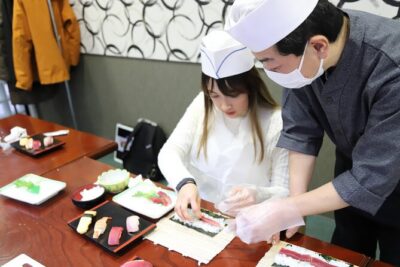
Tsukiji Fish Market Guided Tour and Sushi Making with Pro Chef
Read our review →Browse the lists this tour appears in