
Reviewed · HISTORICAL TOURS
Walking Through History: Hiroshima’s Path to Peace
Hiroshima’s peace message is powerful on its own, but this walk makes it easier to understand by pairing the landmarks with expert, PhD-level context. I like that you follow a clear, easy route in a small group of up to 8 people, so questions actually get answered and the pace stays human.
My favorite part is that you also get Peace Memorial Museum entry handled in advance, which helps you skip the long line. One thing to consider: the tour is only about 2 hours, and the museum time is self-paced, so if you want lots of guided explanation inside the exhibits, you will not get that.
Key highlights to look for on this Hiroshima walk
- PhD-level storytelling that connects each monument to what happened, and why it matters now
- Museum skip-the-line ticket purchase so you spend less time waiting
- Free entry stops at the key peace sites around the park
- A respectful, thoughtful pace with time for photos and quiet looking
- Interactive guide style that encourages questions, not just lectures
- A small group size (max 8) that helps you move together and stay on time
Hiroshima peace monuments in 2 hours with a small expert team
If you only have a short window in Hiroshima, this is a smart way to cover the Peace Memorial Park area without feeling lost. You’re walking between the places that people come back to again and again, because each one adds a different angle to the same core theme: the cost of war, and the push for a world without nuclear weapons.
The small group size is not a minor detail. With up to 8 people, the guide can adjust pacing and keep things clear. It also makes the tour feel more like a conversation on foot, not a hurried stamp-collecting loop.
And yes, this is a walking tour. It is designed for an easy walk, so you can focus on what you’re seeing rather than what you’re doing with your feet. If you’re visiting from another city and trying to make the most of your day, this kind of guided structure is exactly what you want.
More Historical Tours in Hiroshima:
- Hiroshima Historical Walking Tour – Why A-Bomb was Dropped
★ 4.8 · 893 reviews - Hiroshima Peace (Heiwa) Walking Tour at World Heritage Sites
★ 5.0 · 872 reviews - Miyajima Half-day Trip Historical Walking Tour
★ 5.0 · 284 reviews
Start at the Atomic Bomb Dome, then build your understanding step by step
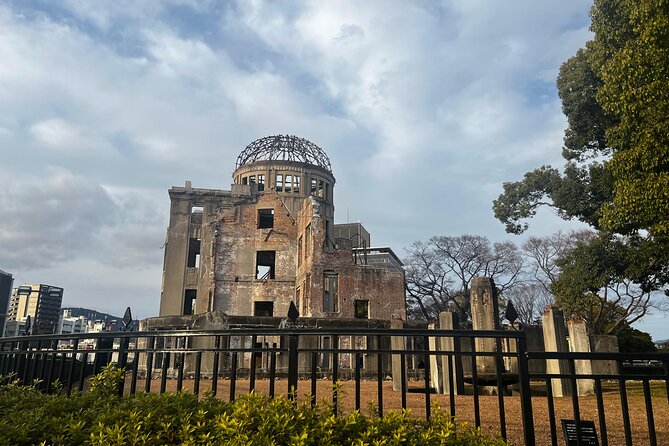
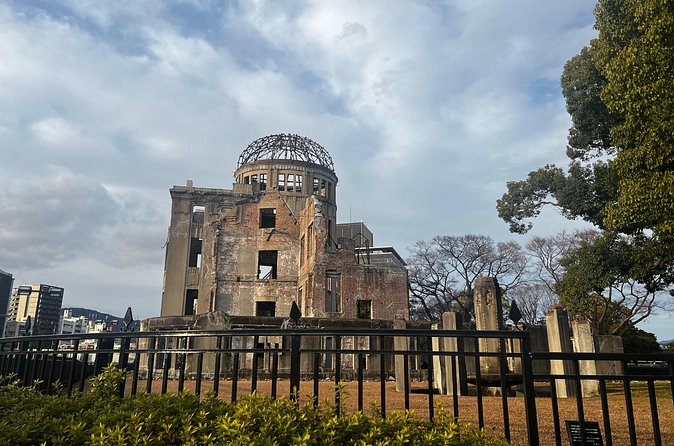
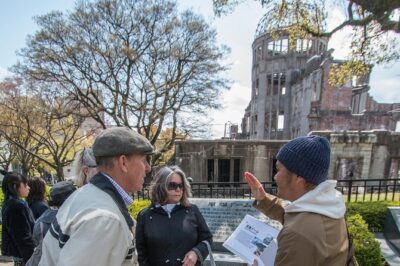
The Atomic Bomb Dome is where the tour locks in your attention. Even without reading a single sign, you can feel that this building is not just a landmark, it is evidence. It’s listed as a UNESCO World Heritage Site, and that matters, because it signals that the world has agreed this place should be preserved, studied, and remembered.
At this stop, the guide’s job is to frame what you’re looking at, so it doesn’t become just another photo spot. You’ll hear the story of the atomic bombing and how the Dome became a symbol that people still reference in the peace movement. The best part of starting here is that it gives you context before you move deeper into the surrounding memorials.
This stop lasts about 20 minutes. That’s a practical amount of time if you want to take photos, read enough to understand, and still keep momentum for the rest of the park. If you’re the type who can stare at details for an hour, you might want to plan extra time later on your own.
Peace Bell, and the idea of harmony without nuclear weapons
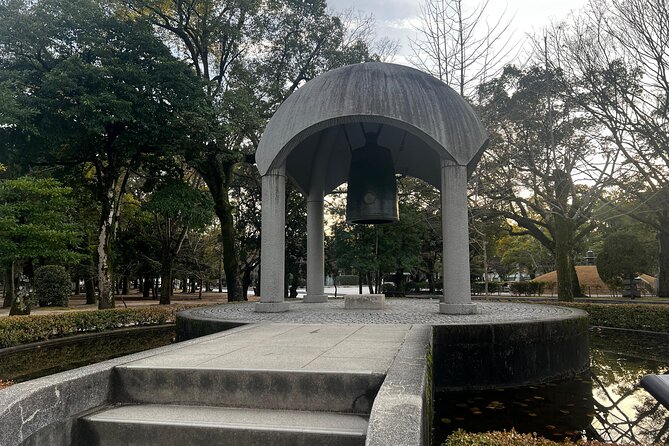
From the Dome, the walk moves you toward symbols that are less about ruins and more about the future people are trying to build. The Peace Bell is one of those symbols. It represents harmony and a world without nuclear weapons.
It may sound simple, but symbols like this work because they compress a huge message into one place. The bell’s deep echo is meant to trigger reflection, and the guide helps you connect that reflection to the broader peace story you’re hearing.
This is a shorter stop, around 10 minutes. Use it to pause and let the message land. If you spend too long here, you’ll run tight later at the places with the most information.
Remembering Korean victims and survivors, plus children’s names and stories
One of the things I respect about this tour is that it doesn’t treat the Hiroshima story as one single cast. You stop at the Monument to Korean Victims and Survivors, which honors Korean lives affected by the atomic bombing. This kind of memorial matters because it broadens the remembrance beyond one nationality. It also acknowledges that the consequences of wartime choices reach more people than any official headline ever suggests.
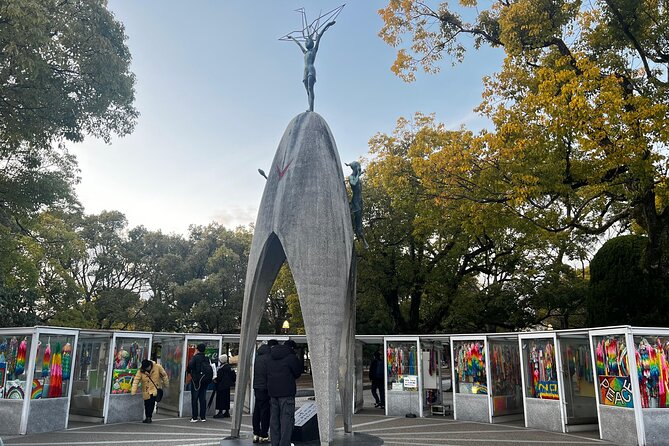
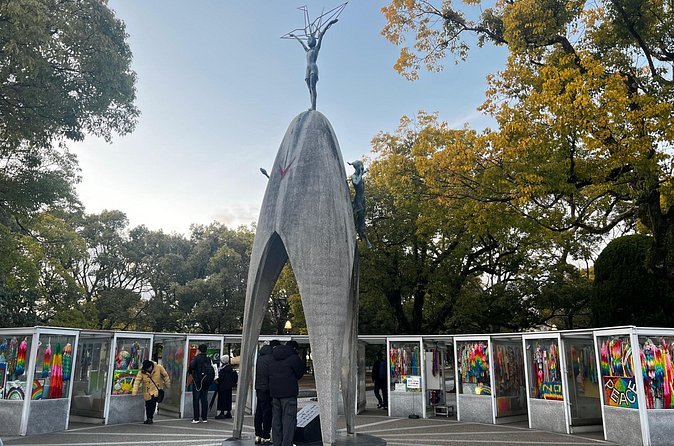
Then you move to the Children’s Peace Monument. This one is connected to the story of Sadako Sasaki, a young girl who folded paper cranes in the hope of survival. The point isn’t the crane craft itself. The point is what the symbol became: a child’s message carried forward as a universal reminder that the war took lives that never should have been cut short.
Both of these stops are around 10 minutes each. That’s enough time to absorb the main message without turning the experience into a museum marathon. If you tend to get emotional at memorials, you may want to slow down your breathing here and take a moment before moving on.
More Walking Tours in Hiroshima:
- Hiroshima City 4hr Private Walking Tour with Licensed Guide
★ 5.0 · 437 reviews - Hiroshima Walking Tour Why A Bomb was dropped to Hiroshima
★ 5.0 · 347 reviews - Hiroshima: History of Hiroshima Group Walking Tour
★ 4.8 · 266 reviews - Hiroshima: Food and Culture Guided Walking Tour with Dinner
★ 4.9 · 212 reviews
The Peace Flame and the long-term promise it carries
Next comes the Peace Flame, burning continuously since 1964. That continuity is the message. It represents commitment to a world without nuclear weapons and it stays lit until all nuclear arms are abolished.
This stop is about 10 minutes. I like it because it bridges the past to the present. The Hiroshima peace story is not just about tragedy, it’s also about accountability and the ongoing work of prevention.
A good guide helps you understand that the flame is not only symbolic, it is also political in the best way. It asks people to keep caring over time, not just on anniversaries.
Hiroshima National Peace Memorial Hall, where personal testimonies matter most
Now you reach the Hiroshima National Peace Memorial Hall for the Atomic Bomb Victims. This is where the tone changes from looking outward to listening inward.
The memorial hall focuses on the victims through personal stories, photographs, and survivor testimonies. The design of the space encourages contemplation, so you’re not meant to treat it like a quick check-in. You’re meant to sit with what you learn and let it affect you.
This stop lasts about 20 minutes. It’s enough time to read several key panels and see how the exhibits connect the human side of history to the bigger global peace message. If you go too fast, you’ll miss what makes it different from the outdoor memorials.
The cenotaph inscription and why the alignment is part of the lesson
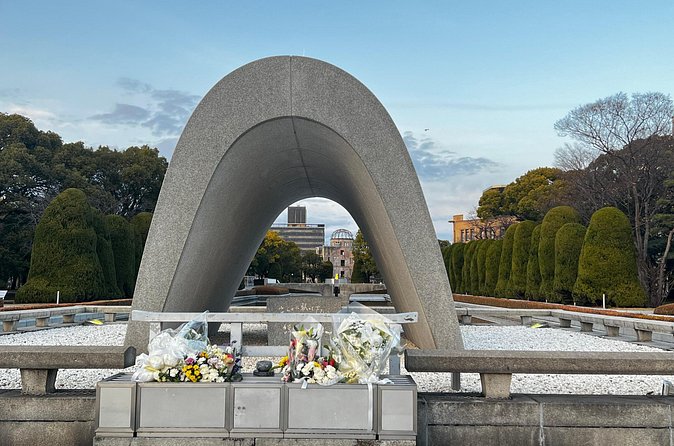
The walk continues to the Hiroshima Peace City Monument Cenotaph for the Atomic Bomb Victims. This one is arched and inscribed with the message: Let all the souls here rest in peace, for we shall not repeat the evil.
It also holds the names of all known victims of the atomic bombing. That alone is heavy. But the guide also points out how the cenotaph aligns with the nearby Peace Memorial Hall, which turns the area into more than a collection of monuments. It becomes a designed route for remembrance.
This stop is around 10 minutes. Expect it to feel brief even if you’re reading carefully, because the area is built to keep you moving from one focal point to another.
Peace Memorial Museum, the smart skip-line plan, and why you go in solo
The Hiroshima Peace Memorial Museum is included, and the guide purchases your entrance ticket in advance. That’s the practical part. It can mean less waiting and more time actually looking.
There’s also an important rule: tour guides are not allowed to speak inside the museum. So you’ll visit on your own. That can sound like a drawback if you love guided commentary, but it can also be a gift. You have quiet, uninterrupted time to absorb the exhibit text, photos, and displays at your own speed.
The tour itinerary lists the museum stop as about 10 minutes. In reality, museums can expand endlessly in your brain. If you want more time, plan to come back later. If you have limited time, think of this museum visit as a focused first pass that helps you understand what you’re seeing outside.
If you’re the type who likes to ask questions, you can still do that before you enter, and then use your own time inside to read. When you come out, you’ll be ready to connect the exhibits to the outdoor memorial messages you just heard.
Gates of Peace, the multilingual symbol you can finish on
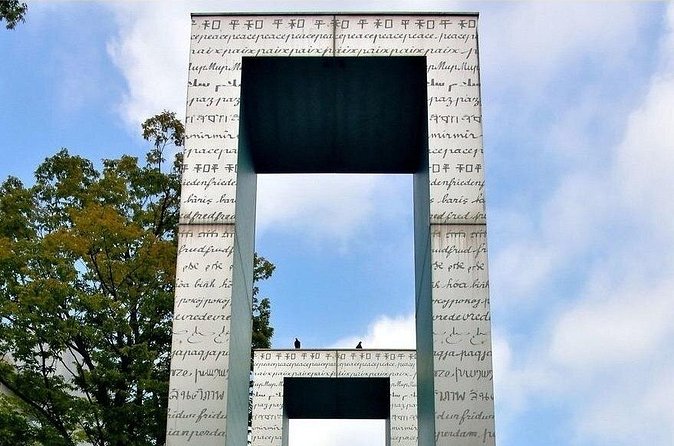
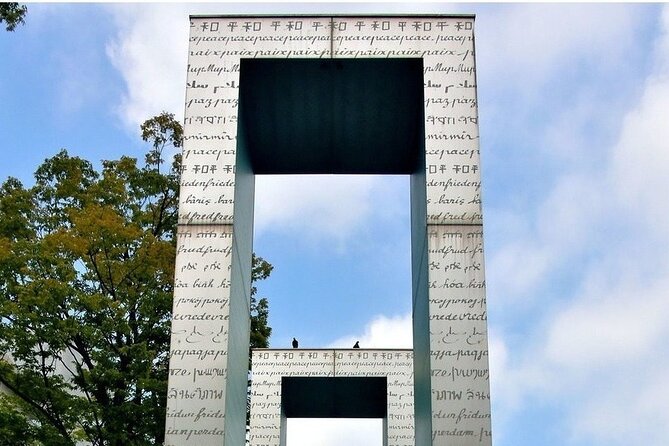
You end at the Gates of Peace, a set of ten glass gates inscribed with peace in multiple languages. This stop is around 20 minutes, which makes sense. It gives you time to read, photograph, and take in the final message in a way that feels less rushed.
I like a finish like this because it gives you closure that is not just sadness. The gates are about a shared idea, not a single nation’s viewpoint. They point you back to the universal hope the entire area is built around.
Ending here is also convenient. The tour’s meeting point is different from the ending point, so you can continue exploring nearby parts of Hiroshima without needing to backtrack the whole way.
Where you start and finish, and how to plan your walking day
The tour starts at 1-chōme-10-1 Ōtemachi, Naka Ward, Hiroshima, and ends at Gates of Peace at 4-15 Nakajimachō, Naka Ward, Hiroshima.
That start-to-finish design is practical. You’re not stuck retracing your steps, and it reduces decision fatigue. If you’re scheduling your day tightly, a single direction flow helps.
You’ll also want to think about weather. One guide approach highlighted in the experience you’re booking is a thoughtful pace that includes stopping in shade on hot days and giving people time to cool down. So yes, it’s a walking tour, but it’s not a drill. Still, wear comfortable shoes and dress for the day you get.
If you’re visiting with limited time, this is one of those tours where timing matters more than distance. The duration is about 2 hours, and each stop has a planned length. The best way to make it satisfying is to treat it like a guided overview first, then return later on your own if something grabs you.
Price and value: why $31.63 can make sense here
At $31.63 per person, this tour isn’t trying to be the cheapest option in Hiroshima. But it doesn’t rely on expensive inclusions either. The value comes from the structure and the guided interpretation.
Here’s what you’re really paying for:
- Expert-led route guidance through the main memorial landmarks, rather than trying to piece together meaning on your own
- Included museum entry, plus the advantage of having the ticket handled so you can skip the long line
- Free admission for the other peace monument stops, so you’re not stacking extra costs as you go
- Small group format (max 8 people), which improves the chance your questions get answered and the pace stays fair
If you’re the kind of visitor who likes to understand what you’re looking at, the guide layer is worth it. If you’re the kind of visitor who prefers silent wandering and reading everything without conversation, you might feel the cost less justified. But for most people, especially first-timers, the guide helps you see more meaning in less time.
Also, the experience is often booked around 14 days in advance on average. If you’re traveling in a busy season or have a firm schedule, reserving sooner rather than later saves stress.
Who this Hiroshima peace walk fits best
This works well if you want:
- a short, structured visit to Hiroshima’s most important peace sites
- a guide who can explain how the symbols connect to the atomic bombing and to the peace movement
- time for photos and quiet reflection without feeling like you’re rushing
It’s also a good fit for mixed groups, including people who want a guided explanation but still need a gentle pace. One example from the experience style is that guides make adjustments for people with mobility concerns by slowing down, so the walk stays manageable. Another example is that guides balance facts with interactive question time, which can make the experience feel more personal instead of one-sided.
If you do not like walking tours, or if you already know the material and want to spend hours inside the museum reading and comparing, you may prefer planning a self-guided day. This one is built to be efficient, not endless.
Should you book this Hiroshima walking tour?
Book it if you want a tight 2-hour plan that connects the Atomic Bomb Dome, the Peace Bell, children’s and victims’ memorials, the Peace Flame, the memorial hall, the cenotaph, and the Gates of Peace into one coherent experience. The included museum ticket and skip-the-line benefit alone can be worth it when your time is limited.
Pass on it only if you’re planning a long, slow deep read day and you already feel confident navigating the park and interpreting what you see. The museum portion is self-guided inside, and the outdoor stops are paced for a quick overview.
If this is your first time in Hiroshima peace spaces, I think you’ll appreciate the guidance. You’ll walk away with a clearer story, a calmer pace, and a stronger sense of why these places matter far beyond one city.
FAQ
How long is the Hiroshima walking tour?
It is about 2 hours (approx.).
What is the price per person?
The price is $31.63 per person.
Does the tour include admission tickets?
Most stops have free admission tickets, and the Hiroshima Peace Memorial Museum entrance ticket is included.
Will I be able to hear my guide inside the Peace Memorial Museum?
No. Tour guides are not allowed to speak inside the museum, so you will visit the museum on your own.
What is the meeting point and where does the tour end?
The start is 1-chōme-10-1 Ōtemachi, Naka Ward, Hiroshima. The tour ends at Gates of Peace, 4-15 Nakajimachō, Naka Ward, Hiroshima.
What group size should I expect?
The tour has a maximum of 8 travelers.
Do I get a mobile ticket?
Yes. The tour uses a mobile ticket.
Are service animals allowed?
Yes, service animals are allowed.
What if my plans change?
Free cancellation is available. You can cancel up to 24 hours in advance for a full refund.
Latest write-ups near Hiroshima
- Hiroshima: Atomic Bomb Dome and Peace Memorial Museum 3 hours★ 5.0 · 20 reviews
- Hiroshima: City and Miyajima Bike and Boat Tour★ 5.0 · 20 reviews
- Hiroshima: Tour of Atomic Bomb Dome & Peace Memorial Museum★ 5.0 · 20 reviews
- Miyajima Guided Tour and Fresh Oyster Farm Tour★ 5.0 · 20 reviews
- Miyajima Highlights: Itsukushima Shrine & Island Nature★ 5.0 · 21 reviews
- Miyajima Highlights: Itsukushima Shrine & Island Nature★ 4.9 · 21 reviews
- Dinner Cruise on HANAIKADA (Raft-Type Boat) with Scenic View of Miyajima★ 5.0 · 21 reviews
- History of Hiroshima Group Walking Tour★ 5.0 · 23 reviews
Historical Tours, compared.

World Heritage Shirakawa-go and Experience Tours from Kanazawa
Read our review →
Imperial Palace and Shogun Historical Walking Tour
Read our review →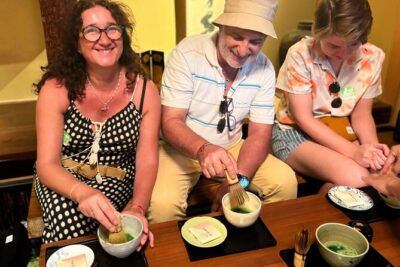
World Heritage Kyoto & Nara Uji Authentic Matcha Experience
Read our review →
Kyoto Gion: 2-Hour Geisha Culture & History Walking Tour
Read our review →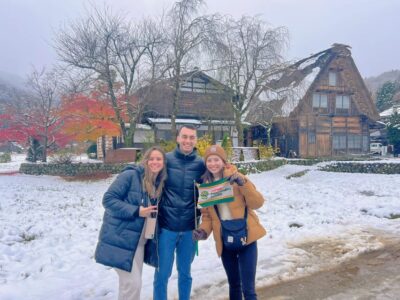
World Heritage Shirakawa-go Morning Guided Tour
Read our review →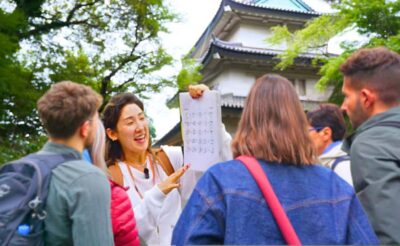
Hiroshima Peace (Heiwa) Walking Tour at World Heritage Sites
Read our review →
Yanaka Walking Tour: Historic and Traditional District of Tokyo
Read our review →Browse the lists this tour appears in