
Hiroshima’s peace story hits hardest when you walk it step by step. This 2-hour guided route through Hiroshima Peace Memorial Park connects the landmarks you recognize, like the Atomic Bomb Dome, to the people behind them. What I like is the mix of big, symbolic stops and the human, story-driven moments like Sadako Sasaki and the paper cranes. I also love that the tour is led by an expert PhD scholar, so you’re not just looking, you’re understanding.
One consideration: this is an emotional walk on mostly outdoor paths, so if you’re sensitive to intense WWII history, or you have health limits, you’ll want to plan for a slower pace and take breaks. Also, bring real walking shoes, because you’re on your feet for the full loop.
Key things that make this tour worth your time
- PhD-led, story-first guidance that turns memorials into a clear timeline of 1945 and the path since then
- Major peace landmarks in one efficient route, including the Atomic Bomb Dome and the Peace Bell
- Hands-on meaning, not just sightseeing, like ringing the bell as a symbol of hope
- Human-scale details, especially Sadako Sasaki’s thousand paper cranes and the Children’s Peace Monument
- Multiple memorial stops, including the Korean Atomic Bomb Victims Cenotaph and other remembrance points
- Small group size (up to 10), so you can ask questions and get answers in plain English
Where this walking tour really shines in Hiroshima
If you’ve ever stood in front of a monument and felt stuck on what to do next, this is the cure. Instead of treating the Peace Park as a checklist, the guide connects each stop to what happened, what was lost, and what Hiroshima chose to build afterward.
You’ll get a route that makes practical sense. It also makes emotional sense. The order matters: the guide starts with remembrance, moves you through key landmark sites, then brings you back toward symbols of hope and modern reconstruction. In other words, you leave with both facts and feelings, but in a guided order that helps your brain keep up.
More Historical Tours in Hiroshima:
- Hiroshima Historical Walking Tour – Why A-Bomb was Dropped
★ 4.8 · 893 reviews - Hiroshima Peace (Heiwa) Walking Tour at World Heritage Sites
★ 5.0 · 872 reviews - Miyajima Half-day Trip Historical Walking Tour
★ 5.0 · 284 reviews
Getting oriented at the Cenotaph for A-bomb Victims
The tour begins at the Cenotaph for A-bomb Victims. Even before you hear much commentary, the setting does work. This is a place of tribute, not a backdrop for photos, so plan to slow down on arrival.
The meeting area is right by the Atomic Bomb Dome area, in front of the Cenotaph erected by volunteers of Hiroshima Prefecture Chiho Lumber Co., Ltd. That detail matters because it signals something Hiroshima’s peace movement has always leaned on: ordinary people stepping in after disaster. You don’t need extra context to feel that the tour is meant to be respectful.
What I like here is that it sets your emotional “baseline.” The guide is steering you from the start, so the rest of the walk doesn’t feel like random monuments glued together.
Atomic Bomb Dome stop: the landmark you can’t unsee
Next you’ll visit the Atomic Bomb Dome, one of the most recognizable buildings in Japan and a UNESCO World Heritage Site. The guide’s time here is focused, about 20 minutes, which is exactly right. Long enough to understand what you’re seeing, short enough that you can still breathe and take it in.
This stop is also where you’ll understand why the dome became more than a ruined structure. A guide can point out how this site functions as evidence, memory, and warning all at once. You’re not just admiring architecture. You’re learning why preservation was part of Hiroshima’s recovery.
A small practical tip: if you’re sensitive to crowds or bright sun, bring your hat and plan water early. The park can feel exposed, even when you’re surrounded by shade from structures.
Clock Tower of Peace: the timeline anchor
After the dome, you’ll move to the Clock Tower of Peace. The tour keeps things tight here, with roughly 10 minutes. That short window is helpful. It pushes you to listen for the takeaway instead of getting lost in details.
A clock tower is a natural symbol for time, and in this context it becomes a reminder that history keeps moving, even when the past refuses to fade. The guide uses this stop to connect the immediate tragedy to what came next in Hiroshima’s rebuild and modernization.
This is one of those spots where a good guide can prevent confusion. Without context, you might wonder why a random-looking tower is in the middle of a WWII memorial route. With context, it becomes a bridge between eras.
More Walking Tours in Hiroshima:
- Hiroshima City 4hr Private Walking Tour with Licensed Guide
★ 5.0 · 437 reviews - Hiroshima Walking Tour Why A Bomb was dropped to Hiroshima
★ 5.0 · 347 reviews - Hiroshima: History of Hiroshima Group Walking Tour
★ 4.8 · 266 reviews - Hiroshima: Food and Culture Guided Walking Tour with Dinner
★ 4.9 · 212 reviews
Bell of Peace and Flame of Peace: symbols you actively use
Then comes the part many people remember most: the Bell of Peace in Hiroshima, plus the Flame of Peace. You’ll spend around 10 minutes at the bell and close by at the peace flame areas.
You’ll ring the bell. That’s not a gimmick. It’s a ritual element in the tour, a chance to participate in the tour’s theme of world peace and hope. If you’re worried about feeling awkward, don’t. The guide frames it clearly, and the whole park atmosphere supports quiet participation.
What I like about this section is the balance. You don’t only witness loss. You also perform a small act that stands for a choice: to keep working for peace rather than just remembering the blast.
Korean Atomic Bomb Victims Cenotaph: expanding the circle of remembrance
One of the tour’s strengths is that remembrance is not limited to a single group or single narrative line. You’ll visit the Korean Atomic Bomb Victims Cenotaph, guided for about 10 minutes.
This stop is important because it broadens your understanding of the disaster’s reach. Hiroshima in 1945 was not an isolated event affecting only local people in a single category. The guide helps you see why that expanded memory matters to the integrity of a peace message.
If you like tours that don’t flatten history into one simple story, this is the kind of stop that earns its place. It’s also where questions often come up, and the small group size helps you get real answers.
The Children’s Peace Monument and Sadako’s cranes
You’ll spend time at the Children’s Peace Monument, around 10 minutes, and the guide will specifically connect you to the story of Sadako Sasaki and the thousand paper cranes.
This is where the tour becomes personal in a way even the most careful history explanation can’t match. The story gives you a human entry point into suffering that would otherwise feel too large to hold in your mind.
Practical note: this is also where you’ll see visitors pause for longer moments. If you want photos, do it quickly and respectfully, and then put your camera away for the guided portion. The guide’s framing helps you focus on meaning, not just images.
Hiroshima National Peace Memorial Hall: context that makes museum time easier
Next up is Hiroshima National Peace Memorial Hall, guided for about 20 minutes. This is one of the tour stops that helps everything else land. The hall gives background and direction, so the memorial park doesn’t feel like a set of separate scenes.
I recommend this pacing if you want the tour to feel coherent, not repetitive. One reason is simple: when you’ve had context before you hit the museum exhibits, the museum stops feel like confirmation, not re-explanation.
If you’re a first-time visitor, this is especially valuable. Even if you’ve read about Hiroshima already, the hall helps you sort facts into a storyline.
Hiroshima Victims Memorial Cenotaph and Prayer Fountain: quiet places with strong purpose
You’ll pass by the Hiroshima Victims Memorial Cenotaph, with about 10 minutes of guided time, and then move toward the Prayer Fountain area for about 10 minutes.
These are often the stops where you notice what silence does. Without guidance, memorial areas can feel like you’re walking through them. With guidance, you learn what to pay attention to: the intent behind the structure, the tone of the messages, and why the park uses repeating elements.
This is also where the route’s design makes sense. The tour doesn’t rush. It gives you short guided segments followed by moments to absorb what you’ve just heard.
Peace Memorial Museum: exhibits and artifacts with human testimony
The Hiroshima Peace Memorial Museum is included, with about 20 minutes of guided time. This is the point where the trip becomes information-dense, because you’ll see exhibits, artifacts, and survivor testimonies.
This is the section where I think the tour format really helps. A museum can be overwhelming on your own. With a guide, you’re not just reading captions. You’re getting signposts for what matters most, and why.
If you’re the type who hates repeating yourself, know this: some guides will refer back to themes you might have already seen elsewhere in the park, but the goal is consistency, not boredom. If you have the choice, doing museum-first can help you avoid that feeling of looping. Still, the guided flow is designed to bring you along step by step.
Extra memorial stops: Dr. Marcel Junod and Norman Cousins
The included route also lists stops like the Dr. Marcel Junod Memorial and the Norman Cousins Memorial Monument. These add more layers to the park’s “peace network” feeling.
Because you get guided time built into the route, you’re less likely to miss the fact that the Peace Park isn’t only about 1945. It’s also about the long process of advocacy and international attention, shown through multiple named memorial points.
If you love learning how local grief connects to global efforts, these named stops are a nice bonus.
Gates of Peace: the ending that makes your last minutes matter
The tour finishes at the Gates of Peace. This ending feels intentional, like a transition from remembrance into a forward-looking frame.
Gates suggest passage. You arrive with heavy context, and you leave with a guided sense of what peace work looks like in the real world, not just as a slogan. It’s a strong wrap-up after the bell, flame, and museum context.
Pace, group size, and the PhD guide factor
The duration is 2 hours, and the group is limited to 10 participants. That small size is a big deal here. In a place like Hiroshima, you don’t just want to hear the main points. You want time for questions, especially if you’re trying to understand cause and consequence clearly.
The tour is led by an expert PhD scholar. You can expect English guidance, and the tour also runs in Urdu and Hindi. In practice, that language support matters if you want the details explained in a way you can actually use.
From an experience standpoint, this tour works best when you let the guide control the flow. If you try to outpace the group with constant wandering, you’ll likely miss the key connections that make the walk feel like a story instead of sightseeing.
Price and value: $23 for what you’re actually buying
At $23 per person for a 2-hour guided route, this is one of the better value types of experiences in Hiroshima if you care about context. You’re paying for three things that are hard to replicate alone:
- a tight, efficient route through major memorial sites
- guided interpretation of exhibits and survivor testimonies in a short time window
- access to the included Peace Park landmarks without needing to stitch the plan together yourself
Could you visit on your own? Yes. But you’d lose a big part of what makes this specific tour worthwhile, the guided meaning and the ability to ask questions in real time.
You also get “skip the ticket line.” Since the included sites are major and often busy, that small advantage can protect your schedule and keep the pace respectful rather than rushed.
Who should book this tour, and who should skip it
This is a great fit if you want a first-time orientation to Hiroshima’s peace sites and you appreciate learning through clear storytelling. It’s also ideal if you like tours that leave room for questions, because the small group size makes that realistic.
It’s not suitable for people with heart problems. The tour is described as a walking experience, and memorial areas still require sustained standing and walking even when the segments are short.
Quick “bring this, wear that” checklist
Bring:
- comfortable shoes
- hat
- camera
- sunscreen
- water
And plan on:
- weather-appropriate clothing
- no smoking in the area
- respecting the solemnity of the sites, with quiet behavior near memorials
Should you book Walking Through History: Hiroshima’s Path to Peace?
Yes, if you want the Peace Park to make sense as more than a list of famous stops. I’d book it particularly if this is your first time in Hiroshima, because the tour’s structure helps you connect the Atomic Bomb Dome, the cenotaphs, Sadako’s cranes, the bell ritual, and the museum exhibits into one understandable arc.
Skip it, or rethink it, if you know you’ll struggle with intense WWII material in a walking format, or if your health limits make sustained walking hard. Otherwise, this is a strong, respectful way to experience Hiroshima’s promise of peace, with enough guidance to leave you informed and enough space to leave you changed.
FAQ
How long is the walking tour?
It lasts 2 hours.
Where do I meet the guide?
You meet at the Atomic Bomb Dome in front of the Cenotaph erected by volunteers of Hiroshima.
What languages are offered for the tour guide?
The live tour guide is available in English, Urdu, and Hindi.
What does the tour price include?
It includes visits to the Children’s Peace Monument, Atomic Bomb Dome, Bell of Peace, Prayer Fountain, Hiroshima Victims Memorial Cenotaph, Flame of Peace, Gates of Peace, Korean Atomic Bomb Victims Cenotaph, Dr. Marcel Junod Memorial, Norman Cousins Memorial Monument, Hiroshima National Peace Memorial Hall, and Hiroshima Peace Memorial Museum.
What should I bring?
Bring comfortable shoes, a hat, a camera, sunscreen, and water.
Is it wheelchair accessible, and is it suitable for everyone?
It is wheelchair accessible. It is not suitable for people with heart problems.
Latest write-ups near Hiroshima
- An Amazing set of Cultural experience: Kimono, Tea Ceremony and Calligraphy★ 5.0 · 69 reviews
- Hiroshima: Private Walking Tour with a Local★ 4.6 · 70 reviews
- Hiroshima: Miyajima Island Half-Day Tour with Guide★ 4.9 · 71 reviews
- Kimono and Tea Ceremony in Miyajima★ 5.0 · 73 reviews
- Hiroshima and Miyajima Private Guided Tour★ 4.5 · 75 reviews
- HIROSHIMA ORIZURU TOWER Admission Ticket★ 4.6 · 75 reviews
- Hiroshima & Miyajima: UNESCO A-Bomb Dome & Itsukushima★ 5.0 · 76 reviews
- Hiroshima to Miyajima: Private Custom Tour with Ferry Ride★ 4.9 · 77 reviews
Historical Tours, compared.
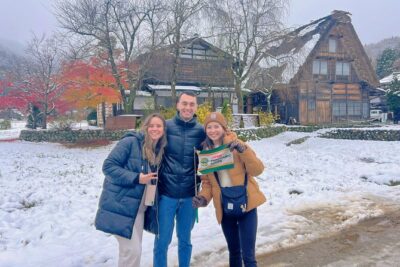
World Heritage Shirakawa-go and Experience Tours from Kanazawa
Read our review →
Imperial Palace and Shogun Historical Walking Tour
Read our review →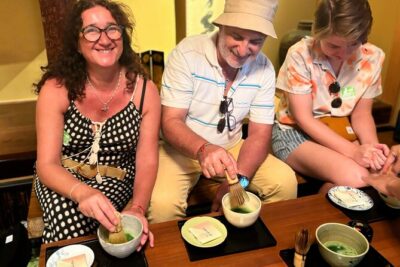
World Heritage Kyoto & Nara Uji Authentic Matcha Experience
Read our review →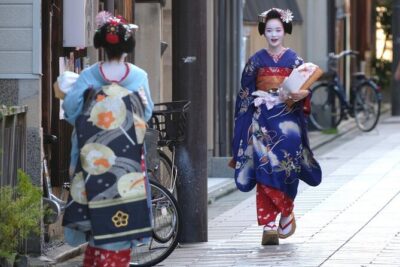
Kyoto Gion: 2-Hour Geisha Culture & History Walking Tour
Read our review →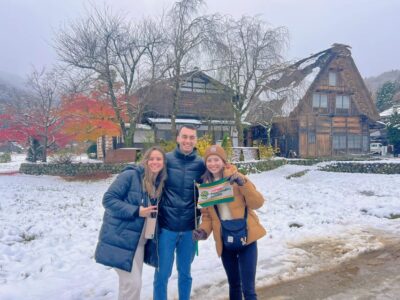
World Heritage Shirakawa-go Morning Guided Tour
Read our review →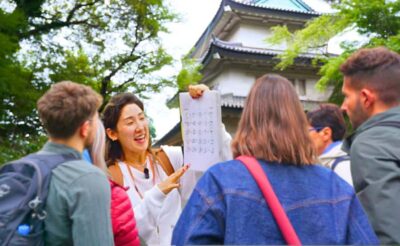
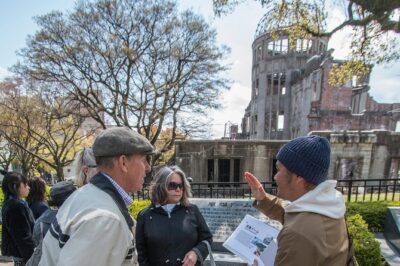
Hiroshima Peace (Heiwa) Walking Tour at World Heritage Sites
Read our review →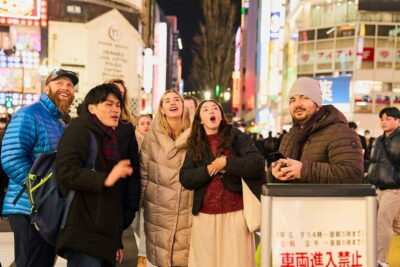
Shinjuku Historical Walking Tour & Secret Backstreets
Read our review →Browse the lists this tour appears in