
Reviewed · KNIFE MAKING EXPERIENCES
Seki: Samurai Knife Making Experience at the Knife Museum
Seki knife making is interesting because you do something most places only talk about. You get hands-on with Japanese blade craft, then you see how sharp the result really is, not just how pretty it looks.
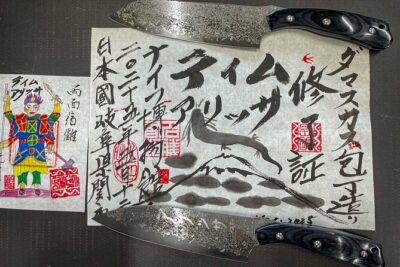
Two things I especially like are the chance to personalize the blade (including having your name written on it in Japanese characters) and the fact you also get instruction on sharpening and polishing, so the day is useful after you go home. One consideration: the process is hands-on and may run long, so keep your schedule flexible.
Seki City is off the main tourist circuit, which is part of the appeal. It is known for cutlery and sword making, and the museums and workshop feel connected to real production rather than a staged performance. You will likely leave with more than a souvenir, you will leave with a better sense of how craftsmanship works.
6 Key Highlights You Should Know Before You Go
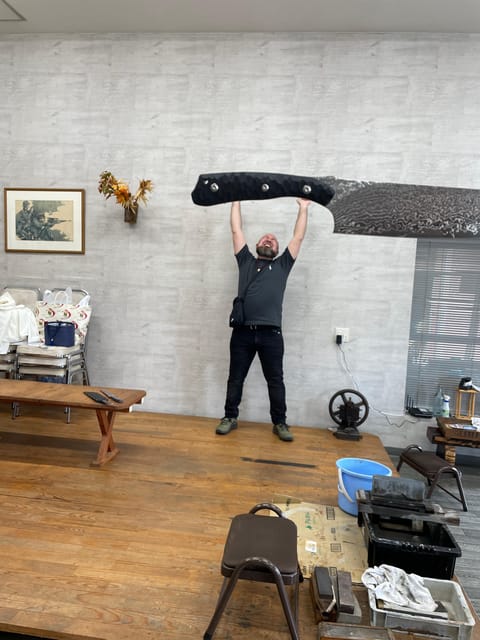
- A real one-day workshop where you create a personalized Damascus kitchen knife from start to finish
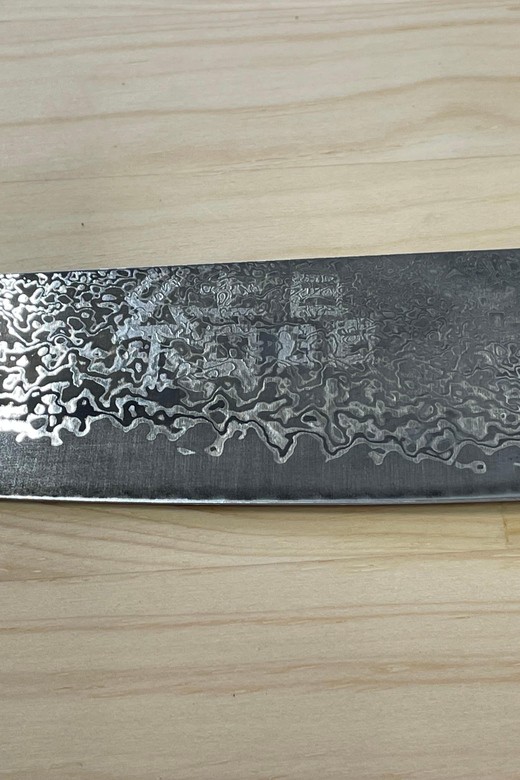
- Name etching in Japanese characters using a special transfer method, then polishing and sharpening your work
- Sharpness testing on fresh vegetables, so you can feel the difference instantly
- G. Sakai Knife Museum time, plus a shop with everything from pocket knives to kitchen and hunting-style blades
- Seki Swordsmith Museum visit, focused on Japanese sword and samurai background
- Small group size (max 5), which helps you get attention while you work at the bench
Seki City, the sword-and-knife town you can taste with your hands
This is a Japan experience that works because Seki is not just a theme. Seki City, in Gifu Prefecture, has been a center for blade making for centuries, helped by local access to high-quality iron sand, charcoal, and water. Today it is still known for serious knives that chefs and home cooks use for sharpness and durability.
What matters to you is this, you are not learning in a vacuum. You are learning in a place built around the craft, which makes the polishing, sharpening, and even the way the instructors explain materials feel practical and grounded.
Also, you get a nice contrast in one day: knives first, then samurai sword history right after. It gives you a fuller view of how Japanese metalwork thinking connects from kitchen use to sword culture.
More Knife Making in Nagoya:
- Authentic knife making experience at a blacksmith in Kyoto
★ 4.8 · 350 reviews - Tokyo: Knife Making Workshop (Sharpening, Engraving)
★ 4.9 · 153 reviews - Kyoto: Beginner Knife Sharpening & Handle Fitting Workshop
★ 4.9 · 141 reviews
Getting there from Kyoto: meeting at Sekitomioka Station and keeping the group small
Your day starts at Sekitomioka Station. You are asked to meet around 10:06 AM, matching the train arrival time, and then a driver picks you up by car. That matters because it saves you from playing transit detective in a place where you might not know the local connections.
The group is small, limited to 5 participants. In practical terms, this is why the day feels manageable. You are not rushing through stations with a crowd. You also have time to ask questions while your knife is on the bench.
The tour includes an English guide, and the activity also runs with Japanese support. In other words, you should not feel stuck if your Japanese is basic or zero. You can follow the steps, and you can understand what the instructors want you to notice while you work.
G. Sakai Knife Museum workshop: making a personalized Damascus-style kitchen knife
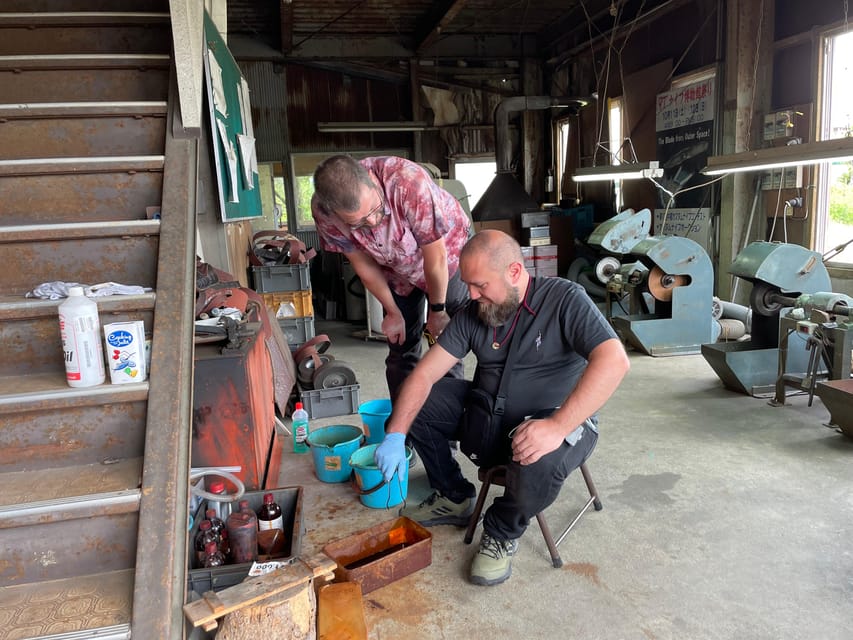
The main event takes place at the G. Sakai Knife Museum, with about 2.5 hours of guided tour and workshop time.
You start the day by being shown the process, then you move into the real work. The experience is built around making your own Damascus kitchen knife. You will do the steps yourself, including shaping and finishing tasks like sharpening and polishing.
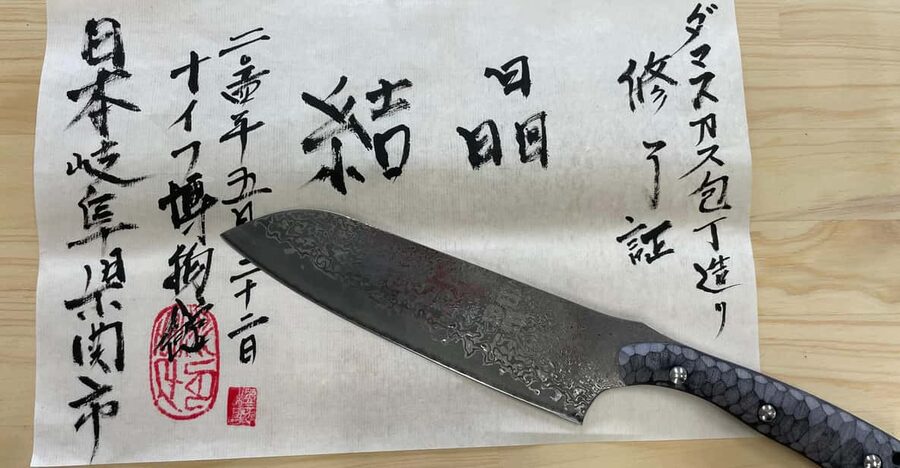
A signature part is personalization. You can engrave or etch your name into the blade, using a special method that transfers your name onto the metal for clean lettering. The result is more than a label. It makes the knife feel like your project, not just a factory product you receive.
Another practical detail: the instructors do not just hand you tools and walk away. You get guidance so you learn the technique, especially around finishing and sharpening. Many people come for the novelty, but what makes it valuable is that you learn how to think like a sharpener. That is the difference between a souvenir knife and a tool you can actually appreciate.
How to make the most of your bench time
To get the best result, watch what the instructor corrects. If they adjust your angle or the way you handle the blade, that is not nitpicking. It is where your edge quality comes from. Also, slow down when you are doing the personalization, because careful placement matters for how good your name looks once everything is polished.
More Samurai & Ninja Experiences in Nagoya:
- Nagoya Samurai & Toyota Tour guided by a friendly local
★ 5.0 · 24 reviews - Tokyo: Samurai Restaurant Show Ticket with 2 Drinks
★ 4.5 · 1,307 reviews - Kyoto Samurai Experience
★ 5.0 · 1,294 reviews - Tokyo: Samurai Ninja Museum Guided tour and Experience
★ 4.6 · 1,010 reviews
Sharpen, polish, and etch: your blade skills do not stop when the workshop ends
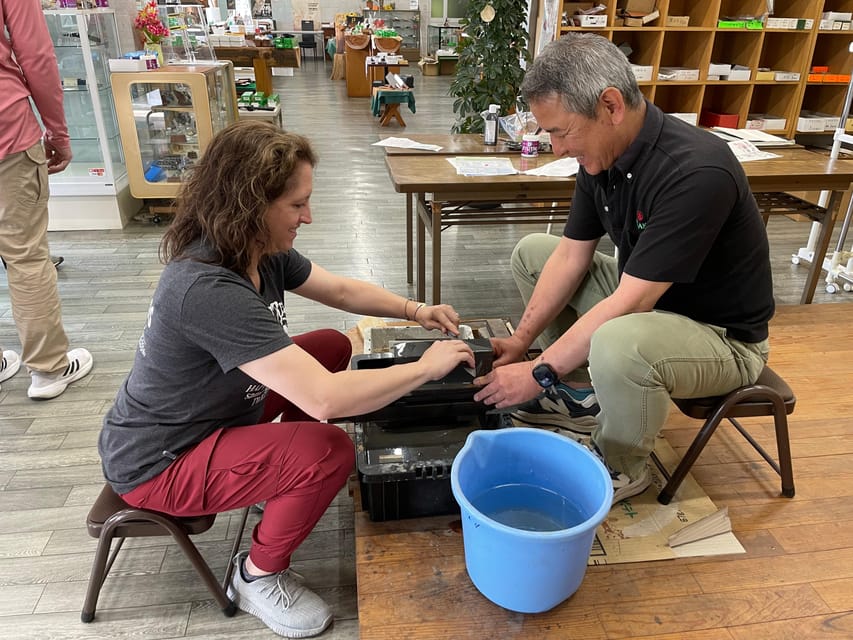
Part of what makes this experience work is that your learning is tied to the knife itself. You do the polishing, you sharpen, and you etch, all as part of the same workflow.
That means you are not just turning a crank. You are building a surface that affects how the blade feels and performs. Polishing and sharpening are not separate lessons. They are linked, and the instructors guide you through that connection step by step.
From the way the instructors teach, you get an explanation of what to do and why. When you understand what the step is supposed to change, you stop treating the process like a timed class and start treating it like a craft.
Testing your knife on fresh vegetables: why this matters more than photos
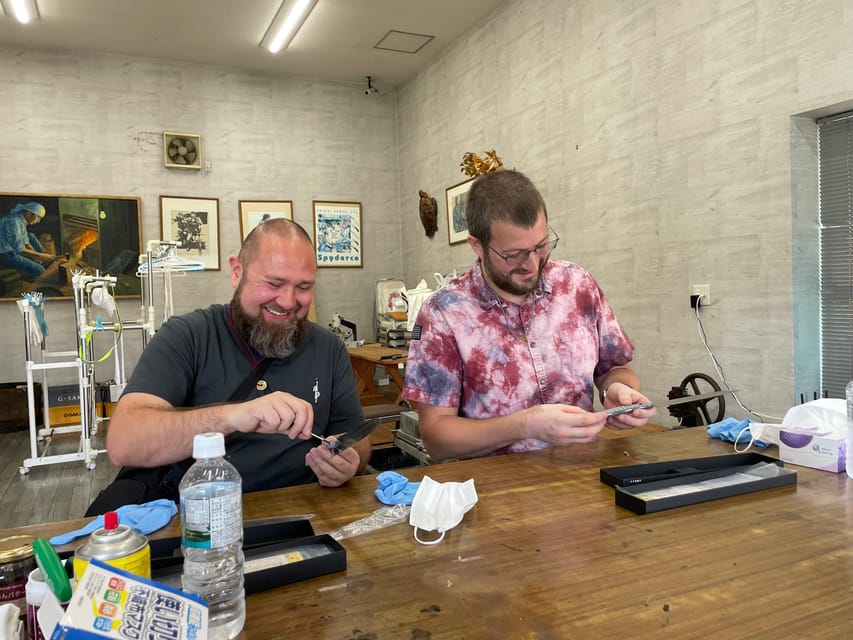
After you finish making and sharpening, you get to test your knife on fresh local vegetables. This is one of the most useful parts of the day, because you can feel what you made.
Knives can look sharp in a display case. They might even look sharp on your kitchen counter. But the vegetable test tells you something else: how the edge behaves in real cutting, how it follows through, and whether your finishing work gives you the kind of bite you want.
This is also a small reality check, in a good way. When your knife performs well, it confirms the craft steps worked. When it feels different than expected, you now understand what an edge needs, so you can improve the way you sharpen later.
The Knife Museum collection: rare blades and the G. Sakai shop vibe
Before or after the workshop steps, you get time to look around the Knife Museum. This is not just a hallway of similar products. You can see unique knives and learn about the context behind them.
You also get access to a shop connected to the museum. People have noted it as impressive, and you can browse a range of knives, including small pocket styles, as well as kitchen knives and other types. If you come thinking you will only buy the knife you make, you might still end up tempted, because the selection is broad and the craftsmanship feels close to production.
What I’d do if I had 20 minutes extra
If you love tools, spend a little time comparing blade shapes and think about how they would behave on different foods. Even without being a knife expert, you will start noticing how purpose shows up in the design.
Lunch in Seki after the forge: Japanese cuisine, often sushi or eel
After the knife work, you get Japanese cuisine lunch at a local restaurant in Seki. Lunch is allotted about 1 hour, and it is included.
Based on what happens in the experience sessions, lunch can include sushi prepared by a sushi master, and some meals are centered on eel. There may also be meal choices at the restaurant depending on the day.
This part is not filler. You need it, because the workshop is hands-on and your brain is working hard. Also, eating in the same town as the craft closes the loop. You experience the local food culture right after learning how Seki knives support cooking.
Seki Swordsmith Museum: samurai sword history and the value of technique
After lunch, you head to the Seki Swordsmith Museum for about 1 hour.
This stop brings the story into focus. You learn about Japanese samurai sword history and how Seki fits into that tradition. The museum experience is about understanding the cultural importance of swords, but also why craftsmanship matters in a technical sense.
One extra layer that people find memorable is seeing swords tied to repair and calibration work. That makes the point that swords are living tools with maintenance needs, not just museum objects. Even if swords are not your daily life, the idea of skilled upkeep is part of the broader craft mindset.
If you want a single word for this museum stop, it is perspective. After making a kitchen knife, you start seeing how metalwork knowledge travels across centuries and applications.
What you take home: your knife, a certificate, and the little extras
Your take-home items are where this stops being just an activity and becomes a keepsake you can use.
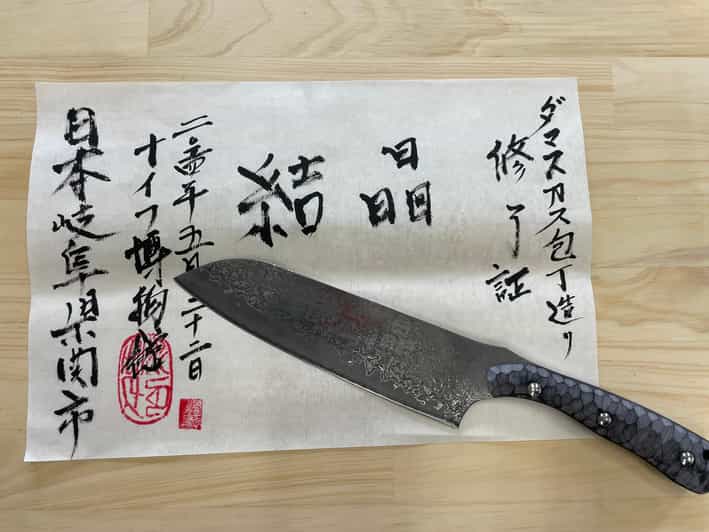
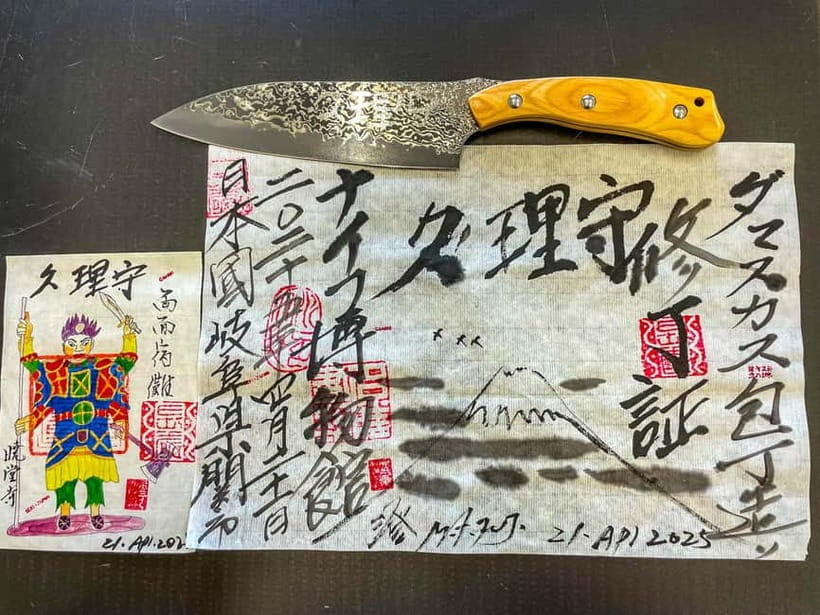
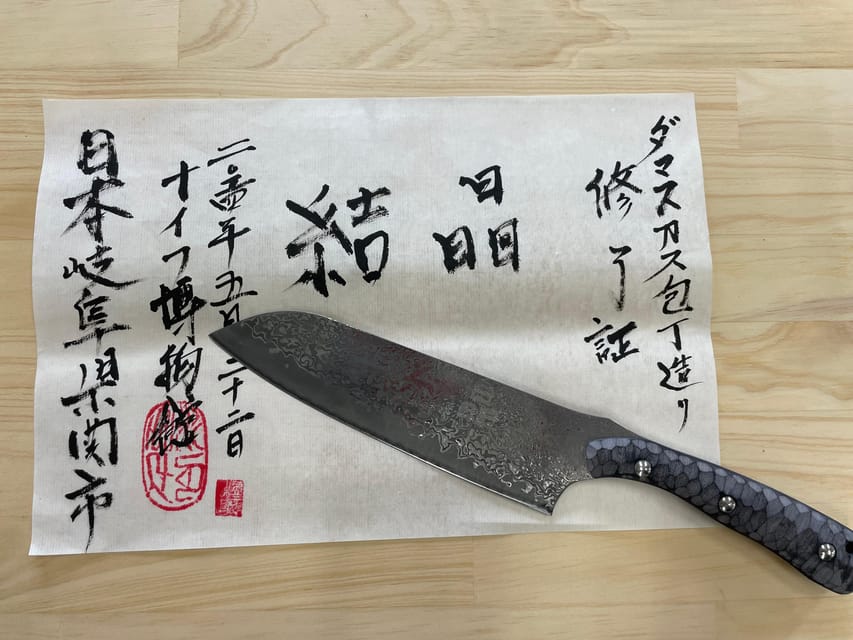
From the experience description, you receive a limited-edition mini knife gift and a certificate to remember the day. You also get your handmade knife, described as a samurai kitchen knife set, plus the practical value of the technique you learned.
Some sessions also add small extras. People have mentioned things like key rings and even a sumi-e picture that matches the motifs used for their knife. You may also get photos and videos taken during the day, depending on your guide and group flow.
Practical advice before you leave
Think about where you will store the knife safely during travel. A handmade edge is an achievement, but it is still an edge. Ask at the end how they recommend transporting it, especially if you are flying.
Price and value: is $322 for one day actually fair?
At $322 per person, this is not a cheap day trip. But you are paying for a bundle that most low-cost activities do not include.
Here is what you get that supports the price:
- A hands-on workshop with professional instruction (including sharpening and polishing guidance)
- A personalized knife made during the session
- Entry tickets to the knife museum and the sword-related museum stop
- Lunch included
- Transportation arranged from Sekitomioka Station and back
- English guidance in a small group (max 5)
If you compare this to what a class plus museum tickets plus lunch plus guided transit would cost separately in Japan, the day starts to look like a real value proposition. And the personalization is the big multiplier. You are not just watching. You are building something with your own name on it.
The other reason the price makes sense is instruction time. Small groups are expensive to run, because every participant needs attention while working with tools.
Who should book this Seki knife-making day?
This tour is a great fit if you want a hands-on craft day instead of a sightseeing-only day. It also fits food lovers, because Seki knives are associated with real cooking use, and lunch follows the workshop.
You might especially enjoy it if:
- You like learning practical skills you can use later, like sharpening and knife finishing
- You want a personal souvenir that is actually a tool
- You are curious about how Japanese sword culture connects to metalwork thinking
It is not suitable for children under 18, so plan for adults or teens who can handle a workshop pace and the tool-based environment.
If you hate slow, careful work, you might find the process lengthy. But if you appreciate craftsmanship, patience is part of the payoff.
Should you book it? My straight answer
Book this tour if you want a meaningful day where your hands do the work, and you get to test the result right away. The combination of making, personalizing, learning sharpening, then seeing swords history makes it feel like one continuous story, not random stops.
Skip it only if your schedule is rigid and you cannot handle a process that may run longer than expected. Also, if you are only looking for a quick museum visit with zero tool time, you may be happier with a lighter tour.
If you are ready for a small-group craft day in Seki, this is the kind of experience that sticks because you can bring it home, use it, and understand what you are holding.
FAQ
Where does the tour meet?
You meet at Sekitomioka Station. The meeting is tied to a 10:06 AM train arrival time, and then a driver picks you up by car.
How long is the experience?
It is a 1-day tour, with the workshop time at about 2.5 hours, lunch for 1 hour, and the sword museum visit for 1 hour, plus travel time.
How big is the group?
The tour is a small group with a maximum of 5 participants.
Is there an English guide?
Yes. The tour includes a live guide in English, with Japanese also listed for the experience.
What will I make during the workshop?
You will make your own personalized Damascus-style kitchen knife during the workshop.
Do I test the knife after making it?
Yes. After finishing, you test the knife on fresh vegetables to check performance and feel.
What museums do we visit?
You visit the G. Sakai Knife Museum and the Seki Swordsmith Museum.
What kind of lunch is included?
Lunch is included as authentic Japanese cuisine at a local restaurant in Seki. It may include items such as sushi or eel based on how the meal is described for the experience.
What do I take home?
You take home your handmade knife, plus a limited-edition mini knife gift and a certificate.
Is it refundable if my plans change?
Yes. The tour offers free cancellation up to 24 hours in advance for a full refund. It also offers reserve now, pay later.
More Museums in Nagoya
- Nagoya: Toyota Commemorative Museum Guided Tour
★ 4.7 · 22 reviews - Tokyo: teamLab Planets TOKYO Digital Art Museum Entry Ticket
★ 4.6 · 9,779 reviews - Osaka Castle: Museum and Tower Entry Ticket
★ 4.5 · 2,380 reviews - Kyoto: Tea Museum Tickets and Matcha Grinding Experience
★ 4.9 · 739 reviews
Latest write-ups near Nagoya
- Magome-juku, Tsumago-juku & Ena-kyo 1d Bus Tour from Nagoya★ 4.6 · 75 reviews
- Nagoya: Japanese Traditional Sweets making and Tea Ceremony★ 4.9 · 76 reviews
- Nagoya Highlight Tour guided by a friendly local★ 5.0 · 86 reviews
- From Nagoya: Hida Takayama & Shirakawa-go Tour w/Opt. Lunch★ 4.5 · 256 reviews
- Hiking the Historic Nakasendo Trail [1 Day Tour from Nagoya]★ 5.0 · 104 reviews
- Ghibli Park 1-Day Bus Tour from Nagoya★ 4.5 · 277 reviews
- Nagoya Full-day Private Custom Tour with National Licensed Guide★ 5.0 · 61 reviews
- Nagoya Samurai & Toyota Tour guided by a friendly local★ 5.0 · 24 reviews
Knife Making Experiences, compared.
Authentic knife making experience at a blacksmith in Kyoto
Read our review →
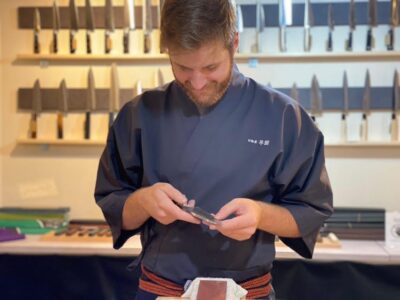
Beginner Knife Sharpening & Handle Fitting Workshop
Read our review →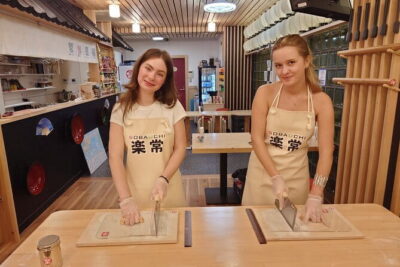
Experience Big soba knife Soba Making Class in Tokyo Kappabashi
Read our review →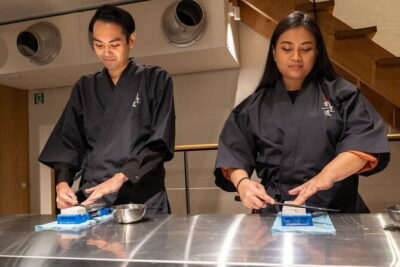
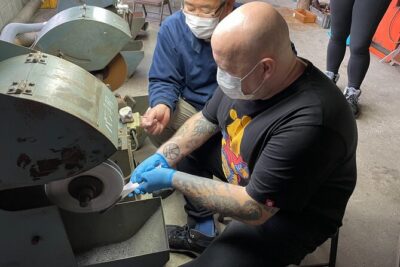
Gifu Samurai Sword Town;Japanese Damascus Knife Making Experience
Read our review →Browse the lists this tour appears in