

Reviewed · WORKSHOPS
Kyo-arashi Shibori Scarf Class
Kyoto has plenty of craft shops, but this one is interesting because you’re not just watching shibori from the sidelines. You’ll learn the Kyo-arashi shibori method step by step and create a silk scarf you can actually take home, not just admire on a shelf. I like that you get color choice during the process, so your scarf looks like it came from your trip, not from a factory line.
I also like the built-in “pause time” while your fabric dries. During that wait, you can browse the museum displays and try on a shibori kimono, which makes the class feel bigger than a quick workshop. One consideration: the class is designed for ages 12 and up, and pricing applies to all ages, so it might not be the best fit if you’re traveling with younger kids.
Key highlights to know before you go

- Kyo-arashi shibori technique taught in a guided, hands-on way, ending with you unfolding the results
- Personalized scarf with your chosen dye color, sized for a full-length wearable souvenir
- Museum time included while your fabric dries, plus a chance to try on a shibori kimono
- Multiple start times so you can fit it into a sightseeing day
- Private group experience, just your group, not a mixed crowd
- 30 to 60 minutes for the class portion, so it’s realistic even on a busy Kyoto schedule
Kyo-arashi Shibori in Kyoto: Why This Class Feels Special
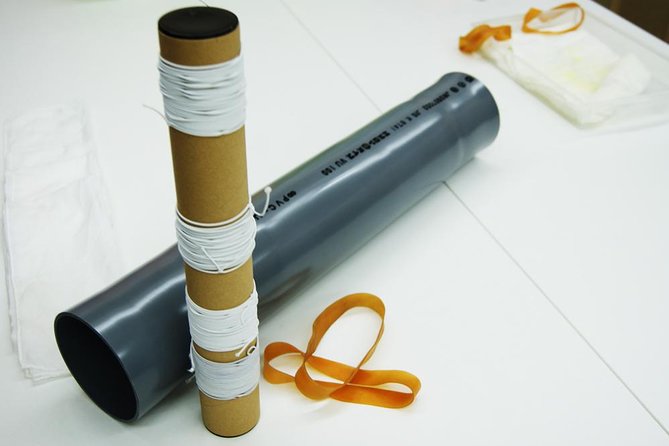
If you want a Kyoto experience that is both cultural and practical, this is a strong pick. Shibori is one of those traditional Japanese crafts that can look simple in photos, then suddenly gets complicated when you try it yourself. The magic here is that the class focuses on one specific method, the kyo-arashi shibori approach, and walks you through it with a professional guide.
What makes it feel rewarding is the end result. You dye a real piece of silk that you can wear and use. That matters. A lot of craft experiences give you something pretty to look at, but this gives you an object you’ll actually reach for, especially in Japan’s layered-season style with light scarves.
Also, you get more than just the hands-on part. The experience includes time in the Kyoto Shibori Museum and a kimono try-on while your dyed fabric sets. That turns the class from a single activity into a small cultural visit, without forcing you into a half-day or full-day commitment.
One more thing I appreciate: the class is described as usually individual, so the instruction time doesn’t feel rushed or lost in a large group dynamic. With crafts, speed is not the goal. Getting the steps right is.
Also on the shortlist for Kyoto:
- PERFECT KYOTO 1-Day Bus Tour
★ 5.0 · 13,518 reviews - Kyoto: Fushimi Inari, Kinkakuji, Bamboo Grove 1 Day Bus Tour
★ 4.8 · 4,316 reviews - Kyoto: Tea Ceremony in a Traditional Tea House in Kiyomizu
★ 4.9 · 3,519 reviews
Kyoto Shibori Museum: Where You Start and What You’ll Do First
Your meeting point is the Kyoto Shibori Museum, located at 135-5 Shikiamichō, Nakagyo Ward, Kyoto. The activity ends back at the meeting point, which is convenient. You’re not stuck navigating an extra commute after you’re done.
Logistically, it’s built for real life. There are two car parking spaces and bicycle parking as well, and it’s near public transportation. So whether you’re riding a subway or arriving by taxi, you should be able to get there without a big headache.
Once you’re inside, you’ll get set up for the main workshop. Your guide leads you through the specific folding and tying method. You don’t need prior craft knowledge, but you should expect to follow directions closely. Shibori is very “process matters,” and the class is structured around that idea.
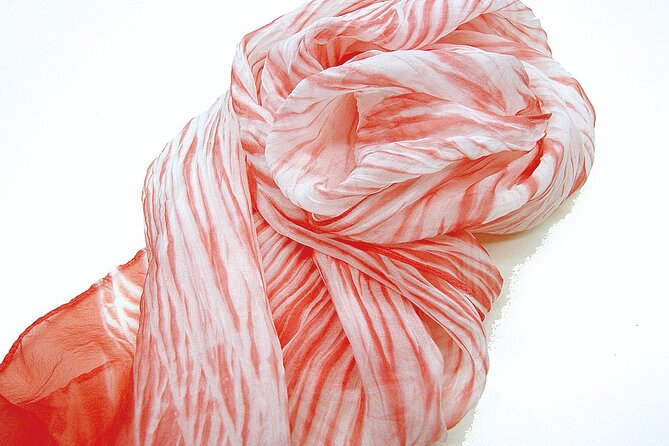
During your session, you’ll work with a specific scarf size: 70 inches by 17 inches (about 180 cm by 44 cm). That’s a full-length scarf, long enough to wear in a few different ways. It’s also large enough that the design you create shows clearly once you unfold it.
Folding, Pipes, Strings, and Dye: The Kyo-arashi Steps You’ll Follow
This workshop is basically a guided recipe for resist-dyeing silk, and the steps are the whole show. You start by learning how to fold your fabric in a particular way, then you wrap a pipe in the fabric. The pipe is part of what shapes the final pattern, because it creates structured folds rather than leaving everything to chance.
Next comes the part that feels most “hands-on experiment.” You wind a string around the wrapped pipe and then squish the fabric down to the bottom of the pipe. This compression is what holds your pattern in place while you dye.
Then the dye step happens. You’ll dye your fabric using a color you choose. I like that you get some control here. Resist-dyeing can feel like a gamble when you have no say in the color. Here, you’re choosing, and that makes the final scarf feel more personal.
After the dye, you unwind the string and roll the fabric with a towel, then press it. That pressing step helps the material settle so the unfolded results look crisp rather than messy.
Finally, you unfold your fabric to see what you made. That moment is the pay-off. It’s also where you’ll understand why those early folding decisions mattered.
Practical advice if you’re going in cold: pay attention early. Most of the “hard part” in shibori isn’t the dye. It’s getting the fabric treated in the right order. If you’re the type who wants to rush through steps, this is the one time to slow down.
Your Color Choice, Drying Time, and the Museum Side Quest
The class isn’t just nonstop squeezing and dye. You also get a built-in break, because your fabric needs to dry. While it’s drying, you can shift from making to exploring.
That’s where the Kyoto Shibori Museum comes in. The museum displays help you understand what you just did. You can connect the technique you practiced with the patterns and examples you see on display.
You can also try on a shibori kimono during the waiting time. This is a simple add-on, but it changes the feeling of the experience. Instead of thinking of shibori as something abstract, you see how it fits into real Japanese clothing styles. Even if you only wear it briefly, it makes the craft feel like it belongs to Kyoto, not just to a workshop room.
If you’re traveling with family or friends, this pacing works well. People who are more interested in craft can focus on technique. People who want a more visual experience can spend time in the museum and on the clothing trial.
One small consideration: because your scarf needs drying, you’ll likely have some waiting time built into your schedule. That’s normal for the process, but it’s good to go in knowing the experience is not just 30 minutes of making and then leaving immediately.
A change of pace from Kyoto:
- Kyoto Geisha Walking Tour: Gion District & Hidden Gems
★ 4.7 · 3,273 reviews - Kyoto: Tea Ceremony Ju-An at Jotokuji Temple
★ 4.9 · 3,207 reviews - Kyoto: Gion Magical Night Walking Tour with Geisha Trivia
★ 4.9 · 2,393 reviews - Kyoto: 45-Minute Tea Ceremony Lesson Experience
★ 4.3 · 2,378 reviews
What You Bring Home: A Wearable Souvenir, Not Just a Keepsake

The big reason this class earns strong recommendations is the final product. You end up with an elegant silk scarf designed to be used, not only displayed.
Because the scarf is 70 by 17 inches, you’re not stuck with a tiny sample. It’s long enough to wrap, drape, and layer depending on how you wear scarves back home. Think of it as a Kyoto souvenir you can keep in rotation, especially during cooler seasons.
Also, the scarf is personalized through two key choices you get in the room:
- Your guidance-driven shaping through folding and tying
- Your dye color selection
That combination makes the final scarf feel like a real handmade item. It’s not just a souvenir with your name on it.
Some extra value also comes from learning the process. Even if you never repeat shibori at home, you’ll leave with a new way to notice patterns when you see shibori in Kyoto stores or galleries. You’ll understand why certain textures show up and why resist methods create that distinct look.
A tip for taking it home: because it’s dyed silk, treat it gently at the start. Avoid rough handling right after the process. Once you’ve used it a few times and it’s settled, it should be easier to care for like any other silk scarf.
Price and Value in Kyoto: Is $50.30 a Smart Use of Time?

At $50.30 per person, the cost is fairly reasonable for what you’re getting. You’re paying for more than supplies. You’re paying for an instructor, guided step-by-step technique, the silk scarf project, and museum entry.
What adds value is the package effect:
- Hands-on work guided by a professional
- Your personalized scarf as a take-home item
- Museum admission included
- Kimono try-on included
- A private group setup, so you’re not squeezed into a crowded schedule
A 30 to 60 minute class might sound short, but shibori dyeing is a process craft. The time spent is mostly the meaningful part, folding, tying, dyeing, pressing, and unfolding. You’re not watching a long slideshow.
Another reason this can be good value: Kyoto craft experiences can vary wildly. Some are mostly shopping with a light demonstration. Here, you do the core work yourself, and the final scarf is the point.
If you’re comparing options, I’d frame it like this. If you want a unique wearable souvenir and like hands-on crafts, this is a strong use of money in Kyoto. If you only want photos and want something you can complete in 15 minutes, you may find it slightly longer than your ideal.
Timing, Start Times, and How to Fit It Into a Day
The class offers multiple start times, which is a real advantage in Kyoto. This city runs on tight schedules and transit timing, and being able to pick a slot makes it easier to avoid stacking too many activities back to back.
The class duration is listed as 30 minutes to 1 hour, and the visit includes the museum browsing during drying time. In practice, that makes it a good “midday or afternoon” activity. You can pair it with other central Kyoto sights without it throwing off your whole day.
If you’re planning around kids, the minimum age is 12, and pricing is the same for all ages. So if you have younger children in the group, you may need to choose something else. If you have teens and up, this can be fun because it’s active and the result is visible quickly at the unfolding stage.
And if you’re the type who wants less group pressure, you’ll like that it’s set up as a private tour or activity, meaning your group participates together without mixing with strangers.
Who Should Book This Scarf Class (and Who Might Skip It)
This works best for people who:
- Want a hands-on Kyoto craft with a clear end product
- Like learning a specific technique, not just doing an art project
- Want a souvenir you can actually wear
- Appreciate a small museum component and the chance to try on a shibori kimono
It may be less ideal if:
- You’re traveling with kids under 12
- You want a very quick stop with no drying time
- You’d prefer a bigger variety of crafts instead of focusing on one technique and one main scarf project
Also, consider what you like to collect. If your souvenirs are mostly photos and edible things, a scarf dye class may feel like a different kind of souvenir category. If you like textile crafts or wearing scarves, it fits right in.
Should You Book the Kyo-arashi Shibori Scarf Class?
I think you should book it if you want an experience that feels distinctly Kyoto and leaves you with something you’ll use. The combination of guided kyo-arashi technique, color choice, and a take-home silk scarf is exactly the kind of craft experience that turns into a personal memory, not just a ticket entry.
It’s also a good pick for value. For the price, you’re not only making something, you’re also getting museum access and kimono try-on time built into the schedule.
If you’re on the fence, here’s the simplest way to decide: if you can see yourself wearing a silk scarf you made yourself, book it. If you know you would never wear it, you might prefer a different Kyoto activity.
FAQ
Where does the Kyo-arashi shibori scarf class take place?
It takes place at the Kyoto Shibori Museum, located at 135-5 Shikiamichō, Nakagyo Ward, Kyoto, 604-8261, Japan.
How long does the class take?
The class is listed as about 30 minutes to 1 hour.
What will I make during the workshop?
You’ll make a shibori scarf using the kyo-arashi shibori method, with a scarf size of 70 inches by 17 inches (about 180 cm by 44 cm).
Does the price include museum admission?
Yes. The experience includes admission to the museum.
Can I choose my start time?
Yes. You can choose from multiple start times to fit your schedule.
Is this a private experience?
Yes. It’s described as a private tour or activity, with only your group participating.
What is the minimum age?
The minimum age is 12 years, and adult pricing applies to all ages.
How much does it cost?
The price is $50.30 per person.
Do I need a printed ticket?
No. The experience uses a mobile ticket.
What is the cancellation policy?
You can cancel for a full refund up to 24 hours before the experience’s start time. If you cancel less than 24 hours before the start time, the amount paid is not refunded.
Latest write-ups near Kyoto
- Kyoto: Nishiki Market Tour with a Local Foodie & Tastings★ 4.5 · 67 reviews
- Kyoto Kimono Rental mimosa |Kimono/Yukata Rental Couple Plan★ 4.8 · 67 reviews
- Kyoto: Traditional Kimono Fabric Handicrafts Workshop★ 5.0 · 67 reviews
- Kyoto Tea Ceremony and Samurai Photo Session★ 5.0 · 70 reviews
- Kyoto: Replica food making experience★ 4.8 · 70 reviews
- Kyoto: Kinkakuji, Golden Pavilion Guided Tour★ 4.7 · 71 reviews
- Private departure transfer from Kyoto city to Kansai International airport★ 5.0 · 72 reviews
- Uji: Green Tea Tour with Byodoin and Koshoji Temple Visits★ 4.8 · 72 reviews
Workshops, compared.

Sushi Making Tokyo Roll and Authentic Japanese Sushi Class
Read our review →

Roll and Authentic Sushi Making Class in Asakusa
Read our review →
Ramen Cooking Class at Ramen Factory in Kyoto
Read our review →
Sushi Making Class in a Happi Coat near a Famous Spot
Read our review →

Sushi Making Osaka Roll and Authentic Japanese Sushi Class
Read our review →Browse the lists this tour appears in