
Reviewed · WORKSHOPS
Kyoto: Japanese Archery Workshop with Experienced Instructor
Kyoto and Japanese archery, called Kyudo, is interesting because it is not about speed or power. It is about posture, breath, and a very specific sequence of movement that feels part martial art, part ritual. I love that you learn the form from a real instructor with decades of practice, and I love that this is a small-group lesson where you get close guidance.
One thing to consider: the main instructor teaches in Japanese, so you will rely on an assistant and English materials to catch the explanations as you go.
Key things I’d mark in your planner
- Master-level instruction: the instructor has practiced Kyudo for over 50 years and holds Kyudo Kyoshi 6th grade
- Small group (max 4): you get time, correction, and chances to practice rather than watching from the sidelines
- Beginner-friendly, hands-on: you start with stance, bow hold, and technique right away
- Provided equipment: no need to hunt down a bow, gloves, or tools before you arrive
- Meaning behind every move: you learn why bowing and timing matter, including the idea of relax
- Good family fit: a participant with a 7-year-old said the studio provides a smaller-size bow
Kyudo in Kyoto: What This 1-Hour Lesson Actually Feels Like
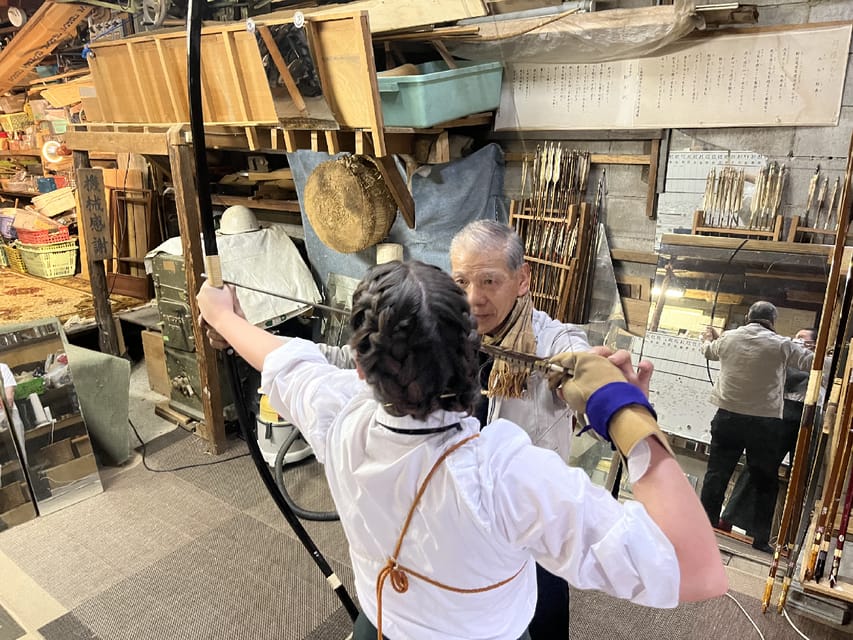
This is not the typical tourist photo-and-pose activity. In your 1-hour Kyudo workshop, you spend most of the time physically practicing, with a teacher showing you the right shape of the body and how to hold the bow. The tone is calm, and the pacing is patient, but the training is real. You learn fast, because you are not just reading or watching, you are doing.
You will likely feel two things early on. First, it is harder than you expect, especially the precision. Second, once your posture clicks, it becomes weirdly soothing. Multiple people described it as meditation-like, with a focus on relaxation rather than strain. That matches what Kyudo is supposed to do: the shot is the result of a well-prepared body, not brute force.
If you want something energetic and loud, this is probably not it. But if you want a hands-on taste of Japanese discipline, you will probably leave thinking about it all week.
Also on the shortlist for Kyoto:
- PERFECT KYOTO 1-Day Bus Tour
★ 5.0 · 13,518 reviews - Kyoto: Fushimi Inari, Kinkakuji, Bamboo Grove 1 Day Bus Tour
★ 4.8 · 4,316 reviews - Kyoto: Tea Ceremony in a Traditional Tea House in Kiyomizu
★ 4.9 · 3,519 reviews
Meet the Instructor and the Small-Group Setup (Up to 4)
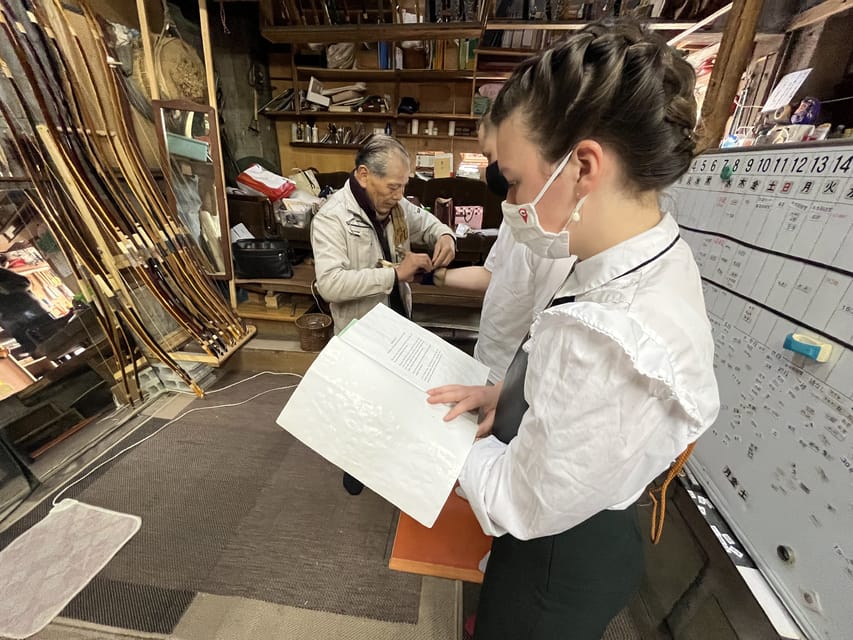
The workshop is led by a Japanese Kyudo instructor, and the setting is intentionally small, limited to 4 participants. That matters. In a tiny group, the teacher can correct you immediately when your stance or bow hold is off. You are not trying to guess what a demo meant for someone else.
A big plus is the teaching support. The instructor may not have flawless English, but the studio provides English materials, and an assistant helps translate and explain. You can also ask questions, and the instructor is described as friendly and good at teaching.
One practical takeaway for you: if you have any personal preferences about how you want instruction (more slow, more visual, different style), let them know in advance. The studio specifically asks participants to share this, and it sounds like they really do adjust.
Your Kyudo Lesson: Stance, Bow Hold, and Technique From Square One
The core of the session is learning proper form. That includes:
- learning the correct stance
- learning the bow hold
- understanding the tools and techniques used
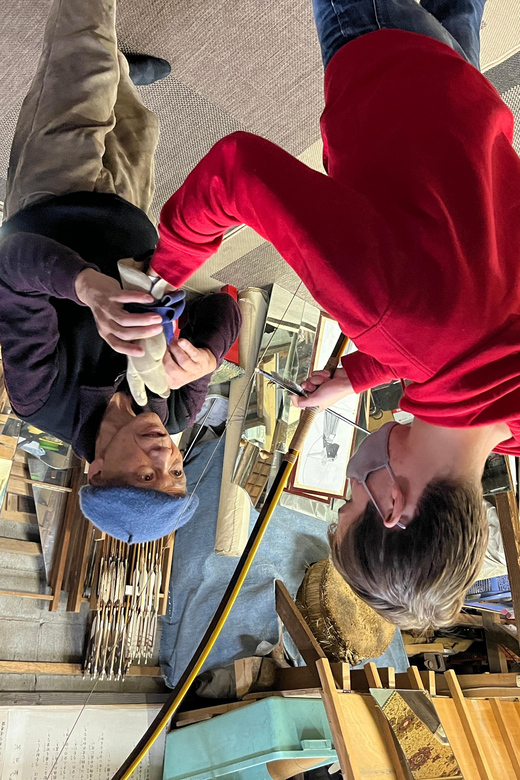
What makes this workshop work for beginners is that the teacher demonstrates and then gives hands-on guidance. One reviewer mentioned the teacher being very present and attentive, walking through each motion. Another said the experience was pretty hands-on from the start.
Kyudo has a sequence, and you may notice the early steps have a kata-like rhythm, similar to what you might see in karate. That pattern helps you build muscle memory. It also reduces confusion, because you start associating each position with what comes next.
Expect repetition. Not in a boring way, but in a training way. The teacher keeps nudging you toward better alignment, then you practice the next attempt. You do not need prior martial arts experience, but you do need patience with the learning curve.
Equipment Is Included, and Yes, the Bow Can Feel Heavy
You do not have to bring anything special. The workshop includes all required Kyudo equipment, which means you can show up and focus on learning instead of shopping.
Still, go in mentally prepared: Kyudo bows and gear can feel weighty compared to what you might have used in other countries. At least one review mentioned the bow being heavier than European equipment. In practical terms, that means:
- your arms and shoulders may tire sooner than you expect
- your grip and posture matter even more
- you will probably want comfortable clothing that lets you move freely
Good news, the studio seems set up for different body sizes. One review specifically said a 7-year-old had a smaller-size bow. So this is not only for tall adults with long arms.
A change of pace from Kyoto:
- Kyoto Geisha Walking Tour: Gion District & Hidden Gems
★ 4.7 · 3,273 reviews - Kyoto: Tea Ceremony Ju-An at Jotokuji Temple
★ 4.9 · 3,207 reviews - Kyoto: Gion Magical Night Walking Tour with Geisha Trivia
★ 4.9 · 2,393 reviews - Kyoto: 45-Minute Tea Ceremony Lesson Experience
★ 4.3 · 2,378 reviews
The Quiet Part: Bowing, Timing, and the Idea of Relax
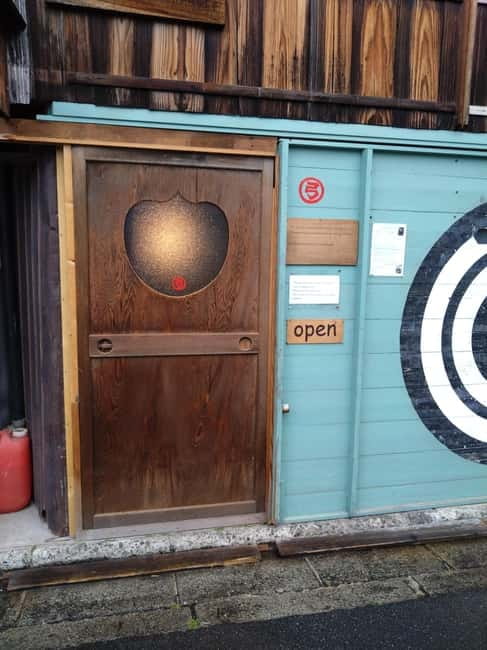
Kyudo is often described as Zen-like, and you can feel that in how the teacher talks about the movement. Several people highlighted the calm spiritual or cultural reasons behind each step. You are not just learning a physical skill. You are learning the mindset that goes with it.
The most helpful idea you will hear is the concept of relax. Relax does not mean slouch. It means letting go of unnecessary tension so the body can move correctly. That is why Kyudo can feel both challenging and oddly calming.
Another key part is bowing. Kyudo includes respectful gestures, and the instructor and assistant explain why these actions matter culturally and spiritually. That gives your movements meaning. Instead of thinking, I am doing moves to shoot a target, you start thinking, I am performing a sequence with respect and intention.
History and Culture You’ll Hear Between Attempts
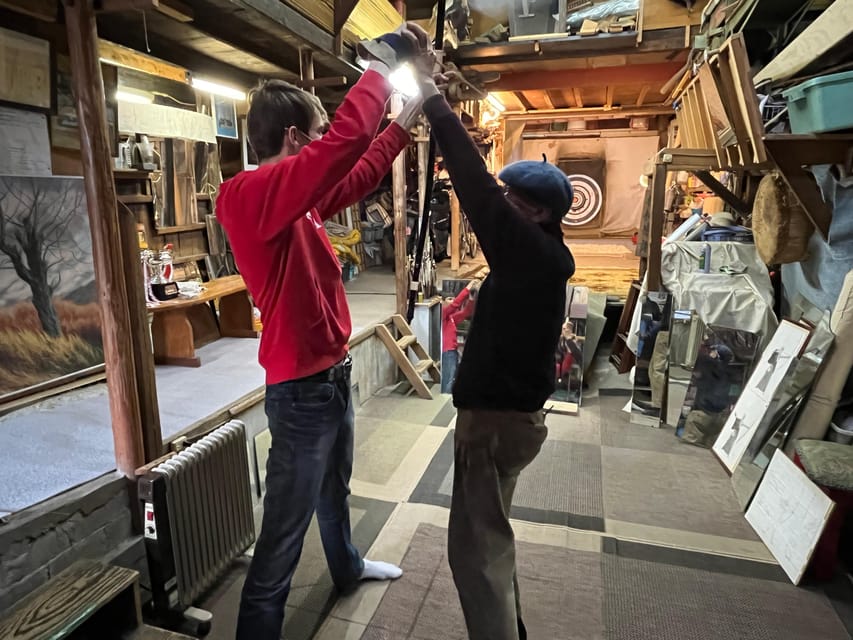
Even in a short lesson, you get context. The workshop includes exploration of Kyudo history and a better understanding of this traditional martial art. One review described it as dating back about 1,000 years, and framed it as both martial art and meditation.
You will also learn how cultural thinking shows up in technique. In Kyudo, what you do with your body is supposed to reflect inner discipline. That is why explanations of the spiritual reasons behind moves show up right alongside posture and grip.
If you love context, you will appreciate the fact that an assistant translates during the experience. One reviewer praised how the assistant gave thorough explanations, not just quick translation. The result is that you come away with a better picture of what you practiced, not only what you did with your hands.
Where to Go in Kyoto: Finding からくり弓道体験場 Near Omiya and Tambaguchi
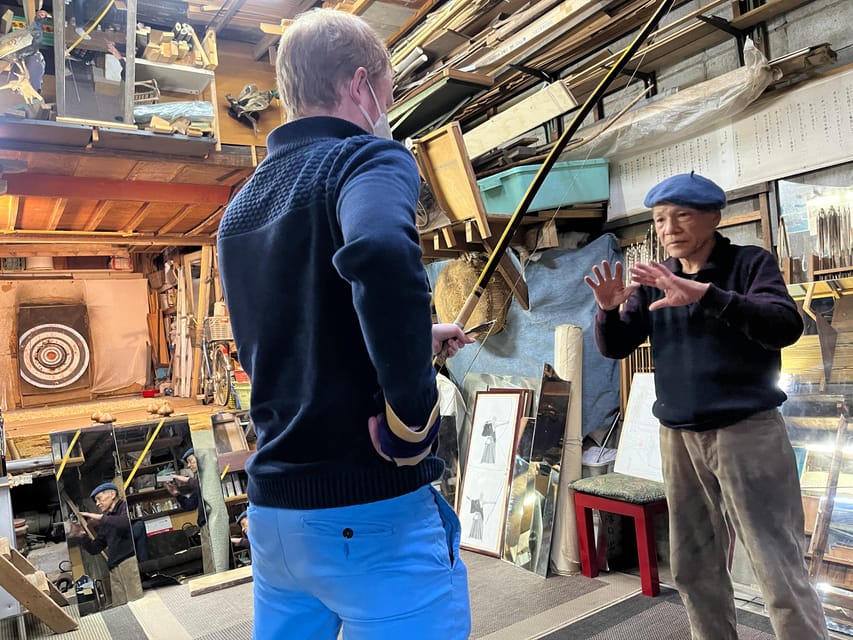
The meeting point is a place you will want to find carefully, because there are a few specific instructions.
Name to search on Google Maps: からくり弓道体験場 (use the Japanese name only, or search Kyudo Experience Kyoto and compare results to the address)
How to get there:
- about 10 minutes on foot from JR Tambaguchi, Hankyu Omiya, or Randen Shijo-Omiya stations
Taxi hint:
- tell the taxi driver Mibugawa-street, Takatsuji-street instead of the full address
Two important arrival details:
- there are no door bells
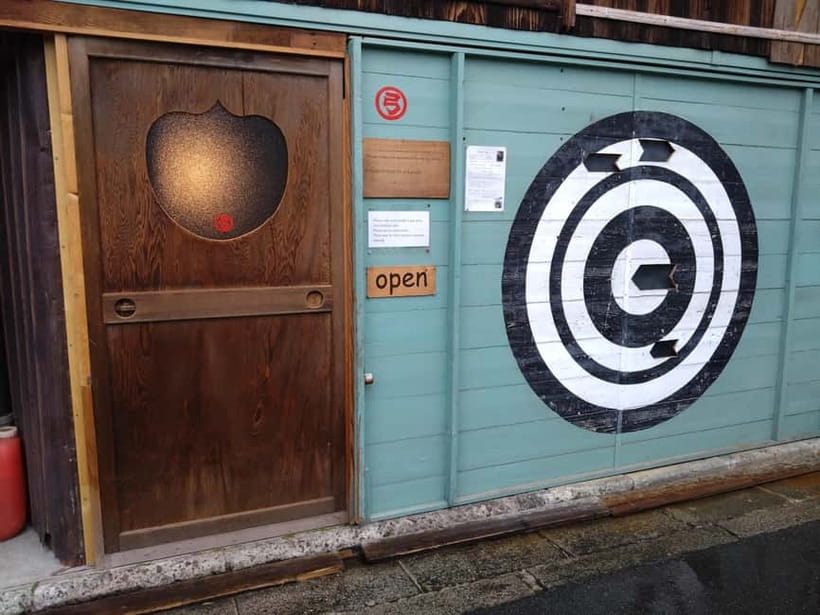
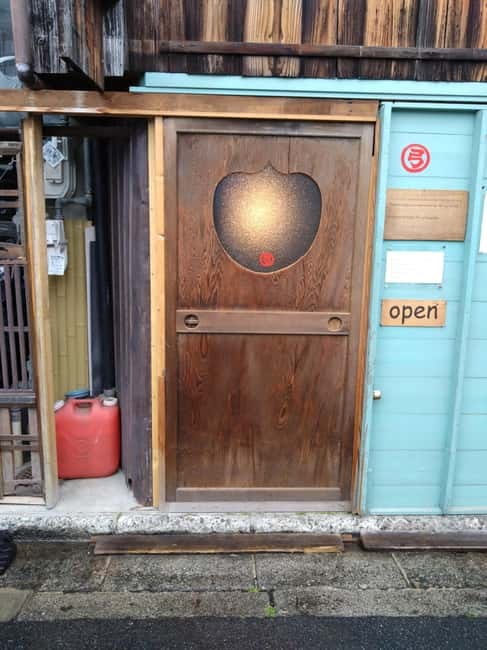
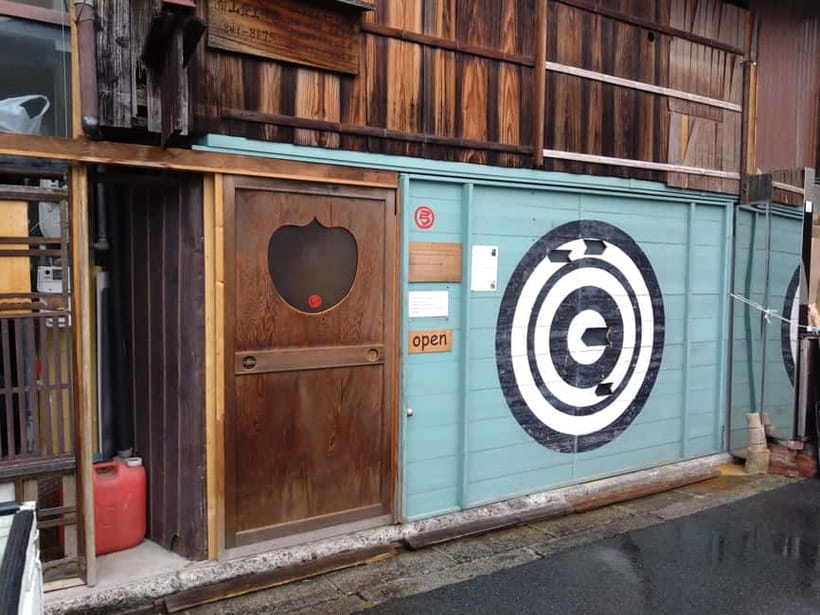
- the entrance is on the side of the building, opposite a small parking lot, so do not enter through other doors
This is the kind of small logistics detail that can save you stress. If you get there early, take a minute to look around for the side entrance instead of trying random doors.
Price and Value: Is $38 for Kyudo Worth It?
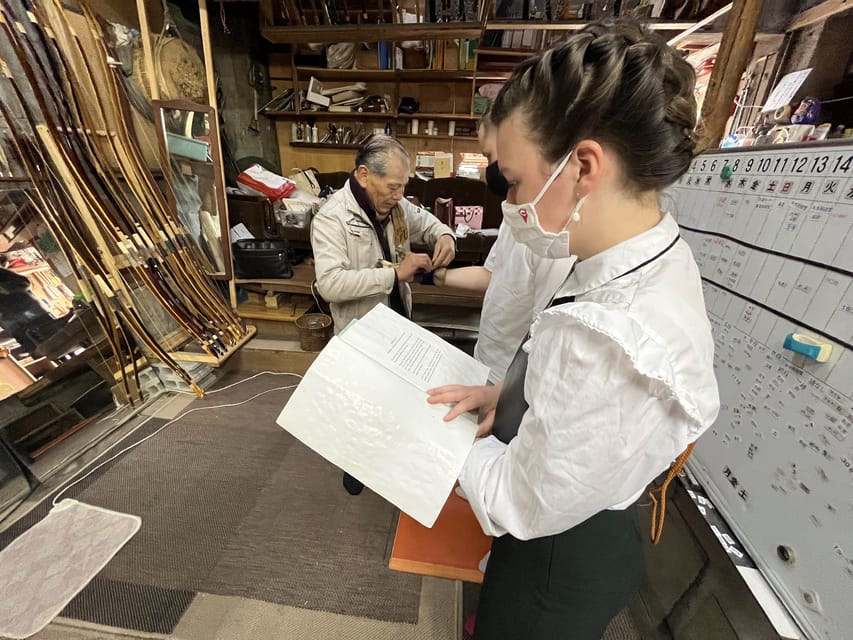
At $38 per person for a 1-hour workshop, you are paying for three things: expert instruction, the real equipment, and guided cultural context. Since equipment is included, you are not facing hidden rental fees.
You also get something many paid activities skip: close coaching. The small-group limit to 4 participants is what turns it from a basic demonstration into actual learning. Several reviewers emphasized how hands-on the instruction felt, including encouragement and detailed walkthroughs.
So the value is strongest if you want more than a quick try. If you just want a brief novelty, you might feel the cost is high compared with a cheaper demo. But if you care about learning correct form and understanding the why behind the ritual, you are getting exactly that in a compact time slot.
Who This Workshop Suits Best (And Who Might Want Something Else)
This Kyudo experience is a great fit if you:
- want a beginner-friendly introduction to Japanese archery
- enjoy structured movement and calm focus
- like having cultural meaning explained alongside technique
- want small-group attention and hands-on correction
It can also work for families. One review said a 7-year-old did fine thanks to a smaller-size bow. That said, this is still a precision activity. Young kids may need patience to follow instructions and practice the sequence.
You might choose a different activity if you:
- need the instructor to speak fluent English directly all the time (the session relies on an assistant and English materials)
- want a high-energy, social scene
How to Prepare So You Get the Most From Your Shot
For a smooth session, keep it simple:
- wear comfortable clothes that let you move freely
- plan to listen and adjust quickly when the teacher corrects your stance
- be ready for a heavier bow than you might expect
- ask questions when you have doubts, since the instructor is described as friendly and good at teaching
If you go in thinking, I am going to learn the sequence, not just hit the target, you will probably enjoy it more. The training builds slowly, and confidence comes from repeating the right positions.
Should You Book Kyoto Japanese Archery (Kyudo) at からくり弓道体験場?
If you want a real introduction to Japanese archery with master-level instruction, book it. The big reasons are the small group size, the hands-on coaching, and the fact that you get explanations that connect technique to culture and spirit. At $38 for an hour with equipment and close guidance, it is solid value.
I would book especially if you like experiences that are quiet, focused, and oddly satisfying once you start getting the form right. If you are mainly chasing a loud, flashy activity, you might not love the pace. But if you want to try Kyudo the way it is meant to be taught, this is a strong choice.
FAQ
How long is the Kyoto Kyudo archery workshop?
The session lasts 1 hour.
What is the price per person?
It is $38 per person.
Is hotel pickup and drop-off included?
No. Hotel pickup and drop-off are not included.
How many people are in each group?
The group is small, limited to 4 participants.
Do I need to bring archery equipment?
No. All required Kyudo equipment is included.
Is there English support during the lesson?
English materials are provided, and an assistant helps with communication. The instructor is Japanese.
Where is the meeting point, and how do I find it?
The meeting point is からくり弓道体験場. If you use Google Maps, search with the Japanese name only or search Kyudo Experience Kyoto and compare results. It is about 10 minutes on foot from JR Tambaguchi, Hankyu Omiya, or Randen Shijo-Omiya station.
Are there any special arrival instructions at the entrance?
There are no door bells. The entrance is on the side of the building opposite a small parking lot.
What should I wear?
Wear comfortable clothes that allow you to move freely.
Should You Book Kyoto Japanese Archery (Kyudo) at からくり弓道体験場?
Yes, I think you should, if you want a beginner-friendly, truly hands-on Kyudo lesson with a veteran instructor and a small-group setting. The included equipment and the close coaching make the price feel fair for what you actually practice. If you prefer lessons where the teacher speaks English directly, plan to rely on the assistant and English materials, since the main instructor is Japanese.
Latest write-ups near Kyoto
- Kyoto: Nishiki Market Tour with a Local Foodie & Tastings★ 4.5 · 67 reviews
- Kyoto Kimono Rental mimosa |Kimono/Yukata Rental Couple Plan★ 4.8 · 67 reviews
- Kyoto: Traditional Kimono Fabric Handicrafts Workshop★ 5.0 · 67 reviews
- Kyoto Tea Ceremony and Samurai Photo Session★ 5.0 · 70 reviews
- Kyoto: Replica food making experience★ 4.8 · 70 reviews
- Kyoto: Kinkakuji, Golden Pavilion Guided Tour★ 4.7 · 71 reviews
- Private departure transfer from Kyoto city to Kansai International airport★ 5.0 · 72 reviews
- Uji: Green Tea Tour with Byodoin and Koshoji Temple Visits★ 4.8 · 72 reviews
Workshops, compared.

Sushi Making Tokyo Roll and Authentic Japanese Sushi Class
Read our review →

Roll and Authentic Sushi Making Class in Asakusa
Read our review →
Ramen Cooking Class at Ramen Factory in Kyoto
Read our review →
Sushi Making Class in a Happi Coat near a Famous Spot
Read our review →

Sushi Making Osaka Roll and Authentic Japanese Sushi Class
Read our review →Browse the lists this tour appears in