
Reviewed · SAMURAI & NINJA EXPERIENCES
Samurai Show, Tea Ceremony, Japanese Traditional Activities
Osaka has lots of dinner spots, but this experience is interesting because you practice Japanese arts and step into a playful Samurai world in one session. I love the chance to handle Samurai armor made by Marutake Industries and the way the tea ceremony teaches real movements, not just watching.
The plan is about 2 hours 30 minutes, though it can run longer depending on how many hands-on stations you want to try, so give yourself a time buffer. Also, costume dress-up like a kimono or full armor is not included in the base ticket, even though you can sometimes add it. If you want help navigating Japanese terms, the staff like Yui and Miyu are the kind of people who guide you and keep the pace friendly.
Samurai Armor, Tea Ceremony, Calligraphy, and Music in One Osaka Slot
This is the kind of activity that works when your day needs structure. You show up, you get oriented, and then you rotate through a set of stations that mix performance with hands-on practice. The key idea here is simple: you do not just observe the culture, you touch it, try it, and ask questions in plain language support.
The format also makes it a strong option for mixed groups. I’m thinking families, couples, and solo visitors who want more than a one-time photo moment. There’s a Samurai performance component, but it is paired with calmer arts like tea ceremony and calligraphy, plus traditional music with instrument practice. It gives your brain a rhythm for the afternoon.
And since it’s run by 道-michi-, the session feels more like a workshop house than a quick show. The small group size helps too, capped at 20 people, so you are not lost in a crowd.
Where You Meet in Shinsaibashi and How the 150-Minute Program Feels
You meet at Shinsaibashi ARTY Inn, Nishishinsaibashi area, in central Osaka. It is near public transportation, and the end time loops back to the same meeting point. That matters because Osaka is big, and time gets eaten by train changes. A simple start-and-finish plan keeps your day on track.
Your voucher is handled as a mobile ticket, so you can focus on arriving rather than hunting paper confirmation. After that, the experience moves like a set of themed rooms or zones in a bigger facility, with English support during the stations.
Most people should be able to participate. The “how physical is this?” answer is: the Samurai section has action, but it’s not about athletic ability. It’s more about trying moves safely and playing along. The tea and calligraphy portions are sit-down or low-mobility activities. So if you’re worried about matching different energy levels in your group, this layout helps.
One practical note: the advertised time is about 2 hours 30 minutes, but I’d still plan for extra time. Some people report they stayed closer to 3.5 to 4 hours, which makes sense if you linger for questions, instrument practice, or add-on costume time. If your schedule is tight, aim to start on the earlier side of your day, not the last hour before you need to sprint to another booking.
More Samurai & Ninja Experiences in Osaka
- Samurai Training Experience KENDO in Osaka
★ 5.0 · 515 reviews - OSAKA NIGHT FUSION Japanese Taiko Kabuki Samurai Dance Show
★ 4.8 · 155 reviews - Osaka: Samurai Training Experience KENDO in Osaka
★ 5.0 · 111 reviews
Samurai Show and Practice: Fun Action With Safety in Mind
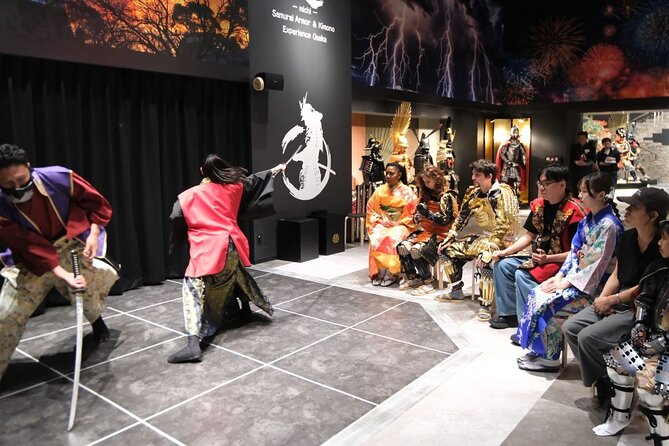
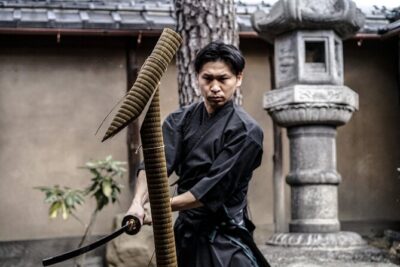
This is not just a passive Samurai performance. You get a chance to join in on the fun, including practicing Samurai-style moves. Expect it to be theatrical, with a host guiding you through what to do, how to hold your stance, and how to move. It’s entertaining, and it’s also a fast way to understand Samurai imagery through gestures rather than lectures.
The experience is designed so people can enjoy it even if they know almost nothing about Japanese history. You’re not being tested. You’re being coached into the moment.
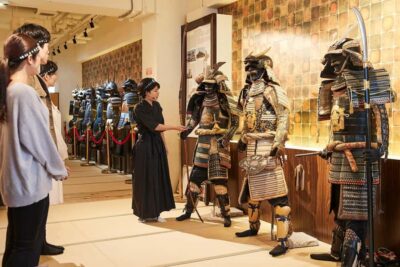
Now, a balanced consideration: one person noted the Samurai pieces were reproductions, and another reviewer said one part felt a bit lame compared with the rest. That tells me the biggest value is the hands-on interaction and the overall show energy, not hyper-accuracy in every prop. If you go in expecting a stunt-friendly, playful performance, you will likely feel satisfied.
Also, the swords in this kind of setup are not real. The whole point is to let you practice the vibe safely, with guidance from the staff.
Tea Ceremony Workshop: Why the Real Movements Matter
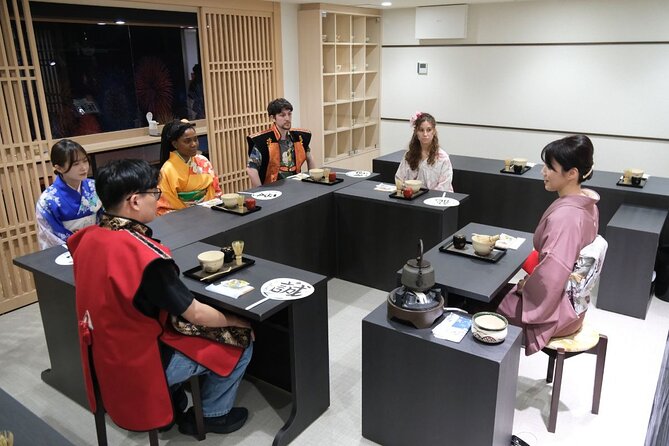
If you only have time for one “Japanese tradition” station, make it the tea ceremony. This part is popular for a reason. You learn how to do it correctly, and you get to participate rather than only watch.
In plain terms, tea ceremony teaches discipline through small actions: the rhythm of handling utensils, the flow of serving, and the etiquette around how you present and receive the tea. You’ll feel it in your body, not just your head.
From the way the program is described, you’ll also get time for questions. That’s a big deal. Tea ceremony can sound intimidating, but once someone explains what you’re doing and why, it becomes approachable.
One of the best things about doing tea ceremony here is the format. It’s part of a full cultural sequence, which means it is not stuck in a classroom mode. You’re moving from art to art, so you stay engaged, and the tea ceremony becomes a grounded reset before calligraphy and music.
If the weather is rainy, this type of facility-based program can be a relief. One review specifically mentioned the rainy day made it better because the activities were indoors. Even if you can’t control the weather, you can control your comfort, and indoor stations help a lot.
Calligraphy Class: Take Home Something You Made
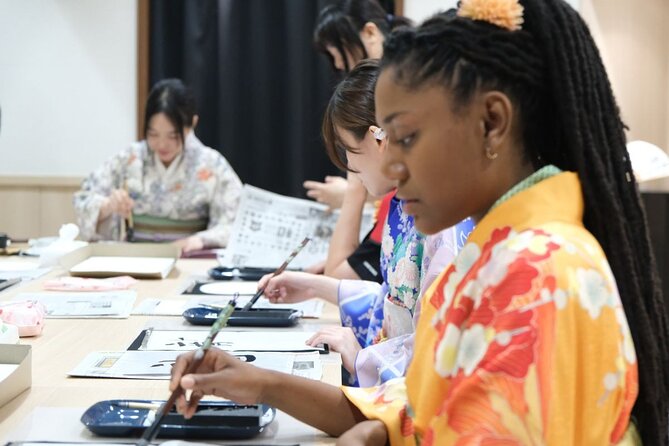
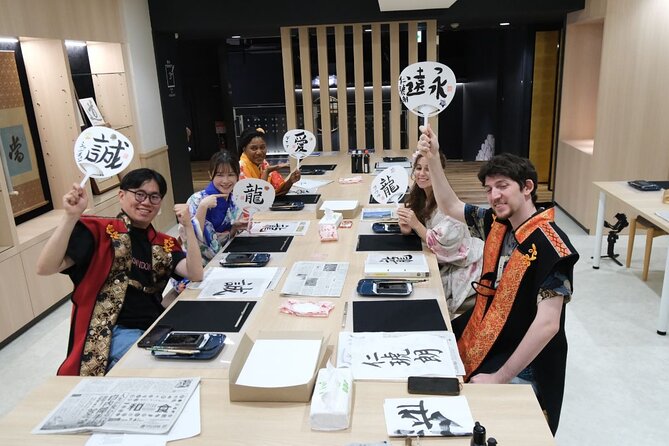
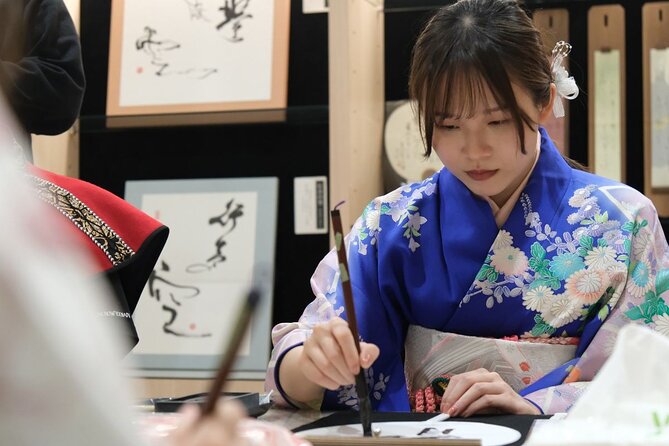
Calligraphy is one of my favorite travel activities because it turns learning into a keepsake. Here, you practice in a guided calligraphy experience, and you can take home a personalized item. One guest described taking home a personalized fan, which is exactly the kind of souvenir that feels earned.
The value is not that you become an expert in one afternoon. It’s that you learn the basics of how calligraphy feels: the strokes, the control, and the mindset. You’re also better able to appreciate why Japanese written characters have presence. Up close, it stops being “just symbols.”
Staff support makes the difference. People highlighted that the team helps with language and keeps everything moving. So even if your Japanese is limited, you’re not stuck guessing.
A practical tip for you: go in curious, not perfection-focused. Your first attempts may be less tidy than your imagination, but that’s normal. The goal is understanding the process, then enjoying the final piece you made.
More Tea Ceremonies in Osaka
- Osaka: Tea Ceremony Experience
★ 4.9 · 1,426 reviews - Tea Ceremony Experience in Osaka Doutonbori
★ 5.0 · 754 reviews - Matcha Making Class in Osaka with Authentic Japanese Sweets Set
★ 5.0 · 509 reviews - Osaka: Matcha Making Experience with Japanese Sweets
★ 5.0 · 146 reviews
Traditional Music and Instrument Practice: More Than Background Entertainment
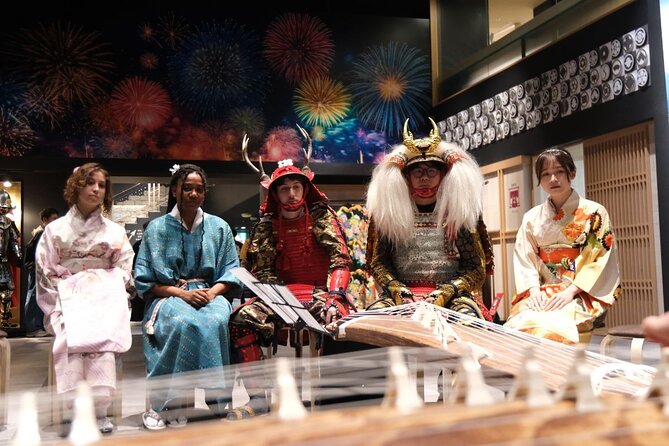
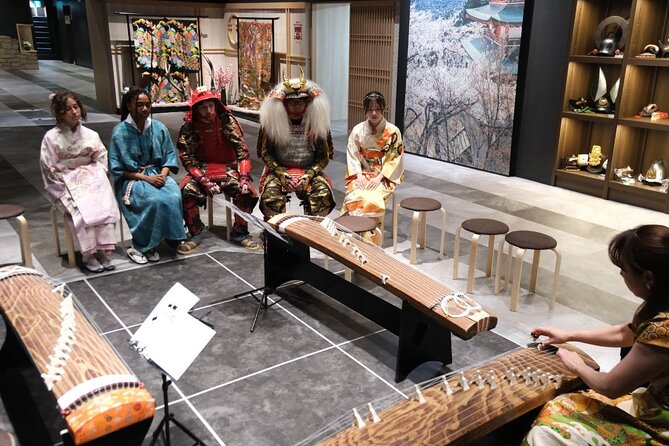
A huge reason this experience scores so well is the live music and the chance to practice instruments. You are not only watching performers. You are encouraged to try things out, even if you feel like you’ll be terrible at first.
The music segment includes multiple instruments and mini-performances. One guest talked about practicing a Japanese instrument and mentioned a Japanese flute, plus a Japanese guitar. Another guest mentioned trying harp. There’s also mention of a complex type of Japanese piano-style instrument.
Even if you do not master the instrument, you’ll leave with two things:
1) a better sense of how the sounds are produced, and
2) a memory tied to your own attempt, not just someone else’s talent.
This is also where the staff energy really matters. Multiple comments highlighted friendly, patient support, and translators helping at different stations. That kind of assistance prevents the classic “we’re watching but not understanding” problem.
Optional Kimono and Samurai Attire: What to Confirm Before You Pay Extra
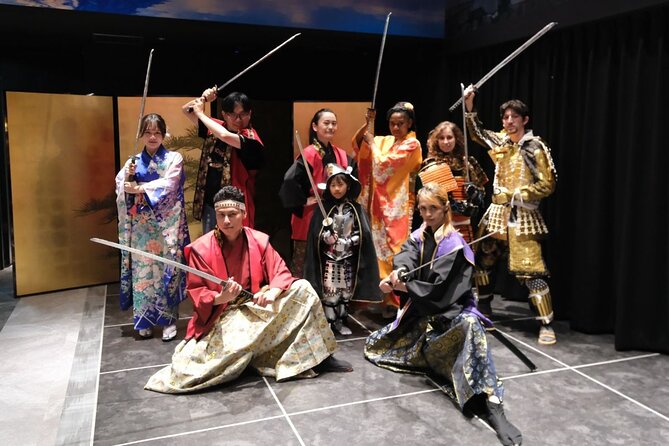
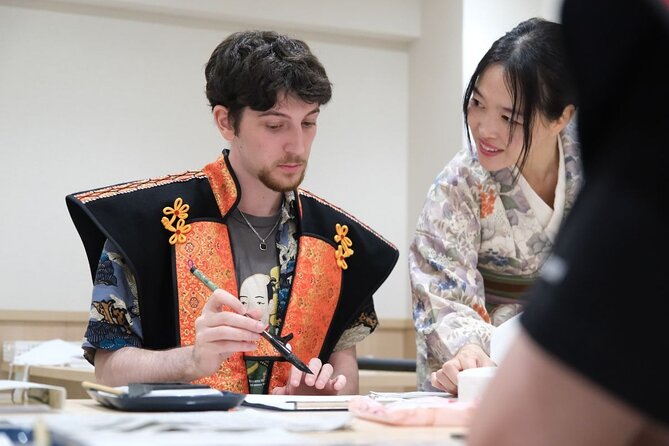
Your base ticket includes the tea ceremony, calligraphy, traditional music, and the Samurai performance. It does not include samurai armor, a kimono, or ninja clothing.
That said, you may have options to dress up during the experience. One person described upgrading for a kimono add-on, noted as about 5,000 yen, and mentioned that attendants help you dress and take photos. They also said you keep the socks and undergarments, which is a nice detail if you like the comfort and cleanliness aspect of trying on traditional clothing.
If a costume matters to your trip, treat it like a separate decision:
- Do you want the photo impact more than the hands-on station work?
- Are you okay with an extra cost and extra time while you get dressed and photographed?
If you’re mostly here for the cultural activities, you can skip add-ons and still get a full afternoon.
Practical Value: Why This Costs Less Than You Think
At $44.92 per person, this sits in the affordable range for Osaka activities that include multiple components. What makes it feel like good value is the density of content.
You are getting:
- a Samurai show with participation
- tea ceremony participation
- calligraphy practice
- traditional music, plus chances to play instruments
When you add those up, you would normally pay separate prices for a tea class, a calligraphy workshop, and a cultural performance show. Here, they’re combined into one booking.
Also, the small group size helps you feel “involved,” not like a spectator in a conveyor belt. People praised the staff for being friendly and helpful, including assistance with Japanese language. That kind of guidance reduces frustration, and it makes even short activities feel more personal.
So the pricing logic is: this is not a premium luxury experience, but it is a high activity-to-cost ratio. If you enjoy hands-on cultural practice, you’ll likely feel you got your money’s worth.
Tips to Get the Most Out of Your 2.5 to 4 Hour Afternoon
Here’s how I’d set yourself up for success.
First, plan for 2 hours 30 minutes as a baseline, not a strict timer. If you want to take your time with calligraphy, try instruments, or ask lots of questions, you can easily stretch longer. Build in buffer time.
Second, dress for comfort. You will be sitting for tea and calligraphy, but you’ll also move for the Samurai practice and possibly for costume dressing if you choose the add-on. Comfortable shoes help.
Third, bring a curious attitude. This is the kind of experience where staff can answer questions and explain what you’re doing, including pronunciation and meaning. People specifically mentioned being supported with Japanese and having translators around. Use that. Ask simple questions like what the actions mean, or what you should notice when you try the next step.
Fourth, if weather is an issue, remember the experience requires good weather. If it’s canceled due to poor weather, you get a different date or a full refund. In practical terms, keep an eye on your day’s forecast so you can adjust plans quickly.
Finally, if you do the costume upgrade, go with the flow. You’ll have attendants help with dressing and photo taking, and you’ll want a calm mindset so you do not feel rushed.
Who This Is Best For, and Who Might Prefer Something Else
This works especially well if you want:
- a short, structured cultural day in central Osaka
- hands-on experiences rather than only shows
- a mix of action, calm arts, and live music
- English support across multiple stations
It’s also a good pick for families. One family-friendly comment mentioned enjoying the experience with kids and grandchildren and noted the staff stayed patient with a larger group. The format is flexible, because each station has a “do your best” style rather than a strict performance standard.
Who might find it less ideal:
- If you expect hyper-historical accuracy at every single prop and costume detail, you may feel let down by reproductions in the Samurai segment.
- If you only want one activity, like solely a tea ceremony, you may feel like you’re being asked to do too much. This is built as a multi-part afternoon.
Should You Book Samurai Show, Tea Ceremony, and Calligraphy in Osaka?
I think you should book it if you want a compact Osaka day that mixes Samurai performance with real participation in tea ceremony, calligraphy, and traditional music. With a small group size, staff help, and the chance to try instruments, it’s the rare booking that feels active from start to finish.
I would pass or choose a different option if your schedule is ultra tight and you cannot risk the session running closer to 3.5 to 4 hours, or if you are only interested in one single cultural activity. Also, double check costume expectations. The base ticket covers the core cultural activities, but kimono and samurai armor are not included.
If you do decide to go, treat it like a workshop day, bring patience, and enjoy the fact that Japanese tradition here is not locked behind glass. You get to participate.
FAQ
How long is the Samurai show, tea ceremony, and calligraphy experience?
It runs about 2 hours 30 minutes (approximately).
Where do I meet for the experience in Osaka?
The meeting point is Shinsaibashi ARTY Inn, 2-chōme-17-3 Nishishinsaibashi, Chuo Ward, Osaka 542-0086, Japan. The activity ends back at the meeting point.
What is included in the price?
The included parts are a tea ceremony experience, calligraphy experience, traditional Japanese music, and a Samurai performance.
What is not included?
Samurai armor, kimono, and ninja clothing are not included.
How big is the group?
The maximum group size is 20 travelers.
What if weather is bad?
The experience requires good weather. If it gets canceled due to poor weather, you will be offered a different date or a full refund.
Latest write-ups near Osaka
- Osaka Private Tour with Government-Licensed Guide★ 4.8 · 20 reviews
- Guided Photography Tour in Osaka: Capturing Memories★ 4.5 · 20 reviews
- Osaka: Food Tour at Night with Tastings★ 4.9 · 20 reviews
- Kansai/KIX Airport to or from Osaka/Kyoto Private Transfer★ 5.0 · 20 reviews
- Osaka: City Highlights Bike Tour★ 4.7 · 20 reviews
- From Osaka/Kyoto: Amanohashidate Day Tour【Including tickets】★ 3.7 · 20 reviews
- Osaka Okonomiyaki Cooking Class “Learn here and make it at home”★ 5.0 · 20 reviews
- Volleyball in Osaka & Kyoto with Locals!★ 5.0 · 21 reviews
Samurai & Ninja Experiences, compared.

Samurai Ninja Museum Guided tour and Experience
Read our review →
Kendo and Samurai Experience with Uniform and Gear
Read our review →
Samurai Sword Class by Experts in Traditional Arts
Read our review →
Skip the lines Basic Ticket at SAMURAI NINJA MUSEUM KYOTO
Read our review →
Samurai Sword & Archery Class from Samurai Descendant
Read our review →
Browse the lists this tour appears in