
Reviewed · WORKSHOPS
Sumi-e Ink Painting Suiboku-Ga Workshop in a Japanese Teahouse
A Japanese teahouse class where you learn Suiboku-ga ink-wash painting is interesting because it trades complicated layering for control, water, and one careful moment. I like that the workshop stays small, limited to eight people, so you get real feedback instead of a quick demo and a free-for-all.
I also love the personal touch: you can pick your theme at booking, then you work with award-winning artist Rensui on techniques meant to keep your brushwork honest. And yes, you leave with green tea, so the souvenir is not just paper.
One consideration: this is a focused, seated art session for about one hour, so if you want something high-energy or outdoorsy, you might find it calmer than you expected.
Key points I’d plan around
- Small-group class (max 8) means you can actually see what your brush is doing
- Award-winning teacher Rensui guides the basics step by step
- Theme choice at booking includes pine, bamboo, plum, orchid, chrysanthemum, or Chinese kanji characters
- Suiboku-ga style favors fewer steps than typical painting, so beginners can succeed fast
- Green tea souvenir plus light refreshment adds real value beyond the class
- You finish with a strong, single-brush idea, so your piece feels finished, not halfway
Suiboku-ga in a Tokyo teahouse: what makes it special
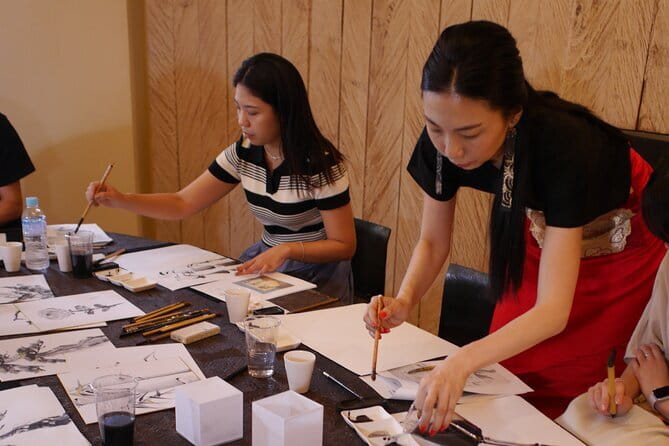
This workshop is built around Suiboku-ga, the ink-wash style also known as sumi-e in everyday talk. The key difference is how it looks and how it teaches you to think. Instead of building up lots of paint layers, you work with ink washes that create contrast, texture, and shape through water control.
That sounds technical, but the vibe is gentle. The session is hosted in a Japanese teahouse setting where you can slow down. You’ll be learning the basics, but you’ll also feel the intended spirit of the method, often described as coming from the heart. In plain terms, the art form rewards attention, not talent.
The best part for me is the way the class is structured. You are not just copying a picture. You’re learning how to move the ink with water, how to judge brush pressure, and how to leave space so the image breathes.
Also on the shortlist for Tokyo:
- Mt Fuji and Hakone 1-Day Bus Tour Return by Bullet Train
★ 5.0 · 26,383 reviews - 1-Day Tokyo Bus Tour
★ 5.0 · 14,250 reviews - Tokyo: TOKYO SKYTREE® Admission ticket
★ 4.5 · 11,192 reviews
Finding Uogashi Meicha Chanomi Club in Tsukiji
Your meetup is at Uogashi Meicha Chanomi Club, 2-chome-11-12 Tsukiji, Chuo City, Tokyo 104-0045. It’s near public transportation, and you’ll end back at the same place when the workshop finishes.
Because there’s no hotel pickup, I recommend planning your route in advance. Tsukiji is easy for transit, but it’s still a neighborhood where you do not want to wander when your class start time is near. If you’re arriving from somewhere like Shinjuku or Shibuya, give yourself extra buffer time, because Tokyo travel can swing from smooth to slow.
Bring your mobile ticket so you can check in without fuss. Also, go in with the mindset that you are going to sit, paint, and focus for about an hour. Wear something comfortable. You’ll want relaxed sleeves and shoes that let you stand and shift easily.
How the 1-hour session flows (and why it works)
The workshop runs about one hour. That’s short enough that you can fit it into a day of sightseeing, but long enough to learn a real skill.
Here’s the typical flow you can expect:
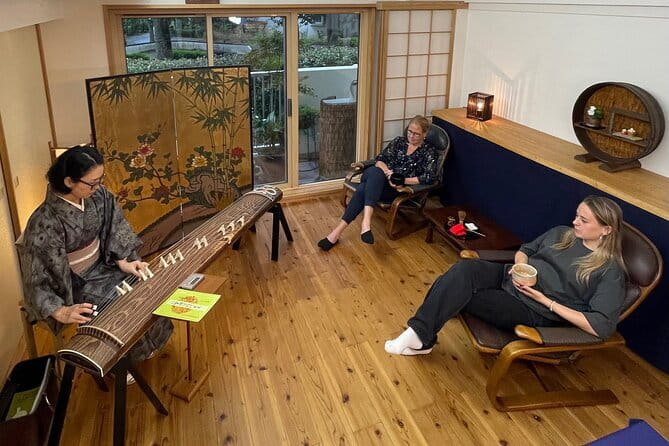
First, you settle in and enjoy Japanese green tea. This is more than a nice touch. It helps you slow your hands down, and ink painting rewards calm control. The included light green tea refreshment sets the tone, especially if you arrive already wired from the city.
Next comes the technique part. You’ll learn basic Suiboku-ga methods, including how ink behaves as it mixes with water. Even if you think you are bad at drawing, the method is forgiving in a different way than you might expect. You’re not aiming for exact realism. You’re learning visual balance using ink density and brush movement.
Then you get to the practical work: you start painting your chosen theme. The teacher’s guidance focuses on simple, high-impact steps, including finishing with a single brushstroke. That last part matters, because it prevents the common beginner problem of overworking a piece until it looks muddy.
The workshop ends back at the meeting point, so you’re not forced into a confusing itinerary shuffle afterward.
Choosing your motif: pine, bamboo, plum, orchid, chrysanthemum, kanji
At booking, you choose what you want to paint. The themes include pine, bamboo, plum, orchid, chrysanthemum, and Chinese kanji characters.
That set of options is great for two reasons.
1) It keeps the class manageable in a group of eight. Everyone can follow the same teaching arc, from brush technique to the final stroke.
2) It gives you something culturally specific. You’re not painting random flowers copied from a postcard. You’re working with motifs that fit the ink-wash tradition.
If you’re traveling with someone who wants a clear choice, this is easy. If you want to try something meaningful, consider kanji. Even if you do not read the characters, you’ll appreciate the discipline of shaping strokes with intent.
One practical note: since you choose at booking, think about it before you go. If you wait until the last minute, you lose the chance to settle your theme and get ready mentally.
A change of pace from Tokyo:
- Tokyo: teamLab Planets TOKYO Digital Art Museum Entry Ticket
★ 4.6 · 9,779 reviews - Mt Fuji & Hakone Cruise, Drum Show Bullet Train 1 Day from Tokyo
★ 4.0 · 7,413 reviews - Tokyo: Sumo Show Experience with Chicken Hot Pot and a Photo
★ 4.8 · 6,678 reviews - Tokyo: Shinjuku Food Tour (13 Dishes at 4 Local Eateries)
★ 5.0 · 6,603 reviews
The ink-wash basics you actually use at the brush
The workshop focuses on fundamentals you can feel immediately: water and ink control. Suiboku-ga looks simple when you see finished works, but the technique depends on decisions you make in seconds.
Here’s what you’re learning in practical terms.
- Ink density: how thick or light your ink appears based on how much water you mix into it
- Brush handling: how pressure affects the mark, and how direction changes the line
- Timing: how quickly ink settles and spreads, which affects texture
- Negative space: where you leave the paper untouched, so the image stays clean
The teacher, award-winning artist Rensui, emphasizes simple methods that let you create something that looks intentional. One of the most useful ideas is the focus on finishing with a single brushstroke. That instruction pushes you to stop tinkering and instead place your final mark with purpose.
That’s why this class is so often recommended for beginners. The art form is structured enough that you can make progress quickly, but open enough that the result will still look like you.
Getting your best results in a small-group class
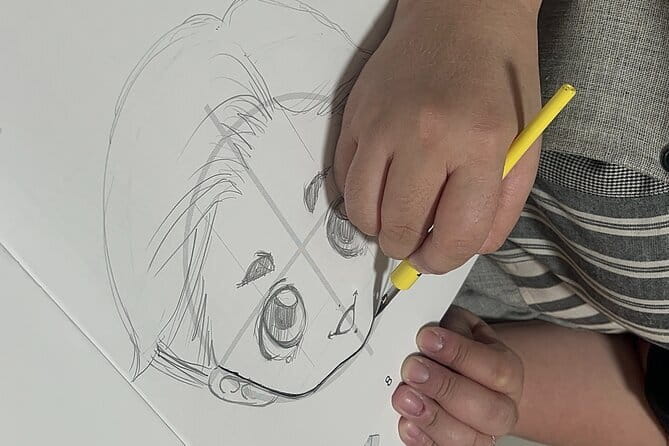
Small-group teaching is not just a luxury here. It changes what you can learn in one hour.
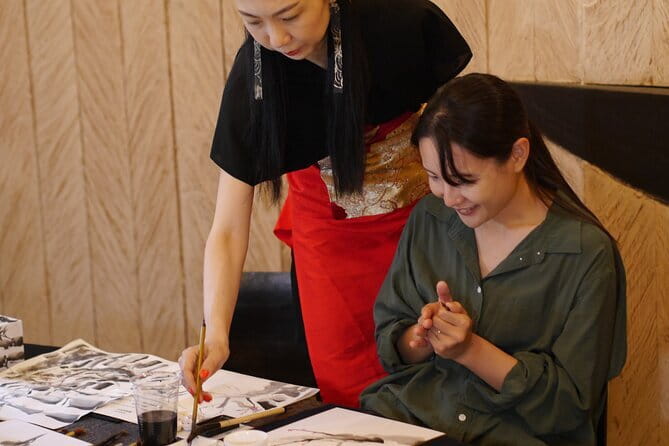
With a maximum of eight participants, you can ask questions and get feedback that fits your actual brush behavior. Ink does not care about theory. It responds to what your hand does right now, so seeing what to adjust matters.
It also helps if you are nervous about being in front of others. In a larger class, beginners often feel rushed. Here, you can take a breath. The session feels relaxed rather than performance-based.
If you’re bringing kids, this format can work surprisingly well. One parent shared that their sons, ages 7 and 9, loved it, and the finished work became a priceless souvenir. The key is that the workshop still offers structured choices, so younger artists are not stuck guessing what they should draw.
You don’t need to be an artist. You do need to be willing to follow a few simple steps and give the ink a chance to do its thing.
The best souvenir is not just the paper
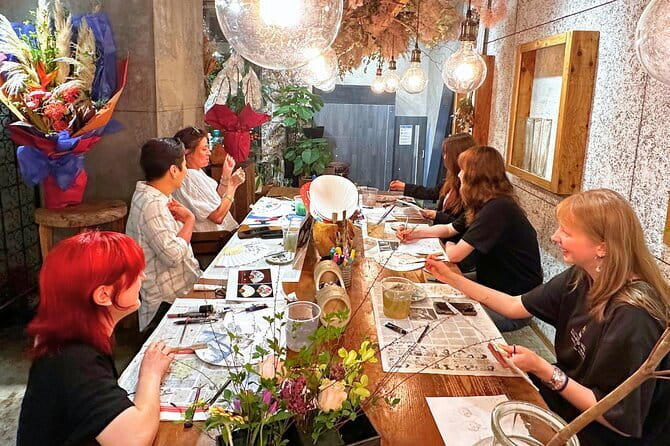
Most ink painting workshops end with a nice keepsake. This one adds extra value in two ways.
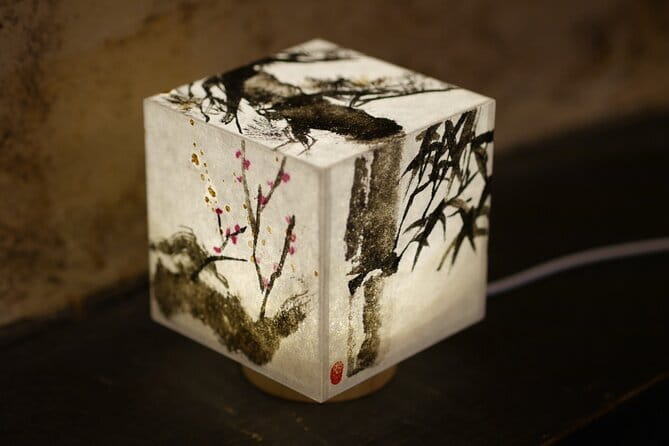
First, you take home your finished work. The artwork becomes a souvenir you can keep or give as a gift. That matters because you will not leave with just a story. You’ll have an object from the experience, something you can frame or share.
Second, you get green tea as a souvenir, plus a light green tea refreshment during the workshop. That turns the day into a complete sensory memory. If you love food-and-culture souvenirs, this is a win.
And there’s a practical upside: ink art is light to carry. You’re not dragging home something bulky from Tokyo, which is always a bonus in real travel logistics.
Price and value: is $93.34 worth it?
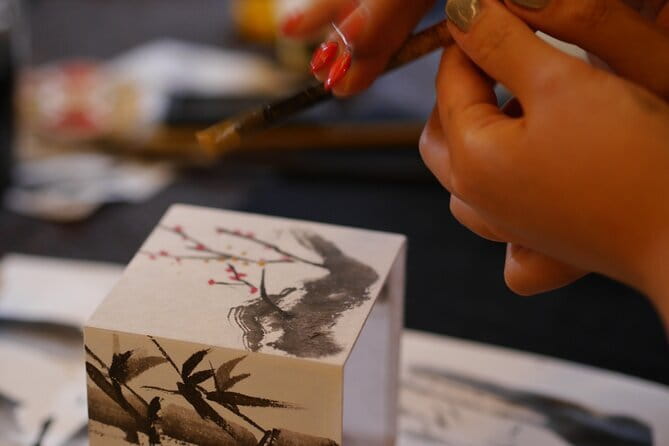
The price is $93.34 per person for about one hour, including the workshop fee, materials, green tea souvenir, and light tea refreshment.
For me, the value comes from what’s included and from the teaching format.
- Materials are included, so you are not paying extra for supplies you might not even use well.
- Green tea refreshment and a green tea souvenir add tangible extras, not just a nice gesture.
- The class is limited to eight, which means the teacher’s attention is more likely to land on you, not just the fastest learners.
Could a basic craft be cheaper? Sure, but cheaper often means more waiting, fewer corrections, and sometimes fewer included perks. Here, you’re paying for a guided skill session and a finished take-home result, in a setting that feels distinctly Japanese.
Also, the workshop is typically booked about 25 days in advance on average. If you are traveling during peak periods, plan earlier rather than later.
Who should book this Suiboku-ga workshop
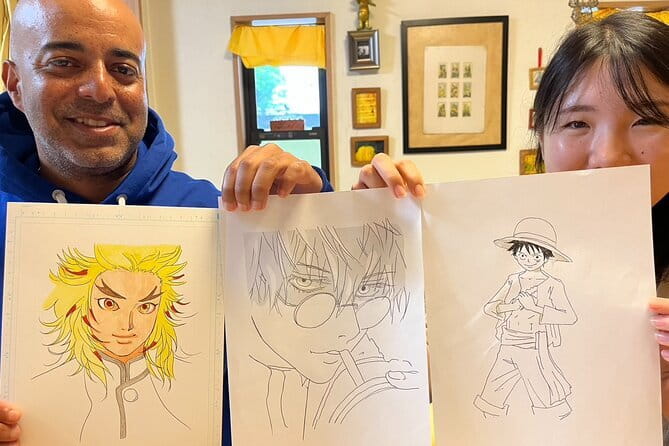
This workshop is a great fit if you want an art experience that feels authentic but still beginner-friendly.
You’ll likely enjoy it if you:
- Love Japanese culture and want more than photos
- Want a hands-on activity that is calm and focused
- Prefer a small-group class with direct guidance
- Like the idea of learning a technique that looks simple but rewards skill
- Want a take-home souvenir that feels personal
It may not be ideal if you:
- Want a long, museum-style visit instead of a practical class
- Do not enjoy sitting and concentrating for around an hour
- Are looking for a high-action, moving-between-locations itinerary
Final call: should you book it?
Yes, I think you should book this if you want a Tokyo experience that most people skip. The combination of a teahouse setting, a skill taught the right way, and a take-home piece plus green tea makes it feel worth the time.
If you like structured learning, this workshop has it. If you like art that looks elegant without tons of complicated steps, Suiboku-ga is a smart choice. And if you want a souvenir that feels genuinely made by you, not just bought, this is exactly that.
One last tip: pick your theme ahead of time and show up ready to pay attention. The ink responds to your choices, and once you get the hang of that, the hour goes fast.
FAQ
How long is the Suiboku-ga ink painting workshop?
It lasts about 1 hour.
How many people are in the class?
It is limited to a maximum of 8 travelers.
What is included in the price?
The workshop fee, materials, green tea souvenir, and light green tea refreshment are included.
What themes or objects can I paint?
At booking, you choose one theme from pine, bamboo, plum, orchid, chrysanthemum, or Chinese kanji characters.
Is this suitable for beginners?
Most travelers can participate, and it is an introductory course focused on basic techniques.
Do I take the finished artwork home?
Yes, your finished piece becomes a souvenir you can take home or give as a gift.
Where is the meeting point?
Uogashi Meicha Chanomi Club, 2-chome-11-12 Tsukiji, Chuo City, Tokyo 104-0045, Japan.
Is hotel pickup included?
No, hotel pickup and drop-off are not included.
Can I get a refund if I cancel?
Yes, cancellation is free. You can cancel up to 24 hours in advance for a full refund.
Latest write-ups near Tokyo
- Tokyo Customized Private Tour: See Top Attractions in 1 Day★ 4.8 · 67 reviews
- From Tokyo: Top 5 Scenic Spots of Mount Fuji Full-Day Tour★ 4.5 · 67 reviews
- Traditional Japanese Music ZAKURO SHOW in Tokyo★ 5.0 · 67 reviews
- Tokyo: Shinjuku Izakaya and Golden Gai Bar Hopping Tour (2h)★ 4.9 · 67 reviews
- Tsukiji: Unlimited Sake Tasting Experience★ 4.9 · 67 reviews
- Private Harajuku Omotesando Architecture Walking Tour★ 5.0 · 67 reviews
- Samurai Ninja Museum Asakusa: Kid-Friendly Ninja Training★ 4.7 · 67 reviews
- Tokyo: Not a show- a professional sumo practice with experts★ 4.9 · 67 reviews
Workshops, compared.
Sushi Making Tokyo Roll and Authentic Japanese Sushi Class
Read our review →
Roll and Authentic Sushi Making Class in Asakusa
Read our review →
Ramen Cooking Class at Ramen Factory in Kyoto
Read our review →
Sushi Making Class in a Happi Coat near a Famous Spot
Read our review →

Sushi Making Osaka Roll and Authentic Japanese Sushi Class
Read our review →Browse the lists this tour appears in